All Fruit Trees

All Fruit Trees
Looking for bareroot fruit trees Canada? We offer a wide variety of bareroot fruit trees including apples, apricots, pears, plums, cherries, quince, and peaches that are grown for the Canadian climate & we deliver cold-hardy fruit trees right to your door!
We also offer fruit trees for small gardens, heritage apples Ontario and you can filter all our fruit trees by hardiness zones. Search trees by collection or peruse all the varieties we carry below! We offer flat rate shipping across Canada.




320 products
Sort by:
320 products
320 products

History: Hewe's Virginia (aka Hughes' Virginia or Virginia) was discovered in Virginia in 1817 although the first trees discovered were thought to be around 100 years old. It is believed that Hewe's Virginia is a cross between a European apple and a North American crabapple. It became quite popular for its excellence as a cider apple and was favoured by Thomas Jefferson who devoted an entire block of his orchard at Monticello to just Hewe's Virginia. This variety was widely planted in the 18th and 19th centuries but waned as interest in cider-making declined. Luckily, it stuck around with us due to its usage as rootstock and pollinizers for other varieties. With the growing popularity of cider in the US, however, Hewe's Virginia is making a strong comeback as people are once again realizing its potential.
Why We Grow It: This hardy, vigorous tree produces a good number of crabapples that are excellent for cider. It is easy to see why this variety was so popular back in the day and is making a resurgence now, the bittersharp juice is great on its own and in blends. Hewe's Virginia is also great for making jelly!

History: Holstein was discovered in Schleswig-Holstein, Germany in 1918 and became one of the most popular varieties in the country. It is possibly a seedling of Cox's Orange Pippin.
Why We Grow It: This popular German variety sports attractive yellow skin with an orange/red blush. The flesh is firm, juicy, and aromatic in a way that is reminiscent of Cox's Orange Pippin. In general, this variety is easy to care for and grows vigorously.
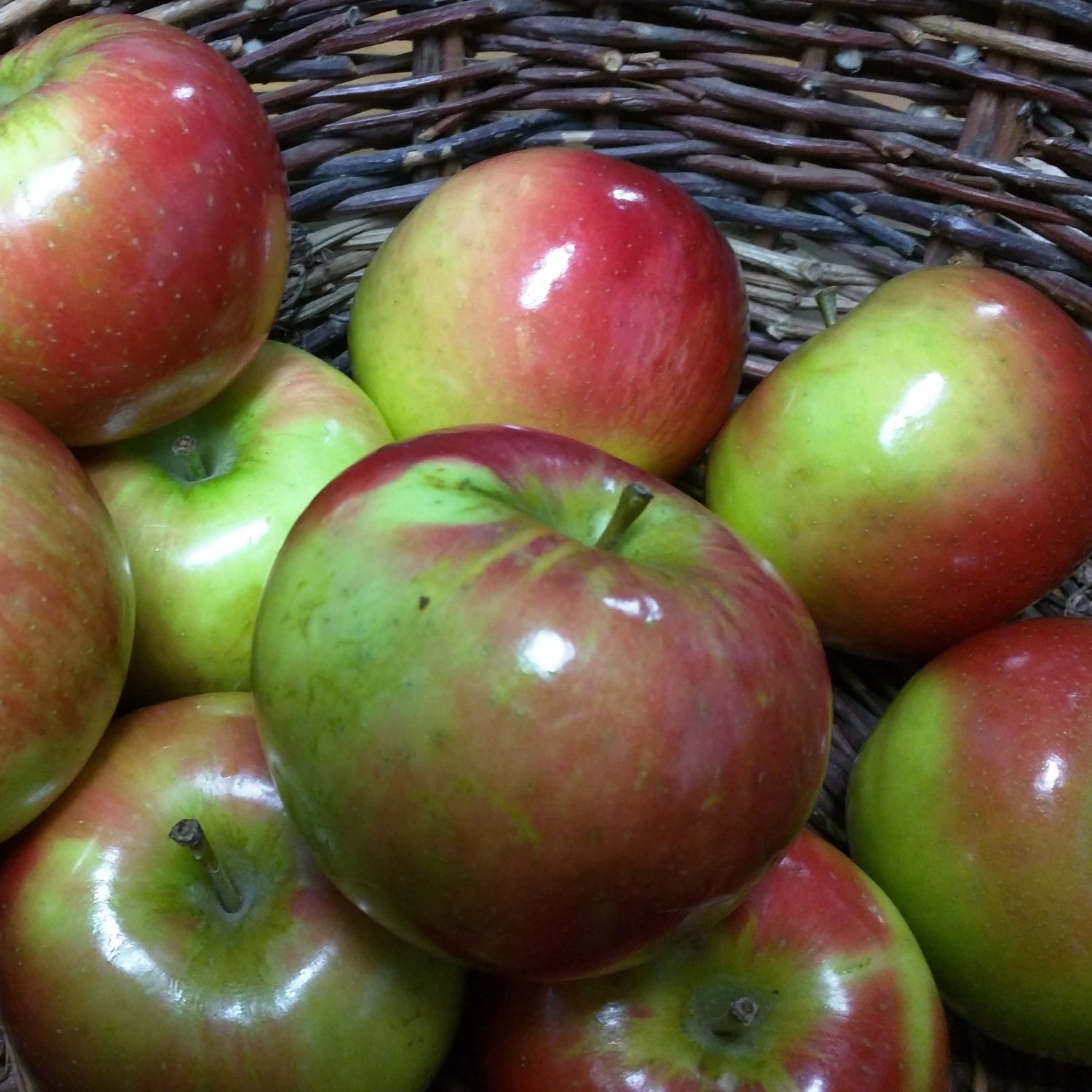
History: Honeycrisp apples were developed by the University of Minnesota in the 1960s and released in 1991. It is one of almost thirty varieties created by the university's breeding program since it began in 1888. The excellent flavour of Honeycrisp has allowed it to become one of the most popular apples in North America and in 2006 it became the state fruit of Minnesota.
Why We Grow It: Honeycrisp is popular for a reason. The apples are large and attractive with good flavour under favourable growing conditions. However, they are not an apple for beginner growers due to issues with some diseases especially in storage, but with diligent care you can produce these crunchy sweet apples in your own backyard/orchard.


History: Honeygold apples were developed by the University of Minnesota and introduced in 1970. It is one of nearly 30 varieties that have been developed by the university's breeding program since it began in 1888. This apple is a cross between Golden Delicious and Haralson, designed to combine the taste of the former with the cold hardiness of the latter. Honeygold is also famous for being mistakenly identified as one of the parents of Honeycrisp, although that has since been rectified.
Why We Grow It: With the sweet taste and appealing look of Golden Delicious but the cold hardiness of Haralson, this is an excellent apple for anyone living in colder hardiness zones. It is great for fresh eating as well as making pies and applesauce. The tree is also somewhat scab resistant.

History: Hosui was developed at the Institute of Fruit Tree and Tea Science in Japan. It is a cross between Hiratsuka and Kosui and was selected for its excellent flavour, texture, and resistance to black spot. Hosui was released in 1972 and has since become one of the most popular Japanese varieties.
Why We Grow It: Hosui is more acidic than other pears, providing a sweet and tangy flavour that is unique amongst Asian pears. This early-ripening variety boasts vigorous growth and will produce heavy crops of these large, delicious, golden-brown fruits.
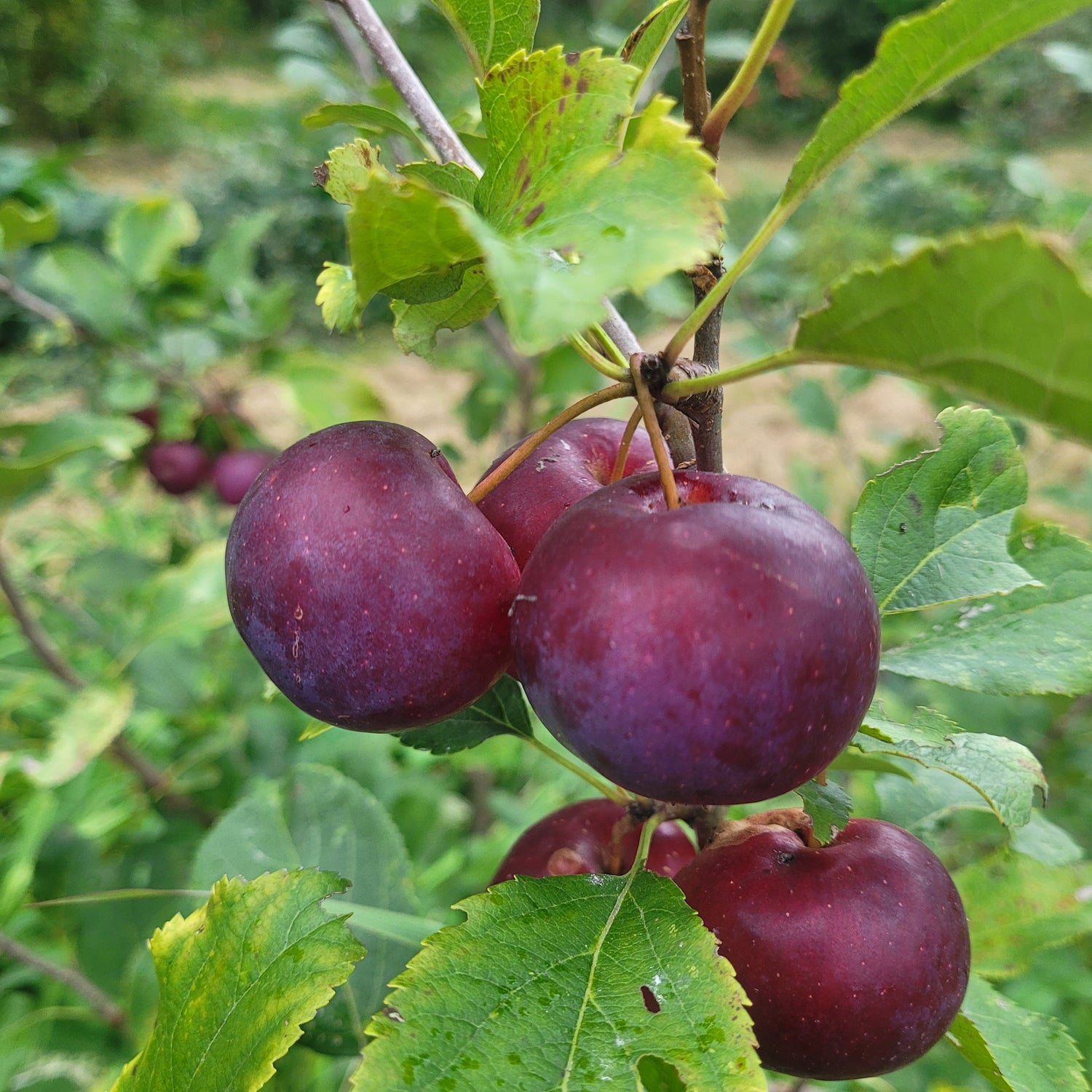
History: The exact origins of Hyslop are unclear but it was discovered sometime in the early 1800s around Boston by the Hyslop family who helped develop the area. This apple was popular for over a century but in recent years has fallen into obscurity.
Why We Grow It: Although definitely not recommended for fresh eating, Hyslop crabapples have a sub-acid, astringent flavour and are great in cider blends. They are also known as being one of the best apples for jellies. The tree is quite attractive with blue tinged blossoms in the spring and brilliant red/purple fruit in the fall.

History: Idared apples were developed at the University of Idaho Agricultural Experiment Station in 1942. Although its flavour is generally considered average, its excellent storage qualities have made it one of the most popular apple varieties in North America.
Why We Grow It: Idared's best quality is its ability to easily last six months when stored in a fridge, potentially until June under optimal storage conditions. The flesh tends to be softer and is white with some tinges of green. The flavour is described as sprightly, moderately acidic, and tangy, and this apple boasts a high Vitamin C content. It is great for baking and making applesauce. The tree's naturally somewhat smaller size makes Idared easier to prune and train.

History: Although we do not know for sure, it is likely we carry the Green or White Ischia fig (there has historically been a lot of confusion between the two!). Ischia figs were introduced to the English-speaking world by Philip Miller in his book The Gardeners Dictionary (note: it uses the old English spelling "ifchia"), the first edition of which was published in 1731. He allegedly claimed that several fig varieties he brought to England were from the Italian island Ischia although some say he may have lost or destroyed the original labels on some Italian figs and simply named them after different islands. Regardless, the Ischia figs have been popular in Europe for centuries and are still grown today.
Why We Grow It: Ischia has greenish-yellow skin which makes it less appealing to birds while on the tree! Despite its rather unassuming exterior, these figs contain vibrant red flesh with an excellent, rich flavour - try peeling it and adding it to all manner of salads! It is known to be a very productive variety and due to its compact growth it is ideal for container growing.

History: Jalander is a little-known apple with a unique history. Eric Hambly, owner of Siloam Orchards, and his wife visited one of New York's experimental farm stations in the 1980s shortly before it shut down. Hundreds of newly developed disease-resistant apple varieties were slated for destruction, so the couple gathered as much material for propagation as possible and grafted the trees back in Ontario. In the end, five of these trees were chosen for their disease-resistance and taste. One of them was Jalander and it is Hambly's favourite apple among all disease-resistant varieties.
Why We Grow It: For those interested in growing truly rare and unique apples, check out Jalander! On top of its disease-resistance, this apple boasts a sweet-tart taste with character (according to Hambly), and is also crisp and juicy.


History: This McIntosh type apple was developed in New Jersey at the Rutgers Agricultural Experiment Station in 1956. It was released commercially in 1971.
Why We Grow It: For McIntosh lovers this is a great apple to grow since it ripens before actual McIntosh apples. It is a bit more tart than McIntosh which makes it great for cooking, baking, and applesauce. It is recommended to use a thickener when baking pies since the flesh cooks down quickly. This tree is also a good cropper.
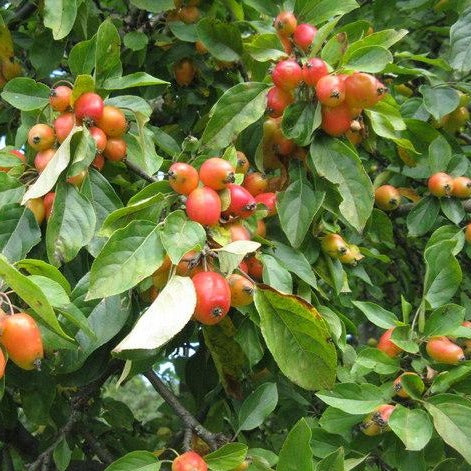
History: John Downie was raised by Edward Holmes, a nursery worker in England, in the 1870s. The variety was named after another nursery worker and friend of Holmes, John Downie. John Downie crabapples remain one of the most popular of the English crabapples.
Why We Grow It: This crabapple sports bright orangey-red fruit, often used to create some of the best jelly around. With its sweet-tart flavour, this crabapple can be pressed into a cheery orange juice that is a great addition to cider blends.

History: Jonagold, a cross between Golden Delicious and Jonathan, was developed in 1953 at the New York State Agricultural Experiment Station at Cornell University. With its large size and sweet flavour, it has become one of the most popular apples in North America and is especially popular in Belgium.
Why We Grow It: The fruit is attractive with a red blush over yellow skin. It has a pleasant sweet-sour flavour that makes it a great multi-purpose apple.

History: Jonathan has an interesting history since there are two potential origins. One story says that Rachel Higley collected apple seeds from the local cider mill which she later grew on her new property in Ohio in 1796. She named one of the new varieties Jonathan after a young boy who often visited her orchard. The second, and more likely story, is that it was grown by farmer Philip Rick in the 1820s in New York. Originally named Rick, the apple was renamed Jonathan after the man who brought it to the attention of the Albany Horticultural Society.
Why We Grow It: These cheery red apples are crisp, juicy, and sweet. They are good for fresh eating as well as turning into pies and sauce. The fruit also stores quite well, lasting until January/February under optimal conditions.
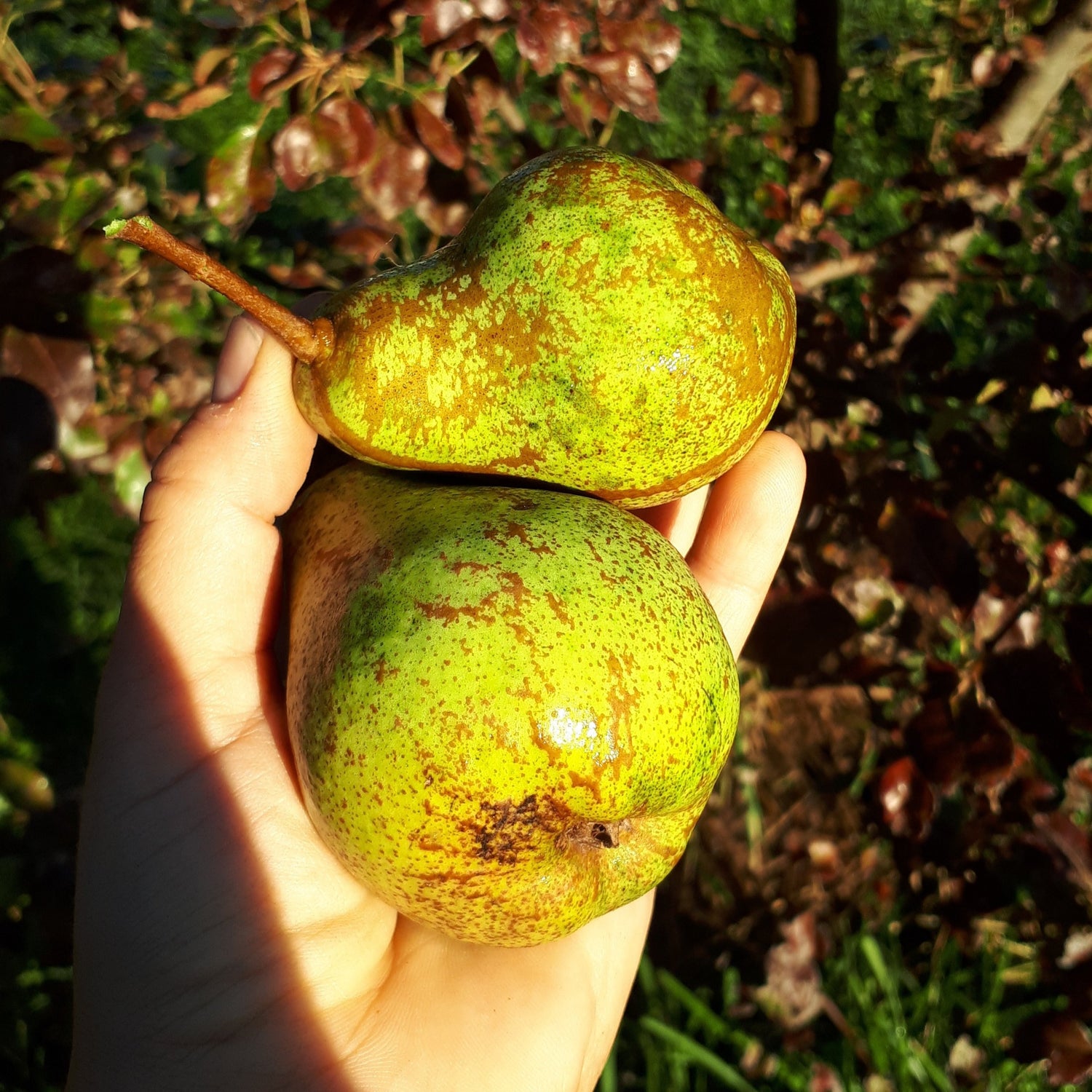
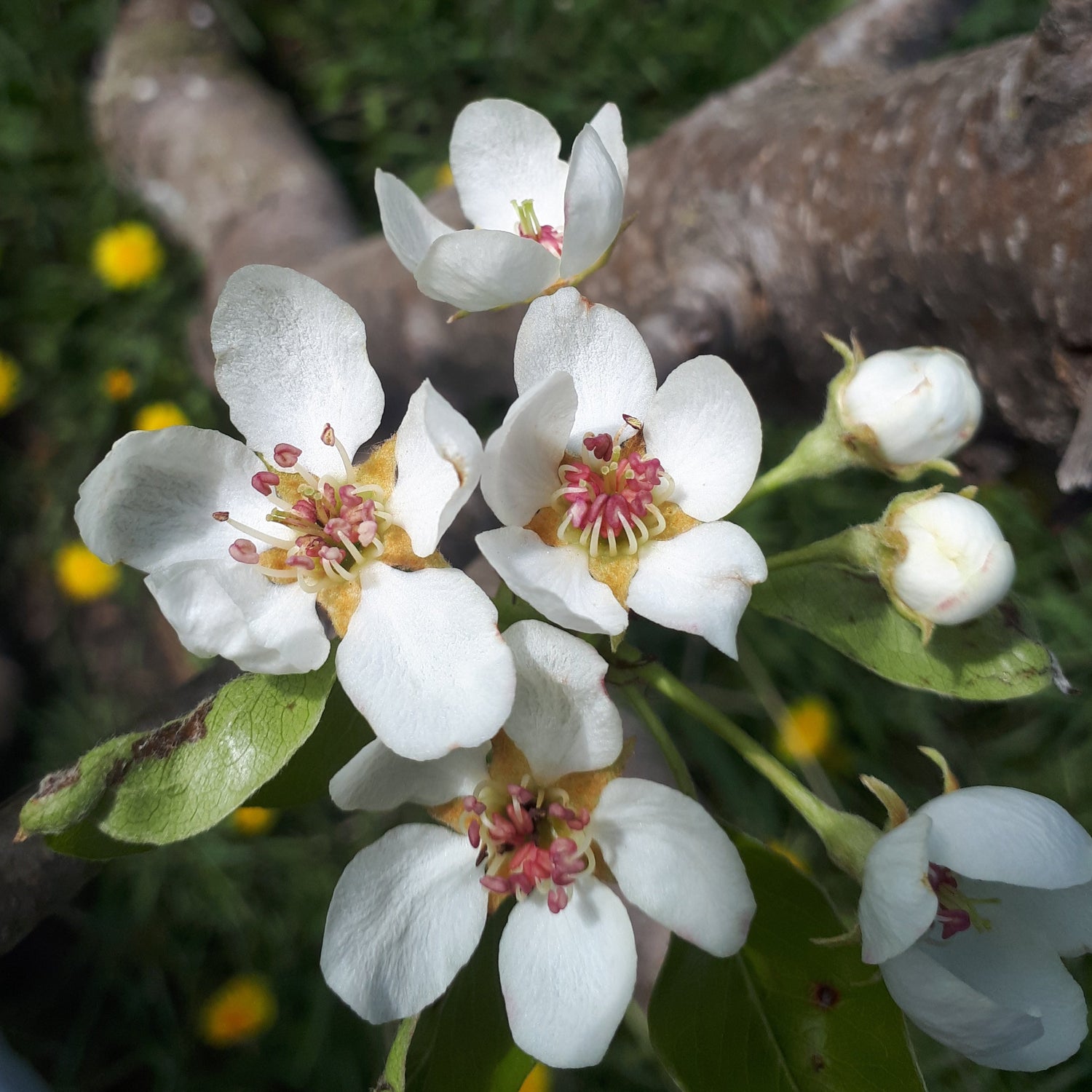
History: Jules d'Airoles was first discovered by Leon Leclerc in Laval, France, in 1836. It was named after Jules de Liron d'Airoles, a notable French horticulturalist and pomologist. Confusingly, this pear shares its name with a Belgian variety grown about twenty years later by François-Xavier Grégoire-Nélis.
Why We Grow It: This pear develops in storage to a wonderful treat: very sweet and a touch tangy, semi-fine juicy flesh, with pleasant tannic notes depending on the terroir. Smooth, thick green skin with a lovely rose blush where the sun touches the fruit.
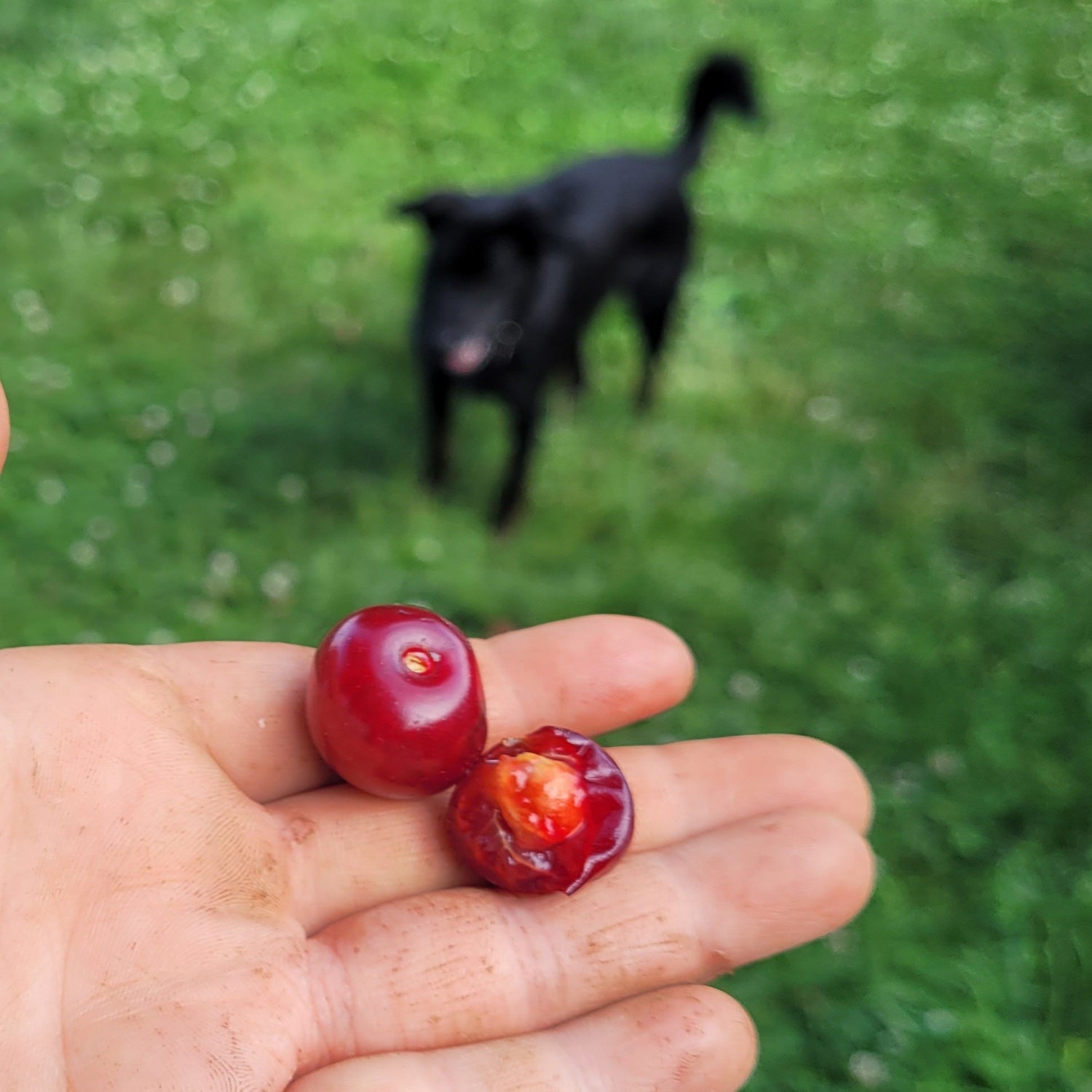
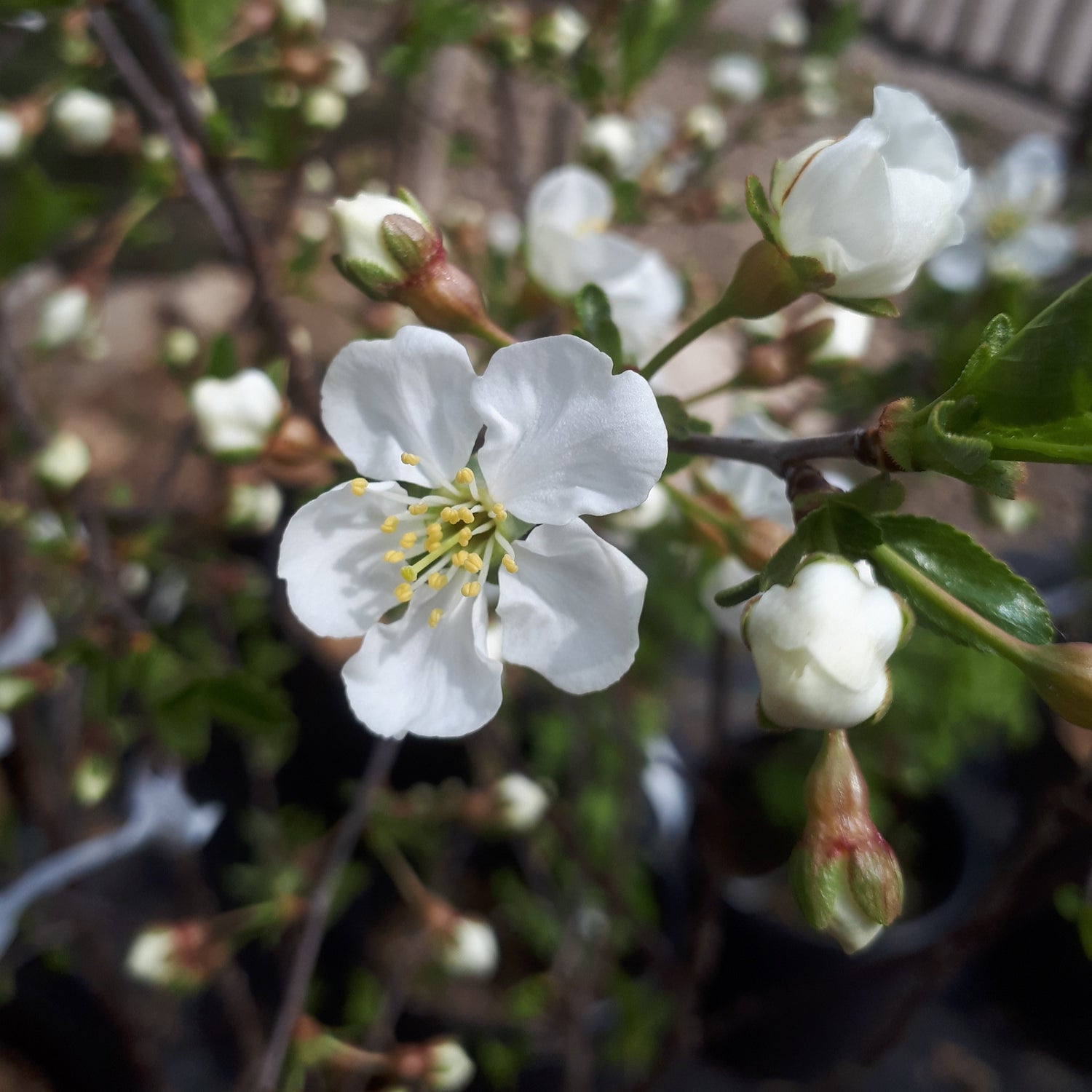
History: Juliet dwarf sour cherries are one of several dwarf sour cherries developed and released by the University of Saskatchewan with the goal of creating sour cherries that were cold hardy, shorter in stature, and produced good quality fruit. This initiative began in the 1940s and Juliet was released as part of the Romance series in 2004.
Why We Grow It: With good yield and deep red medium-sized fruit, Juliet is a favourite for those that enjoy the sweet-tart flavour! This is an excellent variety for the fresh market or processing. For anyone short on garden space, these cherry bushes reach 6-8 feet at maturity.
Check our our blog post with some tasty sour cherry recipes!
Showing 150/320
Next