Products
846 products
Sort by:
846 products
846 products

History: Daffodil is the common name used to refer to various species in the genus Narcissus. Native to parts of Europe and northern Africa, these flowers have been celebrated for their beauty since antiquity. They feature in many works of art and literature, have been used in traditional medicine (although parts of the plant are toxic), and are celebrated as heralds of spring. Unsurprisingly, they are an extremely popular garden plant to this day!
Why We Grow It: Add some sunshine to your orchard or garden! This beautiful mix of daffodils are a great addition to your yard or orchard & will help to deter deer, moles, voles, rabbits etc. from your trees.
Last day to add bulbs to your Fall order: Monday, October 26th
Bulbs only? They'll ship right away.
Bulbs + bareroot trees? They'll ship together over the next few weeks with your fall order.
Add some colour, biodiversity, and joy to your orchard this fall with Alliums and Daffodils from Silver Creek Nursery!

SPECIAL PRODUCT:
This year we have extra Pawpaw seeds that are already sprouted!! Take advantage and plant your own pawpaw's this spring!
Only available until 4:30pm today (May 14th)! All remaining seed orders will be shipped out on Monday, May 18th. Orders may ship separately from other plant orders if you have more than one order. If picking up, we recommend planning your pickup appointment ASAP after receiving your notification that your seeds are ready.
Species: Asimina triloba
History: Native to southern Ontario where it is considered a vulnerable species and the central United States, it is believed the range of these trees has shrunk with the extinction of megafauna that likely dispersed the seeds. These oddly tropical fruits have been cultivated by indigenous peoples and European colonizers alike, it is rumoured chilled pawpaw was George Washington's favourite dessert and Thomas Jefferson planted some at Monticello. Although popular among locals and with foragers, pawpaws have failed to achieve any kind of commercial success due to their poor keeping ability and oft difficult pollination.
Why We Grow It: The Pawpaw produces very unique fruit that has a distinct tropical banana/mango flavour and custard-like texture. As it oxidizes fairly quickly once cut open, it is best eaten fresh once fully ripe or made into sauces, ice cream, etc. You can bake and cook with pawpaw like you would with bananas but please take note that some people have reported extreme tummy troubles after consuming cooked pawpaws! Pawpaws have a very slow growth habit and grow naturally as an understory tree, usually not reaching over 35 feet. We grow them from seed for increased hardiness compared to grafted stock.


History: The St. Lawrence apple was discovered in the Montreal area as a seedling of a Snow apple, the most popular variety in Quebec at the time. By 1835, these apples were commonly grown in the area where they were popular for fresh eating and cooking but have since faded into obscurity.
Why We Grow It: Although less popular now, these apples are still good for eating and baking. The boldly striped red skin also makes the fruit very attractive. The tree bears good crops each year and is relatively hardy.
History: The St. Lawrence apple was discovered in the Montreal area as a seedling of a Snow apple, the most popular variety in Quebec at the time. By 1835, these apples were commonly grown in the area where they were popular for fresh eating and cooking but have since faded into obscurity.
Why We Grow It: Although less popular now, these apples are still good for eating and baking. The boldly striped red skin also makes the fruit very attractive. The tree bears good crops each year and is relatively hardy.
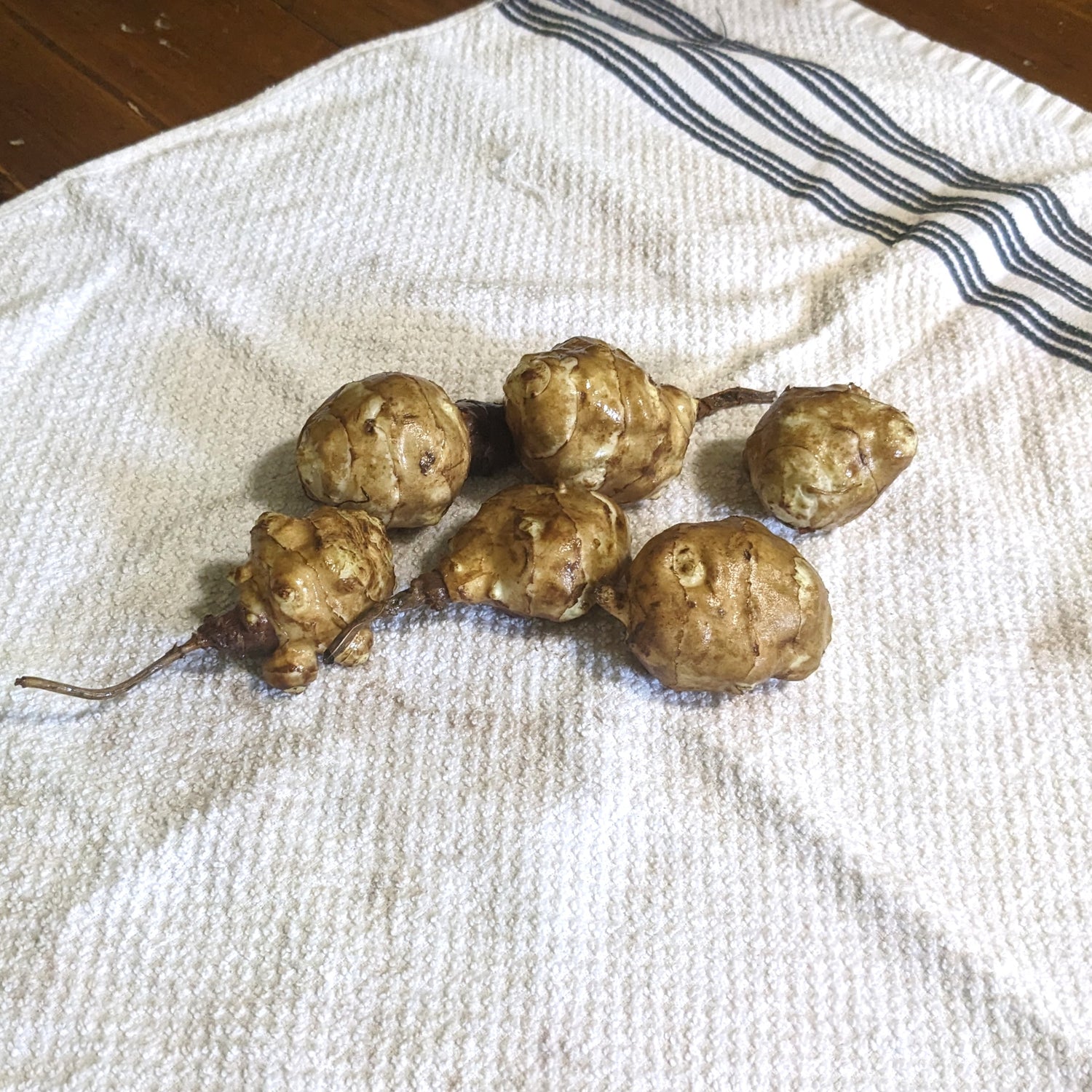
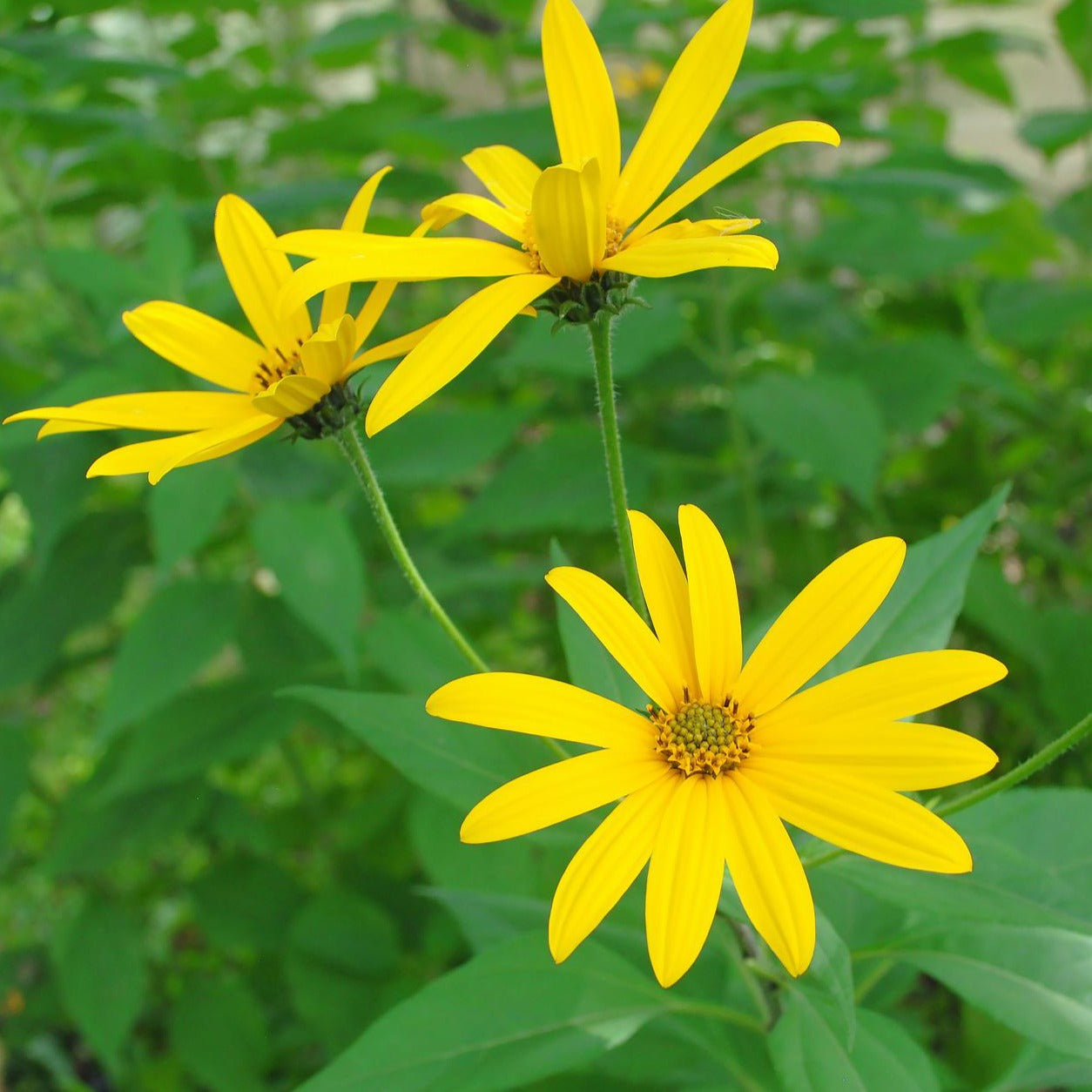
Species: Helianthus tuberosus, Sunchokes are also known as Jerusalem Artichokes or J Chokes
History: Stampede apparently originated on a reserve in northern Ontario where indigenous peoples had been cross-breeding the earliest flowering sunchokes they could find. They succeeded with Stampede which is an early flowering and ripening variety. In 1978, only two tubers were sent to Johnny's Selected Seeds in Maine, producing enough tubers by the end of the year that the nursery was able to introduce the new variety commercially in 1979.
Why We Grow It: Stampede is an extremely productive variety and produces relatively large, if somewhat knobby, white tubers. Like other sunchokes, Stampede can be prepared and eaten in a variety of ways, similar to the many ways you can use a potato! The early flowering and ripening time of this variety is great for anyone with a limited growing season.
History: Stanley plum was developed in Geneva, New York by Cornell University and released in 1962.
Why We Grow It: This freestone European plum has deep purple skin and meaty, golden flesh, the standard for prunes. It has a sweet juicy flavour and is great for fresh eating, canning, and drying. The tree produces heavy, reliable crops.
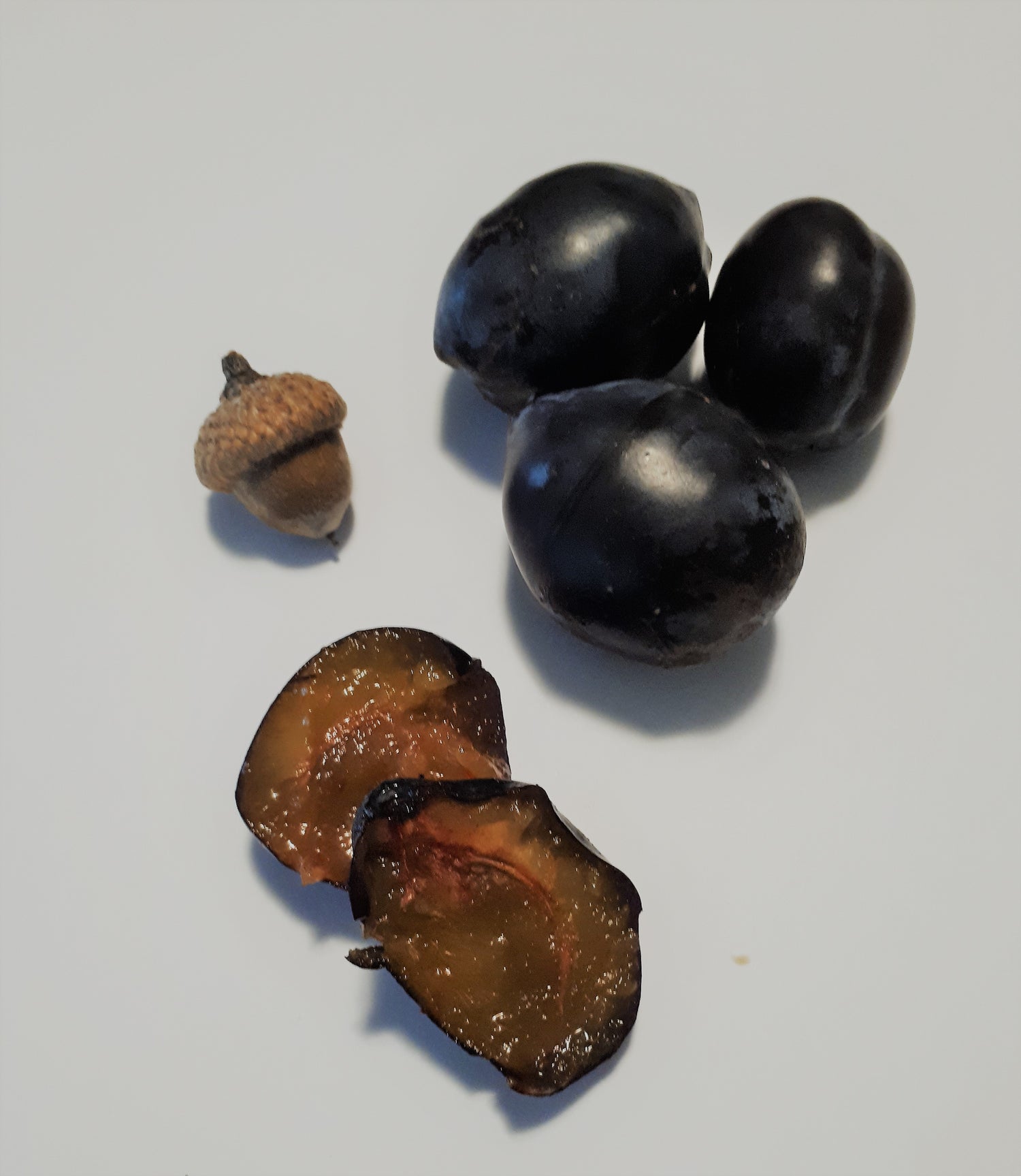
History: Stanley plum was developed in Geneva, New York by Cornell University and released in 1962.
Why We Grow It: This freestone European plum has deep purple skin and meaty, golden flesh, the standard for prunes. It has a sweet juicy flavour and is great for fresh eating, canning, and drying. The tree produces heavy, reliable crops.

We use this in our orchard for all trees (both in our experimental orchard and nursery stock) as part of out holistic spray system. You can download the holistic spray recipe here.
Full of trace minerals, this liquid seaweed comes from the Ascophyllum nodosum plant in the Atlantic Ocean.
Kelp is one of the first tools you should reach for in the toolbox of plant care. There is hardly a comparable option that has the range of benefits that kelp can provide. Kelp improves seed germination, enhances crop defense mechanisms and growth, promotes stronger roots, resists drought and other environmental stresses- all the while boosting yields and improving soil health. How can a plant not like this stuff?
Because of its immersion in sea water, kelp is widely known for its content of beneficial trace elements such as copper, calcium, iron, magnesium, sodium, sulphur and more. Often people solely focus on the NPK ratios when it comes to their plants, thinking that this is all the plant needs. But the micro minerals are equally important, as very minute amounts of these can be critical to impacting optimum plant health and growth.
However the area where liquid kelp really excels can be found in the added benefit of its containing a range of plant hormones such as cytokinins, gibberellins and auxins as well as phytosanitary agents. It is these hormones that regulate, trigger and direct plant growth, both in the root zone, as well as in the leaflets and growth tips. As plant growth moves through root expansion, to building frame, it then changes over to its reproductive phase, where it begins to flower and set fruit. The plants requirements for the various hormones that trigger and impact these stages varies throughout these cycles.
Auxins are quite important early on in plant growth, as it regulates the expansion of the roots, along with the building of the structure and frame of the plant. Cytokinins are particularly crucial for much of the plant vegetation growth phase, as they initiate rapid cell division and new cell wall production.
Although cytokinins are important throughout all plant growth phases, as it comes into the important flowering stage, the hormone balance shifts more dominantly towards cytokinins. These promote cytokinesis, the process of stimulating cell division. They help improve leaf growth, but more importantly during the transition to reproductive growth, or flowering, they can shorten node length and directly assist in the production of more lateral bud development. This has been shown to increase flower yield and quality levels considerably.
Liquid kelp is also very effective in helping the plant resist plant stress, due to excessive heat conditions and drought.
Liquid quid kelp is best applied directly as a drench to the soil in the early stages of plant growth, so that it can help with root development. But when the plant is transitioning to the flower stage, it is preferable to use as a foliar.
When applying as a foliar, it is always best to spray your plants before 7:00 in the morning- or earlier, as it is in the coolness of the morning before the heat of the sun closes the stomata on the underside of the leaves when the plant is most able to absorb the valuable nutrients that liquid kelp provides. Adding a small amount of liquid yucca as a surfactant helps greatly in the plant absorption process, as this keeps the liquid from 'balling up' and forming droplets on the leaf surface. Instead, the surfactant breaks this water tension down and establishes a much greater liquid coverage of the leaf surface, making the whole process much more efficient.
Application rates are 5-10 ml per litre of water minimum, repeated every 7-30 days. This product is approved for organic use.
945mL bottle is enough for 200L of spray mix, or 4x 50L mixes.
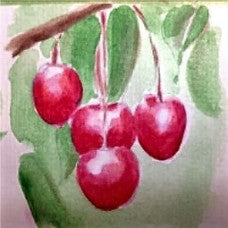
History: Stella sweet cherries were developed by the Summerland Research and Development Centre in British Columbia in 1956 by K.O. Lapins, after whom Lapins cherries are named. These cherries were named and released in 1968, becoming the first named variety of self-pollinating sweet cherries. They have since become very popular, especially in the UK, and have been awarded the Royal Horticultural Society's Award of Garden Merit.
Why We Grow It: The Royal Horticultural Society was right to commend Stella. These large cherries have skin that is shiny yet extremely dark red, creating a feast for the eyes as well as the mouth! The flesh is medium firm and has a lovely sweet flavour, great for fresh eating as well as canning. Stella is self-pollinating and makes an excellent pollinator for other varieties.

History: Not to be confused with Stembridge Cluster, Stembridge Jersey was introduced in Somerset, England, in the 1950s. To this day it remains a popular variety in UK cider orchards.
Why We Grow It: The good-quality bittersweet juice produced by this variety explains why it is still popular in the UK. Although Stembridge Jersey suffers from a tendency to only produce fruit every other year, it does produce good crops in those alternate years and is relatively disease resistant.

History: This English cider apple originated in and was named after Rodney Stoke, a small village in Somerset, England. It was discovered around 1920 and has been popular in England since.
Why We Grow It: Stoke Red produces a great bittersharp juice that is well-regarded for cider making. As an added bonus, it is a heavy cropper and resistant to scab.
History: Strawberry Pippin is another variety whose history we know little about. All we know is that it likely originated in England where it was first recorded in 1874. The 'pippin' in its name indicates that it was grown from seed by chance.
Why We Grow It: While we may not know much about its past, we do know why we are happy to grow it! Strawberry Pippin has an attractive red striped fruit which is quite firm and sweet. Its excellent flavour is best enjoyed picked fresh right off the tree. In our experience, Strawberry Pippin does well with minimal care, and is an excellent choice for the backyard.

History: Strawberry Pippin is another variety whose history we know little about. All we know is that it likely originated in England where it was first recorded in 1874. The 'pippin' in its name indicates that it was grown from seed by chance.
Why We Grow It: While we may not know much about its past, we do know why we are happy to grow it! Strawberry Pippin has an attractive red striped fruit which is quite firm and sweet. Its excellent flavour is best enjoyed picked fresh right off the tree. In our experience, Strawberry Pippin does well with minimal care, and is an excellent choice for the backyard.


Love strawberry season? Dress up your desk with a new quilted coaster for break time or use as a mouse pad! This cute strawberry mini quilt is one of a kind and an improvisational project when using up bits and pieces of fabric scraps that I can never throw out!
- size is about 8 x 8 inches (20 x 20 cm)
- nice for a small gift: hostess, birthday, housewarming, BFF, etc.
- easy care, just throw in with regular wash.
- made with quality cotton fabrics and careful sewing and stitching
Notice the last photo shows more mini quilts, sold separately.
My quilts will come packaged with care instructions.
Quilting is done by freemotion, which is a hand guided machine stitching technique, not computer. This means that your quilt will always be one of a kind, as the artistry of the stitching is unique to each piece.


Looking for a versatile bag that fits in your purse? Our sturdy totes come in ever-changing fabrics, with only a few made of each fabric, making your bag almost one-of-a-kind! These basic totes are a great reusable bag for grocery shopping and all-purpose use... book bags for students, perfect at the beach, craft projects, or even a diaper bag!
This listing is for the strawberry tote bag shown in the first few photos.
Features of each bag:
- all cotton, fully lined, with no exposed seams
- bag body sits about 14.5 inches tall and the base measures 6 x 10.5 inches
- sturdy, cotton webbing handles, measuring over 33 inches long; so that the bag will hang about 15 inches down from your shoulder
- washable, just throw in with your regular laundry 🫧
- a nice, thick elastic closure to secure the bag when using our tuck, fold ‘n’ roll method for storing the bag (see video)
- a great purse accessory 👜
- a practical and eco-friendly gift idea, too! 🎁
So many ways you can use these tote bags. I keep a stash in our vehicle as reusable shopping bags to take to market to carry all that lovely fresh produce. In our area of Ontario, grocery stores have started to charge a small fee for bags. It is very common to bring our own bags to the store. These will last years with normal use and care.
A great gift for the woman who has everything. 🌞


Curious about grafting your own trees in the summer? We're happy to offer a grafting workshop focused on chip budding apple trees. While this workshop focuses on apple trees, these same skills can be used to graft other species of fruit trees as well!
Registration includes:
- 3 pieces of apple budwood of your choice* and 3 EMLA 106 semi-dwarf rootstock - you will graft and take home 3 apple trees!
- 1 copy of Fruit Tree Grafting for Everyone (co-authored by Steph)
- Exclusive workshop-day discounts on fruit trees, tools, and orchard supplies
*We will be in touch closer to the workshop to let you know what apple varieties will be available for grafting.
Dates & Times:
- Part One: Zoom - Wednesday, August 12th from 7pm-9pm, online via Zoom
-
Part Two: In-person – Thursday, August 13th from 6pm-8pm in our orchard (weather permitting) or in our hoophouse at Silver Creek Nursery (2343 Gerber Rd, Wellesley, ON, N0B 2T0)
- When signing up, please select the date you will be attending in-person
- If weather permits we will be out in the orchard so please dress appropriately for the weather. If there is rain we will be in the hoophouse. The hoophouse is covered but please dress appropriately for the temperature.
During the Zoom call, we will walk you through the theory and application of summer grafting including aftercare, and will answer any grafting questions you may have. On Thursday we will go over chip budding techniques in-person, give you a chance to try grafting out for yourself, and by the end of the workshop you'll have grafted 3 of your own apple trees to plant at home!
NOTE: Refreshments will be provided (bring your own drinking vessel). We will have some stools/chairs but bring your own if you prefer.

Join us in our orchard and learn all about of summer fruit tree pruning and why it matters!
So you planted a fruit tree... now what? Are your fruit trees growing vigorously but producing less fruit than you'd hoped? Wondering what to prune, when to prune, and why summer pruning matters?
We have answers, and we're excited to invite you to our Summer Pruning Workshop! This course is great for beginners and those who want to dive more in-depth into understanding fruit tree physiology, for a lifetime of fruitfulness.
Where & When?
- Part One - Thursday, July 9th from 7pm-9pm, online via Zoom
-
Part Two – Friday, July 10th from 7pm-9pm in-person at our orchard at Silver Creek Nursery (2343 Gerber Rd, Wellesley, ON, N0B 2T0)
- This is a rain or shine event so please dress accordingly!
Who? Steph from Silver Creek Nursery plus YOU!
What? I (Steph) will help demystify fruit tree pruning and show you how strategic summer pruning can improve fruit quality, tree health, and orchard productivity.
Did you know that pruning during the growing season can help manage excessive growth, increase sunlight penetration, improve airflow, help deter pests, and encourage better fruit development?
During this workshop, you will learn:
- Differences between summer and dormant-season pruning, and why we need both at certain times in a trees life:
- The purpose and benefits of summer pruning
- How to prune for better fruit production
- When and where to make pruning cuts during the growing season
- How to identify water sprouts, suckers, and overly vigorous growth
- How to improve light penetration and airflow to reduce disease pressure
- Techniques for maintaining manageable tree size and structure
- Common pruning mistakes and how to avoid them
PART 1 - Online via Zoom, Thursday, July 9th from 7pm-9pm
We'll begin with an online discussion of basic pruning principles, and then delve into more advanced tree physiology. You'll learn how to assess a tree's growth, identify pruning priorities, and make confident pruning decisions on trees at different stages of development.
You will also be invited to send in pictures ahead of time from your own garden/orchard so we can chat about your individual trees in our Q&A.
You will receive a recording of the Zoom session and a copy of the presentation after the workshop.
PART 2 – In our orchard at Silver Creek Nursery, Friday, July 10th from 7pm-9pm
Now we'll head into the orchard to put the theory you learned into practice! Steph will demonstrate proper pruning techniques and guide participants through real-world examples, helping you understand not just how to prune, but why.
We will be in the orchard regardless of rain or shine so please dress accordingly!
Why? One of the most common questions we hear is, "My fruit tree grows like crazy, but the harvest isn't great, OR, it's not bearing fruit!" Summer pruning is often a key part of the solution.
While winter pruning encourages growth, summer pruning helps direct the tree's energy into fruit production, ripening, and maintaining a healthy structure. Understanding when and how to prune throughout the seasons can make a significant difference in both the health of your trees and the quality of your harvest.
Join us for a practical and informative morning in the orchard and leave with the confidence to care for your fruit trees all season long!
NOTE: Refreshments will be provided (bring your own drinking vessel). Participants will receive a recording of the zoom webinar and exclusive workshop-day discounts on fruit trees, tools, and orchard supplies.


History: Summer Rambo was first described in 1535 in France where it is known as Rambour d'Ete, named for its early ripening and the village of Rambures. It arrived in colonial America where it was called Summer Rambour which became Summer Rambo sometime before the 1850s. Its short shelf life means it never reached commercial success but it is a popular early apple at u-pick orchards and farmers' markets.
Why We Grow It: Summer Rambo produces oblong apples that are green with a red blush that ripen relatively early in the summer. This crisp, aromatic apple has a wine-like flavour that is good for fresh eating, cider, and sauce. Although it does not store well, it is a delightful summer treat!

History: Summer Rambo was first described in 1535 in France where it is known as Rambour d'Ete, named for its early ripening and the village of Rambures. It arrived in colonial America where it was called Summer Rambour which became Summer Rambo sometime before the 1850s. Its short shelf life means it never reached commercial success but it is a popular early apple at u-pick orchards and farmers' markets.
Why We Grow It: Summer Rambo produces oblong apples that are green with a red blush that ripen relatively early in the summer. This crisp, aromatic apple has a wine-like flavour that is good for fresh eating, cider, and sauce. Although it does not store well, it is a delightful summer treat!
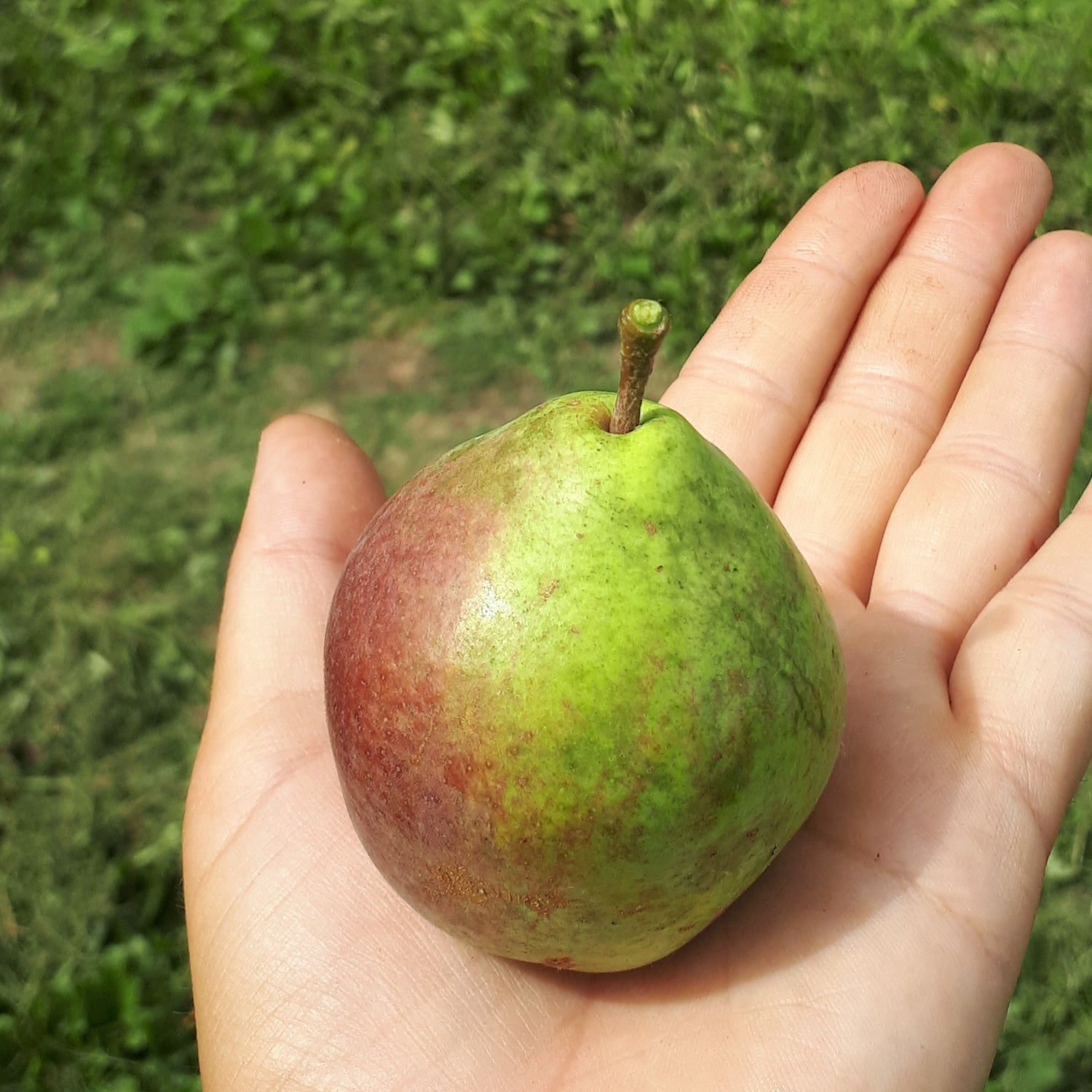
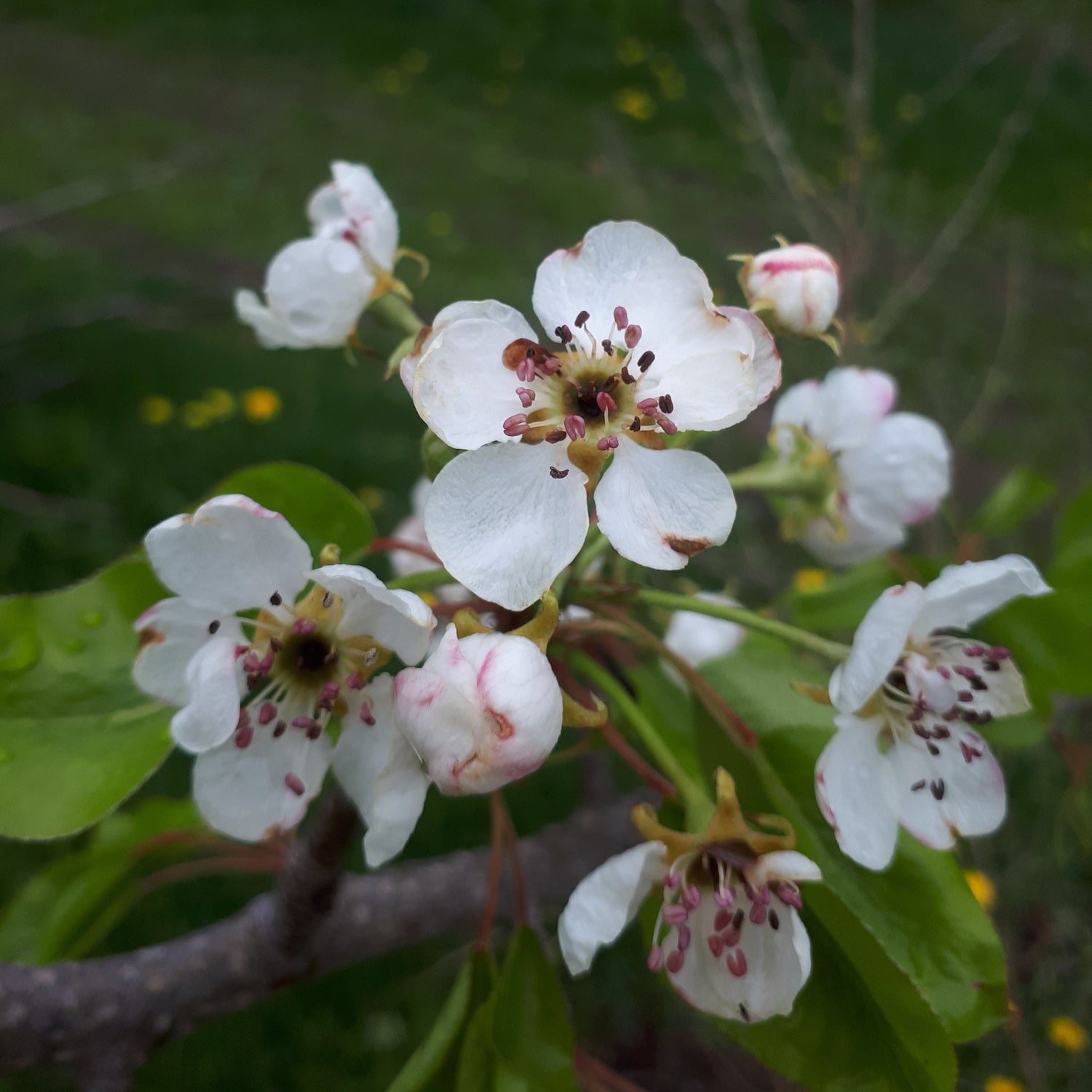
History: Summercrisp pears were developed by the University of Minnesota in an effort to create a cold hardy pear. They were successful in creating a hardy and delicious pear, releasing the variety in 1985. Its name is derived from the fact it ripens in summer (very early for a pear!) and that it is great right off the tree when still crisp.
Why We Grow It: Summercrisp performs amazingly in our test orchard, producing lots of freckled beauties that ripen uniformly and hang well on the tree. This early cold-hardy pear has a really sweet, pleasant flavour and is not gritty or dry. The fruit are average-sized with yellow skin and red blush. For optimal eating they should be picked before fully ripe and stored in the fridge until eating. This variety deserves to be more widely planted.
History: Summercrisp pears were developed by the University of Minnesota in an effort to create a cold hardy pear. They were successful in creating a hardy and delicious pear, releasing the variety in 1985. Its name is derived from the fact it ripens in summer (very early for a pear!) and that it is great right off the tree when still crisp.
Why We Grow It: Summercrisp performs amazingly in our test orchard, producing lots of freckled beauties that ripen uniformly and hang well on the tree. This early cold-hardy pear has a really sweet, pleasant flavour and is not gritty or dry. The fruit are average-sized with yellow skin and red blush. For optimal eating they should be picked before fully ripe and stored in the fridge until eating. This variety deserves to be more widely planted.


Species: Helianthus tuberosus, Sunchokes are also known as Jerusalem Artichokes or J Chokes
History: Our founder, Ken Roth, acquired Sunbeam from Sunny Nature Farm near Midland, ON. The owners of the farm were unsure what variety it was but Ken says it is now his favourite sunchoke, no contest! He collected and propagated the tubers, Mouse suggested he name them Sunbeam in honour of Sunny Nature Farm, and now we are happy to release them to the public in 2025!
Why We Grow It: Sunbeam won Ken over with its large, smooth tubers that are reminiscent of sweet potatoes. He finds them easier to clean than the other varieties we currently offer which makes processing them for cooking much smoother. Even compared to other sunchokes Sunbeam is highly productive and vigorous! Considering Ken has been growing his selection of sunchokes over the years, we trust his judgement when he says this one takes the cake.


2026/2027 Staff Favourite
Our sunchokes are Zack's favourite this year! Zack has this to say about our OG sunchoke tubers: “It blows my mind how fast sunchokes grow. This particular variety has produced stalks almost 20ft high in two different locations for multiple years now. Though its tuber size is nothing to write home about, its stalk size sure is! I wonder about the soil-building potential of these giants! Not having to replant these edible tubers is such a blessing, but beware if you want to get rid of them.”
All Staff Favourites are 20% off. The Staff Favourite Discount cannot be combined with other quantity discounts.
Species: Helianthus tuberosus, Sunchokes are also known as Jerusalem Artichokes or J Chokes
History: Sunchokes are native to central North America and have traditionally been cultivated by indigenous peoples for their edible tubers. European colonizers sent samples back to Europe where it became naturalized. It has fallen into obscurity in North America but there was some success in marketing it commercially in the 1990s and 2000s. These sunchokes are the first ones we started offering here at Silver Creek Nursery! Although we do not know what variety (if any) they are, they have done quite well for us in our front garden and have been a tasty part of many staff meals over the years!
Why We Grow It: These native plants produce tasty root tubers that, like potatoes, can be prepared and eaten in a variety of ways including raw, roasted, or treated like sauerkraut. Most people can eat them no problem, but some folks do find they can get mildly gassy if they enjoy too much at a time, so if you have never eaten them before, moderation is advised. They are in the sunflower family so get quite tall and produce lovely little yellow flowers. They spread vigorously as well, and should be managed (easily done with mowing or hand pulling in summer).
The pictures on the left show Zack standing in front of the sunchoke patch by our front office! The photo was taken Aug. 7th, 2026 and they are already quite tall, but they will continue growing until they flower in September.

Why We Grow It: It is hard to turn down an apple that sounds as wonderful as Sundance! It is crisp and juicy with a spicy, citric flavour. Along with being great for fresh eating, the fruit also holds its shape well when baked. As an added bonus, this variety is resistant to many common apple diseases and stores quite well so you'll have plenty of high quality apples to easily last you through the winter.

Combine these floating sunflower bee candles with flower petals to make a dreamy glowing floral and water centerpiece for any occasion!
- pure beeswax
- 5.08cm diameter x 1.27cm tall (2" x 0.5")
- approximate burn time 3-5 hours
- floats on water

Species: Hippophae rhamnoides
History: Sunny (known originally in Russian as Botanicheskaya Ljubitelskaya) was first developed in Russia and was further tested and introduced by Latvian agronomists who gave it the name Sunny (aka Solnechnaya with 'solnech' meaning 'sunny' and 'naya' being a female suffix). It was selected for its large berries and high juice content, making it a good option for commercial growing for comestible products. Commercially, it is the most widely grown sea buckthorn variety in central and eastern Europe.
Why We Grow It: Sunny produces large berries that are lower in acidity than most other varieties, giving them a comparatively sweeter (but still sour!) taste. They also have a higher juice content than other sea buckthorn berries, making them a great option for those looking to process them into juice or other sea buckthorn products.

Species: Quercus bicolor or hybrid. Our seeds are collected from trees that may have been cross-pollinated by closely related species so the resulting seedlings may be hybrids.
History: Swamp White Oak is native to parts of southern Ontario and a few places in Quebec and down into the US. It is an important food source of many animals. Traditionally, the acorns are used by indigenous peoples as a source of food and the bark is used as medicine. The hard, durable wood is used for a variety of purposes including furniture, flooring, boats, and barrels. It is also used for landscaping with some trees planted at the 9/11 Memorial Site.
Why We Grow It: Swamp White Oaks are great trees whether you are looking for a native tree to feed wildlife or a stately addition to your landscape. These trees are easy to transplant and are tolerant of many soil conditions so long as the area is moist. The acorns are a great food source for many species and can also be processed for use in cooking and baking.
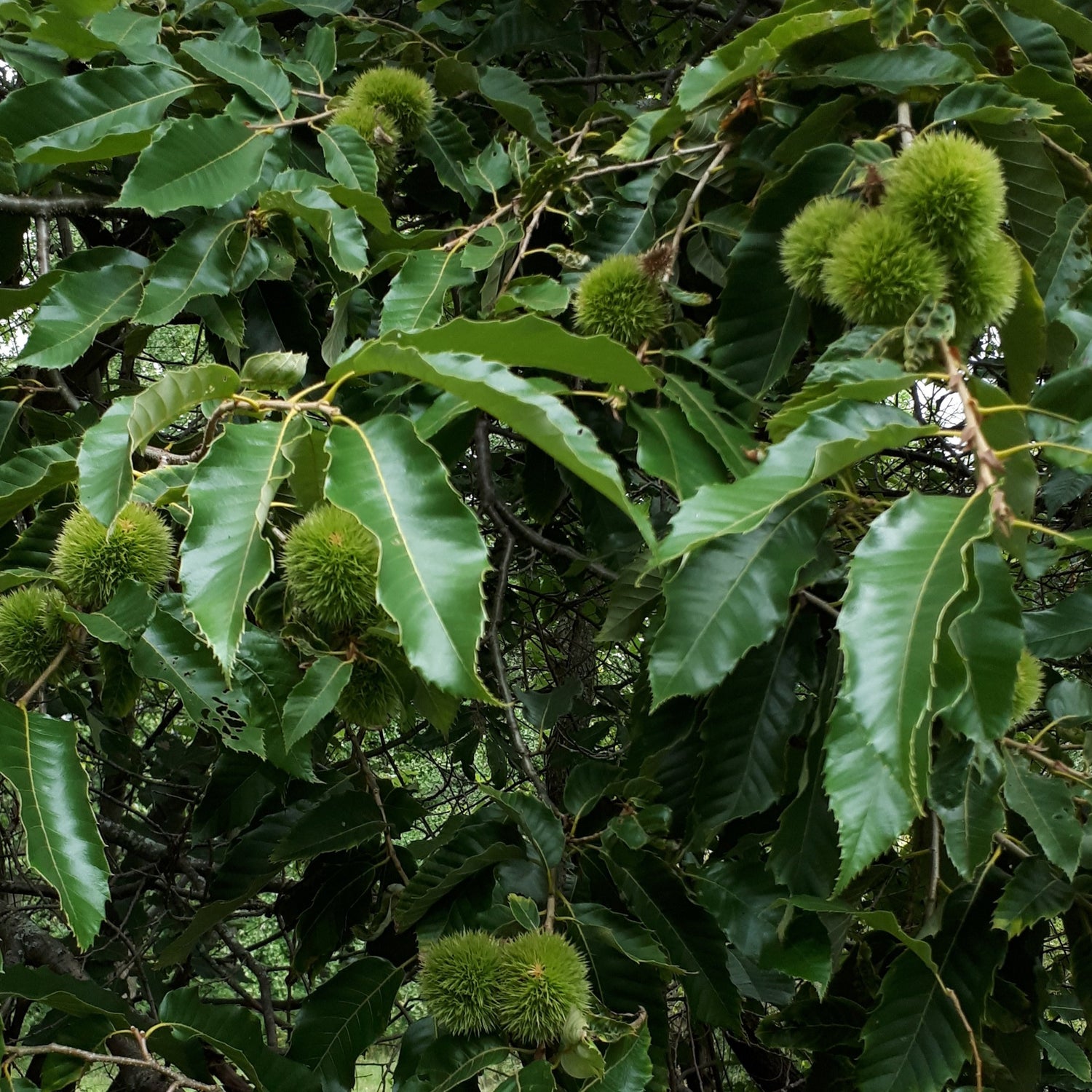
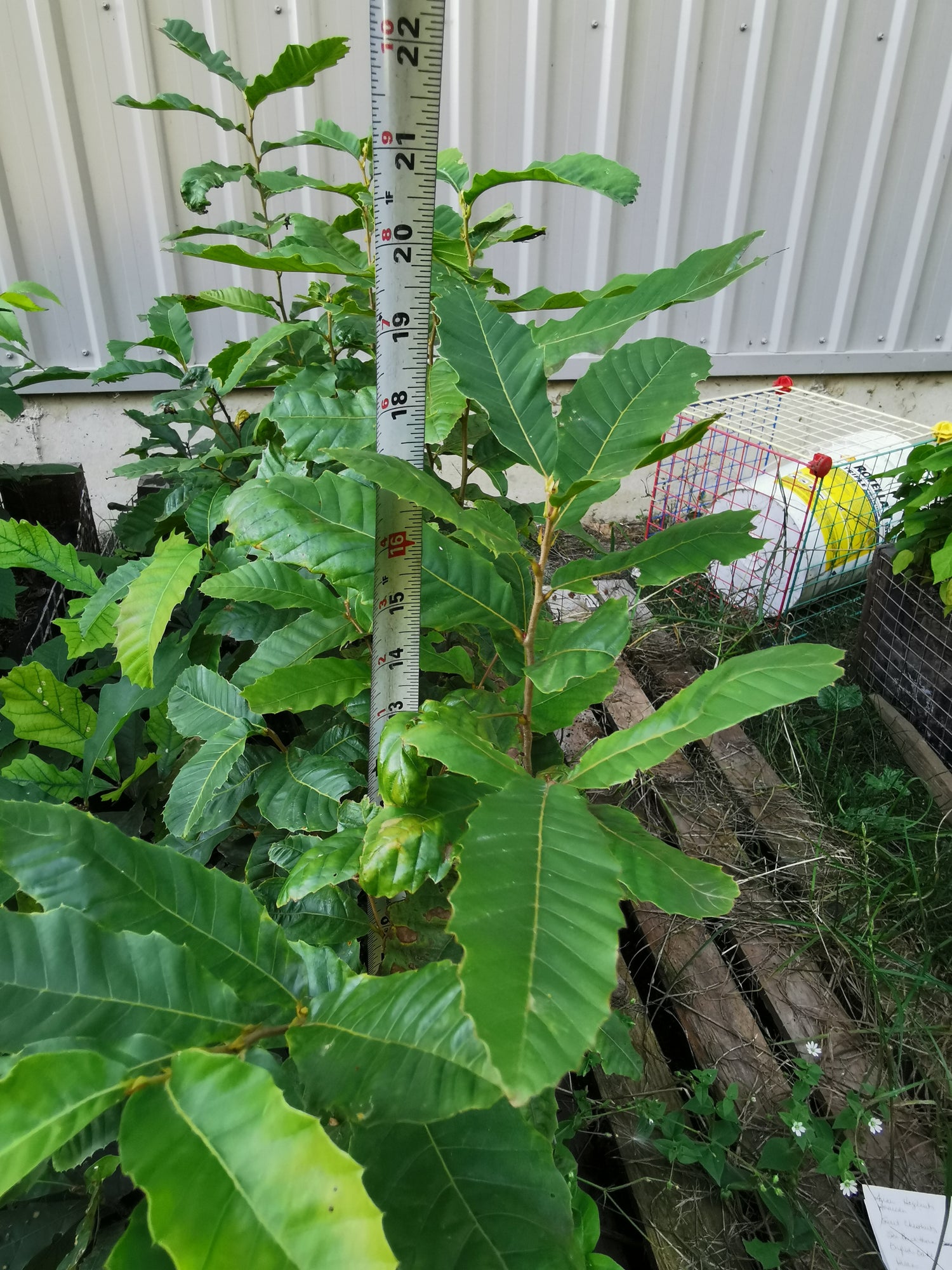
Species: Castanea dentata x mollissima
History: These seedlings are a cross between Chinese chestnuts and American chestnuts grown from seed from Grimo Nut Nursery. As a hybrid of Chinese and American chestnuts, these seedlings have blight resistance along with good cold hardiness.
Why We Grow It: This tree has incredible potential as a truly sustainable food source for humans. High in vitamins and starch, the nuts can be used to make a flour food staple, or pressed for oil to be made into bio fuel. For more inspiration and ideas in growing sweet chestnuts as a crop, we recommend the book Restoration Agriculture: Real-World Permaculture for Farmers by Mark Shepard.

History: Sweet Coppin originated in Devon, England, in the early 1700s. It was grow on a relatively large scale in the 1800s before its popularity waned, although it has since made a comeback and is grown around the world.
Why We Grow It: While this old English cider apple has a very good but mild flavour that is suitable for fresh eating, it is most well known for its cider qualities. It produces a full sweet cider of vintage quality