Products
846 products
Sort by:
846 products
846 products
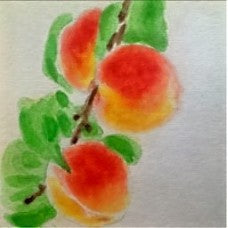
History: White Lady was created by Zaiger Genetics in California as part of their fruit breeding enterprise. It was selected for its unique white flesh, reddish skin, and overall excellent fruit quality. The variety was introduced in 1986.
Why We Grow It: White Lady is a unique variety featuring red blush over white skin and firm, white flesh. This freestone peach has quite low acidity giving it a very sweet flavour and it is great for fresh eating, canning, preserving, and baking. The tree itself is adaptable and the blossoms tolerate unpredictable spring weather better than most.

History: One of Thomas Jefferson's favourites, the origin of this fig is a mystery; one old account claims it was planted during the rule of Henry the Eighth by Cardinal Pole, while another claims it was planted at the Archbishop of Canterbury's palace at Lambeth. Regardless, this fig has certainly stood the test of time, and with good reason!
Why We Grow It: White Marseilles produces small, green-white figs with excellent aromatic flavour and a firm yet melting texture. Delicious! This variety grows well in a container too.
Photo courtesy of figdatabase.com
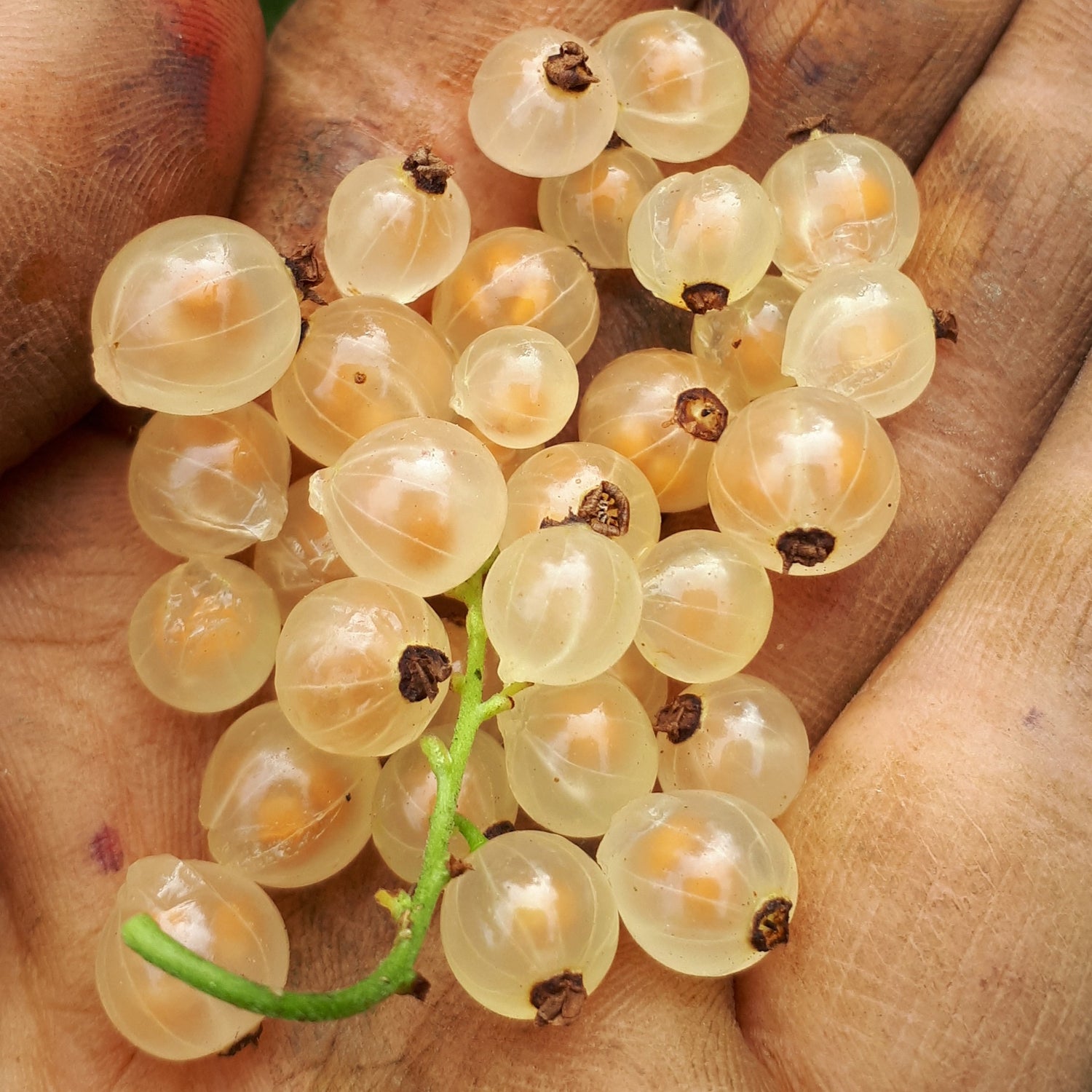
Species: Ribes rubrum
History: Developed in Holland, White Pearl currants, like all white currants, are actually an albino mutation of red currants. This variety has been popular in Europe for quite some time, although aside from its place of origin it appears there is little information on how it came to be.
Why We Grow It: These delicate translucent berries are white with a pinkish-gold hue, making them delightful to see growing in the garden. They have sweet and mild flavour that is slightly floral. The plant itself is quite cold hardy and bears prolific crops.
History: Whitney crabapples were grown from seed by nurseryman A.R. Whitney around 1865 at Whitney Nursery in Illinois, US. It became popular for its excellent cold hardiness and productivity and in the 1900s the state of Montana recommended it as one of the best crabapple varieties to grow.
Why We Grow It: These large (for a crabapple) yellow and red apples boast a sweet-sharp flavour with some astringency and juicy, crispy flesh. They are a truly multipurpose fruit and can be eaten fresh (if you like some astringency to your apple) or used for cooking, sauce, cider, and jelly. The trees are very cold hardy and boast good disease resistance as well.


History: Windsor sweet cherries originated on the farm of James Dougall in the 1800s and were introduced in 1871. His farm was located in Windsor, Ontario and the variety was named after the area.
Why We Grow It: Windsor produces large bright red fruit with firm, flavourful flesh. Along with being great for fresh eating, it is one of the very best for canning.
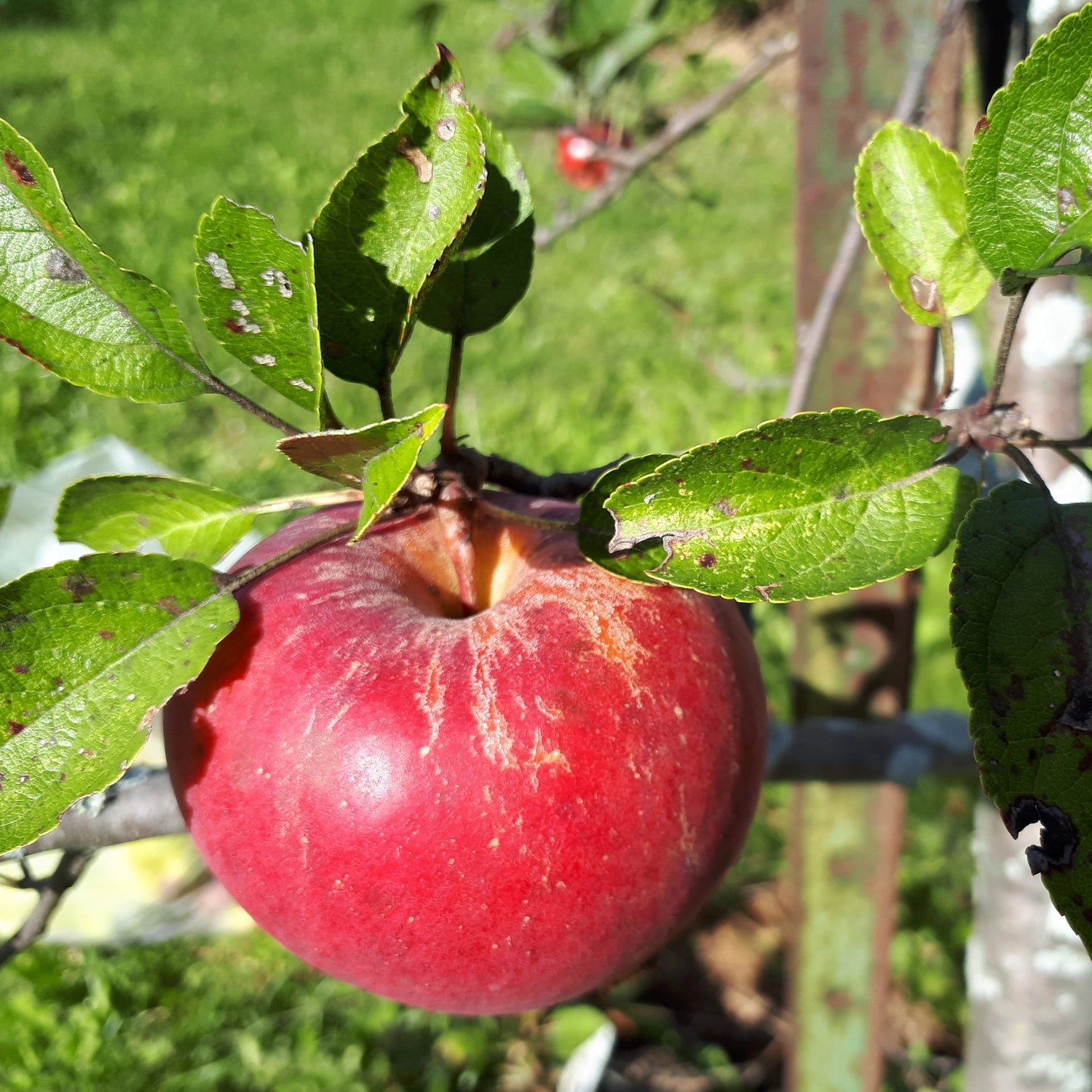
History: Winesap's origins are unclear but it is believed to have originated from New Jersey pre-1800s where it was popular for making cider. It is first mentioned in a couple of books on apples in the early 1800s. Winesap was popular in the US until the 1950s due to its good keeping ability but the advent of better storage technology allowed better tasting apple varieties to eclipse it. It is still quit popular with backyard orchardists.
Why We Grow It: Winesap's all-purpose nature helps to explain why it hasn't faded into total obscurity like some other varieties. The medium-large red and yellow skinned fruit is good for cooking and making cider. It has sweet flesh with some tang or 'winey' flavour that is also decent for fresh eating. On top of that, the tree is productive, very resistant to fireblight, and the fruit stores well.
History: Winesap's origins are unclear but it is believed to have originated from New Jersey pre-1800s where it was popular for making cider. It is first mentioned in a couple of books on apples in the early 1800s. Winesap was popular in the US until the 1950s due to its good keeping ability but the advent of better storage technology allowed better tasting apple varieties to eclipse it. It is still quit popular with backyard orchardists.
Why We Grow It: Winesap's all-purpose nature helps to explain why it hasn't faded into total obscurity like some other varieties. The medium-large red and yellow skinned fruit is good for cooking and making cider. It has sweet flesh with some tang or 'winey' flavour that is also decent for fresh eating. On top of that, the tree is productive, very resistant to fireblight, and the fruit stores well.
History: Winesap's origins are unclear but it is believed to have originated from New Jersey pre-1800s where it was popular for making cider. It is first mentioned in a couple of books on apples in the early 1800s. Winesap was popular in the US until the 1950s due to its good keeping ability but the advent of better storage technology allowed better tasting apple varieties to eclipse it. It is still quit popular with backyard orchardists.
Why We Grow It: Winesap's all-purpose nature helps to explain why it hasn't faded into total obscurity like some other varieties. The medium-large red and yellow skinned fruit is good for cooking and making cider. It has sweet flesh with some tang or 'winey' flavour that is also decent for fresh eating. On top of that, the tree is productive, very resistant to fireblight, and the fruit stores well.
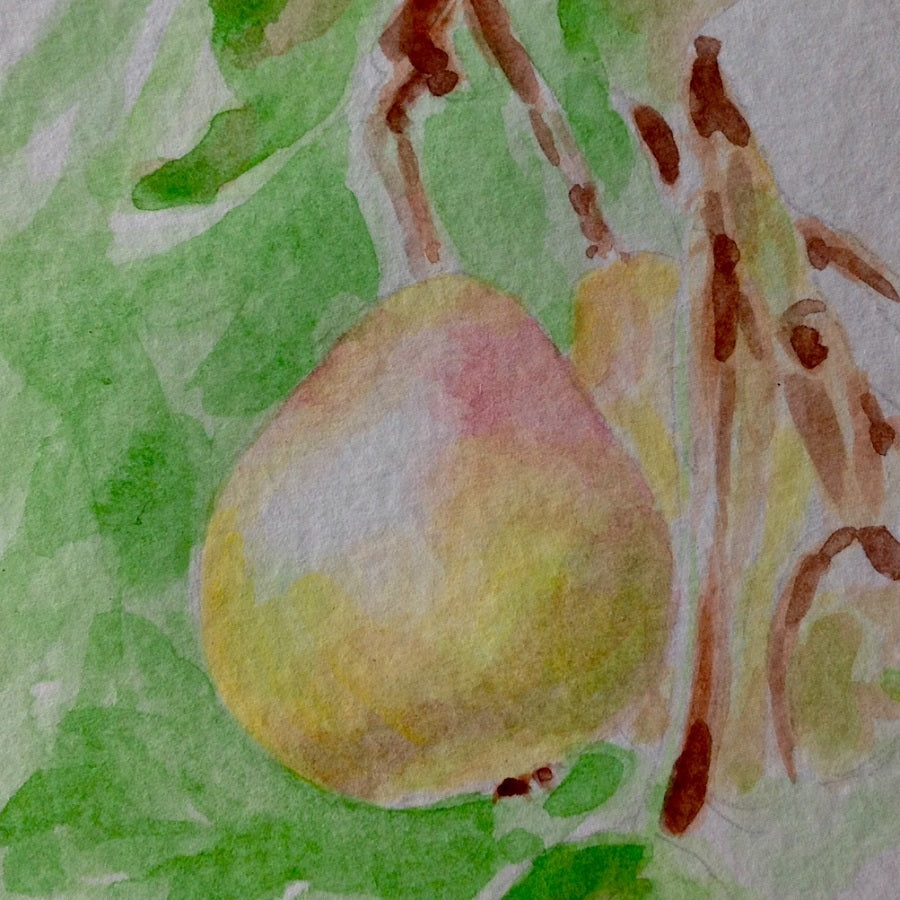
History: Winnal's Longdon was raised by a Mr. Winnall in the parish of Weston-under-Penyard, a village in England, around 1790. Despite being named after Winnall, Winnal's Longdon is now commonly spelled with only one 'L' after it was recorded incorrectly in the 1920s. This pear is still grown in small quantities in England.
Why We Grow It: This old English variety is a high quality perry pear. It was blended with Hendre Huffcap to form a perry which won the Long Ashton Perry competition many years in a row. The tree is known for its vigorous growth, heavy crops, and high resistance to scab which make it quite suitable for organic production.
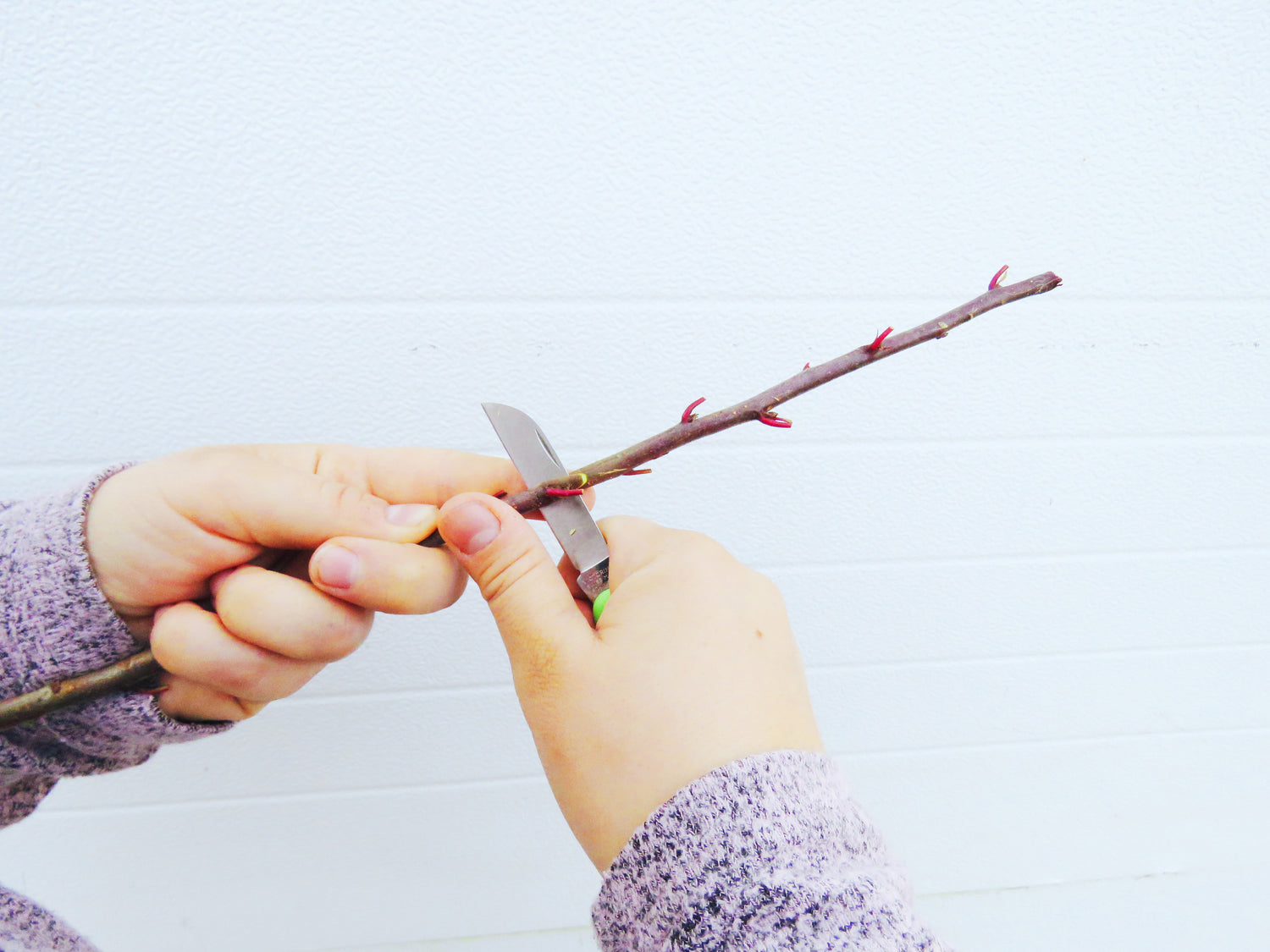
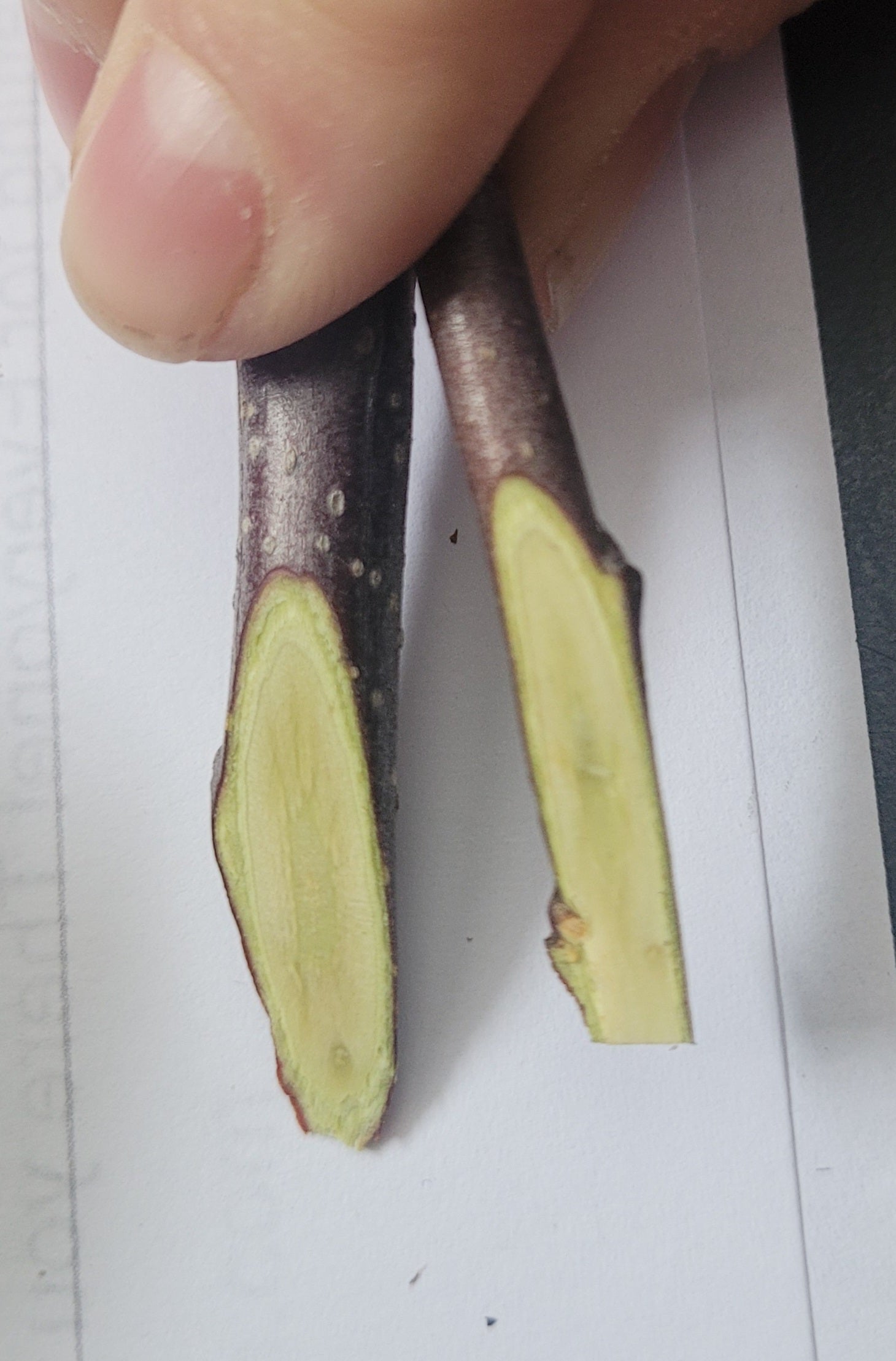

We will be offering two different dates for you to join us (in person) for our 2026 Grafting Workshop in order to accommodate a growing interest.
We are offering you a choice of either Saturday, April 25th, 2026 (1pm-4pm) & Sunday, April 26th, 2026 (1pm-4pm) for our annual workshop.
This workshop covers dormant whip and tongue grafting! We will walk you through the history and theory behind grafting, we give you a chance to try grafting out for yourself, and by the end of the workshop you'll have grafted five of your own apple trees to plant at home!
We offer both single and paired registration:
Single registration includes:
- 5 scions and rootstock of your choice* - you will graft and take home five trees!
- 1 copy of Fruit Tree Grafting for Everyone (co-authored by Steph!)
- Practice material for one person
- Cost - $150 per person plus tax
-
5 scions and rootstock of your choice* - you will graft and take home five trees total per pair!**
- 1 copy of Fruit Tree Grafting for Everyone (co-authored by Steph!)
- Practice material for two people
- Cost - $200 per pair plus tax
*Your options will be any of the scionwood varieties we have available for this season and specified rootstock varieties. We will reach out to participants at a later date regarding their selection. Additional rootstock and scionwood can be purchased from the website when available.
**Paired tickets are an economical option for two people to attend the workshop but each pair only takes home five trees total. If both participants want to graft and take home five trees each, they will each need to purchase a Single ticket.
History: Winter Banana originated on David Flory's farm in Indiana around 1876. It was named Winter Banana due to the apparently banana-like aroma it gives off when ripe. It is also named Flory Banana or Flory Apple after David Flory. Winter Banana was grown on the west coast and gained some popularity in England and Germany. The thin skin of this variety is easily bruised which prevented it from being a commercial variety but it is still commonly found in gardens and farmer's markets.
Why We Grow It: This all-purpose apple is extremely attractive with pale yellow skin and a pinkish-red blush. The banana-like aroma is accompanied by sweet flesh with an acid tang. The flavour improves in storage and the apples can be kept all winter.


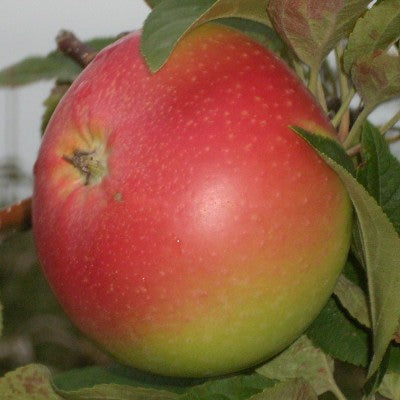
History: Winter Banana originated on David Flory's farm in Indiana around 1876. It was named Winter Banana due to the apparently banana-like aroma it gives off when ripe. It is also named Flory Banana or Flory Apple after David Flory. Winter Banana was grown on the west coast and gained some popularity in England and Germany. The thin skin of this variety is easily bruised which prevented it from being a commercial variety but it is still commonly found in gardens and farmer's markets.
Why We Grow It: This all-purpose apple is extremely attractive with pale yellow skin and a pinkish-red blush. The banana-like aroma is accompanied by sweet flesh with an acid tang. The flavour improves in storage and the apples can be kept all winter.
History: Winter Bartlett pears originated on the western coast of the United States, likely in Eugene, Oregon. They were introduced by D.W. Coolidge in 1880 but it is believed the variety may have existed for some time before that. It earned its name from it's resemblance to the Bartlett pear in taste and shape and it's designation as a winter pear.
Why We Grow It: As opposed to summer pears which are meant to be eaten shortly after picking, winter pears are supposed to be allowed to ripen for months in cold storage and enjoyed during later seasons. It is worth the wait for this variety, which produces a medium to large fruit with golden-yellow skin covered in patches and dots of russet and red streaks. It has a sweet and slightly subacidic flavour paired with firm, coarse, juicy white flesh. It is also great for cooking.
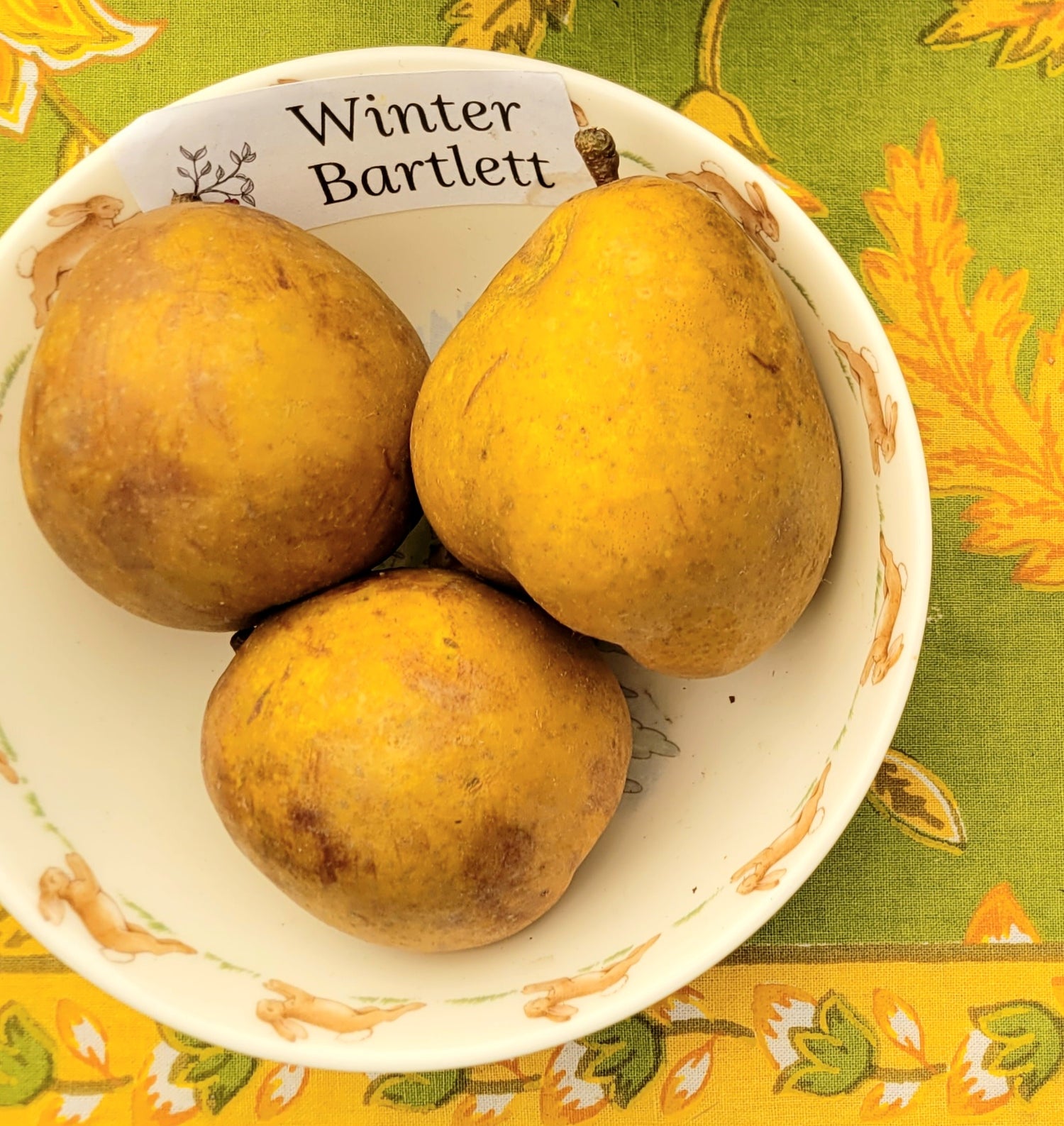
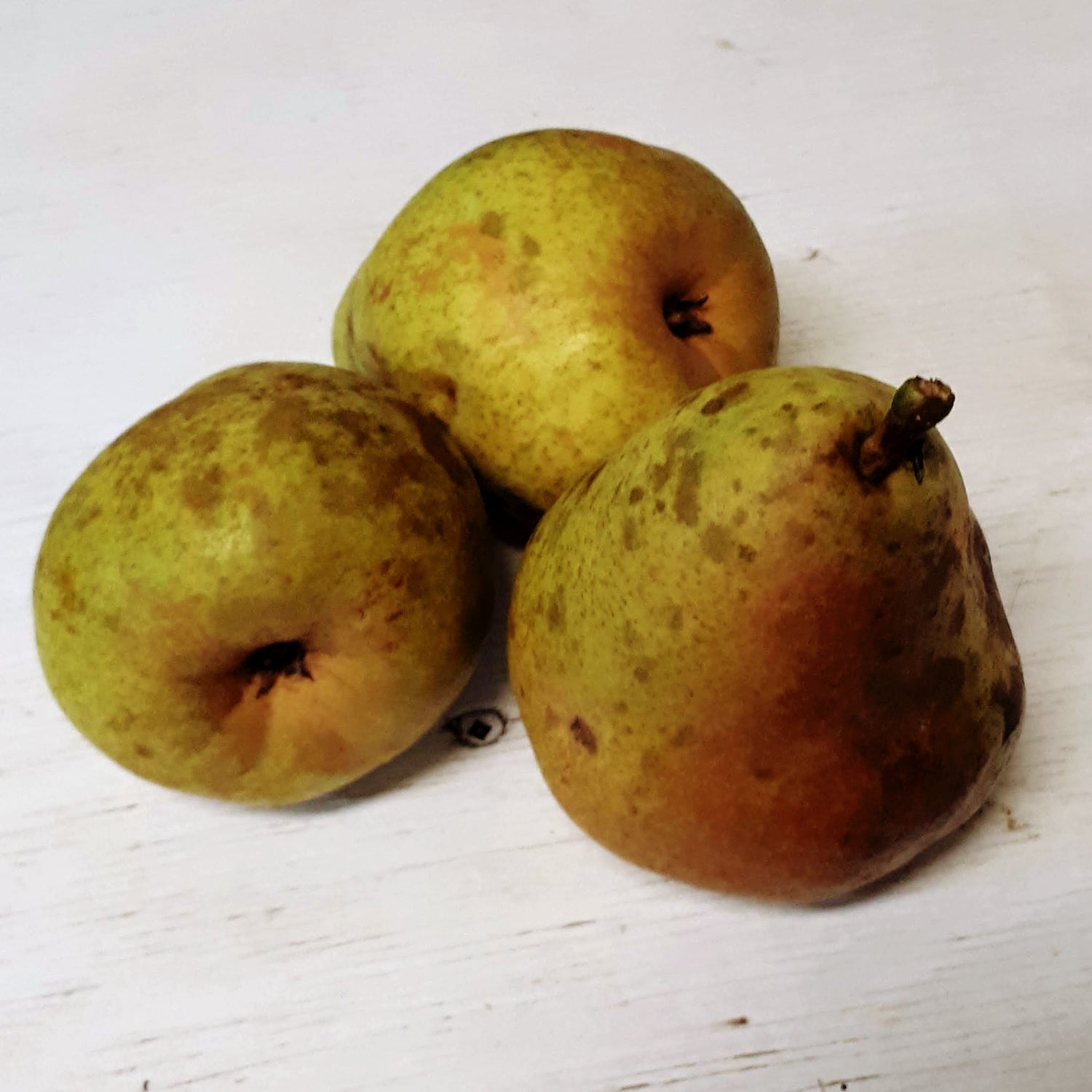
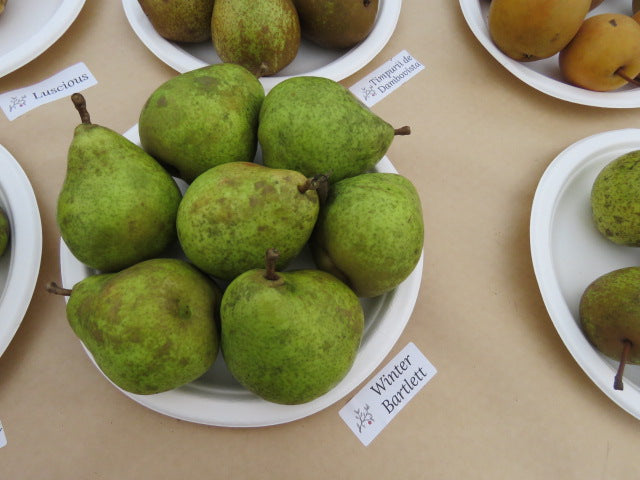
History: Winter Bartlett pears originated on the western coast of the United States, likely in Eugene, Oregon. They were introduced by D.W. Coolidge in 1880 but it is believed the variety may have existed for some time before that. It earned its name from it's resemblance to the Bartlett pear in taste and shape and it's designation as a winter pear.
Why We Grow It: As opposed to summer pears which are meant to be eaten shortly after picking, winter pears are supposed to be allowed to ripen for months in cold storage and enjoyed during later seasons. It is worth the wait for this variety, which produces a medium to large fruit with golden-yellow skin covered in patches and dots of russet and red streaks. It has a sweet and slightly subacidic flavour paired with firm, coarse, juicy white flesh. It is also great for cooking.


Winter Fruit Tree Pruning Workshop & Wassail: 2-Part Series
- Part One - Friday February 20th, 2026, at 7:30pm-8:30pm plus Q&A session via Zoom
- Part Two - Saturday February 21st, 2026 at 9:30am-10:30am plus Q&A session in Oakley's Orchard (in-person) at Silver Creek Nursery, 2343 Gerber Rd, Wellesley, ON, N0B 2T0
-
Part One --> We'll spend an evening discussing the theory and principles of pruning over zoom. Our virtual group meeting via Zoom (Friday night), will include a one hour discussion on all things relating to pruning. We will go over the life stages and annual cycles of fruit trees, how to properly shape a fruit tree for the best air flow to prevent diseases, how to restore old trees, and more, all for a healthier, more productive orchard.
- This session will be tailored and customized by and for you! Attendees are encouraged to submit pictures of their trees (and/or questions), ahead of time so we can discuss during our zoom.
-
Part Two -->The following day, we will meet in-person to put theory into practice at our orchard. I will personally guide you on how and where to make your cuts based on different age/life stages of trees, what you should avoid, how to spot signs of trouble on your tree, and how best to ensure a healthy and strong tree structure for many years to come!
- We'll close the session with a mug of hot cider and wassail the orchard for good measure!. Please be aware that our in-person date is weather dependent as we will be outside in the orchard for the duration of the event.
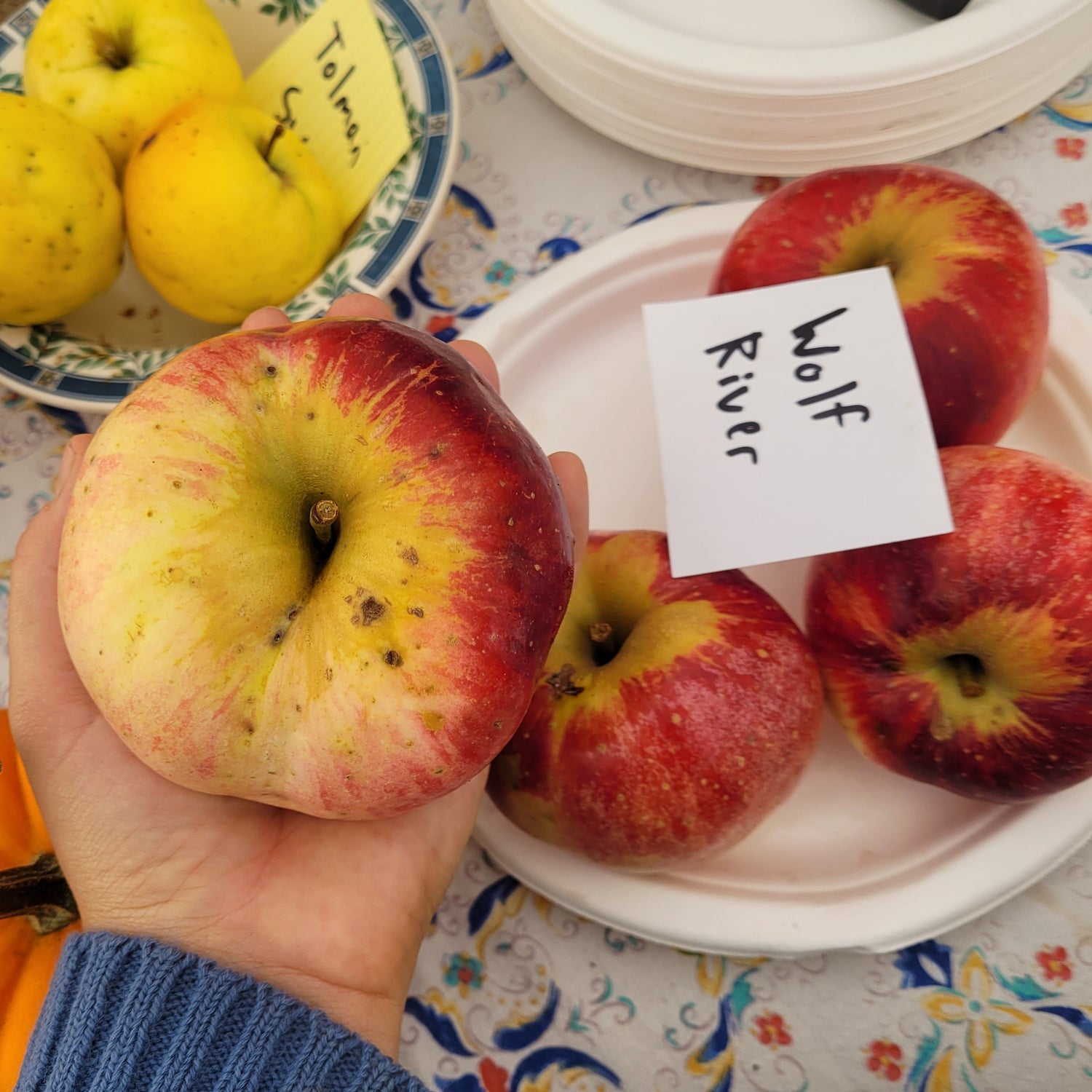
History: Wolf River was raised from seed by Quebec lumberman William Springer in the latter half of the 19th century. When Springer and his family were moving by wagon to Wisconsin, they bought a bushel of Alexander apples along the way. Upon arriving at their new home, he planted the seeds from said apples along the bank of the Wolf River and the Wolf River apple grew from there. This variety has since garnered a reputation as a good cooking apple and for the incredible size of its fruit.
Why We Grow It: First and foremost, Wolf River is legendary for the huge size of its fruit. The apples can weigh a pound or more and there are stories of pies being made from a single apple. The fruit, green with red blush and stripes, has a sweet and tart flavour that is good for cooking and it holds its shape well when cooked. The tree itself is hardy and relatively disease resistant as well.


History: Wolf River was raised from seed by Quebec lumberman William Springer in the latter half of the 19th century. When Springer and his family were moving by wagon to Wisconsin, they bought a bushel of Alexander apples along the way. Upon arriving at their new home, he planted the seeds from said apples along the bank of the Wolf River and the Wolf River apple grew from there. This variety has since garnered a reputation as a good cooking apple and for the incredible size of its fruit.
Why We Grow It: First and foremost, Wolf River is legendary for the huge size of its fruit. The apples can weigh a pound or more and there are stories of pies being made from a single apple. The fruit, green with red blush and stripes, has a sweet and tart flavour that is good for cooking and it holds its shape well when cooked. The tree itself is hardy and relatively disease resistant as well.

Wollastonite comes from the area around Seeleys Bay in Ontario. Its source is a high grade calcium silicate deposit that when mined and ground down provides an excellent rock dust made up of approximately 27% silicon, 16.5% calcium, and 4% magnesium. Although most soils can benefit from the calcium addition, it is the silica content here that is of interest.
Silica is a crucial mineral, as it contributes greatly to building the strength of cell walls, which not only encourage upright plant structure, but they trigger a range of natural defense in turn. Strong cell walls protect the plant from pests that seek to chew and suck on the plant structures. A cell wall fortified with adequate silica levels also protects the plant from assault by the different fungal pathogens by making it much more difficult for the fungal pathogens to be able to eat their way through the cell walls into the cell center where it then gains a foothold and spreads.
Silica also boosts photosynthesis and chlorophyll development. The nutrient pathways in the plant- the xylem and phloem- govern the movement and translocation of mineral nutrients throughout the plant. It is silica that is responsible for the creation and maintenance of these pathways. And without adequate levels of silica in its structure, plants will all too often succumb more readily to the stresses brought on by drought and low water conditions.
"The stronger the cell wall, the more stress-resistant the plant, whether that stress is from pathogens or non-living factors." Graeme Sait, Australian Agronomist
This product is approved for organic use.
Application: 1 cup per tree, work the dust into the top 3in of the soil
Use at a rate of approximately 1/2 cup per cubic foot of soil mix.
Equivalency Measurement - 7 cups/2kg

Wool Pellets Soil Conditioner - Bethel Farm
Wool pellets are a natural, eco-friendly soil conditioner that improves moisture retention, promotes healthy plant growth, and reduces the need for chemical fertilizers. They help repel pests, regulate temperature, and break down over time to enhance soil health—making them a sustainable choice for any garden or house plant.
Key Benefits:
-
- Improves moisture retention around roots
- Reduces transplant shock
- Encourages deeper, stronger root systems
- Provides slow-release nitrogen over time
- Fully natural, biodegradable, and soil-building
To learn more about Bethel Farm (Julie raises happy sheep and produces quality lamb): visit Bethel Farm website.
To learn more about how to use pellets: visit Gezellige Farm website.

History: Woolbrook Pippin originated in 1903 at Woolbrook Nursery in the UK. It was discovered by J.H. Stevens and Son. It is a Cox's Orange Pippin seedling and received an Award of Merit from the Royal Horticultural Society in 1929.
Why We Grow It: Woolbrook Pippin produces a greenish apple overlaid with bright red stripes that is excellent for fresh eating. The fruit is firm, crisp, and juicy with a sweet, aromatic flavour balanced by a bit of tartness. This is a great choice for fans of Cox's Orange Pippin!


History: Woolbrook Pippin originated in 1903 at Woolbrook Nursery in the UK. It was discovered by J.H. Stevens and Son. It is a Cox's Orange Pippin seedling and received an Award of Merit from the Royal Horticultural Society in 1929.
Why We Grow It: Woolbrook Pippin produces a greenish apple overlaid with bright red stripes that is excellent for fresh eating. The fruit is firm, crisp, and juicy with a sweet, aromatic flavour balanced by a bit of tartness. This is a great choice for fans of Cox's Orange Pippin!
History: The origins and history of this variety are unknown based on our current research.
Why We Grow It: This variety produces a medium-sized freestone plum with purple-pink skin and yellow flesh that is sweet and juicy. It is one of the hardiest European plums around, making it a good choice for our colder climate!
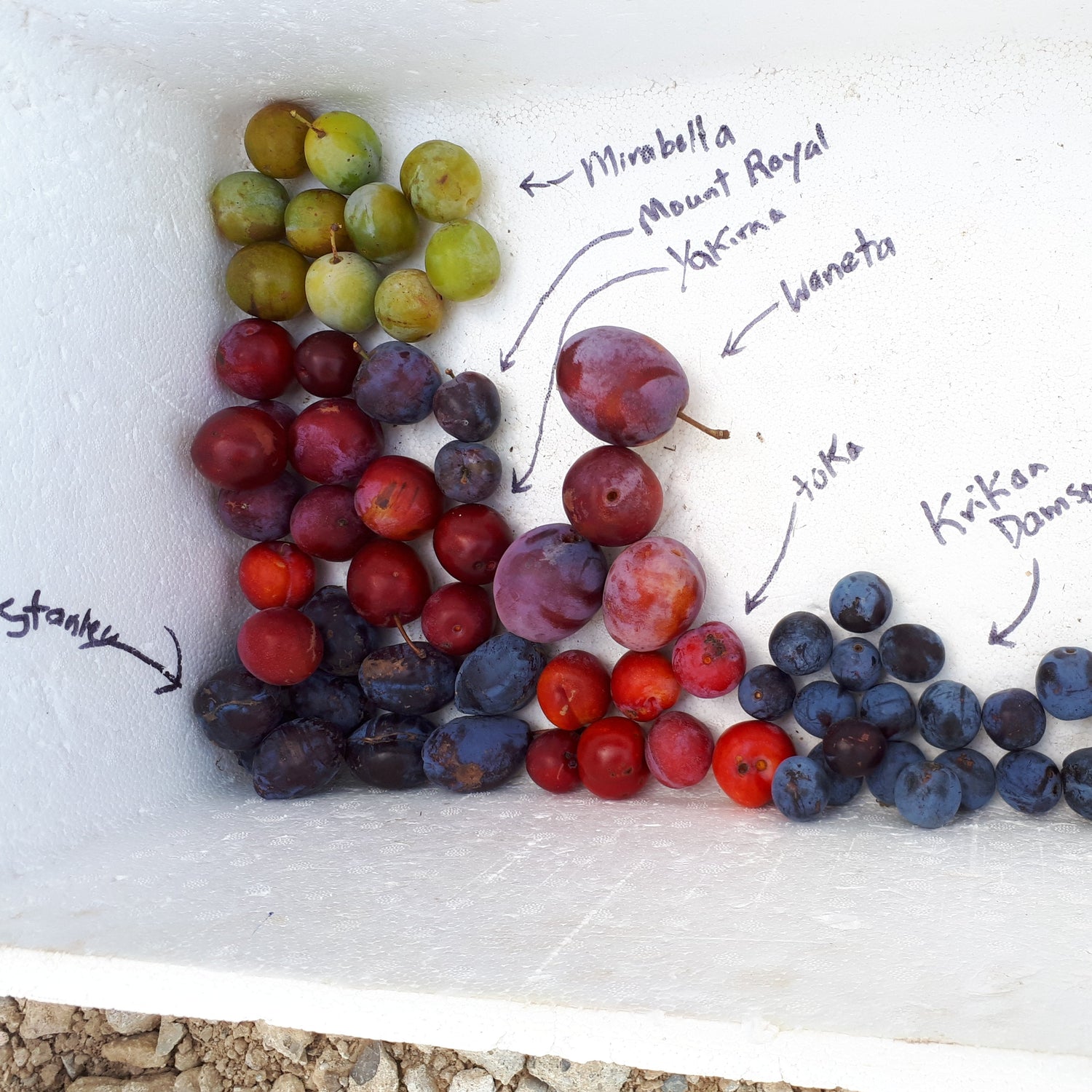
History: The origins and history of this variety are unknown based on our current research.
Why We Grow It: This variety produces a medium-sized freestone plum with purple-pink skin and yellow flesh that is sweet and juicy. It is one of the hardiest European plums around, making it a good choice for our colder climate!

Species: Corylus avellana
History: Yamhill was created by the Oregon State University hazelnut breeding program which released it in 2008. It was initially bred by Shawn Mehlenbacher and David Smith in 1990. Despite its small nut size, Yamhill was selected for its resistance to Eastern Filbert Blight, good quality, and high productivity. The variety was named Yamhill after Yamhill County in Oregon where a lot of hazelnut production takes place.
Why We Grow It: Yamhill is a disease-resistant variety that boasts a small but good quality nut that is great for baking (including making chocolate!). The tree is quite productive and also tends to have a more compact growth habit, making it a good option for those with limited space.
History: Yarlington Mill was discovered growing in the wild by a Mr. Bartlett. He discovered it in 1898 near a mill in the English village of Yarlington, hence the name 'Yarlington Mill.' It was further propagated and made popular by the grower Harry Masters (who also grew Harry Masters Jersey). This variety is still commonly planted in cider orchards in England.
Why We Grow It: This is an excellent cider apple for our climate. It produces a medium bittersweet juice with good flavour. The tree is hardy and vigorous but tends to bear biennially so it requires attentive thinning.
History: Yarlington Mill was discovered growing in the wild by a Mr. Bartlett. He discovered it in 1898 near a mill in the English village of Yarlington, hence the name 'Yarlington Mill.' It was further propagated and made popular by the grower Harry Masters (who also grew Harry Masters Jersey). This variety is still commonly planted in cider orchards in England.
Why We Grow It: This is an excellent cider apple for our climate. It produces a medium bittersweet juice with good flavour. The tree is hardy and vigorous but tends to bear biennially so it requires attentive thinning.

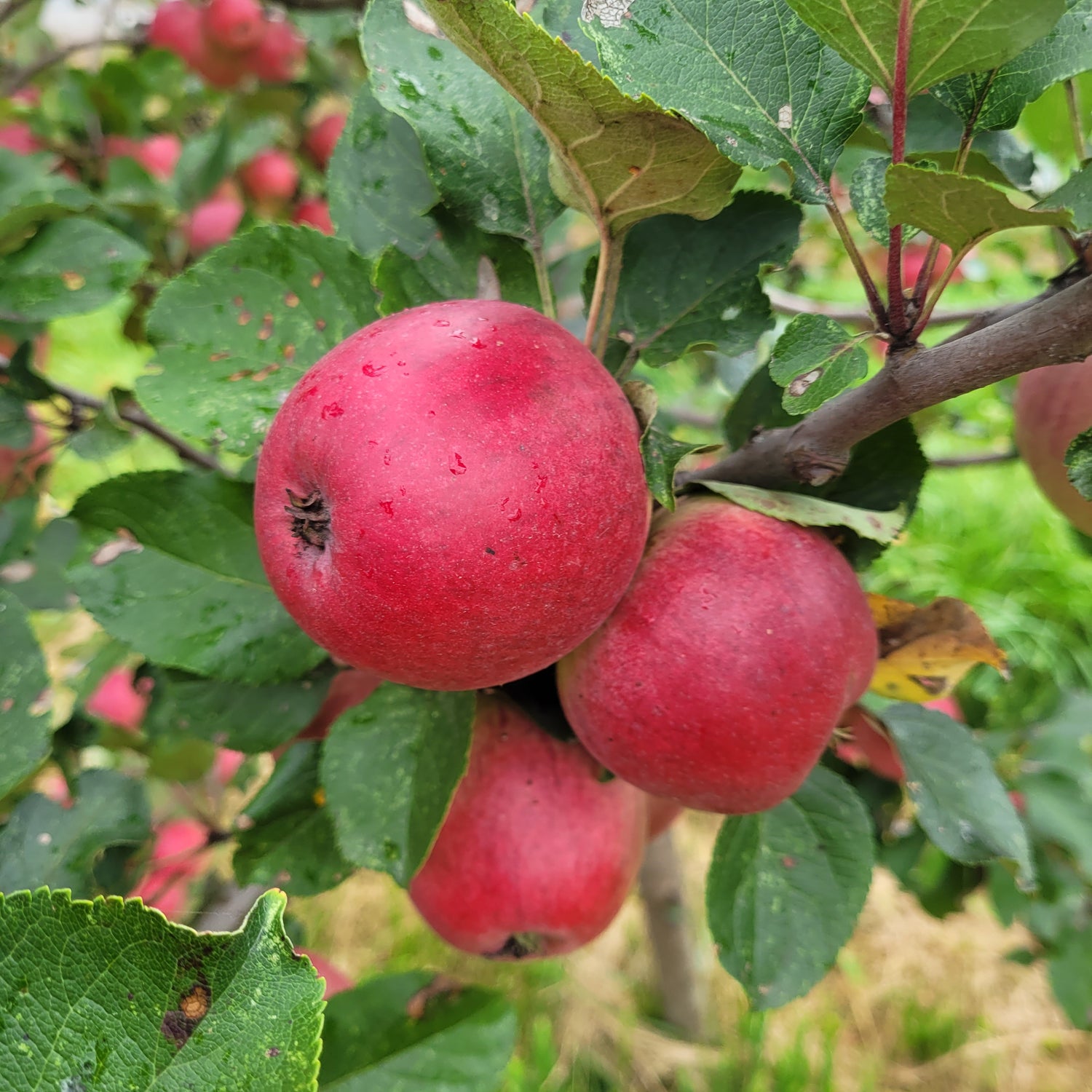

History: Yarlington Mill was discovered growing in the wild by a Mr. Bartlett. He discovered it in 1898 near a mill in the English village of Yarlington, hence the name 'Yarlington Mill.' It was further propagated and made popular by the grower Harry Masters (who also grew Harry Masters Jersey). This variety is still commonly planted in cider orchards in England.
Why We Grow It: This is an excellent cider apple for our climate. It produces a medium bittersweet juice with good flavour. The tree is hardy and vigorous but tends to bear biennially so it requires attentive thinning.
History: Generally just known as Gravenstein, it is unknown when or where exactly these apples came from but they were imported from France to Denmark in the 1600s by Count Frederik the Younger and planted at the summer residence of the Danish royal family, Gråsten Palace. As a result the variety was named Gråsten (Danish for graystone) which translates to Gravenstein in German. This apple has been popular in Canada since the 1820s, particularly in Nova Scotia, and provided the dried apples and applesauce for American soldiers during WW2. In 2005 it was declared the national apple of Denmark.
Why We Grow It: Yellow Gravenstein's excellence as a fresh eating and cooking apple makes it easy to see why it is grown in so many different countries, even if the tree is slow to bear fruit and is prone to many common fruit tree diseases (although we haven't had much issues growing it here). It has a great sweet/tart flavour and is crunchy and juicy. The fruit is a nice yellow with red striping.


History: Generally just known as Gravenstein, it is unknown when or where exactly these apples came from but they were imported from France to Denmark in the 1600s by Count Frederik the Younger and planted at the summer residence of the Danish royal family, Gråsten Palace. As a result the variety was named Gråsten (Danish for graystone) which translates to Gravenstein in German. This apple has been popular in Canada since the 1820s, particularly in Nova Scotia, and provided the dried apples and applesauce for American soldiers during WW2. In 2005 it was declared the national apple of Denmark.
Why We Grow It: Yellow Gravenstein's excellence as a fresh eating and cooking apple makes it easy to see why it is grown in so many different countries, even if the tree is slow to bear fruit and is prone to many common fruit tree diseases (although we haven't had much issues growing it here). It has a great sweet/tart flavour and is crunchy and juicy. The fruit is a nice yellow with red striping.

History: Yellow Long Neck, aka Honey Fig, was discovered growing at the San Diego Botanic Gardens although there are little details on its origins. Some say it came from the University of California Riverside Fig Breeding Program which began in the early 1900s.
Why We Grow It: Yellow Long Neck produces medium to large fruit with a bright yellow colour. True to their other name, Honey Fig, the fruit has a deliciously sweet flavour. It is excellent straight off the tree but can also be used to make great jams and pies. The tree itself is quite vigorous and will still produce fruit in the same year where the tree dies back to the ground during the winter.