apple qty discount




181 products
Sort by:
181 products
181 products

History: Strawberry Pippin is another variety whose history we know little about. All we know is that it likely originated in England where it was first recorded in 1874. The 'pippin' in its name indicates that it was grown from seed by chance.
Why We Grow It: While we may not know much about its past, we do know why we are happy to grow it! Strawberry Pippin has an attractive red striped fruit which is quite firm and sweet. Its excellent flavour is best enjoyed picked fresh right off the tree. In our experience, Strawberry Pippin does well with minimal care, and is an excellent choice for the backyard.

History: Red Gravenstein is a sport/mutation of the original Gravenstein/Yellow Gravenstein that is a striking bright red. Some say it is also sweeter than the original.
Why We Grow It: With attractive red skin, this is a lovely sport of the original Gravenstein. It is a good quality and sweet early apple that is excellent for home orchards.
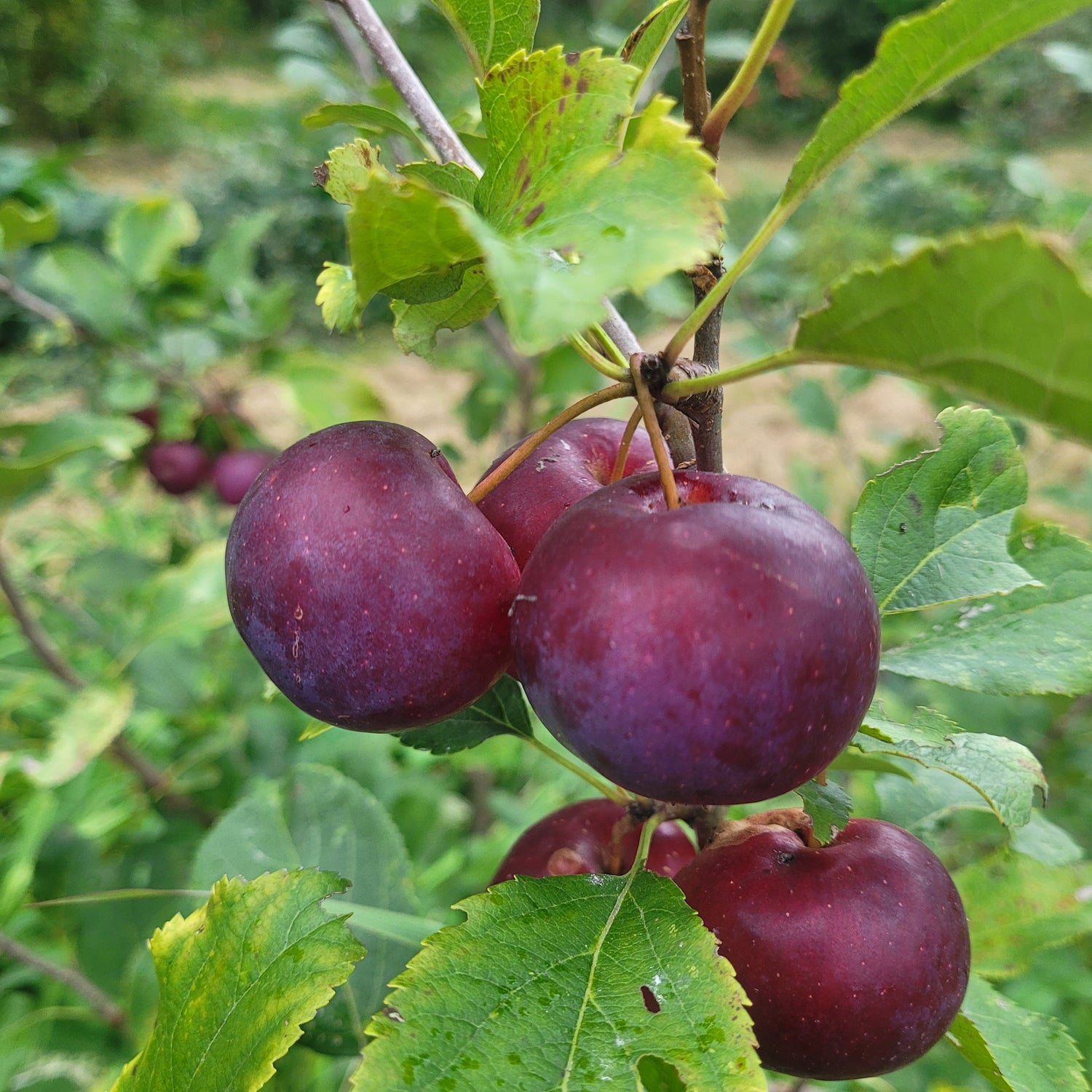
History: The exact origins of Hyslop are unclear but it was discovered sometime in the early 1800s around Boston by the Hyslop family who helped develop the area. This apple was popular for over a century but in recent years has fallen into obscurity.
Why We Grow It: Although definitely not recommended for fresh eating, Hyslop crabapples have a sub-acid, astringent flavour and are great in cider blends. They are also known as being one of the best apples for jellies. The tree is quite attractive with blue tinged blossoms in the spring and brilliant red/purple fruit in the fall.


History: Shamrock apples were raised by K. Lapins at the Pacific Agri-Food Research Centre in 1970 and released in 1986.
Why We Grow It: This is a Canadian apple for all you Granny Smith lovers! Although a bit sweeter than Granny Smith, Shamrock apples still have some tartness and are hardy enough to survive in Canadian climates. They even resemble Granny Smith with their light green skin and white flesh.
Photos courtesy of Shannon McInnis!


History: Little is known about Muscadet de Dieppe aside from the fact it originated near the port of Dieppe in Normandy, France. It was commonly grown in the area since 1750 at least.
Why We Grow It: Considering this French cider variety was popular in an area known for its cider, this makes for a classic cider apple. The juice is bittersweet and aromatic which is excellent in both single-variety ciders and cider blends.

History: The St. Lawrence apple was discovered in the Montreal area as a seedling of a Snow apple, the most popular variety in Quebec at the time. By 1835, these apples were commonly grown in the area where they were popular for fresh eating and cooking but have since faded into obscurity.
Why We Grow It: Although less popular now, these apples are still good for eating and baking. The boldly striped red skin also makes the fruit very attractive. The tree bears good crops each year and is relatively hardy.


History: Bulmer's Norman was imported from Normandy, France to England in the early 1900s by the cider making company H.P. Bulmer. This variety didn't even have a name when it arrived but quickly grew in popularity for use in making cider. This apple has since fallen out of the limelight and is primarily used for grafting other varieties onto its sturdy trunk.
Why We Grow It: Although less popular these days, this variety boasts vigorous growth, decent disease resistance, and a surprising tolerance for cold. This conical, green apple produces a bittersweet juice and is high in tannins.
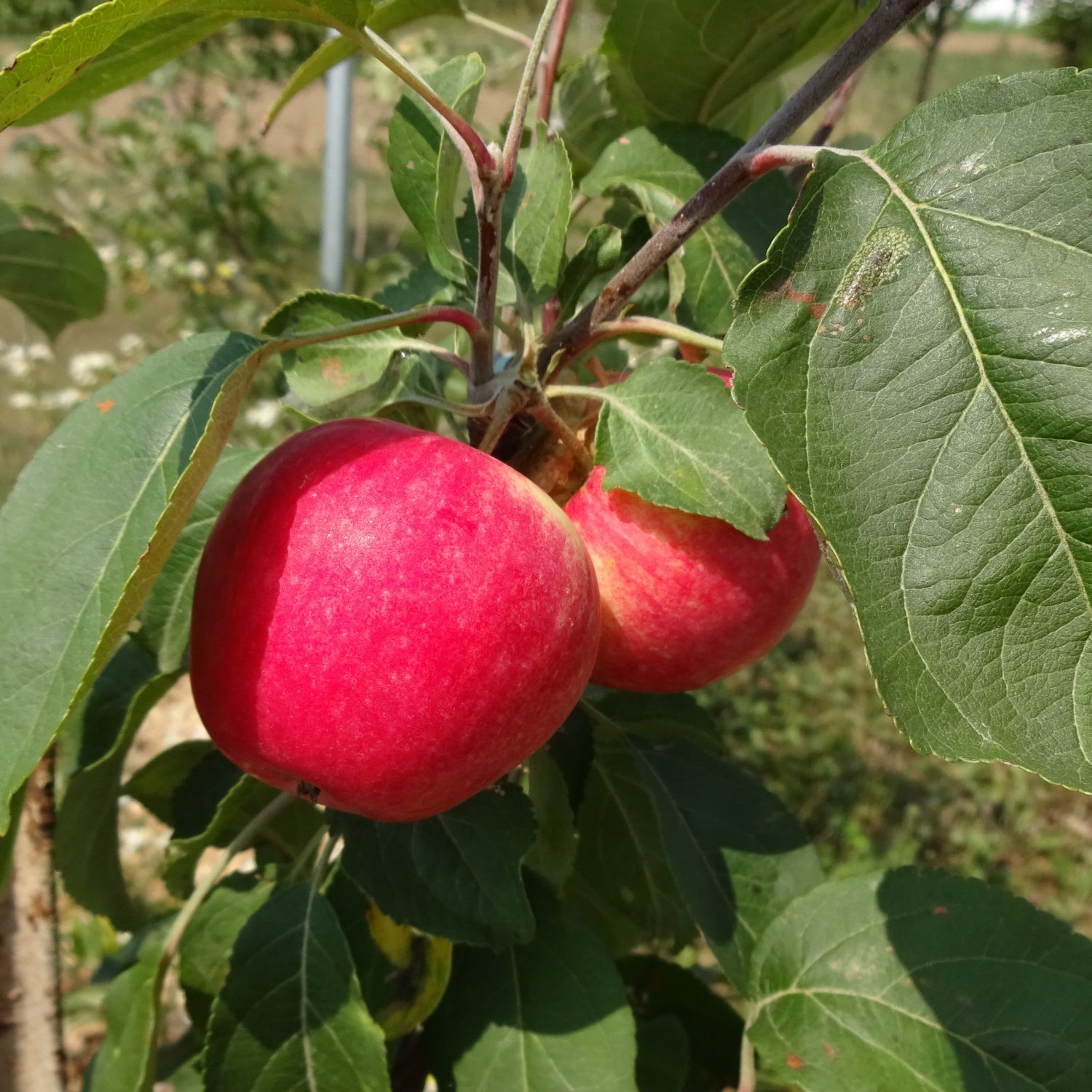
History: Norland apples were created by Dr. C.R. Ure and introduced in 1979 by the Agriculture Canada Research Station in Morden, Manitoba.
Why We Grow It: Since this variety was bred to survive in the prairies, it is very cold hardy. The fruit is medium-sized with sweet flesh that is good for fresh eating or applesauce. It bears heavy annual crops starting early in the life of the tree. A home orchardist in Dacre, ON described the fruit as "lovely with no pest damage; juicy, creamy-fleshed with excellent flavour."


History: Also known as Albemarle Pippin. This apple was discovered as a chance seedling (aka a pippin) in the village of Newtown in New York sometime in the late 1600s or early 1700s. It was commonly grown in colonial America, even earning praise from both George Washington and Thomas Jefferson. In 1838, the American minister to Great Britain gave some to Queen Victoria who loved the apples so much she removed tariffs on the variety and they became an important export until the tariffs were reinstated during WW2.
Why We Grow It: Newtown Pippin's popularity can be ascribed to its unique ‘rich pineapple flavour’ which it develops under optimum growing conditions. So far it has been performing well in our test orchard with good vigour and we have had no issues with diseases despite the tree's general susceptibility.

History: Idared apples were developed at the University of Idaho Agricultural Experiment Station in 1942. Although its flavour is generally considered average, its excellent storage qualities have made it one of the most popular apple varieties in North America.
Why We Grow It: Idared's best quality is its ability to easily last six months when stored in a fridge, potentially until June under optimal storage conditions. The flesh tends to be softer and is white with some tinges of green. The flavour is described as sprightly, moderately acidic, and tangy, and this apple boasts a high Vitamin C content. It is great for baking and making applesauce. The tree's naturally somewhat smaller size makes Idared easier to prune and train.

History: Kingston Black is named after the English town Kingston St Mary where it was grown in orchards around a parish. Its dark maroon flesh earned the second part of its name, 'black.' This apple produces a great single-variety cider which made it quite popular by the 1800s and by 1950 it was the most commonly grown cider apple in the West of England. Although its popularity has waned due to its poor cropping and disease susceptibility, it is still renowned among cider enthusiasts.
Why We Grow It: This English cider apple produces a well-balanced juice, capable of creating a vintage cider of excellent quality. Although the variety has its downsides, there is a reason it has remained popular with cider enthusiasts.

History: Jonagold, a cross between Golden Delicious and Jonathan, was developed in 1953 at the New York State Agricultural Experiment Station at Cornell University. With its large size and sweet flavour, it has become one of the most popular apples in North America and is especially popular in Belgium.
Why We Grow It: The fruit is attractive with a red blush over yellow skin. It has a pleasant sweet-sour flavour that makes it a great multi-purpose apple.

History: Medaille d'Or was raised from a seed by Monsieur Goddard in Rouen, France. In 1873 the apple was awarded a gold medal by the Societe Centrale D’Horticulture de Departement de la Seine Inferieure and in 1884 was brought to England by the Woolhope Naturalist's Field Club where it became established as a classic English cider apple.
Why We Grow It: It is easy to see why this apple was popular in both France and England with its yellow-gold skin and excellent cider qualities. This apple produces a fruity juice with high alcohol content and is very high in tannins. It makes a great single-variety cider.


History: A highly regarded cider apple of Normandy, France, where it has been grown for centuries. This cultivar is one of the traditional cultivars in the production of calvados (a brandy made from apples and sometimes pears) in the Pays d’Auge region.
Why we grow it: This cider apple has a unique spicy flavour that is high in tannins, low in acidity, and low in sugar. With it's rich history and beautiful brass coloured juice, this cultivar is a must in every well-rounded cider orchard.
Photo credit: Trizek, CC BY-SA 4.0, via Wikimedia Common

History: In the 1830s in Lancaster County, Pennsylvania, a seedling apple tree grew beside the smokehouse of William Gibbons. Perhaps it sprang from a core that some one had tossed there while they tended the fire. Who knows? What we do know is that the aptly named Smokehouse was commonly grown in the area until its popularity waned as sweeter apple varieties appeared on the market. Still, this variety has stood the test of time due to its great flavour.
Why We Grow It: Traditionally Smokehouse apples are picked a little early and used for baking, but if they're allowed to ripen fully on the tree, some people have described the balanced flavour as being “like drinking fresh-pressed cider!”.
Showing 60/181
Next