apple qty discount




181 products
Sort by:
181 products
181 products


History: Priscilla is the second apple variety developed through the collaborative PRI disease-resistant breeding program run by Purdue University, Rutgers University, and the University of Illinois. It was planted in 1962 and has a complex heritage that includes Starking Delicious, McIntosh, Golden Delicious, and Rome Beauty. It was introduced in 1972 and named 'Priscilla' after Priscilla Hovde, the wife of the seventh president of Purdue University as it happened to fit the 'pri' naming scheme for the varieties developed through the program.
Why We Grow It: Another successful introduction from the PRI breeding program, Priscilla boasts resistance to most common apple diseases including fireblight and scab. The fruit is also quite attractive with a deep red blush over yellow skin with a sweet and subacid flavour.

History: Little to nothing is known about this apple other than it likely originated in France.
Why We Grow It: Astringent! First apple to produce in Ken's orchard planted 2019 in Beaver Valley. Despite its foggy past, this apple has a lot of potential for a bright future. It produces an aromatic juice and is quite high in tannins, making it a great addition to cider blends. The tree is known for its vigorous growth (notable compared to cider trees in general), high productivity, and general disease resistance which make it definitely worth growing.

History: Tremlett's Geneva Bitter (aka Geneva Tremlett's Bitter) come from a tree that was believed to be Tremlett's Bitter, an English cider variety. It was imported to Geneva, New York from England in the 1960s but at some point there was a mix-up and the mistake was only uncovered after many American growers had received scions from the erroneous tree.
Why We Grow It: Although this isn't the traditional bittersweet cider apple popular in England, Tremlett's Geneva Bitter still produces a good quality bittershap cider. Some say it is even better than the original!
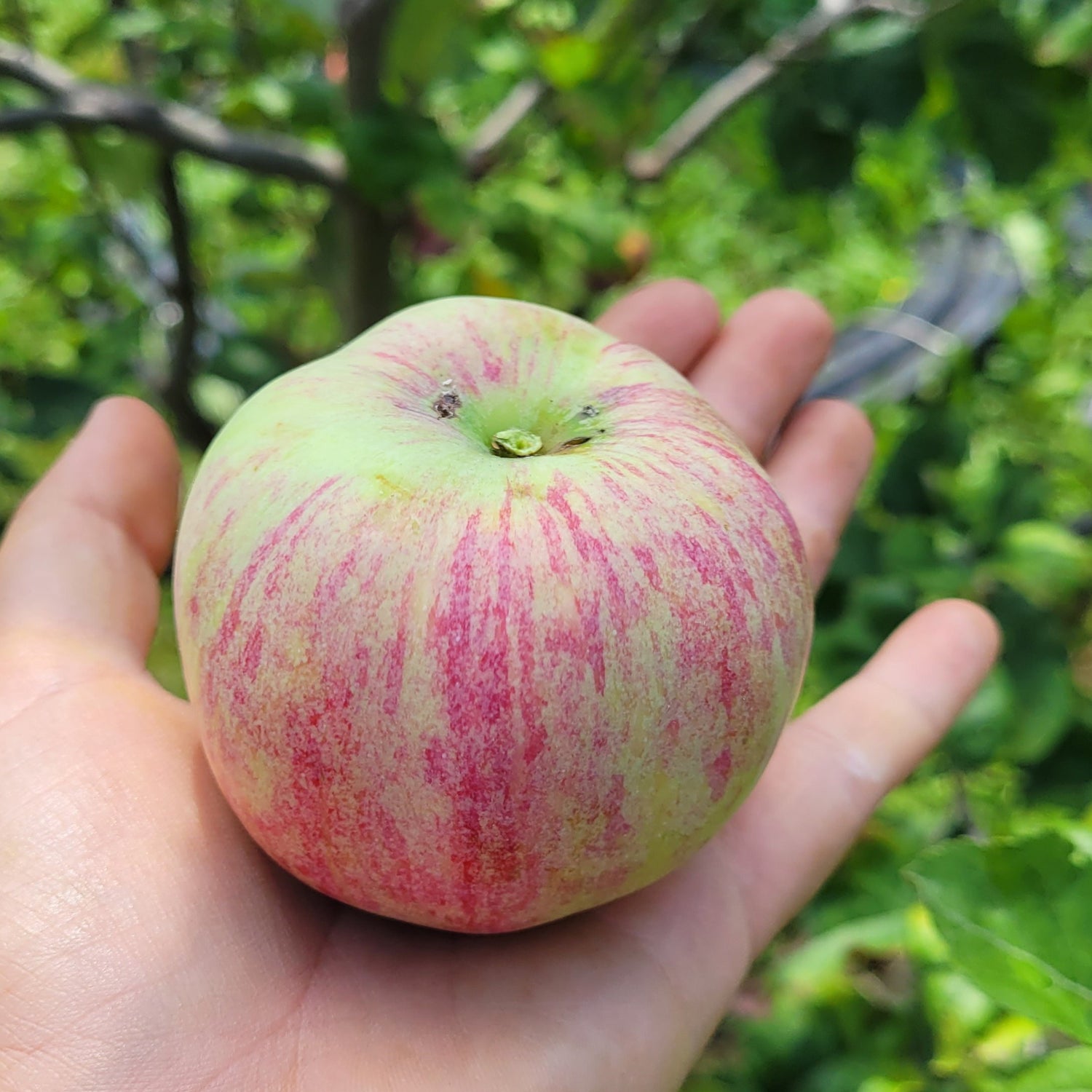
History: This cold-hardy apple was developed in the prairies and is for growing in colder, northern areas.
Why We Grow It: This unique apple produces a yellow fruit with red stripes. It is a rather uncommon variety and is great for sauce. It has begun producing reliably in our test orchard the last few years, and always has a bountiful crop.

History: Shizuka (translated as "quiet" or "calm") was created at the Aomori Apple Experiment Station in Japan in the 1930s. It is a cross between Golden Delicious and Indo, the same parentage as its sister apple Mutsu.
Why We Grow It: Although it resembles Mutsu with its large yellow-green fruit, sometimes featuring a reddish-orange blush, Shizuka is sweeter and less acidic. This is an excellent fresh-eating apple for farm gate sales and it also keeps well. It is also great in salads due to its slow browning.


History: Redfree is one of the apples developed under the collaborative PRI disease-resistant breeding program run by Purdue University, Rutgers University, and the University of Illinois. It was bred in 1966 and officially introduce to the public in 1980.
Why We Grow It: Redfree apples are great for fresh eating with a pleasant, mildly sweet flavour and softer yet crisp flesh. The fruit does not ripen all at once, allowing a longer eating season. As its name would suggest, it has decent resistance to several common apple diseases.

History: Wagener apples come from a seed that was planted by George Wheeler in the Finger Lakes area of New York in 1791. In 1796, Abraham Wagener purchased Wheeler's property and planted the seedling on his own property in Penn Yan village where the tree was known for producing attractive, tasty fruit in abundance every year. The variety was named after Wagener and became popular for its excellent storage qualities.
Why We Grow It: Wagener is ideal for the self-sufficient homesteader who values a late keeper, lasting until April in an ordinary cold cellar. When first picked they have a sharp, acidic taste and are great for cooking. In storage, they mellow to an excellent sweet, crisp apple that is perfect for fresh eating.

History: Somerset Redstreak originated in Somerset, England in the early 1900s. This cider apple is still widely planted in the UK.
Why We Grow It: These attractive apples, yellow with red blush and striping, create a nice bittersweet juice with no sharpness.

History: Noël des Champs (translated from French as 'Christmas Field') emerged in the Normandy region of France in the 1800s. It has remained a well-regarded apple and is one of thirteen apples prized for cider production in the Pays d'Auge region.
Why We Grow It: This rare cider apple is bittersweet with small, flattish fruits. They are dark red with some striping. As its prestige suggests, this is a good quality cider apple. The tree tends to start bearing fruit at a young age.


History: Generally just known as Gravenstein, it is unknown when or where exactly these apples came from but they were imported from France to Denmark in the 1600s by Count Frederik the Younger and planted at the summer residence of the Danish royal family, Gråsten Palace. As a result the variety was named Gråsten (Danish for graystone) which translates to Gravenstein in German. This apple has been popular in Canada since the 1820s, particularly in Nova Scotia, and provided the dried apples and applesauce for American soldiers during WW2. In 2005 it was declared the national apple of Denmark.
Why We Grow It: Yellow Gravenstein's excellence as a fresh eating and cooking apple makes it easy to see why it is grown in so many different countries, even if the tree is slow to bear fruit and is prone to many common fruit tree diseases (although we haven't had much issues growing it here). It has a great sweet/tart flavour and is crunchy and juicy. The fruit is a nice yellow with red striping.

History: Lady apples are one of, if not the oldest, apple varieties in existence with a verifiable history. It is said to have originated in the Brittany region of France before 1628 and was grown during the reign of King Louis XIII. This apple goes by several other names as well. It is also known as Api or Pomme d'Api, named after the Forest of Api in France where it is believed this apple may have been discovered. This particular name is similar to Appia, an apple variety popular in Ancient Rome, which some believe is the same apple as Lady. Lady apples are also known as Christmas apples due to their use in adorning Christmas wreaths and trees.
Why We Grow It: It's hard not to be interested in an apple with such a long history as this one. The fruit is small but attractive: red flushed over yellow. The crisp, sweet fruit maintains its good quality all winter in storage.
History: Norhey comes from the Morden Research Station, Agriculture Canada. It was created by Dr. C. R. Ure in the 60's to survive the harsh prairie winters. It was introduced in 1975.
Why We Grow It: It seems Dr. Ure was successful since this is about the hardiest apple we've come across. The fruit has green skin that turns yellow after picking. It's fair for fresh eating, good for cooking and juicing with sweet, sub acid flavours and creamy crisp flesh. The tree has consistent, heavy crops.
History: Westland apples were developed at the Alberta Special Crops and Horticultural Research Centre in Brooks, Alberta and introduced in 1979.
Why We Grow It: This medium sized pie apple is cold hardy, excellent for the prairies and northern regions. The fruit is large and a pale yellow-ish green with red flush and stripes.

History: Vista Bella was created at Rutgers University in New Jersey in the 1950s and released in 1974. Although its poor keeping ability prevents it from being a commercial success, this early ripening variety is still a nice way to herald in the apple harvest season every year.
Why We Grow It: Vista Bella is the first red apple of the season. The flavour and texture are of better quality than other early apples, making Vista Bella an excellent choice for early farmer’s market sales and roadside stands. The flesh is crisp and juicy, although it softens quickly and, like other early apples, does not keep long.

History: Fallawater originated in Pennsylvania sometime before 1842, possibly from seeds brought by European colonizers. At one time it was quite popular in the southern United States. This variety has over twenty different names, many of which resemble Fallawater such as Fallenwalder, while others are more fun and unique like Molly Whopper, Green Mountain Pippin, and Prim's Beauty of the West.
Why We Grow It: No matter which name this variety goes by, you can always expect a large, attractive apple with a mildly sweet flavour. Fallawater is an excellent sauce and cooking apple and the fruit stores for a long time.
Showing 105/181
Next