Apple Trees

Apple Trees
Apples have been a staple of the human diet since ancient times. Their varied shapes, sizes, colours, and tastes provide fruit that is beautiful to the eyes and pleasing to the palate in many forms—fresh, baked, stewed, dried, and in cider, sauce and jelly. When planning to plant apple trees, remember that to ensure pollination and fruit set, two different varieties are required. For example, Idared and Golden Russet trees will pollinate each other, but two Idared trees will not. Some varieties, called triploids, have sterile pollen and cannot pollinate other trees. A third variety is then required to ensure pollination of all trees.
Sort by:
63 of 173 products
63 of 173 products
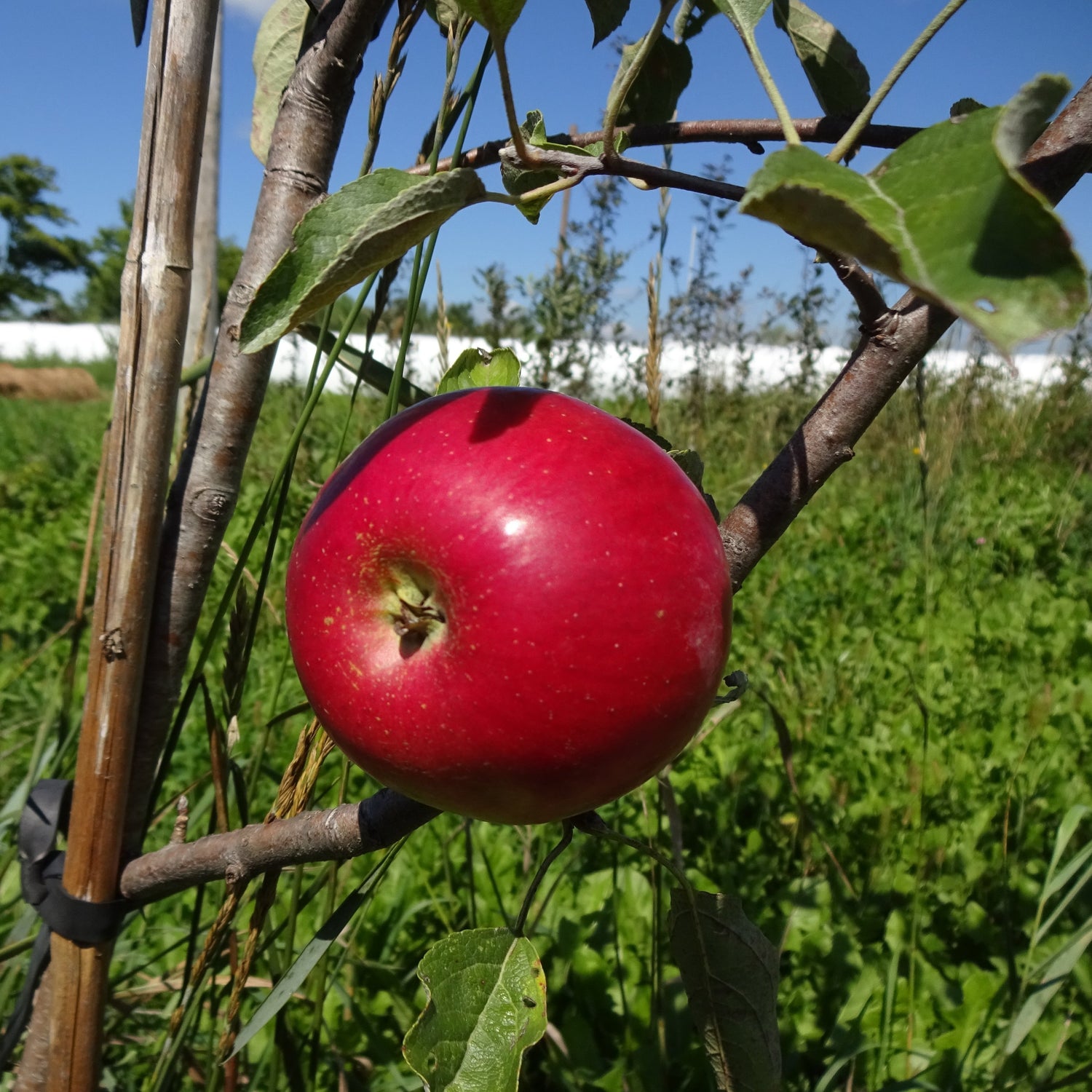
History: Akane was developed in Japan in 1937 at the Morioka Experimental Station. It is one of several kinds of produce created to better feed citizens and troops during WW2. The name 'akane' literally translates from Japanese as 'deep red.'
Why We Grow It: This crisp, sweet apple is great for fresh eating and has bright red skin. It tends to begin bearing at a young age and is relatively diseases resistant.
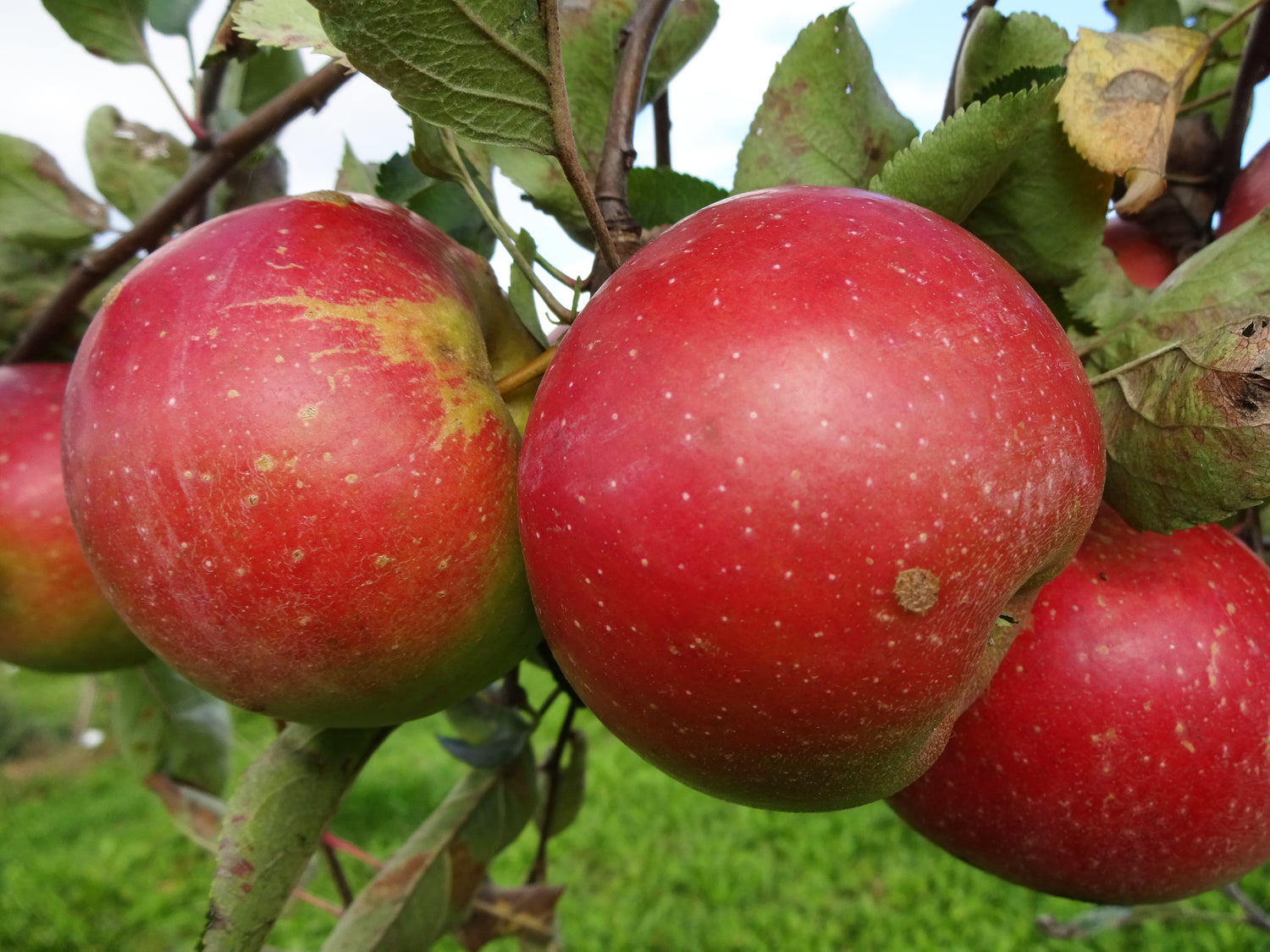
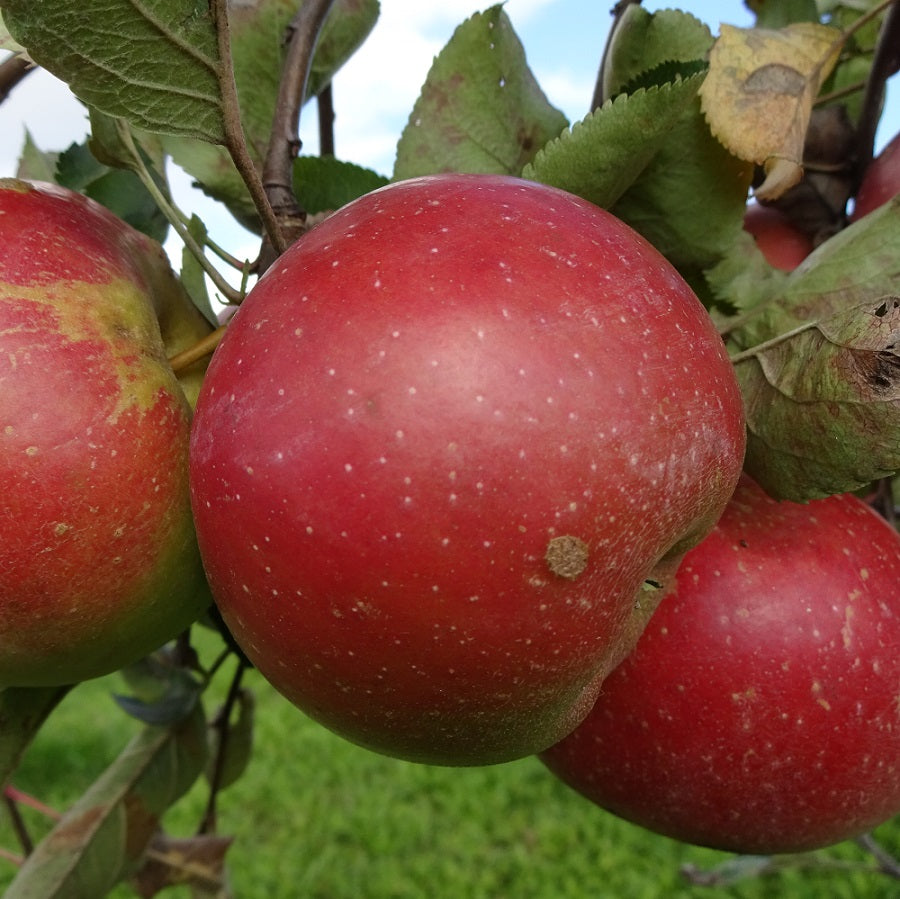
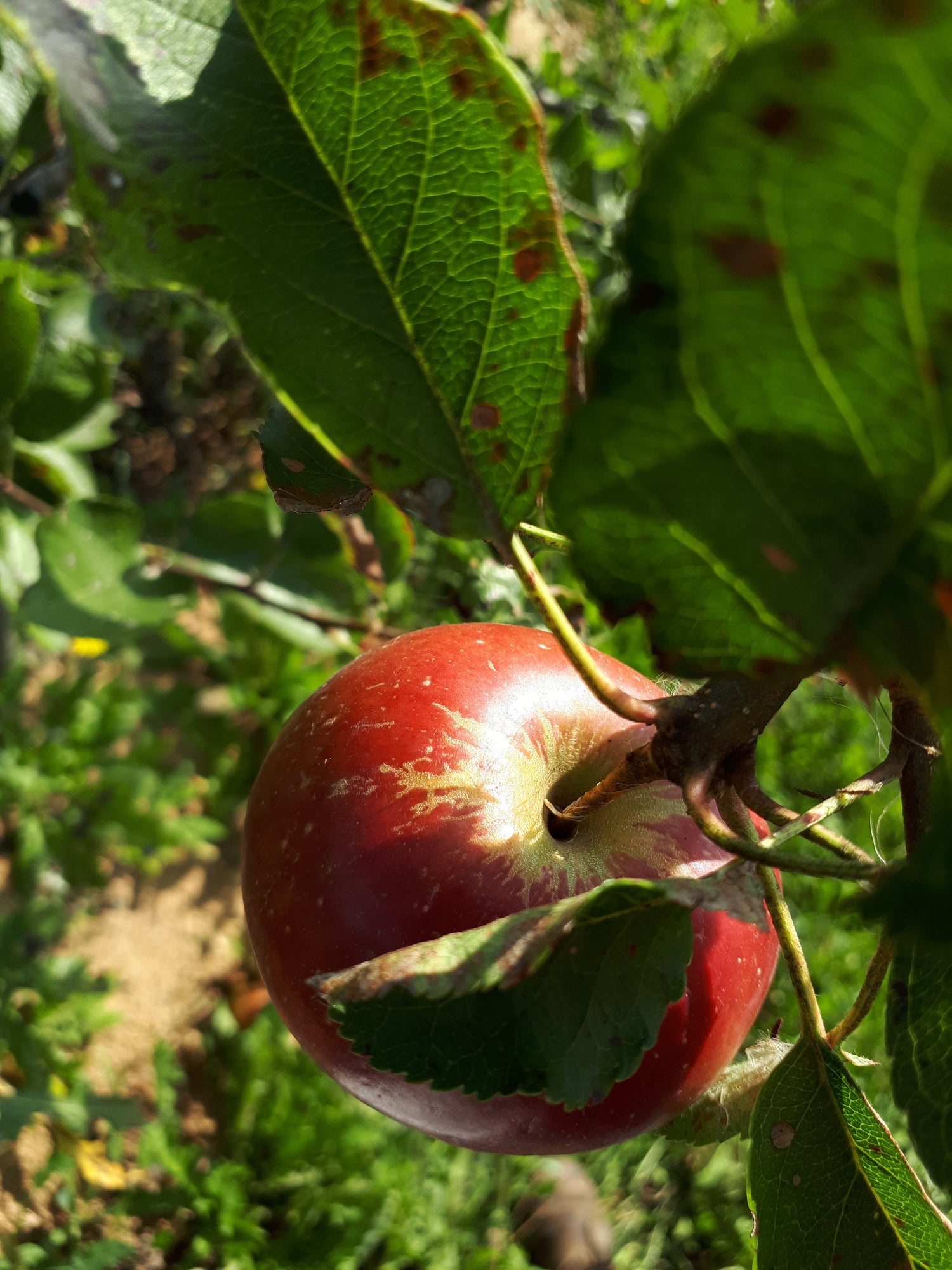
History: This classic American cooking apple was discovered by chance around 1740 in Massachusetts. It was eventually brought to the attention of a Col. Baldwin, after whom the variety was later named, who helped to spread it further. By 1850 this was one of the most commonly grown apples in the US, although its popularity began to decline by the 1900s, exacerbated by a terrible winter in 1934 that wiped out a significant number of trees. Despite this, Baldwin is making a bit of a comeback and a monument to this apple still stands in Wilmington, Massachusetts, around where it was discovered.
Why We Grow It: Baldwin apples produce large, greenish-yellow and maroon fruit with firm, sweet flesh that maintains its shape and crispness when cooked. The fruit produced in our test orchard has been attractive and blemish-free.

History: A traditional French cider apple grown in Normandy, it is one of the varieties approved by the Appellation d'Origine Contrôlée for use in cider production in the region.
Why We Grow It: This apple produces an aromatic, bittersweet juice that can be used in cider and apple brandy. Although it only bears fruit every other year, it produces a considerable crop in a single season. It is also a great pollinator for other varieties due to its long blooming time.

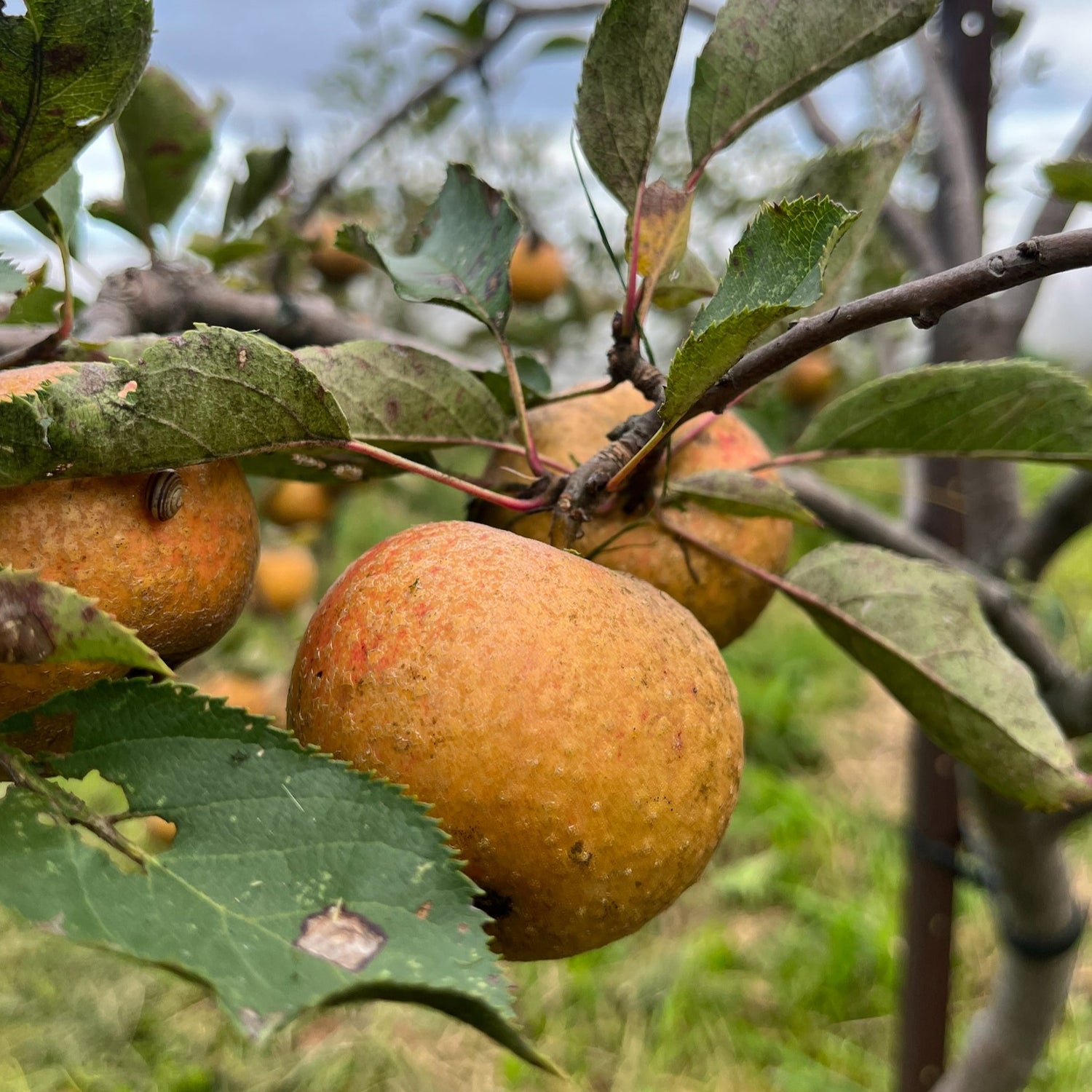
History: The history of Blenheim Orange is a bit muddled depending on your source. We know it was discovered by George Kempster (either a baker, a tailor, or a basket weaver depending on who you ask!) in England in 1740 and it was originally named Kempster's Pippin. Some say he found it as a seedling growing along a wall of Blenheim Palace while others claim he grew it in his garden located near Blenheim, England. It was later renamed to Blenheim Orange in the early 1800s, likely when it was sold commercially through nurseries. This variety has many other names, including: Beauty of Dumbleton, Blooming Orange, and Northwitch Blenheim. The tree itself is also known for its sturdy wood and it was at one time popularly used to make railway cogs.
Why We Grow It: These large, somewhat flat apples feature orangey-red stripes over yellow skin with some russet. The fruit is good for fresh eating with a nutty taste and is quite nice when paired with cheese. It is also great for cooking and makes a stiff purée. The tree is highly vigorous but can be slow to come into production, although it has heavy crops once it does.

History: Brettacher Sämling (sämling meaning seedling in German) originated as a chance seedling on a farm in Brettach, Germany in the early 1900s. It is possibly a descendent of the French cooking apple, Lebel. It is known for its excellent storage qualities and is still grown commonly in parts of Germany.
Why We Grow It: Brettacher Sämling produces large, juicy apples with a sweet-tart fruity flavour that has a hint of spice. The apples, green with a red blush, are best enjoyed after being stored for two months. They are fairly versatile, also considered suitable for sauce and juice/cider. Compared to other apple trees, this variety is relatively low maintenance and only requires a hard prune every two to three years.
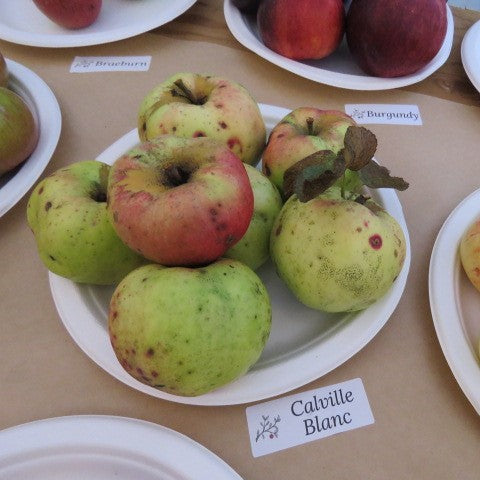
History: Calville Blanc d'Hiver was discovered in France and first documented in 1598. It spread to other countries and was even grown by Thomas Jefferson in Monticello.
Why We Grow It: Known for its rather misshapen and lumpy appearance and the odd red splotches on its green skin, this apples exterior belies a strong, sweet-sharp flavour that makes it great for fresh eating, cooking, and cider. Some claim it rivals Bramley's Seedling as one of the best cooking apples with the added benefit that, unlike Bramley's, it holds its shape when baked or cooked. It is also boasts a high Vitamin C content.

History: This vintage quality cider apple is believed to have originated near Martock in England. This apple is so old it's not entirely certain when exactly it was first discovered, with estimates ranging from the 11th to 14th century.
Why We Grow It: This lesser-known apple is bitter with high acid, featuring a fruity flavour with a bitter aftertaste that is great when made into cider on its own or when mixed into a cider blend.

History: Chisel Jersey is believed to have originated in Martock, England in the 1800s. It spread little outside the immediate area for about a century but during the mid-1900s this apple became quite popular in commercial cider orchards. It has, however, lost some of that renown today despite being an excellent cider apple.
Why We Grow It: With small, green fruit featuring a striped red flush, this bittersweet cider apple is highly recommended in England as well as in Canada. It is high in tannins and sugars but low in malic acid and makes a great cider apple.
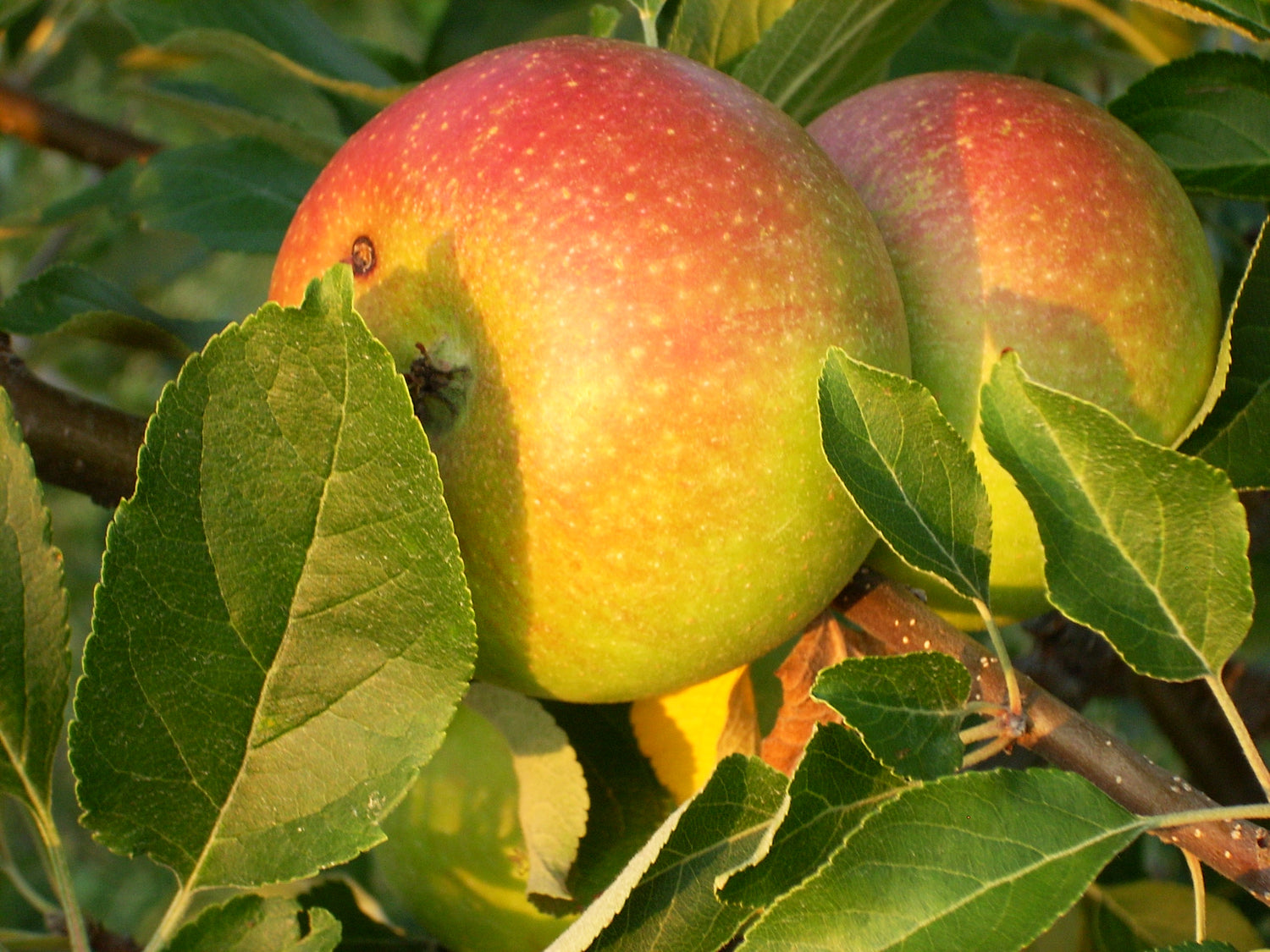
History: Cox's Orange Pippin was first grown in England in 1830 and was named after the retired brewer and horticulturalist who first bred it, Richard Cox. Its excellent flavour has earned it a spot as one of the best fresh eating apples in England where it has remained popular ever since. In fact, it still accounts for over 50% of fresh eating apples grown in the UK today. Despite its reputation, it is seldom grown commercially in North America due to its precocious nature and susceptibility to many common apple diseases.
Why We Grow It: This apple's reputation is hard to ignore with its sweet, subtle, aromatic flavour and attractive orange-red skin. Not only is it good for fresh eating, it is also popular in cider blends.
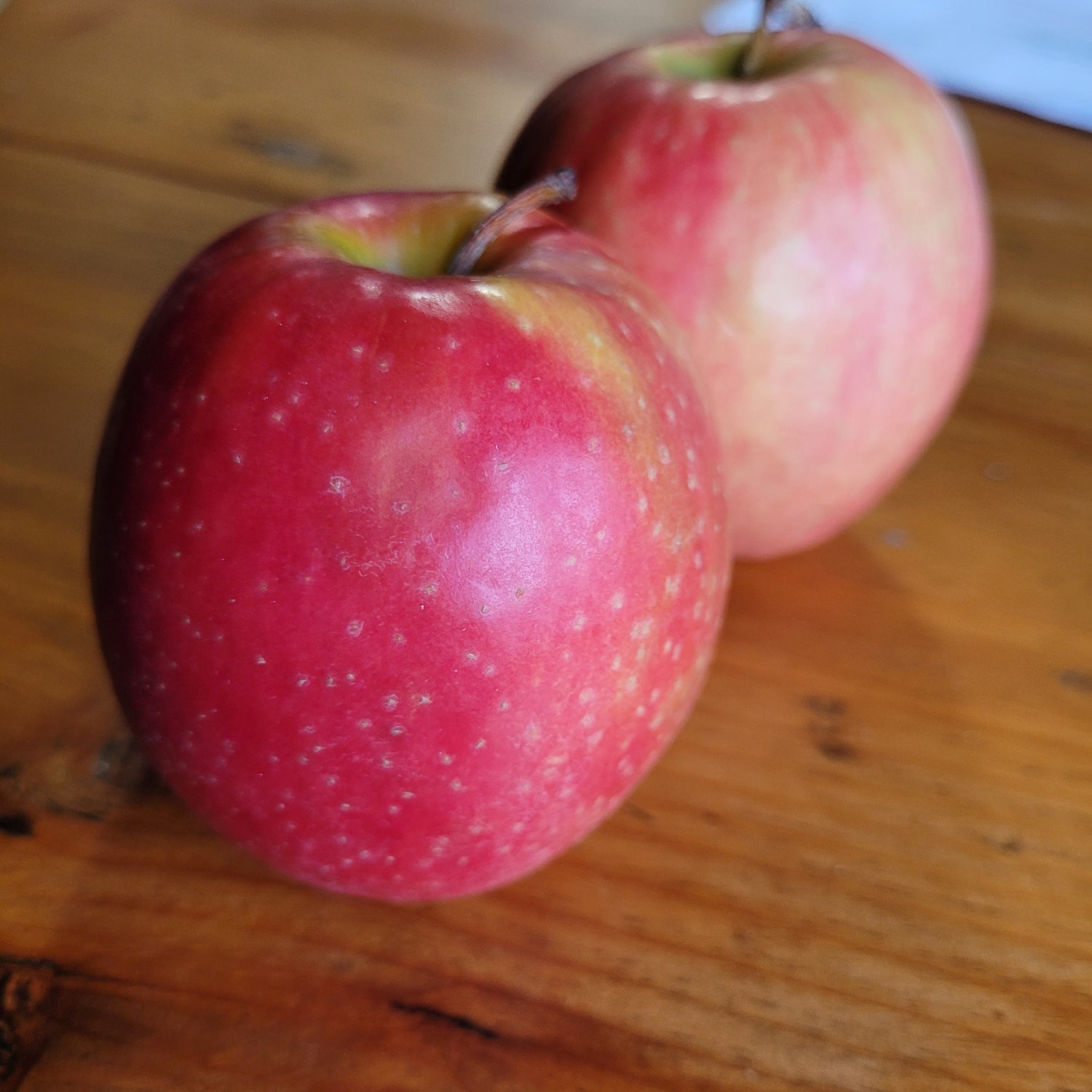
2025/2026 Staff Favourite
Cripps Pink Apples are Jodi's favourite this year! She has this to say about this variety: “I really like Cripps Pink for its crisp/crunchy bite texture along with its sweet-tart flavour. To top it off, they store well so I get to enjoy the crunch of them well into winter.”
All Staff Favourites are 20% off. The Staff Favourite Discount cannot be combined with other quantity discounts.
History: Cripps Pink was developed by John Cripps at the Western Australia Department of Agriculture in 1973 as a cross between Lady Williams (an Australian variety) and Golden Delicious. The successful result was introduced to the market in 1985. In just ten years, Cripps Pink became an extremely popular variety and over a million trees were planted in Australia alone. This variety remains popular in many countries around the world. This apple is also known as Pink Lady which is its brand name when the fruit meets very strict criteria for quality.
Why We Grow It: Cripps Pink has a refreshing honeyed sweet-tart flavour that makes it great for fresh eating, baking, and cider. The lovely fruit, yellow with a pinkish-red blush, is slow to brown and also stores exceptionally well.
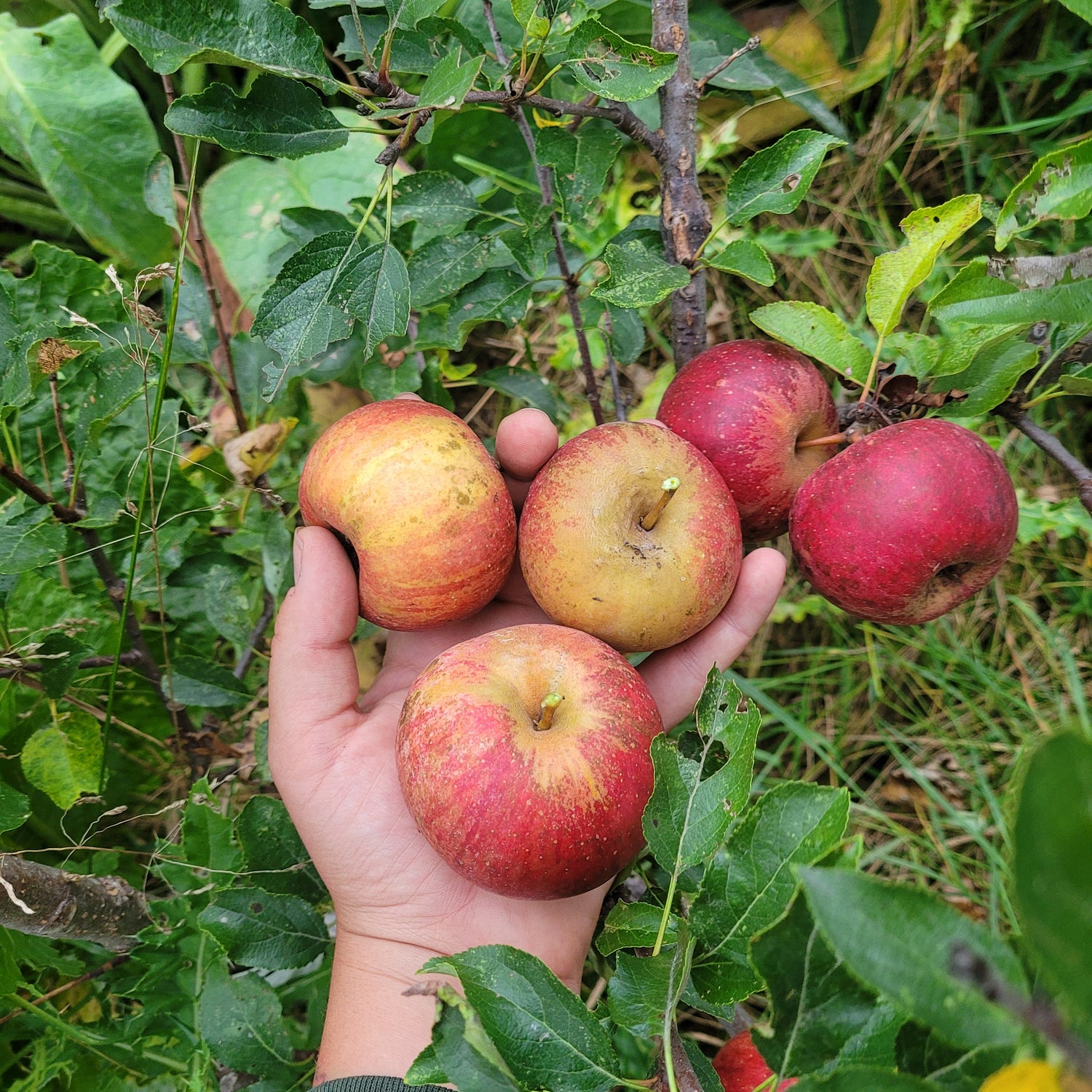
History: Dabinetts are an English cider apple named after William Dabinett who happened to find this variety growing in a hedge in the early 1900s. Since then the apple has become quite popular for use in making cider.
Why We Grow It: These smallish apples with speckled red skin produce a high-quality juice which can be used in single-variety ciders or blends. Dabinetts are classified as a bittersweet, are very resistant to scab, and are a reliable cropper.

History: Delbarestivale was developed by Delbard, a nursery in France, in the 1950s. Likely named as a portmanteau of 'Delbard' and 'estivale' (translated from French as 'summer') due to its early ripening time, this variety goes by many other names including Delcorf, Monidel, Dalili, and Ambassy. It was bred in an attempt to create an improved version of Golden Delicious. Although not quite as popular as Golden Delicious, it is still grown commercially in parts of France and England and the Royal Horticultural Society awarded it the Award of Garden Merit in 1998.
Why We Grow It: This French apple is very sweet but balanced nicely with a sharp flavour. The flesh is aromatic and crisp and the skin is a lovely, stripey bi-colour with reddish streaks overlaying green. The apples store quite well for an early-ripening variety, although they do tend to bruise easily.

History: Domaine apples originated in France some time before the 1900s. In the Pays d'Auge region in Normandy, Domaine is one of the 13 cultivars prized for making hard cider (included in that 13 are Fréquin Rouge and Noël des Champs, which we also have available). This apple was brought to the United States in 1949 but remains relatively unknown outside of its country of origin.
Why We Grow It: This bittersweet cider apple is high in tannins, low in acidity, and contains a moderate amount of sugar. Although not great for single-variety ciders, it can be an excellent addition when used in cider blends.

History: The exact origin of Ellis Bitter is unknown but it is believed to have originated on the farm of a Mr. Ellis in the 1800s in England. It was planted commercially, particularly by growers under contract with the cider-making company H.P. Bulmer. Unlike some older cider varieties, Ellis Bitter still remains relatively common today.
Why We Grow It: Ellis Bitter is an old English cider apple, with good disease resistance, vigour, and production. This variety produces a high quality medium-bittersweet juice with soft, astringent tannins that are suited for blends. It is notable for its early ripening time compared to many cider apples, and therefore adds nicely to an orchard to extend the season. This cultivar has produced very well in the Ontario climate according to trials at the Vineland Research Station.

History: Elstar apples were developed in the Netherlands in the 1950s and are a cross between Golden Delicious and Ingrid Marie. This excellent combination has created what is considered one of the best Golden Delicious offspring. Fittingly, it has since become quite popular in continental Europe. Despite being introduced to the US in 1972, it has not attained the same level of popularity in North America.
Why We Grow It: Elstar is a flavourful variety, fine for fresh eating or sauce with its crisp, juicy flesh; very little acidity. The skin is distinctive, sporting a orangey-red marbled appearance.
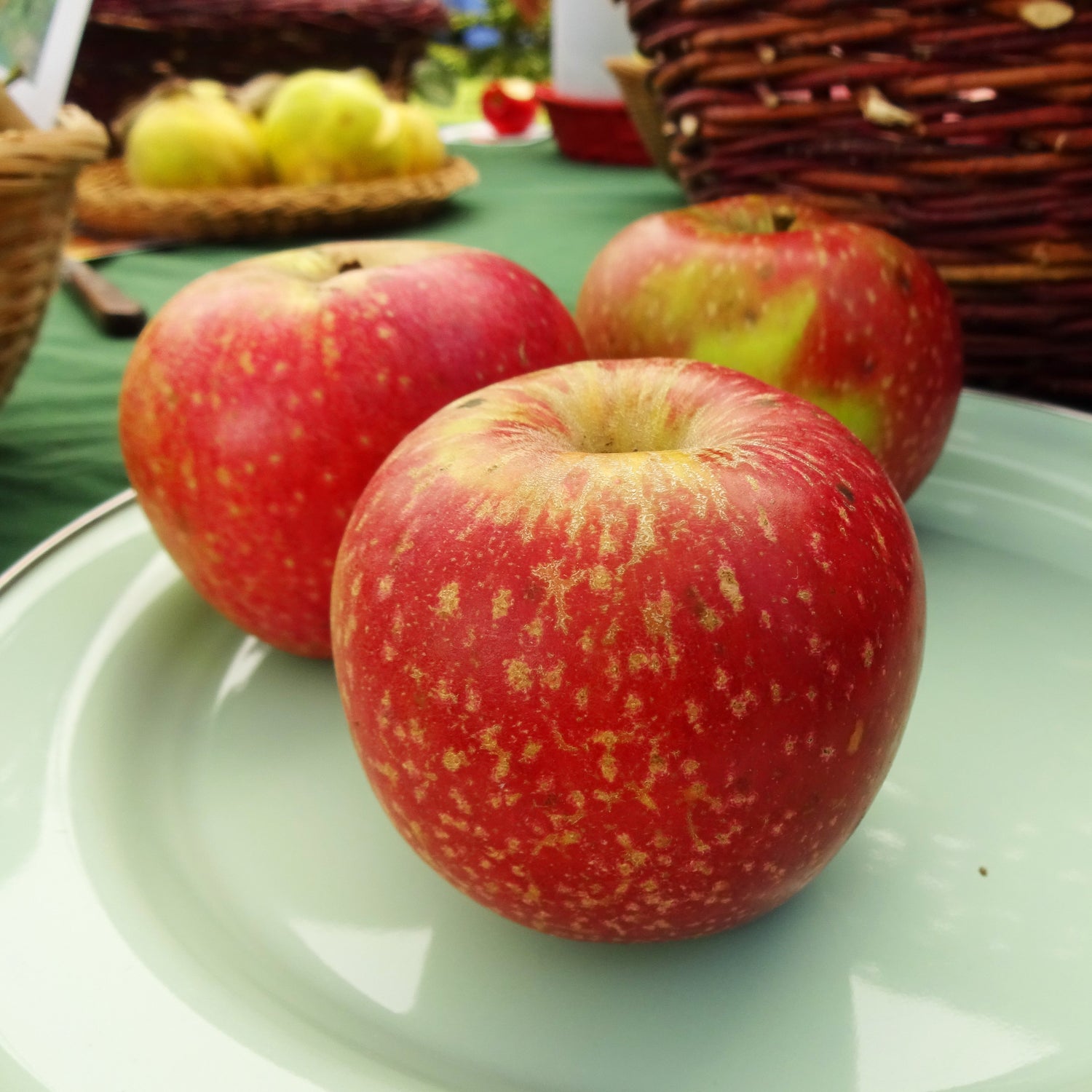
History: Esopus Spitzenberg was discovered near Esopus, New York in the early 1700s. Its main claim to fame is its supposed designation as Thomas Jefferson's favourite apple, a claim supported by the numerous Esopus Spitzenberg trees he had planted at his plantation Monticello. This apple was very popular in the US in the 1800s, considered one of the best for fresh eating, valuable for cooking, and a nice addition to cider blends.
Why We Grow It: The flavour of this particular variety is complex with high acid content, considered by many to be a high quality fresh-eating apple. This is helped by the attractive medium sized fruit which sports bright red skin. This variety keeps, with good flavour, until March. Despite being susceptible to just about every common apple disease, we still believe this apple is worth the extra effort and haven't had much issue growing it here.
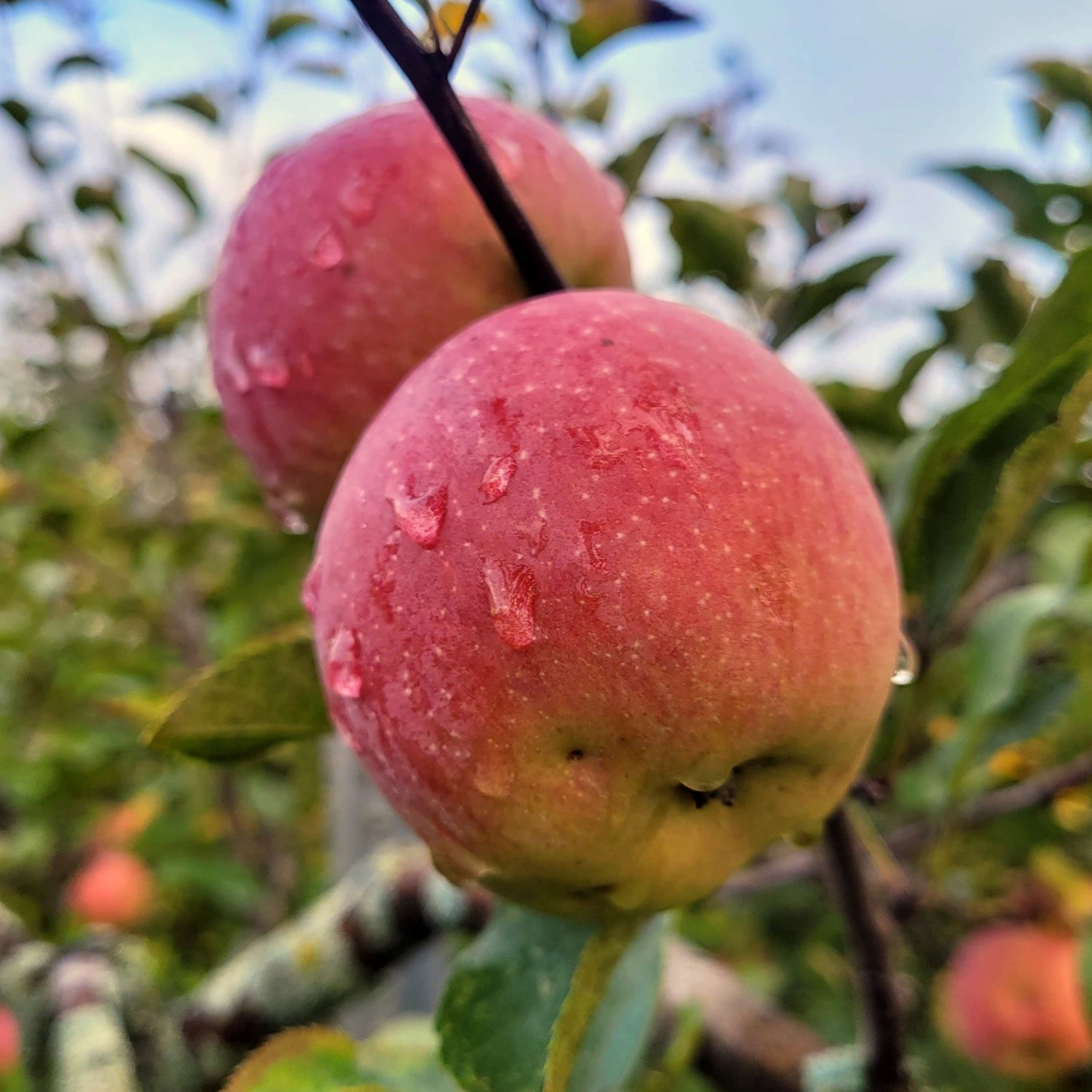
History: Fuji apples were developed at the Tohoku Research Station in Japan in the 1930s and released commercially in 1962. It was named after Fujisaki, the town where it was created. Despite being created in Japan, this apple is actually a mix of two American varieties. Its excellent flavour and attractive appearance has made it one of the most popular apples varieties in the world. It is commonly grown in the US, Japan, and China.
Why We Grow It: Its crisp, very juicy, sweet flesh makes Fuji a very popular variety. It also stores well, lasting about three months. To the best of our knowledge, this is the original strain.

Why We Grow It: Along with the great sweet flavour and juiciness of the original, Fuji BC #2 also boasts redder skin, making it more appealing for those who prefer red apples.
History: Gala apples are one of several varieties created by J.H. Kidd in New Zealand as part of his project to cross Cox's Orange Pippin with American varieties in the 1930s. He definitely succeeded with the Gala apple which has since become one of the most popular apple varieties worldwide and a mainstay in grocery stores.
Why We Grow It: This apple earned its popularity with its amazing flavour, especially when eaten fresh off the tree. Although many sports with a deeper red colour have been introduced and marketed as Gala, they often come at a compromise to flavour so we offer you the original Gala with full sweet crunchiness.
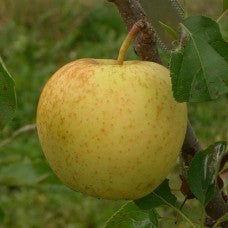
History: Golden Delicious was discovered by chance on a family farm in West Virginia and sold in 1914 to the Stark Brothers Nurseries. It has since become one of the most popular apples in North America. Since 1972, Clay County, where the apple was found, has hosted an annual Golden Delicious Festival and in 1995 it was declared the state fruit of West Virginia. Golden Delicious is also the parent of many varieties, including prominent ones such as Ambrosia and Gala.
Why We Grow It: It is easy to see why this apple is so popular with its attractive golden yellow skin and sweet, crisp cream-coloured flesh. Golden Delicious is a favourite for fresh eating, sauce, and apple butter. On top of that, it is resistant to scab, powdery mildew, and fire blight.

History: Goldrush was bred specifically for scab resistance as part of the collaborative PRI disease-resistant breeding program run by Purdue University, Rutgers University, and the University of Illinois. It was developed in the 1970s and released in 1994. This variety has a complex heritage of Golden Delicious mixed with a cross of several other varieties for their disease resistance.
Why We Grow It: This is arguably the best scab-resistant variety released from the PRI Breeding Program as far as flavour is concerned. The dense, crisp flesh of this yellow apple is full of sugars and flavour. It is distinctly spicy and tart at first but mellows the longer it is in storage. The fruit stores exceptionally well. This truly multi-purpose apple is also great for drying and, unusually for a modern variety, is good in hard cider.
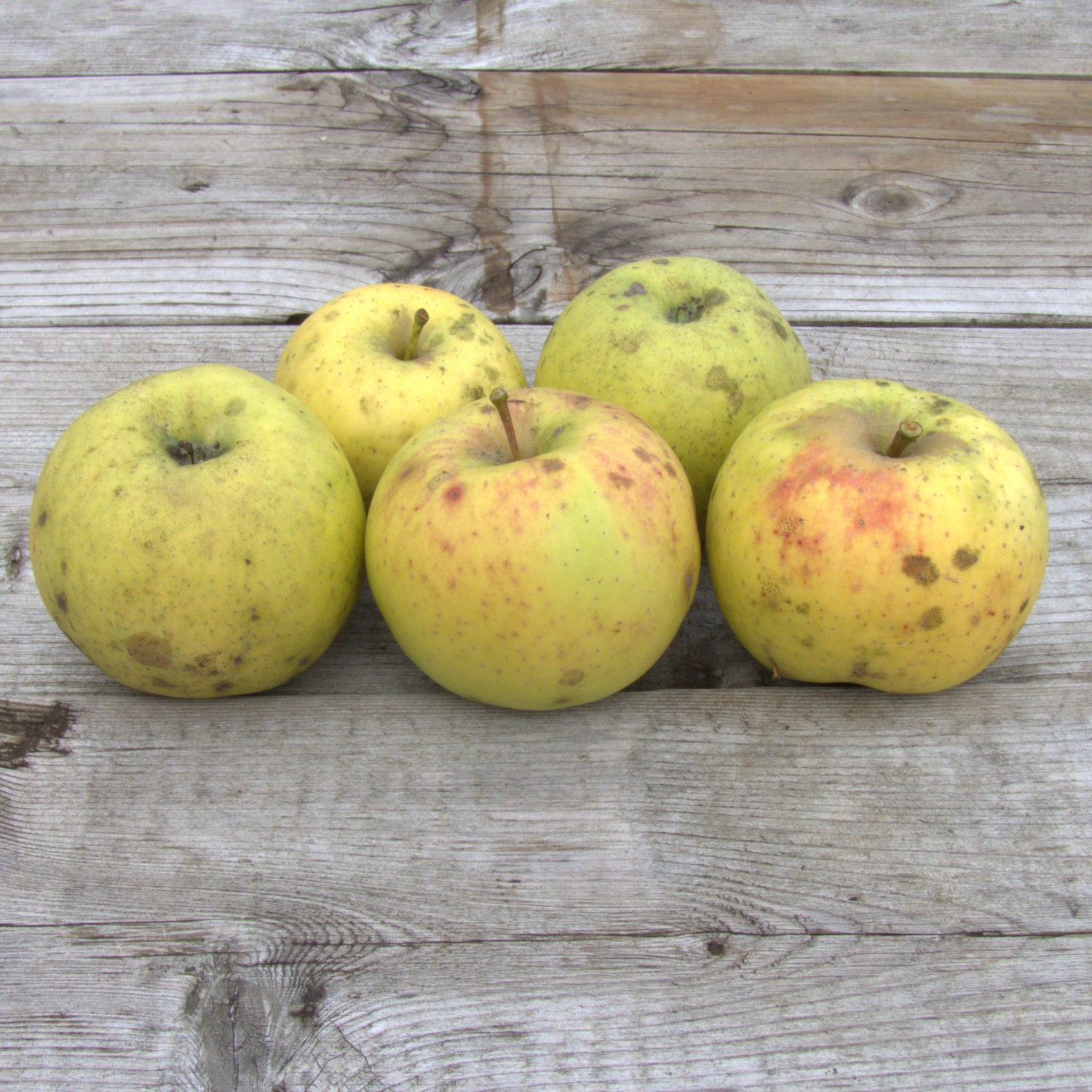
History: Grimes Golden was discovered on the Grimes farm in what is now West Virginia in 1832. Local legend claims that it grew from a seed planted by John Chapman, better known as Johnny Appleseed. After its discovery, it was widely planted up until the 1930s when it became supplanted by more popular varieties such as its (likely) descendant, Golden Delicious.
Why We Grow It: Although less popular now than Golden Delicious, many claim that Grimes Golden has a superior flavour: sweeter and with a hint of spice. The fruit is great for fresh eating and making cider, and it stores quite well. The tree is moderately resistant to fire blight and mildew.

History: Harrison was first described in 1817 by William Coxe and became a very popular cider variety in New Jersey during the 1800s, making it one of few American varieties renowned for its cider properties. Harrison's popularity declined in the early 1900s and it was believed that this variety was lost to time until it was rediscovered in 1976 growing by an old cider mill in New Jersey. This rediscovery was just in time, as what may have been the last known Harrison trees were cut down only a week later. Following successful propagation, it is once again being grown by cider makers across North America. It is considered one of the best American apples both for fresh eating and cider.
Why We Grow It: Harrison produces a high quality cider and can be made into a single variety cider. Unlike most cider apples, Harrison can also be eaten fresh and has a pleasant if somewhat dry taste. It is also scab resistant and crops reliably each year.

History: Harry Masters Jersey was discovered in the early 1900s at Yarlington Mill (in England) and is thought to be a seedling of Yarlington Mill (the apple variety). It was named after Mr. Masters, a worker at the mill who is thought to have discovered the apple.
Why We Grow It: Although not the most vigorous of apple trees, the fruit itself boasts a medium-full bittersweet juice of vintage quality with low acid that makes it popular among cider connoisseurs. Harry Masters Jersey also starts producing fruit at a young age.

History: Holstein was discovered in Schleswig-Holstein, Germany in 1918 and became one of the most popular varieties in the country. It is possibly a seedling of Cox's Orange Pippin.
Why We Grow It: This popular German variety sports attractive yellow skin with an orange/red blush. The flesh is firm, juicy, and aromatic in a way that is reminiscent of Cox's Orange Pippin. In general, this variety is easy to care for and grows vigorously.

History: Jonagold, a cross between Golden Delicious and Jonathan, was developed in 1953 at the New York State Agricultural Experiment Station at Cornell University. With its large size and sweet flavour, it has become one of the most popular apples in North America and is especially popular in Belgium.
Why We Grow It: The fruit is attractive with a red blush over yellow skin. It has a pleasant sweet-sour flavour that makes it a great multi-purpose apple.

History: Jonathan has an interesting history since there are two potential origins. One story says that Rachel Higley collected apple seeds from the local cider mill which she later grew on her new property in Ohio in 1796. She named one of the new varieties Jonathan after a young boy who often visited her orchard. The second, and more likely story, is that it was grown by farmer Philip Rick in the 1820s in New York. Originally named Rick, the apple was renamed Jonathan after the man who brought it to the attention of the Albany Horticultural Society.
Why We Grow It: These cheery red apples are crisp, juicy, and sweet. They are good for fresh eating as well as turning into pies and sauce. The fruit also stores quite well, lasting until January/February under optimal conditions.

History: Kandil Sinap* originated in the early 1800s around the Black Sea, although it is debated whether it originally came from the Crimean Peninsula in the Ukraine or the Sinop Peninsula in Turkey. It was at one time commonly exported into Russia.
*There are different thoughts on what Kandil Sinap translates to, some say it is 'candle of Sinop,' others 'sweet apple of Sinap,' and it translates directly from Turkish as 'oil lamp'
Why We Grow It: Kandil Sinap's most prominent feature is the odd shape of the fruit, strangely oblong and conical, almost resembling a candle in appearance. The odd green fruit have a sweet, sprightly flavour and are quite aromatic, although they do bruise easily. The tree naturally stays smaller but produces heavy crops and is great for backyard orchards.

History: Little to nothing is known about this apple other than it likely originated in France.
Why We Grow It: Astringent! First apple to produce in Ken's orchard planted 2019 in Beaver Valley. Despite its foggy past, this apple has a lot of potential for a bright future. It produces an aromatic juice and is quite high in tannins, making it a great addition to cider blends. The tree is known for its vigorous growth (notable compared to cider trees in general), high productivity, and general disease resistance which make it definitely worth growing.

History: Medaille d'Or was raised from a seed by Monsieur Goddard in Rouen, France. In 1873 the apple was awarded a gold medal by the Societe Centrale D’Horticulture de Departement de la Seine Inferieure and in 1884 was brought to England by the Woolhope Naturalist's Field Club where it became established as a classic English cider apple.
Why We Grow It: It is easy to see why this apple was popular in both France and England with its yellow-gold skin and excellent cider qualities. This apple produces a fruity juice with high alcohol content and is very high in tannins. It makes a great single-variety cider.
Collections
Malus domestica
While sweet apples are available in abundance, sharps (high in acid) and bitters (high in tannin) are more difficult to come by. Whether you make cider on a large scale, or just need a few trees for the backyard, you will find a great selection here of both old and new varieties, particularly sharps and bitters. Please phone for wholesale pricing on large orders.
English Cider Apple Classification
|
Flavour |
Acidity (g/L malic acid) |
Tannins (g/L tannic acid) |
|
Sharp |
over 4.5 |
less than 2 |
|
Bittersharp |
over 4.5 |
over 2 |
|
Bittersweet |
less than 4.5 |
over 2 |
|
Sweet |
less than 4.5 |
less than 2 |