
berry qty discount




79 products
Sort by:
79 products
79 products

Species: Actinidia arguta
History: Anna (aka Ananasnaya or Michurin's Pineapple) was created by Soviet plant breeder I.V. Michurin likely in the late 1800s or early 1900s. He created Anna, along with many other varieties, with the goal of breeding high-yielding plants of better quality that are more cold hardy. The flavour is reminiscent of pineapple so he named it Ananasnaya after the genus Ananas (which includes pineapples) and 'naya', a feminine suffix in Russian. Shortened to 'Anna' in North America, this variety remains commercially popular for its easy growth and propagation and reliable crops.
Why We Grow It: Anna produces kiwis with a distinct red blush (with enough sun exposure) that are sweet with a little tartness. The flavour is tropical with hints of pineapple and citrus. These vigorous vines require a trellis or other support to climb across. Make sure you have a suitable support in place, a mature plant can produce over 50lb of fruit in one season!
Species: Rubus sp.
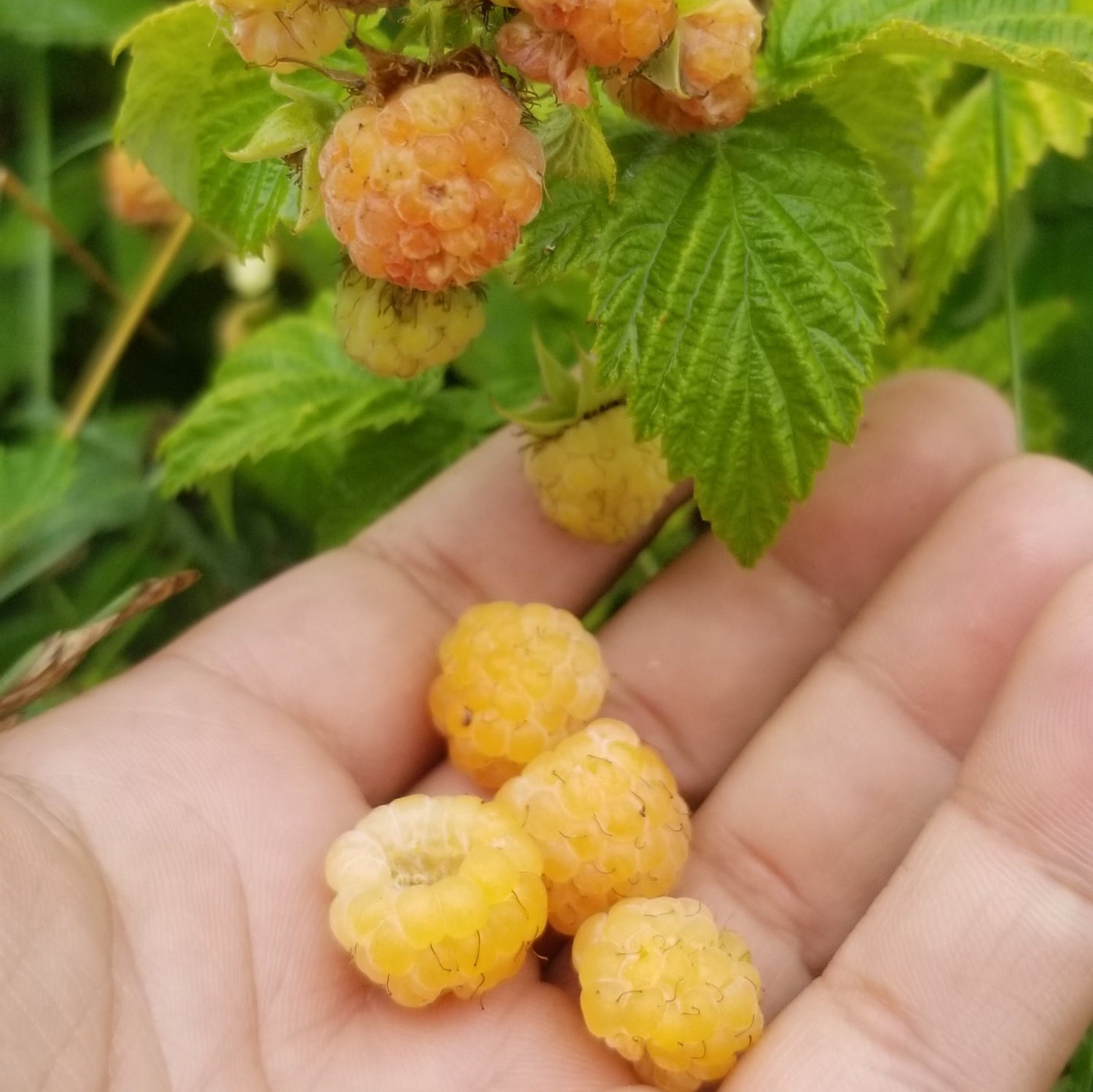
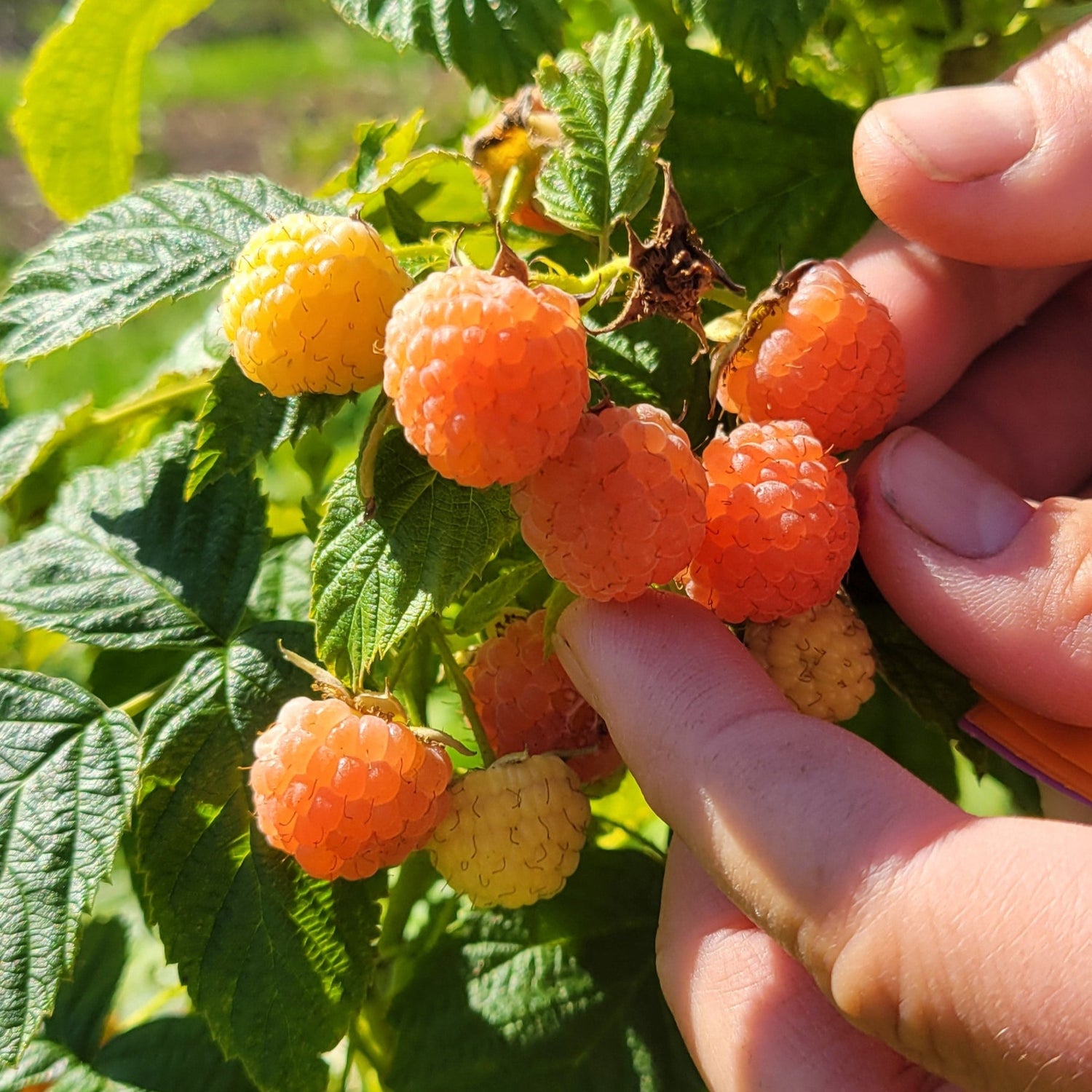
History: Anne is the product of quite the combined efforts between the University of Maryland, Rutgers University, Virginia Polytechnic Institute and State University, Southern Piedmont Agricultural Research and Education Center, and University of Wisconsin. Through their cooperative breeding program, the cross that created Anne was originally made in 1989 and the variety was released in the 1990s. It remains one of the more popular yellow raspberries today.
Why We Grow It: Anne produces large, firm raspberries that are quite sweet with a flavour some liken to apricots or bananas. Most uniquely: the berries are yellow, turning a warm orangey-yellow at their ripest! The berries are good for eating fresh, baking, freezing, or adding to salads and their yellow colour helps them to stand out. This is an everbearing variety so you can cut down the canes in the winter for a large fall crop, or enjoy a more spread out crop from August to September. Anne also sports relatively few thorns, making harvesting a little easier.
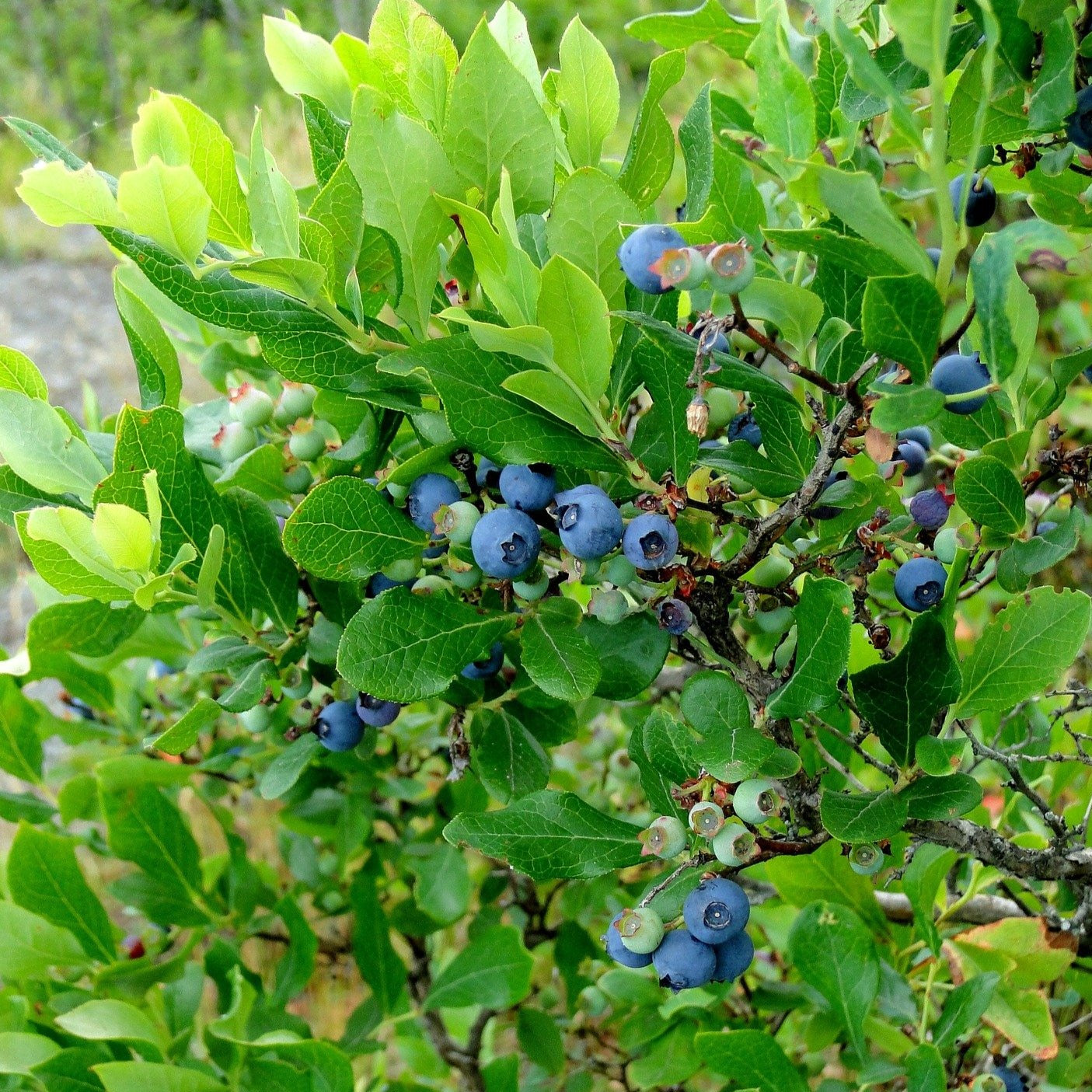
Species: Vaccinium angustifolium
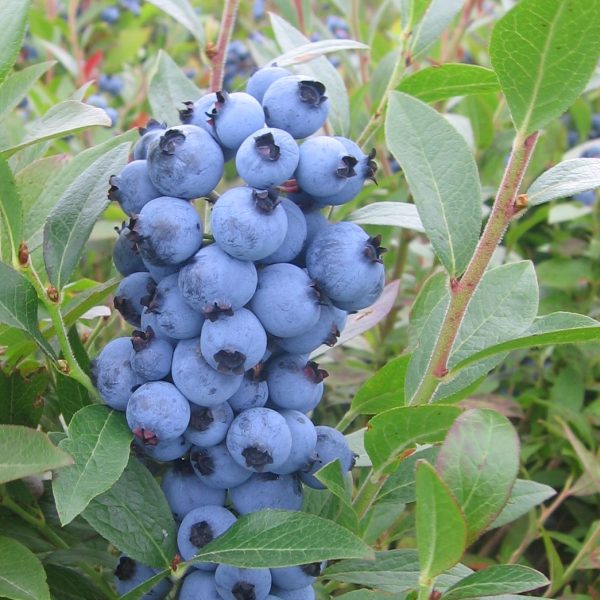
History: BB4 lowbush blueberry was discovered growing wild in a bush near a tissue culture lab near the small municipality of L'Ascension-de-Notre-Seigneur in the Saguenay-Lac-Saint-Jean region of Quebec. Impressed with the quality and flavour, the lab decided to propagate these wild blueberries.
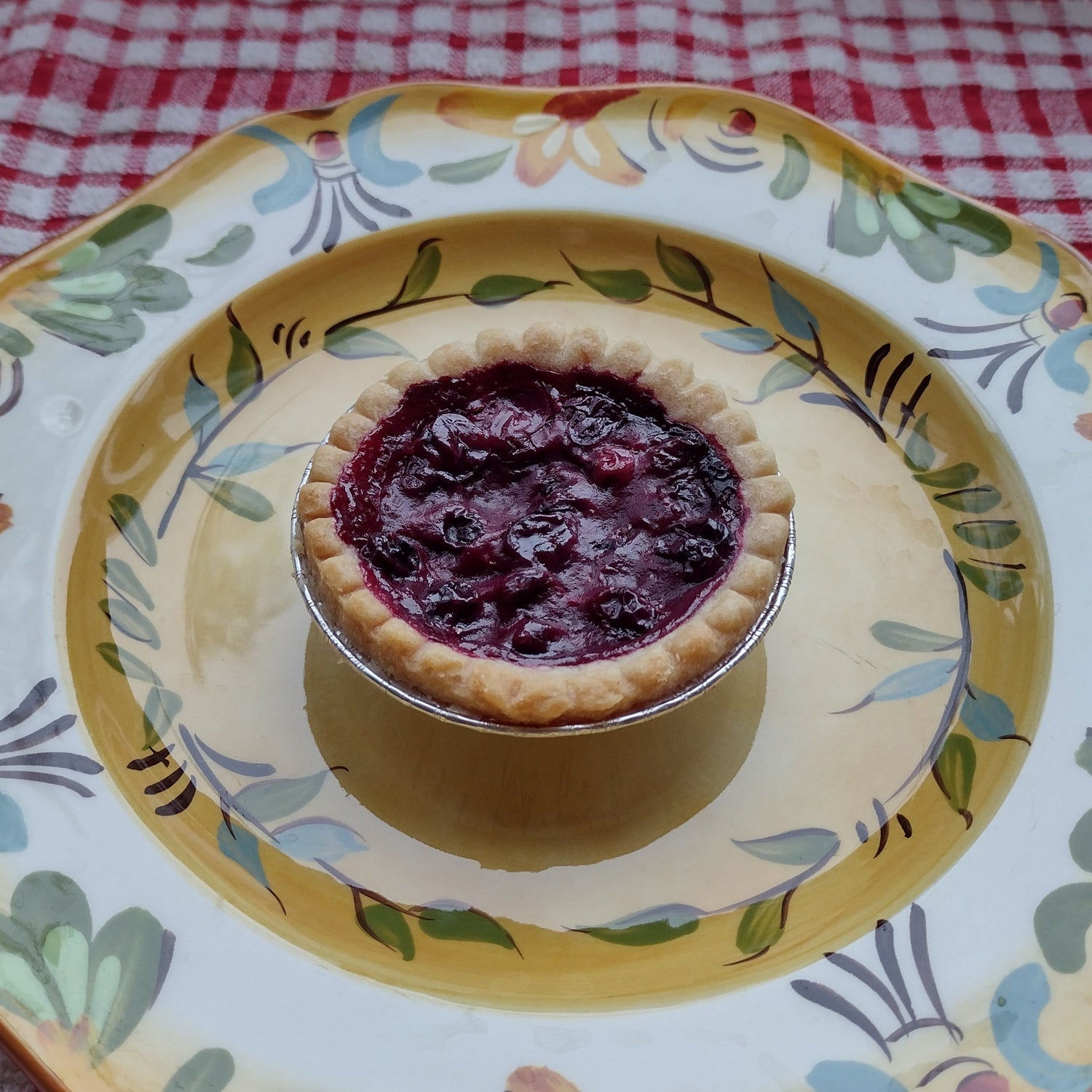
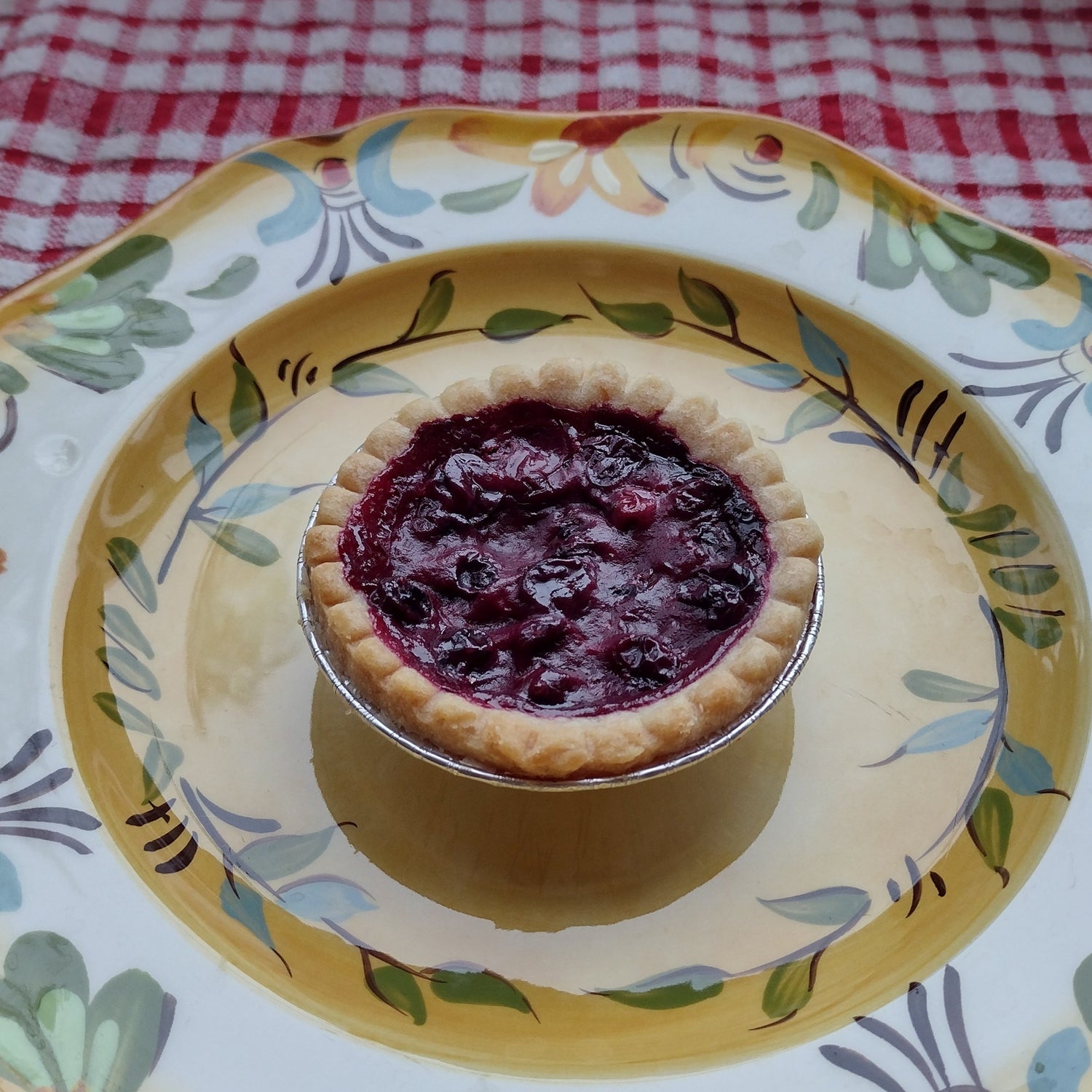
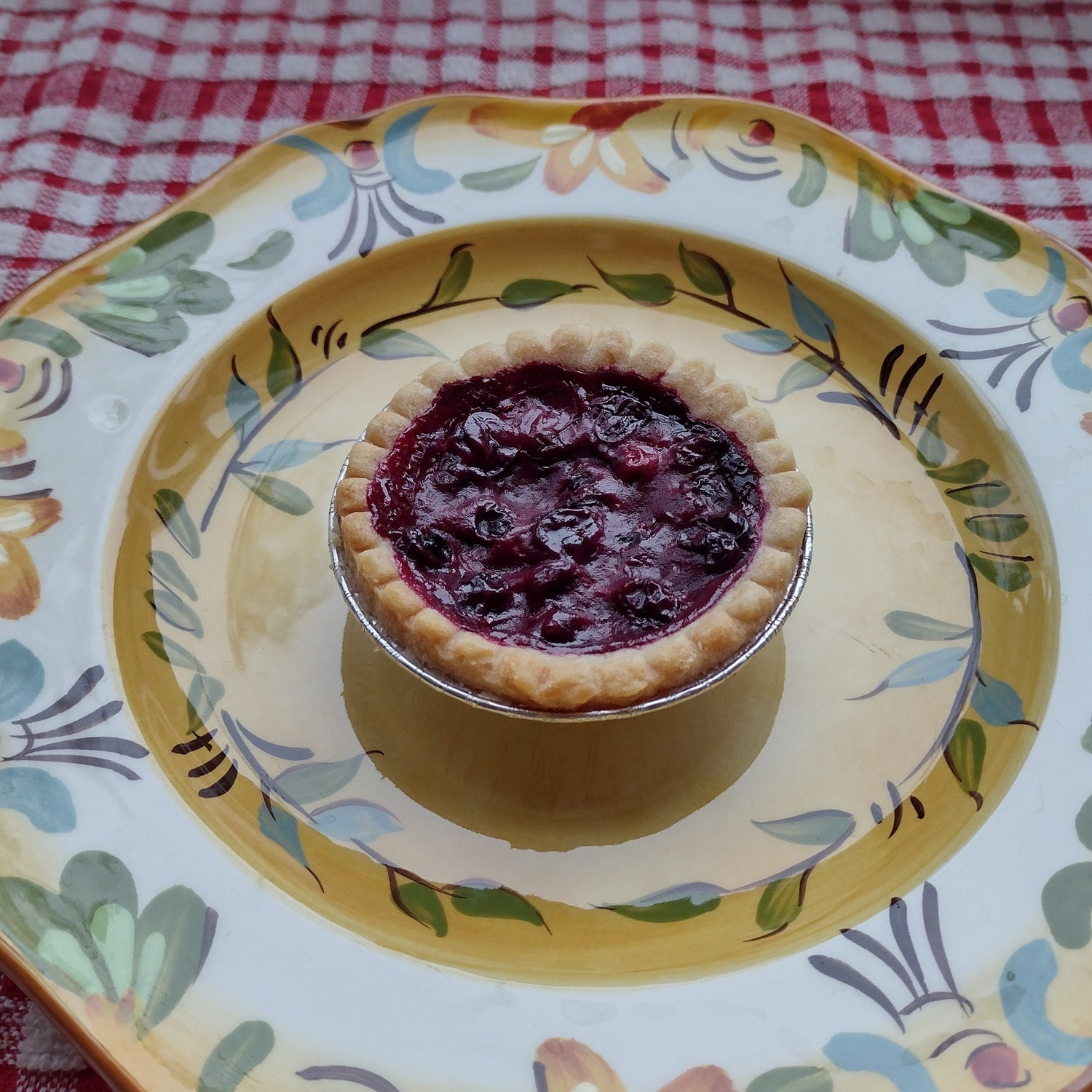
Why We Grow It: BB4 produces medium to large powder-blue berries, with a tasty, sweet flavour. The berries grow in nice clusters, making picking easy. Blueberries are great for baking, for example Steph made some wonderful black currant and blueberry tarts that are pictured here!
Species: Lonicera caerulea
History: Aurora haskap was developed at the University of Saskatchewan. After a decade of breeding and trials, it was released in 2012. It was originally selected as a pollinator for Borealis haskap but its superior flavour and greater productivity compared to other varieties quickly made it more popular.
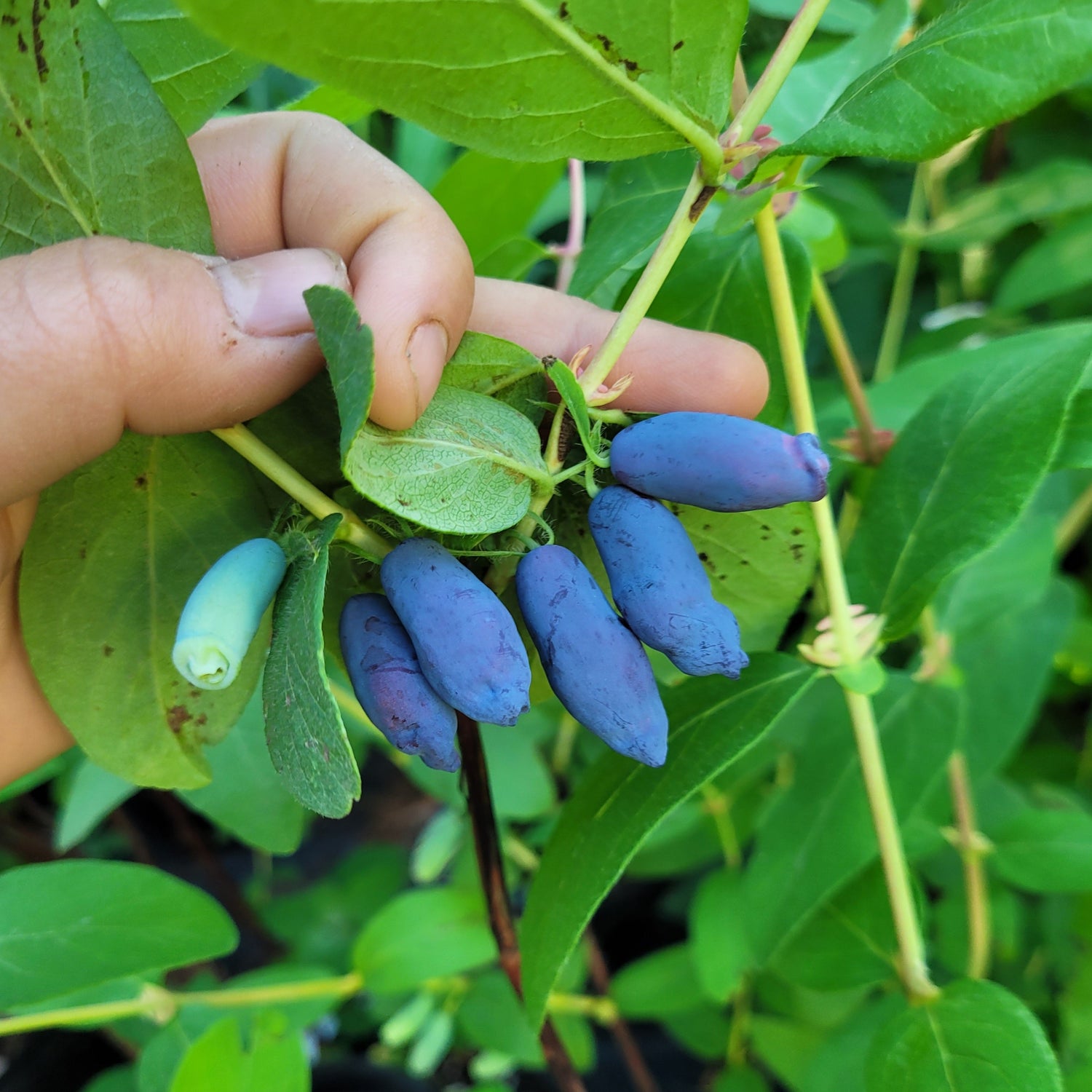
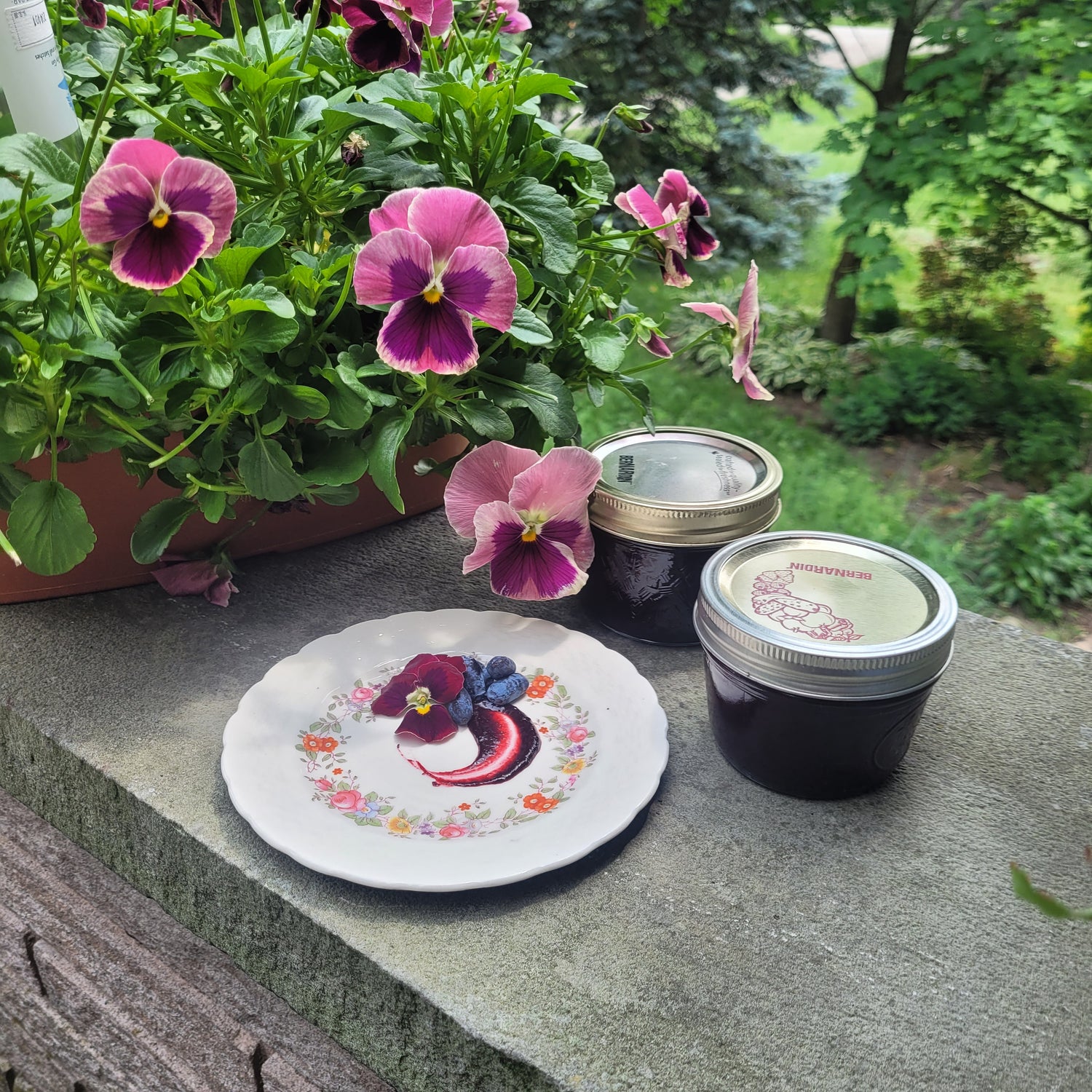
Why We Grow It: A sweetly flavoured favourite! Aurora tastes like a cross between a raspberry and a blueberry, with a satisfying chewy texture. The deep blue fruit are 3 cm long and juicy. Allow to sit out a few days after picking for optimally sweet fruit.
Species: Lonicera caerulea
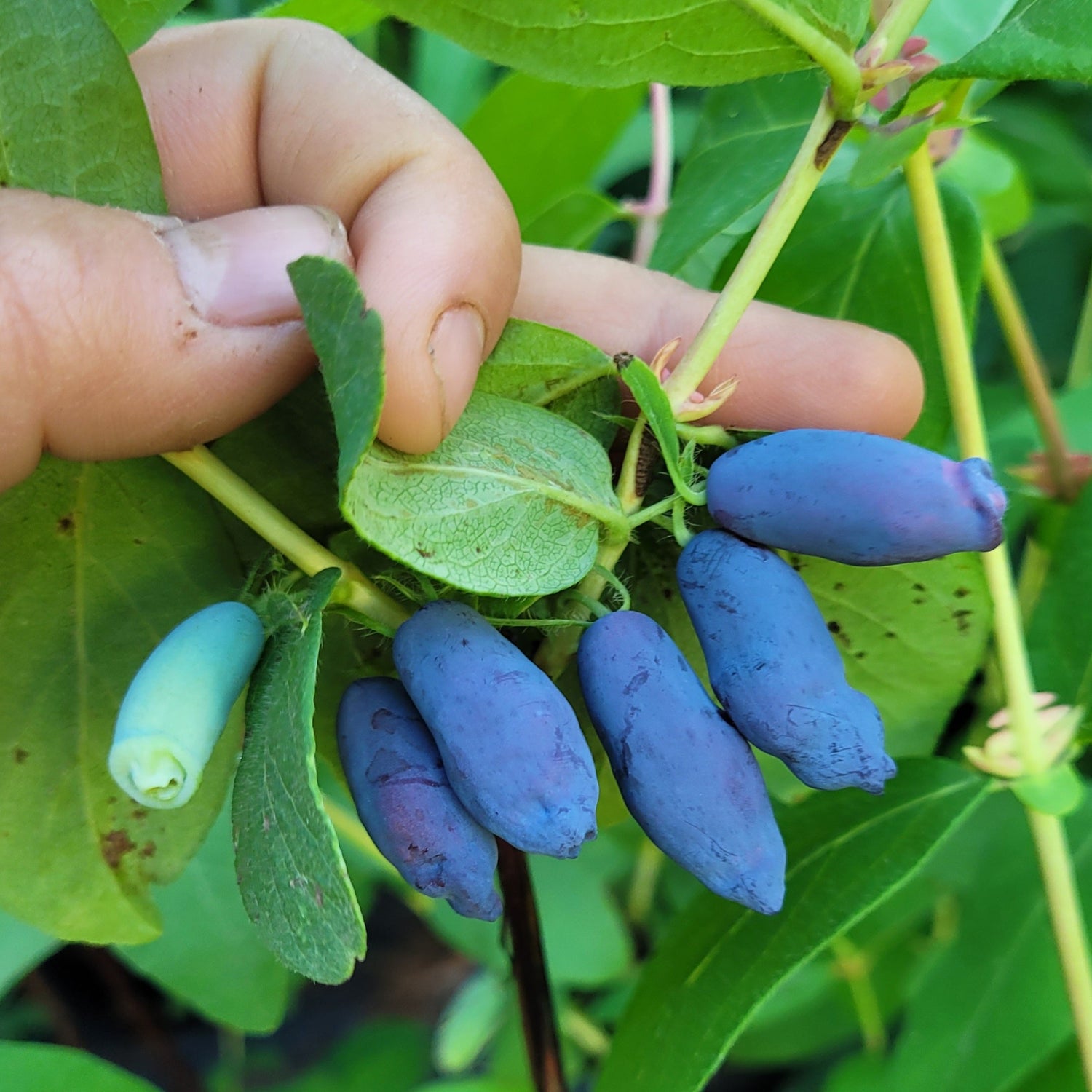
History: Blue Banana was developed by Lidia Stuart of Berries Unlimited, potentially bred from Russian varieties or a cross between Russian and Japanese varieties. The variety is named for the unique shape of the berries and was likely selected for their large size and sweet flavour.
Why We Grow It: Blue Banana is exceptionally sweet compared to other haskap varieties and the flavour has been described as 'smoked strawberry.' These large, sweet berries are good for fresh eating along with cooking, baking, preserving, etc! The bush itself grows quickly and is relatively disease resistant.
Species: Vaccinium corymbosum
History: Blueray higbush blueberry was introduced in 1941, although there is little other information on its origins. It may have originated in New Jersey where blueberry cultivation began.
Why We Grow It: Blueray produces an abundant crop of very large berries with good flavour. This cold hardy variety is great for home growers! Blueberries are great for baking, for example Steph made some wonderful black currant and blueberry tarts that are pictured here!
Species: Lonicera caerulea
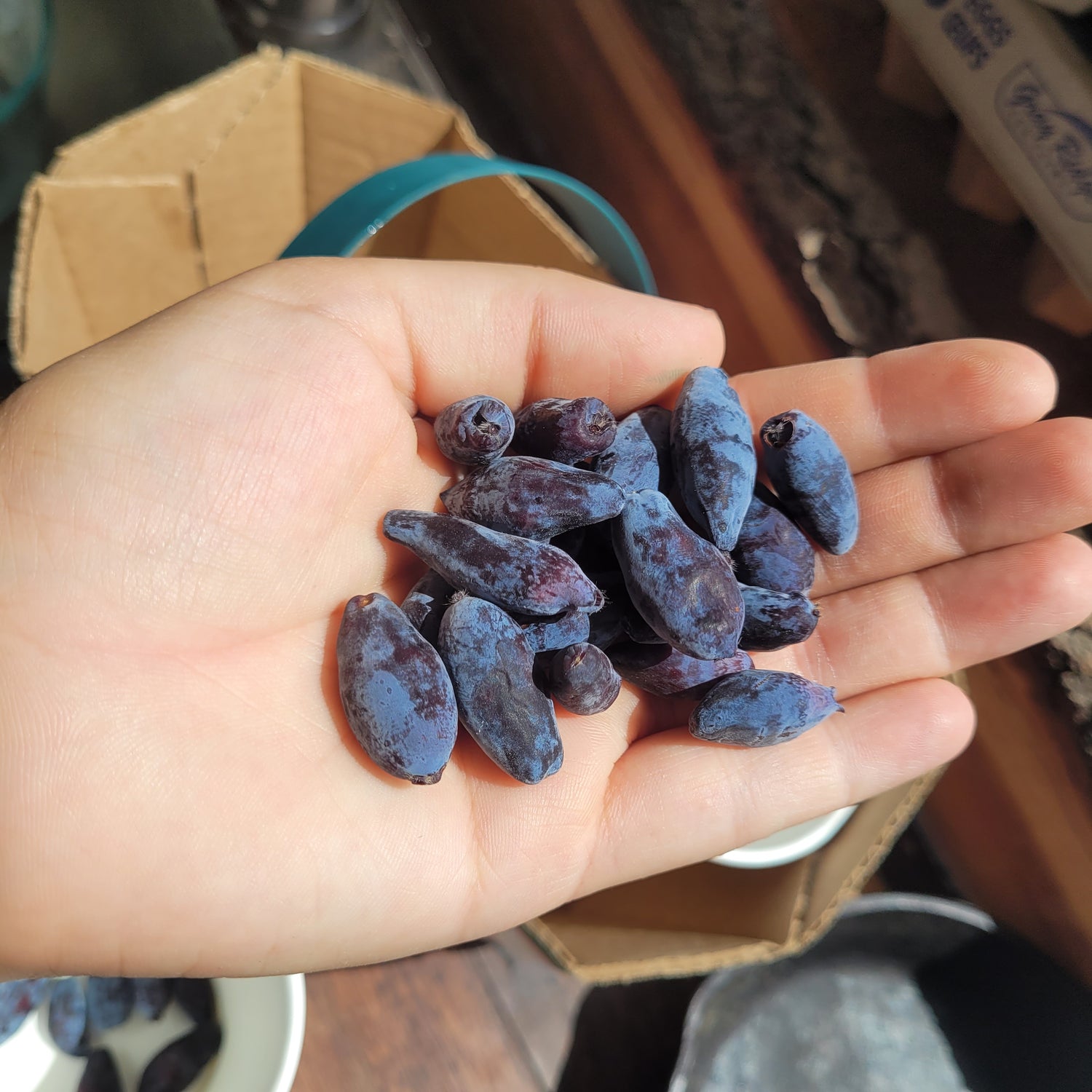
History: Boreal Beast was developed by Bob Bors at the University of Saskatchewan as part of the Boreal series of haskaps. The goal of the Boreal series is to cross haskaps from Russia, Japan, and the Kuril Islands to create superior cultivars with the best qualities of all three strains. Boreal Beast was rated very highly for flavour in the breeding program. Named after Beauty and the Beast, Boreal Beast was intended to be the pollination partner for Boreal Beauty but in practice it has been found that their pollination times don't quite overlap.
Why We Grow It: Boreal Beast is noted for its excellent flavour with a great aroma and pleasant aftertaste. The shrub itself is quite vigorous and sturdy, and produces good-sized crops of delicious medium-sized berries.
Species: Lonicera caerulea
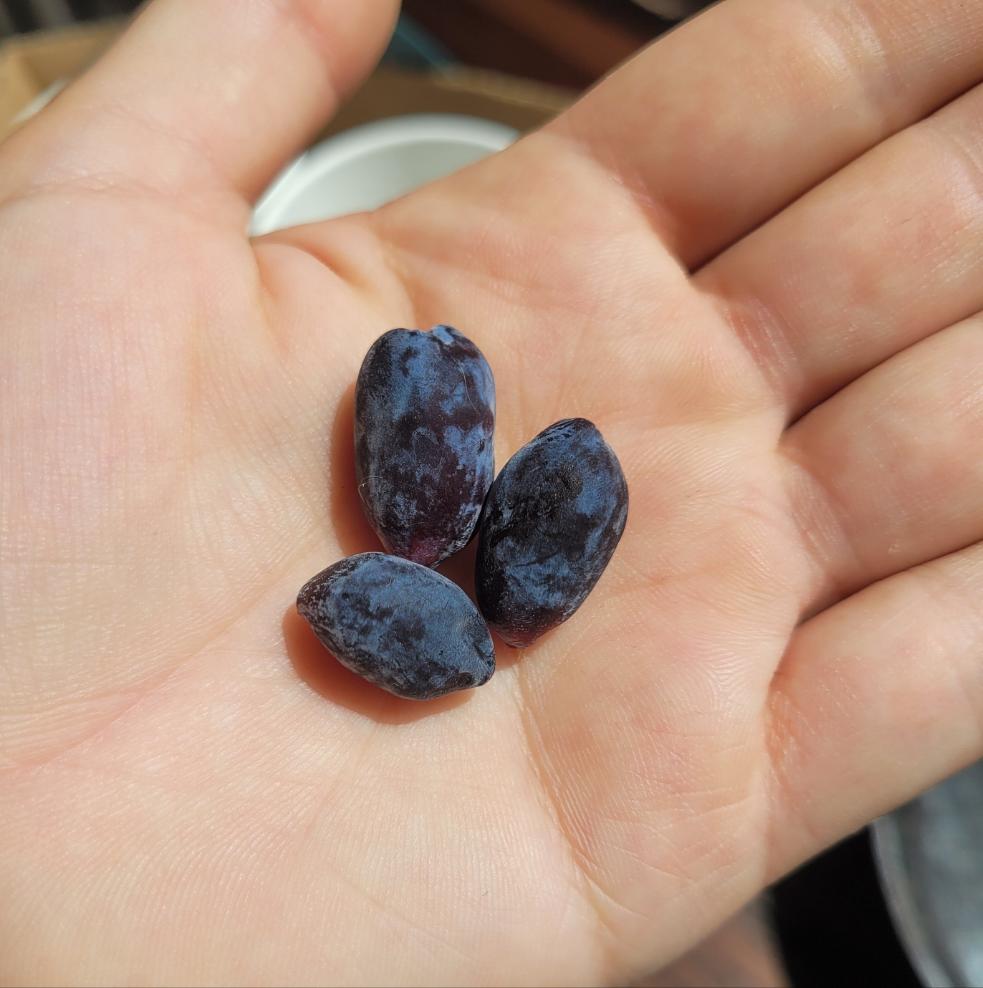
History: Boreal Beauty haskap is part of the Boreal series of haskaps developed by Bob Bors at the University of Saskatchewan. The goal of the Boreal series is to cross haskaps from Russia, Japan, and the Kuril Islands to create superior cultivars with the best qualities of all three strains. Boreal Beauty was released in early 2017, chosen for its large size, firmness, and good flavour. Its name, a reference to Beauty and the Beast, was meant to be a handy way to remember that Boreal Beast is the recommended for pollination partner for this variety, but in practice unfortunately the two don't overlap quite enough for pollination to be optimal.
Why We Grow It: Boreal Beauty sports large berries that are more oval-shaped and firm than other haskaps while maintaining with good flavour. This variety could show promise for mechanical harvesting. It is also quite vigorous and produces heavy crops.
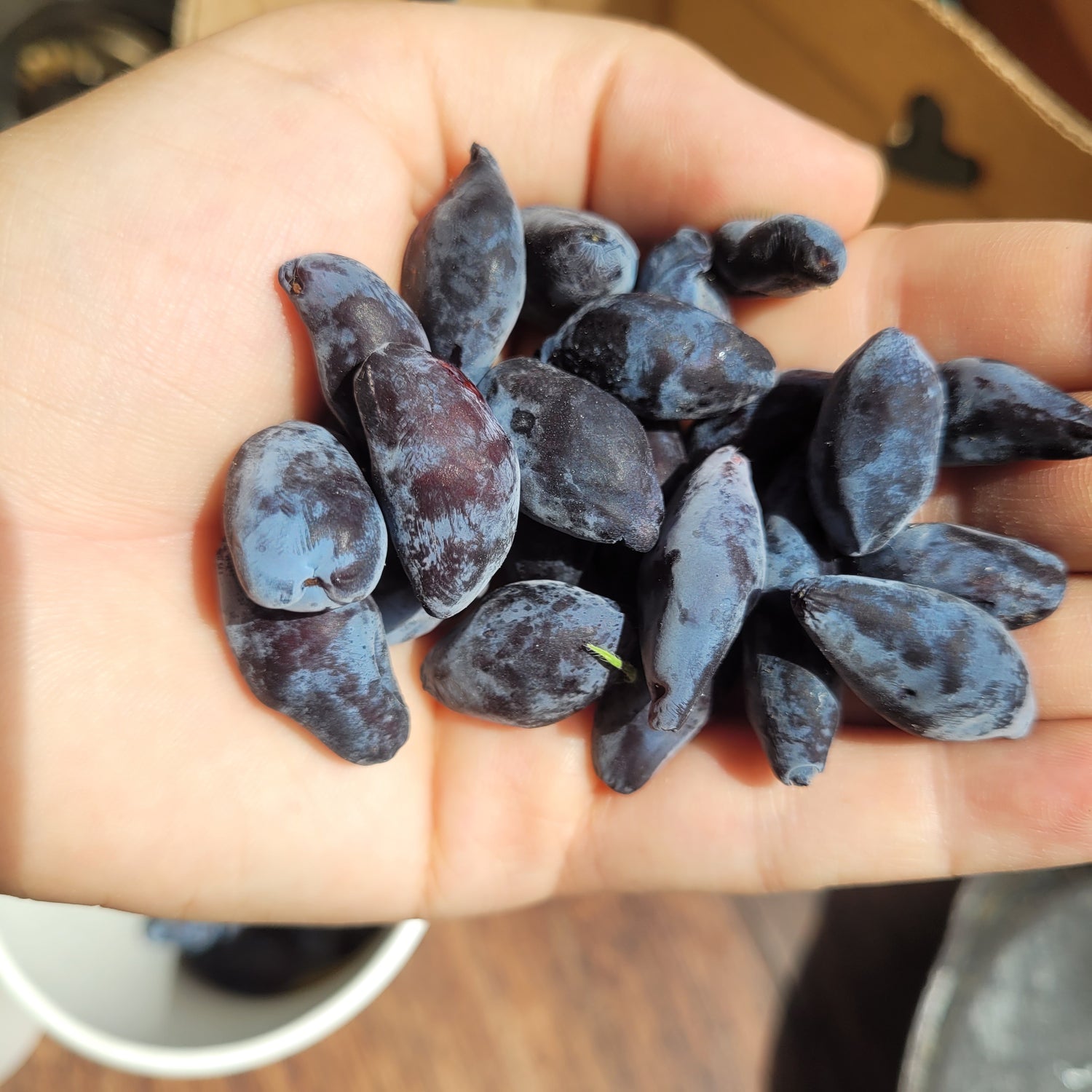
Species: Lonicera caerulea
History: Boreal Blizzard was developed by Bob Bors at the University of Saskatchewan as part of the Boreal series of haskaps. The goal of the Boreal series is to cross haskaps from Russia, Japan, and the Kuril Islands to create superior cultivars with the best qualities of all three strains. While Boreal Blizzard is only a cross between Russian and Japanese varieties, it has produced some of the largest berries the breeding program has seen while boasting good flavour!
Why We Grow It: Boreal Blizzard produces exceptionally large berries that are meaty and sweet. This heavy cropper is ideal for U-pick operations and small farms where the larger berries make them more suitable for hand-picking.
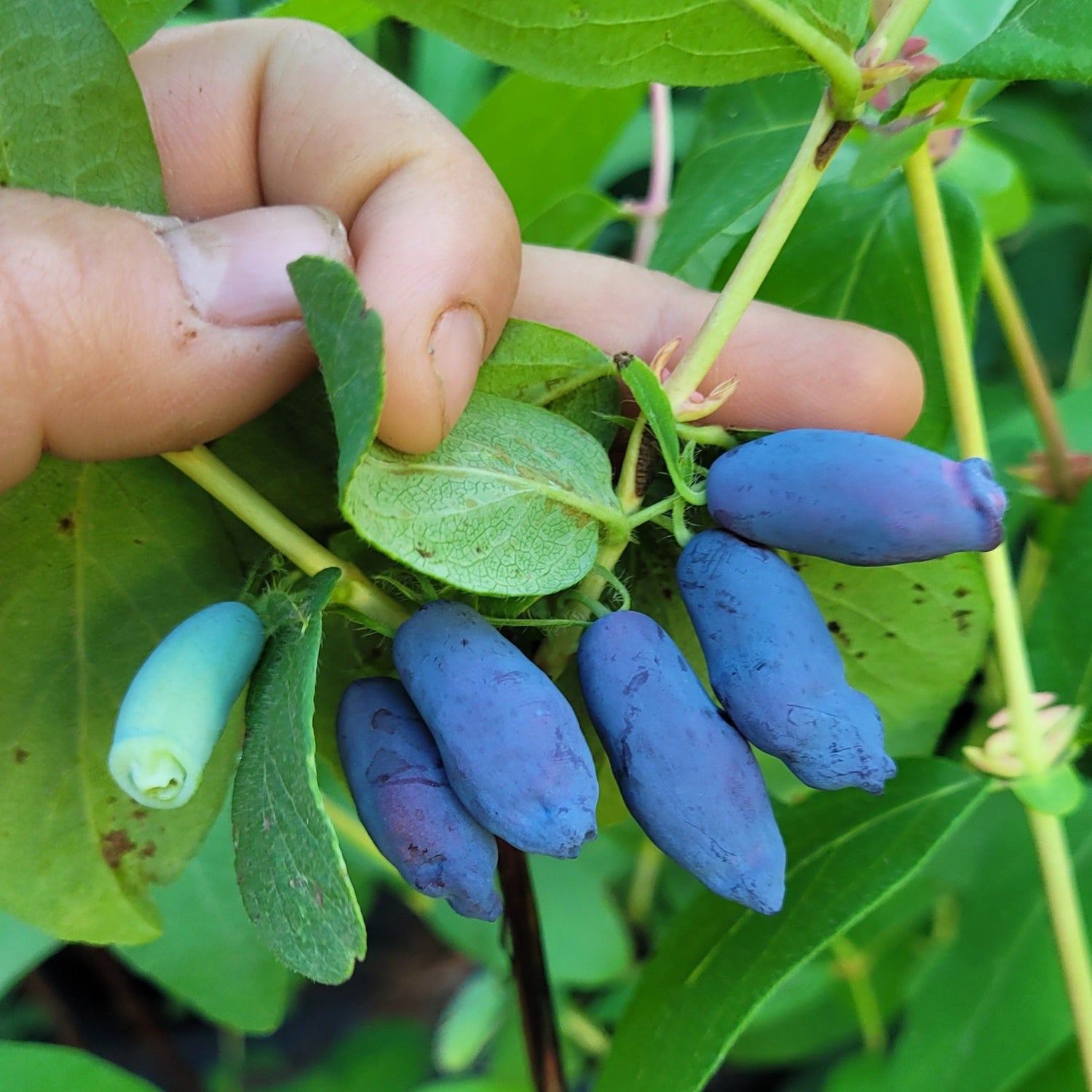
Species: Lonicera caerulea
History: Borealis was created by Bob Bors at the University of Saskatchewan and was released in 2007, likely being selected for its large fruit, good flavour, and resistance to powdery mildew.
Why We Grow It: Borealis produces large, round berries with an excellent flavour, albeit less sweet than more modern haskap varieties. The berries are excellent for baking although they are a bit softer and need to be handled more delicately when being picked. The bush itself is a little more compact than other varieties and is very resistant to powdery mildew.
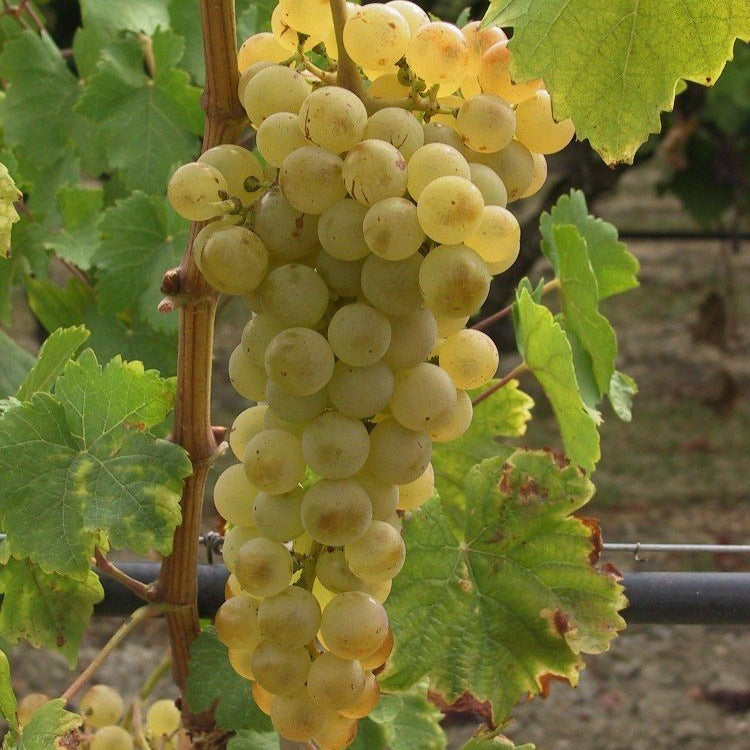
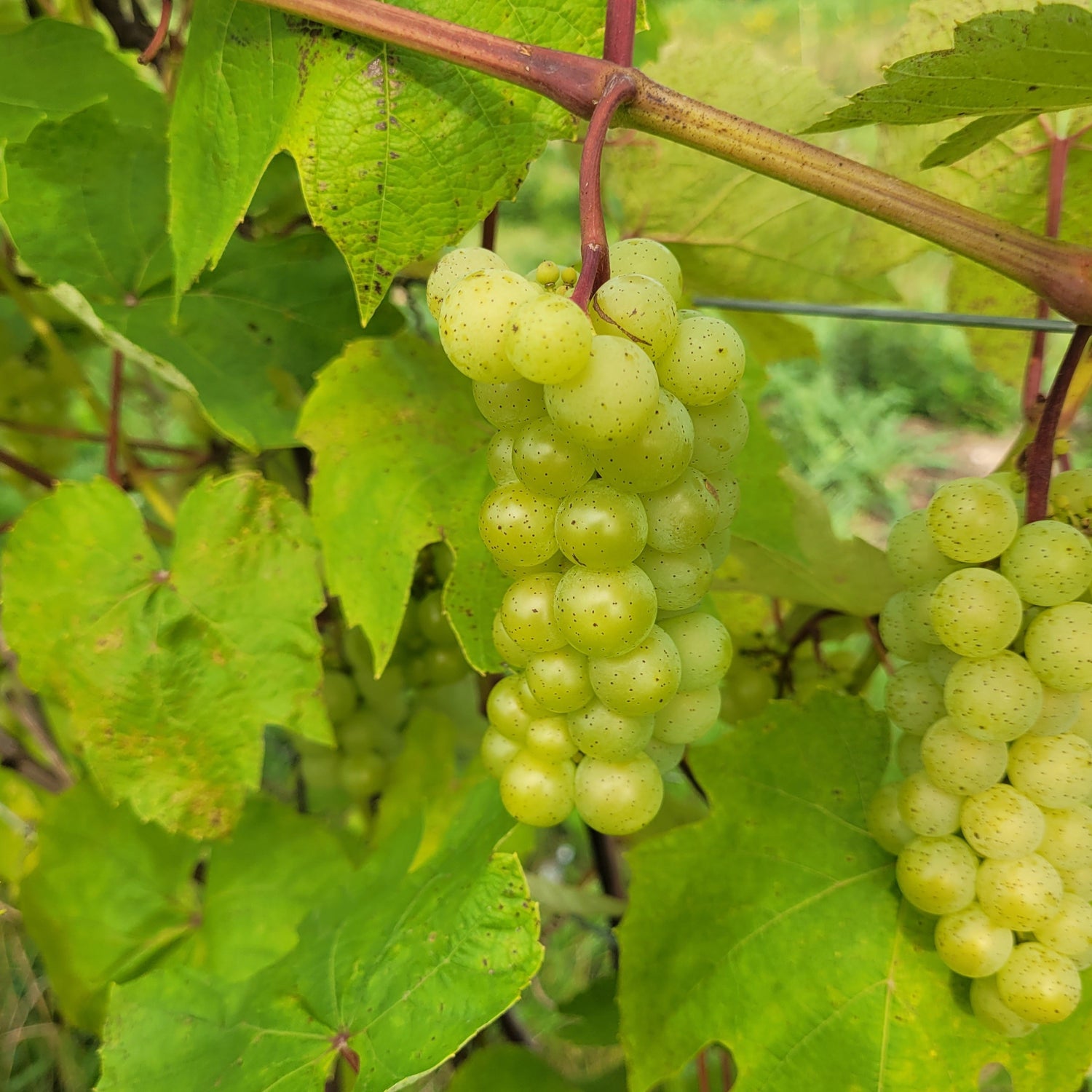
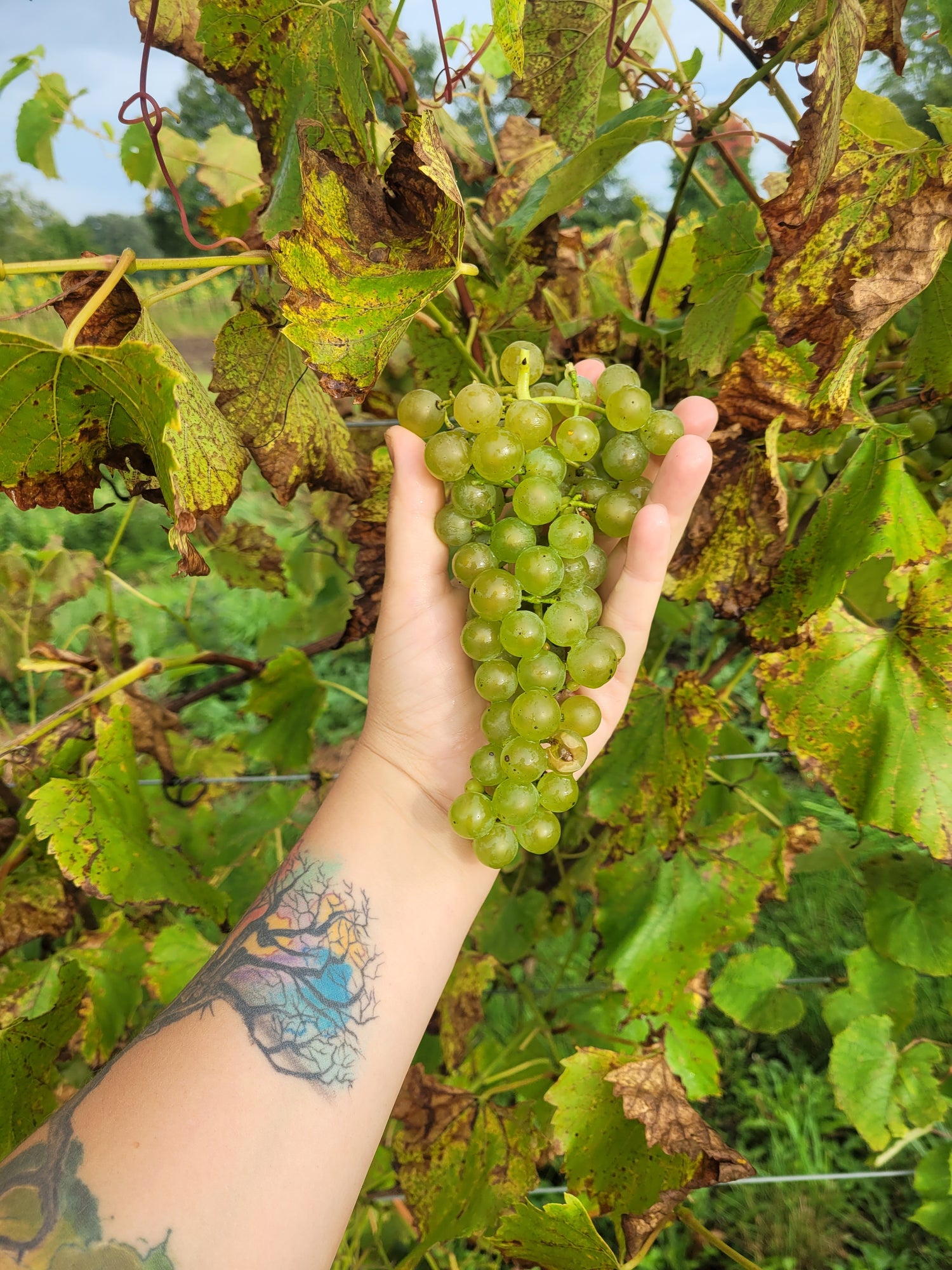
Species: Vitis riparia x Vitis labrusca
History: Brianna was bred by renowned grape breeder Elmer Swenson as a cross between Riverbank grape (V. riparia) and Fox grape (V. labrusca) as part of his effort to create high-quality grapes that were cold hardy enough to be grown in the cooler parts of North America. Brianna was first bred in 1983 on Swenson's farm in Wisconsin and released in 2001. It was named by Ed Swanson who was planning on naming it Brian due to its vigour but chose Brianna instead, believing the feminine name was more fitting for white wine.
Why We Grow It: Brianna is a seeded green grape with an excellent complex fruity flavour that has hints of grapefruit and pineapple. The medium-large green fruit is suitable for fresh eating or making wine or juice. This variety boasts good disease resistance, vigorous growth, and begins producing fruit at a young age.
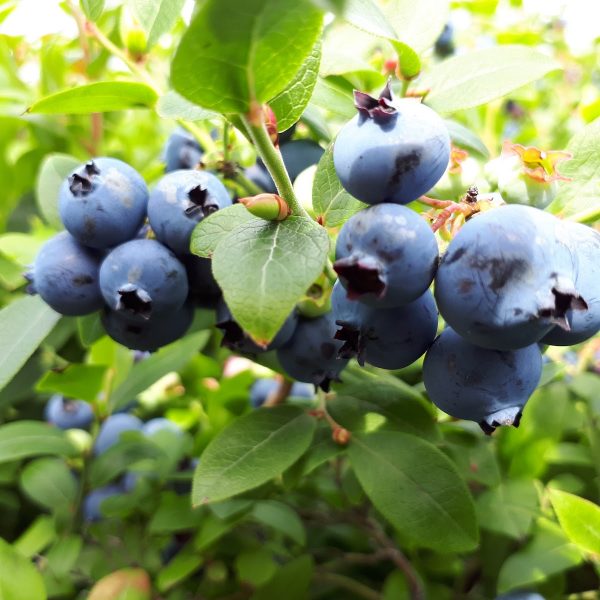
Species: Vaccinium angustifolium
History: Brunswick lowbush blueberry is the second lowbush variety developed at the AAFC Kentville Research and Development Centre in Nova Scotia. It was discovered growing wild on a blueberry farm owned by Shepoddy Blueberry and Lumber Co. in New Brunswick and was selected in 1965 for further testing. Proving to be an excellent variety that grows well and is relatively disease-resistant, it was named for its province of origin and released in 1977.
Why We Grow It: Brunswick produces firm, medium-sized dark blue berries, bursting with sweet flavour. These lowbush blueberries grow into a compact bush, with glossy dark green foliage that turns a lovely red in autumn. Blueberries are great for baking, for example Steph made some wonderful black currant and blueberry tarts that are pictured here!

Species: Vitis sp. (hybrid)
History: Canadice is a cross between Bath and Himrod that was first bred in 1954 at the New York State Agricultural Experiment Station in Geneva, New York. Selected for its seedless nature and cold hardiness, it was released in 1977. The variety was named for Canadice Lake, one of the nearby Finger Lakes.
Why We Grow It: Canadice produces seedless red grapes that are sweet with a hint of spice. The fruit is best known for fresh-eating but it can also be used for jellies, juice and wine. Although this is one of the more cold hardy varieties of seedless grape, it may still suffer winter injury in a particularly cold year.
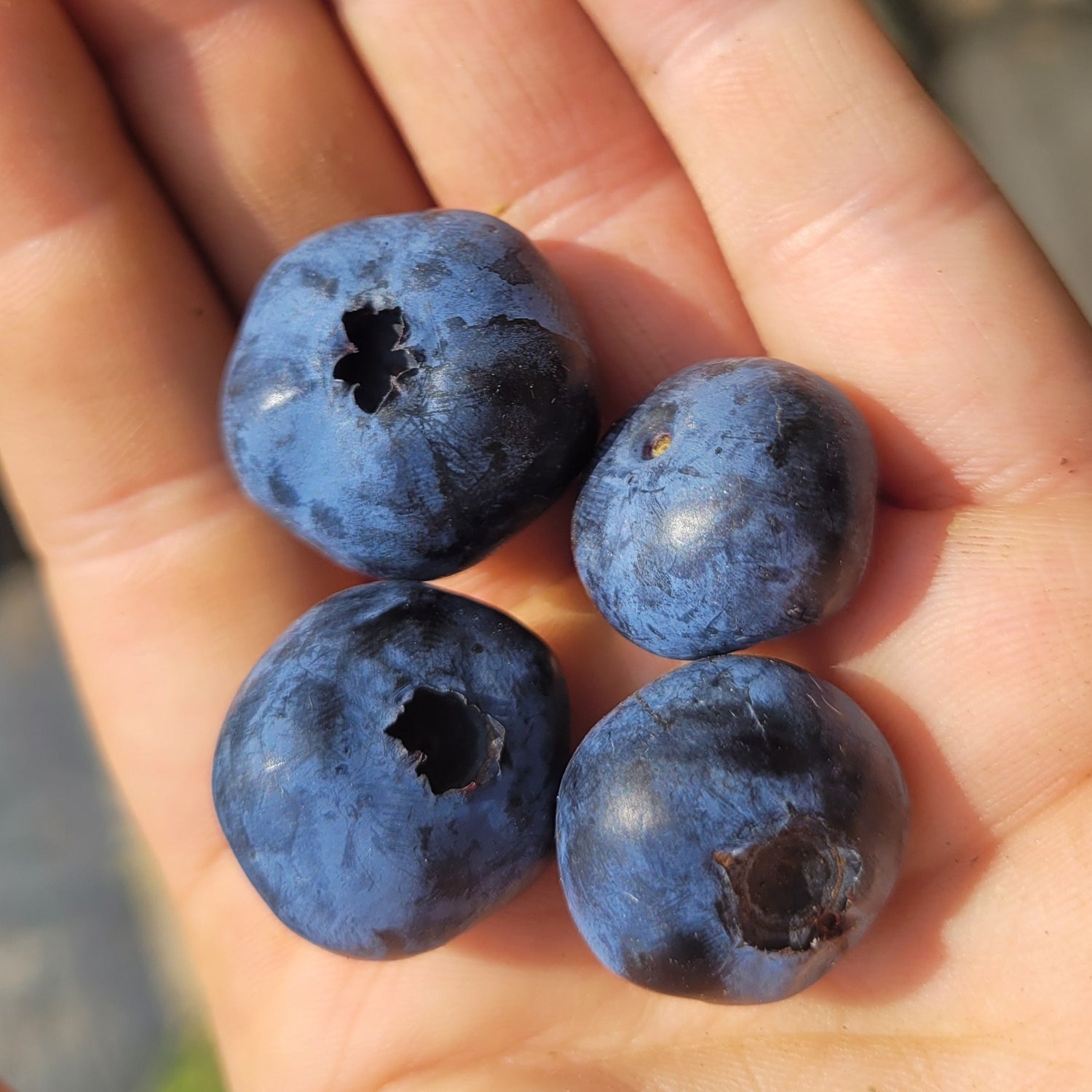
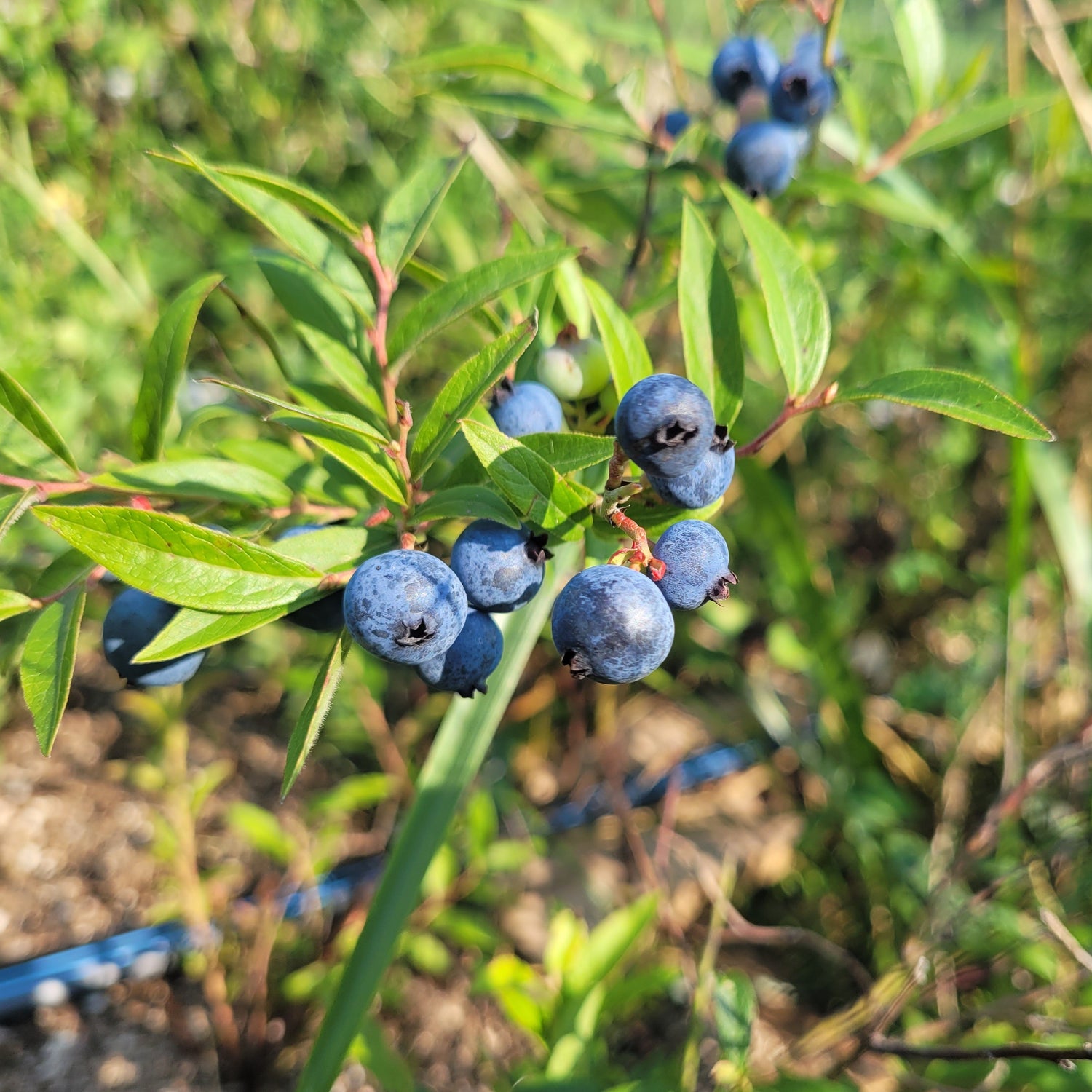
Species: Vaccinium corymbosum
History: Chandler higbush blueberry was introduced in 1995. It originated in Corvallis, Oregon where it was developed by the United States Department of Agriculture's Agricultural Research Service agency's (USDA-ARS) Blueberry Breeding Program.
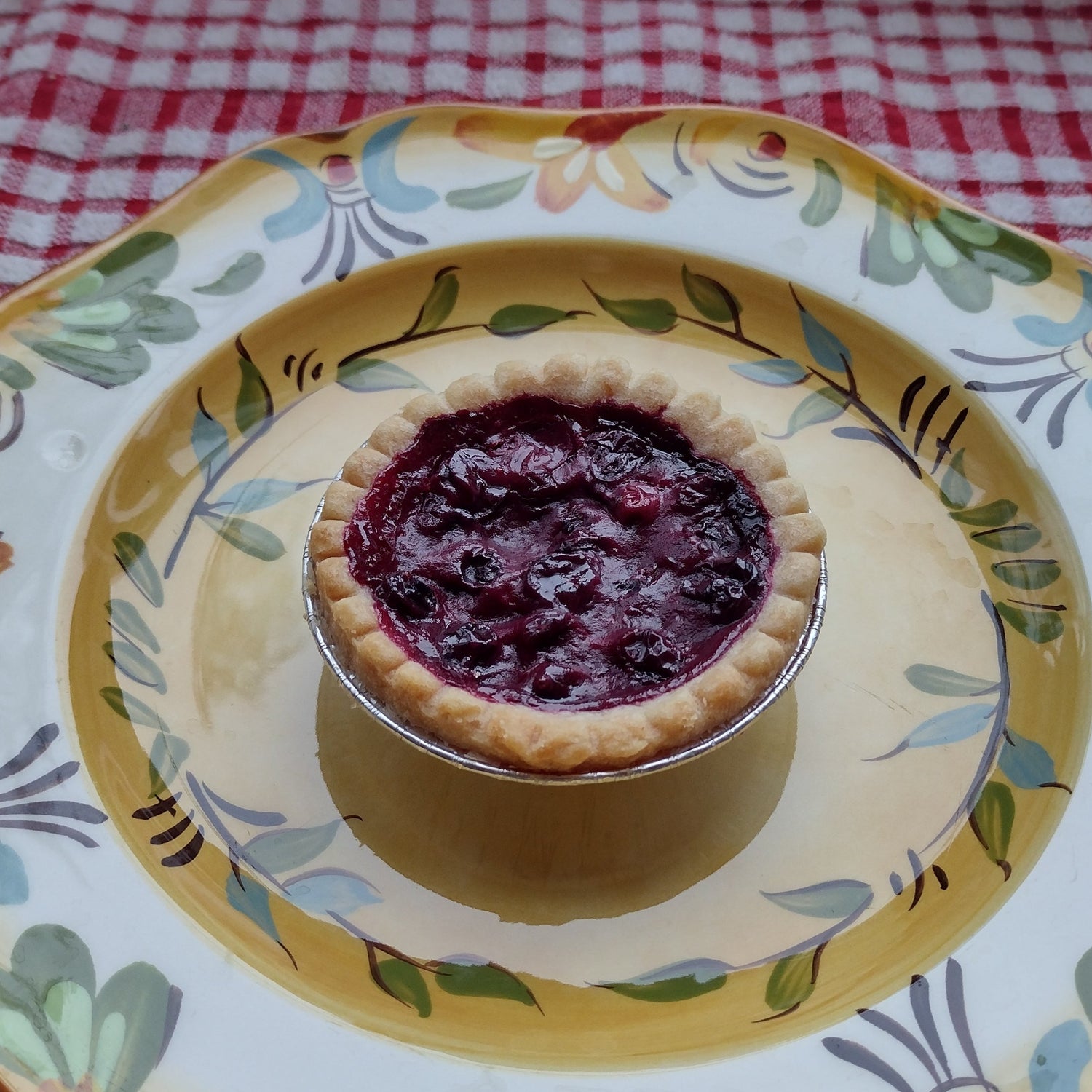
Why We Grow It: Chandler produces the largest blueberries in the commercial industry, and plenty of them! They are sweet and juicy despite their size and can be harvested over a long period of time. Blueberries are great for baking, for example Steph made some wonderful black currant and blueberry tarts that are pictured here!
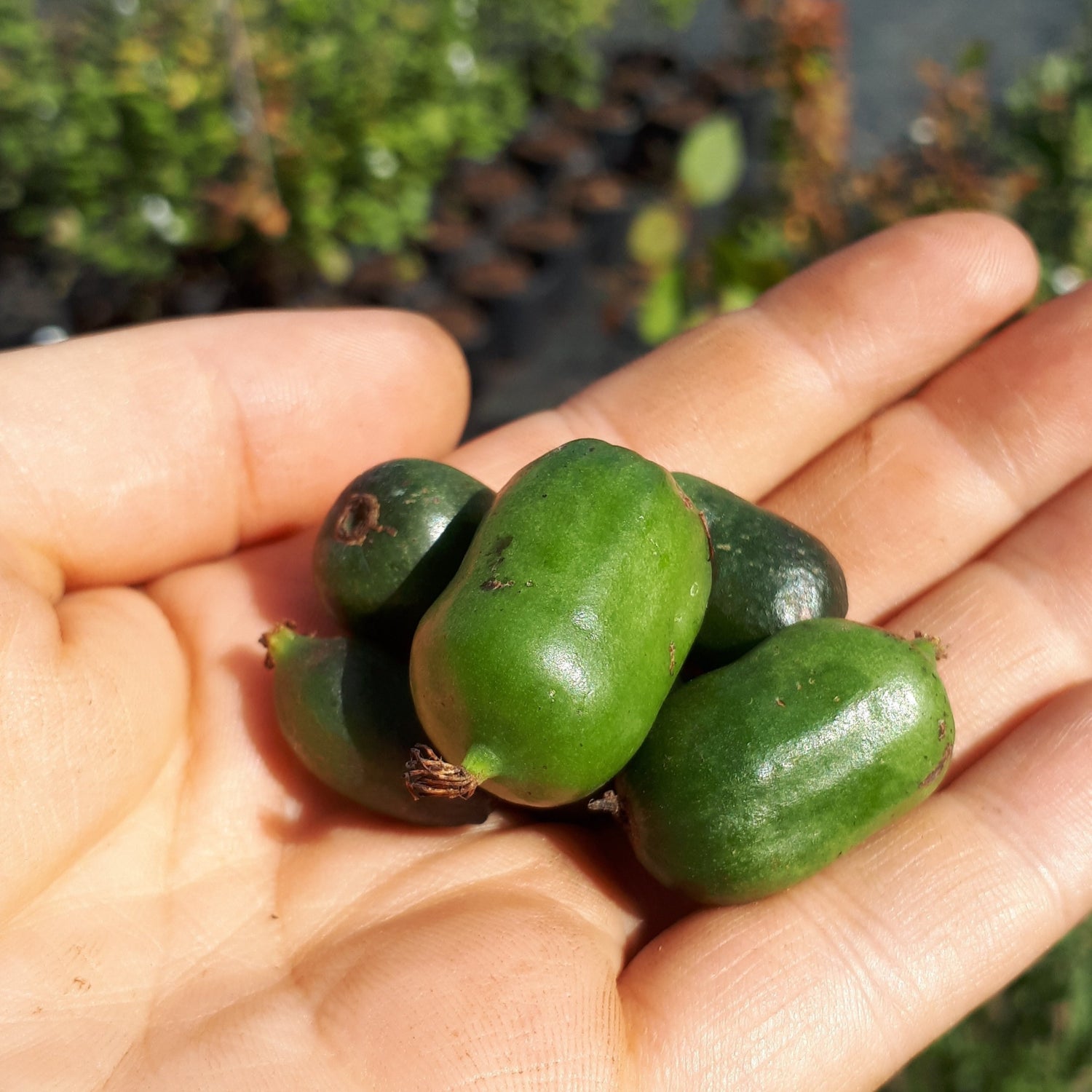
Species: Actinidia arguta
History: Changbai Giant kiwis were discovered by the Changbai Mountain Research Institute of the Chinese Academy of Agriculture near the North Korean border. The variety was likely collected and propagated due to its unusual round shape and excellent flavour. Named for the Changbai Mountains where it was discovered, its name translates literally from Mandarin as 'perpetually white.' It is also named for the exceptionally large fruit it produces.
Why We Grow It: Aside from its interesting origins, Changbai Giant also boasts unusually shaped kiwis compared to other varieties: round like an apple rather than more oblong like other hardy kiwis. The fruit is also very sweet and the plant itself is a little hardier than some other varieties. Like other female varieties, it can produce a large crop of fruits and it is recommended that the vine be grown on a trellis or other kind of support.
Showing 15/79
Next