
berry qty discount




79 products
Sort by:
79 products
79 products
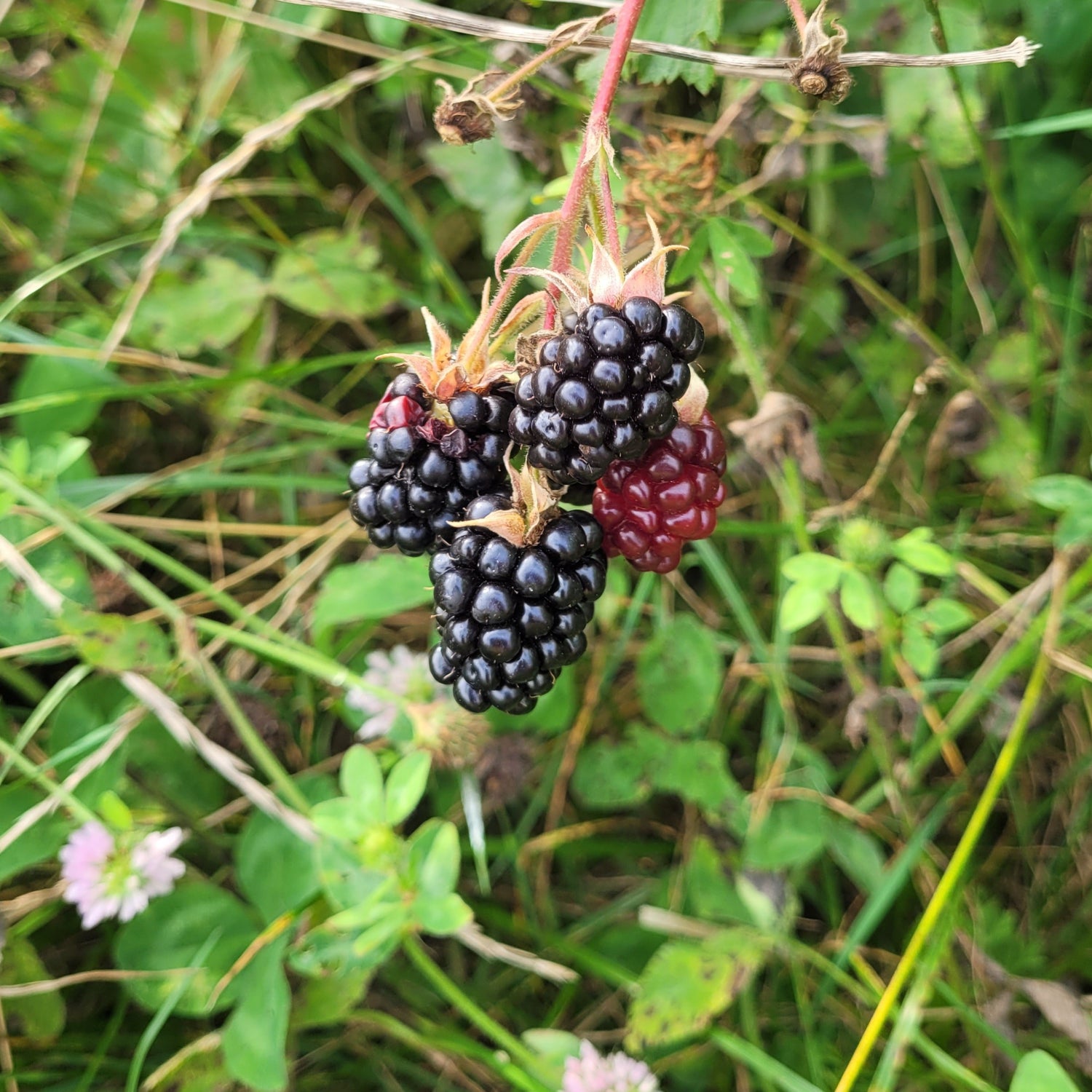
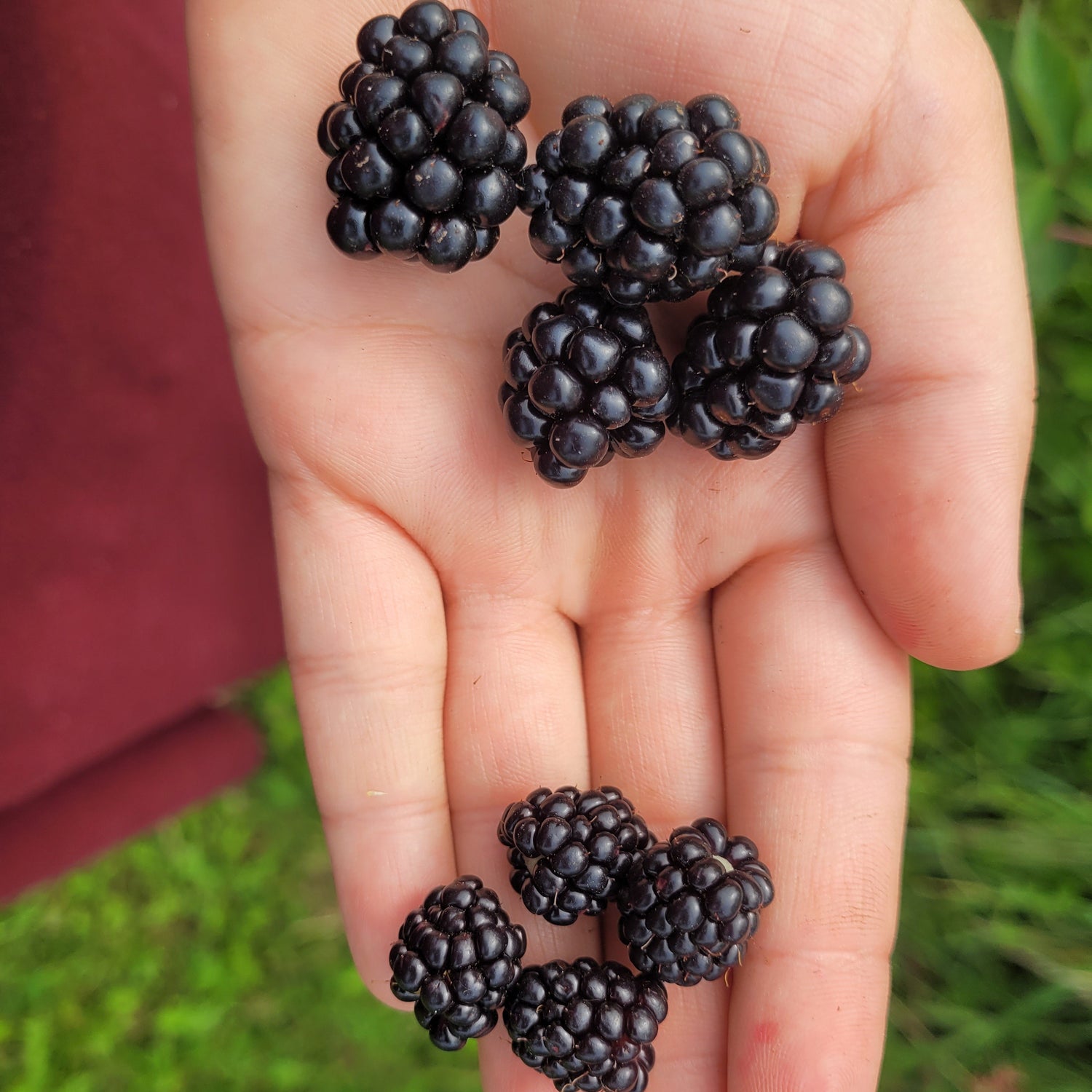
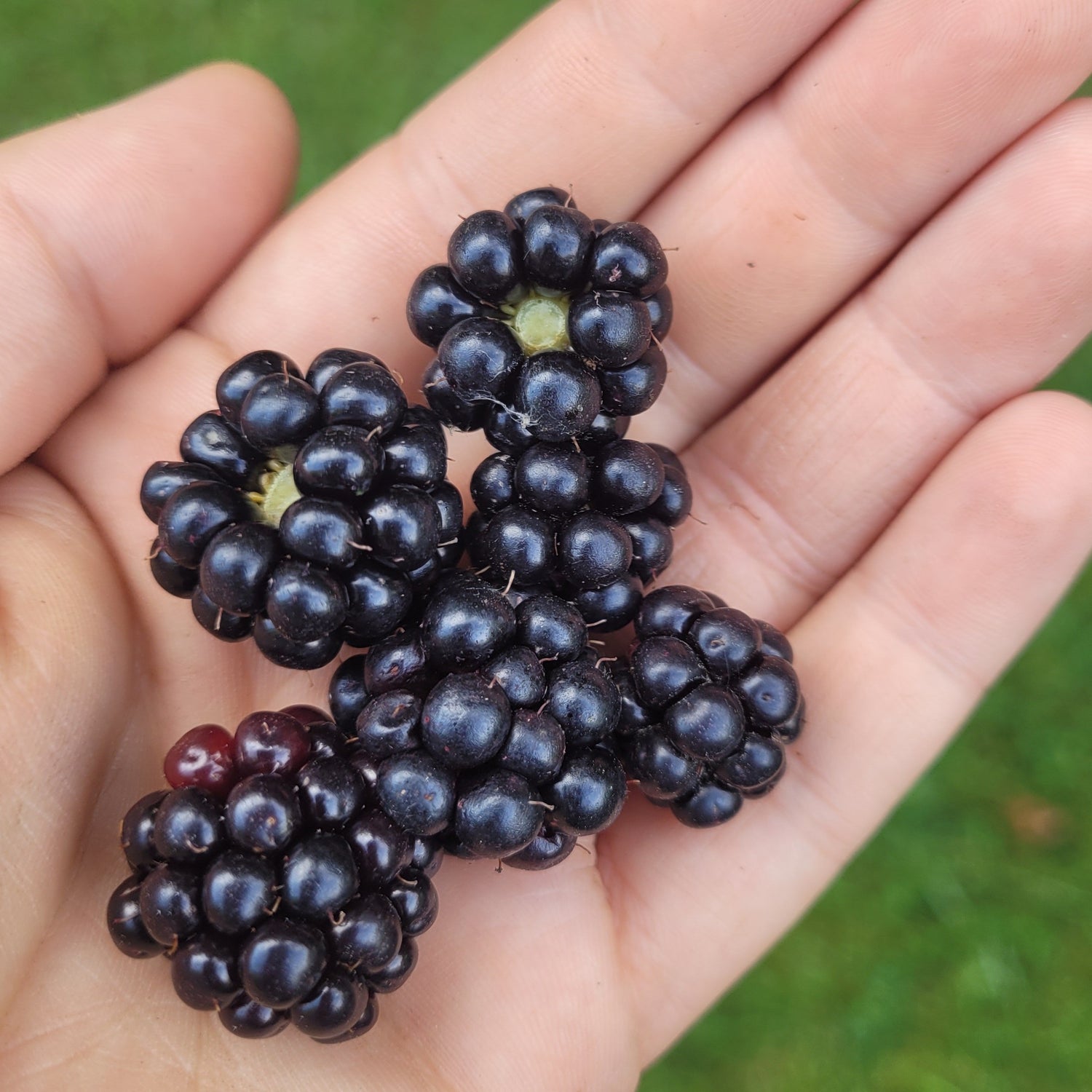
Species: Rubus sp
History: Chester Thornless was created and released as a collaboration between the Agricultural Research Service, USDA, Illinois Agricultural Experiment Station, Ohio Agricultural Research and Development Station, and Maryland Agricultural Experiment Station. It was first bred in Illinois in 1968 and was selected for its thornless nature and cold hardiness. It was later released in 1985.
Why We Grow It: Chester Thornless is easy to grow and rewarding. It produces a reliable bounty of firm, sweet, juicy blackberries that are great for a wide variety of uses.
Pictured on the left: top: Chester, bottom: Illini Hardy

Species: Lonicera caerulea
History: Chito was created by Dr. Maxine Thompson who collected open-pollinated seeds from berry farms in Hokkaido, Japan in 2000. The seeds were planted in Oregon and evaluated. Chito was selected in 2014 for its open growth habit, vigour, yield, and fruit quality.
Why We Grow It: Chito produces a large, sweet/tart, ovate berry with a milder flavour than other haskaps. Like other haskaps they are good for fresh eating, baking, and making jam/jelly. This vigorous shrub has a more open growth habit than other varieties, making the fruit easier to see and harvest.

Species: Vitis labrusca x V. vinifera
History: Concord was created by Ephraim Bull in Massachusetts. In 1843, he began breeding wild V. labrusca grapes, occasionally hybridizing them with V. vinifera, in an effort to breed a good quality grape that could survive a colder climate. After growing 22,000 seedlings, he found one that fit what he was looking for. He named it Concord after the town where his farm was located and introduced it in 1854. In 1869, Dr. Thomas Welch created pasteurized Concord grape juice that prevented fermentation, marketing it as a non-alcoholic substitute for Communion wine. This business eventually became the Welch's company that still exists today. By 1923, Concord became the most commonly grown commercial grape in North America and although its status has fallen somewhat, it is still commonly grown and used in many grape products. The distinct colour of the grapes is also the reason why grape-flavoured products are coloured purple!
Why We Grow It: Concord produces dark blue slipskin grapes that are aromatic with a sweet flavour. This hardy, vigorous variety is great for fresh eating, baking, and jelly and is suitable for juice and wine as well. The grapes do contain a large seed.

Species: Vaccinium corymbosum, hybridized with V. ashei and V. darrowi
History: Draper blueberries were developed at Michigan State University by renowned plant breeder James Hancock who has also developed several other notable blueberry varieties and other fruits such as the Redhaven peach. He worked with Arlen Draper, a blueberry breeder from the US Department of Agriculture, for 14 years to breed and test different varieties for commercial use, picking Draper due to its many excellent qualities. Named for Arlen Draper, this variety has quickly become an extremely popular commercial variety due to the size and quality of the fruit.
Why We Grow It: Draper produces large, firm fruit with an excellent sweet flavour. They are great for eating fresh or can be used in baking, jams, etc like other blueberries! The large size of the berries makes them good for u-pick orchards and the bushes stay slightly smaller than other highbush varieties! They also store better and longer than other blueberry varieties and ripen at the same time.
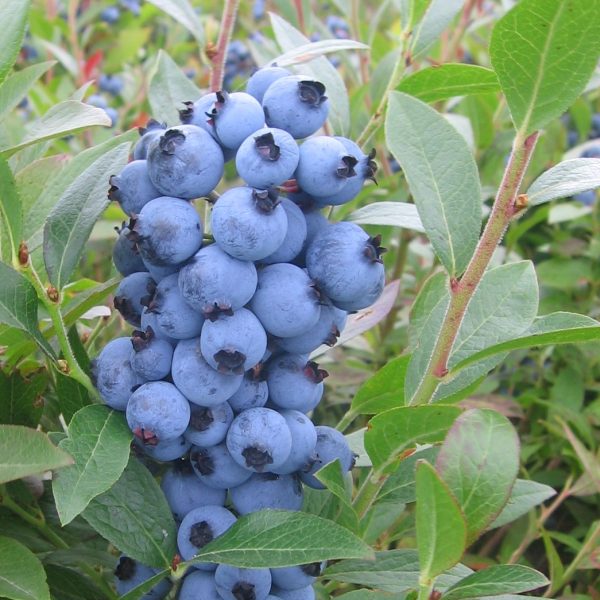
Species: Vaccinium corymbosum
History: Duke was developed in Maryland by Arlen Draper, a blueberry breeder working for the USDA, in collaboration with the New Jersey Agricultural Experiment Station. After ten years of testing it was released in 1987 thanks to its early ripening time, general disease resistance, reliable crops, and suitability for commercial sale. It was named Duke after S. Arthur "Duke" Galetta of the Atlantic Blueberry Company in honour of his support for blueberry breeding efforts over the years.
Why We Grow It: Duke produces good-sized crops of large, firm berries that are a good balance of sweet and tart. This is one of the earlier ripening blueberries and it has received the Royal Horticultural Society's Award of Garden Merit. Duke is an extremely reliable producer thanks to it's later bloom time that allows it avoid late spring frosts. Like other blueberries, it is great for a variety of uses including fresh eating, baking, and preserving!
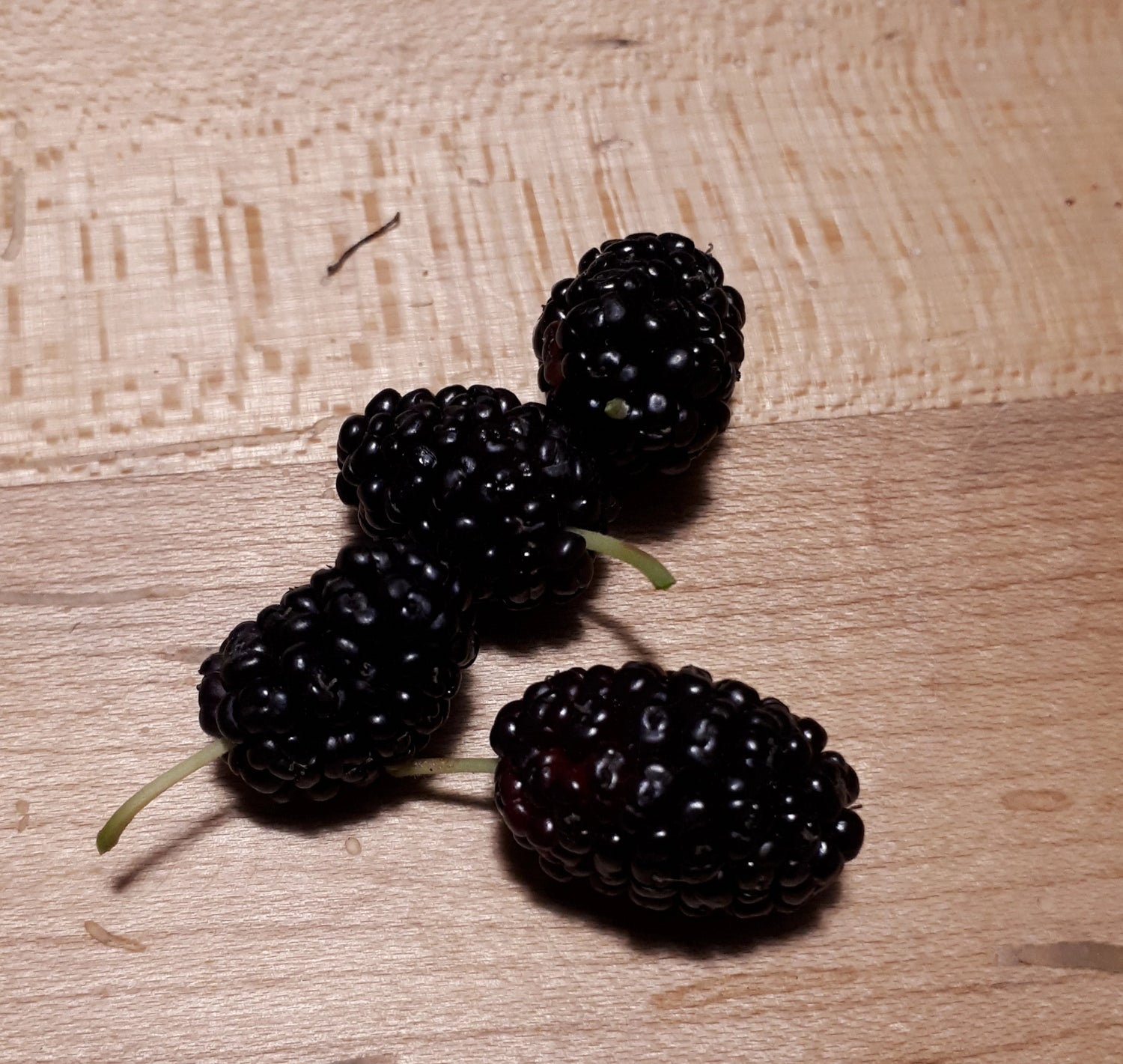
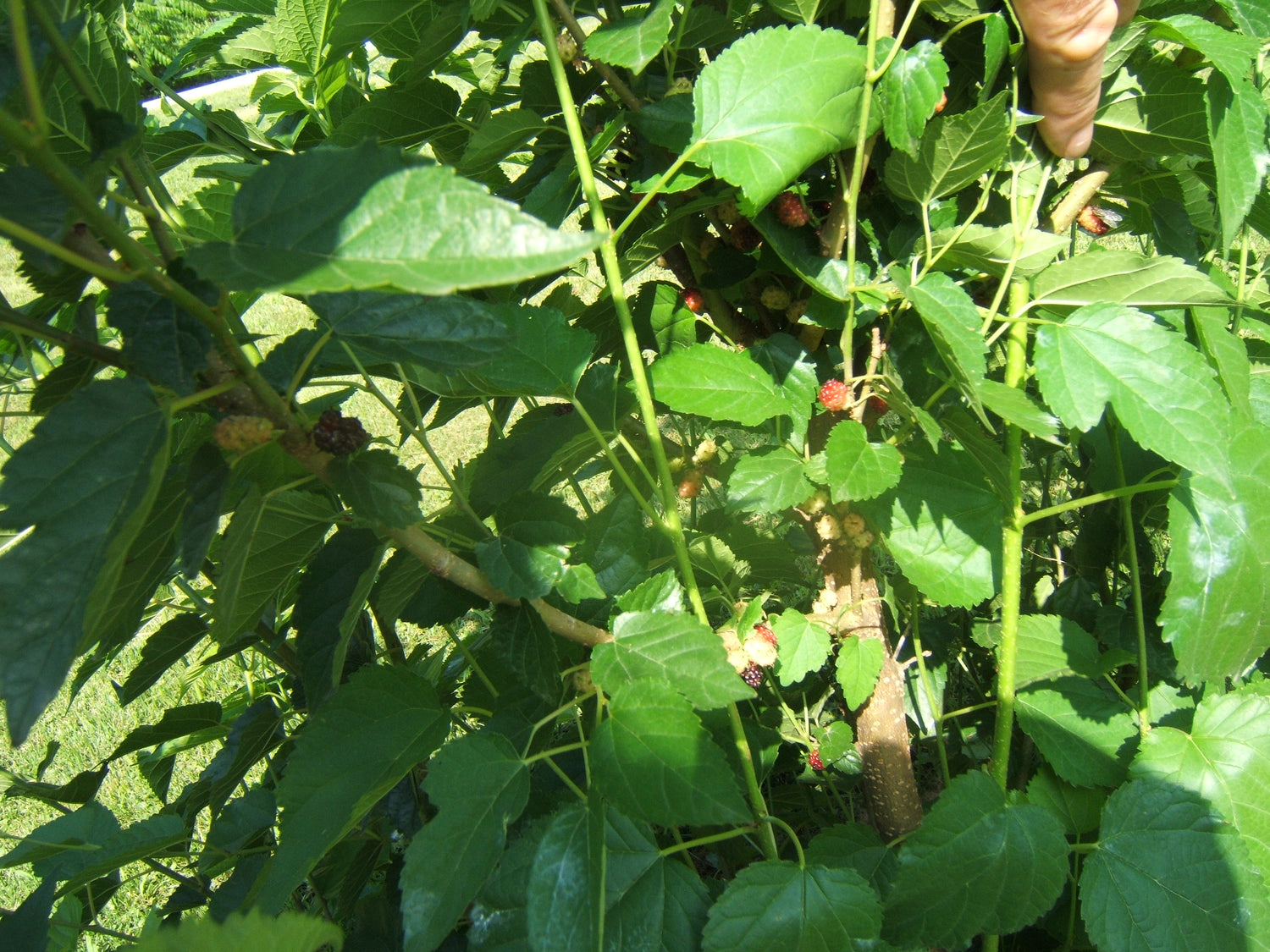
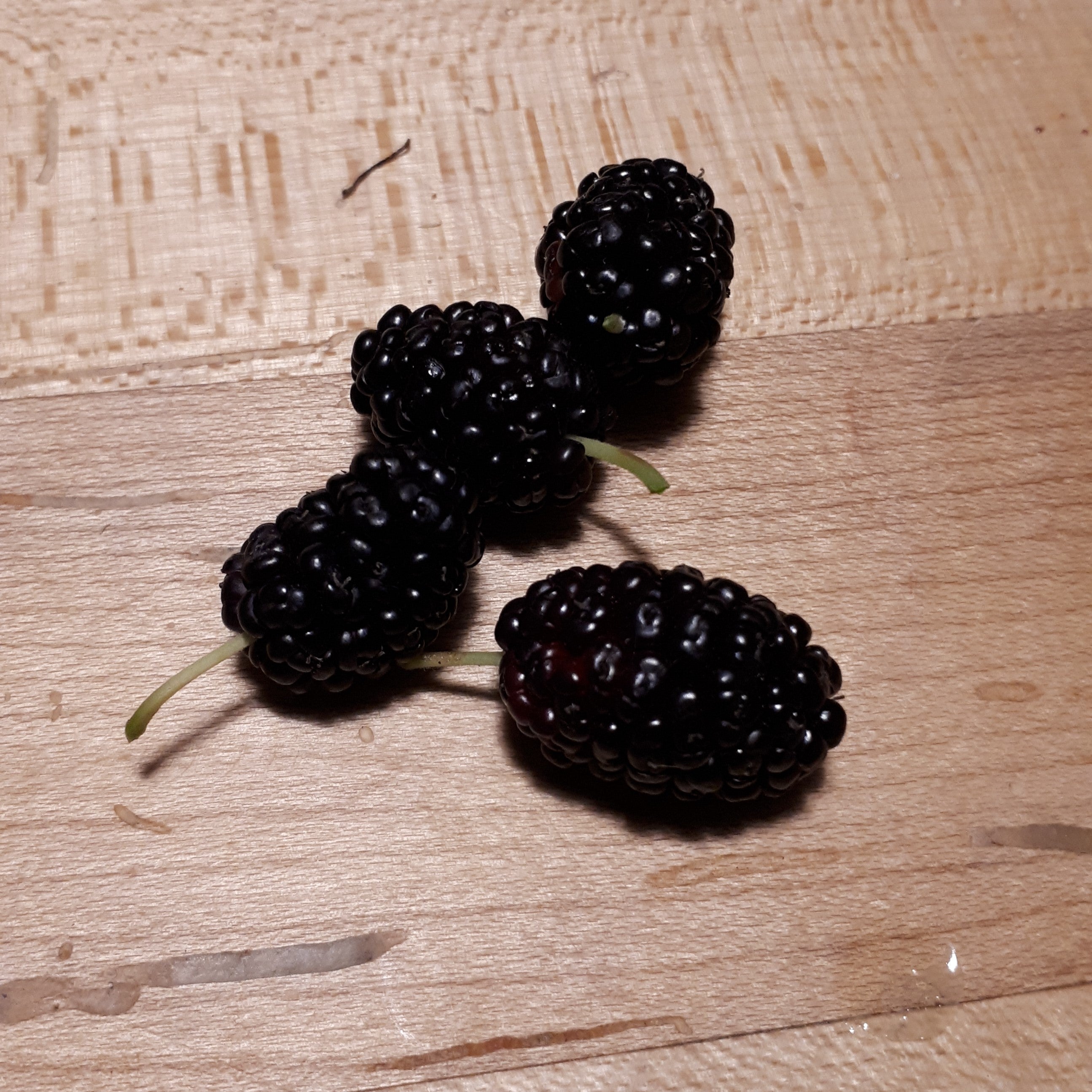
Species: Morus nigra
History: While the origins of the cultivar itself are unclear, Dwarf Everbearing mulberries can trace their history back to Mesopotamia and Persia where it is believed that Morus nigra originated. It can now be found naturalized in parts of Europe, Asia, and the Middle East where it has been cultivated for its edible properties. As a dwarf variety, Dwarf Everbearing is popular in gardens.
Why We Grow It: Soft and sweet with a hint of musk, it is hard to turn down fresh mulberries! In the right climate, Dwarf Everbearing will cycle in and out of fruiting for 10-12 weeks which gives you even more time to enjoy this lovely treat. It is also perfect for container growing, making a lovely patio plant in the summer and houseplant in the winter when pruned down to 4ft (for optimal fruiting).
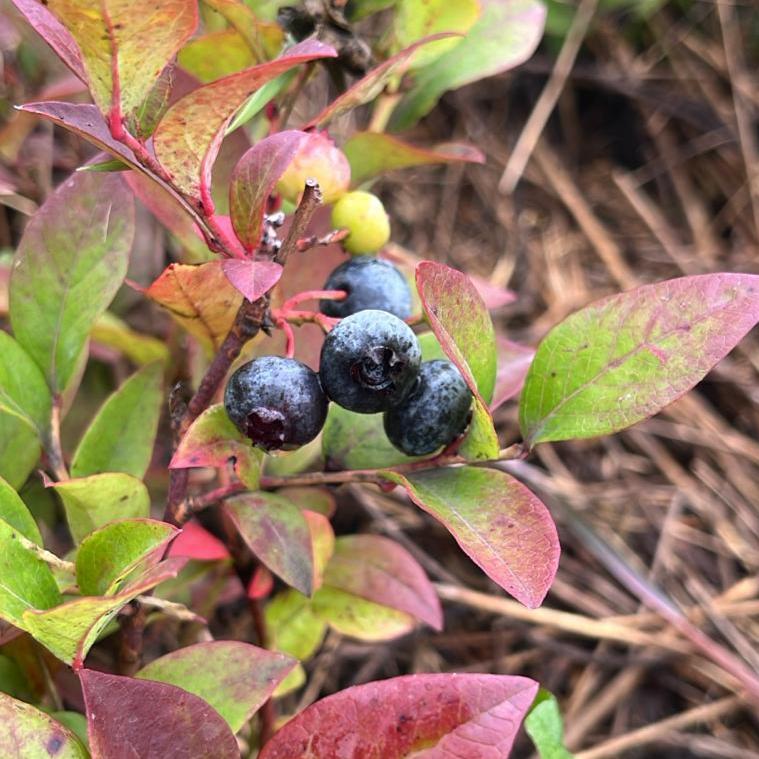
Species: Vaccinium corymbosum
History: Elliott originated in 1947 when Dr. George Darrow of the USDA first bred it. Elliott, and the other blueberries Dr. Darrow bred, were first evaluated by Dr. Arthur Elliott and then by members of the USDA such as Arlen Draper who has bred numerous blueberry varieties. It was released in 1973, over 25 years after the it was originally grown. Elliott was selected for the good quality of its fruit and its exceptionally late ripening time, making it a great variety for extending the blueberry season. It was named Elliott to honour Dr. Elliott's contributions to blueberry breeding efforts.
Why We Grow It: Elliott produces large berries with a mild sweet flavour late in the season. They are great for fresh eating, cooking, baking, and preserving! The bush is very productive and the firm fruit stores well. For those who want to enjoy fresh blueberries for as long as possible, Elliott is an excellent choice due to its very late ripening time!

Species: Vitis sp. (hybrid)
History: Frontenac was bred by renowned cold hardy grape breeder Elmer Swenson at the University of Minnesota. It was released in 1996 and since then has become commonly planted in Canada and northeastern America where other wine grapes will not perform as well.
Why We Grow It: Frontenac produces a blue grape that is best used for wine-making. It is suitable for rosés, dry red wines, and fortified wines such as port. It is high in both acidity and sugar, producing a balanced wine with a nice colour.
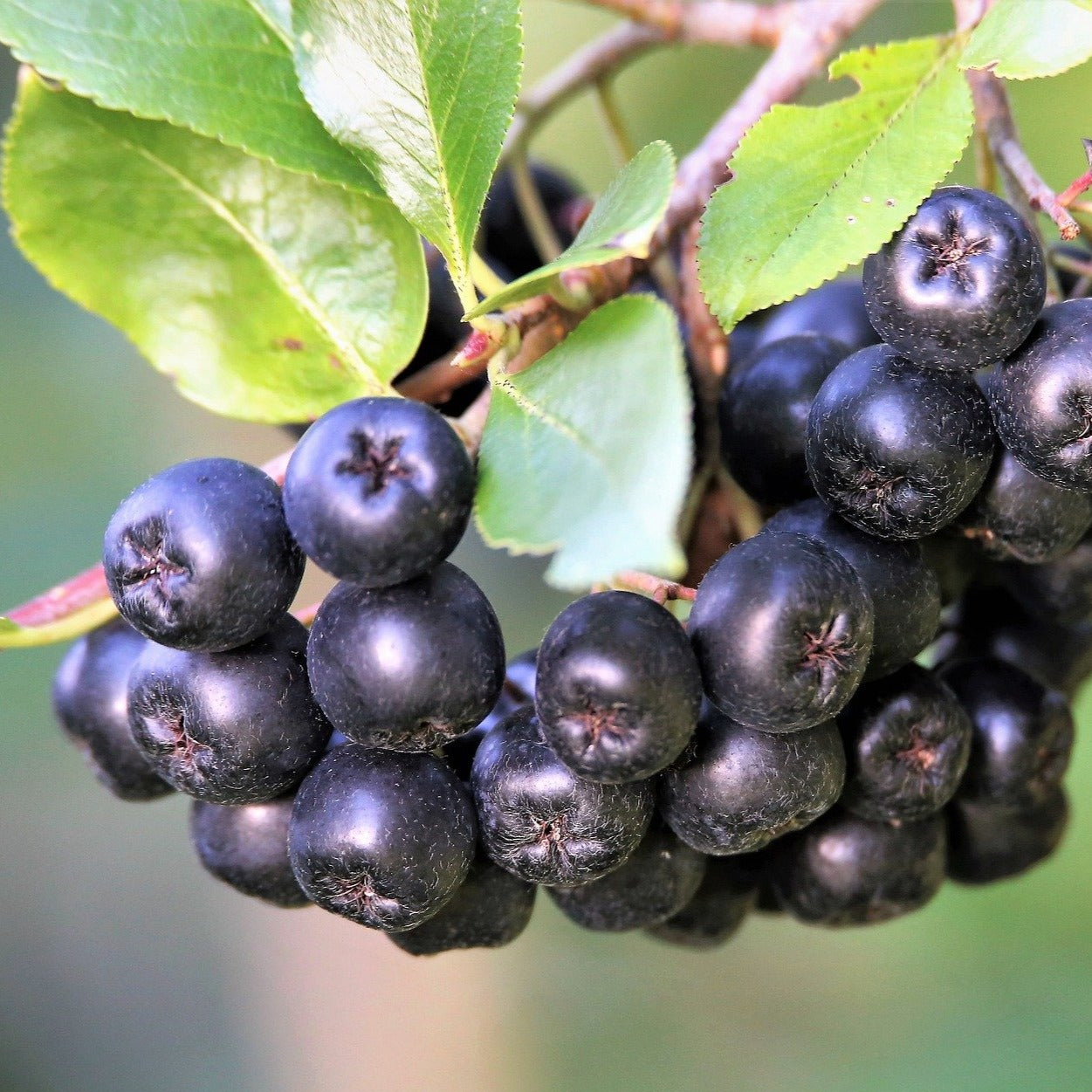
Species: Aronia melanocarpa
History: Galicjanka was developed in Poland where Aronia berries are a common agricultural crop. It is one of the most popular varieties grown there due to its suitability for commercial plantations.
Why We Grow It: This variety produces large berries with good flavour. While the berries ripen in August, they can hang onto the bush for a couple months and tend to sweeten over time. Despite its popularity in Poland, it is unfortunately not very common in North America.
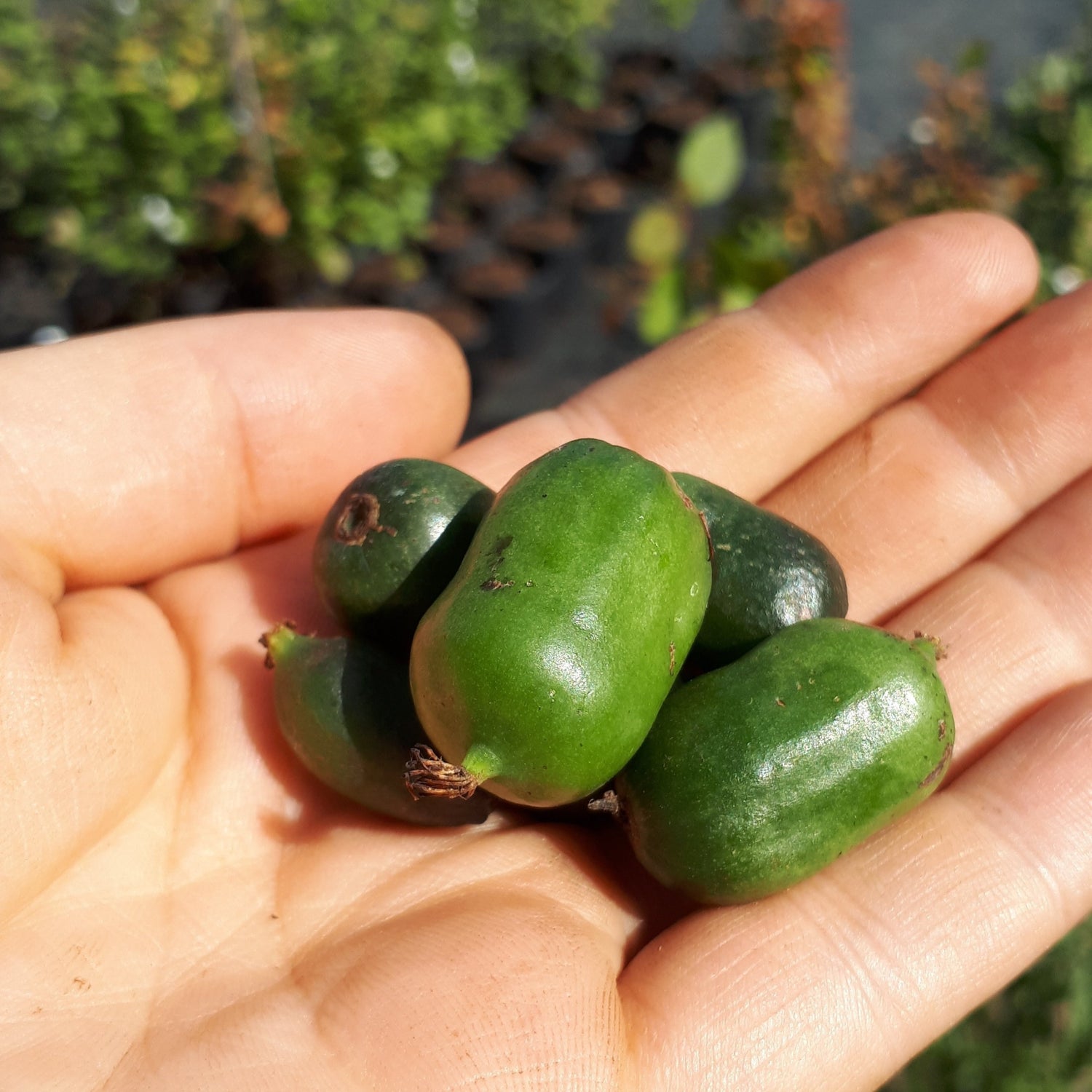
Species: Actinidia arguta
History: Geneva hardy kiwi was discovered growing in the Dr. Slate collection near the Cornell Experimental Station in Geneva, New York. It is named after the city of Geneva. A series of Geneva kiwis was bred and Geneva 3 was selected as the best-performing amongst all of them.
Why We Grow It: This variety produces medium-sized fruit with smooth skin so you can eat the whole kiwi! The delicious, honey-scented fruit can be enjoyed out of hand like grapes or made into preserves. You can also use it make a delicious and nutritious popsicle by pureeing it with some applesauce (or your favourite fruit) and a dab of honey, pouring it into molds, and freezing it. This vigorous vine can reach up for 40' long, so be prepared to prune, or trellis over 50lb of fruit per season.


Species: Ribes aureum
History: Golden Currants (aka Clove Currants) are native to Canada and the central US. They are a source of nectar for many pollinators including butterflies, bees, and hummingbirds and the berries are a food source for various bird species. Indigenous peoples traditionally harvest the berries and use parts of the plant medicinally. Golden Currants are also used as landscape/ornamental plants, particularly in native plant gardens.
Why We Grow It: Golden Currants are an excellent plant for those looking to add more native plants to their collection. This hardy and adaptable shrub produces numerous yellow blooms that smell similar to cloves (hence the other common name) and attract many pollinators including hummingbirds. Later in the summer, the small, dark berries can be harvested from the bush for use in jams, preserves, and baking or can be left to feed the birds.

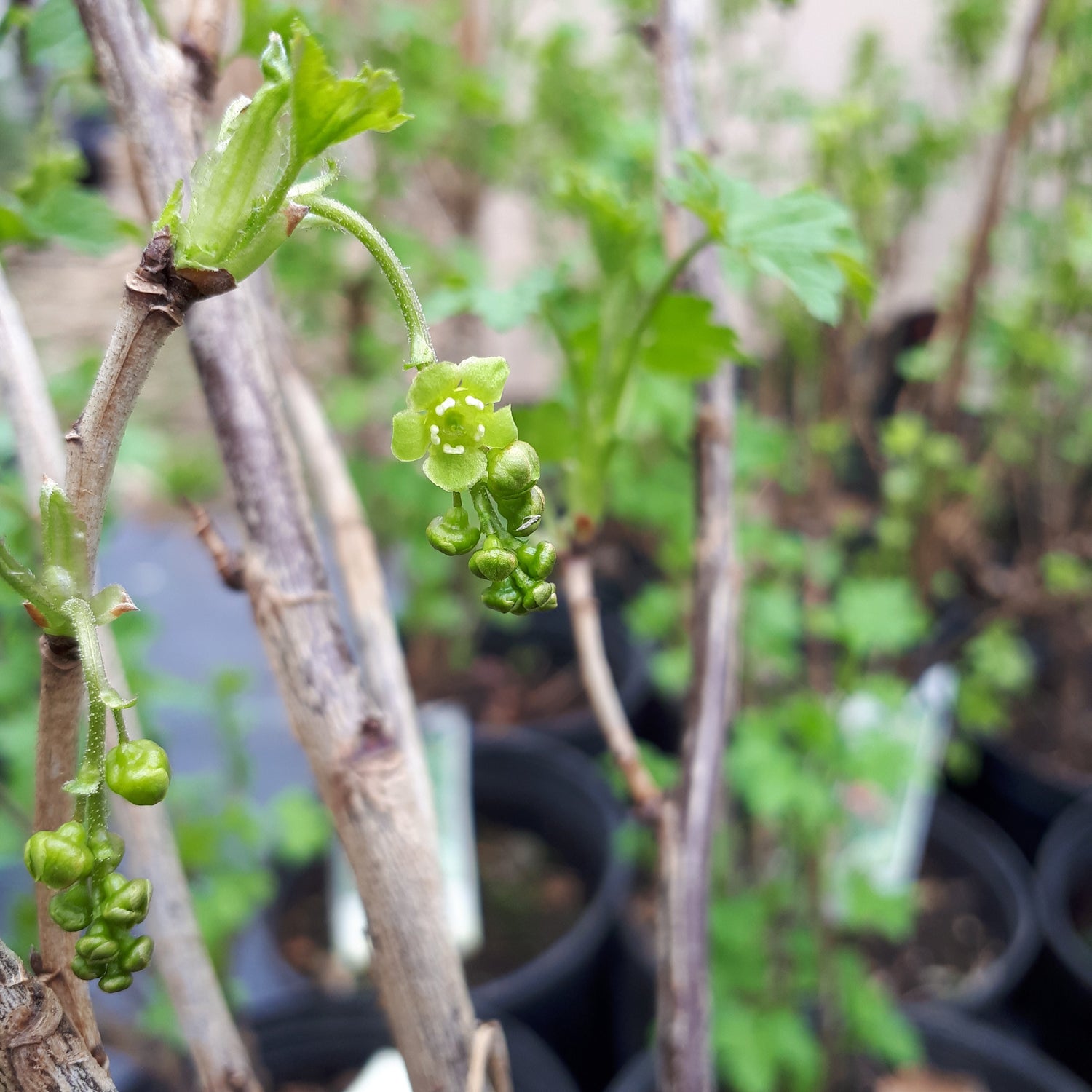
Species: Ribes nigrum
History: This black currant is a family classic that was grown by Ken's great-grandmother.
Why We Grow It: Grandma Ethel produces large fruit with a slightly stronger flavour than Titania and an unusual sweetness for a currant. The berries make a very tasty juice - the recipe can be found further below!
A note on the "Grandma" Series: Inspired by this modest currants' success here at the nursery, we decided to curate our own repertoire of family favourites! Check out our tried-n-true gooseberries, rhubarb and raspberries.
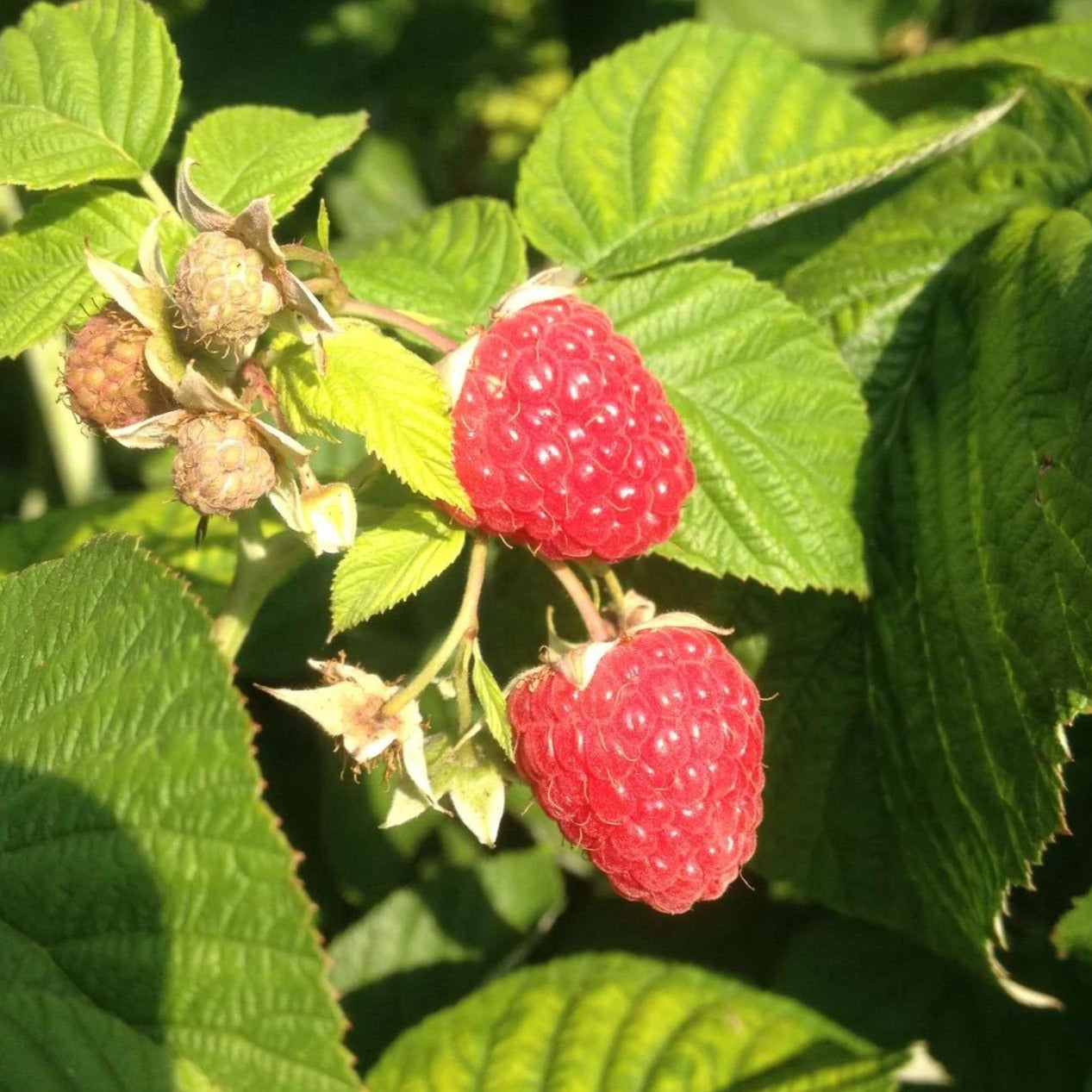
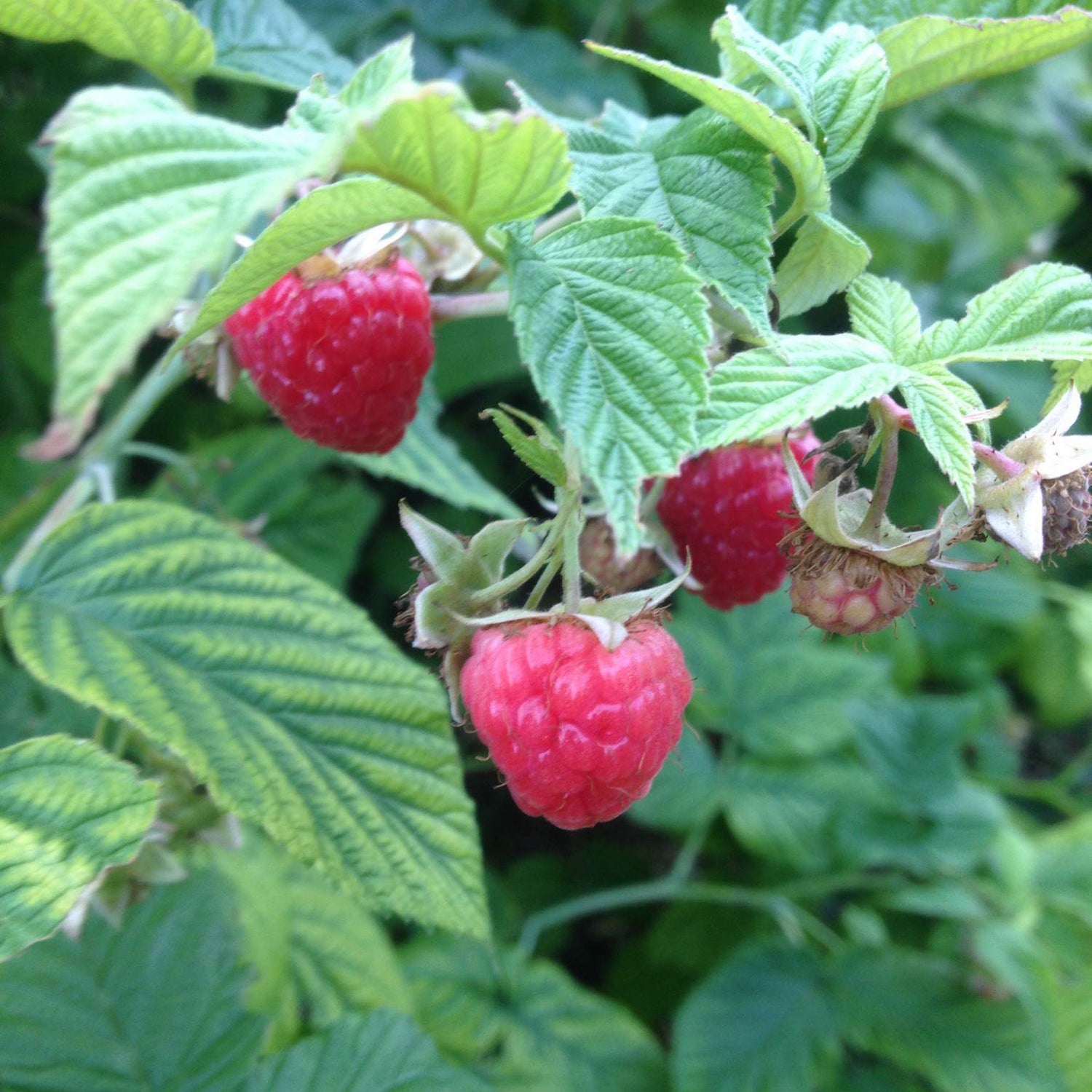
Species: Rubus sp
History: These red raspberries were grown by our great-grandmother and have been passed down through the family.
Why We Grow It: We might be a little biased, but we think they have superior flavour! The fruit is very uniform, not crumbly, and holds its shape well fresh or frozen.
A note on the "Grandma" Series: Inspired by Ken's 'Grandma Ethel Black currant', we decided to curate our own repertoire of random (may be a cultivar from long ago, or a favoured seedling) berries that have become family favourites! Check out our tried-n-true rhubarb and gooseberries in addition to the currants and raspberries.

Species: Vaccinium corymbosum
History: Hannah's Choice was developed in Maryland by Arlen Draper, a blueberry breeder working for the USDA, in collaboration with the New Jersey Agricultural Experiment Station. The initial cross was made in 1978 and the variety was released in 2000 after being selected for the superior sweetness and firmness of its fruit compared to other early ripening blueberry varieties.
Why We Grow It: Hannah's Choice produces firm, medium to large blueberries with a sweet flavour that has a hint of peach. For those looking to extend the blueberry season, this early-ripening variety is a great option! The fruit is larger, sweeter, and stores better than many other early season varieties. The fruit tends to ripen all at once and is on the firmer side, making it a good option for both commercial farms and u-pick operations.

Species: Rubus sp
History: Hardy Black originated in Nova Scotia. As the name implies, the variety was selected for its hardiness along with excellent fruit.
Why We Grow It: This hardy variety produces large, dark berries that are sweet and juicy. To make it even better, they bear fruit over a long period of time which gives you that much more of an opportunity to enjoy these lovely berries.
Showing 30/79
Next