Wholesale Plant Availability
For wholesale inventory;
124 products
Sort by:
124 products
124 products
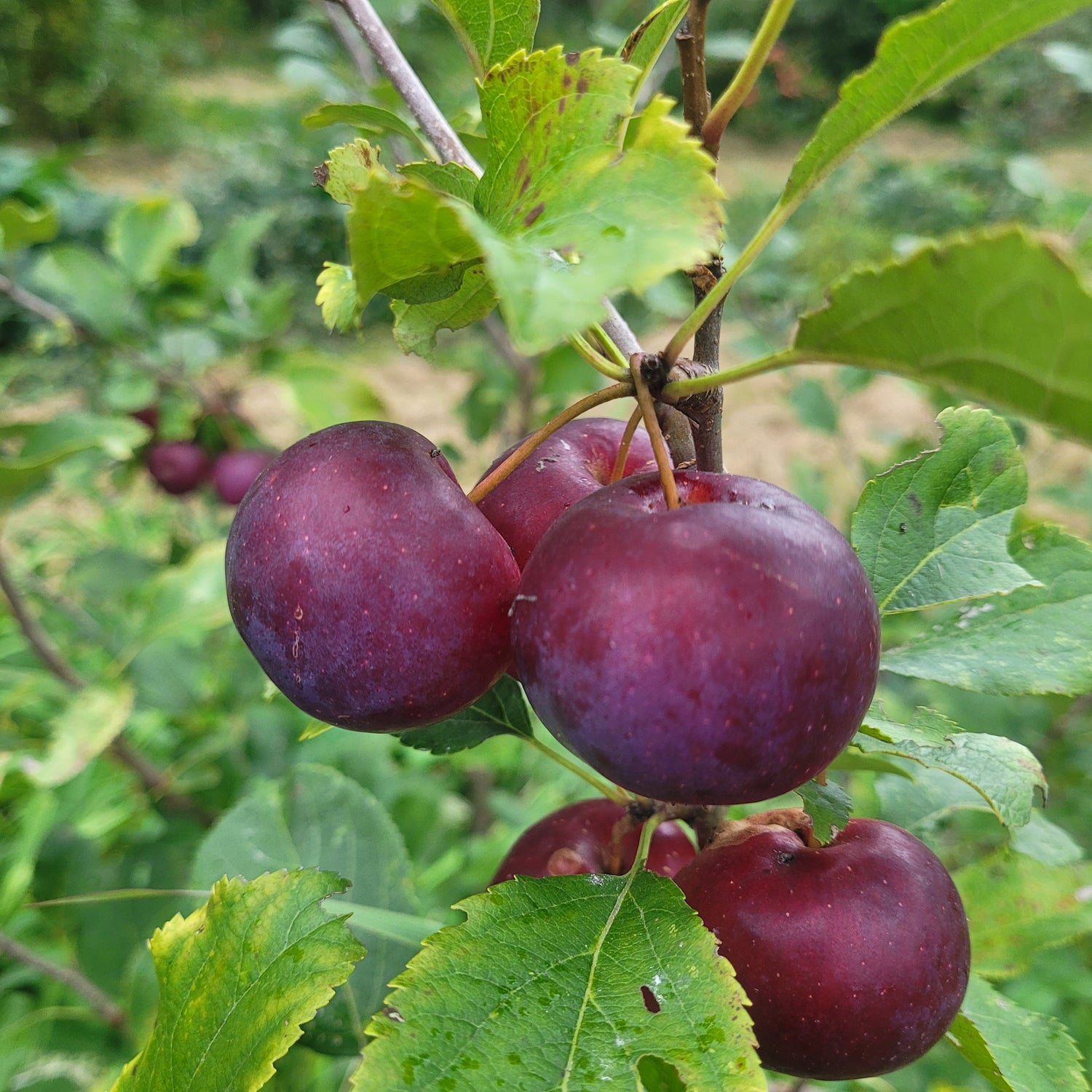
History: The exact origins of Hyslop are unclear but it was discovered sometime in the early 1800s around Boston by the Hyslop family who helped develop the area. This apple was popular for over a century but in recent years has fallen into obscurity.
Why We Grow It: Although definitely not recommended for fresh eating, Hyslop crabapples have a sub-acid, astringent flavour and are great in cider blends. They are also known as being one of the best apples for jellies. The tree is quite attractive with blue tinged blossoms in the spring and brilliant red/purple fruit in the fall.

Species: Amelanchier x wiegandii (likely a hybrid of A. arborea and A. sanguinea)
History: There is little information on the origin of Isaac although it is believed to be a cross between the Common Serviceberry (A. arborea) and the Roundleaf Serviceberry (A. sanguinea). It was likely selected for its large, sweet berries.
Why We Grow It: Isaac produces very large berries with a lovely sweet flavour. Like other serviceberries they are great for fresh eating, cooking, baking, and preserving. Isaac makes a nice ornamental shrub with its rounded shape and white blooms in the spring. It is generally an adaptable and cold hardy plant as well!

History: Jonagold, a cross between Golden Delicious and Jonathan, was developed in 1953 at the New York State Agricultural Experiment Station at Cornell University. With its large size and sweet flavour, it has become one of the most popular apples in North America and is especially popular in Belgium.
Why We Grow It: The fruit is attractive with a red blush over yellow skin. It has a pleasant sweet-sour flavour that makes it a great multi-purpose apple.

History: Jonathan has an interesting history since there are two potential origins. One story says that Rachel Higley collected apple seeds from the local cider mill which she later grew on her new property in Ohio in 1796. She named one of the new varieties Jonathan after a young boy who often visited her orchard. The second, and more likely story, is that it was grown by farmer Philip Rick in the 1820s in New York. Originally named Rick, the apple was renamed Jonathan after the man who brought it to the attention of the Albany Horticultural Society.
Why We Grow It: These cheery red apples are crisp, juicy, and sweet. They are good for fresh eating as well as turning into pies and sauce. The fruit also stores quite well, lasting until January/February under optimal conditions.

Species: Lonicera caerulea
History: Kawai was created by Dr. Maxine Thompson who collected open-pollinated seeds from berry farms in Hokkaido, Japan in 2000. The seeds were planted in Oregon and evaluated. Kawai was selected for its fruit quality, high yields, and high vigour.
Why We Grow It: Kawai produces medium, blocky berries with an excellent, mild flavour. Like other haskaps, the fruit is well suited for fresh eating, baking, and making jelly/jam among many other uses. The cold hardy bush itself is quite vigorous and has high yields.

History: Kerr is an applecrab (cross between crabapple and apple) with Dolgo and Haralson parentage. It was developed at the Morden Research Station in Manitoba in the 1950s and named after plant breeder and ecologist William Les Kerr who was working at the station at the time.
Why We Grow It: The fruit is a pleasant dark red and unlike true crabapples, has a pleasantly sweet and tart flavour that makes it good for fresh eating. Although small, the fruit stores well and are quite juicy which makes them good for pressing. The juice does well when added to cider blends.


History: Liberty was developed by the New York State Agricultural Experiment Station in Geneva, NY, in 1955 and released in 1978. It is a cross between Macoun and a Japanese crabapple (Malus floribunda), bred in hopes of achieving the disease resistance of the Japanese crabapple.
Why We Grow It: The creators of Liberty were highly successful in their goal, creating one of the most disease-resistant varieties. Liberty is a favourite for organic production as a result. The fruit is bright red with sweet, creamy flesh and it stores well.

History: Maiden's Blush was first described in New Jersey in 1817 although it had already been popular in Philadelphia markets for some time. It likely originated around New Jersey in the late 1700s. Maiden's Blush continued to be commonly grown in the southern US through the early 1800s.
Why We Grow It: Maiden's Blush's uniqueness is still worthy of attention today, its flavour being an interesting mix of citrus-like acidity and sweetness that stand out among other apples. While it is good for fresh eating, particularly after a few weeks off the tree, it is most well known for cooking, baking, and drying due to its non-browning qualities.
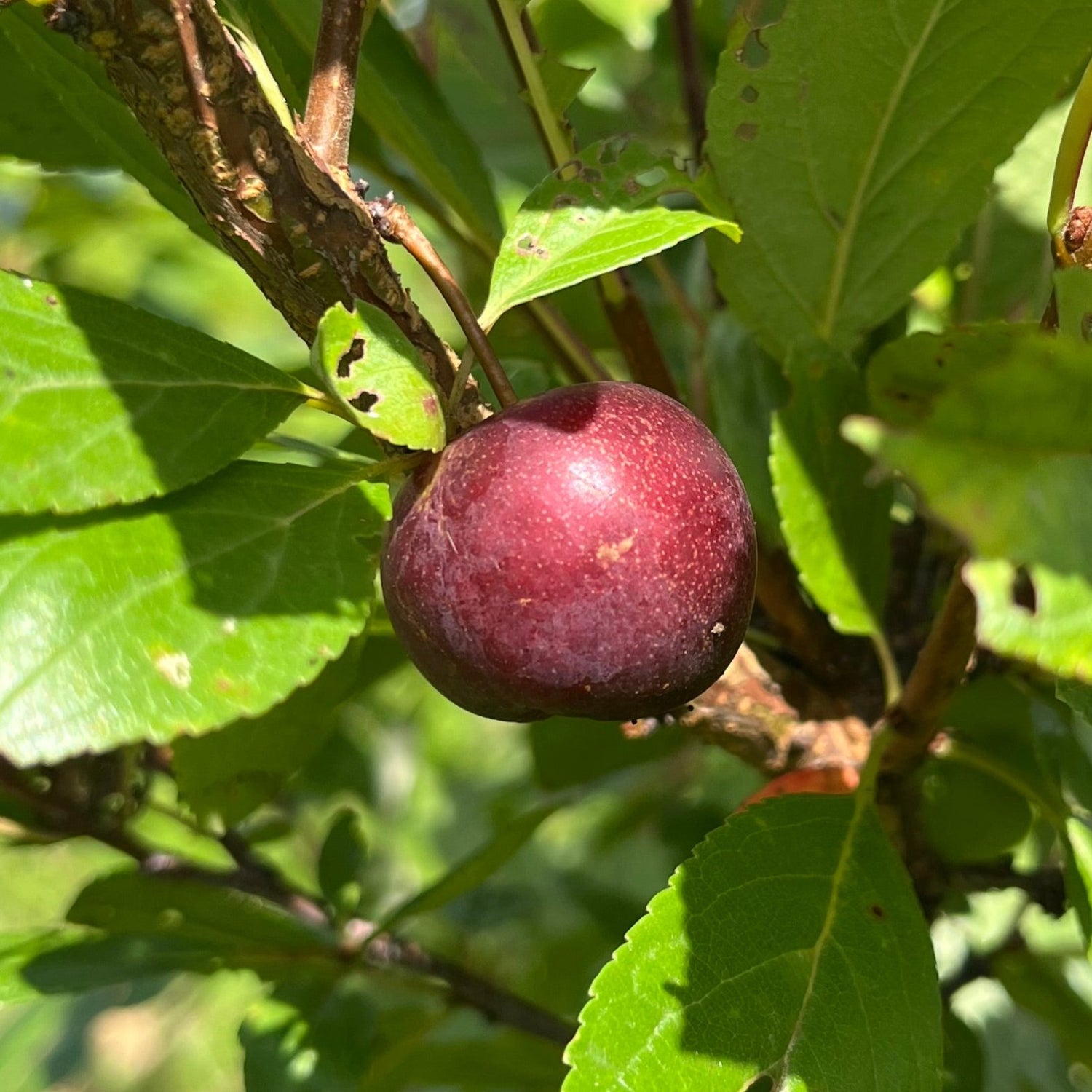
Species: Prunus pumila var. besseyi (Western sandcherry) x P. salicina (Japanese Plum)
History: Manor was developed at the Morden Research Station in Manitoba and released in 1945.
Why We Grow It: Manor produces a small plum with skin that is nearly black when ripe and purplish-red flesh. When ripe, the fruit is quite sweet and good for fresh eating! Some prefer to pick it when it is still a little unripe and a bit firmer since it is more astringent and lends itself well to uses such as baking, preserving, and making wine. The shrub stays smaller than other chums but starts bearing fruit at a young age and is known for being quite productive.
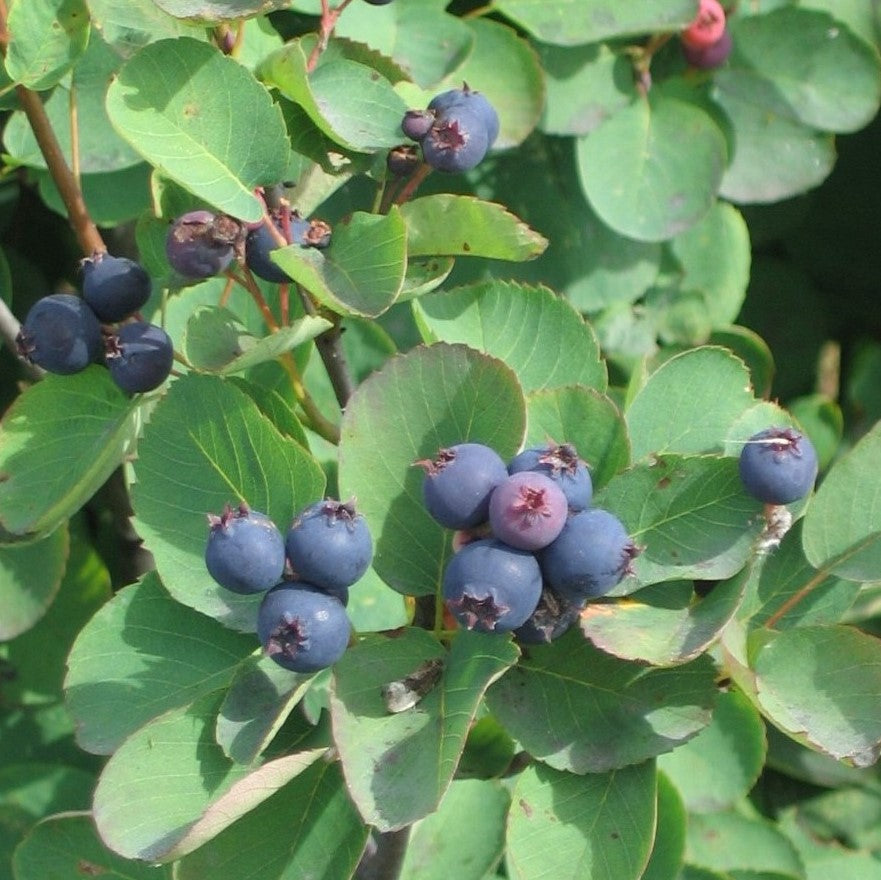
Species: Amelanchier alnifolia (aka Western Serviceberry)
History: Martin was grown by Dieter Martin in Saskatchewan. He selected this variety for its large berries and uniform ripening time.
Why We Grow It: Martin produces deep purple berries that are both flavourful and juicy! The berries are on the larger size and ripen at more or less the same time, making them a good choice for mechanized picking.

History: John McIntosh planted several apple seedlings upon settling in Dundela, Ontario. From these, he discovered the famous McIntosh apple as a seedling in his orchard. The family began selling the fruit and grafted McIntosh trees in 1835 and in 1870 it entered commercial production. By the 1900s it was one of the most popular apples in northeastern North America, although its popularity waned over time as varieties such as Gala were introduced. Nonetheless, McIntosh apples still remain some of the most popular in North America. The original tree died in 1906 after being damaged by a house fire and a commemorative plaque marks where it stood. The apple has since been named Canada's national fruit. The Macintosh line of Apple computers was also named after this variety.
Why We Grow It: For fans of Canadian heritage apples in particular, this one is hard to beat. To the best of our knowledge, this is the original strain of McIntosh. Aside from its storied past, McIntosh apples boast soft, slightly tart flesh with high Vitamin C content. It is excellent for fresh eating and making applesauce.
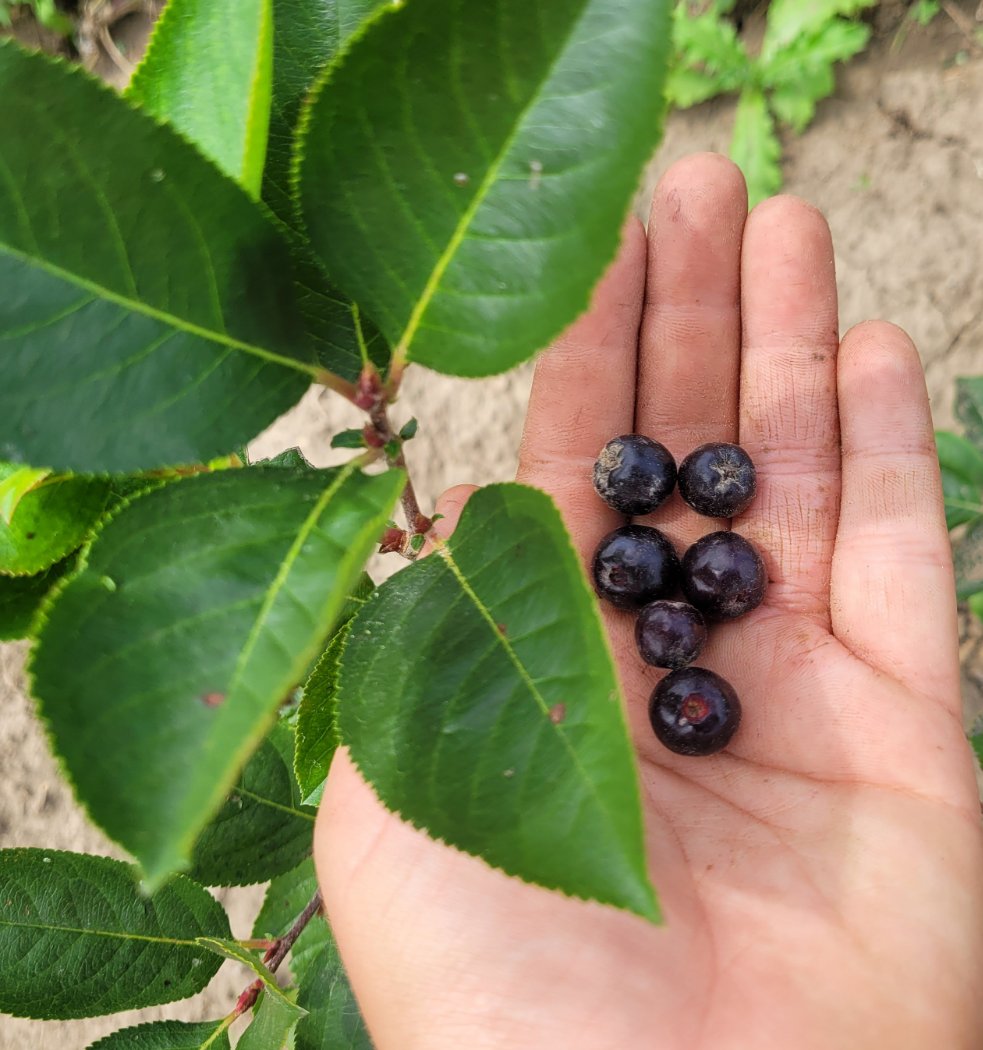
Species: Aronia melanocarpa
History: McKenzie was created by the USDA who, in 1976, planted several seedlings of the variety to evaluate its performance. It was named 'McKenzie' in honour of its first planting site in North Dakota, possibly named after McKenzie County specifically. The variety was officially released in 2008.
Why We Grow It: McKenzie boasts vigorous growth and good production, reliably producing firm blue-black fruit that is tart with an earthy taste. The berry clusters are easy to pick and have a wide range of uses! While the berries ripen in August, they can hang onto the bush for a couple months and tend to sweeten over time.

History: Melba was developed by W.T. Macoun at the Central Experimental Farm in Ottawa in 1898. In 1924 it was released commercially and three years later received the Silver Wilder Medal from the American Pomological Society.
Why We Grow It: Melba is a lovely early market apple or backyard tree for making applesauce! The fruit is yellow with crimson flush and the crisp, white skin has a very sweet flavour.
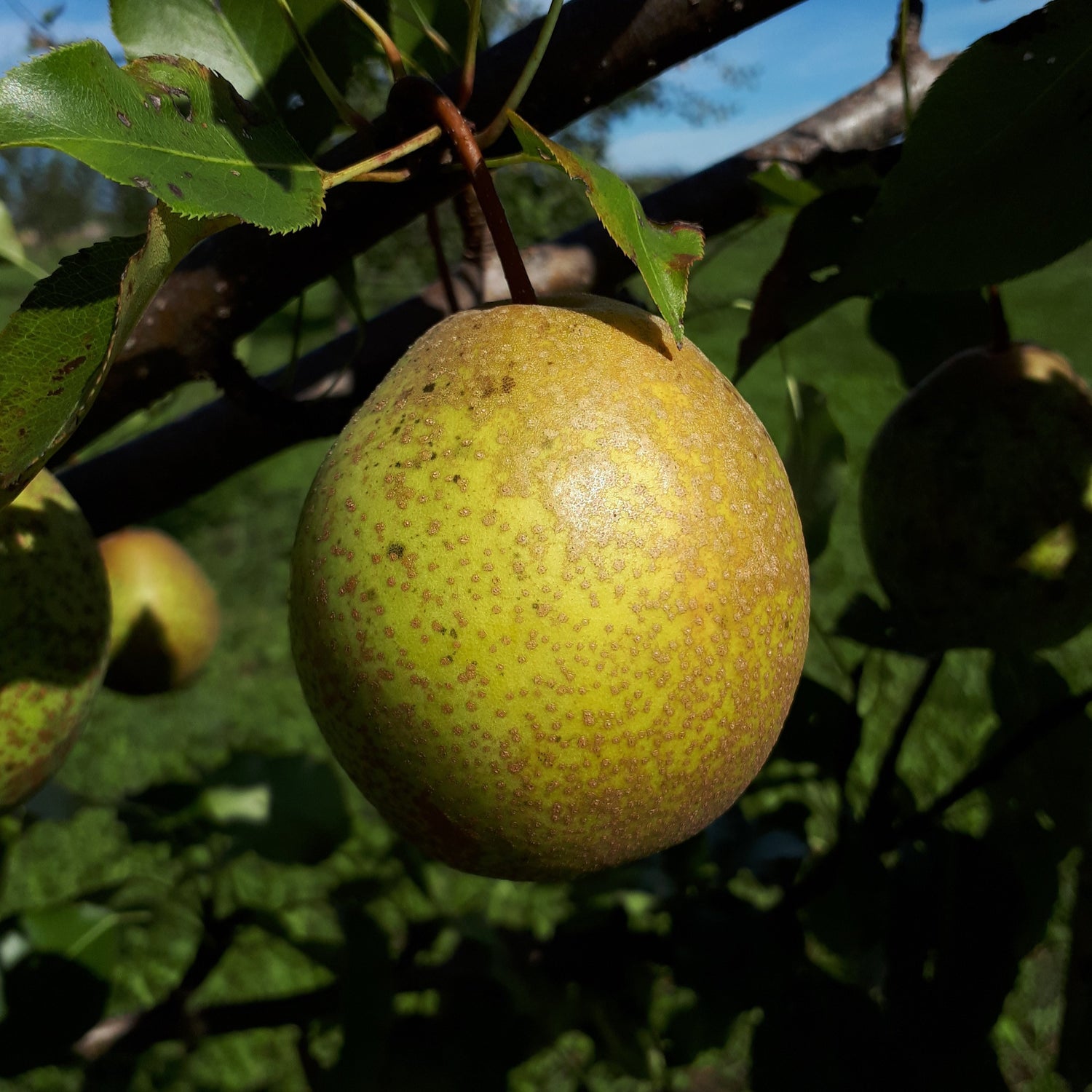
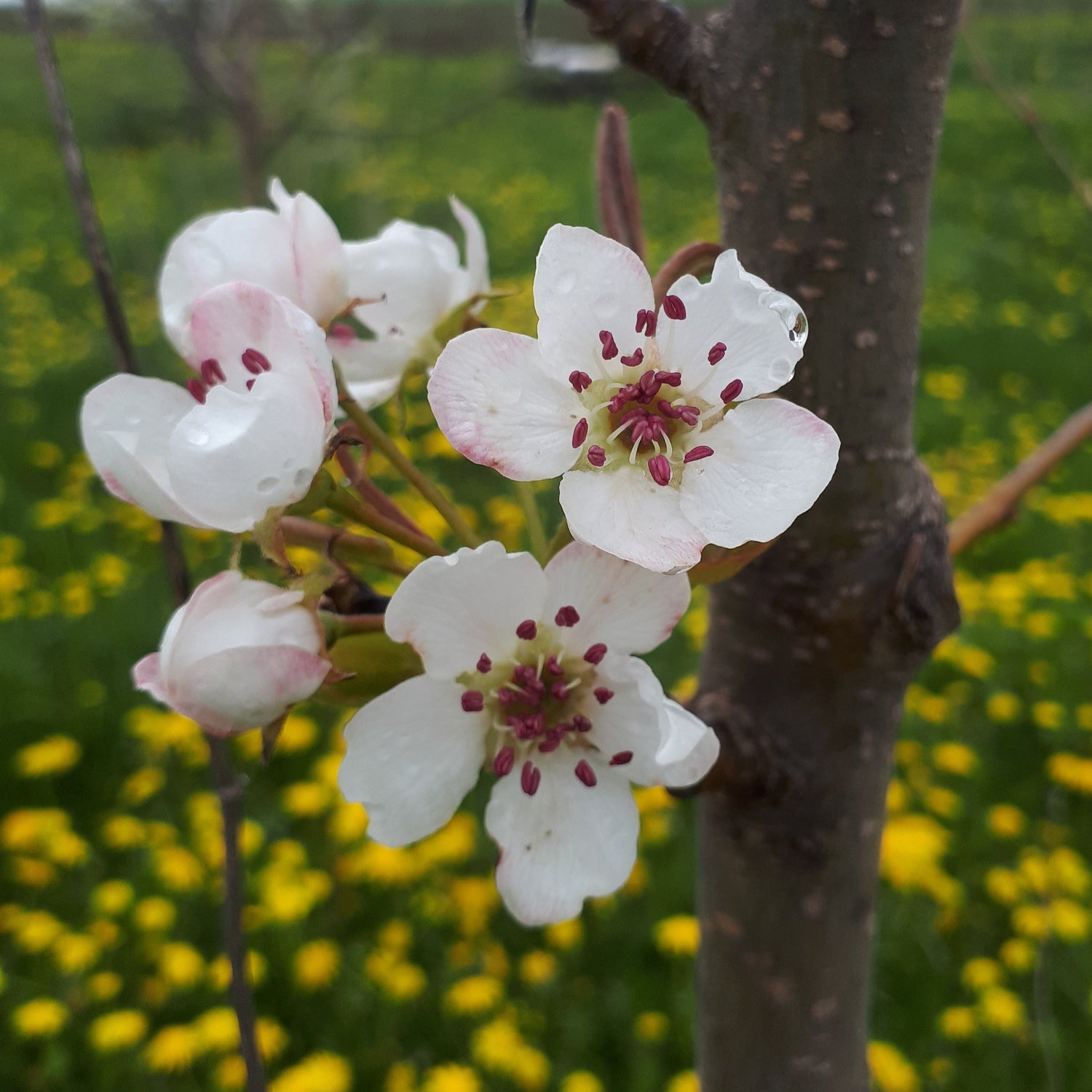
History: Mishirasu is an Asian pear from Japan.
Why We Grow It: Mishirasu is a popular variety since the fruit are extra large with a sweet, mild flavour and a nice crunch. The skin is brown and russeted, and the fruit have a roundish shape that is reminiscent of European pears.


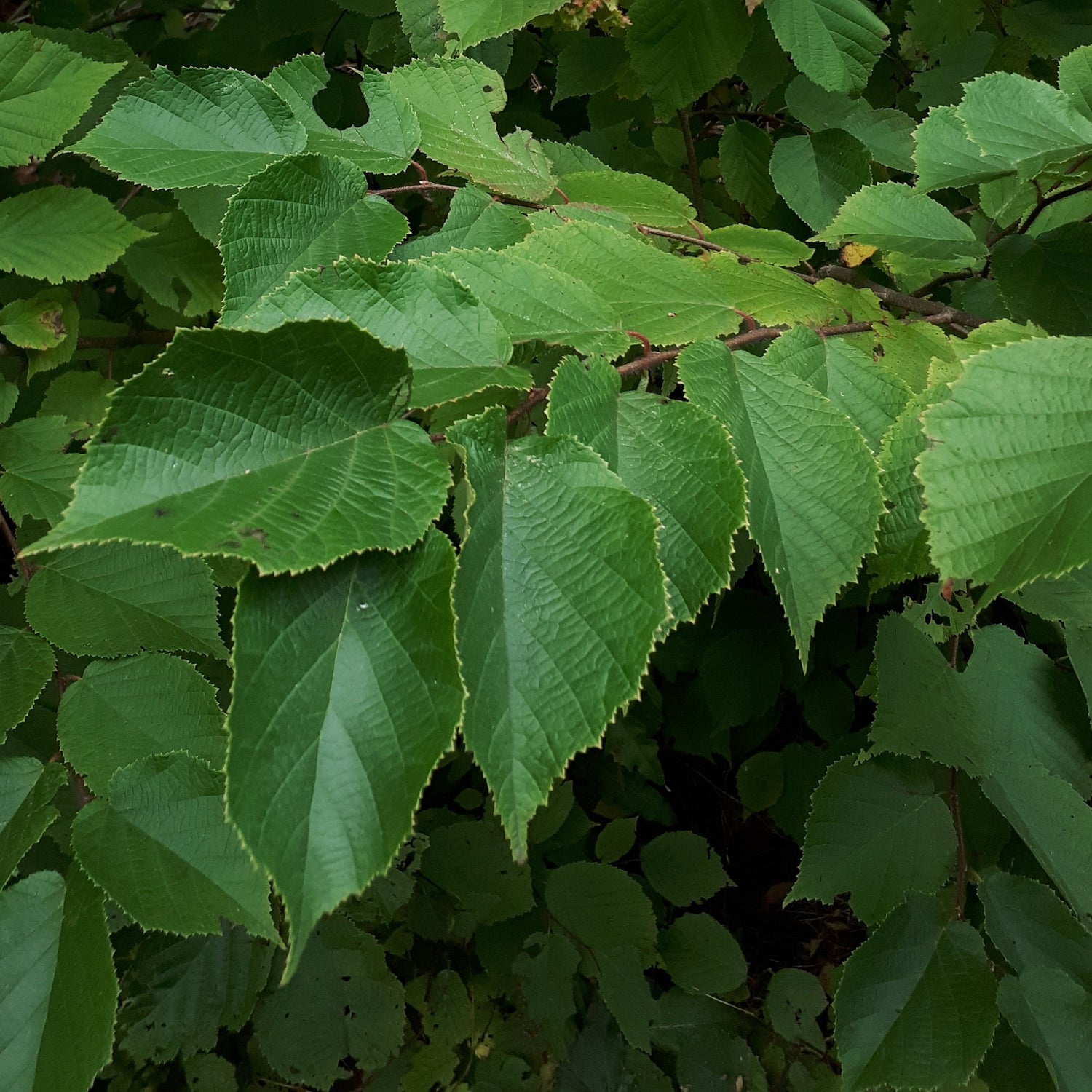
Species: Corylus heterophylla, C. americana, or C. heterophylla x C. americana
History: These hazelnut seedlings are grown from seed sourced from an open-pollinated, mixed hazelnut orchard at Grimo Nut Nursery. Since the orchard is open-pollinated, the resulting seedlings may be Asian hazelnuts, American hazelnuts, or hybrids of the two!
Why We Grow It: With such random cross-pollination, each seedling has the chance to be quite unique! Regardless of what you get, they will produce nuts that are excellent for a variety of uses!
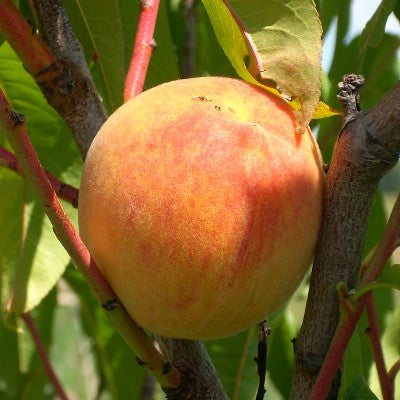
Species: Prunus persica
History: These peach seedlings are grown from peach seeds from the very trees we have in our orchards! The parents will be a mix of the Harrow Diamond, Redhaven, Reliance, Veteran, and seedling peaches from True Root Nursery.
Why We Grow It: Peach seedlings tend to stay fairly true to type so odds are you're going to get a pretty solid peach tree once they mature and it is hoped that growing them from seed here will make them a littler hardier! For those who prefer the certainty that comes with getting a named variety, these trees would also be great for grafting as rootstock, feeding wildlife, or planting along a fence line.


Species: Morus sp
History: Our mulberry seedlings are grown from local seed, but they most closely resemble the native red mulberry, Morus rubra, which are considered endangered in Canada. Indigenous peoples traditionally use the berries as a food source, the wood for smoking meat, and even made clothes from the inner bark of the young plants.
Why We Grow It: The delectably sweet berries are easily enjoyed by humans, livestock, and insects alike! Mulberries don't last very long once ripe so the best way to enjoy this summer treat is to grow them yourself!


History: Little is known about Muscadet de Dieppe aside from the fact it originated near the port of Dieppe in Normandy, France. It was commonly grown in the area since 1750 at least.
Why We Grow It: Considering this French cider variety was popular in an area known for its cider, this makes for a classic cider apple. The juice is bittersweet and aromatic which is excellent in both single-variety ciders and cider blends.
History: Mutsu apples (aka Crispin) were developed in the 1930s at the Aomori Apple Experiment Station in Japan as a cross between Golden Delicious and Indo apples, the same parentage as its sister apple Shizuka. This variety was named after Mutsu Province which was the previous name for the area where it was grown and released in 1949.
Why We Grow It: Mutsu apples have a lot going for them. They have a delicious sweet-tart flavour which is great for fresh eating and the golden yellow skin is quite attractive. The fruit itself is very large and keeps its shaped when cooked, making it an excellent choice for baking. The apples even store well, lasting all winter.

History: The Niitaka Asian pear was developed in Japan as a cross between Amanogawa and Imamuraaki Asian pears in 1915 and was released in 1927.
Why We Grow It: Niitaka is a popular Japanese variety with large orange-brown fruit that is round and speckled. The flavour is sweet and mild.
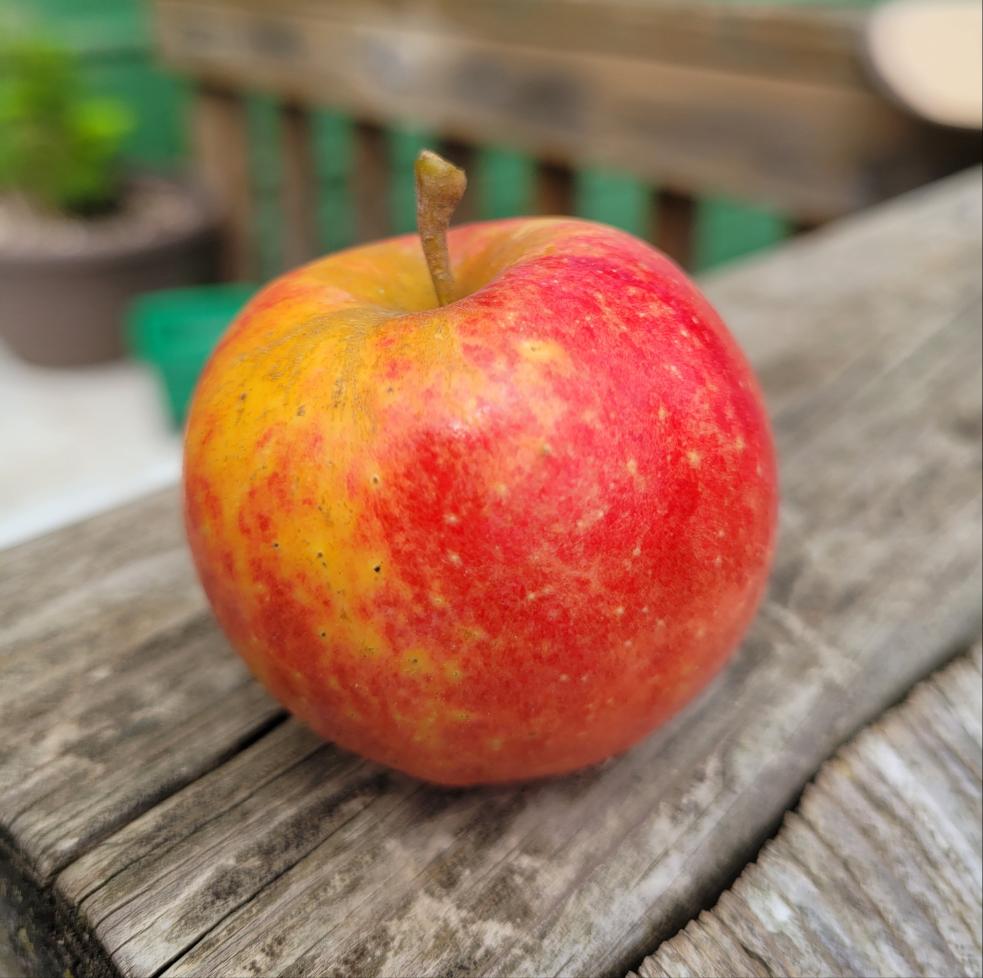
History: Norkent was bred as a cross between Haralson and Rescue at the Morden Research Station. It was one of tens of thousands of seedlings sent across the prairies as part of the Prairie Fruit Breeding Cooperative initiative by Agriculture and Agri-Food Canada in the 1960s. It was planted at the University of Alberta before being moved again to a backyard in Edmonton once the university ran out of space to it grow.
Why We Grow It: This pleasant and aromatic apple is one of the best fresh eating apples for colder climates! The flesh of this red apple is crisp and said to taste like a cross between an apple and pear.
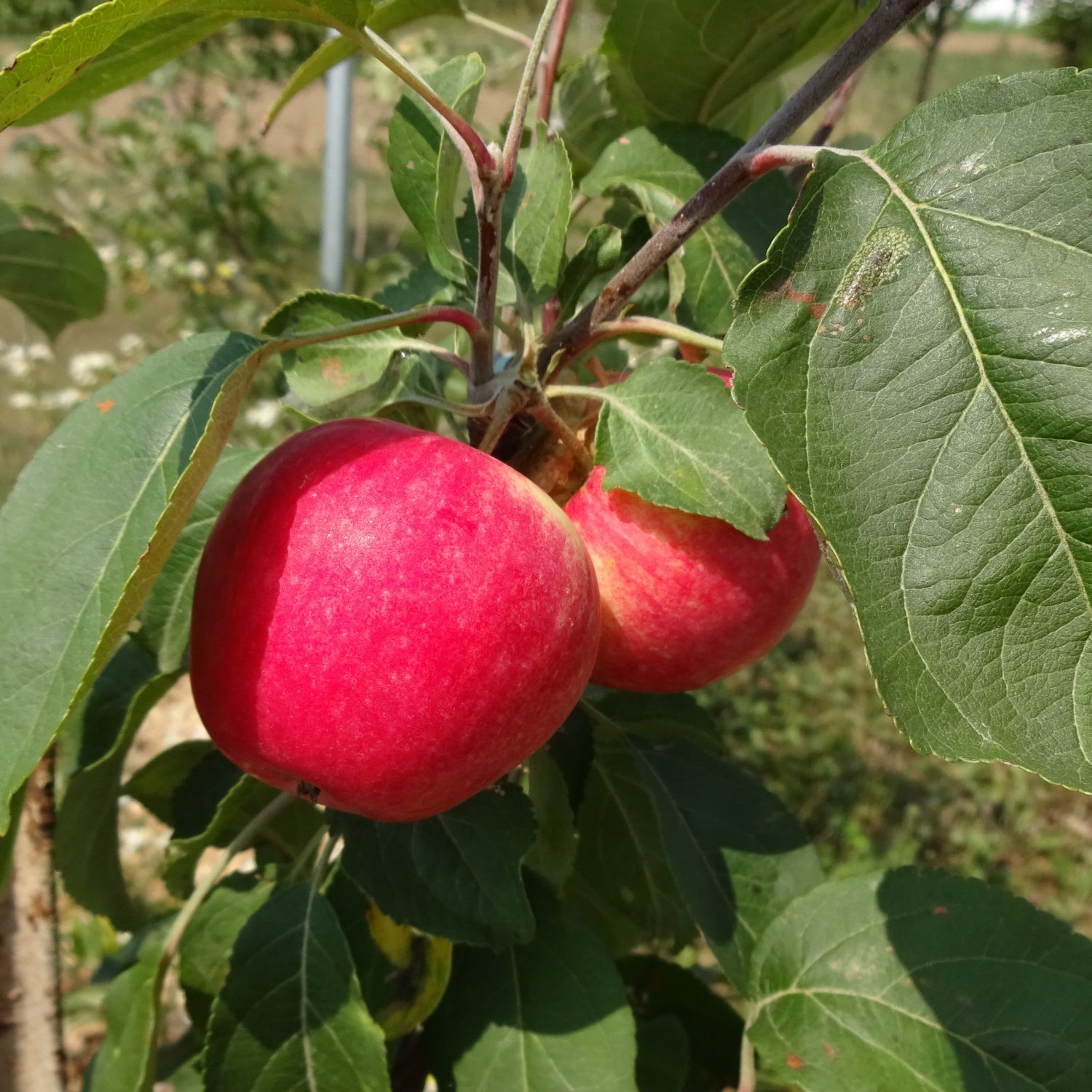
History: Norland apples were created by Dr. C.R. Ure and introduced in 1979 by the Agriculture Canada Research Station in Morden, Manitoba.
Why We Grow It: Since this variety was bred to survive in the prairies, it is very cold hardy. The fruit is medium-sized with sweet flesh that is good for fresh eating or applesauce. It bears heavy annual crops starting early in the life of the tree. A home orchardist in Dacre, ON described the fruit as "lovely with no pest damage; juicy, creamy-fleshed with excellent flavour."
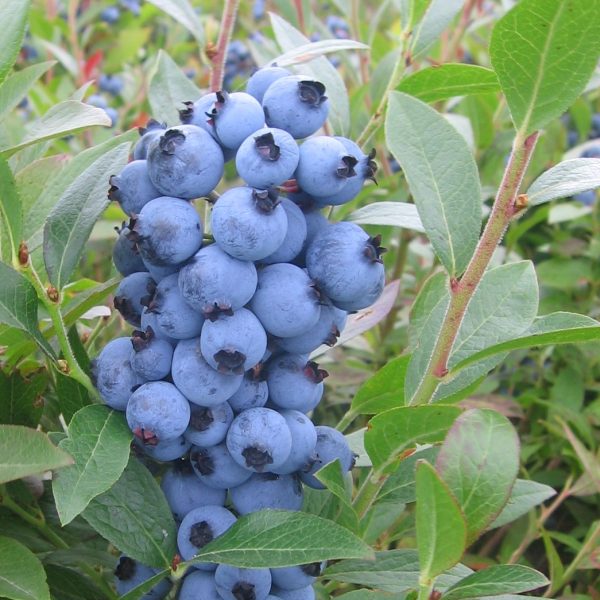
Species: Vaccinium corymbosum x V. angustifolium
History: Northblue was bred by the University of Minnesota as part of a hybrid blueberry breeding program that started in 1967. The goal of the program was to cross highbush and lowbush blueberries in order to create high-quality cold hardy varieties. Of the three varieties initially created in this program, Northblue was noted for having the largest fruit and highest productivity. Northblue was introduced to the public in 1983.
Why We Grow It: Northblue produces nicely sized, firm blueberries that store well. The berries have a good sweet flavour akin to that of wild blueberries and are great for a variety of uses. The compact shrub is quite productive and cold hardy.
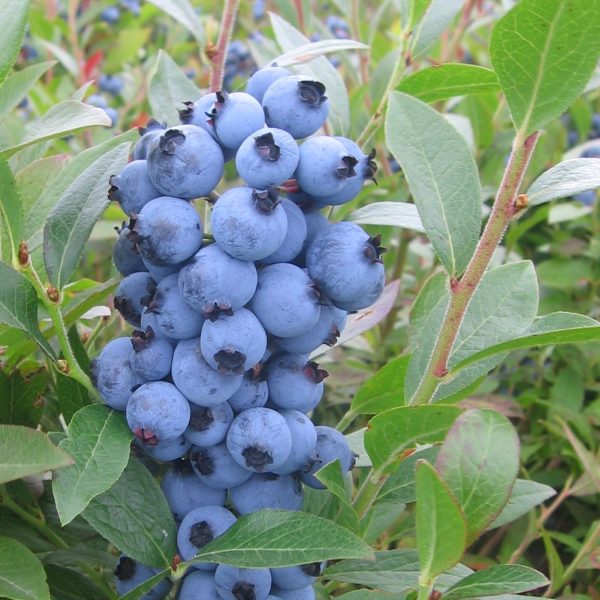
Species: Vaccinium corymbosum x V. angustifolium
History: Northcountry was bred by the University of Minnesota as part of a hybrid blueberry breeding program that started in 1967. The goal of the program was to cross highbush and lowbush blueberries in order to create high-quality cold hardy varieties. Northcountry itself was created in 1968 and was introduced in 1986.
Why We Grow It: Northcountry produces small to medium blueberries with a sweet flavour akin to that of wild blueberries. For those looking to enjoy fresh blueberries as soon as possible each year, this variety is an excellent choice since it ripens quite early. The compact bush is also quite cold hardy and productive!
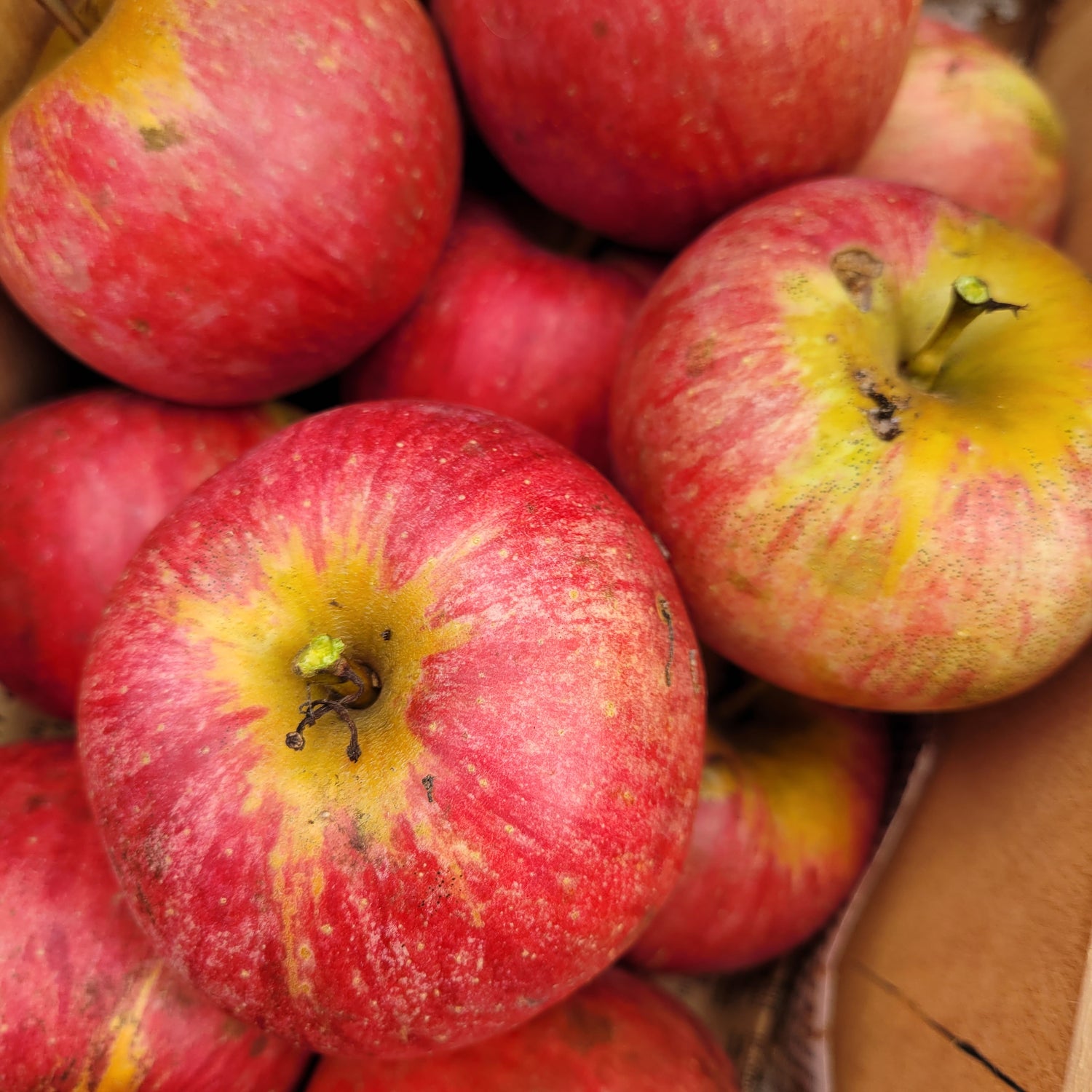
History: Northern Spy was first discovered in New York around 1800. It tends to be irregularly shaped and bruises easily, so it is not a popular commercial apple but it is still commonly grown in certain regions in the States today. It is featured in several poems and in 1953 a box of Northern Spy apples was sent to Senator Joseph McCarthy by the Toronto Globe and Mail during his infamous hunt for 'communist spies.'
Why We Grow It: Northern Spy apples are juicy with a balanced sweet-tart honeyed flavour, although they do tend to bruise easily due to their thin skin. To make up for that, they are known for making wonderful pies. The trees are cold hardy and vigorous.
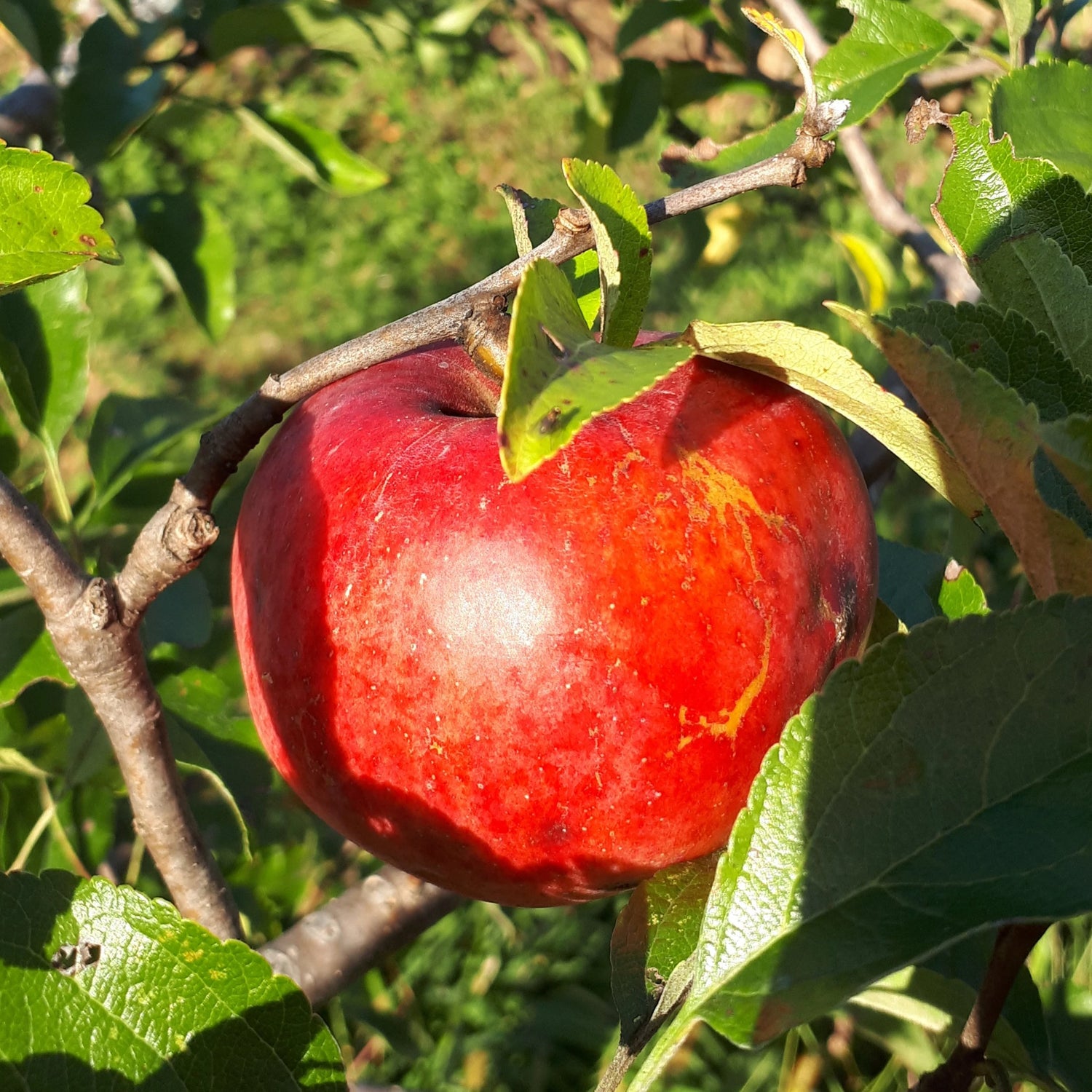
History: Nova Easygro was developed at the AAFC Kentville Research and Development Station in Nova Scotia and introduced in 1971.
Why We Grow It: Living up to its name, Nova Easygro is hard to beat if you're looking for a low-maintenance backyard tree or a clear winner for organic orchards. This variety is resistant to numerous common apple diseases and tastes great. The flavour is pleasant and sweet and the flesh is firm and white with the perfect texture, earning this apple favourable reviews at our tasting event.
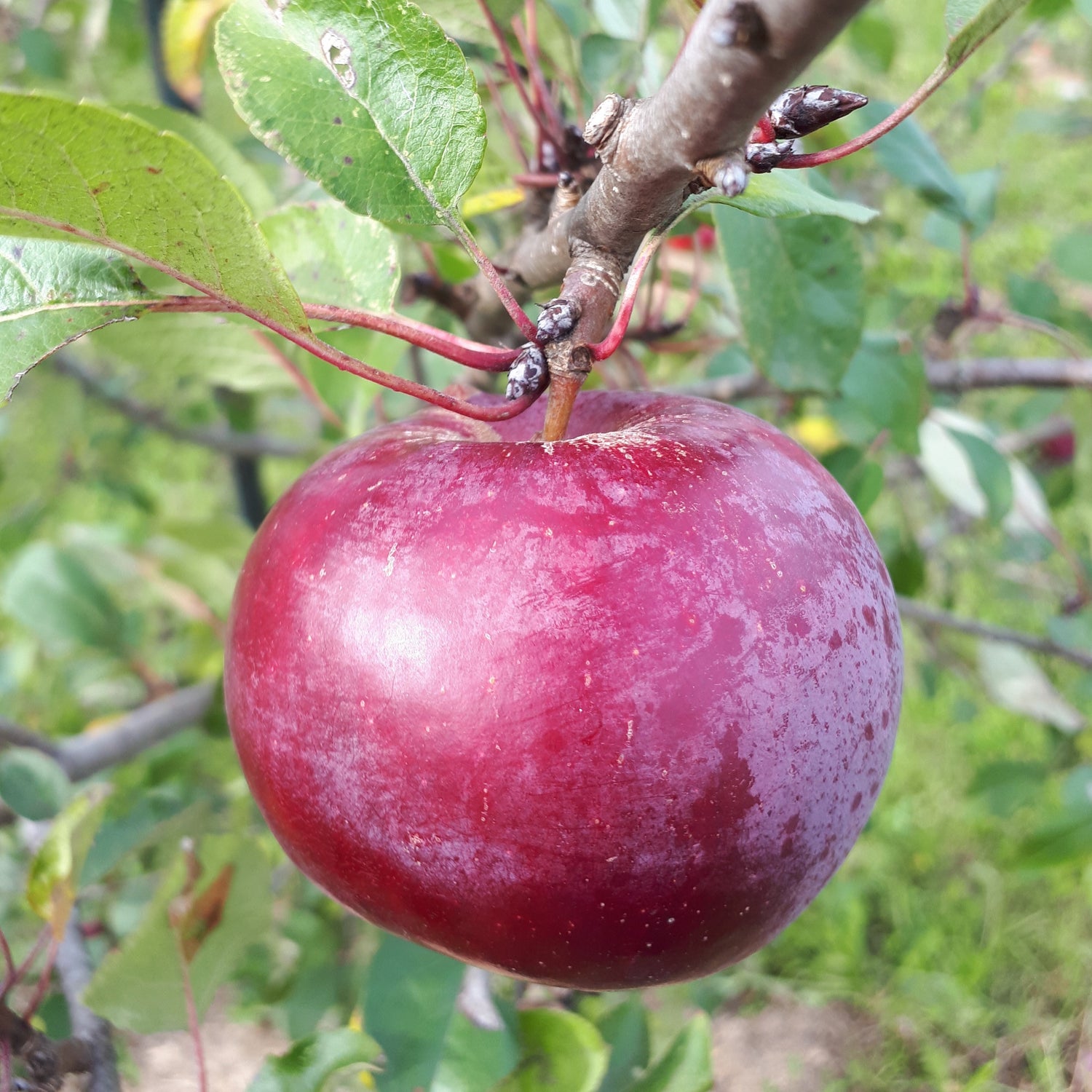
History: Novamac apples were developed at the AAFC Kentville Research and Development Centre in Nova Scotia and introduced in 1978.
Why We Grow It: Novamac is a variety that definitely deserved more attention. They are generally disease resistant and have proven to be very easy to grow in our test orchard where they are performing well. This apple has a nice vibrant tang but also lots of sweetness and notes of berry. The flesh is firmer than its namesake McIntosh, which it is descended from.

Species: Aesculus glabra
History: Ohio Buckeye is native to Walpole Island in Ontario and some central and southern states in the United States. The Shawnee name for the tree is 'hetuck' which means 'eye of the buck' due to the nut's resemblance to a deer's eye. Indigenous peoples such as the Lenape traditionally use the nuts for medicinal uses, tanning leather, and jewellery. Ohio Buckeye is the state tree of Ohio and people from Ohio and graduates of Ohio State University are sometimes called 'buckeyes'. Unsurprisingly, the nuts have an important cultural place in Ohio. There is a candy resembling the nuts called 'buckeyes' that are popular and the nuts make numerous appearances in Calvin and Hobbes whose author is from Ohio. Its wood is too soft to be used for much and it has limited uses as a street tree since it is considered messy due to the nuts it drops.
Why We Grow It: Ohio Buckeye is an attractive ornamental tree with its large, palmate leaves and notable yellow flowers in spring. Although the tree is toxic and generally not fed on by wildlife, the large flowers are very attractive to a variety of pollinators including hummingbirds!


Species: Prunus pumila var. besseyi (Western sandcherry) x P. salicina (Japanese Plum)
History: Opata was developed by Dr. N.E. Hansen who was a professor of horticulture at South Dakota State University from 1895 to 1950. He helped pioneer chum development in an effort to create plants hardy enough to survive in the northern prairies. Opata is the Sioux word for 'bouquet', following Hansen's tradition of naming his native plant crosses after words from local indigenous cultures.
Why We Grow It: Opata produces a red chum with yellow flesh that is freestone, firm, juicy, and considered to be one of the better tasting chums. It is pleasantly sweet with only a hint of acidity. It is good for fresh eating as well as jams, jellies, preserves, and pies. Like other chums, the shrub itself is compact, cold hardy, and relatively free of pests and disease.

Species: Actinidia arguta
History: There appears to be little information available on the origin of Opitz. It has likely been propagated for its late bloom time, making it compatible with some female varieties that are not pollinated by earlier blooming male varieties.
Why We Grow It: Opitz is a later blooming male variety that is helpful for pollinating late blooming female Hardy Kiwis like Anna and Chang Bai. It grows vigorously and is known to flower profusely.