Wholesale Plant Availability
For wholesale inventory;
124 products
Sort by:
124 products
124 products
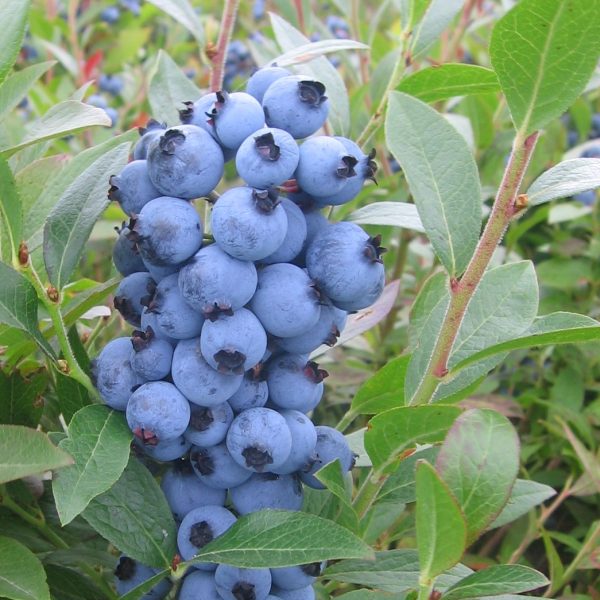
Species: Vaccinium corymbosum
History: Duke was developed in Maryland by Arlen Draper, a blueberry breeder working for the USDA, in collaboration with the New Jersey Agricultural Experiment Station. After ten years of testing it was released in 1987 thanks to its early ripening time, general disease resistance, reliable crops, and suitability for commercial sale. It was named Duke after S. Arthur "Duke" Galetta of the Atlantic Blueberry Company in honour of his support for blueberry breeding efforts over the years.
Why We Grow It: Duke produces good-sized crops of large, firm berries that are a good balance of sweet and tart. This is one of the earlier ripening blueberries and it has received the Royal Horticultural Society's Award of Garden Merit. Duke is an extremely reliable producer thanks to it's later bloom time that allows it avoid late spring frosts. Like other blueberries, it is great for a variety of uses including fresh eating, baking, and preserving!
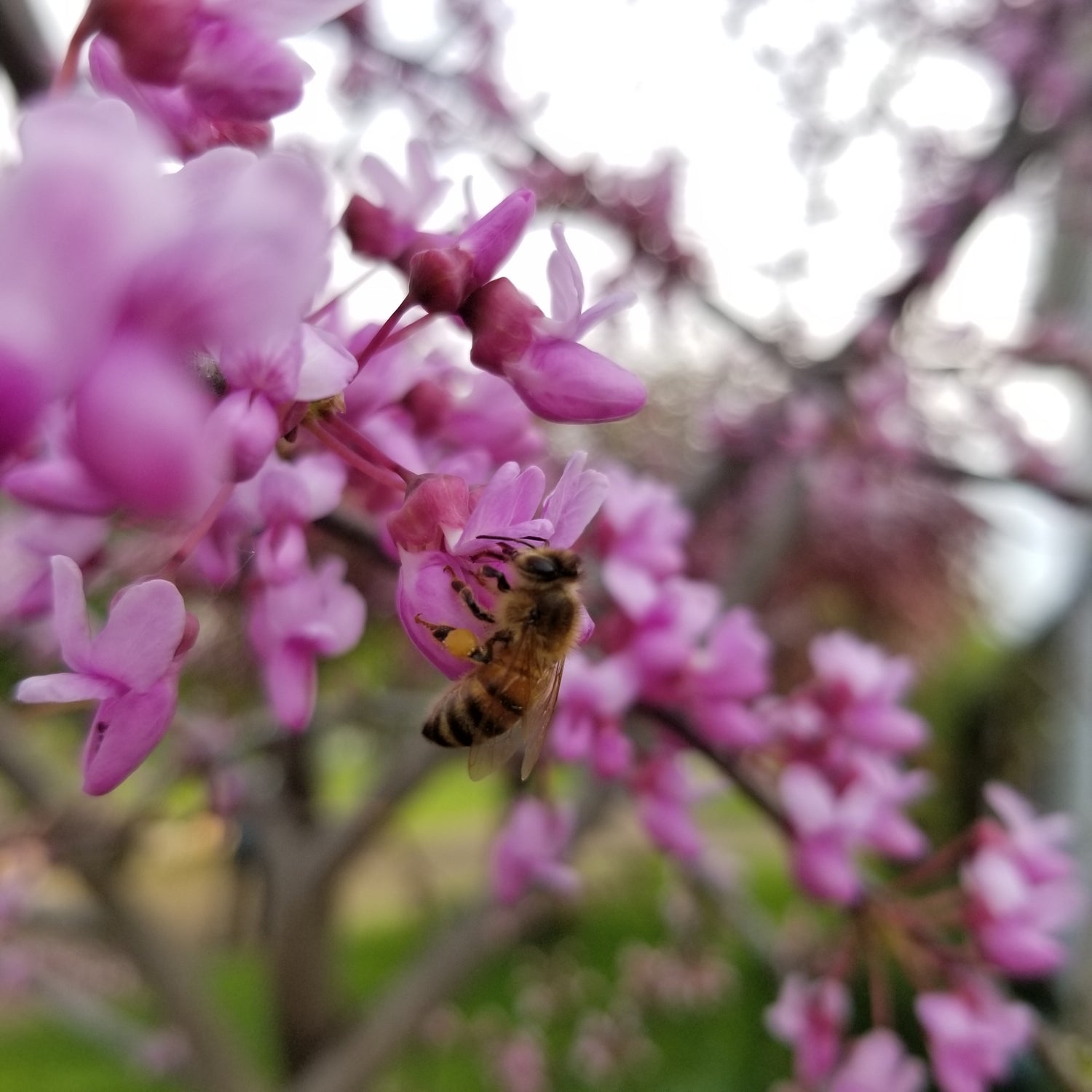
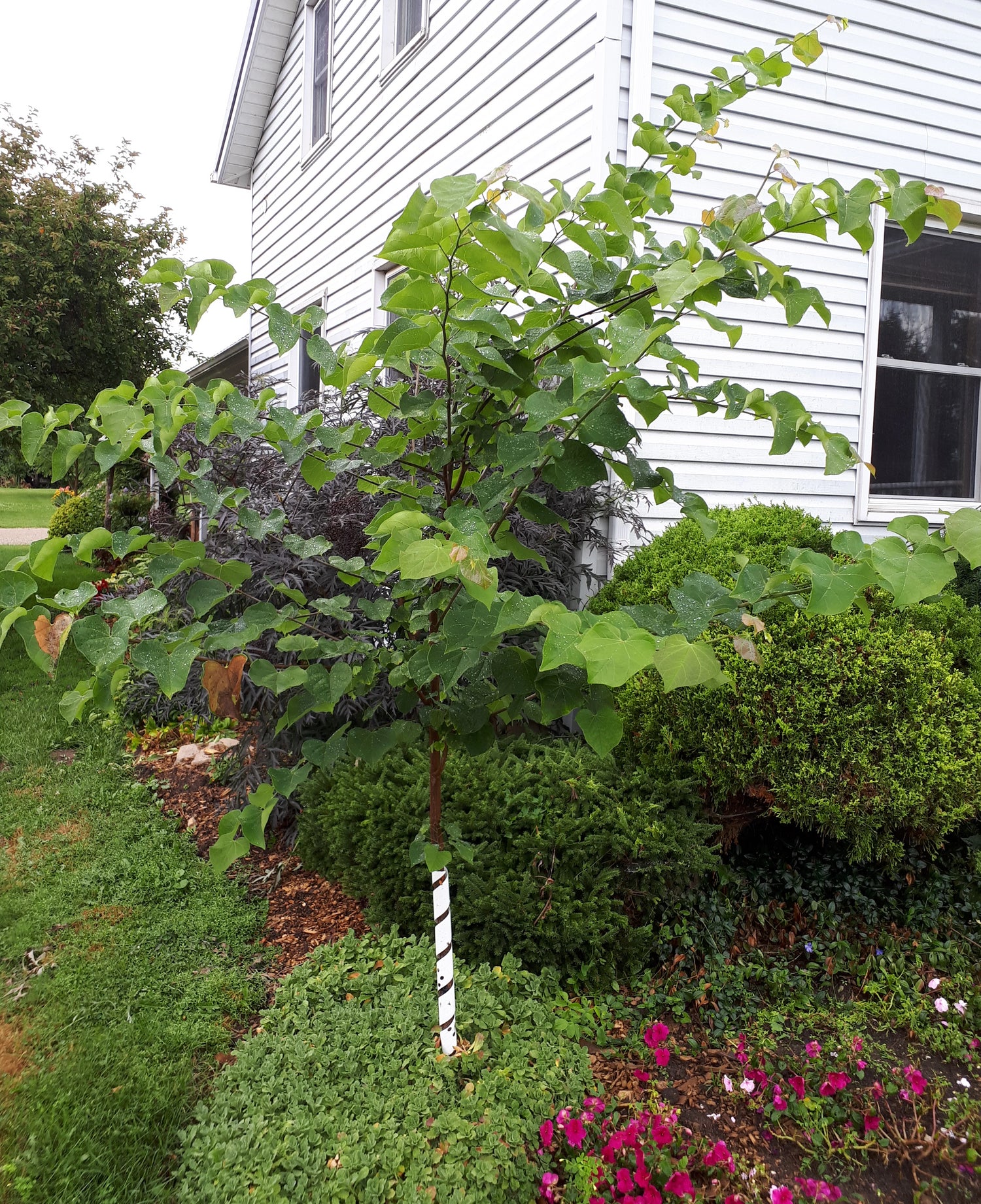
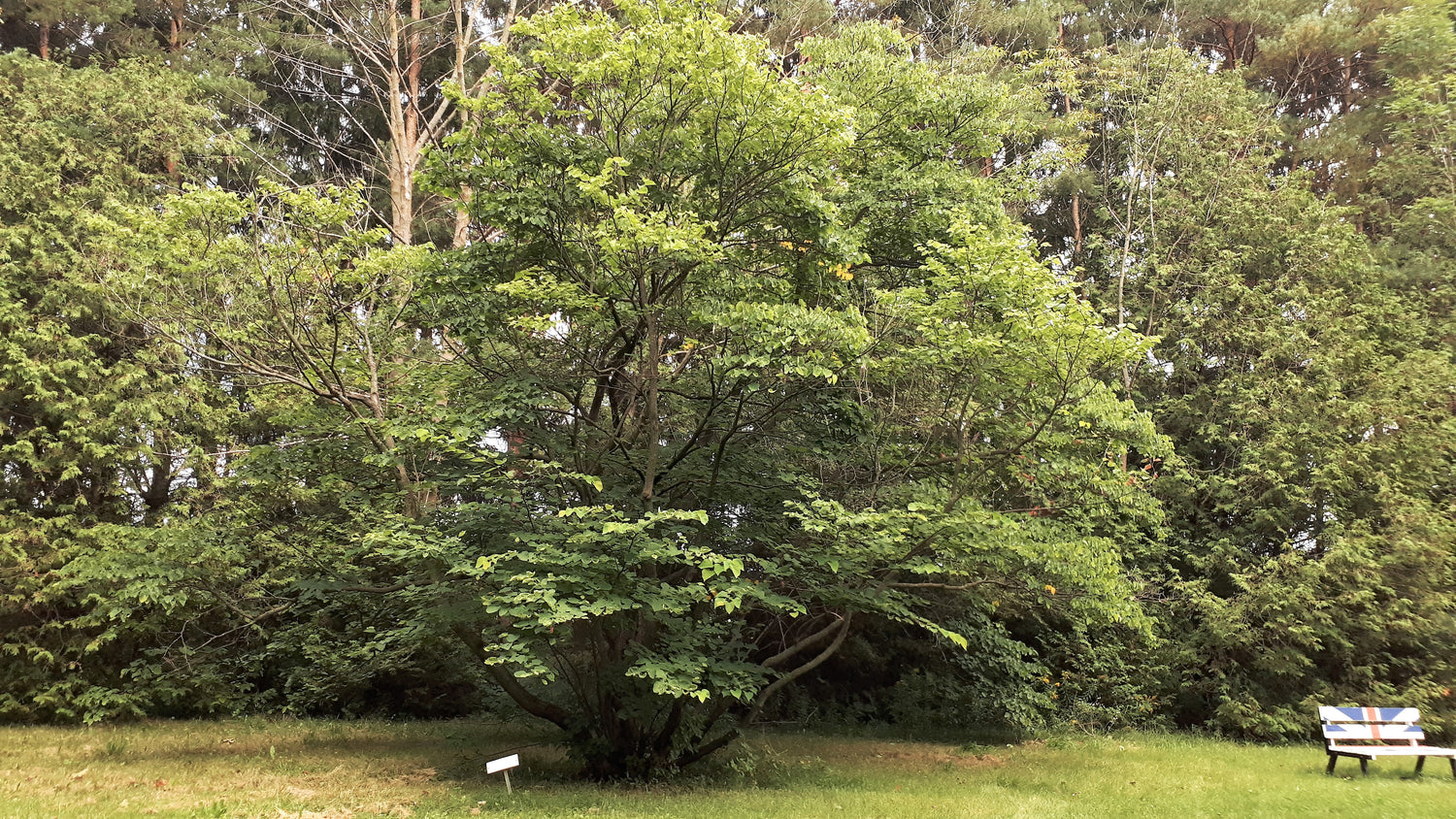
Species: Cercis canadensis
History: Native to the eastern United States and parts of central Mexico, this tree may have once been native to southern Ontario but it is no longer found here naturally. It is still a fairly common sight since it has been widely planted as an ornamental tree due to its gorgeous profusion of pink flowers. The flowers and seeds have traditionally been eaten by indigenous peoples and people still enjoy them fresh or fried today, while some use the green twigs for seasoning.
Why We Grow It: This native tree grows well in any soil type, and puts on a show stopping bloom every spring producing millions of edible citrusy flowers. The pods it produces are edible too, and are best enjoyed when the young pods are sauteed or fried. The heart-shaped leaves add another level of appeal to the tree even when it is not flowering.
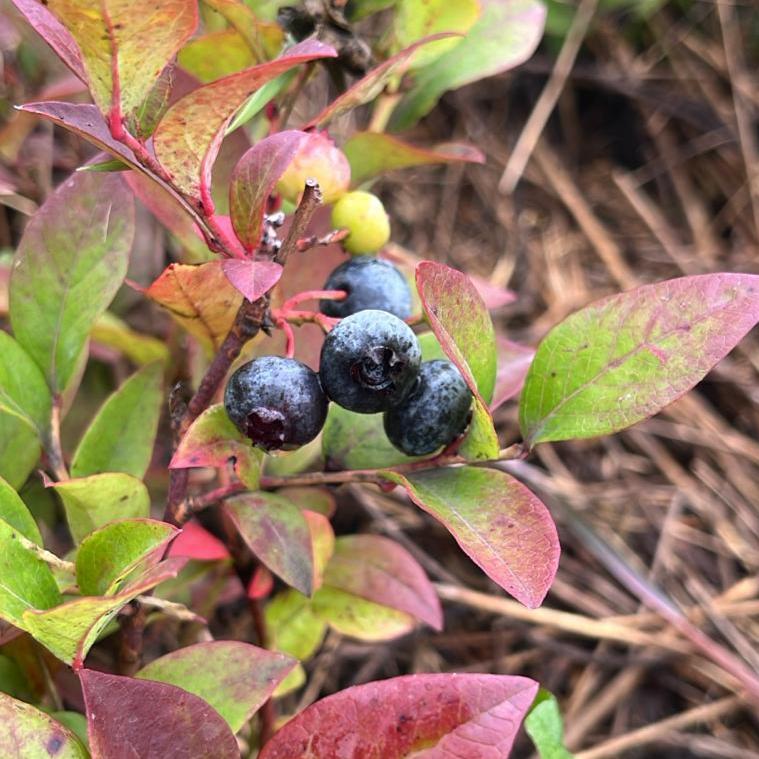
Species: Vaccinium corymbosum
History: Elliott originated in 1947 when Dr. George Darrow of the USDA first bred it. Elliott, and the other blueberries Dr. Darrow bred, were first evaluated by Dr. Arthur Elliott and then by members of the USDA such as Arlen Draper who has bred numerous blueberry varieties. It was released in 1973, over 25 years after the it was originally grown. Elliott was selected for the good quality of its fruit and its exceptionally late ripening time, making it a great variety for extending the blueberry season. It was named Elliott to honour Dr. Elliott's contributions to blueberry breeding efforts.
Why We Grow It: Elliott produces large berries with a mild sweet flavour late in the season. They are great for fresh eating, cooking, baking, and preserving! The bush is very productive and the firm fruit stores well. For those who want to enjoy fresh blueberries for as long as possible, Elliott is an excellent choice due to its very late ripening time!
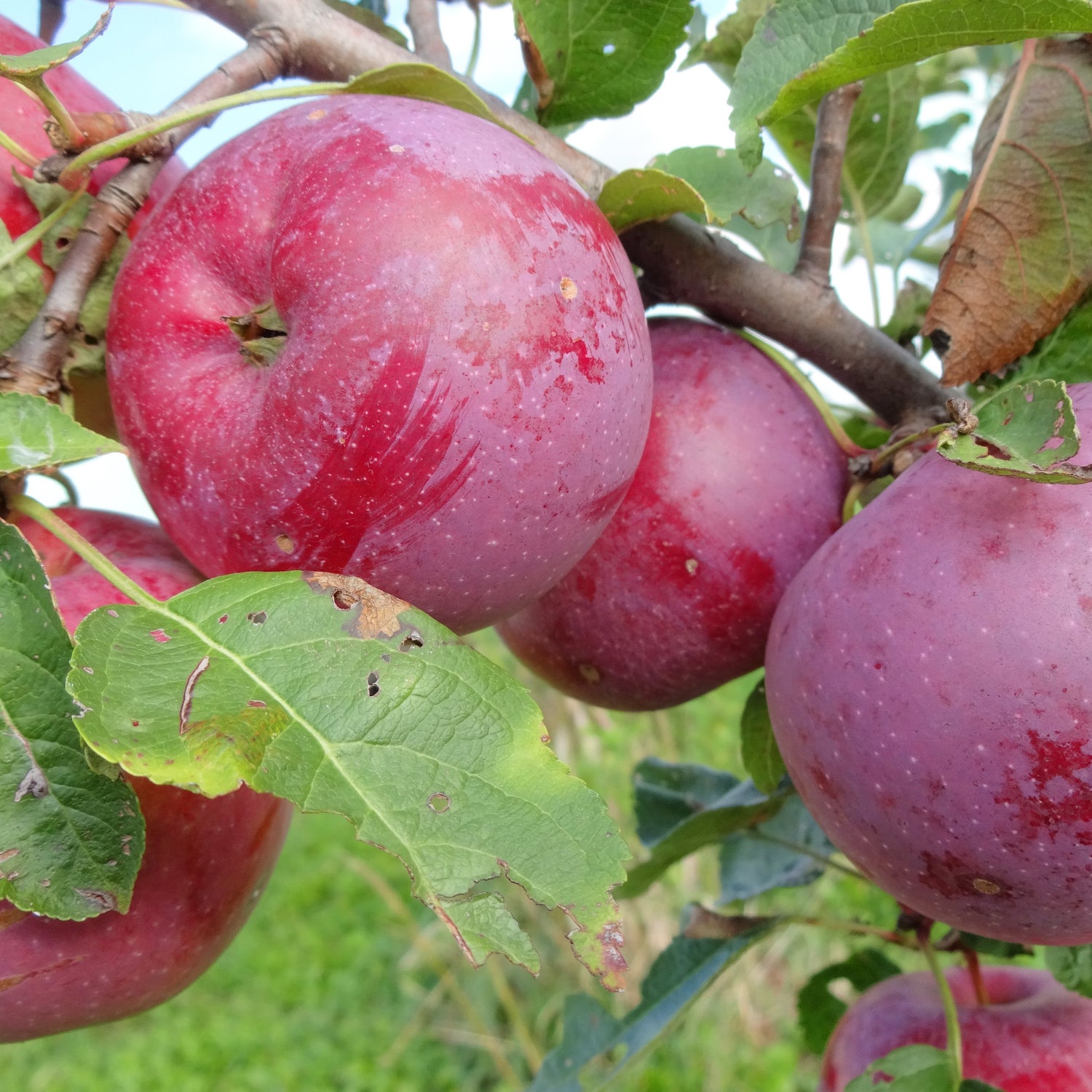
History: The creation and selection of Empire apples was a lot more intense compared to the chance origins of some of our older varieties. In 1945, scientists from the Cornell University New York State Agricultural Experiment Station collected thousands of seeds from the orchard of fruit nutritionist Lester C. Anderson. For years these seeds were grown and tested until Empire emerged as the best apple from amongst its siblings. It was released to the public in 1966 and has since become one of the top ten most popular apples in North America.
Why We Grow It: Empire is an excellent general-purpose apple for the Great Lakes area. The attractive green and red fruit is crisp and sweet and keeps well into the winter. The trees crop heavily and reliably, and the fruit is resistant to bruising, making life easier for the grower. They are also resistant to fireblight and cedar apple rust.
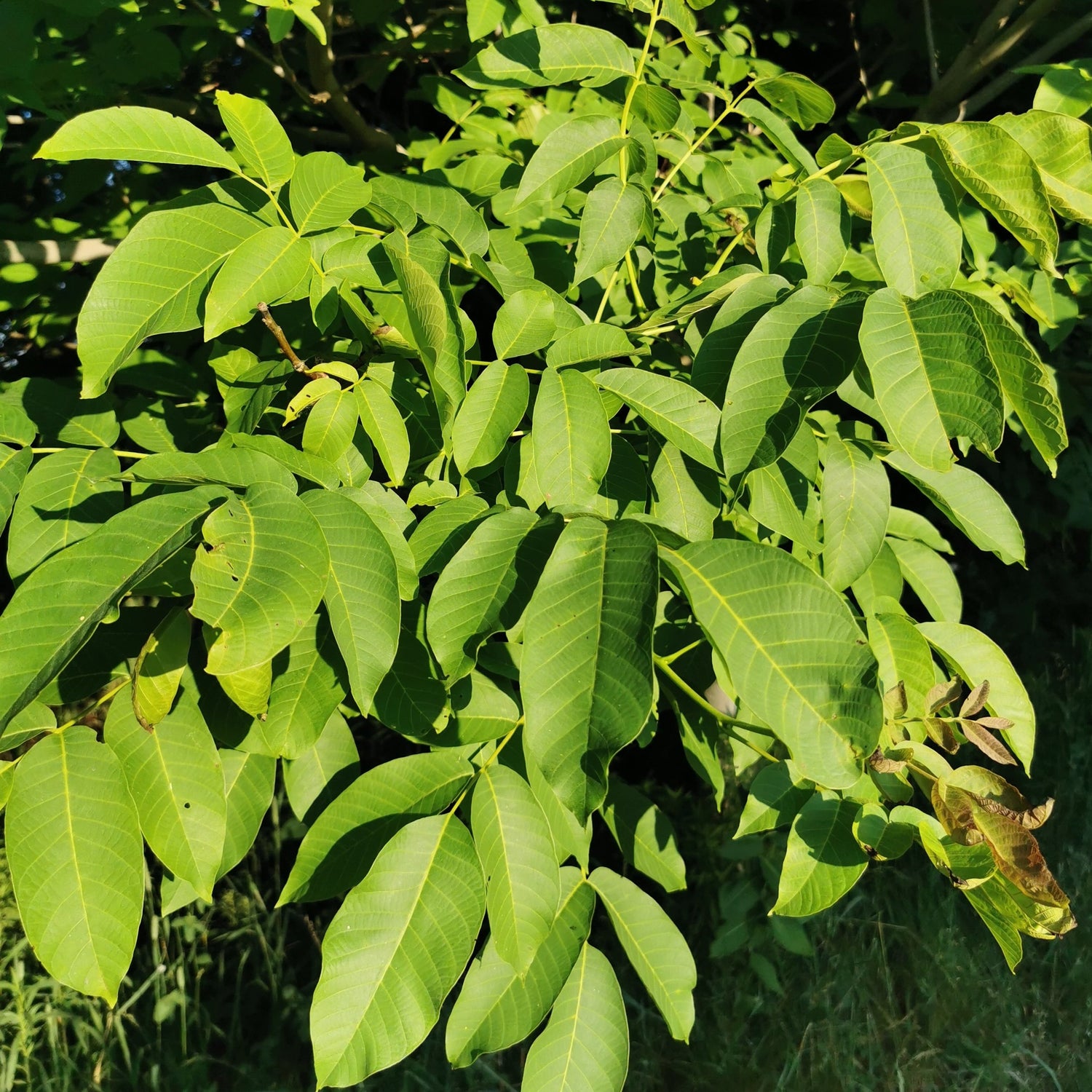
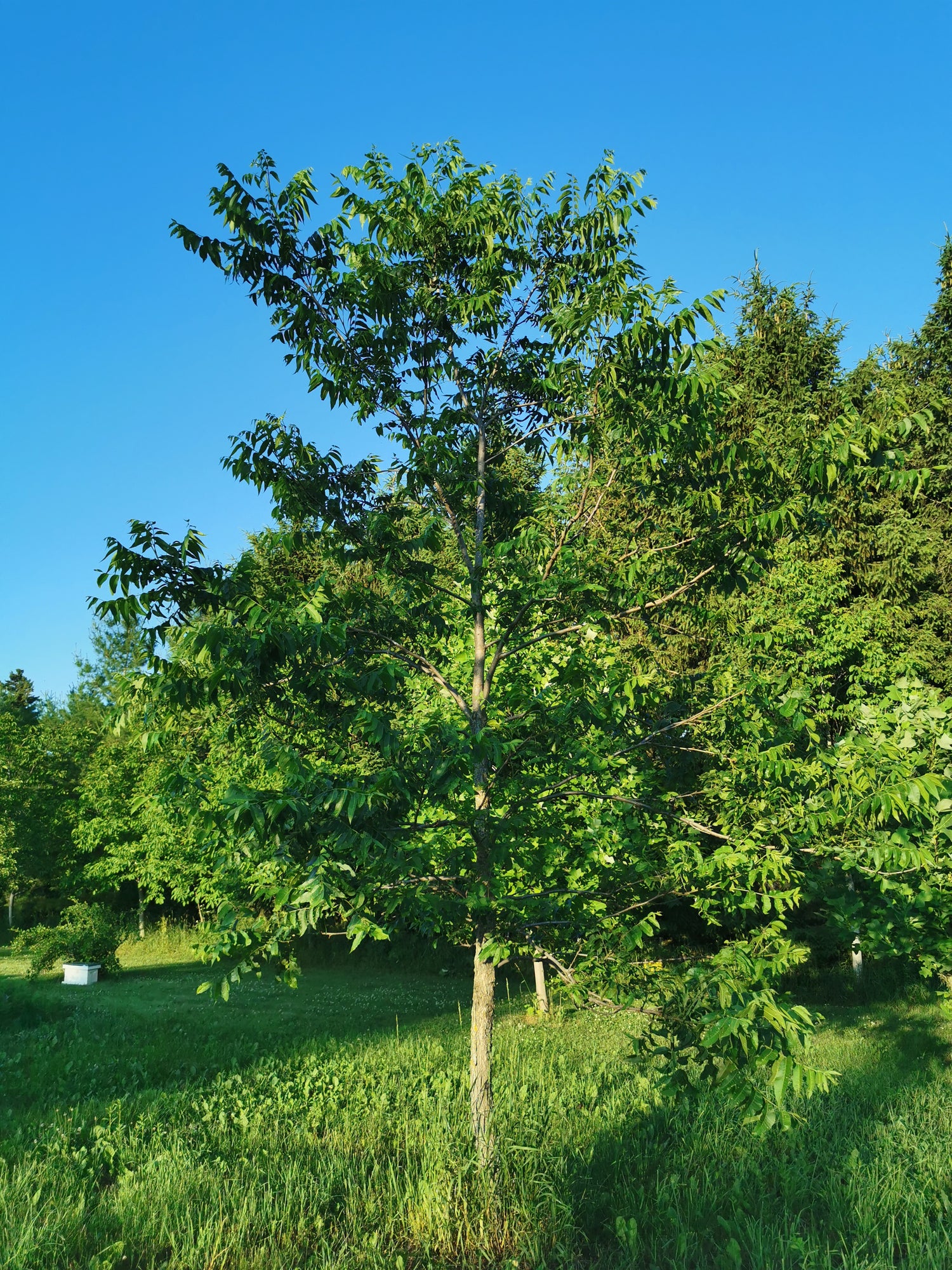
Species: Juglans regia or hybrid. Our seeds are collected from trees that may have been cross-pollinated by closely related species so the resulting seedlings may be hybrids.
History: English Walnut (aka Persian/Carpathian Walnuts) is native from the Balkans to the Himalayas and China. It possibly originated in Iran and over time has been spread across the world by Alexander the Great, the Romans, trade along the Silk Road, and British colonizers. In Italy, there were legends of witches gathering under an old English Walnut tree in Benevento to perform sabbats which in turn has inspired works such as the ballet Il Noce de Benevento. Still commonly grown and cultivated today, China is the main producer of commercial walnuts.
Why We Grow It: Although they aren't native like our other walnut trees, English Walnuts are known for being easier to open than Black Walnuts and remain popular for a reason. Our seedlings come a mother tree near Listowel ON, an extra boon when Ontario grown English Walnuts are said to produce sweeter nuts than those from California! The sap can be boiled to make walnut syrup, which tastes very similar to maple syrup but with notes of caramel and butterscotch. The husks can be used to flavour beer, like hops.
Be mindful of the juglones in the in the roots/nut husks, they are toxic to many other species. They require a buffer of about 50'/30m from the edge of the trees canopy for juglone-sensitive plants. This article from The Garden Hoe has a helpful list of plants that tolerate juglones. However there are recent (2019) studies showing healthy soil high in organic matter and mycorrhizal fungi actually reduce the toxicity of juglones suggesting many plants can grow below juglans species in a healthy ecosystem - it will be interesting to see more study done in this area!

History: AKA Co-op 30, Enterprise is one of the many varieties that was developed through the collaborative PRI disease-resistant breeding program run by Purdue University, Rutgers University, and the University of Illinois. It was introduced in 1993 and has proven to be a very reliable variety. Although its name does not start with 'PRI' like many of the other varieties that came from this program, they still snuck the initials into Enterprise's name.
Why We Grow It: Enterprise produces crisp fruit that it is known for its strong, rich, tart flavour that can be described as spiced. It is a very disease-resistant variety that grows quickly, produces reliable crops, and stores for a long time. They are good for fresh eating although the skin is on the thicker side, and they can be used for cooking, baking, and sauce.
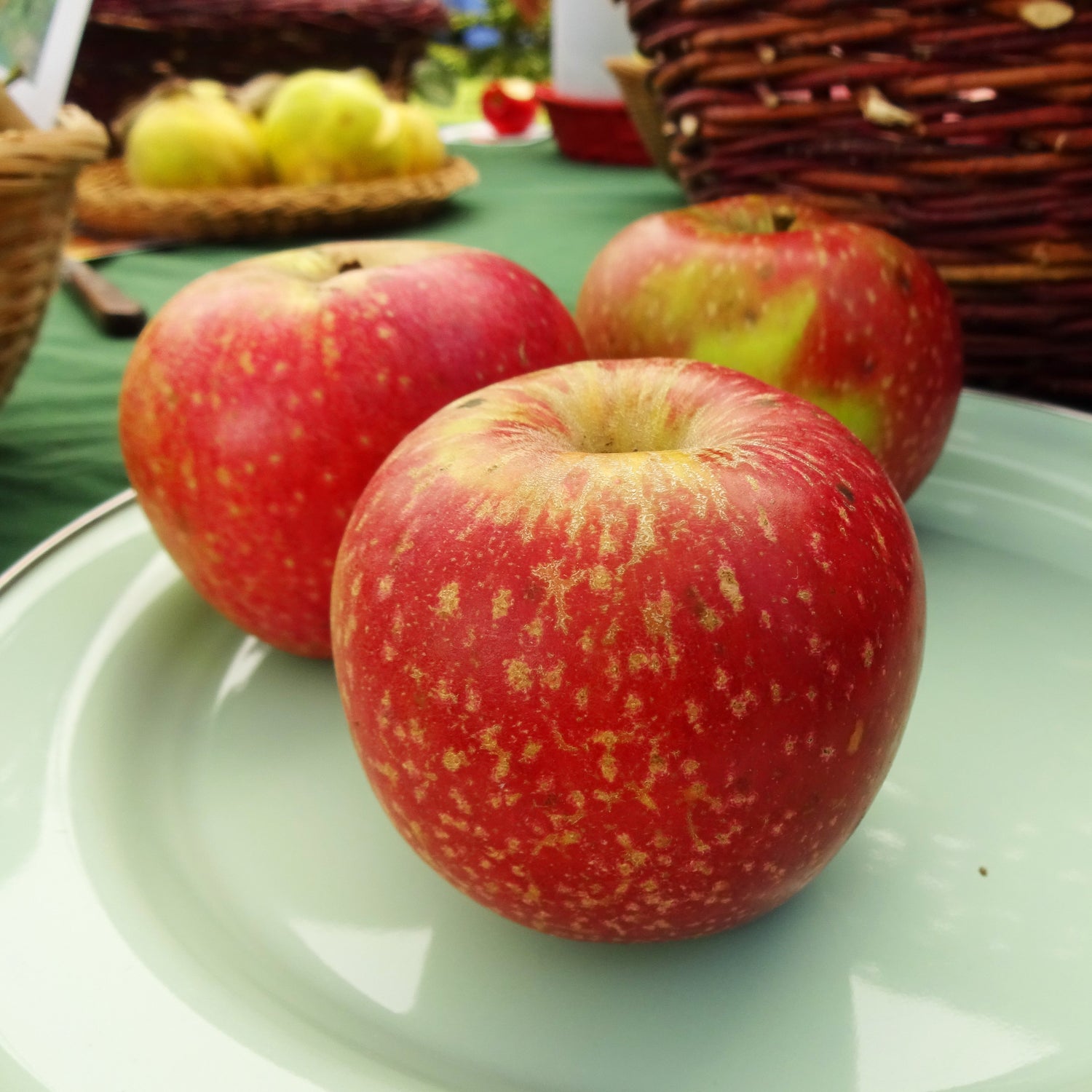
History: Esopus Spitzenberg was discovered near Esopus, New York in the early 1700s. Its main claim to fame is its supposed designation as Thomas Jefferson's favourite apple, a claim supported by the numerous Esopus Spitzenberg trees he had planted at his plantation Monticello. This apple was very popular in the US in the 1800s, considered one of the best for fresh eating, valuable for cooking, and a nice addition to cider blends.
Why We Grow It: The flavour of this particular variety is complex with high acid content, considered by many to be a high quality fresh-eating apple. This is helped by the attractive medium sized fruit which sports bright red skin. This variety keeps, with good flavour, until March. Despite being susceptible to just about every common apple disease, we still believe this apple is worth the extra effort and haven't had much issue growing it here.

Note: Our Evans sour cherries are grown from cuttings so they will be smaller and bushier than the grafted and seedling sour cherries we offer. Please see 'Size at Purchase' below for more details!
History: Evans (aka Bali) was originally grown by a Mrs. Borward living near Fort Saskatchewan, Alberta. This was quite notable since, at the time, it was believed that it was impossible to grow any cherry trees in the prairies! She had been growing the cherries since the early 1920s and the cold hardy tree was eventually brought to the attention of horticulturalist Dr. Ieuan Evans by a friend. In 1976, her garden was slated for destruction due to the pending construction of a federal prison so she invited Dr. Evans to take suckers to propagate the tree. He gave the suckers out to a wide circle of friends and acquaintances who were all impressed and the variety was dubbed 'Evans' in his honour by another Alberta Agriculture horticulturalist. Dr. Evans tried to bring the variety to the attention of local nurseries who turned it down, refusing to believe cherries would grow in the cold prairie climate. Eventually, it was picked up by nurseries and Evans became the number one selling cherry tree in North America.
Why We Grow It: Evans produces bright red cherries that are excellent for pies, jellies, jams, and juice. This naturally dwarfing variety only reaches about 12-14ft tall compared to to a full-size tree which can reach up to 25ft. Evans tends to grow as more of a bush but can be pruned to maintain a tree form. It produces a profusion of white blooms in the spring which makes it quite attractive as an ornamental plant as well.
Check our our blog post with some tasty sour cherry recipes!
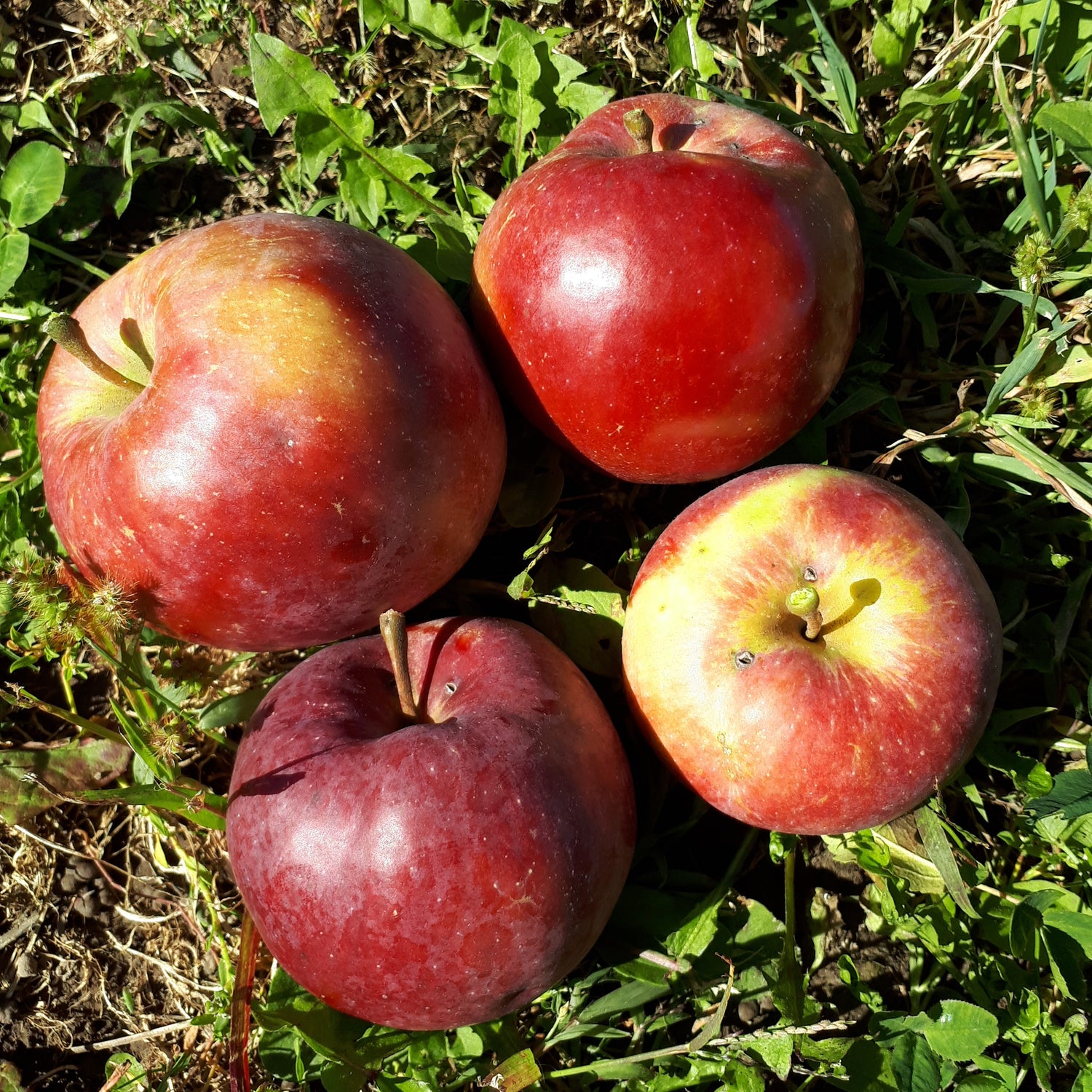
History: Fireside apples originated in 1943 from a breeding program at the Minnesota Agricultural Experiment Station. They are one of nearly 30 varieties that have been introduced by the university's breeding program since it began in 1888.
Why We Grow It: Fireside stands as an icon of toughness in the world of apples, thriving in cold northern areas. But don’t let this image fool you—Fireside has a warm heart! The flesh is amazingly sweet and very juicy.


History: Florina, aka Querina, was developed in France in the 1980s at the Station de Recherches d'Arboriculture Fruitiere. Despite being developed in France, its ancestry is made up of American varieties. Since its introduction it has become quite popular in continental Europe.
Why We Grow It: One of Steph and Mouse's favourites! Florina is a wonderful all-around apple for the backyard offering both rich flavour and easy care. The sweet, crisp fruits it produces are perfect right off the tree but also keep a few months. They are also great for organic production: resistant to scab, fireblight, mildew, and rosy apple aphid.


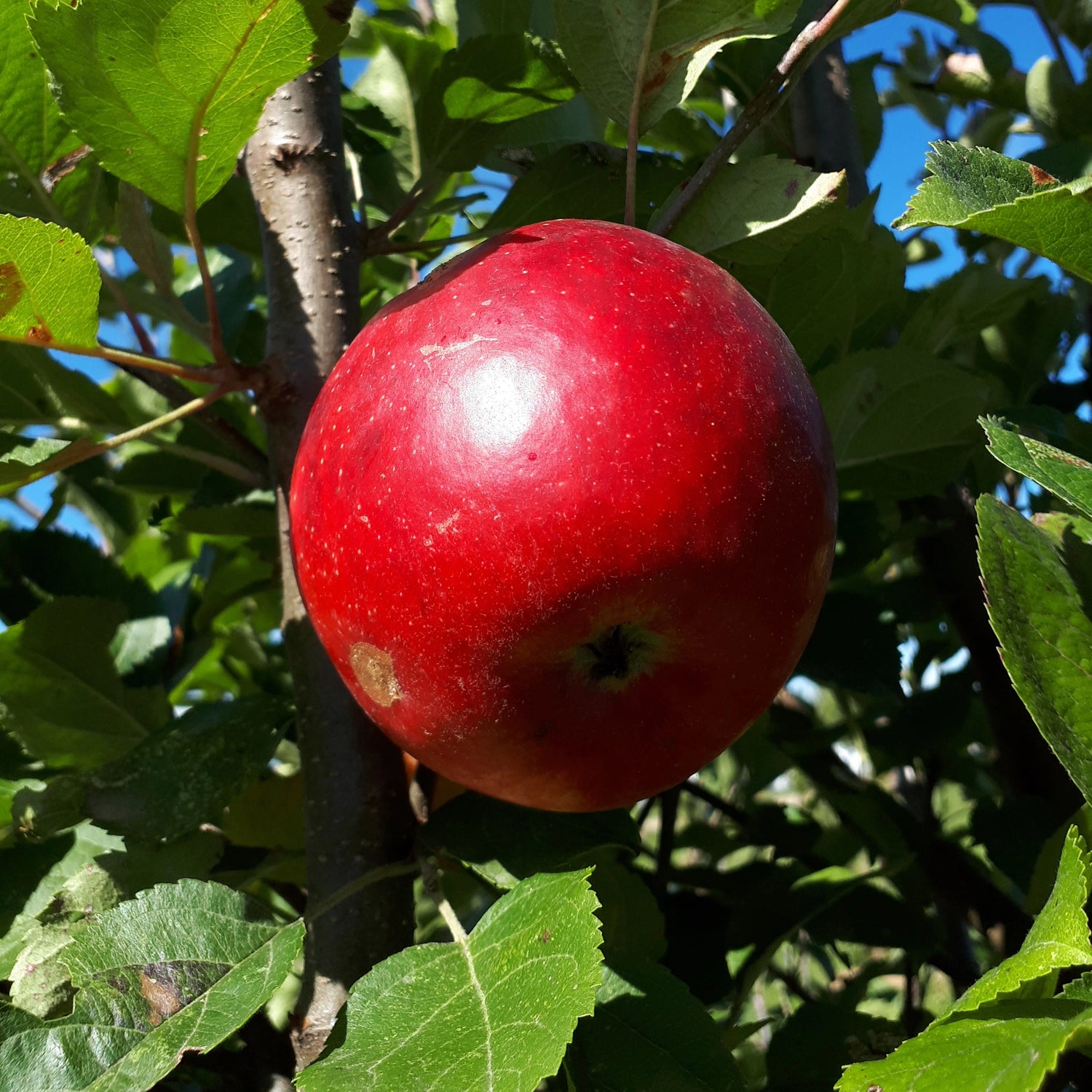
History: Freedom was developed in a breeding program at the New York State Agricultural Experiment Station in Geneva, New York in 1958. The goal was to create an apple that was immune to apple scab, and this particular variety was chosen from 120 other apples that were planted out from seed selected through an intensive breeding program. It was released in 1983 and given the name Freedom to represent its freedom from apple scab.
Why We Grow It: Low maintenance, disease-resistant, vigorous, good flavour, and a good keeper... all in one apple! Freedom is the perfect variety for growing organically, for pick-your-owns, backyards, and community orchards. Large red skinned apple, similar to McIntosh in flavour with sweet, subacidic, sprightly flavour and juicy white flesh. Crunchy, fine grained flesh.

Species: Vitis sp. (hybrid)
History: Frontenac was bred by renowned cold hardy grape breeder Elmer Swenson at the University of Minnesota. It was released in 1996 and since then has become commonly planted in Canada and northeastern America where other wine grapes will not perform as well.
Why We Grow It: Frontenac produces a blue grape that is best used for wine-making. It is suitable for rosés, dry red wines, and fortified wines such as port. It is high in both acidity and sugar, producing a balanced wine with a nice colour.
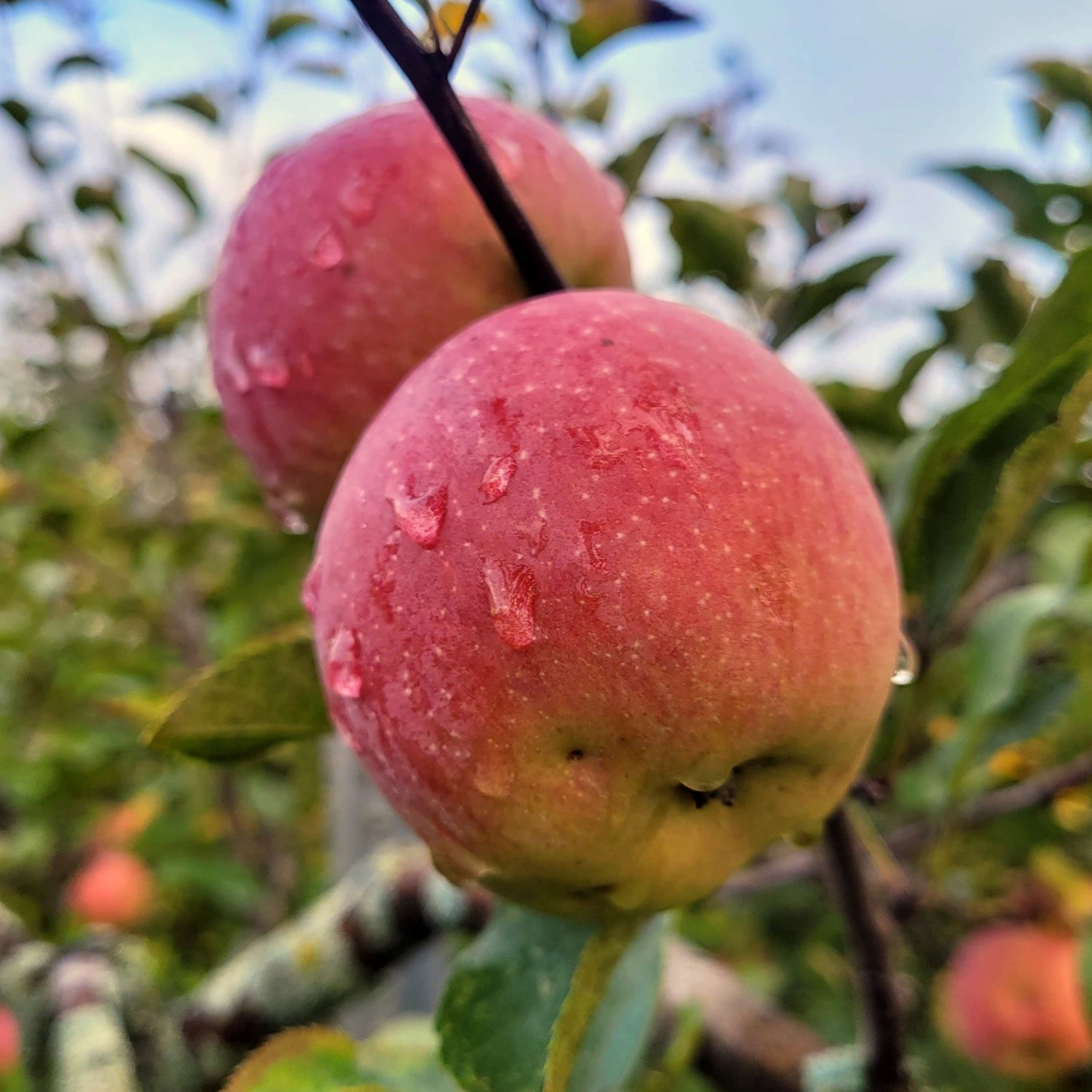
History: Fuji apples were developed at the Tohoku Research Station in Japan in the 1930s and released commercially in 1962. It was named after Fujisaki, the town where it was created. Despite being created in Japan, this apple is actually a mix of two American varieties. Its excellent flavour and attractive appearance has made it one of the most popular apples varieties in the world. It is commonly grown in the US, Japan, and China.
Why We Grow It: Its crisp, very juicy, sweet flesh makes Fuji a very popular variety. It also stores well, lasting about three months. To the best of our knowledge, this is the original strain.
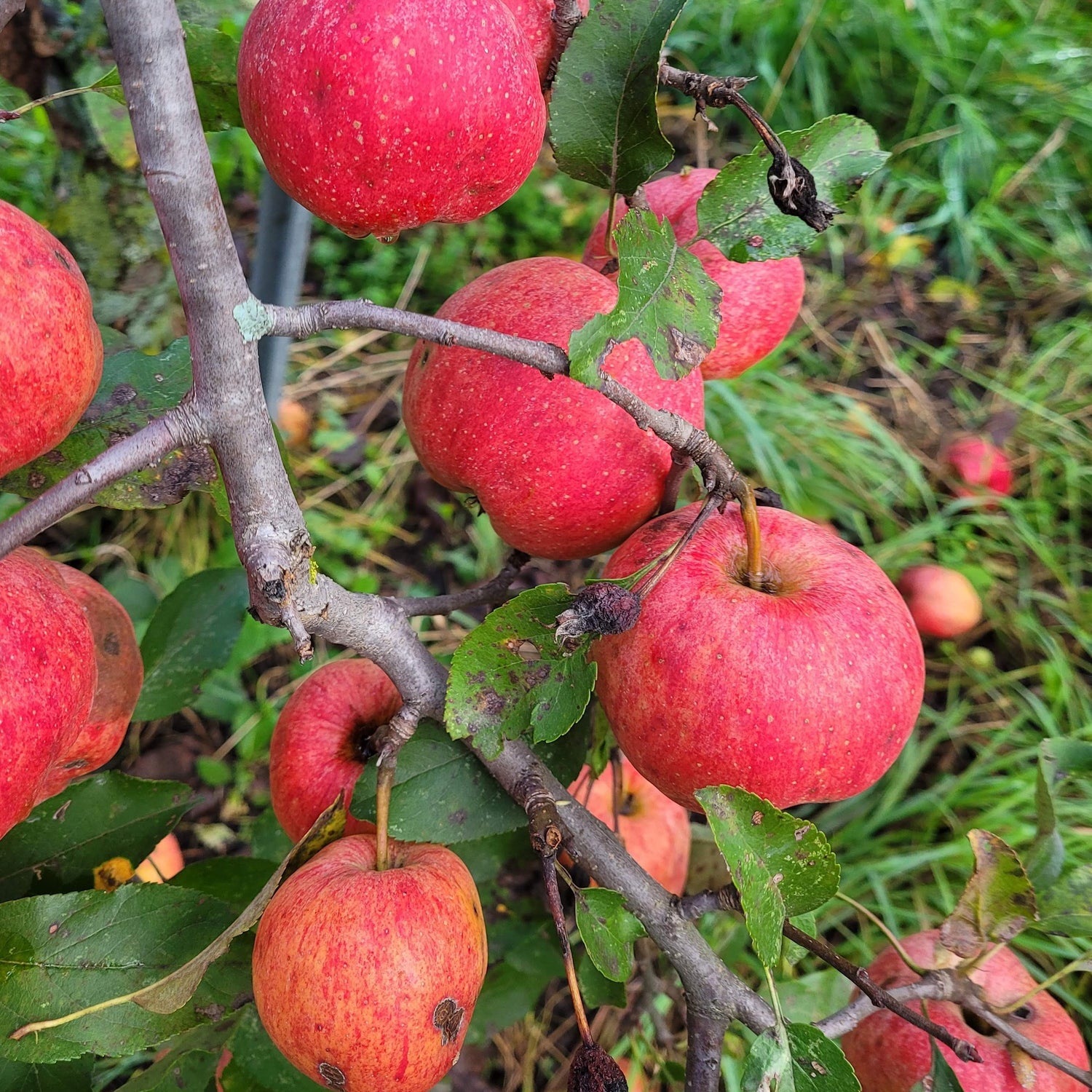
History: Gala apples are one of several varieties created by J.H. Kidd in New Zealand as part of his project to cross Cox's Orange Pippin with American varieties in the 1930s. He definitely succeeded with the Gala apple which has since become one of the most popular apple varieties worldwide and a mainstay in grocery stores.
Why We Grow It: This apple earned its popularity with its amazing flavour, especially when eaten fresh off the tree. Although many sports with a deeper red colour have been introduced and marketed as Gala, they often come at a compromise to flavour so we offer you the original Gala with full sweet crunchiness.
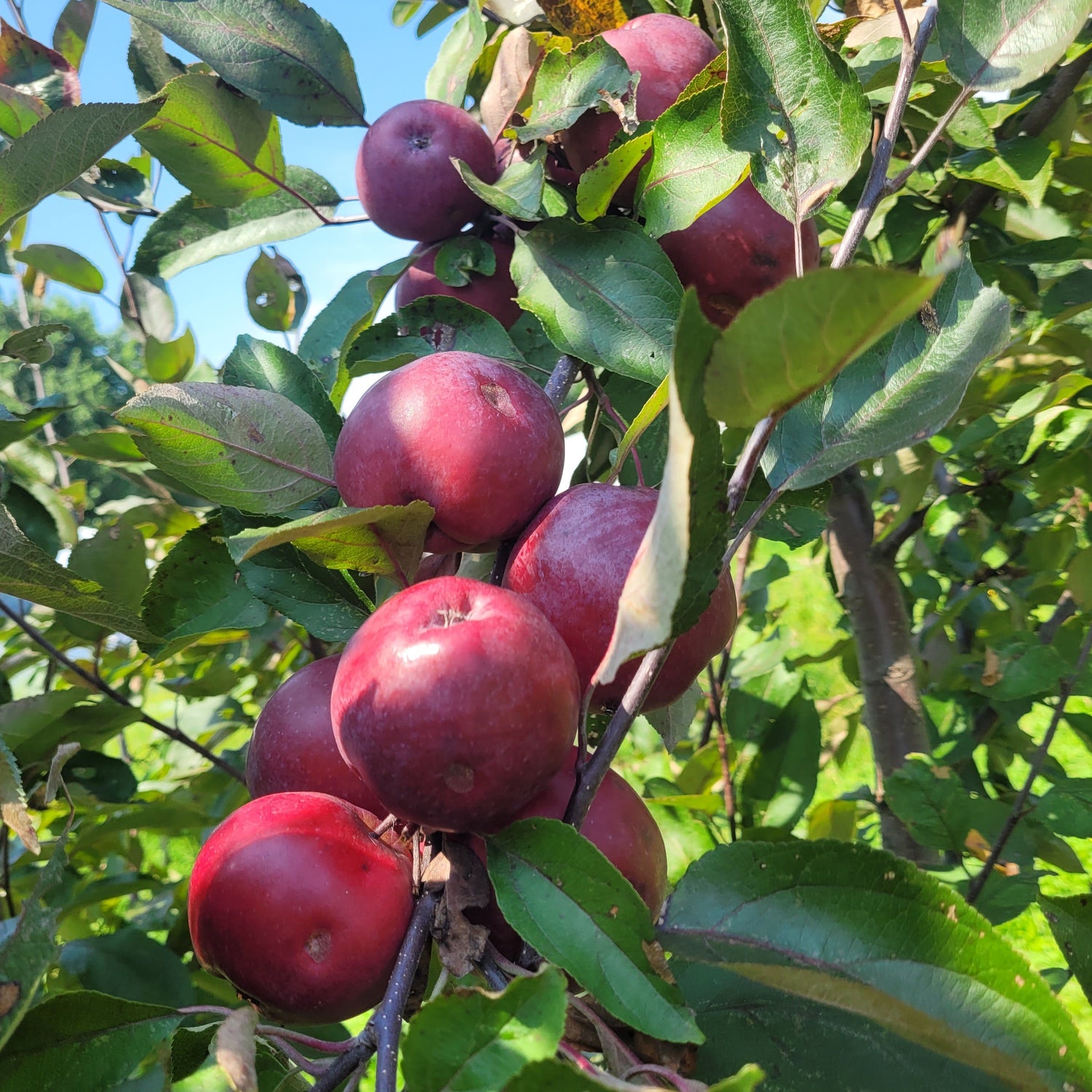
History: The Geneva crabapple was developed in the 1930s in collaboration with the Ottawa Experimental Farm and the New York State Agricultural Research Station based in Ottawa. The creation of this crabapple was head by Isabella Preston who specialized in creating cold-hardy ornamental plants.
Why We Grow It: This attractive crabapple has deep maroon flesh. The tree itself is quite visually appealing, sporting red leaves and bright pink flowers in the spring. The taste is reminiscent of rhubarb and is suitable for cooking as well. As it is a low sugar/high acid juice, it is best blended with another high sugar variety for cider. It also adds a nice red hue to blends.

History: Glowing Heart was bred in Toronto by Fred Jansen, one of the founders of the North American Fruit Explorers (NAFEX). This unique apple is still in its early years.
Why We Grow It: This variety has a unique pink and white flesh and is quite acidic. One bite will make you pucker! Although not the best option for fresh eating, this apple creates an aromatic jelly with rich flavour and can be used in ciders as well. It does well in organic orchards.


History: Golden Delicious was discovered by chance on a family farm in West Virginia and sold in 1914 to the Stark Brothers Nurseries. It has since become one of the most popular apples in North America. Since 1972, Clay County, where the apple was found, has hosted an annual Golden Delicious Festival and in 1995 it was declared the state fruit of West Virginia. Golden Delicious is also the parent of many varieties, including prominent ones such as Ambrosia and Gala.
Why We Grow It: It is easy to see why this apple is so popular with its attractive golden yellow skin and sweet, crisp cream-coloured flesh. Golden Delicious is a favourite for fresh eating, sauce, and apple butter. On top of that, it is resistant to scab, powdery mildew, and fire blight.

History: Golden Nugget was created more or less by accident when Golden Russet and Cox's Orange Pippin were crossed at the Kentville Agricultural Station in Nova Scotia in 1932. Despite being an accident, once researchers realized how flavourful this variety was they continued to raise it and eventually released it in 1964. Although a delicious apple, its small size prevented it from attaining true commercial success.
Why We Grow It: It is prized for its incredible flavour which is super sweet and tangy like a pineapple. Along with being great for fresh eating, it is also suited for cider. The tree itself boasts decent disease resistance.

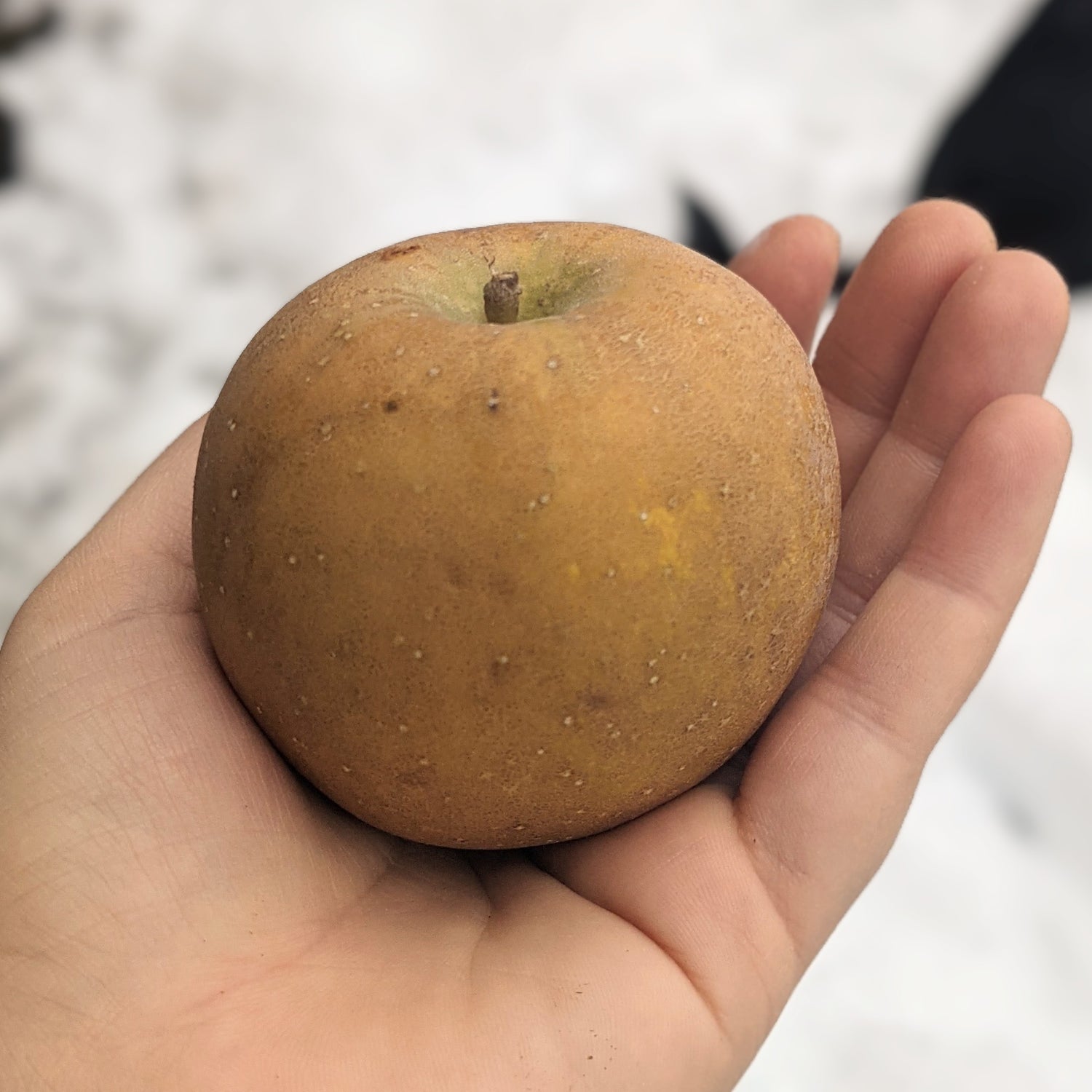
History: The origins of Golden Russet are unclear, but we know it was discovered in New York in the first half of the 1800s. It may have come from the seedling of an English russet variety and could have Ashmead's Kernel parentage. It was grown commercially for some time before falling out of favour, although it has regained some popularity recently due to its strengths in cider production.
Why We Grow It: With both lots of sweetness and acidity, Golden Russet is one of our favourites for fresh eating. The flavourful juice from these apples is also great for making cider. The thick russetted skin discourages insect damage and it is resistant to scab, canker, and powdery mildew. Its tip-bearing habit gives these hardy trees a wispy appearance.

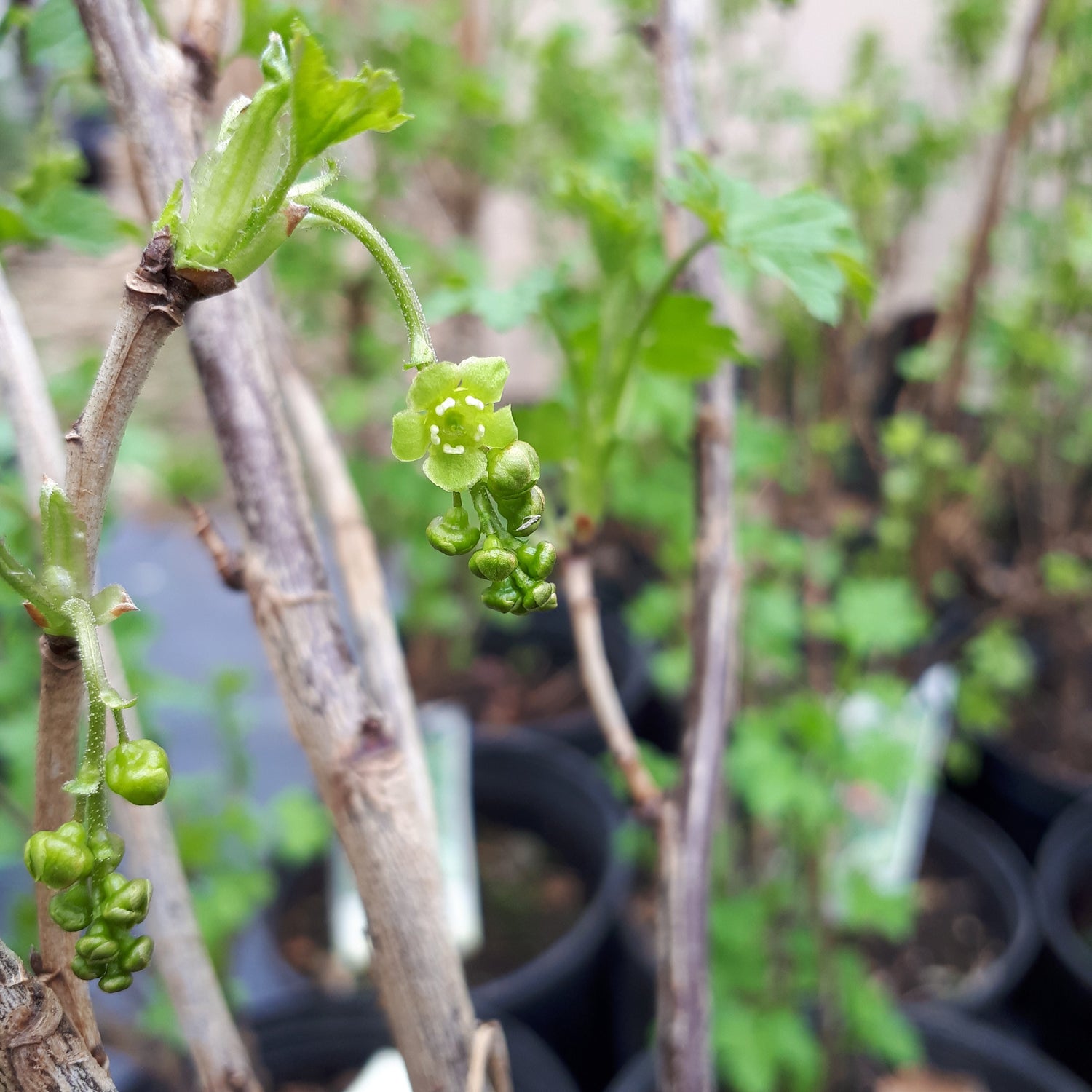
Species: Ribes nigrum
History: This black currant is a family classic that was grown by Ken's great-grandmother.
Why We Grow It: Grandma Ethel produces large fruit with a slightly stronger flavour than Titania and an unusual sweetness for a currant. The berries make a very tasty juice - the recipe can be found further below!
A note on the "Grandma" Series: Inspired by this modest currants' success here at the nursery, we decided to curate our own repertoire of family favourites! Check out our tried-n-true gooseberries, rhubarb and raspberries.
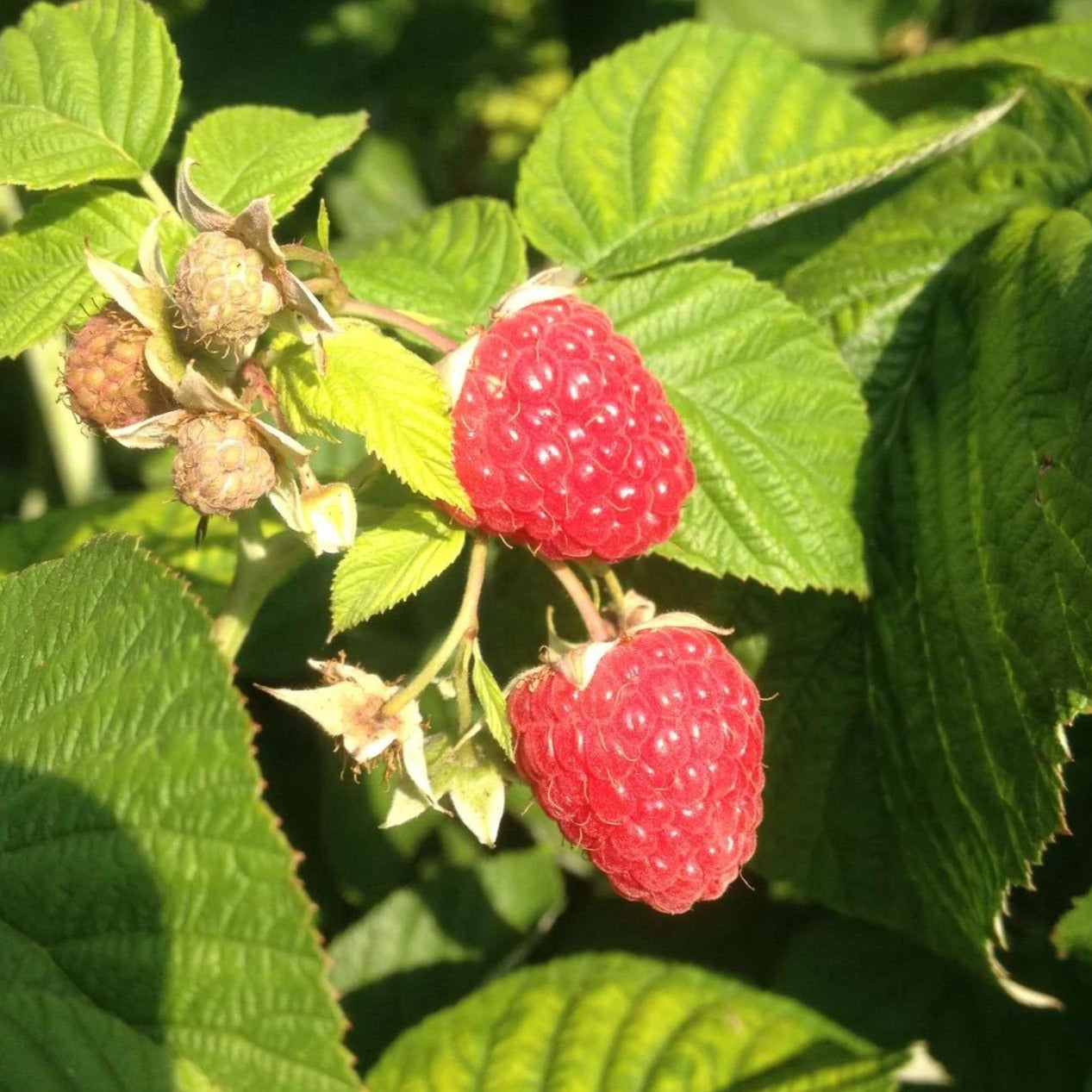
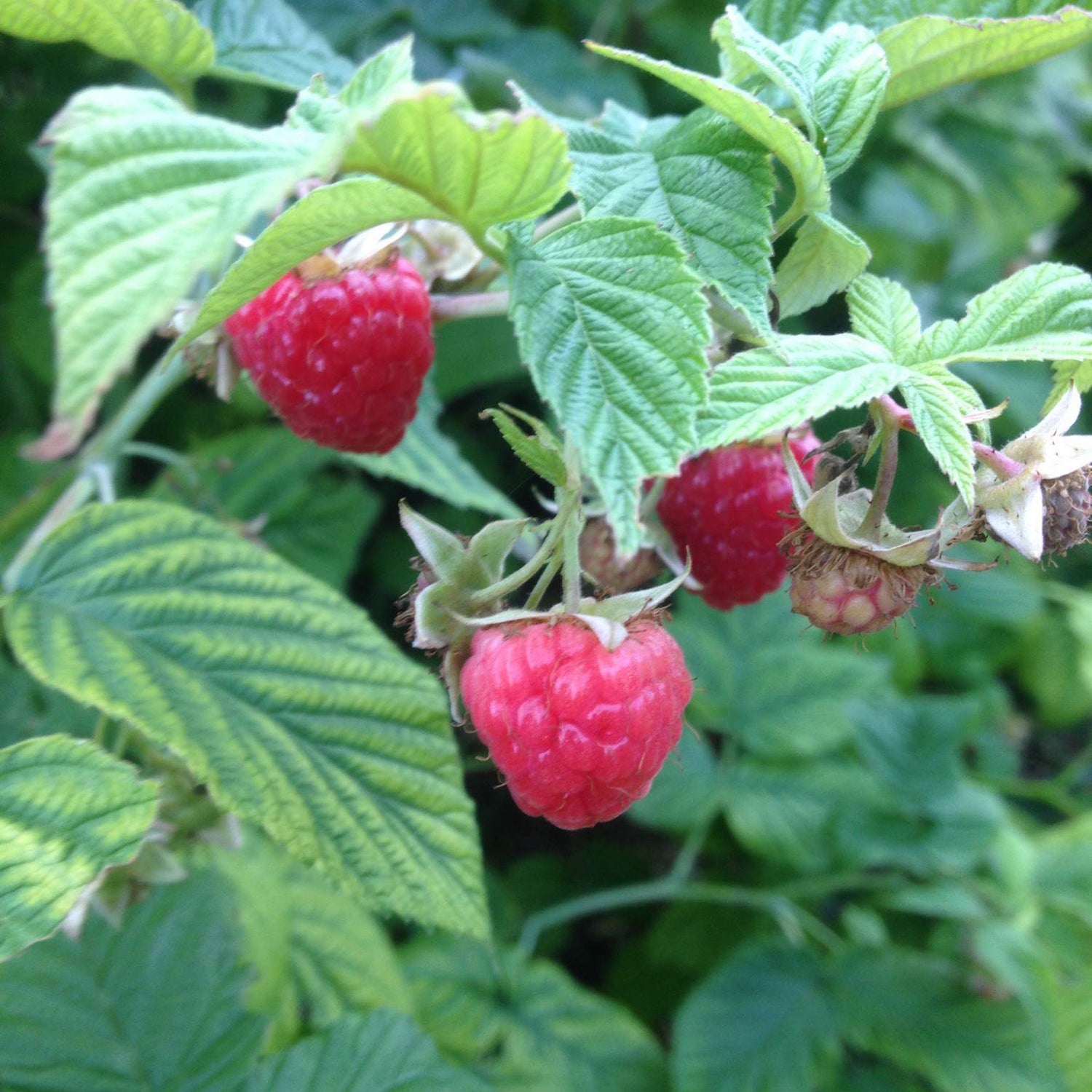
Species: Rubus sp
History: These red raspberries were grown by our great-grandmother and have been passed down through the family.
Why We Grow It: We might be a little biased, but we think they have superior flavour! The fruit is very uniform, not crumbly, and holds its shape well fresh or frozen.
A note on the "Grandma" Series: Inspired by Ken's 'Grandma Ethel Black currant', we decided to curate our own repertoire of random (may be a cultivar from long ago, or a favoured seedling) berries that have become family favourites! Check out our tried-n-true rhubarb and gooseberries in addition to the currants and raspberries.

History: Granny Smith was discovered by Maria Ann "Granny" Smith as a chance seedling on her and her husband's farm in Australia in 1868. Having grown from apple seeds she had tossed, she found it to be an exceptional apple. She propagated it and brought the apples to market, earning the variety local popularity. She passed away two years later but local growers kept the variety going until it was noticed by the New South Wales Department of Agriculture in 1895. Thanks to its excellent shelf life, it became an important agricultural export and remains one of the most popular apple varieties in the world today. There has been an annual Granny Smith Festival in Eastwood since 1985 to commemorate Maria Ann Smith and her apple that attracts over 80k attendees each year.
Why We Grow It: This classic green apple barely needs an introduction! It is well known for its sweet and sharp flavour that is a delight for fresh eating and for its usage in cooking and baking. As an added bonus, Granny Smith also keeps well in storage and tends to start producing fruit at a young age.

History: Greensleeves was bred as a cross between James Grieve and Golden Delicious by Dr. Frank Alston at the East Malling Research Station in the UK in 1966. In 1981 it received the Royal Horticulture Society Award of Merit and was released the year after.
Why We Grow It: These round, golden apples have a nice sweet/tart flavour that mellows out with maturity. They are great for making juice or cider as well as fresh eating. The tree has low vigour so it naturally stays more compact, a useful feature if you don't have a lot of space.


History: Grimes Golden was discovered on the Grimes farm in what is now West Virginia in 1832. Local legend claims that it grew from a seed planted by John Chapman, better known as Johnny Appleseed. After its discovery, it was widely planted up until the 1930s when it became supplanted by more popular varieties such as its (likely) descendant, Golden Delicious.
Why We Grow It: Although less popular now than Golden Delicious, many claim that Grimes Golden has a superior flavour: sweeter and with a hint of spice. The fruit is great for fresh eating and making cider, and it stores quite well. The tree is moderately resistant to fire blight and mildew.


Species: Celtis occidentalis
History: Hackberries can be found in parts of southern Canada and in the eastern and central United States. The berries produced by the tree are commonly eaten by winter birds and mammals like squirrels. Indigenous peoples traditionally eat the berries raw or use them in several dishes. Although they tolerate urban conditions well, they are relatively uncommon as street trees except in Sombor, Serbia, and Bratislava, Slovakia where they have been planted extensively.
Why We Grow It: These beautiful native trees resemble the American elm, but without the disease issues. Both birds and butterflies enjoy this tree. The sweet small fruit taste like dates with a large crunchy pit that can be eaten or discarded. Thanks to their unusually high levels of proteins, calories, and vitamins, they are a great food source. You can learn more about Hackberries as a food source via this blog post by Alan Bergo.

Species: Vaccinium corymbosum
History: Hannah's Choice was developed in Maryland by Arlen Draper, a blueberry breeder working for the USDA, in collaboration with the New Jersey Agricultural Experiment Station. The initial cross was made in 1978 and the variety was released in 2000 after being selected for the superior sweetness and firmness of its fruit compared to other early ripening blueberry varieties.
Why We Grow It: Hannah's Choice produces firm, medium to large blueberries with a sweet flavour that has a hint of peach. For those looking to extend the blueberry season, this early-ripening variety is a great option! The fruit is larger, sweeter, and stores better than many other early season varieties. The fruit tends to ripen all at once and is on the firmer side, making it a good option for both commercial farms and u-pick operations.
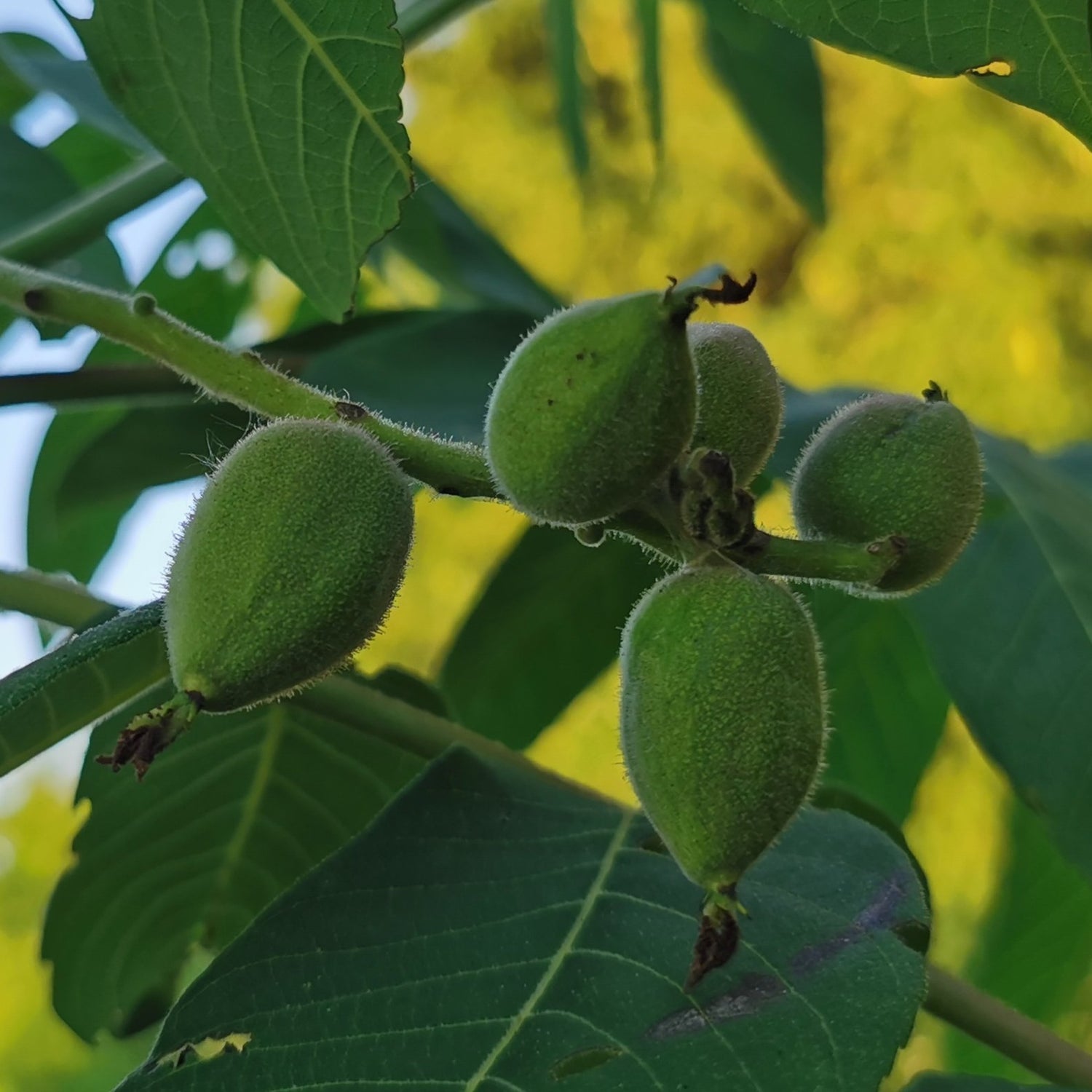
Species: Juglans ailantifolia var. cordiformis or hybrid. Our seeds are collected from trees that may have been cross-pollinated by closely related species so the resulting seedlings may be hybrids.
History: Heartnuts are a sport of the Japanese Walnut that have a heart-shaped shell and kernel instead of the usual elliptical shell. They have good commercial potential in the Great Lakes area where the climate is similar to that of Japan.
Why We Grow It: These trees produce an abundance of tasty nuts that are sweet than other walnuts and lack the bitter aftertaste. Ideally, they will produce heart-shaped nuts but since they are seedlings they may produce the usual rounder nuts of the regular Japanese walnut. They are sensitive to spring frosts for nut production, so they are best planted in a sheltered location.

Special Note: We take special care to grade out (remove) any of these seedlings that are showing visible thorns when we dig them in the fall. This increases the likelihood (although we cannot make any guarantees) that you will not have thorns develop on your Hershey Thornless Honey Locust Seedling. If you don't mind thorns on your Honey Locust, the ones we grade out are available here at a lower pricepoint.
Species: Gleditsia triacanthos
History: The mother variety of these seedlings, Hershey, was developed by John Hershey in the early half of the 1900s. After witnessing the destruction of the Dust Bowl, Hershey knew that trees could play an important role in creating more resilient agriculture and sought out nut, persimmon, honey locust, and oak trees in the wild with desirable traits. Hershey was selected for its large pods, thornless nature, and high sugar content (up to 30-40%!). Some of his original grafted trees can still be found in the US today.
Why We Grow It: Our Hershey seedlings will generally be thornless and produce large, sweet pods similar to what made their parent so desirable. However, with natural variation be aware the pods may not be as large and/or sweet as the original Hershey trees and the seedlings may still produce thorns! The pods are great for livestock feed and the sweet pulp can be used in baking, tea, and making beer. The trees themselves are also nitrogen-fixing, popular with pollinators, and have durable, rot-resistant wood.
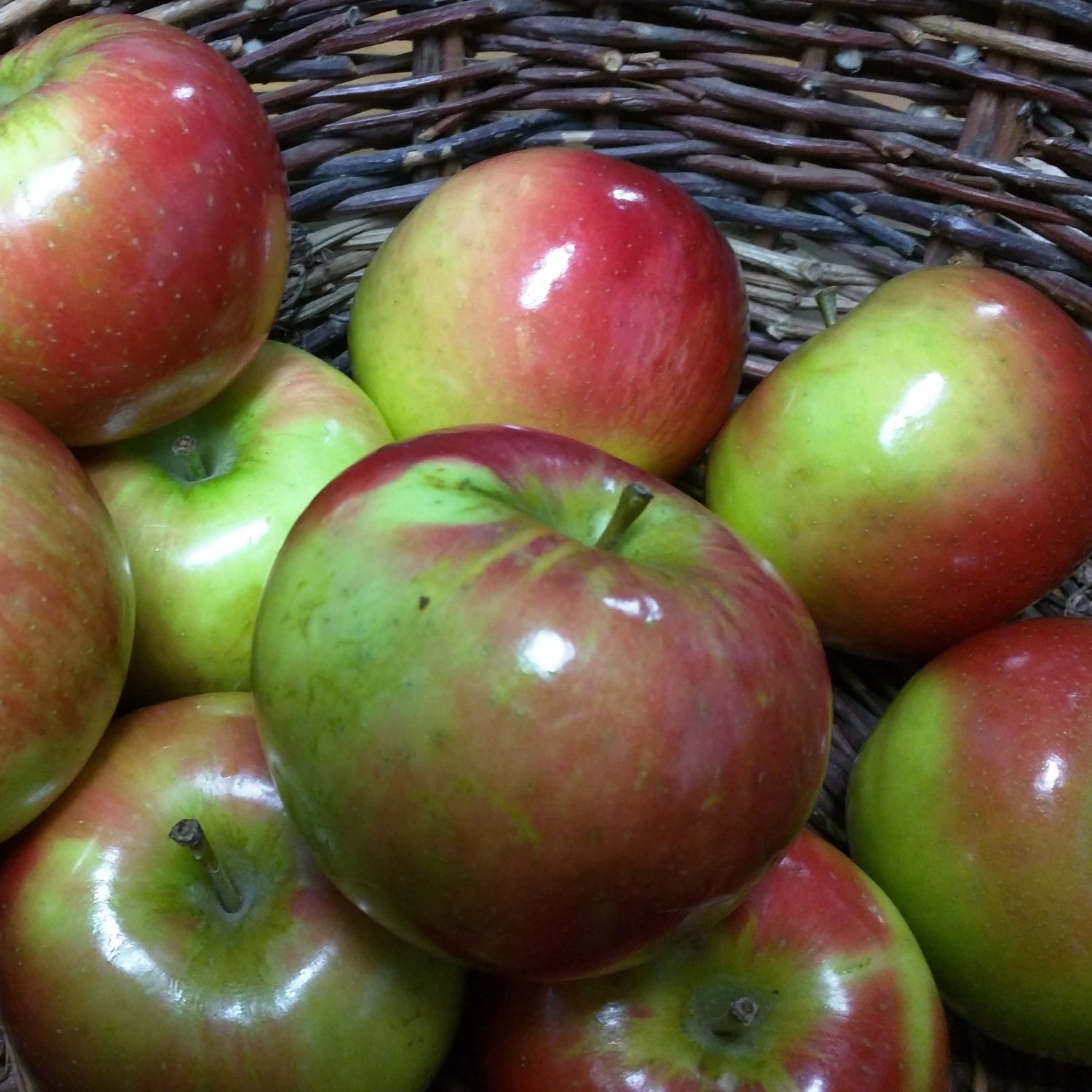
History: Honeycrisp apples were developed by the University of Minnesota in the 1960s and released in 1991. It is one of almost thirty varieties created by the university's breeding program since it began in 1888. The excellent flavour of Honeycrisp has allowed it to become one of the most popular apples in North America and in 2006 it became the state fruit of Minnesota.
Why We Grow It: Honeycrisp is popular for a reason. The apples are large and attractive with good flavour under favourable growing conditions. However, they are not an apple for beginner growers due to issues with some diseases especially in storage, but with diligent care you can produce these crunchy sweet apples in your own backyard/orchard.