All Fruit Trees

All Fruit Trees
Looking for bareroot fruit trees Canada? We offer a wide variety of bareroot fruit trees including apples, apricots, pears, plums, cherries, quince, and peaches that are grown for the Canadian climate & we deliver cold-hardy fruit trees right to your door!
We also offer fruit trees for small gardens, heritage apples Ontario and you can filter all our fruit trees by hardiness zones. Search trees by collection or peruse all the varieties we carry below! We offer flat rate shipping across Canada.




320 products
Sort by:
320 products
320 products


History: Also known as Albemarle Pippin. This apple was discovered as a chance seedling (aka a pippin) in the village of Newtown in New York sometime in the late 1600s or early 1700s. It was commonly grown in colonial America, even earning praise from both George Washington and Thomas Jefferson. In 1838, the American minister to Great Britain gave some to Queen Victoria who loved the apples so much she removed tariffs on the variety and they became an important export until the tariffs were reinstated during WW2.
Why We Grow It: Newtown Pippin's popularity can be ascribed to its unique ‘rich pineapple flavour’ which it develops under optimum growing conditions. So far it has been performing well in our test orchard with good vigour and we have had no issues with diseases despite the tree's general susceptibility.

History: The Niitaka Asian pear was developed in Japan as a cross between Amanogawa and Imamuraaki Asian pears in 1915 and was released in 1927.
Why We Grow It: Niitaka is a popular Japanese variety with large orange-brown fruit that is round and speckled. The flavour is sweet and mild.

History: Noël des Champs (translated from French as 'Christmas Field') emerged in the Normandy region of France in the 1800s. It has remained a well-regarded apple and is one of thirteen apples prized for cider production in the Pays d'Auge region.
Why We Grow It: This rare cider apple is bittersweet with small, flattish fruits. They are dark red with some striping. As its prestige suggests, this is a good quality cider apple. The tree tends to start bearing fruit at a young age.

History: Nonpareil originated in France although no one is sure quite how old it is or what its exact origins are. We do know that it was brought over to England sometime in the 1500s where it gained more popularity due to its pear-drop flavour. It can still be found at markets, farmgate sales, and in gardens in England to this day and is believed to be the ancestor of the popular European variety Ashmead's Kernel.
Why We Grow It: Nonpareil is not much to look at with its dull yellow-green russet skin but it packs a flavourful punch: sweet-sharp with notes of pear-drops. The fruits hangs onto the tree well and stores for several months. It is mainly used for fresh eating but can be added to cider blends as well. The tree is naturally more compact and has moderate vigour.
History: Norhey comes from the Morden Research Station, Agriculture Canada. It was created by Dr. C. R. Ure in the 60's to survive the harsh prairie winters. It was introduced in 1975.
Why We Grow It: It seems Dr. Ure was successful since this is about the hardiest apple we've come across. The fruit has green skin that turns yellow after picking. It's fair for fresh eating, good for cooking and juicing with sweet, sub acid flavours and creamy crisp flesh. The tree has consistent, heavy crops.
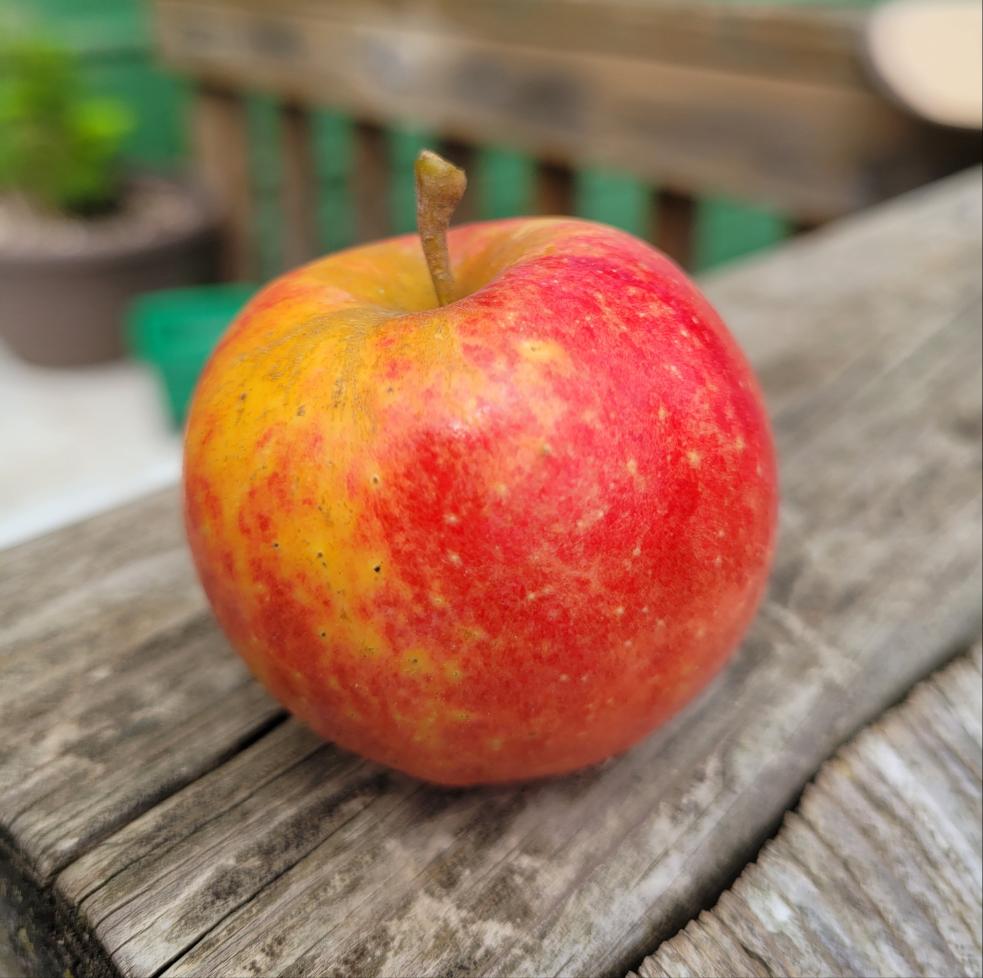
History: Norkent was bred as a cross between Haralson and Rescue at the Morden Research Station. It was one of tens of thousands of seedlings sent across the prairies as part of the Prairie Fruit Breeding Cooperative initiative by Agriculture and Agri-Food Canada in the 1960s. It was planted at the University of Alberta before being moved again to a backyard in Edmonton once the university ran out of space to it grow.
Why We Grow It: This pleasant and aromatic apple is one of the best fresh eating apples for colder climates! The flesh of this red apple is crisp and said to taste like a cross between an apple and pear.
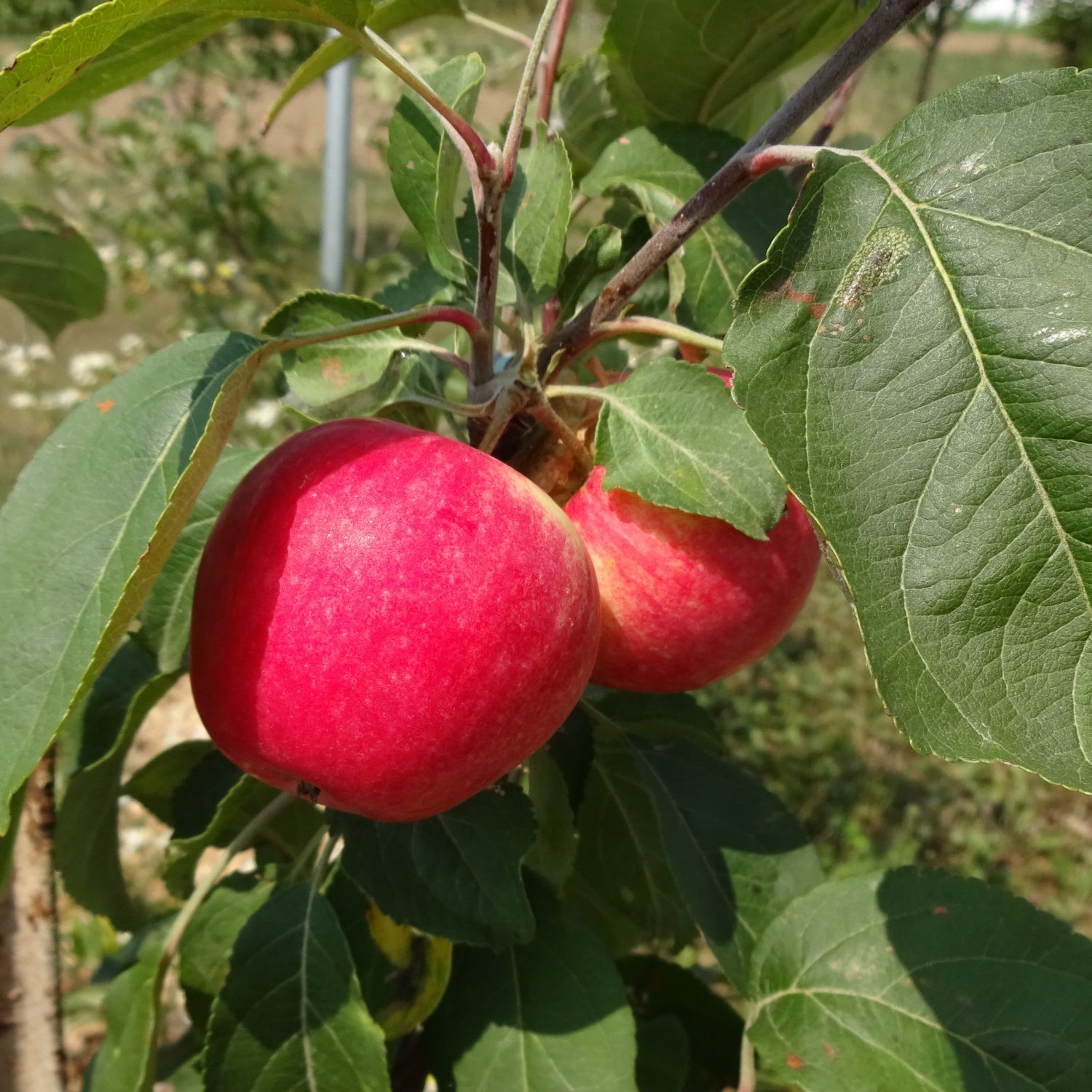
History: Norland apples were created by Dr. C.R. Ure and introduced in 1979 by the Agriculture Canada Research Station in Morden, Manitoba.
Why We Grow It: Since this variety was bred to survive in the prairies, it is very cold hardy. The fruit is medium-sized with sweet flesh that is good for fresh eating or applesauce. It bears heavy annual crops starting early in the life of the tree. A home orchardist in Dacre, ON described the fruit as "lovely with no pest damage; juicy, creamy-fleshed with excellent flavour."
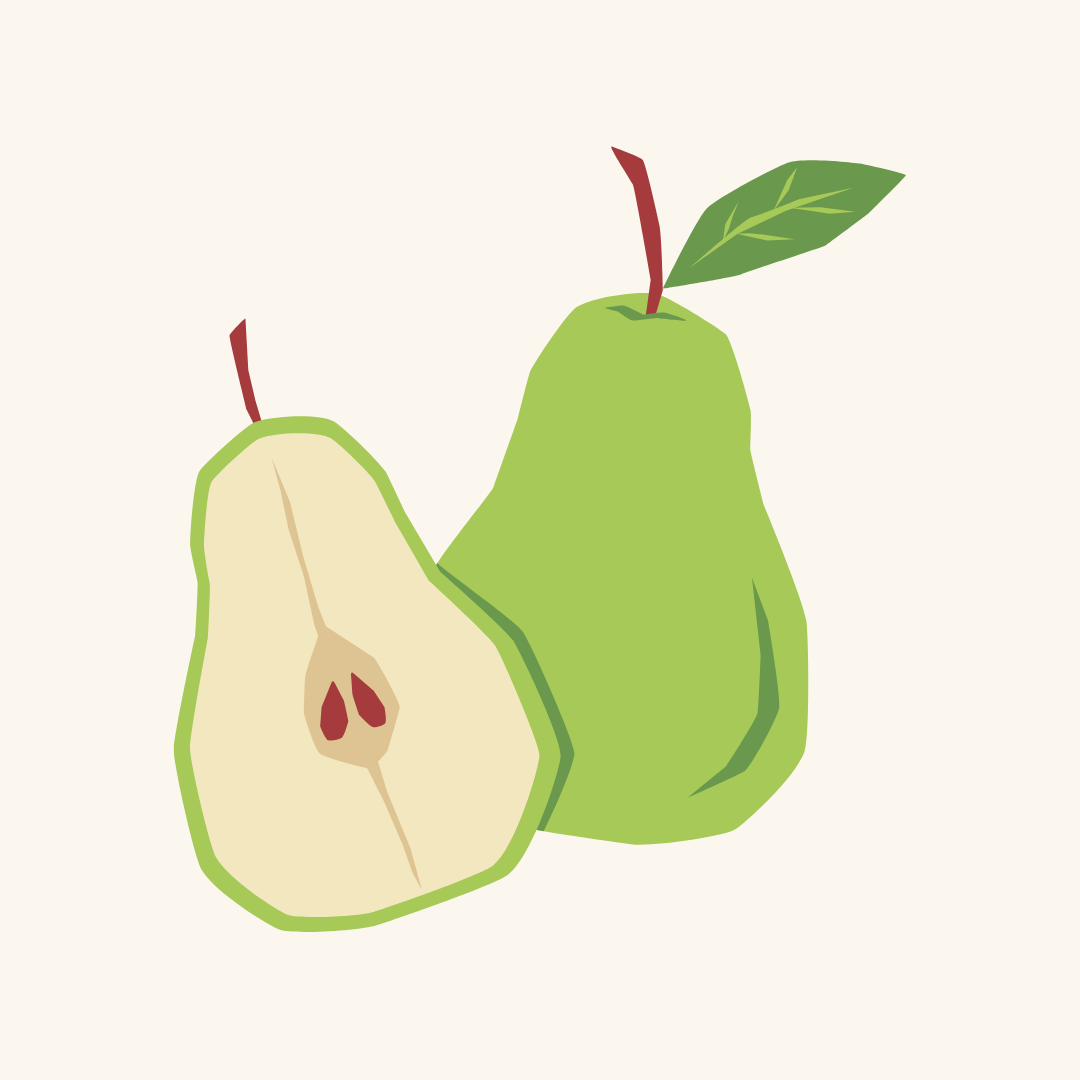
History: Little is known about this variety aside from the fact it originated in France and was widely grown in Austria. It has historically been popular in both countries. Its name translated from German means Normandy Cider Pear, which may point to its place of origin or at least where it was most popular in France.
Why We Grow It: Normannischen-Ciderbirne produces small, russeted pears that are a greenish-yellow. The fruit produces high quality juice for perry.
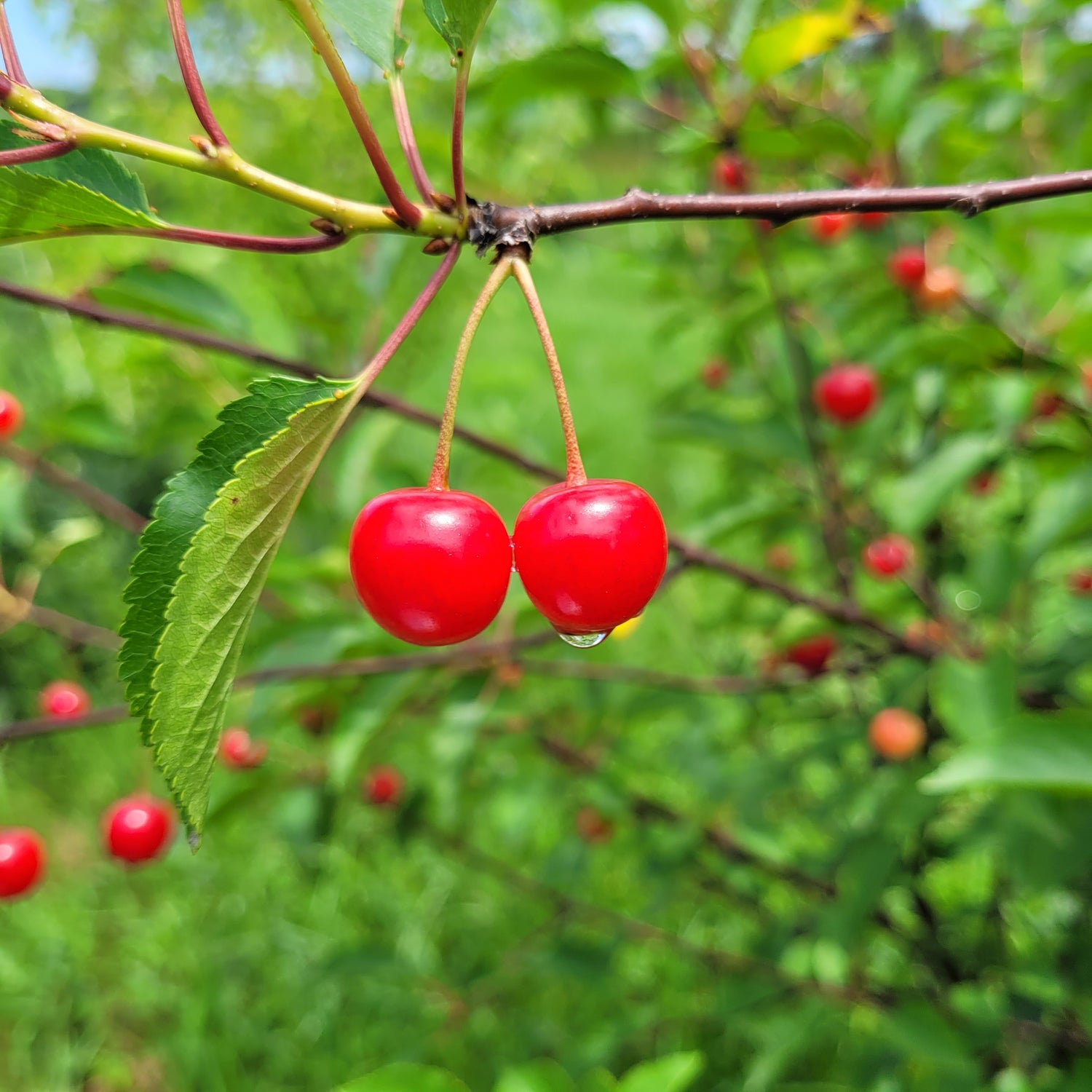

History: North Star sour cherries were created by the University of Minnesota as part of an effort to create varieties that are more resistant to the cold. They were introduced in 1950 and recently have been growing in popularity as a backyard variety.
Why We Grow It: North Star is a sour cherry with bright red skin which darkens as it ripens. It has an excellent flavour. The trees have a compact and weeping growth habit, making them an attractive addition to your yard whether in bloom in spring or bearing fruit in the summer. They are also self-pollinating, very hardy, and resistant to leaf spot and brown rot.
Check our our blog post with some tasty sour cherry recipes!
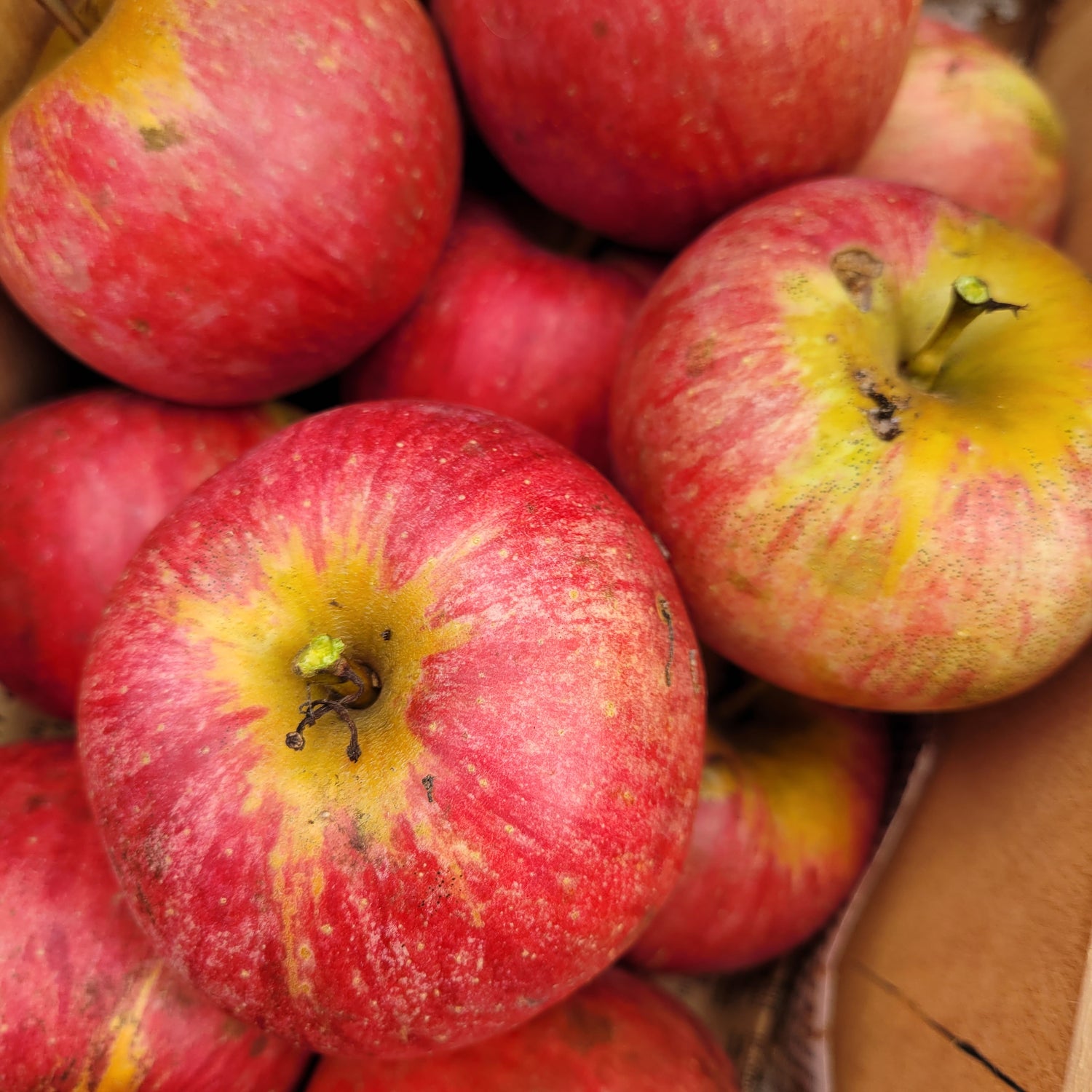
History: Northern Spy was first discovered in New York around 1800. It tends to be irregularly shaped and bruises easily, so it is not a popular commercial apple but it is still commonly grown in certain regions in the States today. It is featured in several poems and in 1953 a box of Northern Spy apples was sent to Senator Joseph McCarthy by the Toronto Globe and Mail during his infamous hunt for 'communist spies.'
Why We Grow It: Northern Spy apples are juicy with a balanced sweet-tart honeyed flavour, although they do tend to bruise easily due to their thin skin. To make up for that, they are known for making wonderful pies. The trees are cold hardy and vigorous.
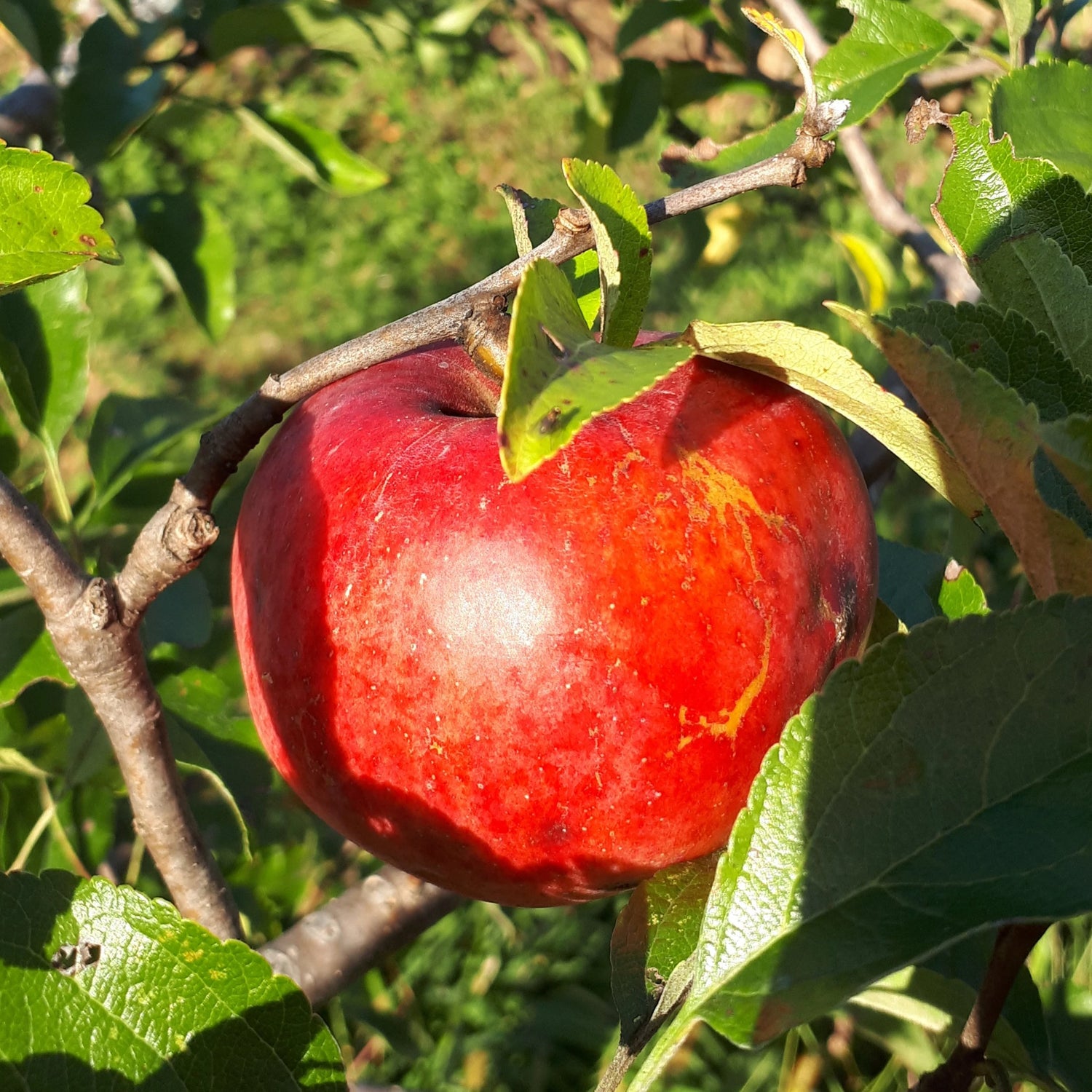
History: Nova Easygro was developed at the AAFC Kentville Research and Development Station in Nova Scotia and introduced in 1971.
Why We Grow It: Living up to its name, Nova Easygro is hard to beat if you're looking for a low-maintenance backyard tree or a clear winner for organic orchards. This variety is resistant to numerous common apple diseases and tastes great. The flavour is pleasant and sweet and the flesh is firm and white with the perfect texture, earning this apple favourable reviews at our tasting event.
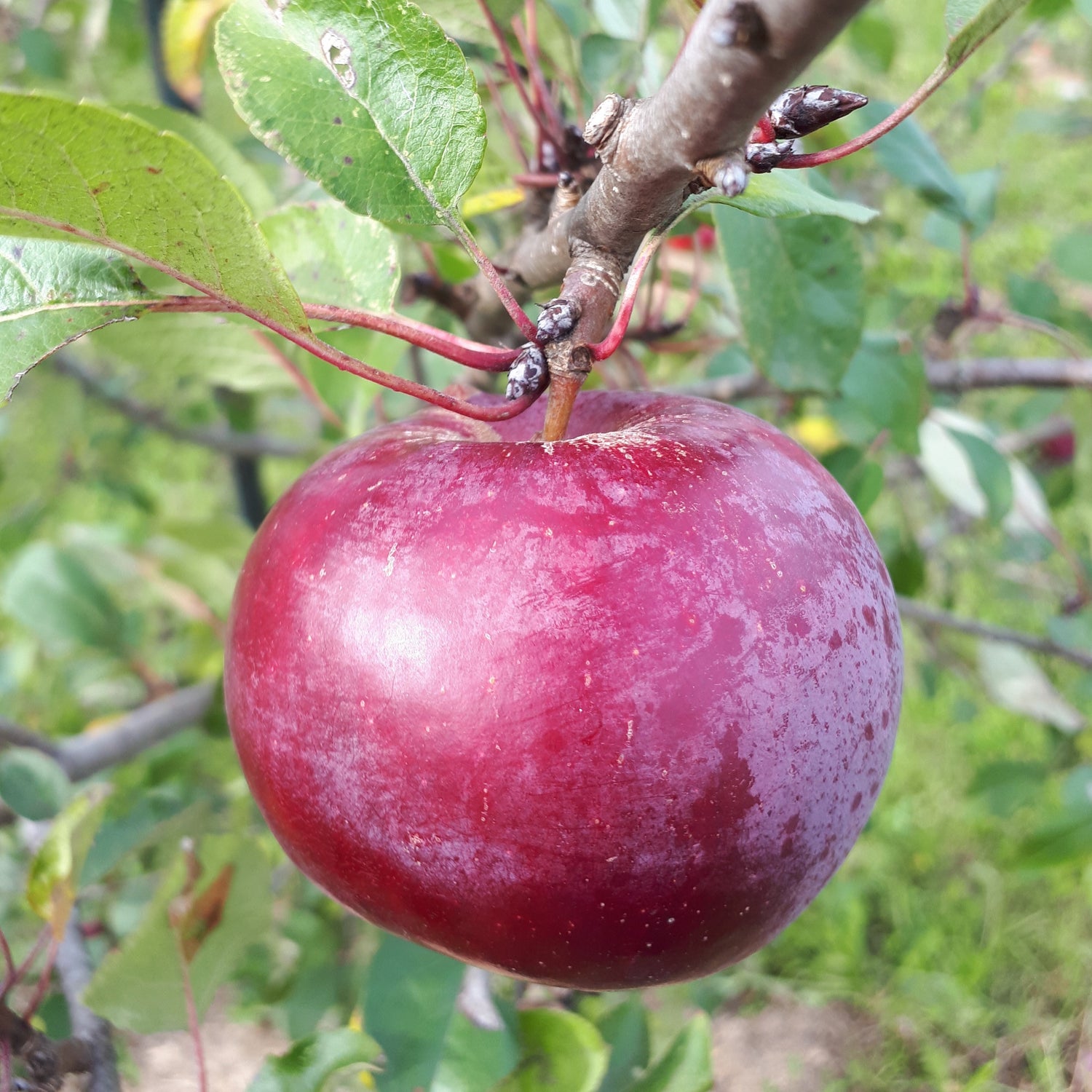
History: Novamac apples were developed at the AAFC Kentville Research and Development Centre in Nova Scotia and introduced in 1978.
Why We Grow It: Novamac is a variety that definitely deserved more attention. They are generally disease resistant and have proven to be very easy to grow in our test orchard where they are performing well. This apple has a nice vibrant tang but also lots of sweetness and notes of berry. The flesh is firmer than its namesake McIntosh, which it is descended from.

History: Discovered in Olympia, Washington by Denny McGaughy in 2014, this variety doesn't match any of the 200+ registered varieties in the Department of Agriculture's National Clonal Germplasm Repository, making Olympian figs true age unknown, and quite possibly heirloom despite its recent popularity.
Why We Grow It: Large purple-red figs have excellent flavour, reminiscent of peaches! Very vigorous and productive, producing a strong breba crop on the pervious seasons growth.


Species: Prunus pumila var. besseyi (Western sandcherry) x P. salicina (Japanese Plum)
History: Opata was developed by Dr. N.E. Hansen who was a professor of horticulture at South Dakota State University from 1895 to 1950. He helped pioneer chum development in an effort to create plants hardy enough to survive in the northern prairies. Opata is the Sioux word for 'bouquet', following Hansen's tradition of naming his native plant crosses after words from local indigenous cultures.
Why We Grow It: Opata produces a red chum with yellow flesh that is freestone, firm, juicy, and considered to be one of the better tasting chums. It is pleasantly sweet with only a hint of acidity. It is good for fresh eating as well as jams, jellies, preserves, and pies. Like other chums, the shrub itself is compact, cold hardy, and relatively free of pests and disease.
History: Packham's Triumph were created by Charles Packham in 1896 in the town of Molong, located in Australia. His goal was to create a late-ripening pear and this popular pear proves he was indeed triumphant. This pear is most commonly grown in the southern hemisphere and the town of Molong is quite proud that such a beloved variety is part of their history.
Why We Grow It: Packham's Triumph is bright-yellow with russet mottling and smooth, white, juicy flesh that has an excellent flavour and smooth texture. The tree produces heavy and reliable crops.
Showing 210/320
Next