All Fruit Trees

All Fruit Trees
Looking for bareroot fruit trees Canada? We offer a wide variety of bareroot fruit trees including apples, apricots, pears, plums, cherries, quince, and peaches that are grown for the Canadian climate & we deliver cold-hardy fruit trees right to your door!
We also offer fruit trees for small gardens, heritage apples Ontario and you can filter all our fruit trees by hardiness zones. Search trees by collection or peruse all the varieties we carry below! We offer flat rate shipping across Canada.




320 products
Sort by:
320 products
320 products
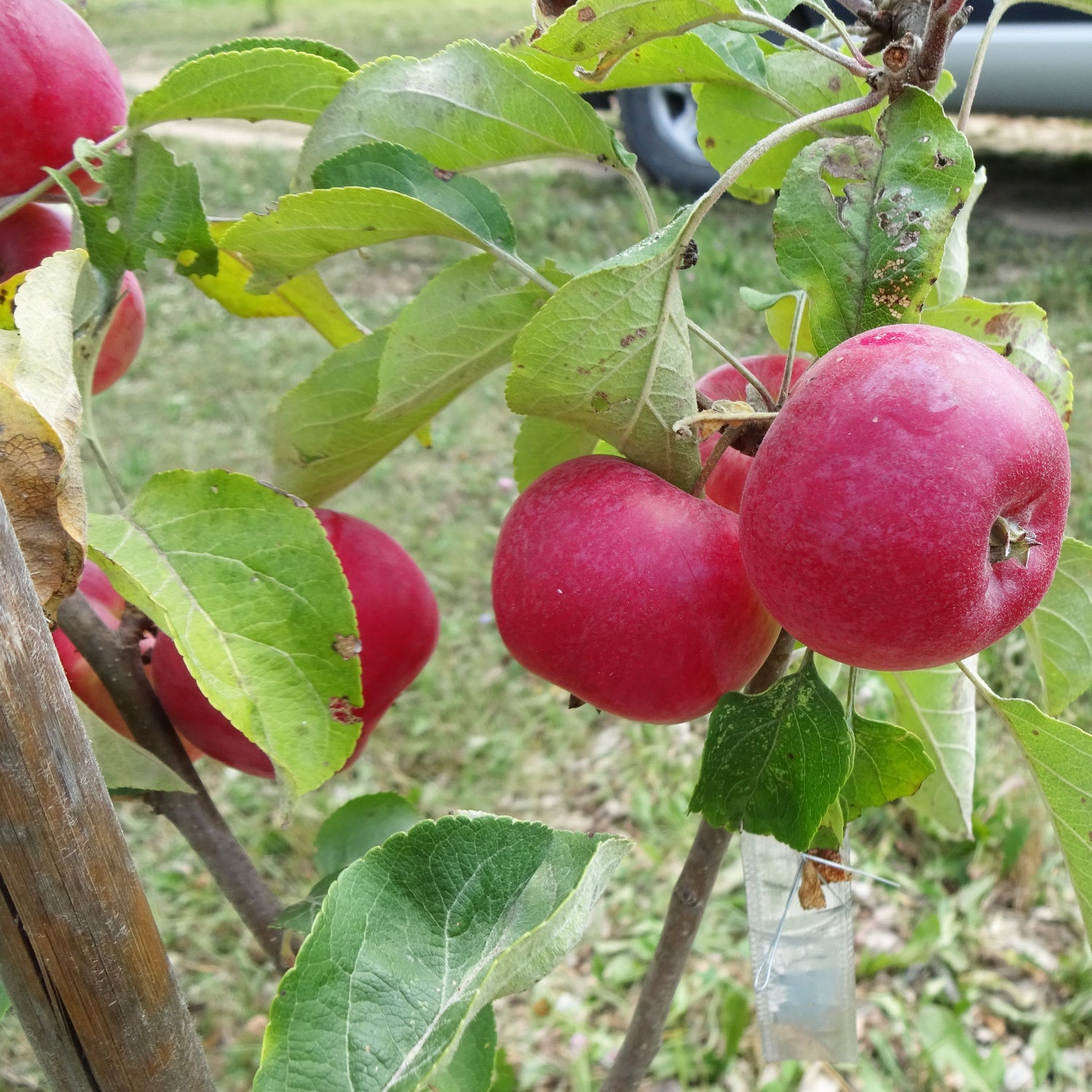
History: Parkland apples were variety created at the Morden Research and Development Centre in Manitoba and released in 1979. Like other varieties developed there, Parkland was designed to withstand the harsh prairie winters and is especially cold hardy. It has become the most commonly grown apple in Alaska after it was brought over in 1985 in an effort to determine which Canadian varieties could survive in the northern state.
Why We Grow It: Parkland is a very satisfying early season apple - sweet and crunchy. It's excellent snacking or applesauce although the fruit is small (about 2" diameter) with creamy flesh and red skin. The tree is quite hardy.

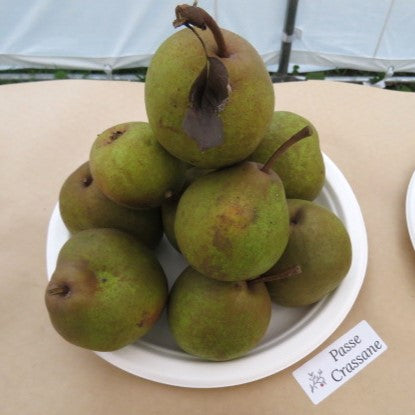
History: The Passe Crassane pear originated in France where it was grown by Louis Boisbunel in 1845 and first bore fruit in 1855. It quickly became popular and was grown in France, Italy, and Spain and commonly exported to Germany and England. The stems were sealed with a red wax to keep in moisture during the pear's long ripening period which became a symbol of the variety. Although its susceptibility to blight has caused its popularity to decline since then, it is still grown on a small scale in parts of France and Italy.
Why We Grow It: This French winter pear is aromatic, floral, and fruity with a melting texture. It is best enjoyed after 4-5 months in storage, usually around February to March. Although the tree is hardy, it is susceptible to mildew and fireblight.

History: Paula Red (sometimes written Paulared) was discovered in Michigan in 1960 by Lewis Arends near a ravine where apples were dumped. It was one of several wild apple seedlings that had sprouted up from the discarded seeds. Likely pleased by its attractive red skin and flavour, Arends named it 'Paula Red' in honour of his wife Pauline. It is a cross between Duchess and McIntosh.
Why We Grow It: Paula Red produces medium to large red apples with small yellow/green patches that are juicy and firm with a nice sweet/tart flavour. The flavour has strong vinous and strawberry notes. It is also slower to brown. This early-ripening variety tends to soften relatively quickly which means it does not store very long, but it is great for making applesauce. The tree produces heavy crops although tends to bear every other year as a result.

History: Pewaukee originated around the mid-1800s when George Peffer, owner of Pewaukee Fruit Farm & Nursery, crossed Duchess of Oldenburg with Northern Spy on his farm in Pewaukee, Wisconsin. The resulting apple, a cross of two varieties well known for their use in cooking, is great for a variety of culinary uses! It was formally recorded as a variety in 1870 and can still be found in old orchards in parts of the US today.
Why We Grow It: Pewaukee produces a yellow apple with red striping that has sweet, crisp flesh with a hint of vanilla. It is great for fresh eating and excels for sauce, cooking, and baking. The tree is known for being hardy and producing fruit at a young age.

History: Pine Golden Pippin's exact origins are unknown, but it is quite an old variety that either originated in northern England or in Scotland. It was first formally described by nursery worker Thomas Rivers in A Descriptive Catalogue of Fruit Trees in 1863. In 1875, Robert Hogg claimed that Pine Golden Pippin was one of the best fresh eating apples around in his book The Fruit Manual.
Why We Grow It: Robert Hogg was correct about Pine Golden Pippin! Despite the small size of the fruit, it makes up for it with crisp and juicy fruit with a sweet/sharp flavour that has a hint of pineapple and resin. The fruit is great for fresh eating and can also be used in cider blends. It tends to be slower growing but produces good crops.
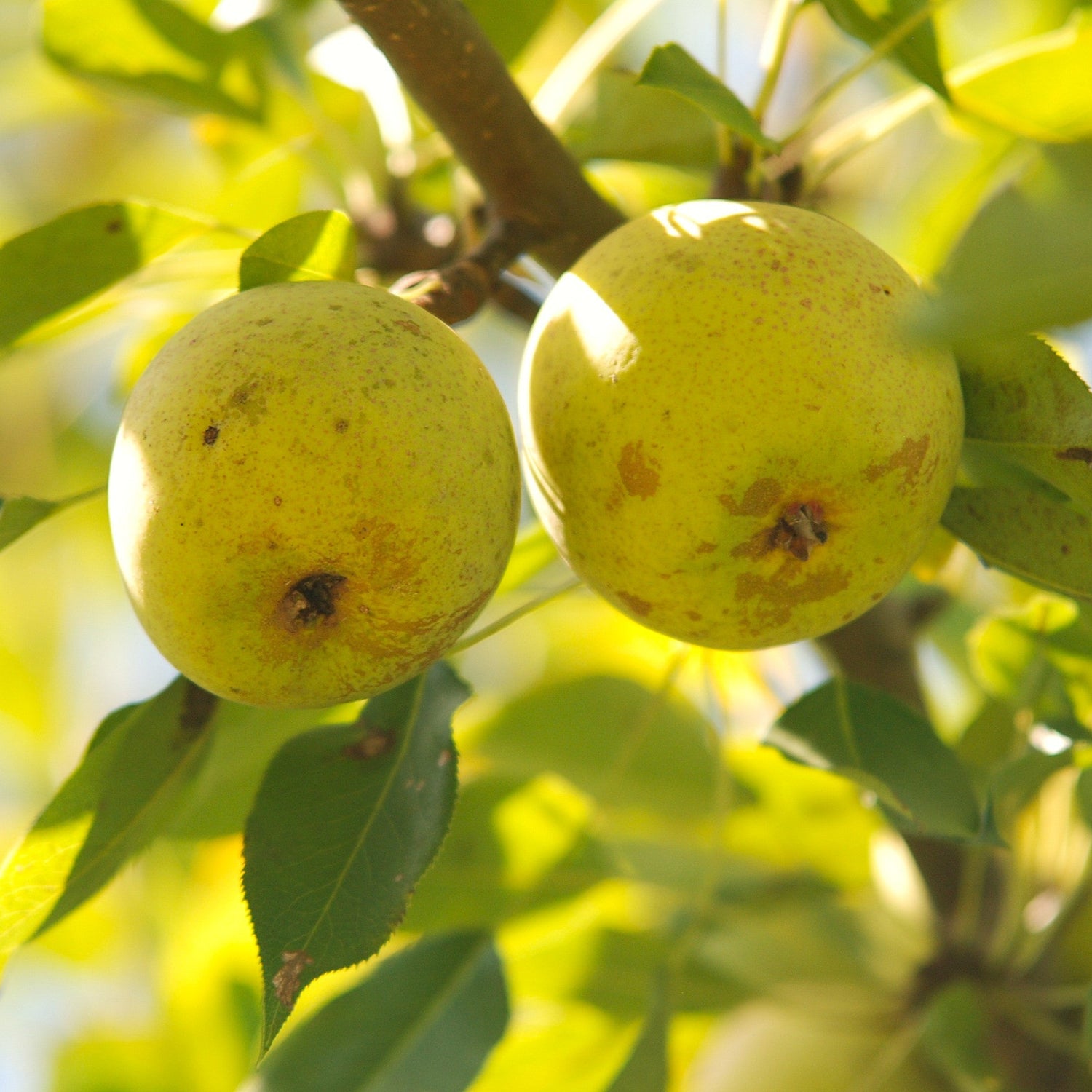
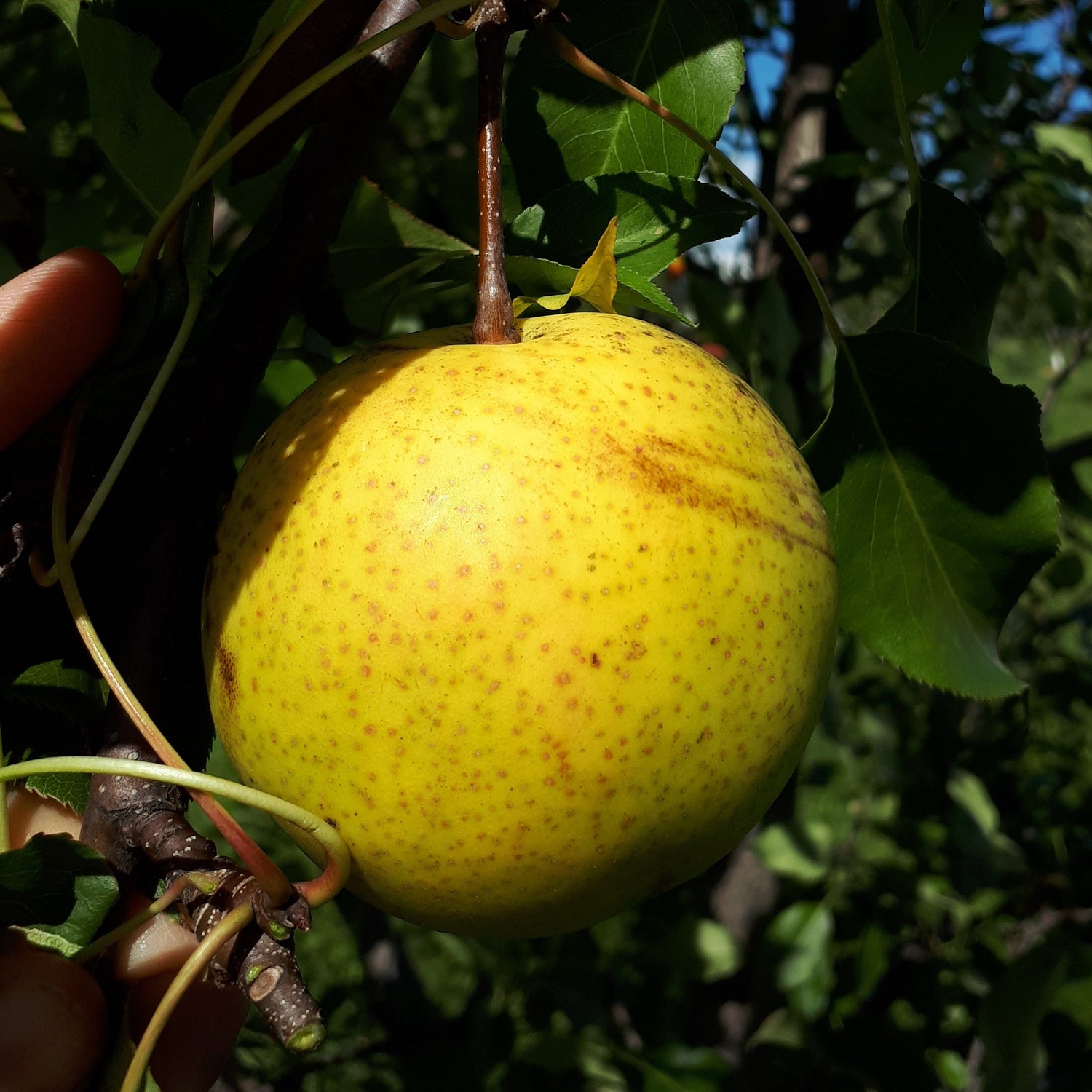
History: Ping Guo Li (translated from Mandarin as 'apple pear') was developed by Jilin Sheng in China and likely named for its round, apple-like shape. While its exact age is unknown, this pear is considered to be an old variety.
Why We Grow It: This Asian pear is nothing but sweet and juicy melting goodness! Its sweet flavour and soft texture are comparable to that of a European pear. So far it has performed very well in our test orchard and displays good cold-hardiness.


History: Not to be confused with Pink Lady, Pink Pearl was developed by breeder Albert Etter who had the goal of creating red-fleshed apple varieties from seedlings of Surprise, a red-flashed variety. In 1940, he partnered with the California Nursery Company to bring some of these varieties to the public. Pink Pearl was selected as the best amongst his seedlings and released in 1945.
Why We Grow It: One of Steph's favourites! Pink Pearl is a delicious apple that is crisp with a pronounced unique fruity flavour and a nice blend of sweetness and sharpness. Its yellow-pink skin conceals a bright pink interior that is stunning to see compared to the white-ish flesh of most apples. It is great fresh or for applesauce, and it is relatively slow browning- it can be cut and bagged in the fridge the night before with very little change in colour the next day. Their pink colour adds a unique visual appeal to baked goods as well, such as with the gooseberry and Pink Pearl tarts Steph made pictured here!

Why We Grow It: Pinova produces lovely yellow fruit with pink to red blush and some striping. It is very flavourful with plenty of sweetness and complexity and a strong floral aroma. This crisp, juicy apple is great for fresh eating, produces bountiful crops, and stores exceptionally well. The tree is also resistant to scab and late spring frosts!

Species: Corylus avellana
History: PollyO was created by the Oregon State University hazelnut breeding program. The initial cross was made by Shawn Mehlenbacher and David Smith in 2001. PollyO was bred for the blanched nut market and selected for its resistance to Eastern Filbert Blight, excellent quality, high productivity, and fast growth. It was eventually released by the Oregon Agricultural Experiment Station in 2018. The variety was named PollyO in honour of Polly Owen who was the director of the hazelnut industry office for over two decades.
Why We Grow It: Bred for the blanched nut market, PollyO produces an excellent quality nut for fresh eating and baking (including use in chocolate!). The trees are highly productive and are a great option for those looking for an abundance of aromatic hazelnuts.


History: The origins of Pomme Gris (translated as 'gray apple' from French) are a bit of a mystery. It may have originated in France in the 1600s as either a seedling or sport of the variety Reinette Gris which was then brought to Quebec by French or Swiss colonizers. Alternatively, it may have its origins in Quebec, perhaps being grown and propagated in Canada from the start. The first instance of this variety's documentation was by a William Forsyth in 1803 who believed the apple originated in Canada and made its way to Europe sometime in the 1700s. Regardless, this variety was grown in Quebec for centuries.
Why We Grow It: Pomme Gris is an excellent all-purpose apple! Although not the prettiest apple in the world, it is crisp, juicy, and aromatic with a nutty flavour and hints of vanilla. It was really a standout when our tree first produced fruit a couple years ago! The fruit can also be used for cooking and the apple would likely be a good addition to cider blends.
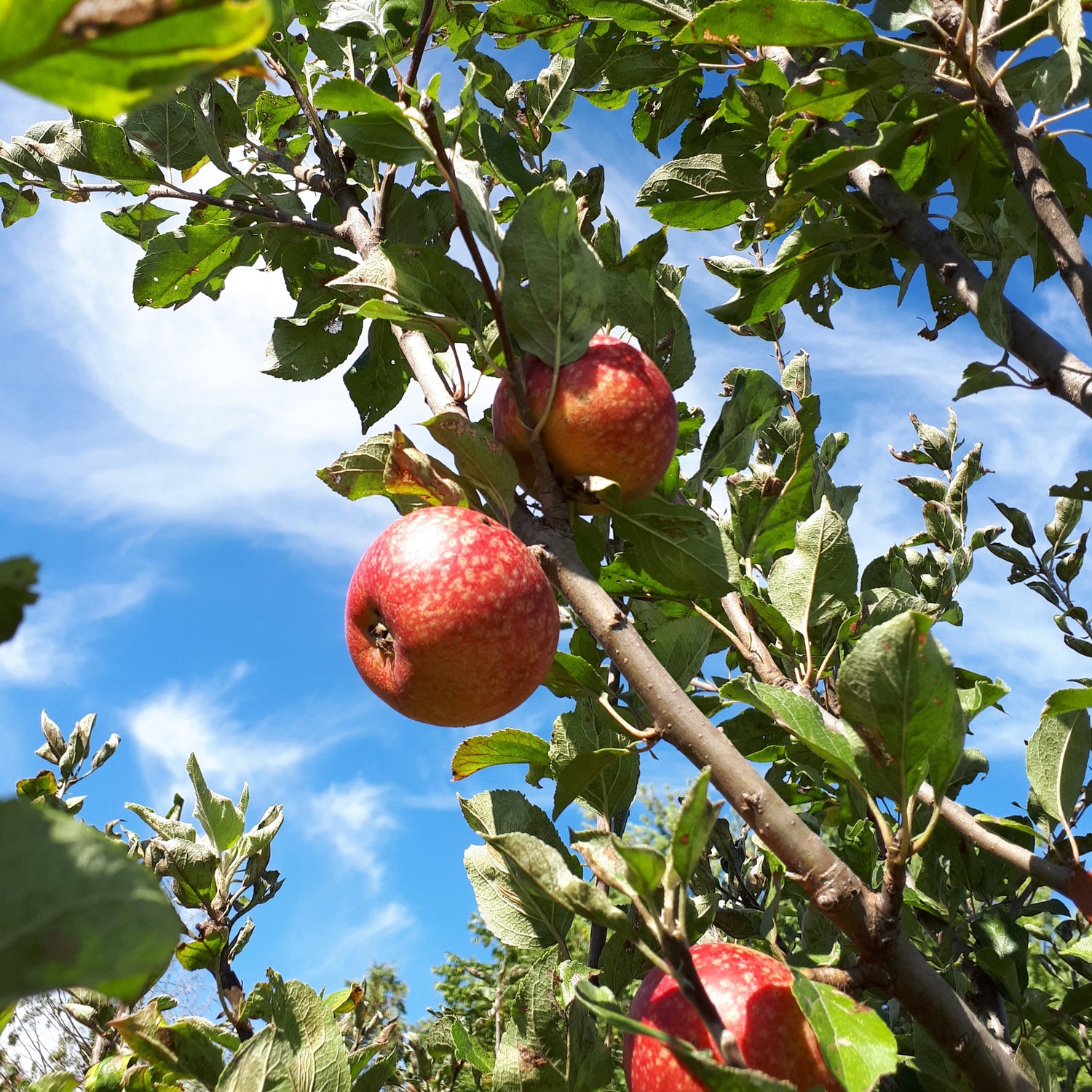
History: Porter's Perfection originated in Somerset in the UK some time in the 1800s. It became extremely popular in England although its popularity began to wane following the 1910s. It is still grown today but not as commonly as it once was. It shows promising results in the North American climate, unlike some other European cider cultivars.
Why We Grow It: This English cider apple produces a medium bittersharp cider. It has done well in different studies in Ontario with the Vineland Research Station with regards to juice composition, disease resistance and overall performance. The tree is a heavy cropper and grows vigorously.

History: Porthos was developed by Bob Bors at the University of Saskatchewan. It was selected for its large fruit and unusually sweet flavour. A member of the Musketeer Series, Porthos was released in 2022 as part of the university's 100 Years of Horticulture Celebrations.
Why We Grow It: Porthos produces large, deep red fruits that are quite sweet for sour cherries! This is a versatile variety that is great for fresh eating, baking, cooking, freezing, and making wine.
Check our our blog post with some tasty sour cherry recipes!

History: Prairifire (sometimes spelled Prairiefire or Prairie Fire) was created by DF Dayton at the University of Illinois and released in 1982. It is a hybrid of several Malus species which gives it excellent disease resistance along with a striking visual appearance. Prairifire remains a popular ornamental variety today!
Why We Grow It: This striking crabapple boasts a profusion of reddish pink blooms in the spring, reddish leaves, and lovely red fruit in the fall. Along with its ornamental appeal, Prairifire is also quite disease resistant, a great pollination partner for other apple trees, and a source of food for wildlife.


History: Prima is one the apples developed from the collaborative PRI disease-resistant breeding program run by Purdue University, Rutgers University, and the University of Illinois. It was introduced in 1958 but unfortunately is no longer fully scab resistant due to the fungus evolving to overcome the resistance since then.
Why We Grow It: Another great apple for organic production and excellent for the backyard or farmer’s market sales! This apple is sweet, juicy, and flavourful and boasts good disease resistance..


History: Priscilla is the second apple variety developed through the collaborative PRI disease-resistant breeding program run by Purdue University, Rutgers University, and the University of Illinois. It was planted in 1962 and has a complex heritage that includes Starking Delicious, McIntosh, Golden Delicious, and Rome Beauty. It was introduced in 1972 and named 'Priscilla' after Priscilla Hovde, the wife of the seventh president of Purdue University as it happened to fit the 'pri' naming scheme for the varieties developed through the program.
Why We Grow It: Another successful introduction from the PRI breeding program, Priscilla boasts resistance to most common apple diseases including fireblight and scab. The fruit is also quite attractive with a deep red blush over yellow skin with a sweet and subacid flavour.
Showing 225/320
Next