TEST july 30_Fruit Trees
297 products
Sort by:
297 products
297 products

History: Idared apples were developed at the University of Idaho Agricultural Experiment Station in 1942. Although its flavour is generally considered average, its excellent storage qualities have made it one of the most popular apple varieties in North America.
Why We Grow It: Idared's best quality is its ability to easily last six months when stored in a fridge, potentially until June under optimal storage conditions. The flesh tends to be softer and is white with some tinges of green. The flavour is described as sprightly, moderately acidic, and tangy, and this apple boasts a high Vitamin C content. It is great for baking and making applesauce. The tree's naturally somewhat smaller size makes Idared easier to prune and train.
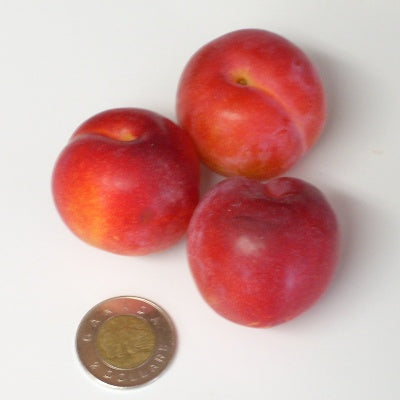
History: Burbank plums were introduced to the West by Luther Burbank, "The Wizard of Horticulture." He grew them from Japanese seedlings he received in 1885 and the variety was named after him, so, somewhat confusingly, they are actually a Japanese plum despite the English name. The variety was introduced commercially in 1897.
Why We Grow It: Burbank plums are lovely with colours ranging from yellow skin and red blush to a dark purplish red. These clingstone plums have good flavour and firm flesh, great for fresh eating, canning, or making into jelly.
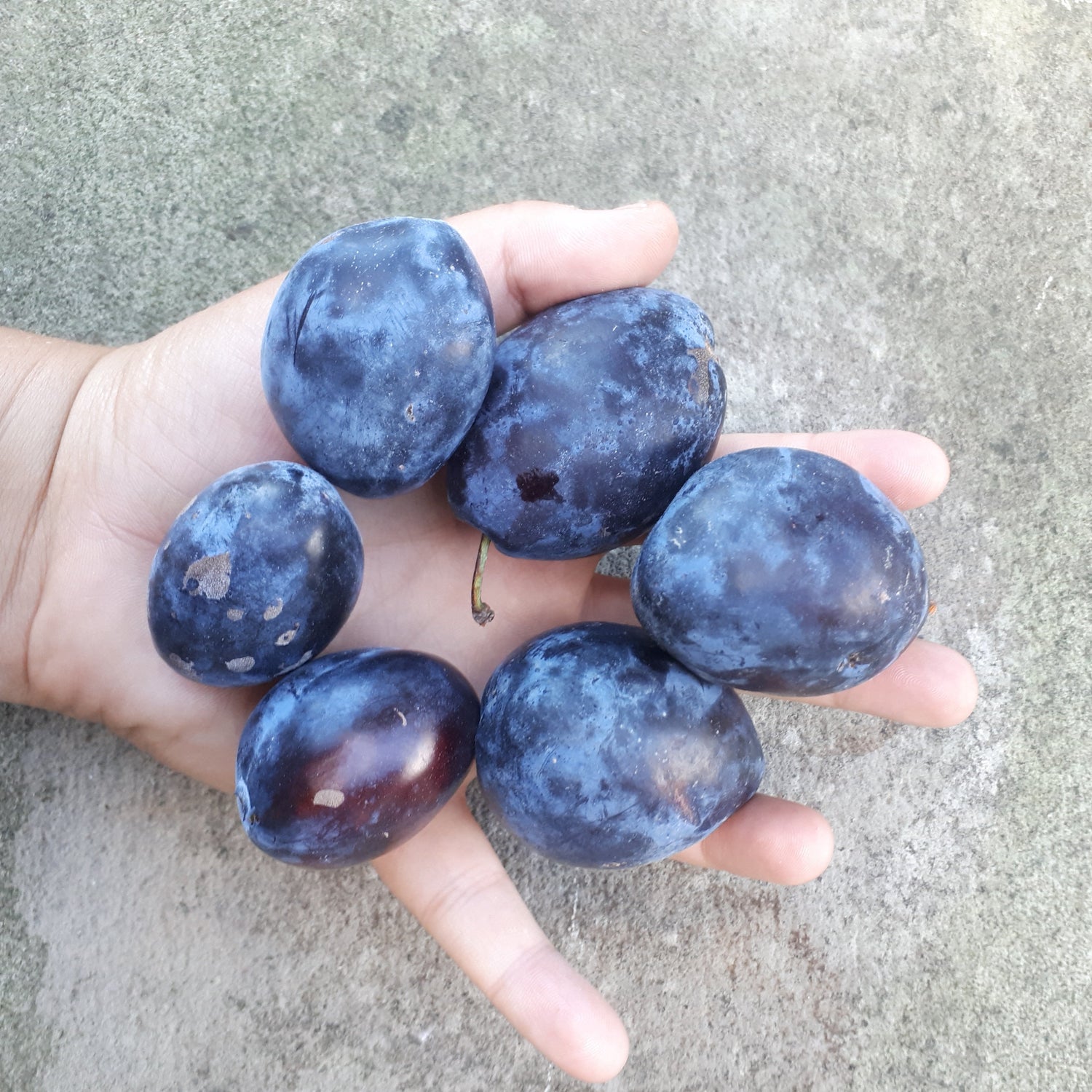
History: German plums are a European variety characteristic of the kind grown in central Europe. Although not much is known about its history, it is believed this variety is at least a couple centuries old.
Why We Grow It: A juicy, freestone plum with an aromatic, sweet flavour. They are great for fresh eating and due to their drier than average nature, are great for baking into traditional German plum desserts. They keep for 2-4 weeks refrigerated, providing ample time to enjoy them fresh or find that perfect recipe.
The photo of the plums in hand compares 4 larger Italian plums on the upper right, to 2 smaller German plums on the lower left.

History: Jonagold, a cross between Golden Delicious and Jonathan, was developed in 1953 at the New York State Agricultural Experiment Station at Cornell University. With its large size and sweet flavour, it has become one of the most popular apples in North America and is especially popular in Belgium.
Why We Grow It: The fruit is attractive with a red blush over yellow skin. It has a pleasant sweet-sour flavour that makes it a great multi-purpose apple.

History: Kingston Black is named after the English town Kingston St Mary where it was grown in orchards around a parish. Its dark maroon flesh earned the second part of its name, 'black.' This apple produces a great single-variety cider which made it quite popular by the 1800s and by 1950 it was the most commonly grown cider apple in the West of England. Although its popularity has waned due to its poor cropping and disease susceptibility, it is still renowned among cider enthusiasts.
Why We Grow It: This English cider apple produces a well-balanced juice, capable of creating a vintage cider of excellent quality. Although the variety has its downsides, there is a reason it has remained popular with cider enthusiasts.

History: In the 1830s in Lancaster County, Pennsylvania, a seedling apple tree grew beside the smokehouse of William Gibbons. Perhaps it sprang from a core that some one had tossed there while they tended the fire. Who knows? What we do know is that the aptly named Smokehouse was commonly grown in the area until its popularity waned as sweeter apple varieties appeared on the market. Still, this variety has stood the test of time due to its great flavour.
Why We Grow It: Traditionally Smokehouse apples are picked a little early and used for baking, but if they're allowed to ripen fully on the tree, some people have described the balanced flavour as being “like drinking fresh-pressed cider!”.

History: Medaille d'Or was raised from a seed by Monsieur Goddard in Rouen, France. In 1873 the apple was awarded a gold medal by the Societe Centrale D’Horticulture de Departement de la Seine Inferieure and in 1884 was brought to England by the Woolhope Naturalist's Field Club where it became established as a classic English cider apple.
Why We Grow It: It is easy to see why this apple was popular in both France and England with its yellow-gold skin and excellent cider qualities. This apple produces a fruity juice with high alcohol content and is very high in tannins. It makes a great single-variety cider.


History: A highly regarded cider apple of Normandy, France, where it has been grown for centuries. This cultivar is one of the traditional cultivars in the production of calvados (a brandy made from apples and sometimes pears) in the Pays d’Auge region.
Why we grow it: This cider apple has a unique spicy flavour that is high in tannins, low in acidity, and low in sugar. With it's rich history and beautiful brass coloured juice, this cultivar is a must in every well-rounded cider orchard.
Photo credit: Trizek, CC BY-SA 4.0, via Wikimedia Common
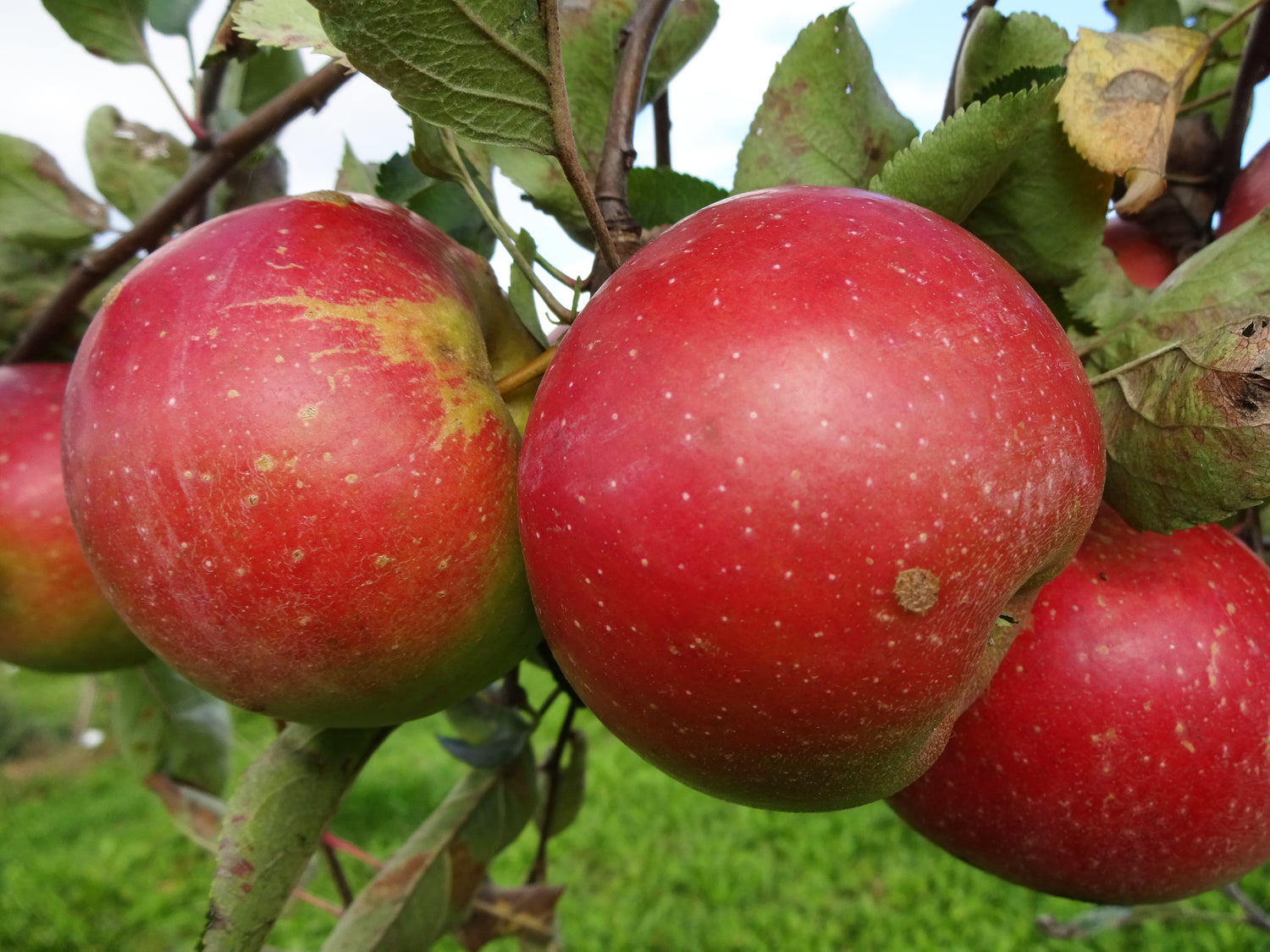
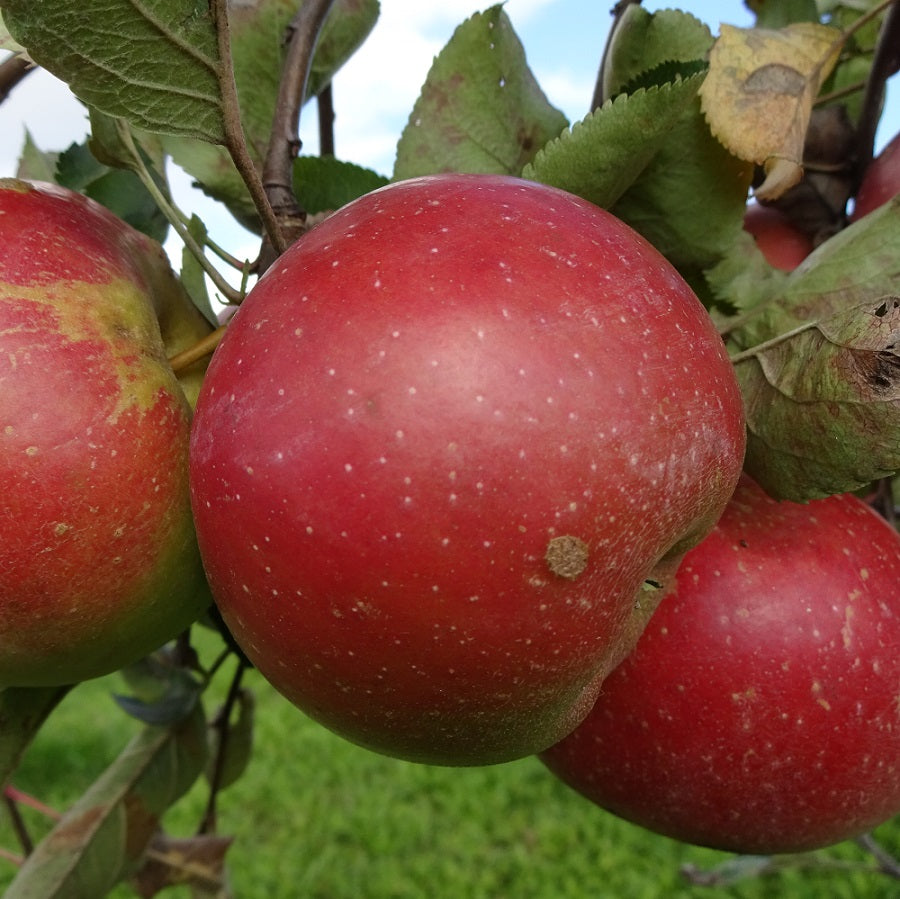
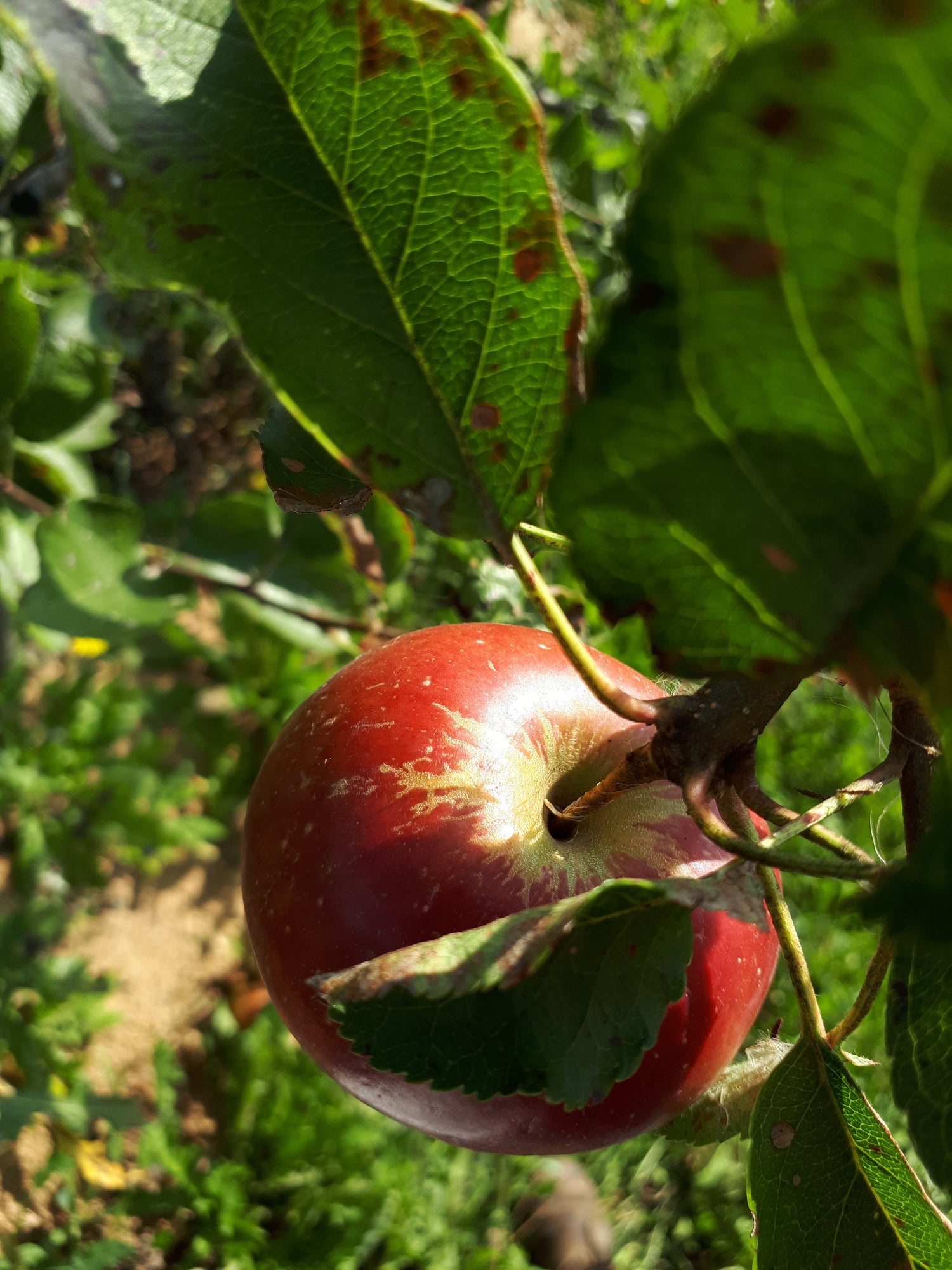
History: This classic American cooking apple was discovered by chance around 1740 in Massachusetts. It was eventually brought to the attention of a Col. Baldwin, after whom the variety was later named, who helped to spread it further. By 1850 this was one of the most commonly grown apples in the US, although its popularity began to decline by the 1900s, exacerbated by a terrible winter in 1934 that wiped out a significant number of trees. Despite this, Baldwin is making a bit of a comeback and a monument to this apple still stands in Wilmington, Massachusetts, around where it was discovered.
Why We Grow It: Baldwin apples produce large, greenish-yellow and maroon fruit with firm, sweet flesh that maintains its shape and crispness when cooked. The fruit produced in our test orchard has been attractive and blemish-free.
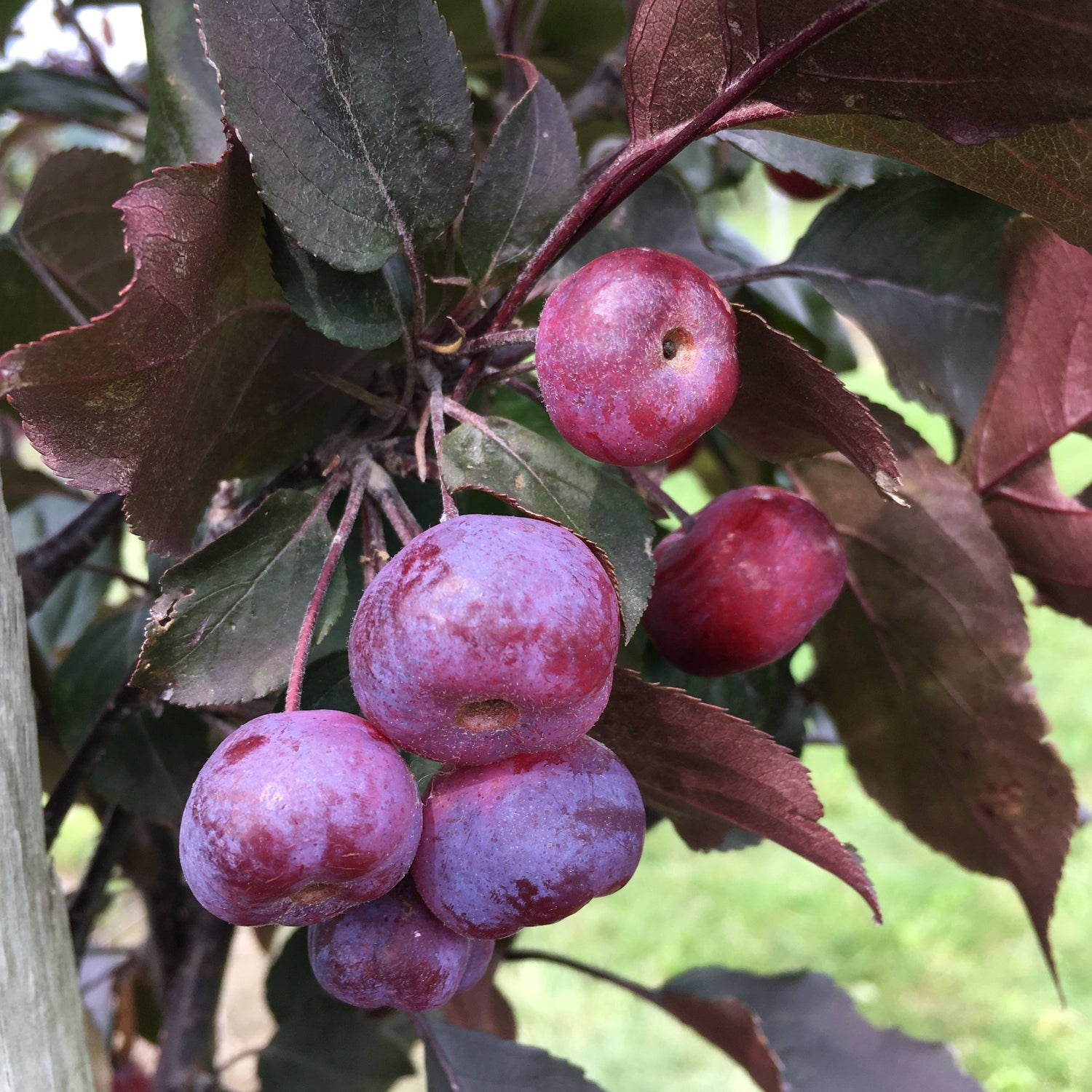
History: Thunderchild is a crabapple that was developed by Percy Wright, a prairie plant breeder in Saskatoon, Saskatchewan. Although it is unknown when exactly Thunderchild was created, it likely came about in the 1900s and can still be seen as a common ornamental tree in the area.
Why We Grow It: Thunderchild makes for a lovely ornamental tree with a profusion of pink blossoms in the spring and deep red foliage. The tiny dark red fruits it produces can be used in cider blends and to make jellies with a gorgeous orange hue. The tree is quite cold hardy and generally disease resistant.


History: Duchess of Oldenburg, or Duchess as we like to call it, originated in the 1700s in Russia. It spread to other countries where it became popular, especially in Victorian England. Its popularity was so great that at one point it was used as a reference cultivar when evaluating other varieties of apples. It is also likely the parent of several other varieties such as Northern Spy.
Why We Grow It: Duchess boasts an attractive fruit that is striped and mottled red over light green. Although these apples don't store well, the flesh is soft and is excellent for pies and applesauce. The trees themselves are quite hardy and disease resistant.
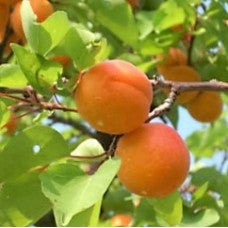
History: Veecot apricots were one of several developed at Vineland, Ontario to survive in a southern Ontario climate.
Why We Grow It: This apricot is an intense dark orange colour when ripe and the flesh is juicy and smooth-textured. It has a pleasant sweet taste that is good for fresh eating and preserving.
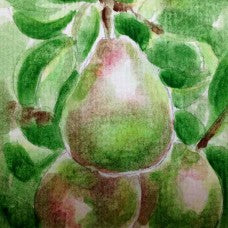
History: Doyenné du Comice was obtained from a garden in Angers in the 1840s as a sapling. In 1848 it bore its first pears which were quickly noted for their excellent flavour. Throughout the 1850s this variety reached other countries such as the UK and US, and in 1894 it was deemed "the best pear in the world" by the London Horticultural Journal. Whether or not it lives up to that much praise, it is still commonly grown, particularly in France.
Why We Grow It: It is certainly enticing to grow and eat what is considered one of the finest dessert pears. The fruit is medium in size with pale yellow skin and juicy, pale yellow flesh. It needs to ripen off the tree for about one month.

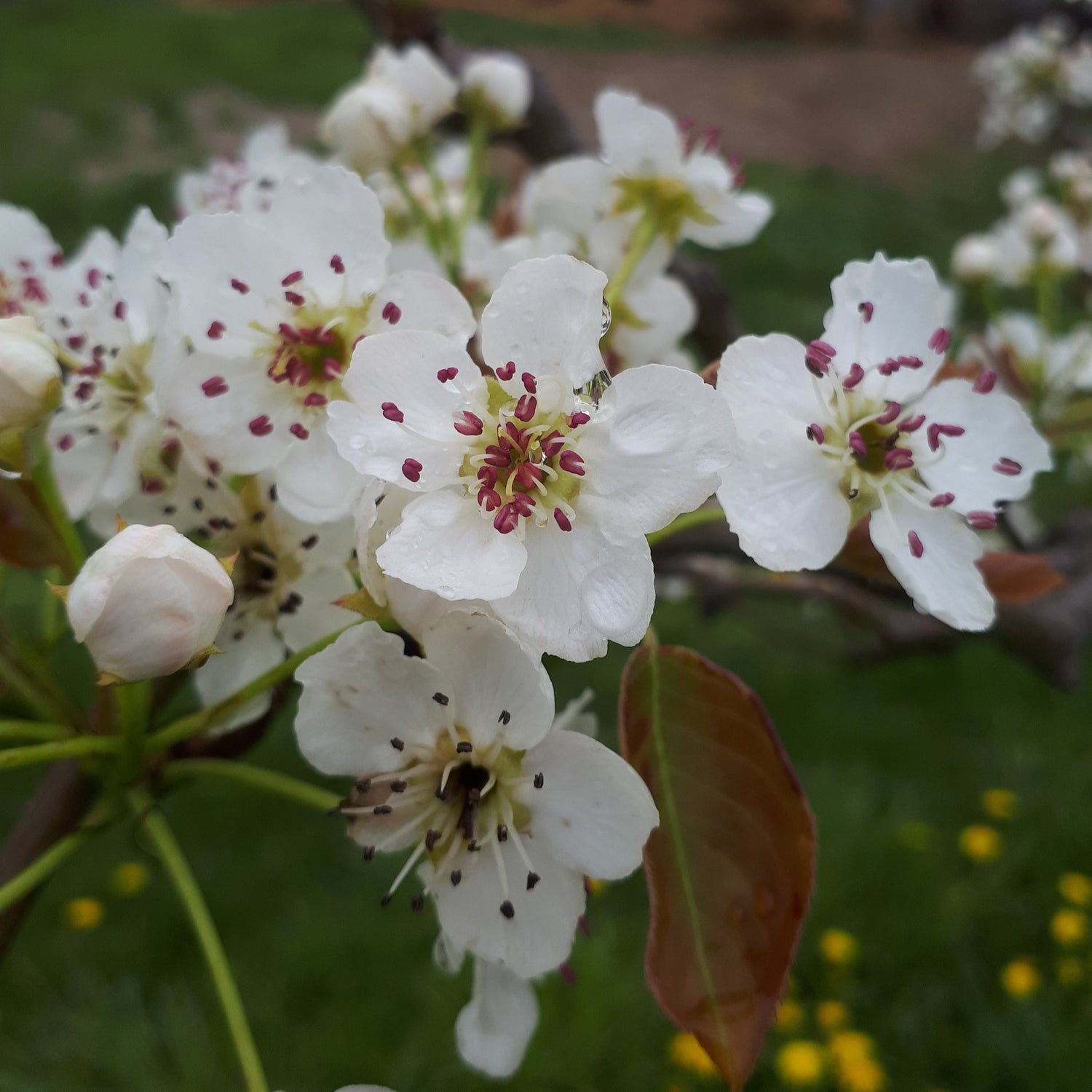
History: Chojuro (translated from Japanese as 'plentiful') was found as a chance seedling in the orchard of Toma Tatsujiro in Japan around 1895. From there it became the most popular pear in Japan until modern varieties began to supplant it in the 1950s. In Kawasaki, the city where Toma's orchard was located, a monument still stands to commemorate his work as a pear breeder. Chojuro is the most popular Asian pear in North America.
Why We Grow It: This popular Japanese heritage variety is hard to turn down. The flattish round fruit has russeted brown skin and can be quite large, and is excellent quality when the fruit is left to ripen into October: the sweet, crisp flesh takes on notes of butterscotch and/or white freezie! We recommend picking it when the colours turns yellow-brown so it will store through winter, otherwise it does not keep if allowed to over-ripen on the tree.


History: Honeygold apples were developed by the University of Minnesota and introduced in 1970. It is one of nearly 30 varieties that have been developed by the university's breeding program since it began in 1888. This apple is a cross between Golden Delicious and Haralson, designed to combine the taste of the former with the cold hardiness of the latter. Honeygold is also famous for being mistakenly identified as one of the parents of Honeycrisp, although that has since been rectified.
Why We Grow It: With the sweet taste and appealing look of Golden Delicious but the cold hardiness of Haralson, this is an excellent apple for anyone living in colder hardiness zones. It is great for fresh eating as well as making pies and applesauce. The tree is also somewhat scab resistant.

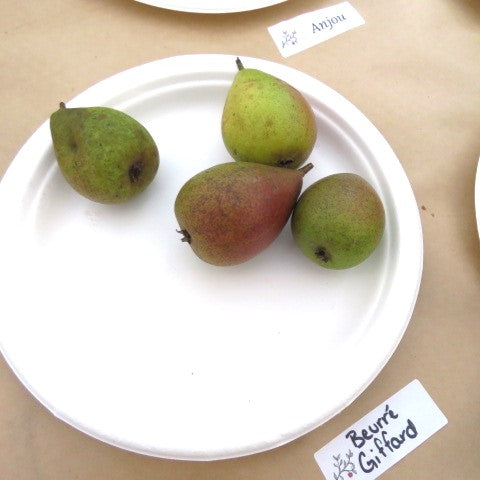
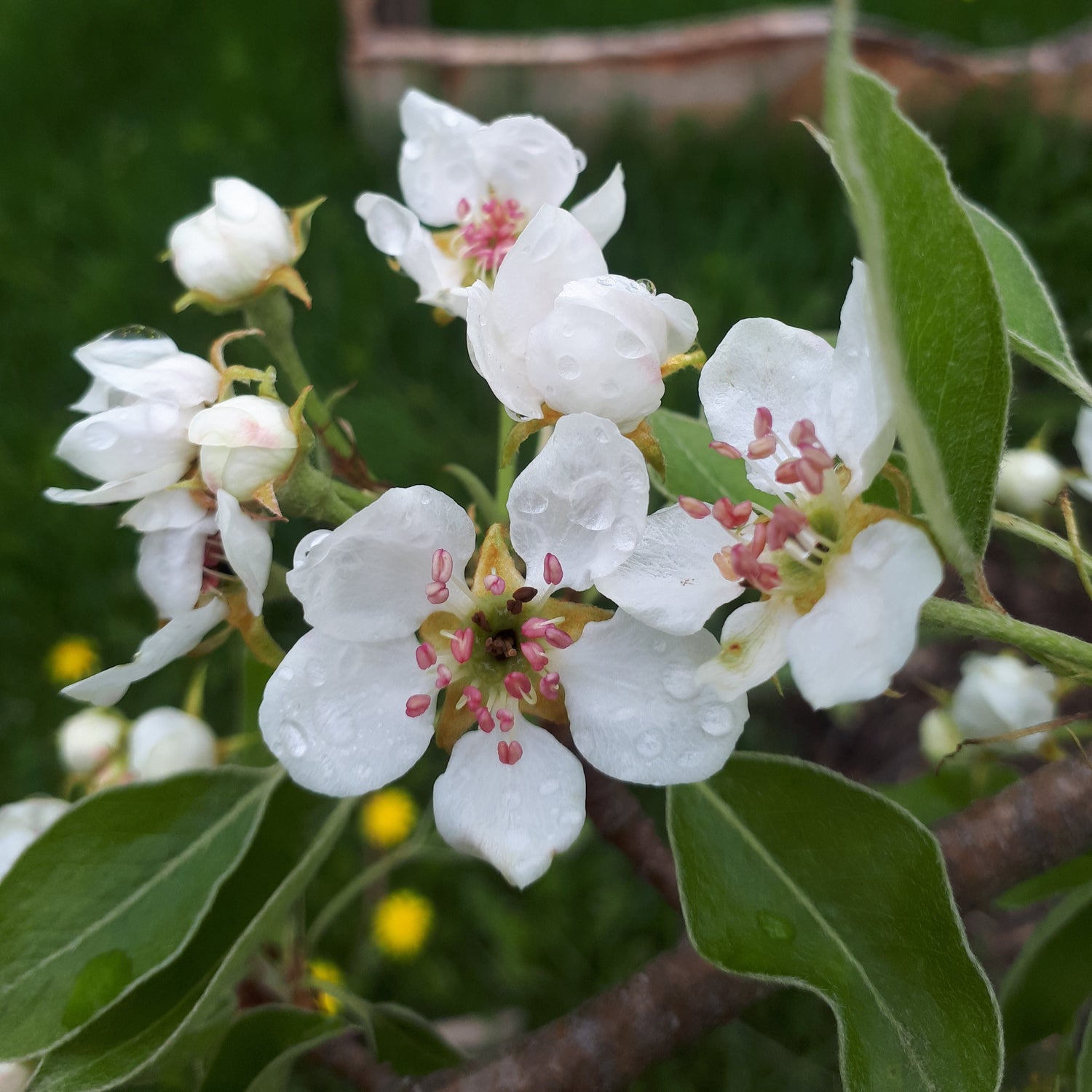
History: Beurré Giffard was discovered as a chance seedling by Nicolas Giffard in 1825 in France. "Beurré" translates from French as "butter-like," referring to the smooth, juicy flesh that was typical of pears developed at this time in France and Belgium. It was later introduced to the United States in 1850.
Why We Grow It: This French heirloom pear is one of the earliest ripening pears we offer. Its sweet, melting yet crisp flesh is similar to Bartlett with an excellent flavour.


History: Once one of the most popular commercial apples in the United States, Ben Davis apple trees were planted across the continent following its discovery around 1800. Due to its firm fruit and excellent keeping qualities, this apple was extremely easy to transport over longer distances which led to its popularity. Once storage and transportation improved, this apple was slowly replaced with better tasting varieties and it is now a relatively rare find. It's also a parent to Cortland.
Why We Grow It: The mellow, sub-acidic, mildly aromatic red fruit is not quite as flavourful as some apples but it stores exceptionally well, lasting into spring. Flavour improves in storage, like many heritage apples. The trees are reliable and heavy croppers, earning them the nickname of 'mortgage-lifters' when they were grown commercially.
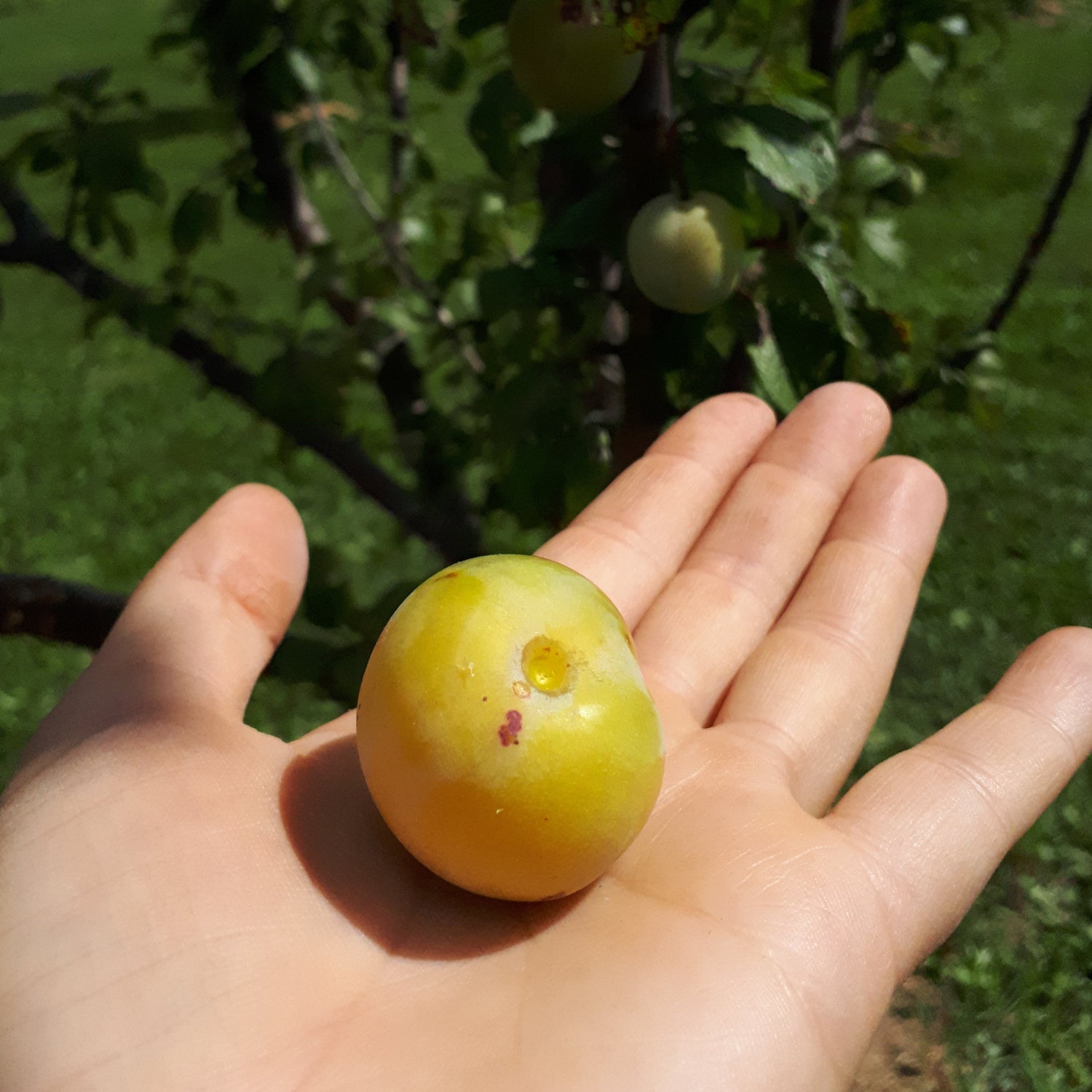
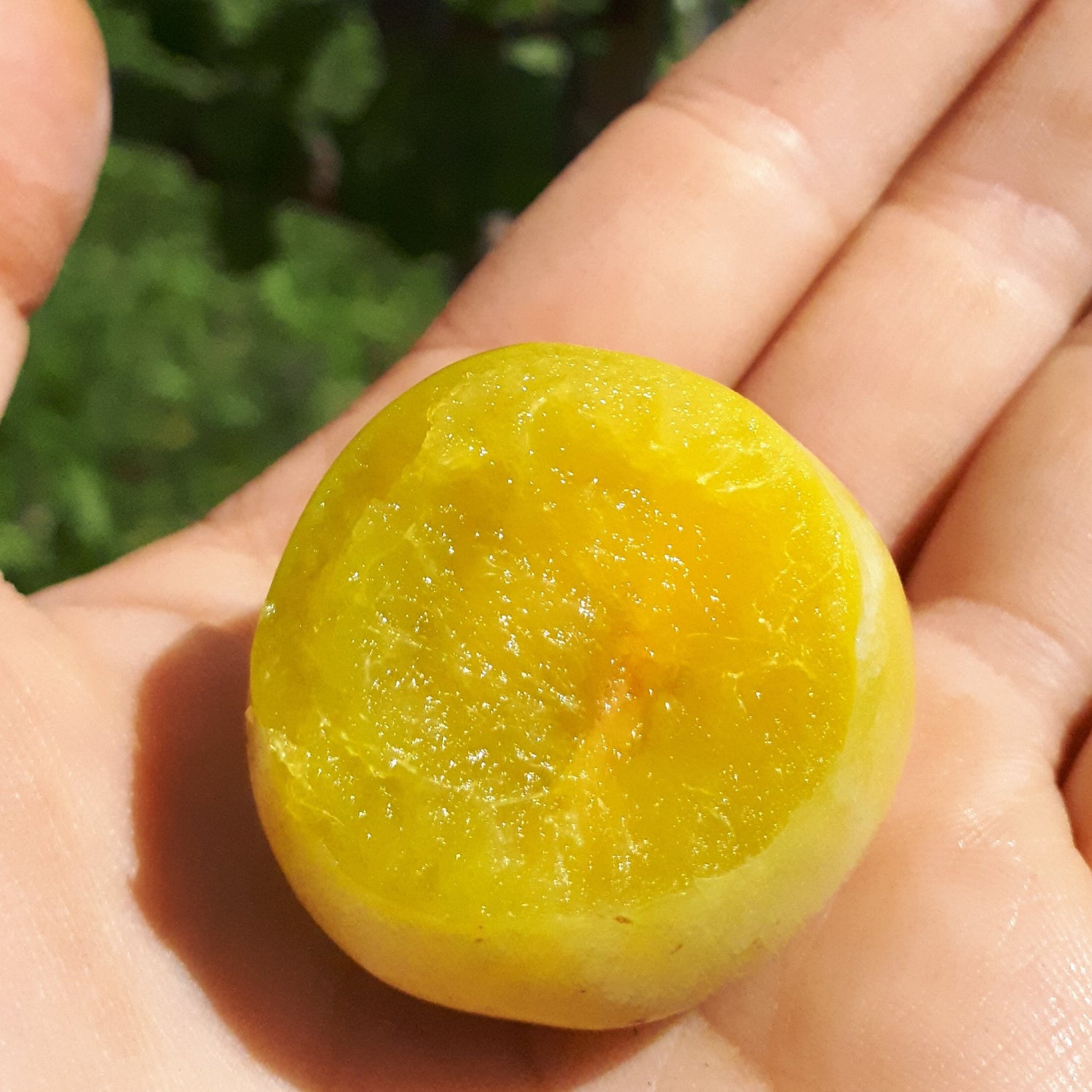
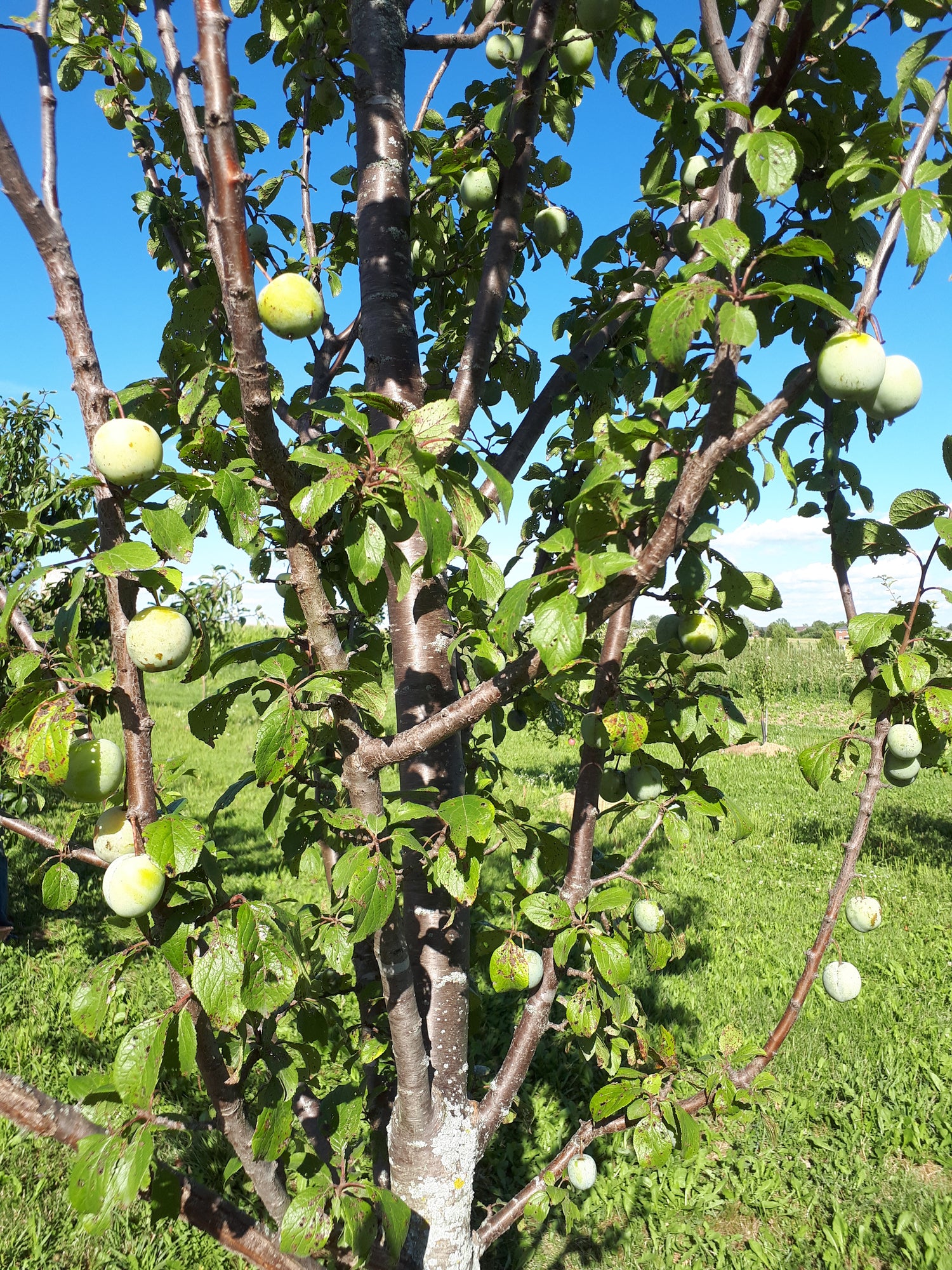
History: Likely cultivated from a wild plum growing in Asia, Mirabelle plums are a specialty of the Lorraine region in France where they are still primarily grown today. They are very popular in Europe and the French city of Metz has an annual Mirabelle Festival that spans two weeks. In 2006, the French city of Nancy created the world's longest Mirabelle tart which measured over 200m in length.
Why We Grow It: It's no why wonder that this European plum is so popular. Mirabelle plums are super sweet and flavourful with soft juicy flesh. The medium-sized yellow fruit is exquisite as a dessert plum, but can also be used in jams, chutneys and schnapps.

History: Lodi is a cross between Yellow Transparent and Montgomery Sweet created at the New York Agricultural Experiment Station in Geneva, NY, and released in 1924. Although it is not suitable for commercial production due to its poor keeping qualities and tendency for the flesh to crack in storage, it is still commonly grown by homeowners in the southern US today.
Why We Grow It: If you're looking for an early apple to get started on making applesauce, Lodi is the way to go! These large yellow-green apples are ready to harvest by the end of July and do not bruise as easily as their Yellow Transparent parent.

History: Goldrush was bred specifically for scab resistance as part of the collaborative PRI disease-resistant breeding program run by Purdue University, Rutgers University, and the University of Illinois. It was developed in the 1970s and released in 1994. This variety has a complex heritage of Golden Delicious mixed with a cross of several other varieties for their disease resistance.
Why We Grow It: This is arguably the best scab-resistant variety released from the PRI Breeding Program as far as flavour is concerned. The dense, crisp flesh of this yellow apple is full of sugars and flavour. It is distinctly spicy and tart at first but mellows the longer it is in storage. The fruit stores exceptionally well. This truly multi-purpose apple is also great for drying and, unusually for a modern variety, is good in hard cider.

History: Golden Nugget was created more or less by accident when Golden Russet and Cox's Orange Pippin were crossed at the Kentville Agricultural Station in Nova Scotia in 1932. Despite being an accident, once researchers realized how flavourful this variety was they continued to raise it and eventually released it in 1964. Although a delicious apple, its small size prevented it from attaining true commercial success.
Why We Grow It: It is prized for its incredible flavour which is super sweet and tangy like a pineapple. Along with being great for fresh eating, it is also suited for cider. The tree itself boasts decent disease resistance.
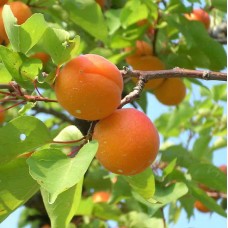
History: Goldcot was bred by researchers in Michigan's snowbelt with the goal of creating a hardier apricot that could withstand harsher winters. They succeeded and Goldcot apricots were introduced in 1967.
Why We Grow It: Both an early and notably hardy cultivar, Goldcot is known to be productive and dependable. The flesh of the fruit is drier than other apricots and has a slight tangy taste that is good for both fresh eating and canning. The tree has a natural semi-dwarf growth habit, great for anyone looking for a smaller apricot tree.
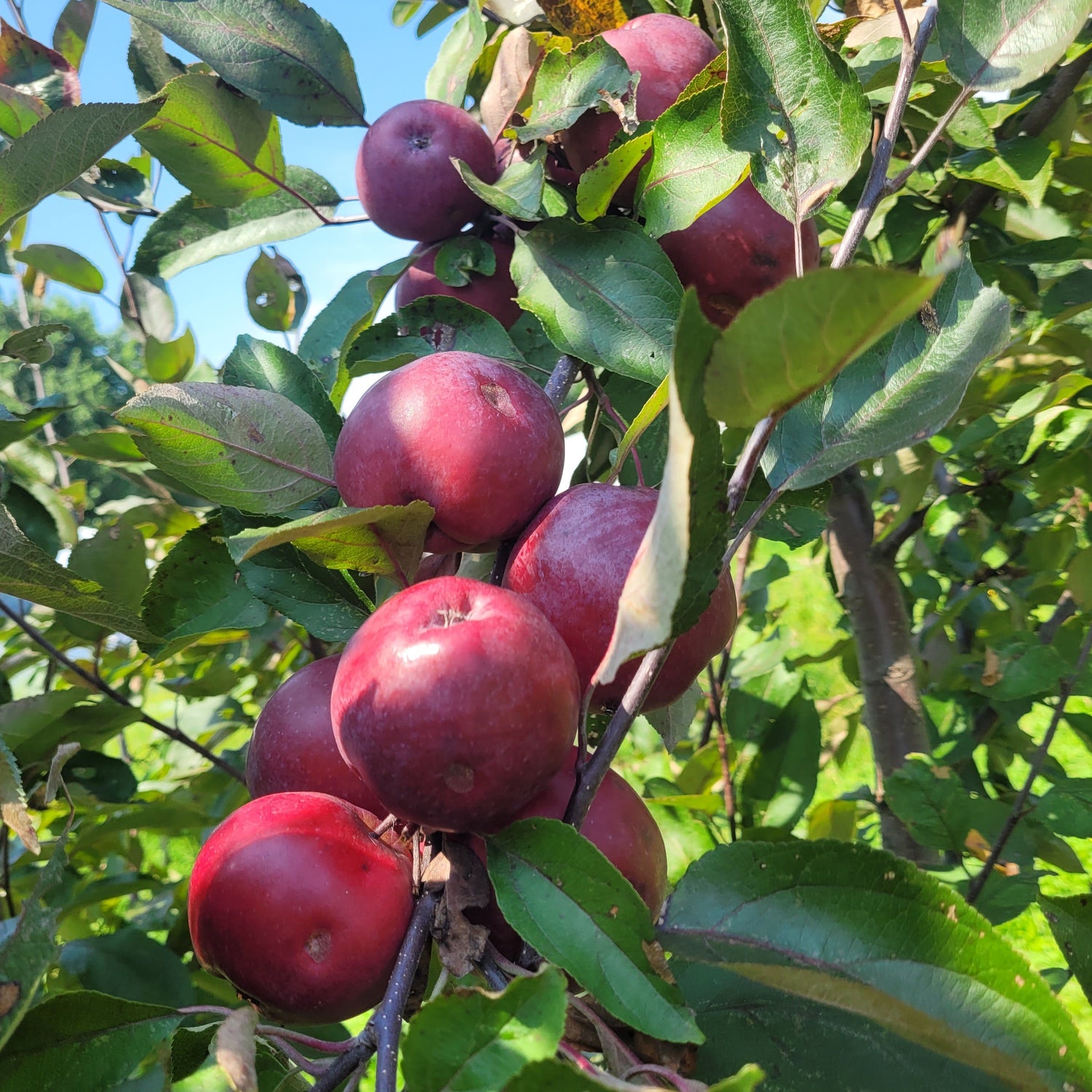
History: The Geneva crabapple was developed in the 1930s in collaboration with the Ottawa Experimental Farm and the New York State Agricultural Research Station based in Ottawa. The creation of this crabapple was head by Isabella Preston who specialized in creating cold-hardy ornamental plants.
Why We Grow It: This attractive crabapple has deep maroon flesh. The tree itself is quite visually appealing, sporting red leaves and bright pink flowers in the spring. The taste is reminiscent of rhubarb and is suitable for cooking as well. As it is a low sugar/high acid juice, it is best blended with another high sugar variety for cider. It also adds a nice red hue to blends.
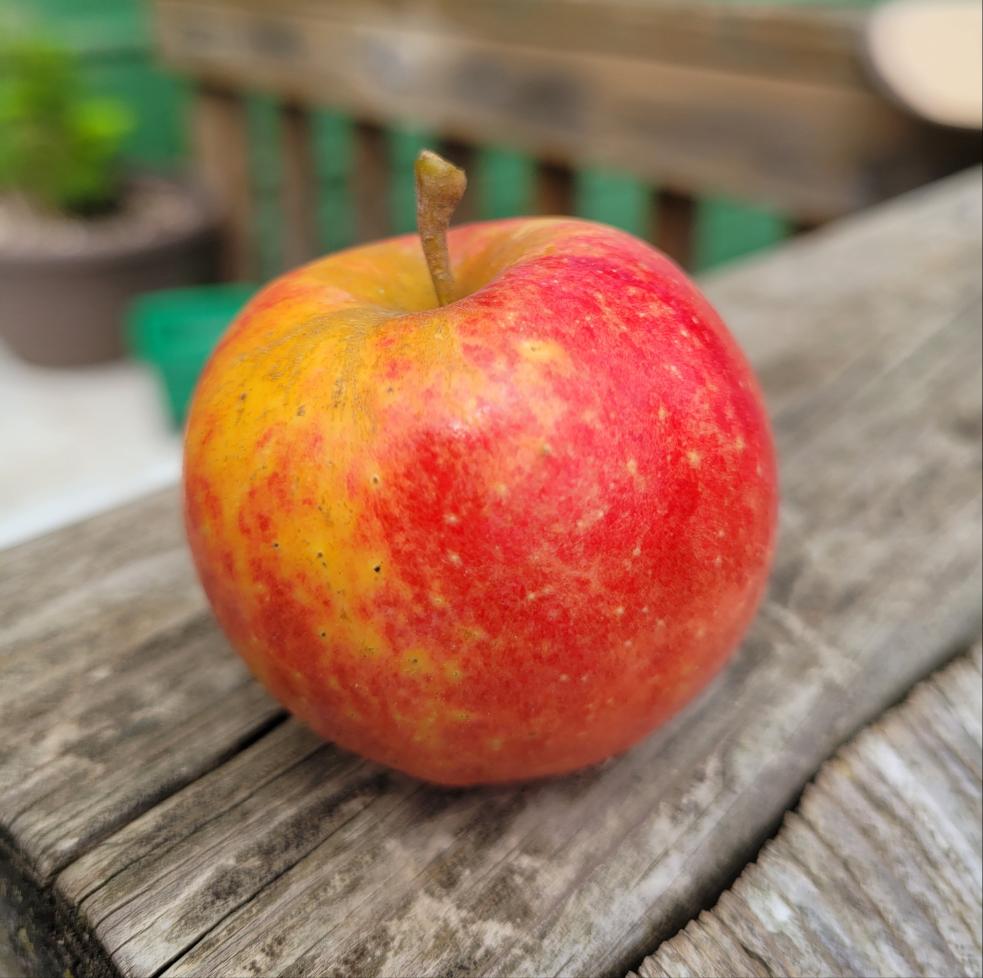
History: Norkent was bred as a cross between Haralson and Rescue at the Morden Research Station. It was one of tens of thousands of seedlings sent across the prairies as part of the Prairie Fruit Breeding Cooperative initiative by Agriculture and Agri-Food Canada in the 1960s. It was planted at the University of Alberta before being moved again to a backyard in Edmonton once the university ran out of space to it grow.
Why We Grow It: This pleasant and aromatic apple is one of the best fresh eating apples for colder climates! The flesh of this red apple is crisp and said to taste like a cross between an apple and pear.
History: Cupid is a part of the Romance series of dwarf sour cherry bushes developed and released by the University of Saskatchewan in 2004. Their goal was to create cold-hardy, dwarfing bushes with good quality fruit. Cupid was likely selected for its good flavour and unusually large cherries, the largest in the Romance series.
Why We Grow It: These dark red, cold-hardy cherries have a sweet-tart flavour that can be enjoyed fresh for fans of a more astringent flavour or used for cooking, baking, and preserving. Cupid has the largest cherries of all the dwarf sour cherries in the Romance series and also ripens the latest, helping to extend the season.

History: Melba was developed by W.T. Macoun at the Central Experimental Farm in Ottawa in 1898. In 1924 it was released commercially and three years later received the Silver Wilder Medal from the American Pomological Society.
Why We Grow It: Melba is a lovely early market apple or backyard tree for making applesauce! The fruit is yellow with crimson flush and the crisp, white skin has a very sweet flavour.

History: Jonathan has an interesting history since there are two potential origins. One story says that Rachel Higley collected apple seeds from the local cider mill which she later grew on her new property in Ohio in 1796. She named one of the new varieties Jonathan after a young boy who often visited her orchard. The second, and more likely story, is that it was grown by farmer Philip Rick in the 1820s in New York. Originally named Rick, the apple was renamed Jonathan after the man who brought it to the attention of the Albany Horticultural Society.
Why We Grow It: These cheery red apples are crisp, juicy, and sweet. They are good for fresh eating as well as turning into pies and sauce. The fruit also stores quite well, lasting until January/February under optimal conditions.

History: Westfield Seek-No-Further was discovered in Westfield, Massachusets in the 1700s. Its flavour is reminiscent of popular fresh eating apples in England which is probably why this apple was so popular among English colonizers. It was the most popular fresh eating apple in New England during the 1800s.
Why We Grow It: Historically a favourite eating apple, Westfield-Seek-No-Further's sharp, nutty flavour is as unique as its quaint name! It now has potential as an addition to cider blends.

History: Moorpark apricots were introduced formally some time in the 1700s at the estate of Lord Anson, a Royal Navy officer. They seem to have had a rich history previously, in Italy and England as early as the mid 1500's. They we so enjoyed, Jane Austin mentions it in her classic novel, Mansfield Park. The variety was named after Lord Anson's estate, Moor Park, and has became a staple cultivar ever since.
Why We Grow It: Moorpark apricots are a particularly popular variety due to their large fruit. The bright orange fruit is sweet and juicy, excellent fresh off the tree. They are also great for canning and drying.

History: Rouville apples were created by R.L. Granger and G.L. Rouselle in 1962 at the Agriculture and Agri-food Canada research centre located in St.-Jean-sur-Richelieu, Quebec. The variety was introduced in 1983.
Why We Grow It: This lovely Quebec cider apple has a wonderful bitter-sweetness that is great for fresh eating and juicing and sauce. It is resistant to scab and has grown very well in our test orchard.