TEST july 30_Fruit Trees
297 products
Sort by:
297 products
297 products
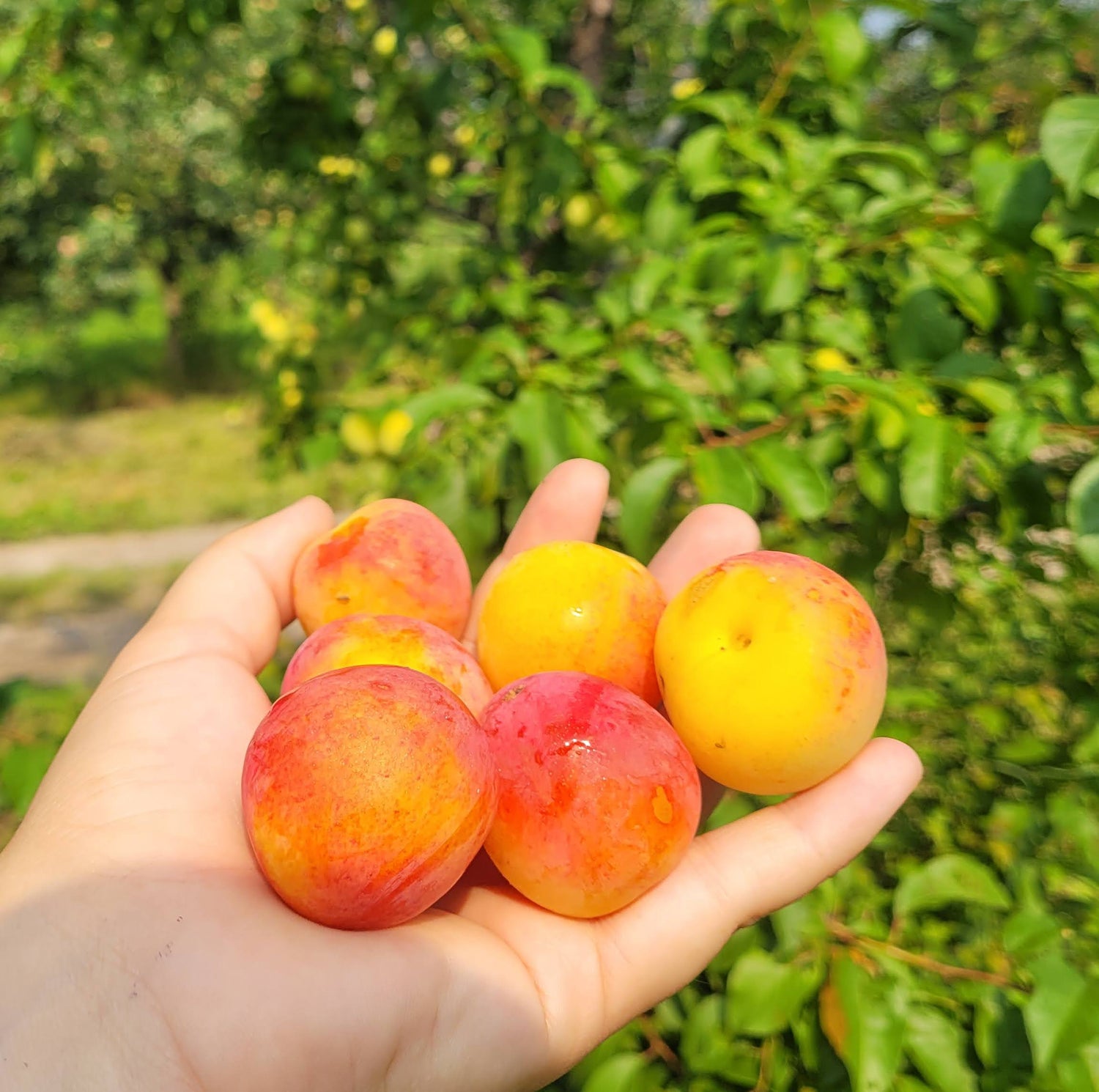
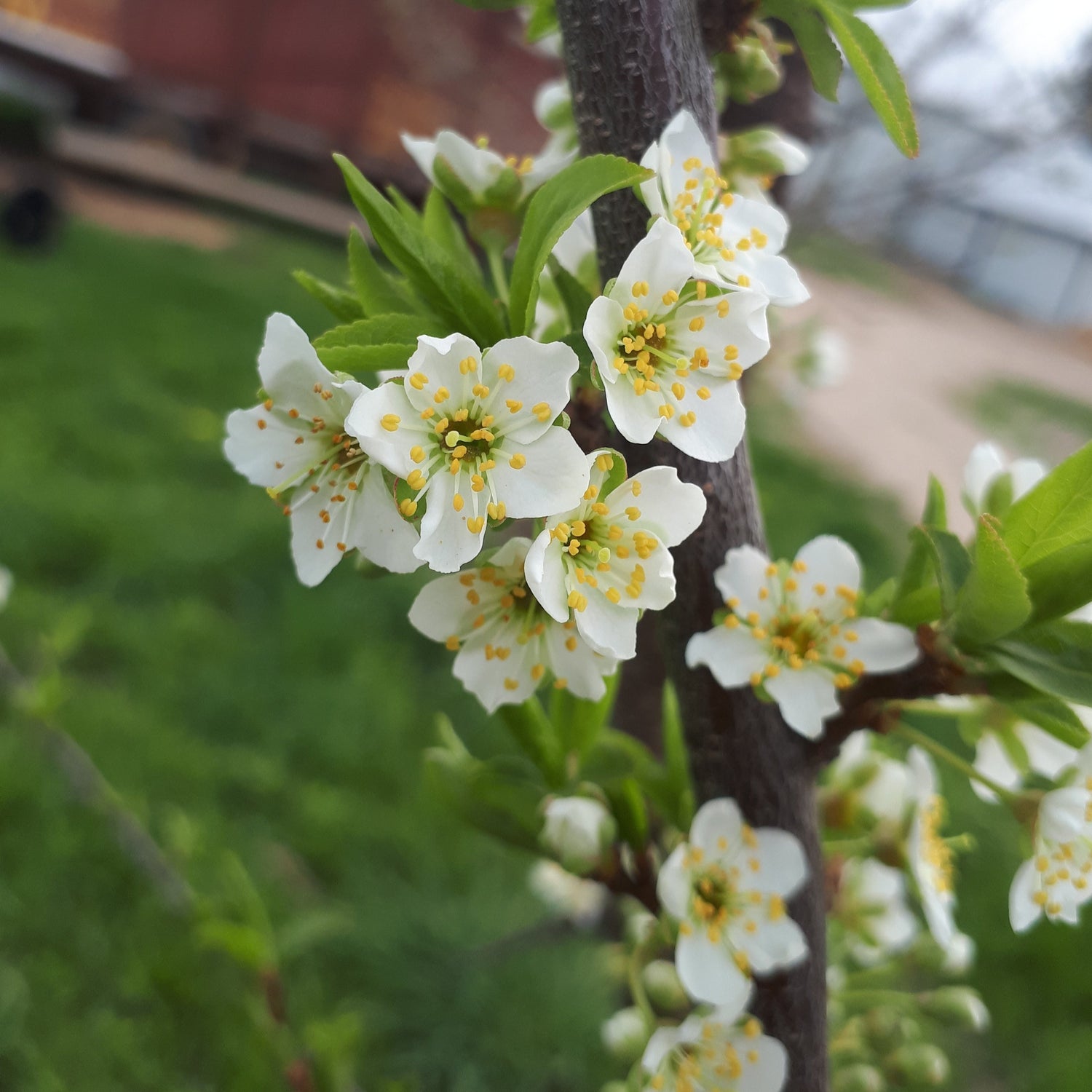
History: Early Golden originated in Fonthill, Ontario where it was discovered as a chance seedling. It has since become the most popular yellow plum in Ontario. Despite its Canadian origin, this is actually a Japanese plum.
Why We Grow It: Early Golden is a very popular Japanese freestone plum. The medium-sized fruit is very sweet with tangy yellow skin that gets a cheery red blush where the sun hits it. Medium-sized. The tree is vigorous and has a low susceptibility to black knot, although it requires careful thinning or else it will tend to bear crops every other year.
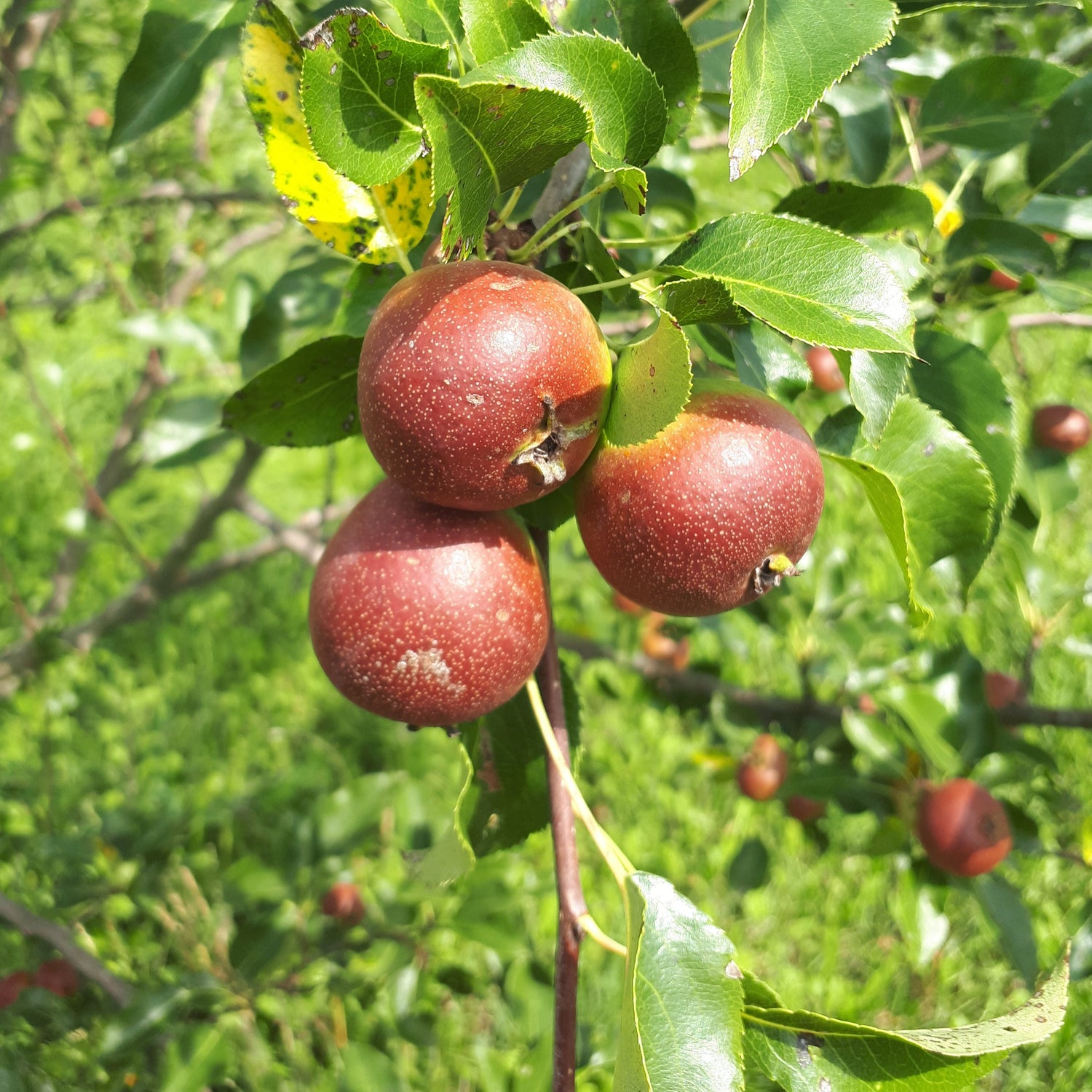
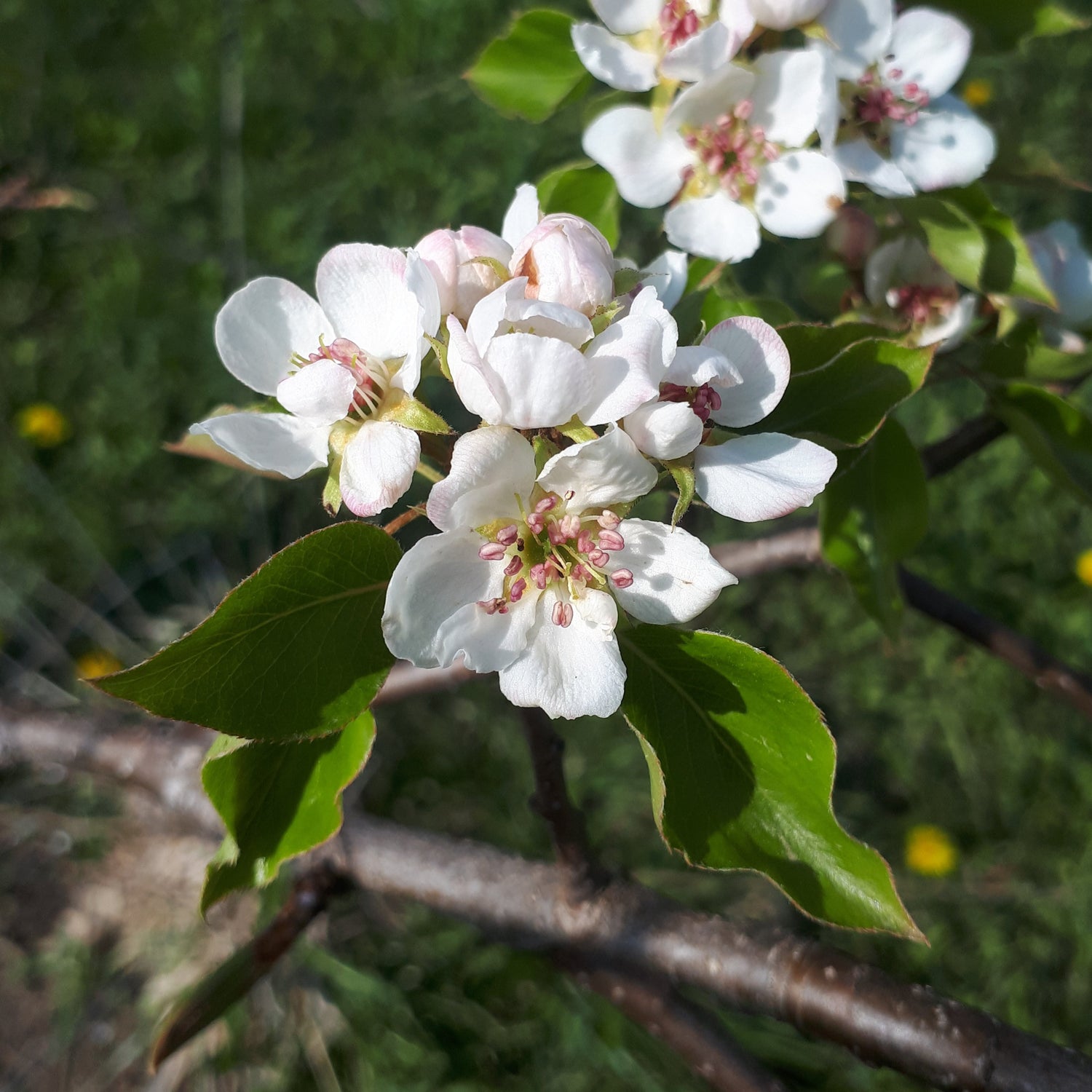
History: Golden Spice was developed by the University of Minnesota and introduced in 1949. It has Ussurian pear (Pyrus ussuriensis) heritage, a separate species from standard European pears (Pyrus communis).
Why We Grow It: Golden Spice is a Ussurian variety with excellent cold-hardiness. The fruit is small and yellow with a sweet, spicy flavour. It is resistant to fireblight.
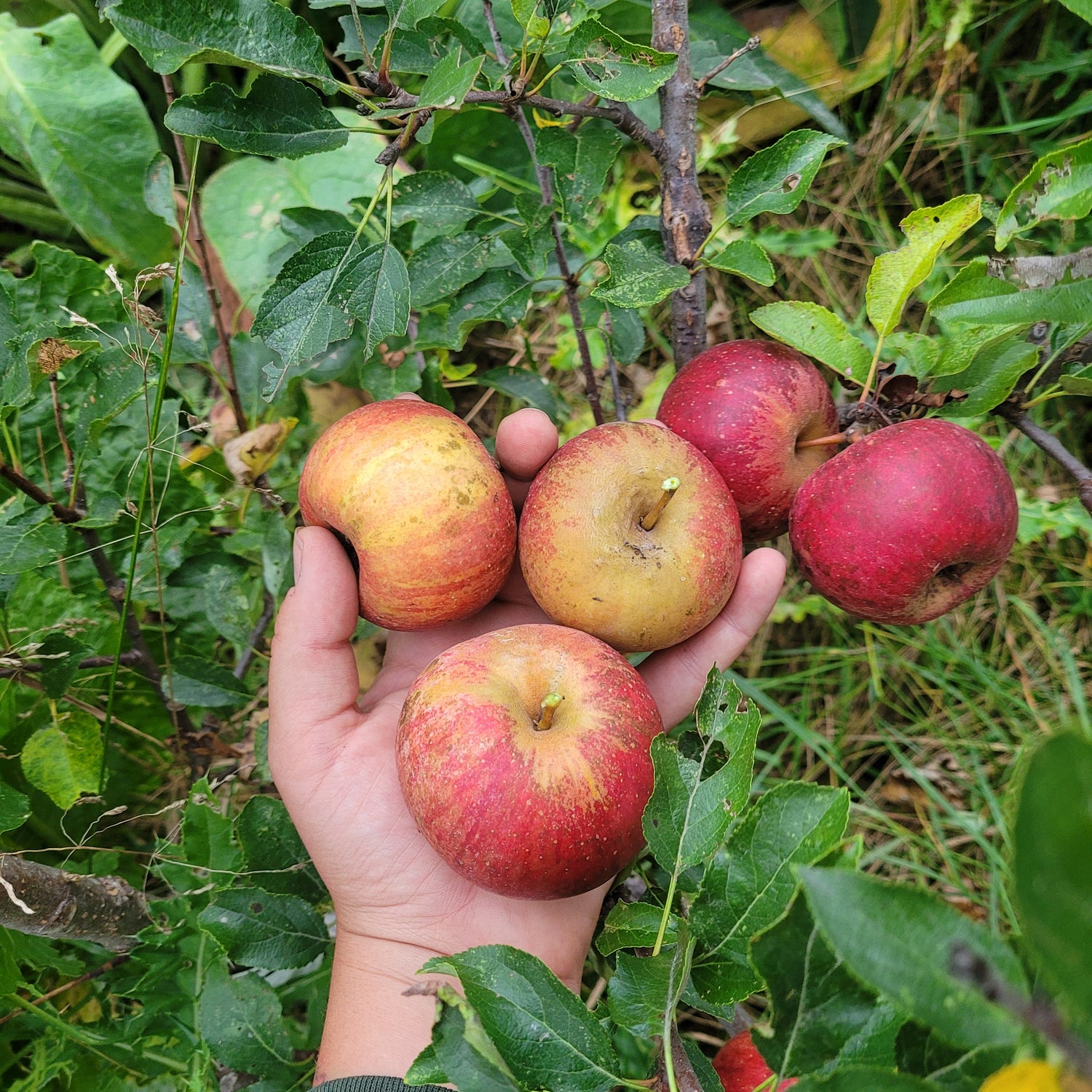
History: Dabinetts are an English cider apple named after William Dabinett who happened to find this variety growing in a hedge in the early 1900s. Since then the apple has become quite popular for use in making cider.
Why We Grow It: These smallish apples with speckled red skin produce a high-quality juice which can be used in single-variety ciders or blends. Dabinetts are classified as a bittersweet, are very resistant to scab, and are a reliable cropper.


History: Grimes Golden was discovered on the Grimes farm in what is now West Virginia in 1832. Local legend claims that it grew from a seed planted by John Chapman, better known as Johnny Appleseed. After its discovery, it was widely planted up until the 1930s when it became supplanted by more popular varieties such as its (likely) descendant, Golden Delicious.
Why We Grow It: Although less popular now than Golden Delicious, many claim that Grimes Golden has a superior flavour: sweeter and with a hint of spice. The fruit is great for fresh eating and making cider, and it stores quite well. The tree is moderately resistant to fire blight and mildew.

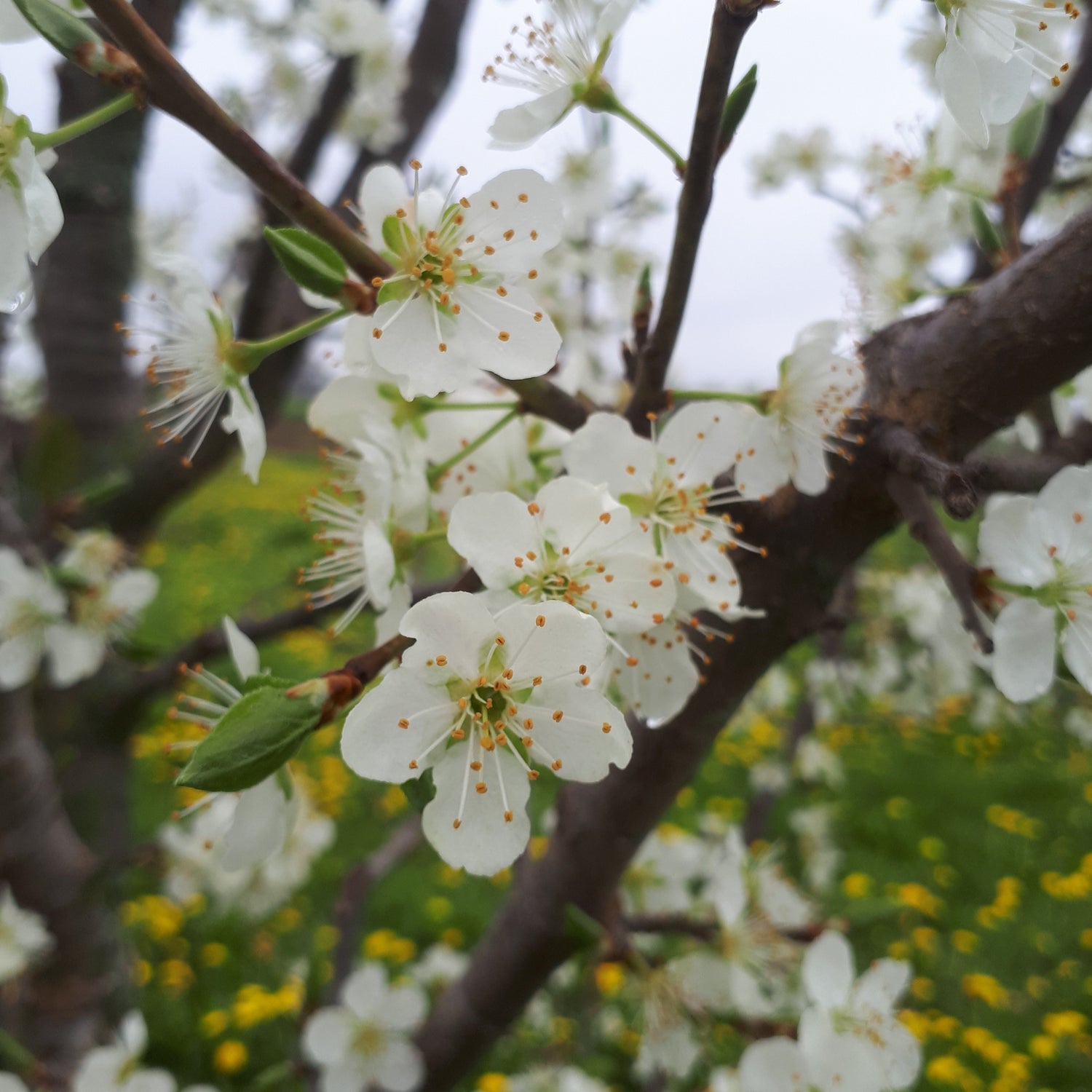
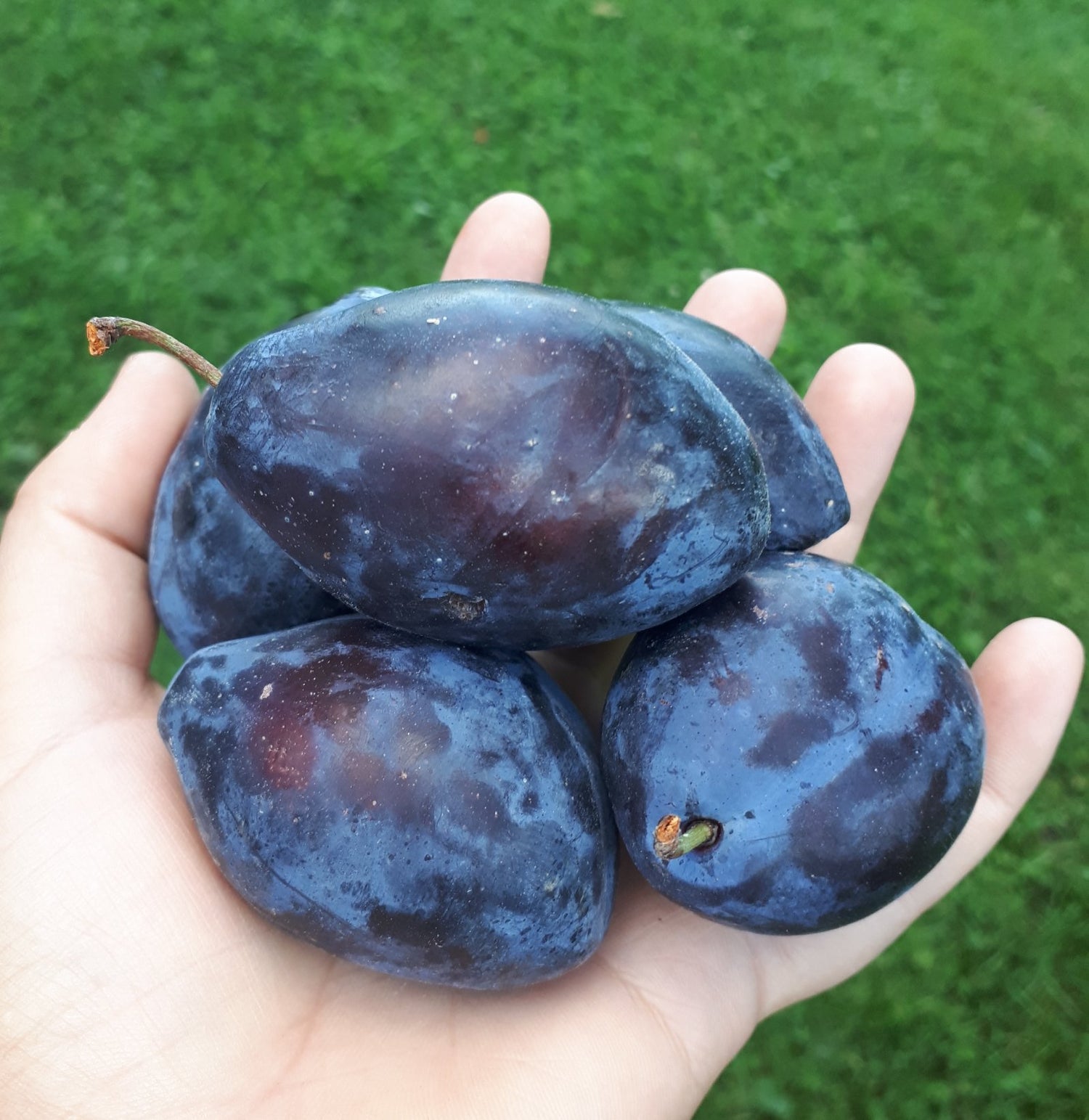
History: Late Italian plums originated in the coastal Mediterranean areas of Italy, although little is known about their history aside from that. They are still grown in Europe and North America today.
Why We Grow It: This European variety produces a large-sized blue plum with sweet yellow flesh. It is an all-purpose plum that is excellent for drying and great eaten fresh, canned, or incorporated into baking, desserts, or salads.
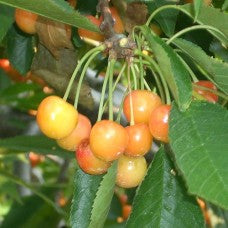
History: Rainier sweet cherries were created by Harold Fogle at the Washington State University research center in 1952 and released in 1960. They were named after Mount Rainier, the tallest mountain in the state. Due to their delicate nature, Rainier cherries tend to be a bit more expensive than other commercial varieties.
Why We Grow It: Rainier are delicious yellow-skinned, yellow-fleshed sweet cherries. Some say they are the best tasting of all yellow cherries, and perhaps the best tasting cherry in general. Along with being great for fresh eating, they are also suitable for uses such as canning.


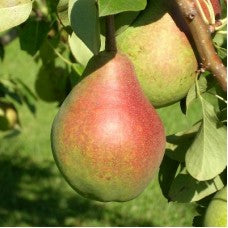
History: Clapp's Favourite Pear originates from Massachusetts where Thaddeus Clapp discovered it as a chance seedling on his property in the 1850s. It was introduced commercially in the 1860s and continues to be grown in the UK and US today.
Why We Grow It: This old variety is hardy and regularly bears excellent medium-large fruit that are yellow with pink blush. They have good flavour but need to be enjoyed rather quickly since the fruit doesn't store long. The fruit needs to be picked about 10 days before completely ripe and allowed to ripen off the tree.

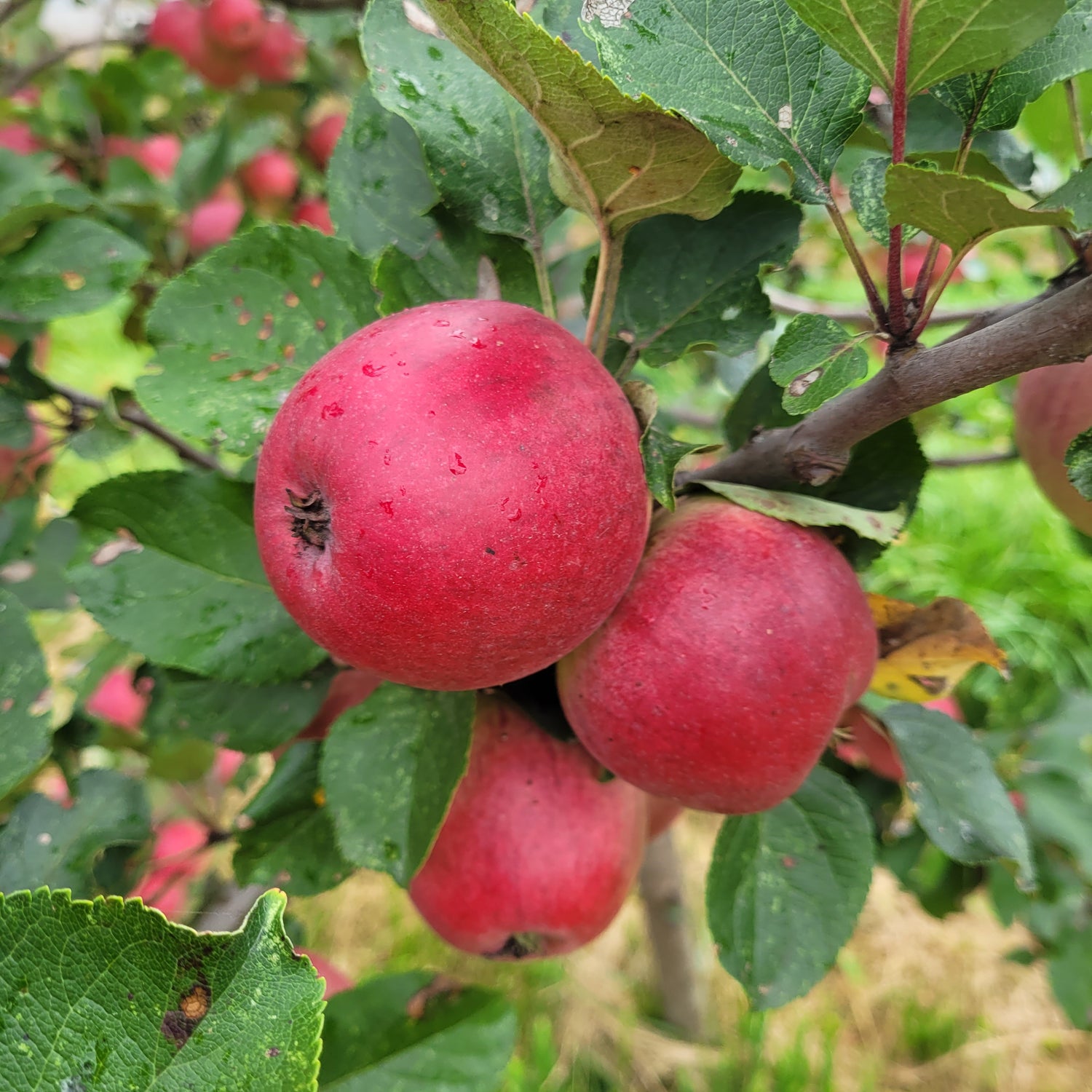

History: Yarlington Mill was discovered growing in the wild by a Mr. Bartlett. He discovered it in 1898 near a mill in the English village of Yarlington, hence the name 'Yarlington Mill.' It was further propagated and made popular by the grower Harry Masters (who also grew Harry Masters Jersey). This variety is still commonly planted in cider orchards in England.
Why We Grow It: This is an excellent cider apple for our climate. It produces a medium bittersweet juice with good flavour. The tree is hardy and vigorous but tends to bear biennially so it requires attentive thinning.


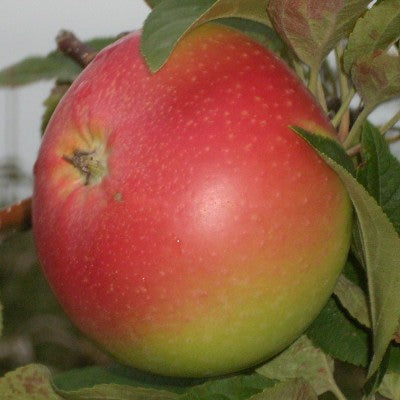
History: Winter Banana originated on David Flory's farm in Indiana around 1876. It was named Winter Banana due to the apparently banana-like aroma it gives off when ripe. It is also named Flory Banana or Flory Apple after David Flory. Winter Banana was grown on the west coast and gained some popularity in England and Germany. The thin skin of this variety is easily bruised which prevented it from being a commercial variety but it is still commonly found in gardens and farmer's markets.
Why We Grow It: This all-purpose apple is extremely attractive with pale yellow skin and a pinkish-red blush. The banana-like aroma is accompanied by sweet flesh with an acid tang. The flavour improves in storage and the apples can be kept all winter.
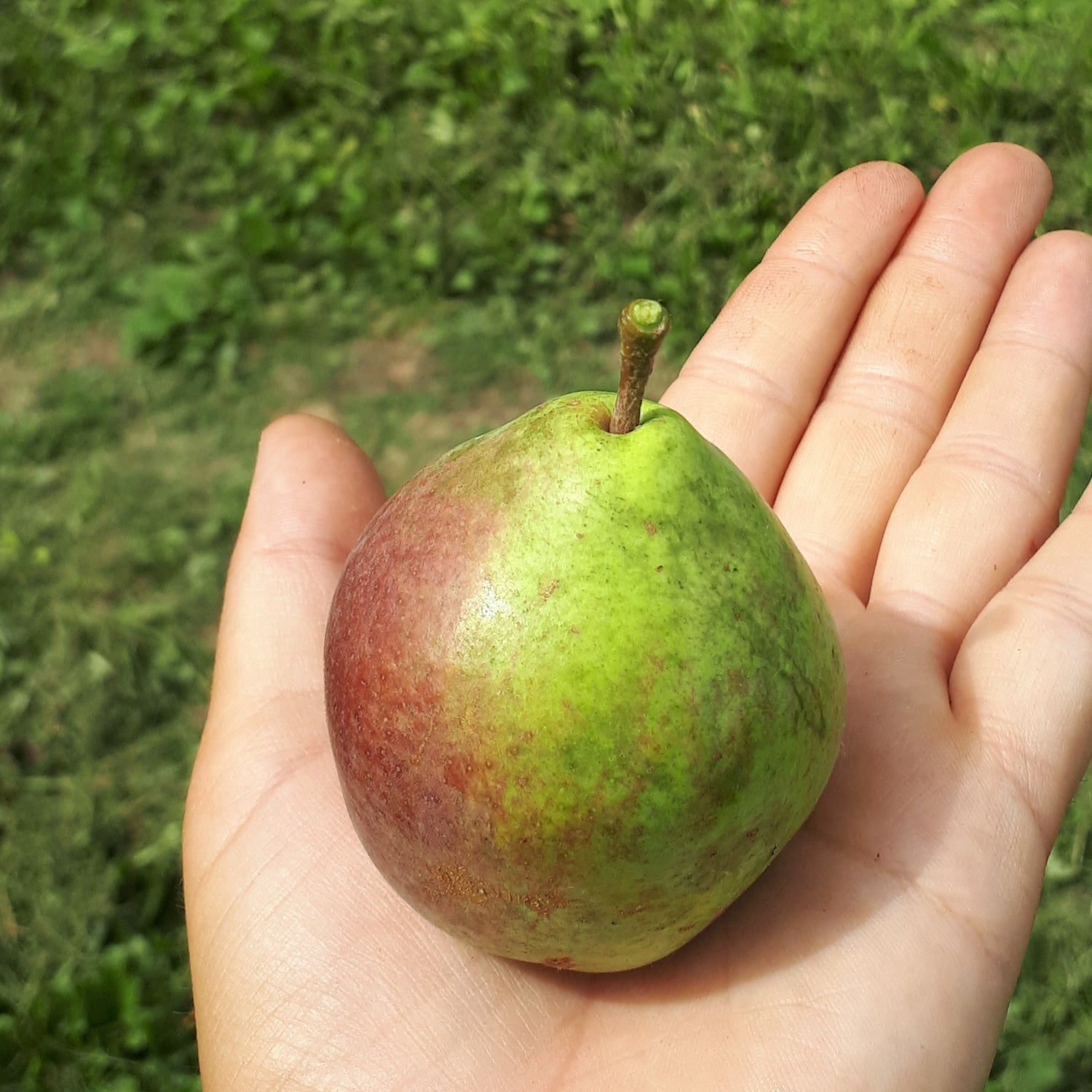
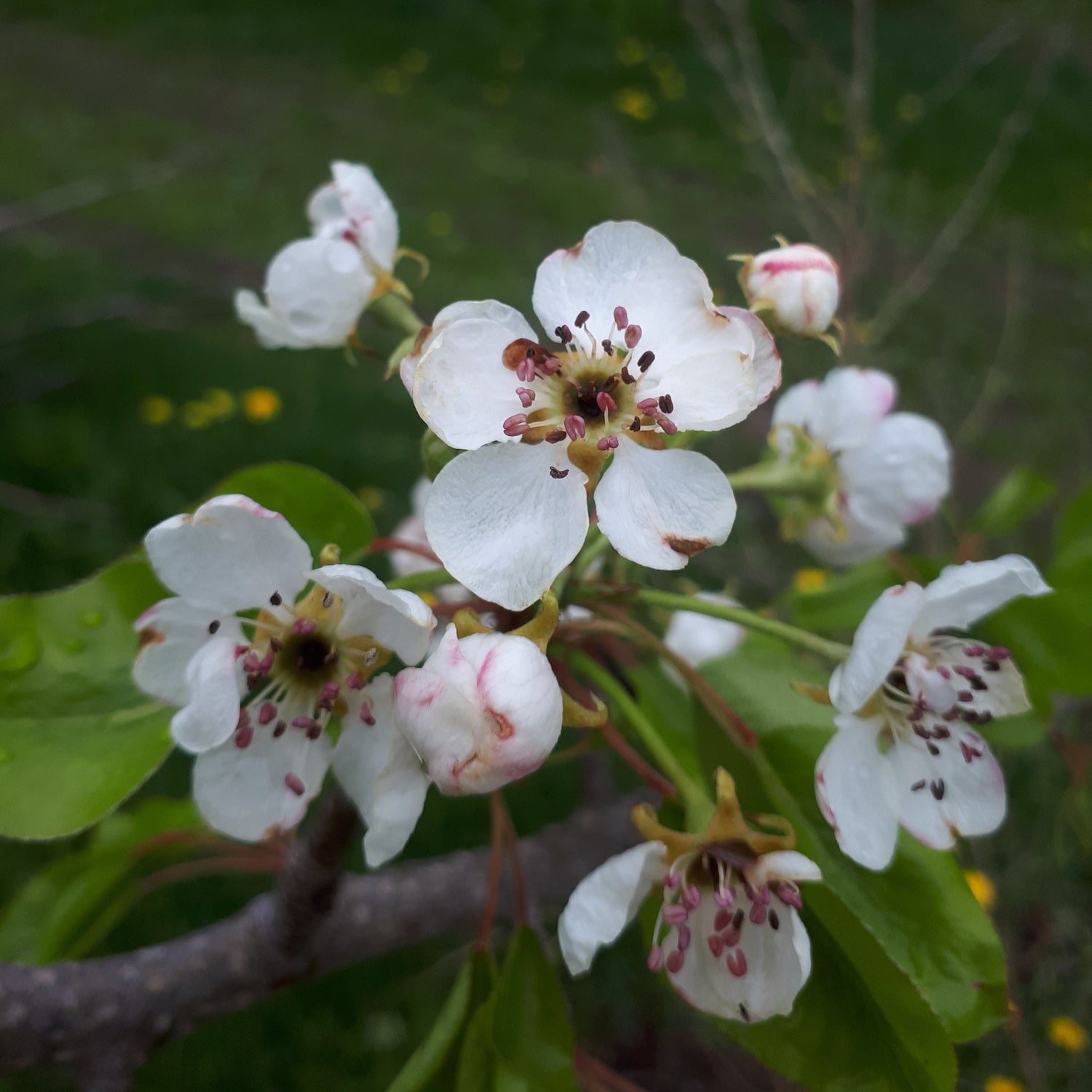
History: Summercrisp pears were developed by the University of Minnesota in an effort to create a cold hardy pear. They were successful in creating a hardy and delicious pear, releasing the variety in 1985. Its name is derived from the fact it ripens in summer (very early for a pear!) and that it is great right off the tree when still crisp.
Why We Grow It: Summercrisp performs amazingly in our test orchard, producing lots of freckled beauties that ripen uniformly and hang well on the tree. This early cold-hardy pear has a really sweet, pleasant flavour and is not gritty or dry. The fruit are average-sized with yellow skin and red blush. For optimal eating they should be picked before fully ripe and stored in the fridge until eating. This variety deserves to be more widely planted.


History: John McIntosh planted several apple seedlings upon settling in Dundela, Ontario. From these, he discovered the famous McIntosh apple as a seedling in his orchard. The family began selling the fruit and grafted McIntosh trees in 1835 and in 1870 it entered commercial production. By the 1900s it was one of the most popular apples in northeastern North America, although its popularity waned over time as varieties such as Gala were introduced. Nonetheless, McIntosh apples still remain some of the most popular in North America. The original tree died in 1906 after being damaged by a house fire and a commemorative plaque marks where it stood. The apple has since been named Canada's national fruit. The Macintosh line of Apple computers was also named after this variety.
Why We Grow It: For fans of Canadian heritage apples in particular, this one is hard to beat. To the best of our knowledge, this is the original strain of McIntosh. Aside from its storied past, McIntosh apples boast soft, slightly tart flesh with high Vitamin C content. It is excellent for fresh eating and making applesauce.
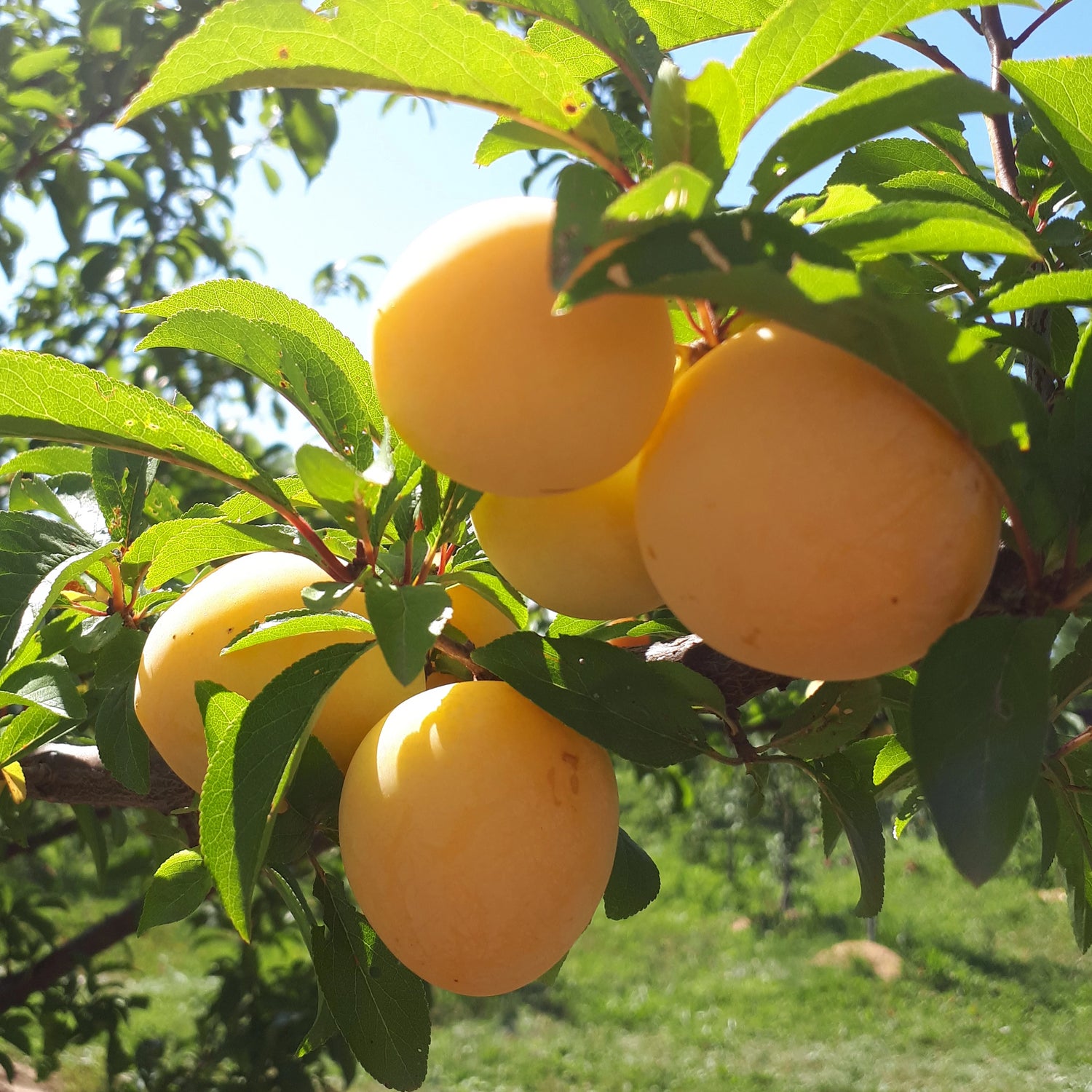
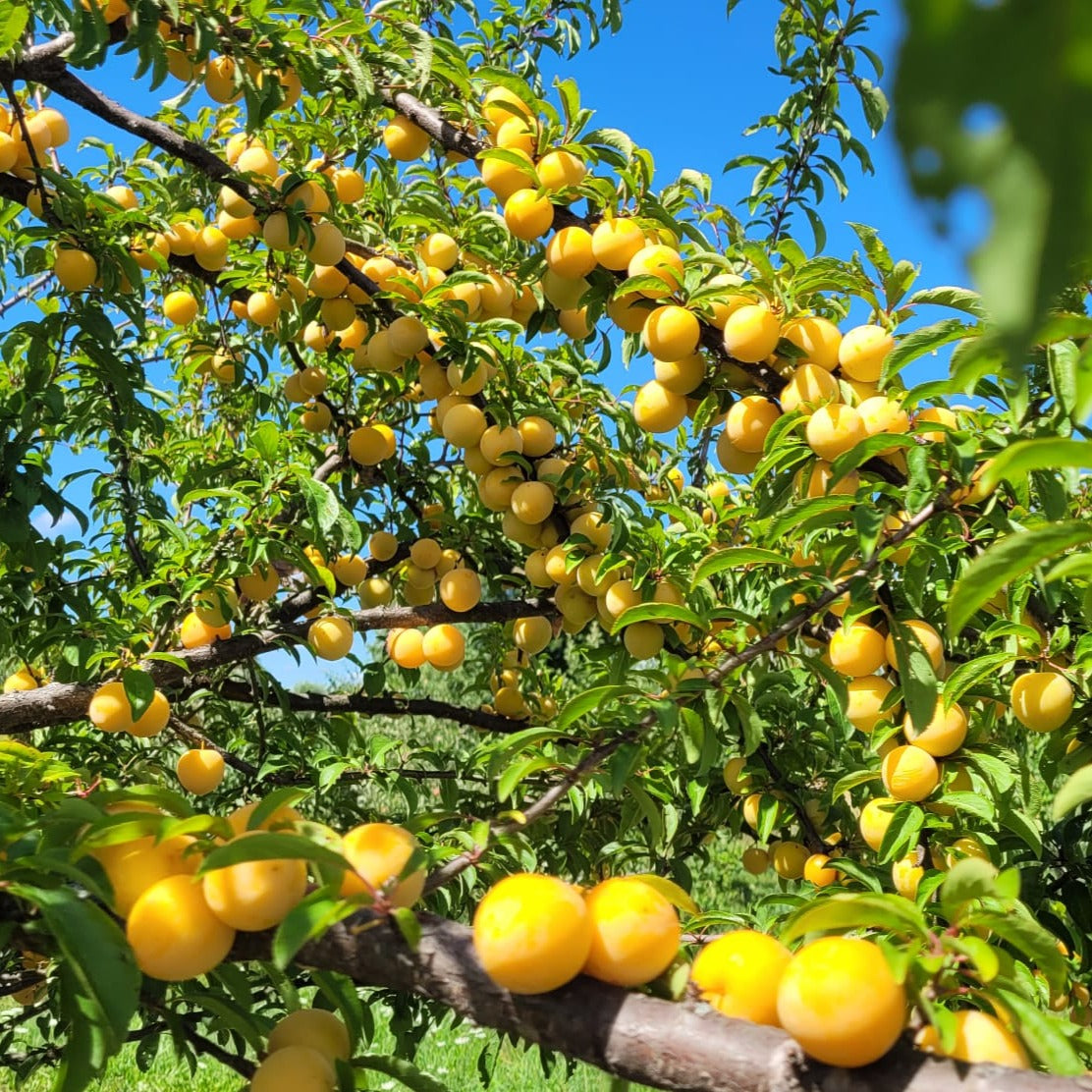
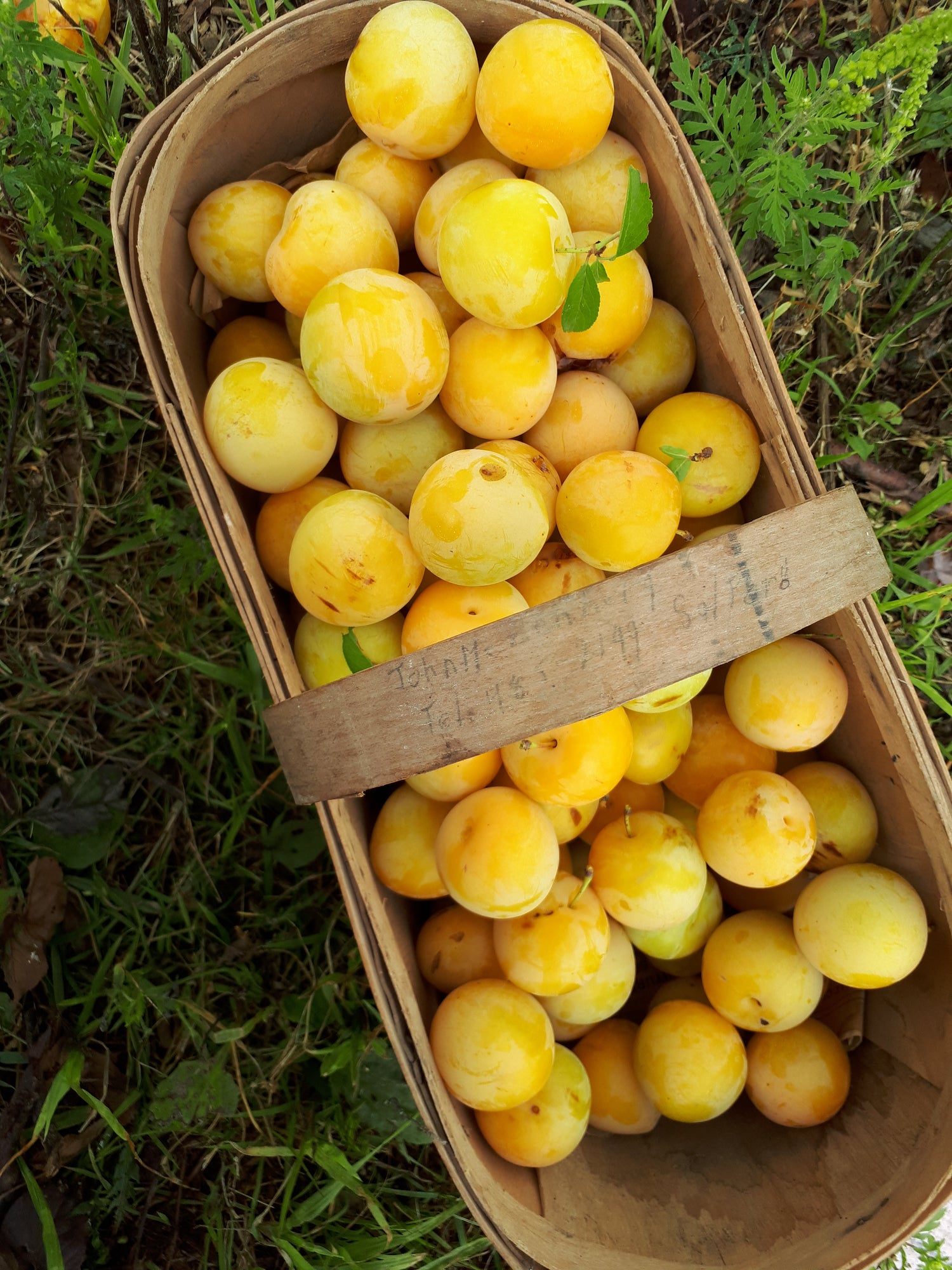
History: Shiro plums (translated from Japanese as 'white') were developed in California and introduced in 1899. They were bred by horticulturalist Luther Burbank who is renowned for his extensive experimentation with creating new plum varieties. Shiro plums are most commonly grown in the United States and Canada.
Why We Grow It: This early Japanese clingstone variety has yellow skin and flesh that is juicy and sweet. The fruit keeps longer than most plums, lasting two to four weeks, and the tree is known for its compact growth and heavy crops.
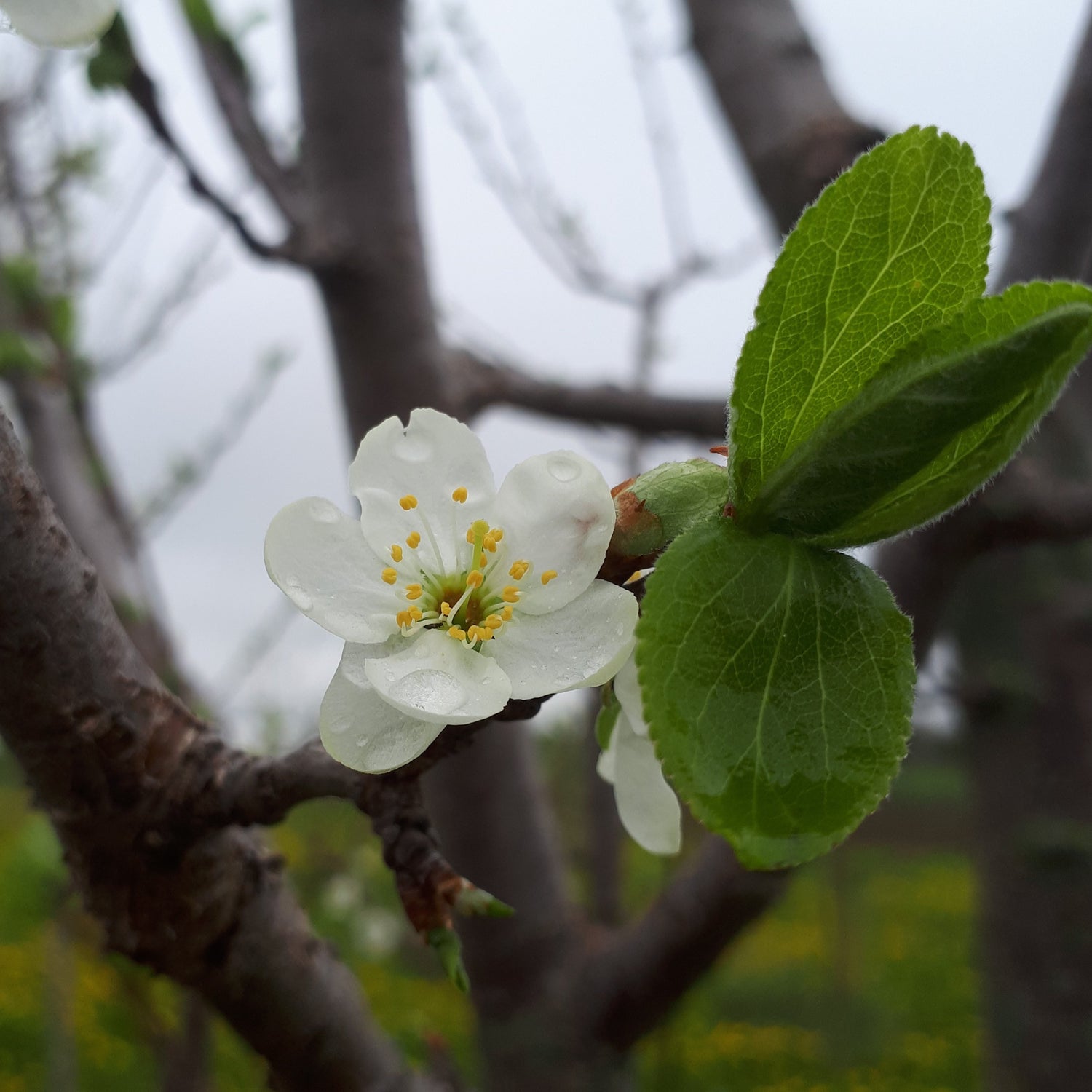
History: Greengage plums are a European variety that originated in Iran, although it is unclear exactly how old they are. They were introduced to England via France in 1724 by Sir William Gage, after whom they were named in English when the French labels were supposedly lost in transit. These sweet plums were later brought to North American colonies where they were grown by prominent figures such as George Washington and Thomas Jefferson. Although they have since fallen out of favour in North America, they are still quite popular in western Europe and occasionally referenced in pop culture. Greengage plums are the namesake of The Greengage Summer, a 1958 novel and subsequent 1961 film, and are mentioned in a Monty Python sketch.
Why We Grow It: It is a shame this plum's popularity declined in North America since it is considered a high-quality dessert fruit, possibly even the best dessert plum. Their bright green flesh is incredibly sweet and can also be used for cooking and preserving. Greengage plum trees tend to have a compact growth habit, great for anyone without a lot of space.

History: Cooke's Jumbo originated as a random mutation of an existing quince variety in an orchard in Dinuba, California. It was brought to the attention of the L.E. Cooke Company, for which it was later named, and introduced commercially in 1972.
Why We Grow It: The fruit produced by Cooke’s Jumbo are exceptionally large with greenish-yellow skin and firm white flesh. They are not generally eaten raw, but rather used for baking, jellies, or candied. This is one of the hardiest varieties of quince available.
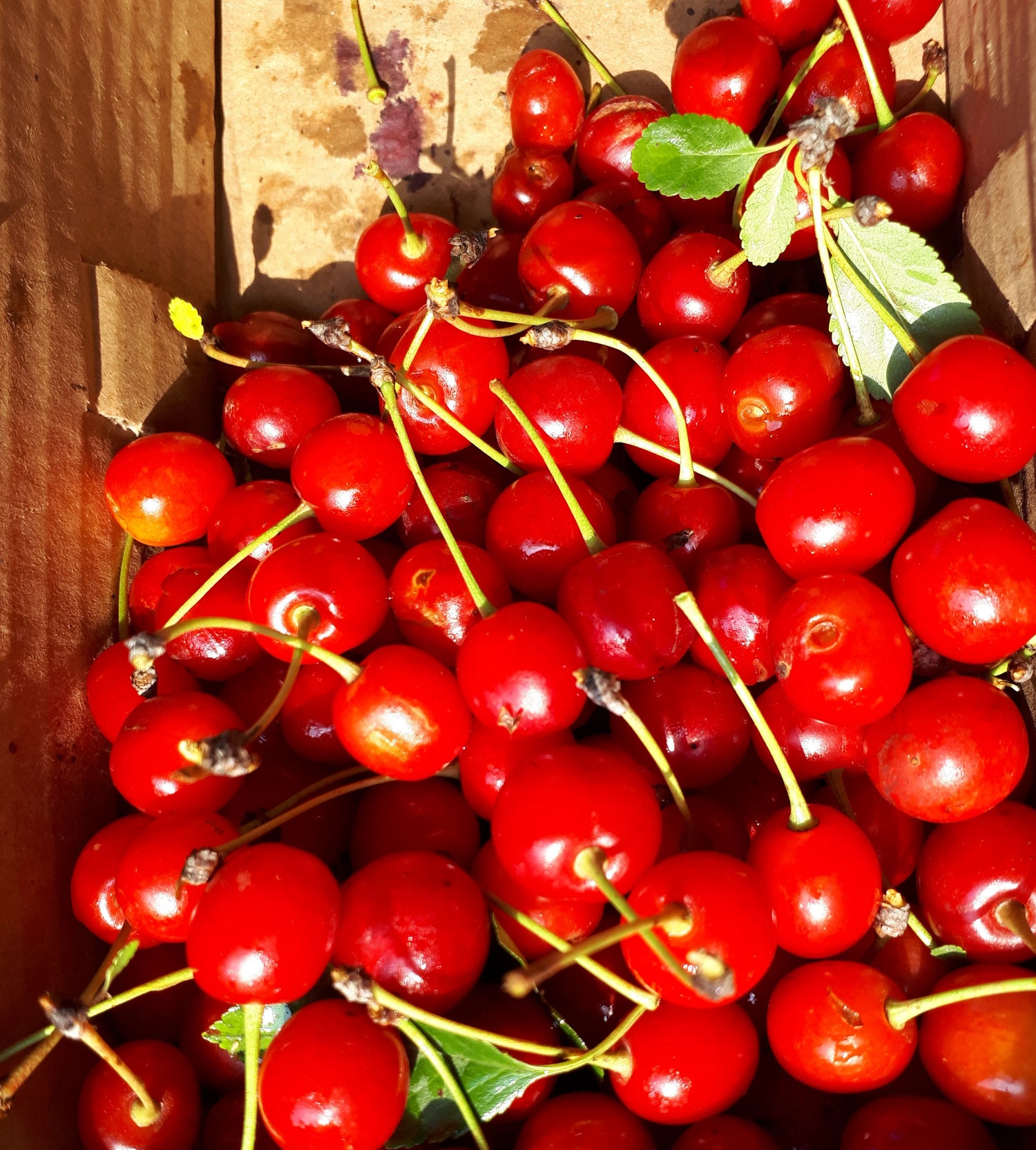
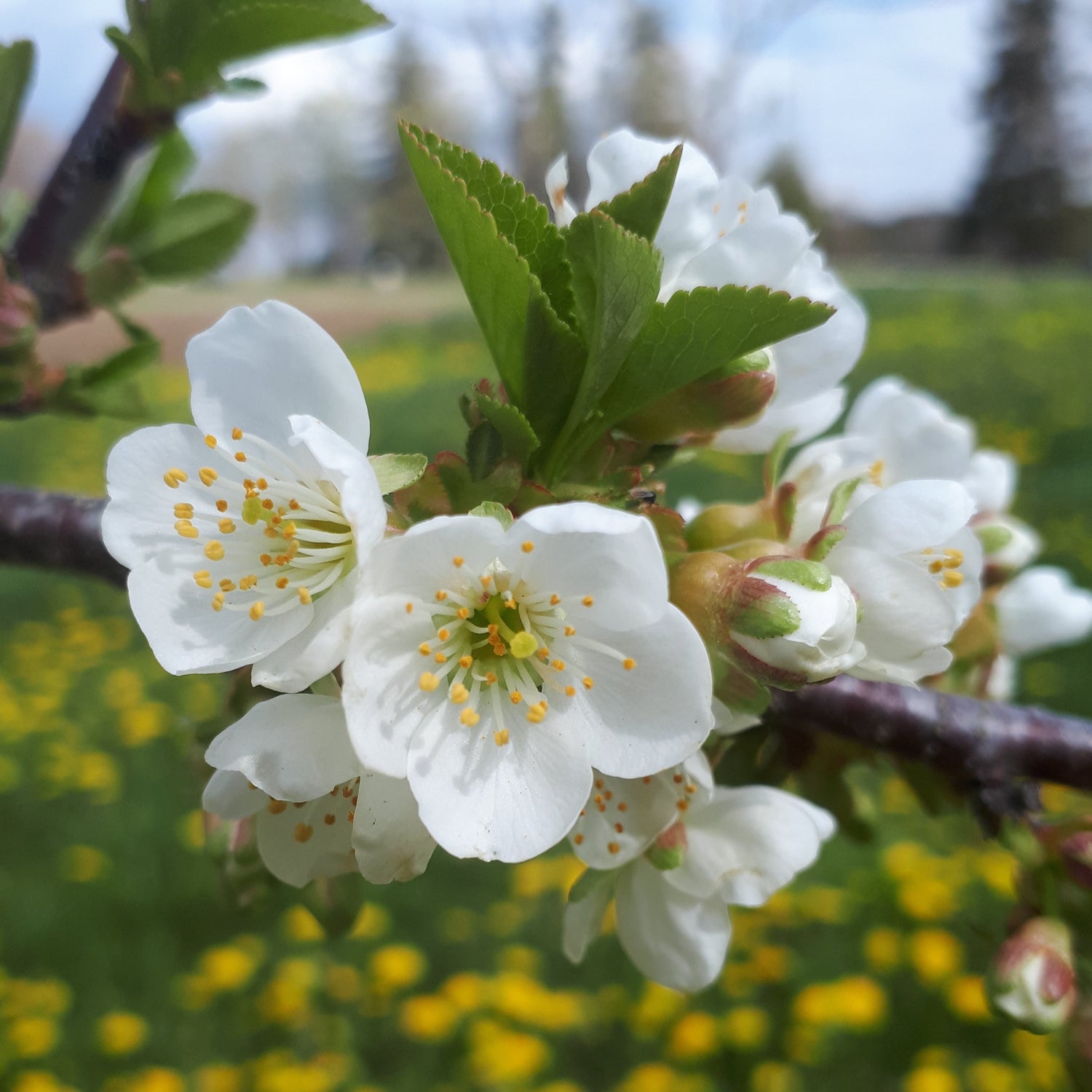
History: Meteor sour cherries were introduced by the University of Minnesota in 1952 as part of an effort to breed more cold hardy varieties.
Why We Grow It: Winter hardiness, reliable cropping, and a resistance to leaf spot make Meteor a good choice for the backyard. The fruit is bright red with yellow flesh. Meteor is classified as an amarelle type sour cherry, similar to Montmorency. It is excellent for making pie.
Check our our blog post with some tasty sour cherry recipes!

History: Strawberry Pippin is another variety whose history we know little about. All we know is that it likely originated in England where it was first recorded in 1874. The 'pippin' in its name indicates that it was grown from seed by chance.
Why We Grow It: While we may not know much about its past, we do know why we are happy to grow it! Strawberry Pippin has an attractive red striped fruit which is quite firm and sweet. Its excellent flavour is best enjoyed picked fresh right off the tree. In our experience, Strawberry Pippin does well with minimal care, and is an excellent choice for the backyard.

History: Red Gravenstein is a sport/mutation of the original Gravenstein/Yellow Gravenstein that is a striking bright red. Some say it is also sweeter than the original.
Why We Grow It: With attractive red skin, this is a lovely sport of the original Gravenstein. It is a good quality and sweet early apple that is excellent for home orchards.
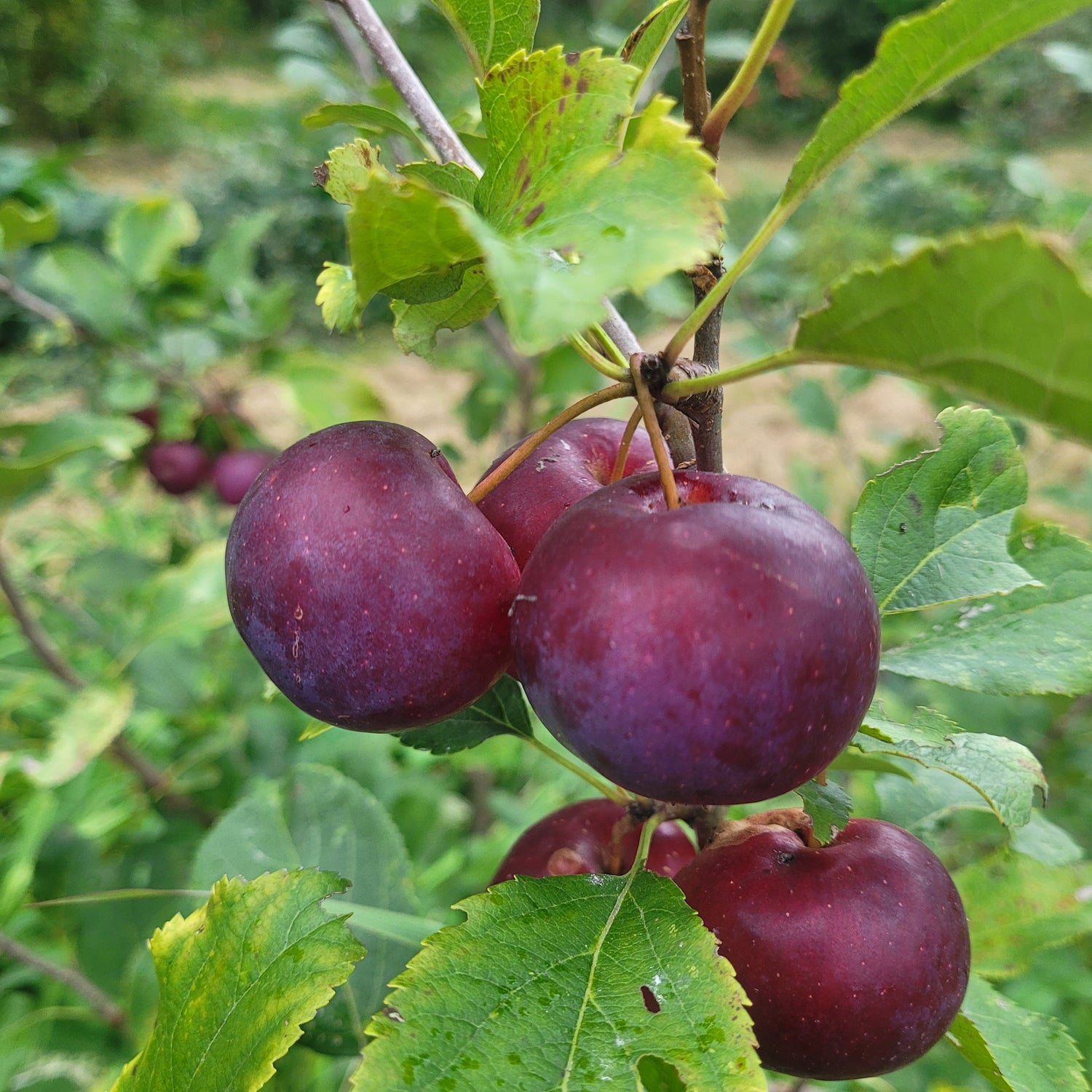
History: The exact origins of Hyslop are unclear but it was discovered sometime in the early 1800s around Boston by the Hyslop family who helped develop the area. This apple was popular for over a century but in recent years has fallen into obscurity.
Why We Grow It: Although definitely not recommended for fresh eating, Hyslop crabapples have a sub-acid, astringent flavour and are great in cider blends. They are also known as being one of the best apples for jellies. The tree is quite attractive with blue tinged blossoms in the spring and brilliant red/purple fruit in the fall.
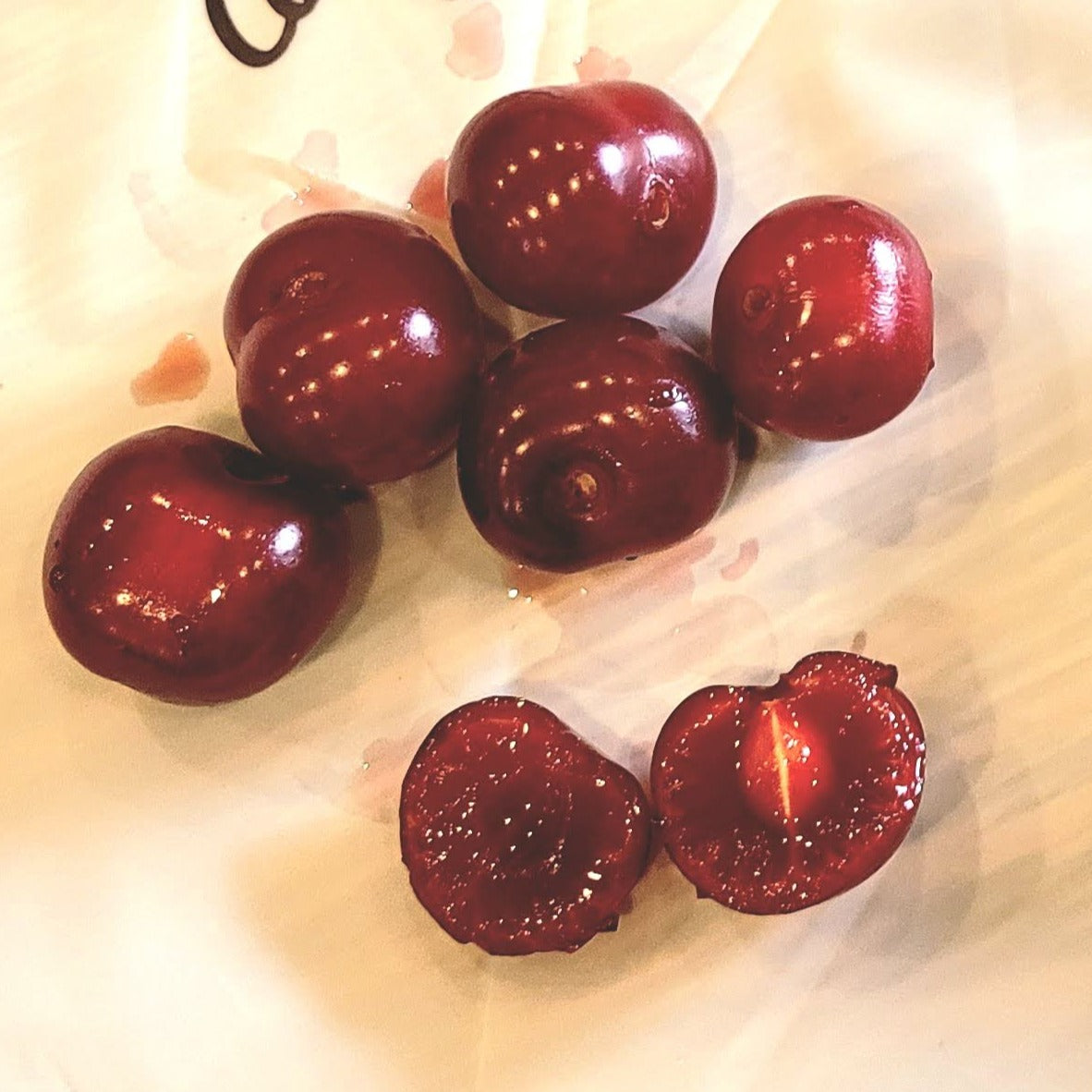
History: Carmine Jewel is one of several dwarf sour cherry shrubs developed at the University of Saskatchewan in an effort to combine cold hardiness, dwarf stature, and good quality fruit into one variety. This effort was started by Dr. Kerr (for whom Kerr applecrabs were named) in the 1940s and Carmine Jewel was released in 1999. It is considered the hardiest of the cherries they developed. Carmine Jewel cherries are now the most commonly grown commercial cherries in the prairies.
Why We Grow It: Carmine Jewel is a notably productive cultivar with small cherries that have a high flesh-to-pit ratio. Thanks to their firm flesh, they are a preferred variety for freezing and drying. The shrub is on the smaller size, reaching 6-7ft once mature, great for anyone who loves cherries but doesn't have a lot of space!


History: Shamrock apples were raised by K. Lapins at the Pacific Agri-Food Research Centre in 1970 and released in 1986.
Why We Grow It: This is a Canadian apple for all you Granny Smith lovers! Although a bit sweeter than Granny Smith, Shamrock apples still have some tartness and are hardy enough to survive in Canadian climates. They even resemble Granny Smith with their light green skin and white flesh.
Photos courtesy of Shannon McInnis!
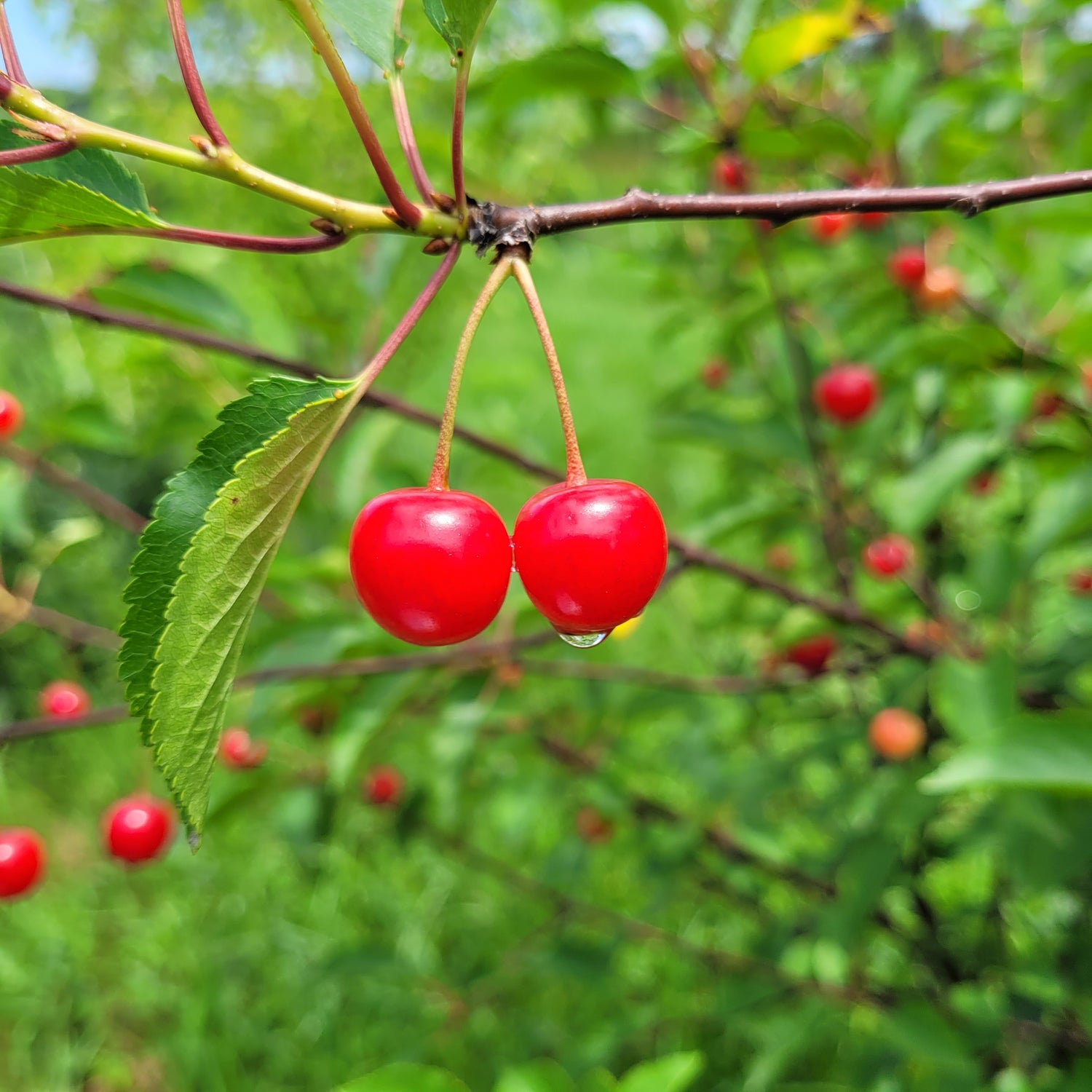

History: North Star sour cherries were created by the University of Minnesota as part of an effort to create varieties that are more resistant to the cold. They were introduced in 1950 and recently have been growing in popularity as a backyard variety.
Why We Grow It: North Star is a sour cherry with bright red skin which darkens as it ripens. It has an excellent flavour. The trees have a compact and weeping growth habit, making them an attractive addition to your yard whether in bloom in spring or bearing fruit in the summer. They are also self-pollinating, very hardy, and resistant to leaf spot and brown rot.
Check our our blog post with some tasty sour cherry recipes!


History: Little is known about Muscadet de Dieppe aside from the fact it originated near the port of Dieppe in Normandy, France. It was commonly grown in the area since 1750 at least.
Why We Grow It: Considering this French cider variety was popular in an area known for its cider, this makes for a classic cider apple. The juice is bittersweet and aromatic which is excellent in both single-variety ciders and cider blends.
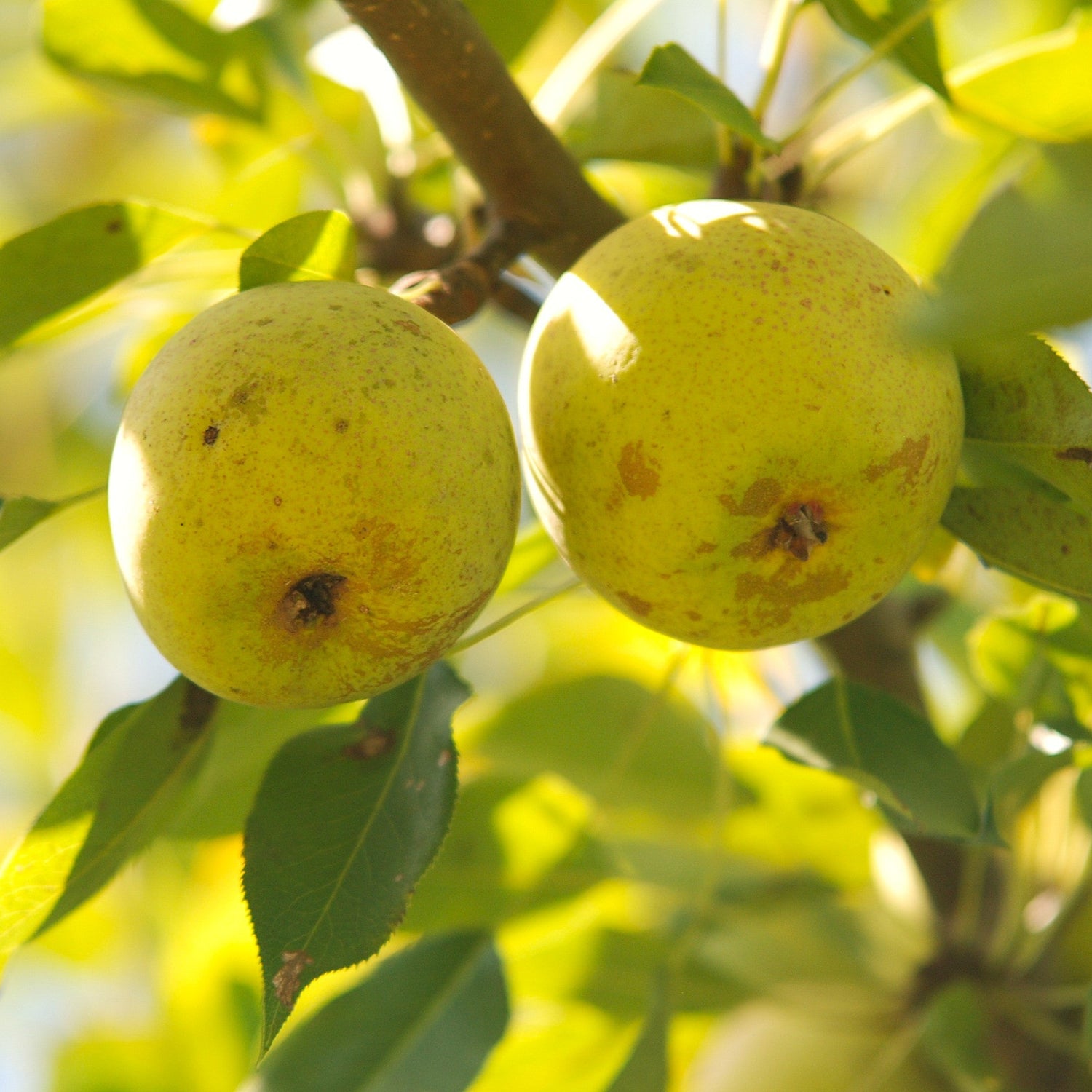
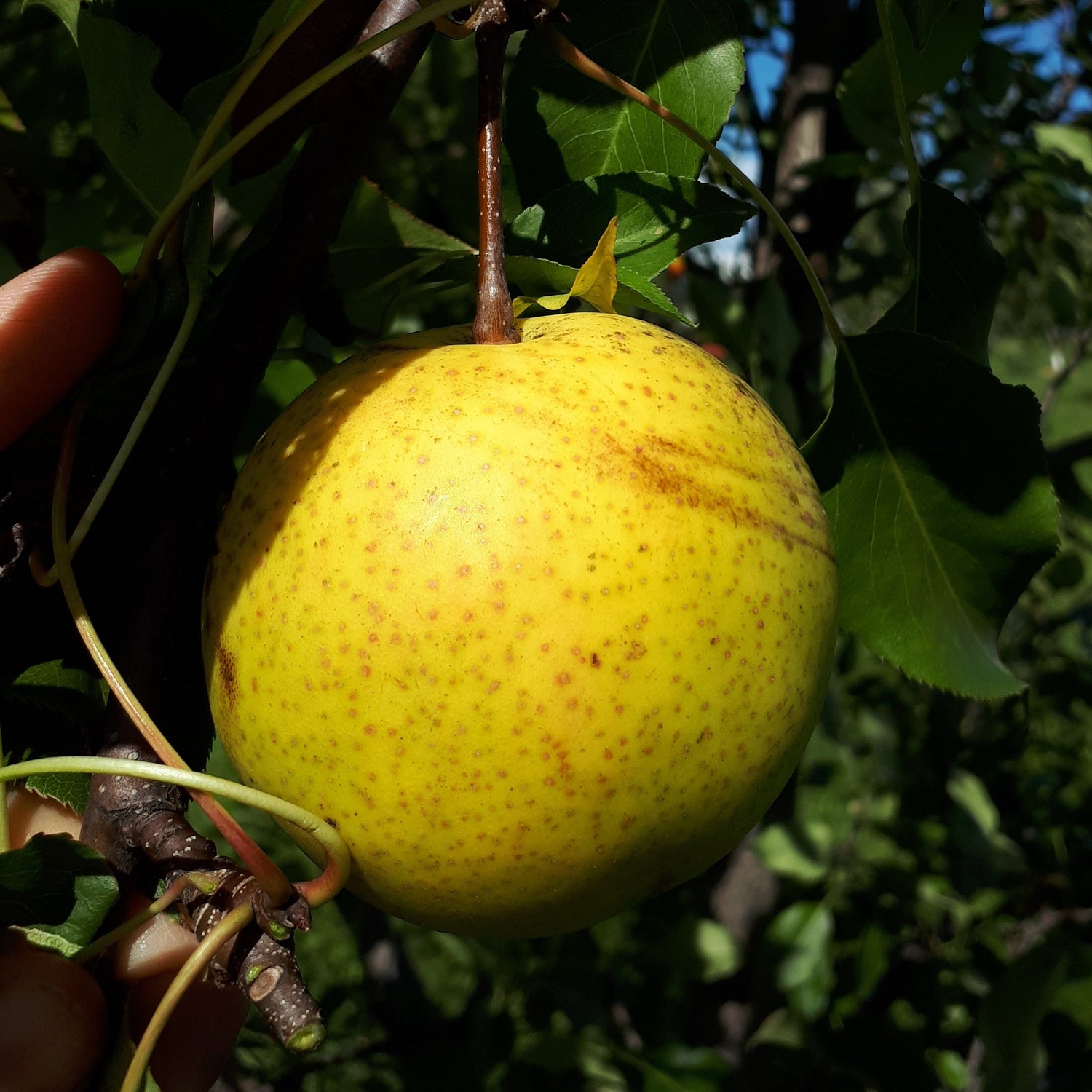
History: Ping Guo Li (translated from Mandarin as 'apple pear') was developed by Jilin Sheng in China and likely named for its round, apple-like shape. While its exact age is unknown, this pear is considered to be an old variety.
Why We Grow It: This Asian pear is nothing but sweet and juicy melting goodness! Its sweet flavour and soft texture are comparable to that of a European pear. So far it has performed very well in our test orchard and displays good cold-hardiness.

History: The St. Lawrence apple was discovered in the Montreal area as a seedling of a Snow apple, the most popular variety in Quebec at the time. By 1835, these apples were commonly grown in the area where they were popular for fresh eating and cooking but have since faded into obscurity.
Why We Grow It: Although less popular now, these apples are still good for eating and baking. The boldly striped red skin also makes the fruit very attractive. The tree bears good crops each year and is relatively hardy.
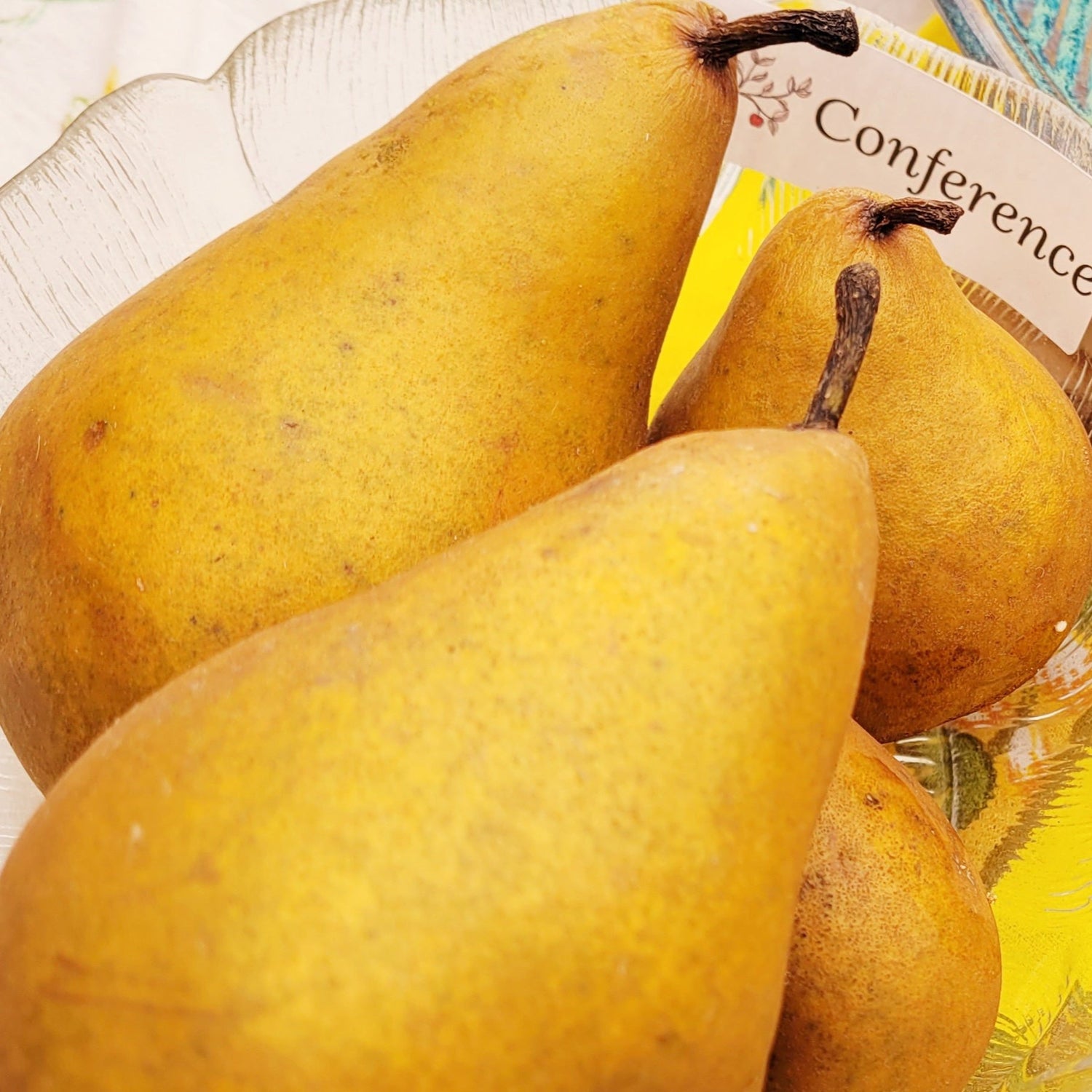
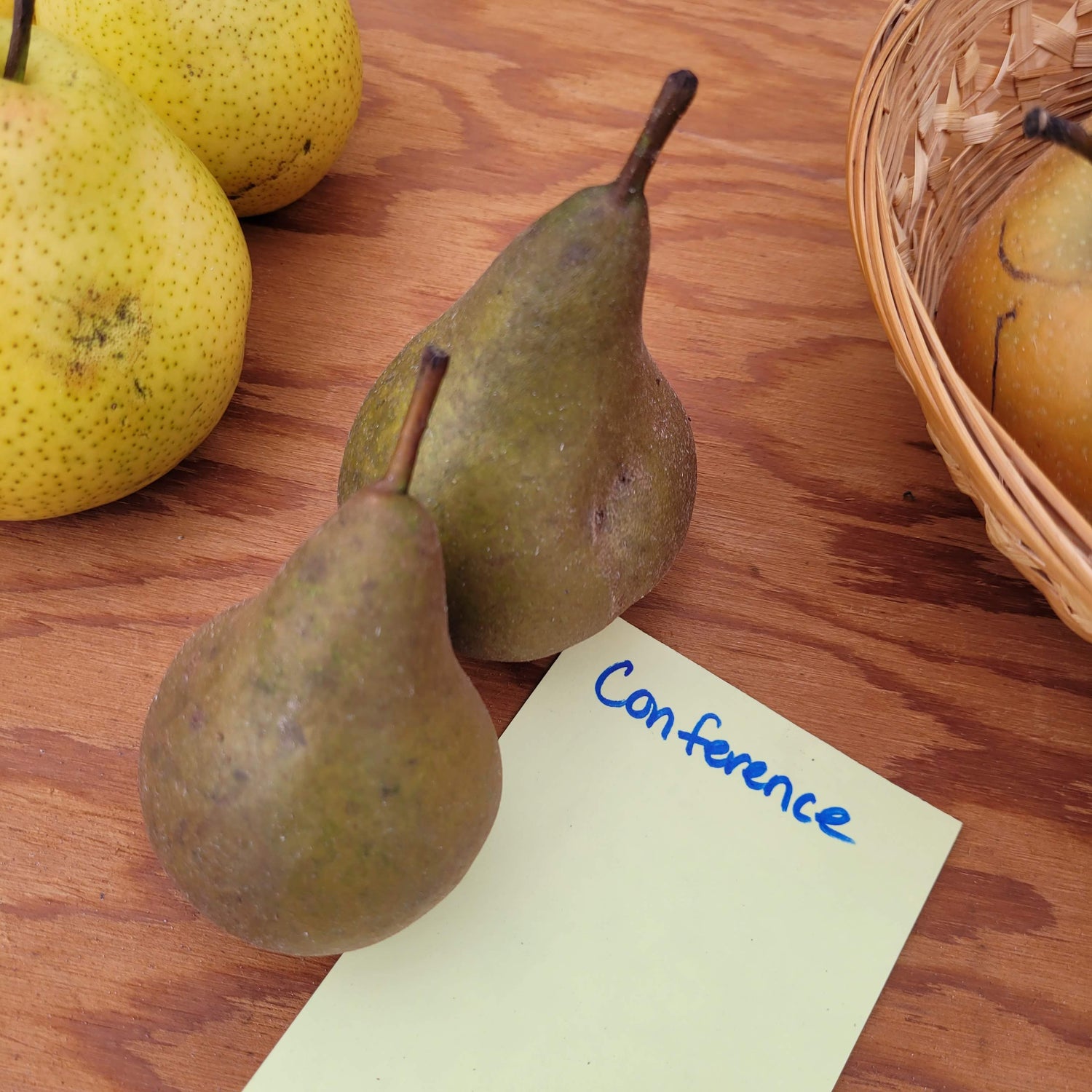
History: Conference pears were found growing in the nursery of Thomas Francis River in the UK in 1884. The following year, he introduced the variety at the National British Pear Conference in London where it won fist place, solidifying its reputation and earning its name. Conference pears continue to be grown in several European countries today where it remains very popular.
Why We Grow It: This old variety has remained popular due to its pleasant and sweet flavour. It can be eaten right off the tree and will keep for a couple months. The fruit itself has an elongated neck, giving it a rather odd appearance.


History: Bulmer's Norman was imported from Normandy, France to England in the early 1900s by the cider making company H.P. Bulmer. This variety didn't even have a name when it arrived but quickly grew in popularity for use in making cider. This apple has since fallen out of the limelight and is primarily used for grafting other varieties onto its sturdy trunk.
Why We Grow It: Although less popular these days, this variety boasts vigorous growth, decent disease resistance, and a surprising tolerance for cold. This conical, green apple produces a bittersweet juice and is high in tannins.
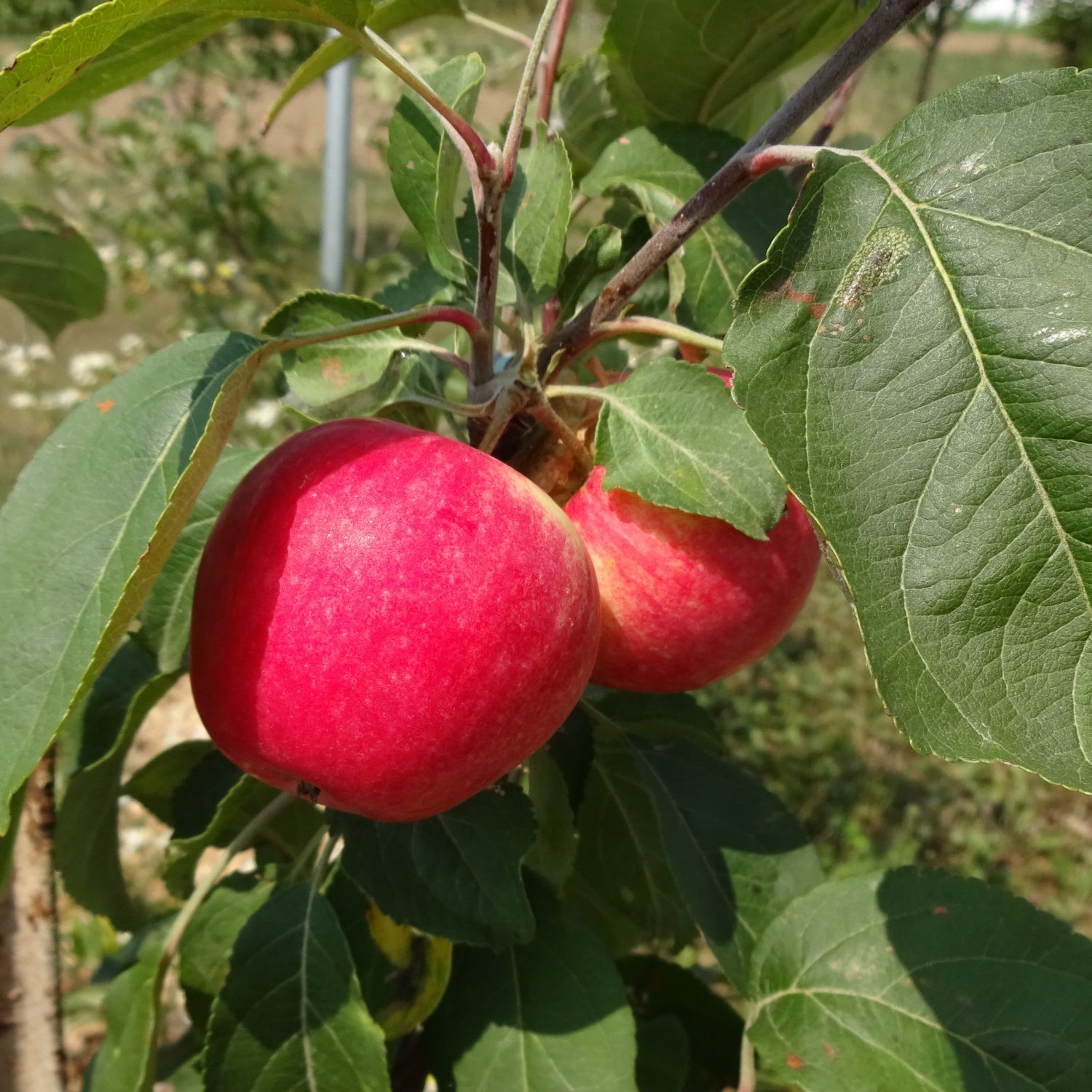
History: Norland apples were created by Dr. C.R. Ure and introduced in 1979 by the Agriculture Canada Research Station in Morden, Manitoba.
Why We Grow It: Since this variety was bred to survive in the prairies, it is very cold hardy. The fruit is medium-sized with sweet flesh that is good for fresh eating or applesauce. It bears heavy annual crops starting early in the life of the tree. A home orchardist in Dacre, ON described the fruit as "lovely with no pest damage; juicy, creamy-fleshed with excellent flavour."
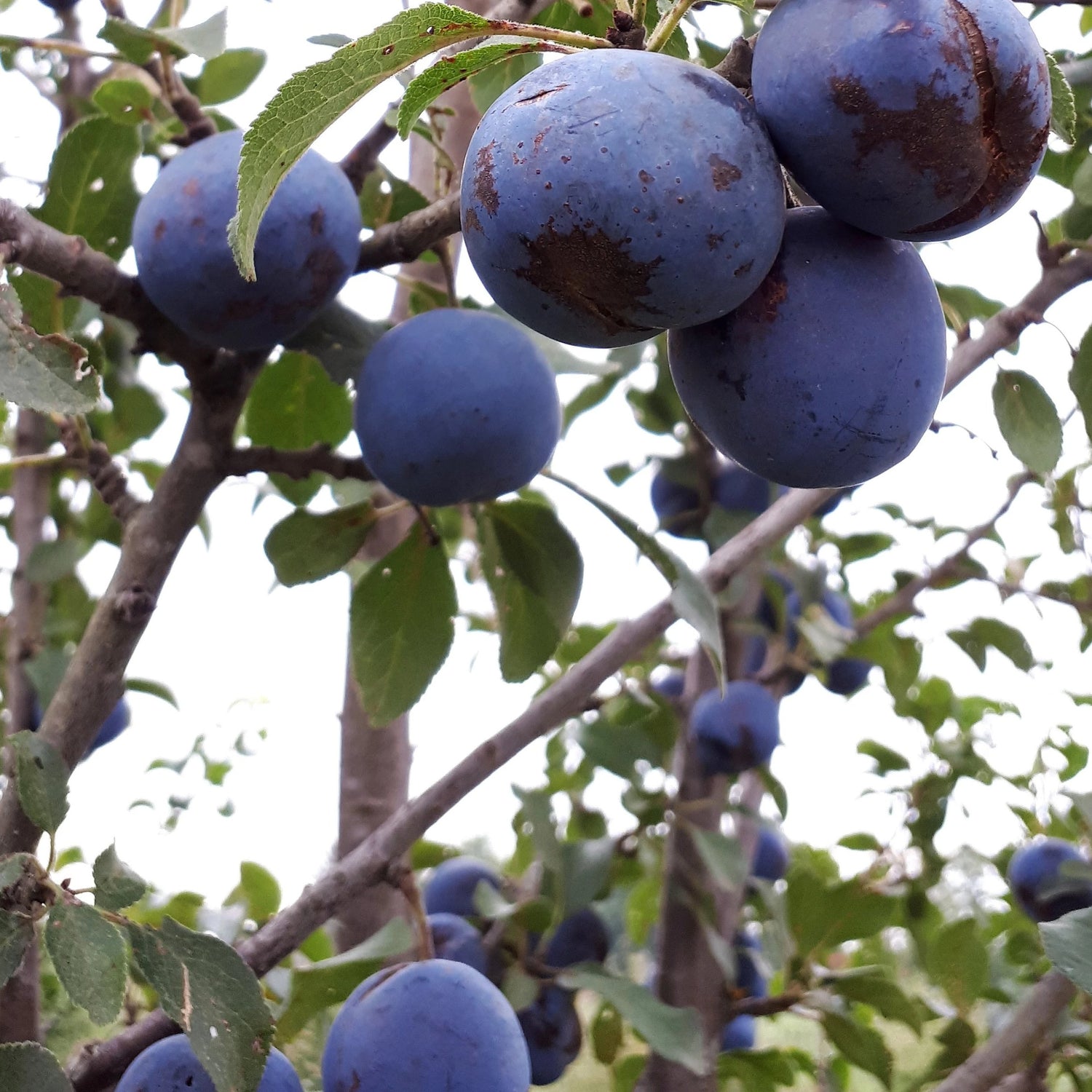
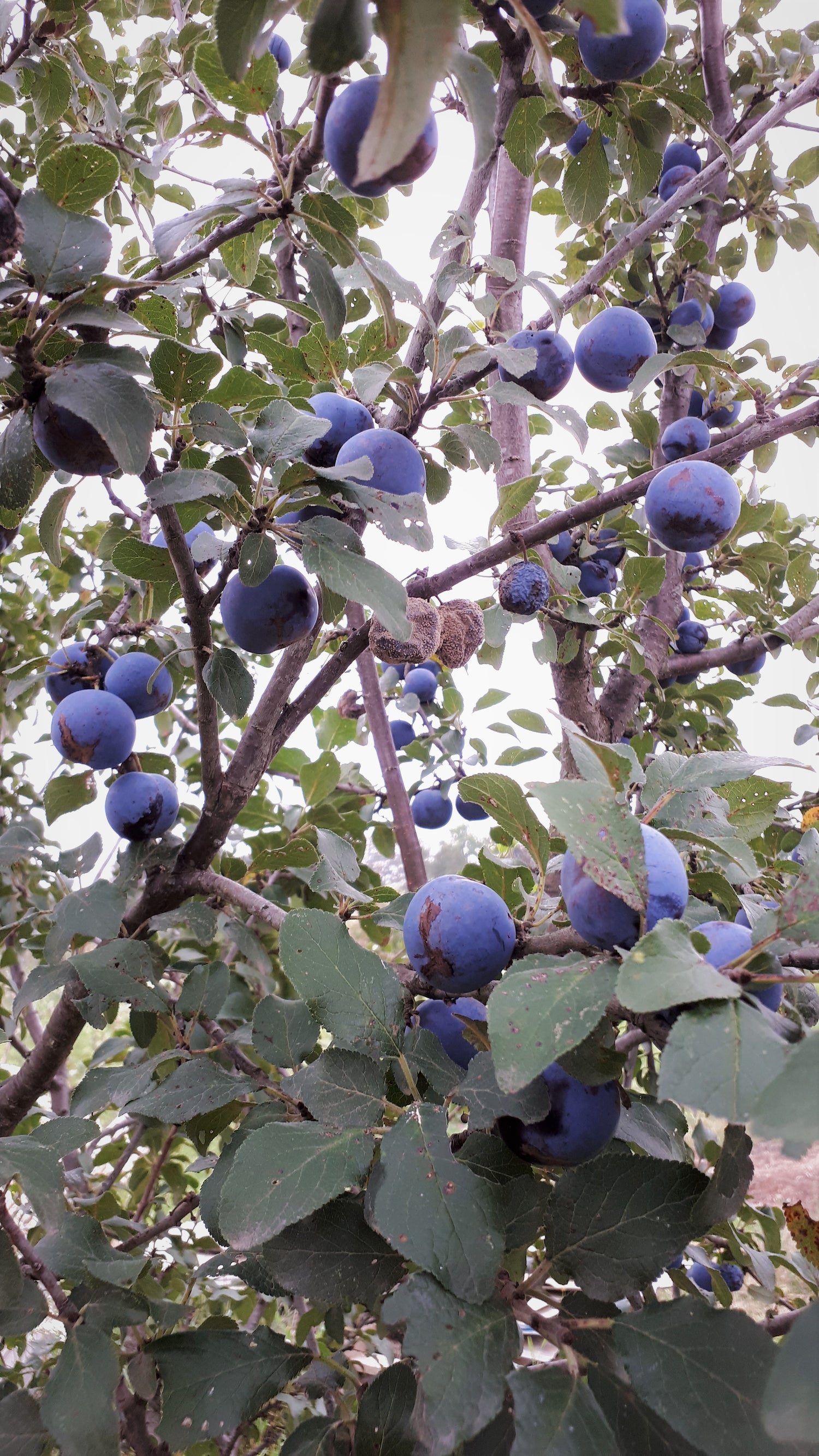
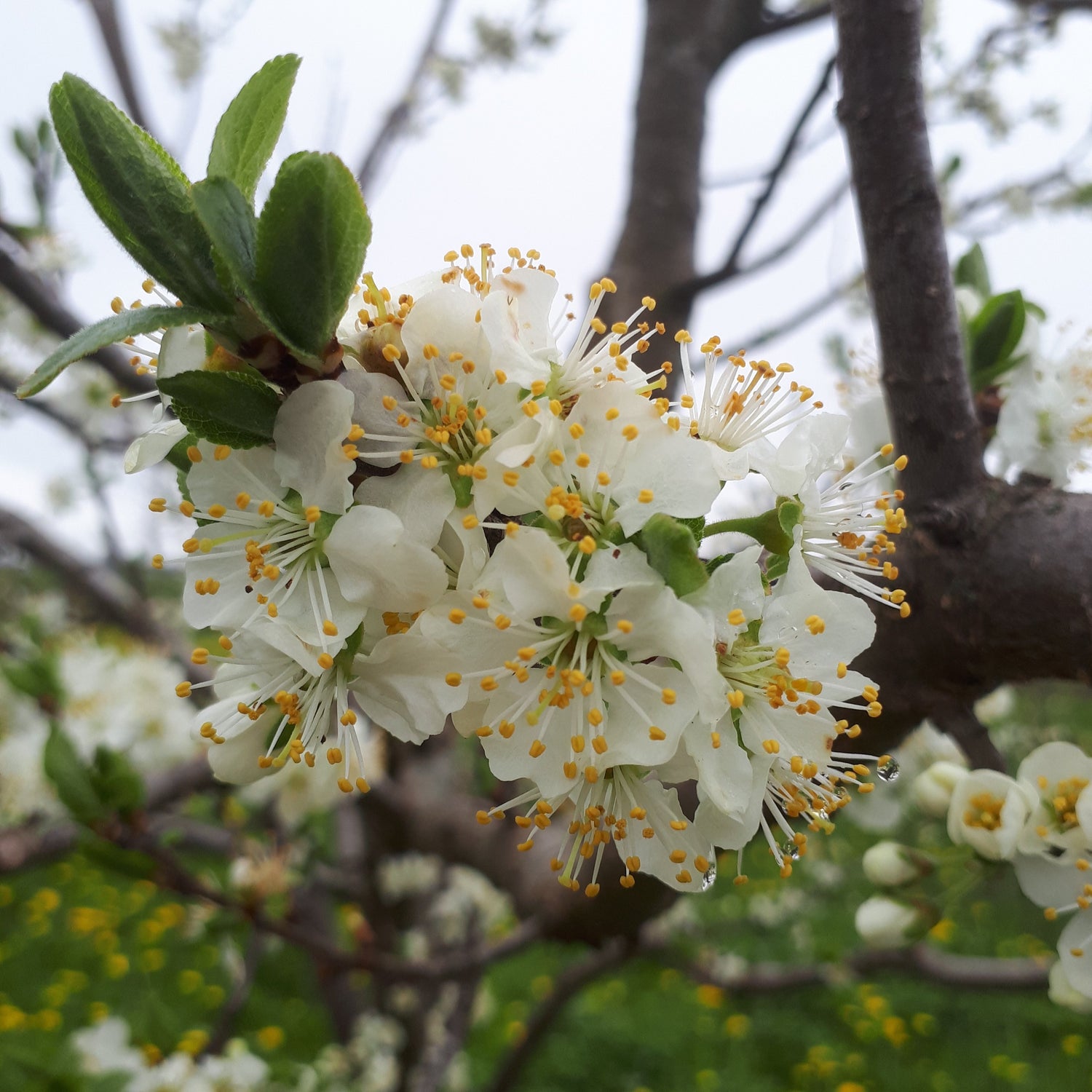
History: This European plum has contentious origins, making it difficult to determine if it is very old or extremely old. The name 'damson' stems from the Latin 'damascenum' meaning 'plum of Damascus.' As the name implies, some believe this plum may have come from the ancient city of Damascus and was brought to England by the Romans, making this plum thousands of years old. While this theory has been highly contested, there is ample evidence to prove that Damson plums have been grown in England for hundreds of years. It was introduced to the US in 1800 and was a a favourite due to its adaptability to its new home.
Why We Grow It: Damson produces small round clingstone fruit with a deep blue/purple skin and spicy yellow flesh. They are sweet enough to eat but also have some astringency which makes them less palatable than other varieties. However, they are superb for cooking, preserving, and making jam. The tree blooms late which allows it to avoid early frosts and this variety is self-fertile.

History: Bonne Louise de Jersey originated from Avranches in Normandy, France in the 1780s. It was originally known as Bonne Louise d'Avranches until it was taken to Jersey in the Channel Islands. As it grew in popularity in the UK, it was given the name Bonne Louise de Jersey instead.
Why We Grow It: Bonne Louise de Jersey is a rich, buttery pear that produces a juicy, red blushed fruit. In spring, this pear is also adorned with a profusion of notably attractive blossoms, adding a nice touch to any landscape. Although the tree is less vigorous than some other pears, this makes it suitable for potting and espalier.


History: Also known as Albemarle Pippin. This apple was discovered as a chance seedling (aka a pippin) in the village of Newtown in New York sometime in the late 1600s or early 1700s. It was commonly grown in colonial America, even earning praise from both George Washington and Thomas Jefferson. In 1838, the American minister to Great Britain gave some to Queen Victoria who loved the apples so much she removed tariffs on the variety and they became an important export until the tariffs were reinstated during WW2.
Why We Grow It: Newtown Pippin's popularity can be ascribed to its unique ‘rich pineapple flavour’ which it develops under optimum growing conditions. So far it has been performing well in our test orchard with good vigour and we have had no issues with diseases despite the tree's general susceptibility.