TEST july 30_Fruit Trees
297 products
Sort by:
297 products
297 products


History: Hendre Huffcap was first recorded in England either in 1923 or 1963. The confusion stems from whether it and another variety called Lumberskull, which was recorded first in 1923, are actually the same variety. Hendre Huffcap remains a popular perry pear in England.
Why We Grow It: This popular English perry pear has endured due to the high quality juice it produces which is great on its own and in blends. The tree bears heavily and reliably, although some thinning is recommended since the branches can break under the weight of its own crops.
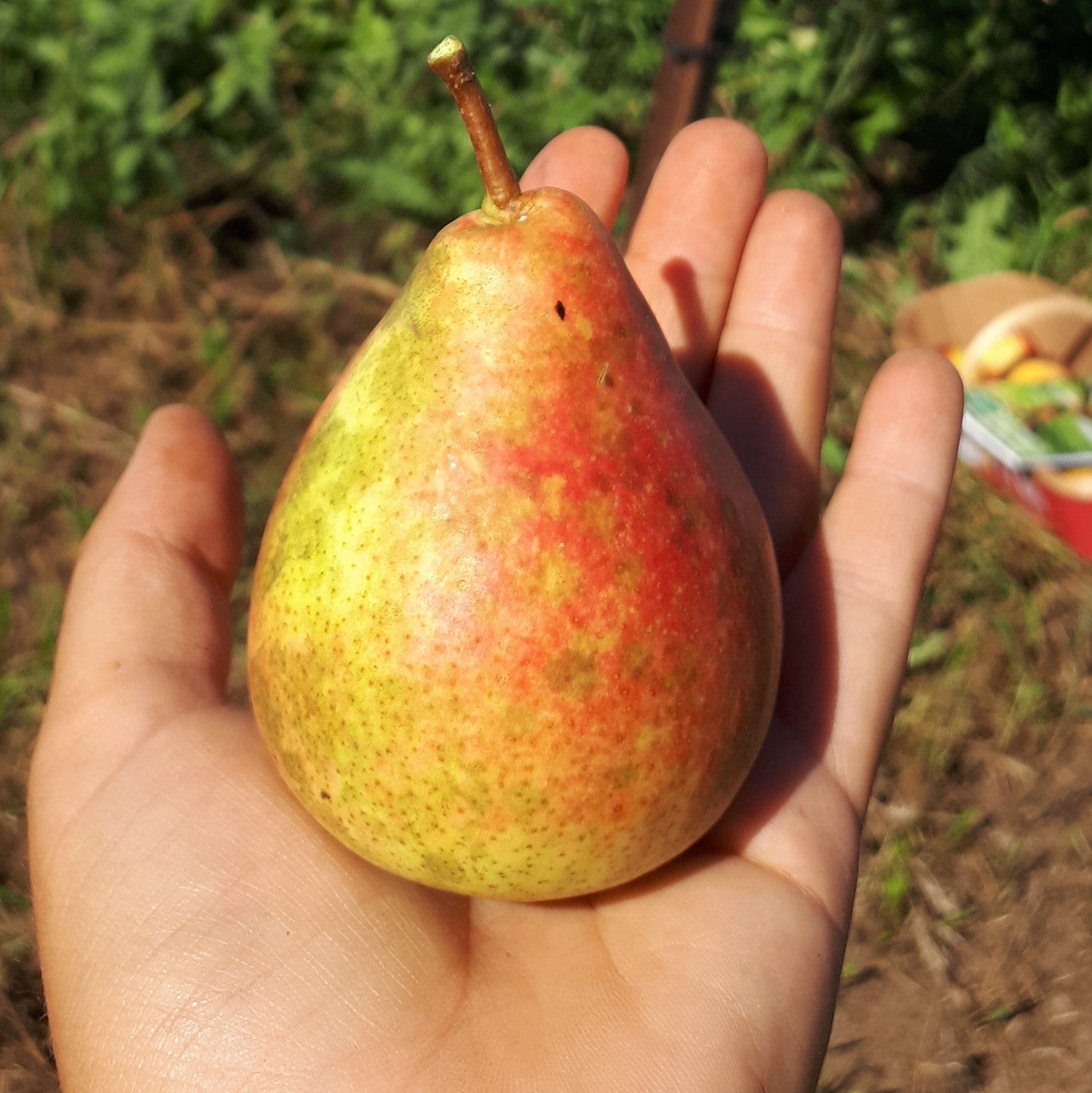
History: Butirra Precoce Morettini was bred as a cross between Coscia and Bartlett in 1956 by A. Morettini as part of an Italian breeding program. It is mainly grown in Italy, Spain, and Portugal.
Why We Grow It: This is an excellent early ripening pear that is sweet and juicy, with crunchy medium-fine grained flesh which mellows in storage to a delectable buttery texture. It has mild floral notes, with just the right amount of sweetness. The tree produces reliable and heavy crops of yellow fruit with a vibrant red flush that store decently well.


History: Prima is one the apples developed from the collaborative PRI disease-resistant breeding program run by Purdue University, Rutgers University, and the University of Illinois. It was introduced in 1958 but unfortunately is no longer fully scab resistant due to the fungus evolving to overcome the resistance since then.
Why We Grow It: Another great apple for organic production and excellent for the backyard or farmer’s market sales! This apple is sweet, juicy, and flavourful and boasts good disease resistance..
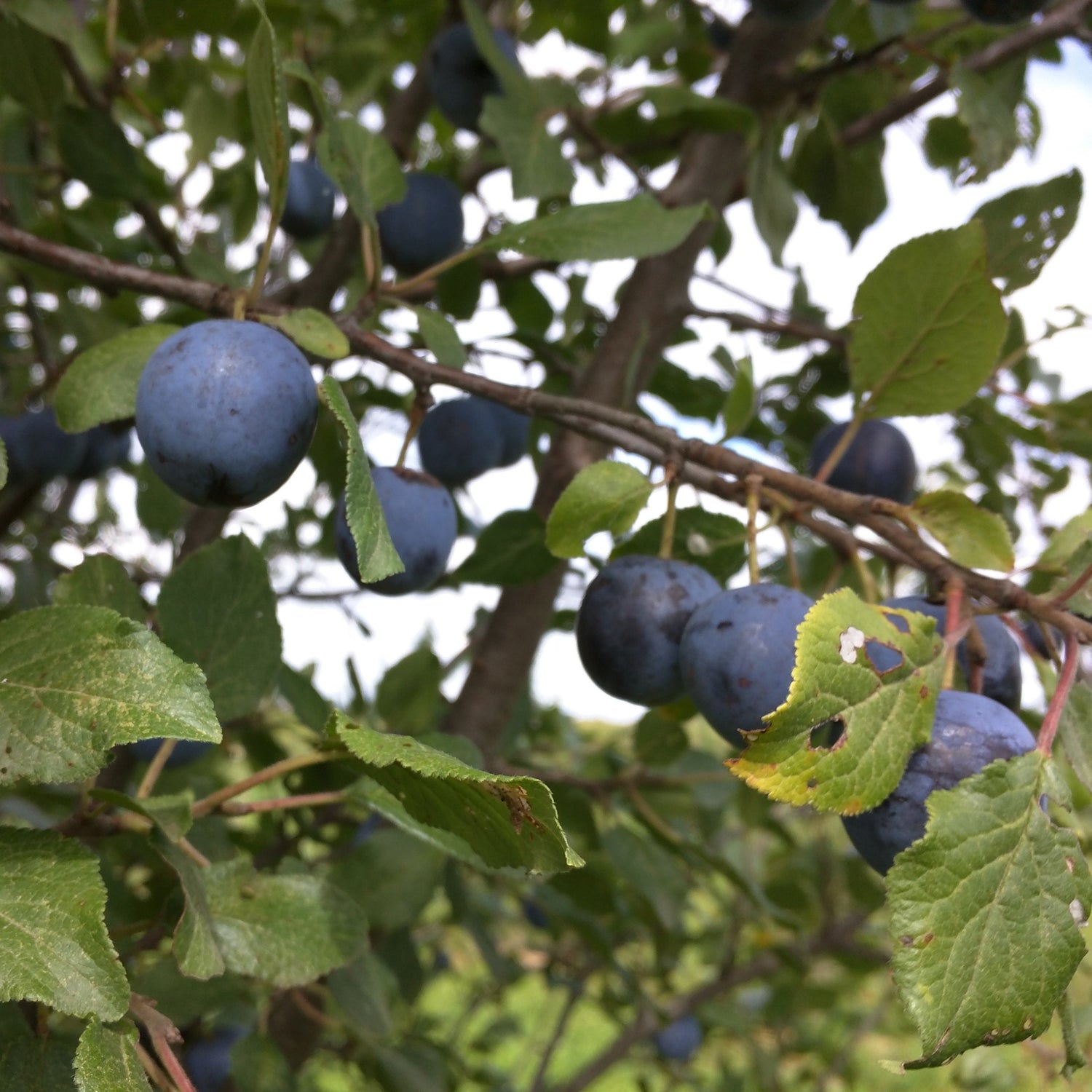
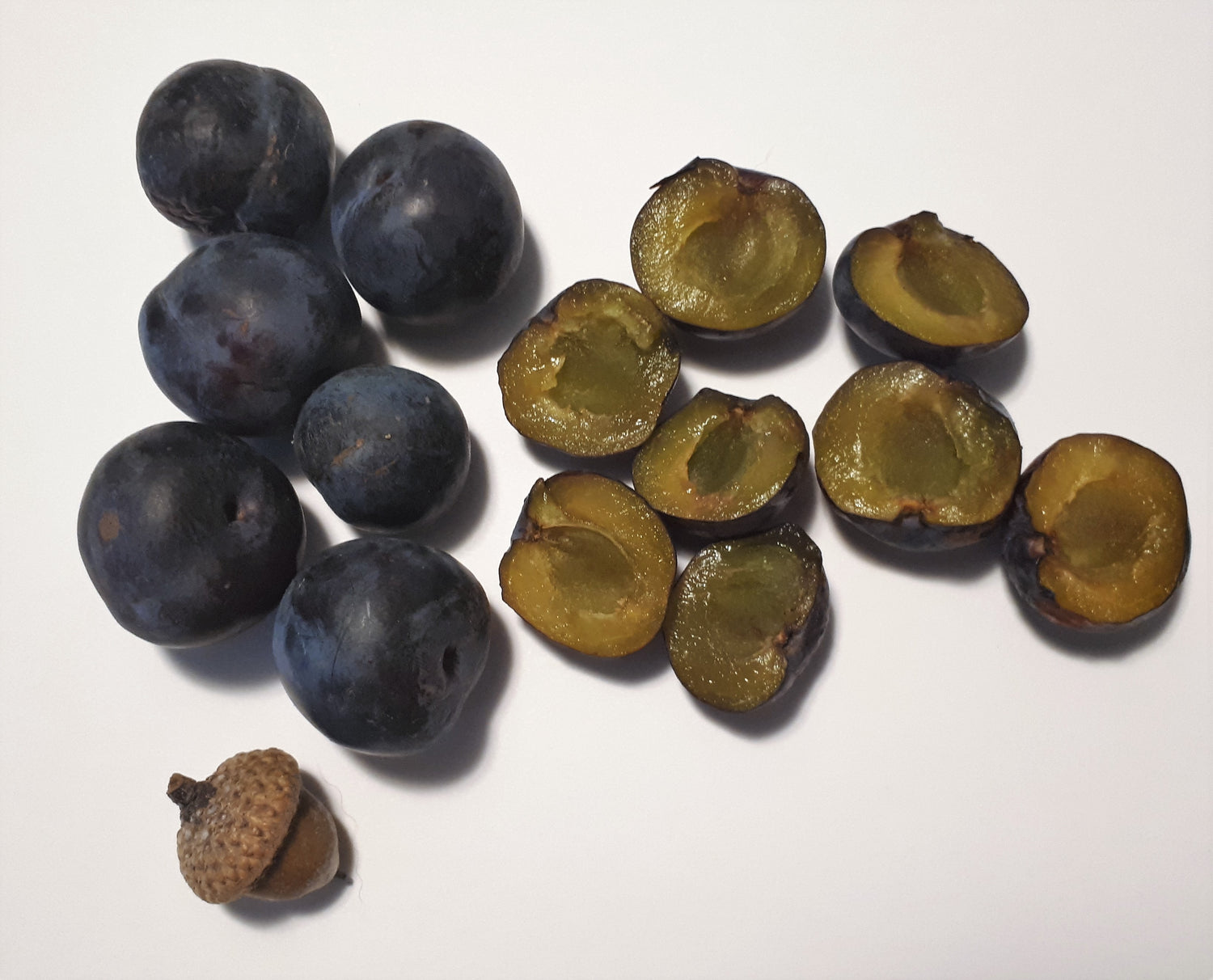
History: Little is known about this particular variety aside from that it's a Damson plum that originated in Sweden. 'Krikon' is the Swedish word for 'damson.'
Why We Grow It: Although its history is a bit of a mystery, we can certainly tell you that this is the best plum variety for very cold regions. It produces small round deep purple fruit that are good for cooking, preserving, and making jam. The flesh has a spicy, sweet flavour although some do not find it that great for fresh eating. Compared to regular Damson's Krikon Damson is a bit smaller, and more flavourful.
History: This is an old perry pear that has been known since the 1800s in Austria and Northern Switzerland. It was first recorded in 1854 and the name Gelbmostler means "yellow most pear."
Why We Grow It: Although the fruit doesn't keep well, it is prized for its high disease resistance, juiciness, and astringent flavour. The skin is greenish-yellow, speckled with russet spots. It has a sugar content of 10-11% by weight.

History: Chisel Jersey is believed to have originated in Martock, England in the 1800s. It spread little outside the immediate area for about a century but during the mid-1900s this apple became quite popular in commercial cider orchards. It has, however, lost some of that renown today despite being an excellent cider apple.
Why We Grow It: With small, green fruit featuring a striped red flush, this bittersweet cider apple is highly recommended in England as well as in Canada. It is high in tannins and sugars but low in malic acid and makes a great cider apple.
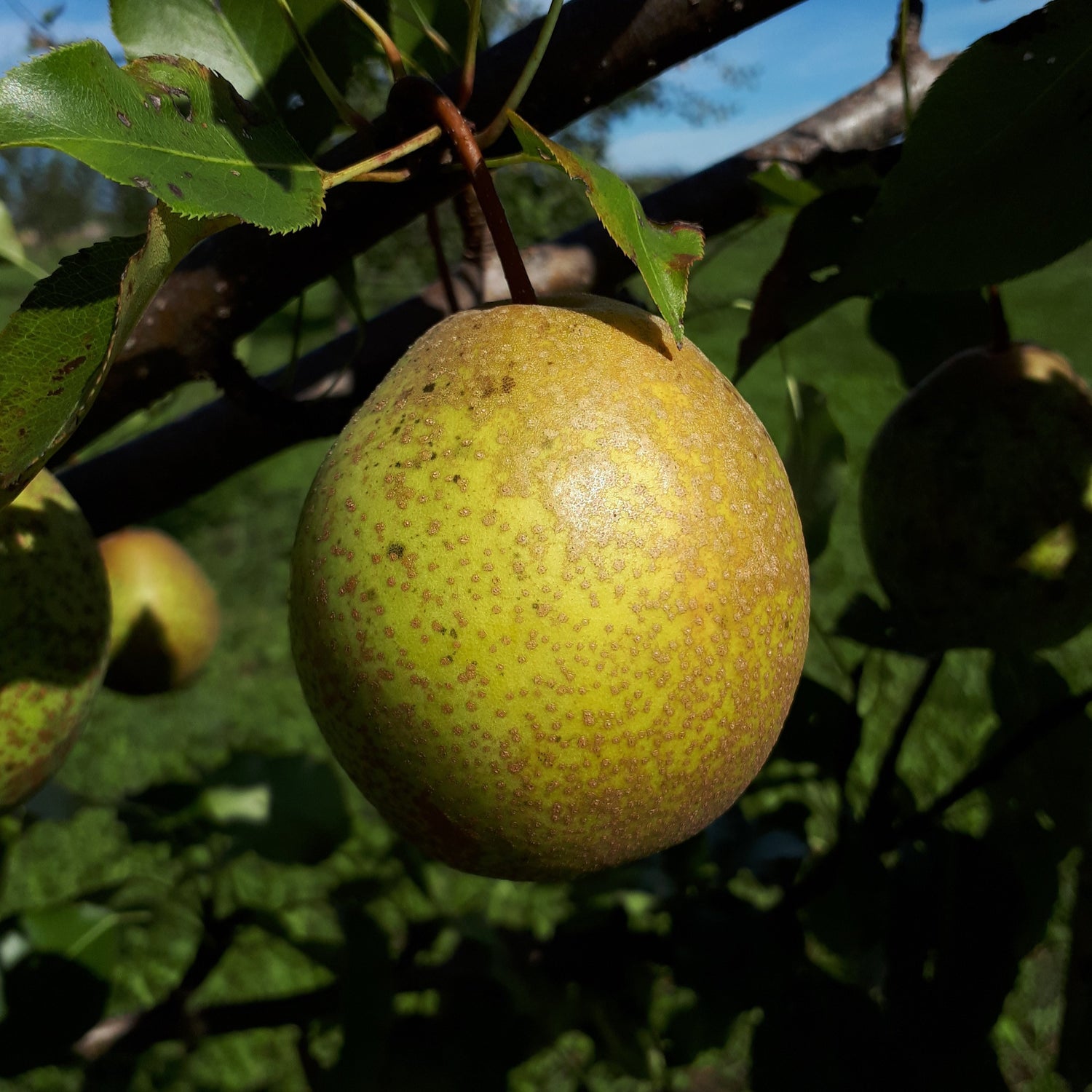
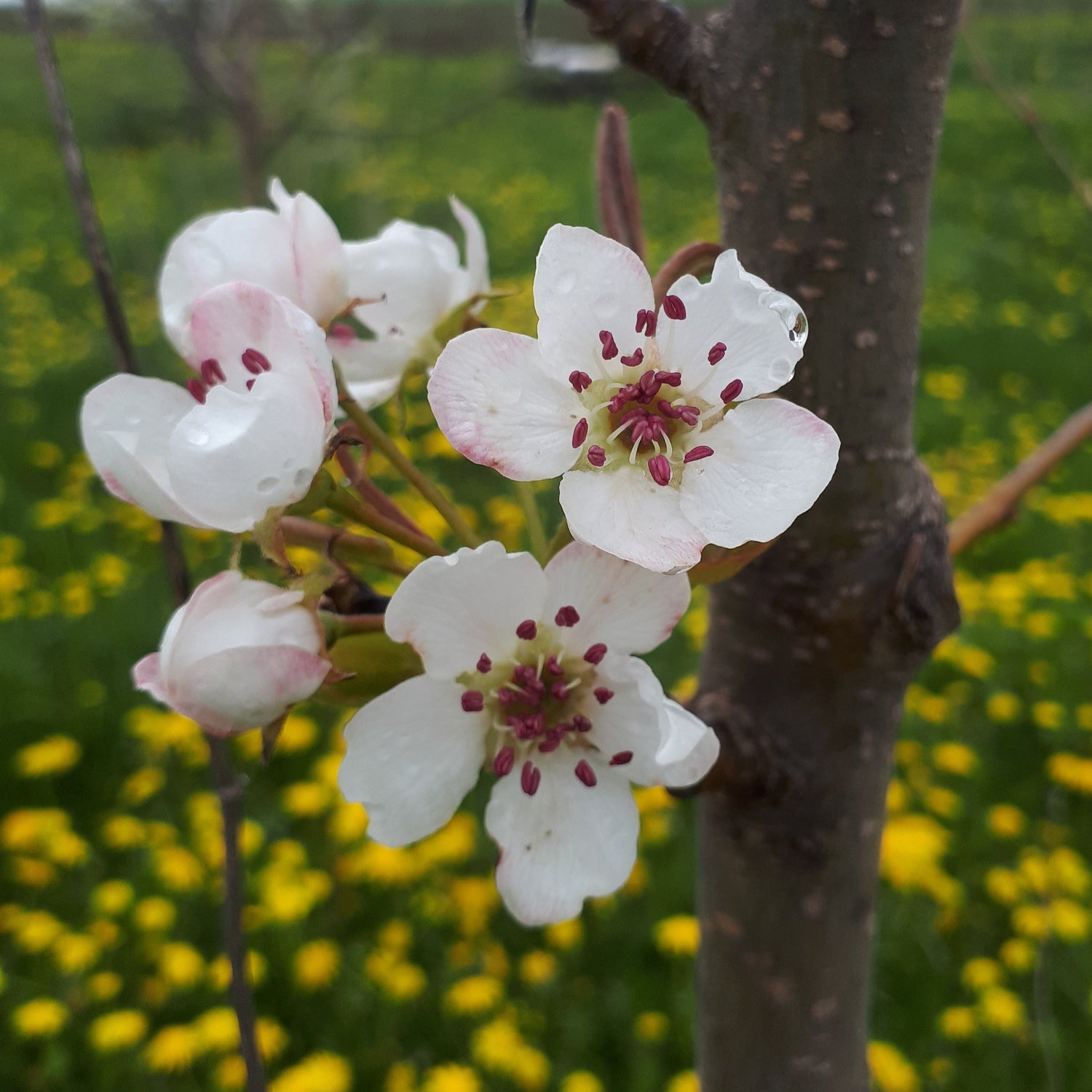
History: Mishirasu is an Asian pear from Japan.
Why We Grow It: Mishirasu is a popular variety since the fruit are extra large with a sweet, mild flavour and a nice crunch. The skin is brown and russeted, and the fruit have a roundish shape that is reminiscent of European pears.

History: Brown Snout was discovered on a farm in the UK in the mid-1800s. Its name comes from the brown russet around its calyx. H.P. Bulmer, a cider-making company, further propagated and spread this apple in the UK where it is still used today.
Why We Grow It: This medium bittersweet cider apple has small, uniquely coloured fruit that are sweet, slightly astringent, medium-tannin, and have low acidity.

History: Discovered in New Zealand by farmer O. Moran in 1952, Braeburn took the world by a storm, becoming one of the most popular commercial apples in the United States and parenting many modern cultivars such as Jazz and Sweetie.
Why We Grow It: Its winning sweet-tart flavour wrapped in an attractive orangey-red skin makes it an excellent fresh eating apple. It is firm and holds its shape well when cooked, and keeps about 4 months. This variety is fairly disease susceptible, meaning it is better for the experienced natural grower or conventional orchards. It is moderately vigorous and a heavy cropper.
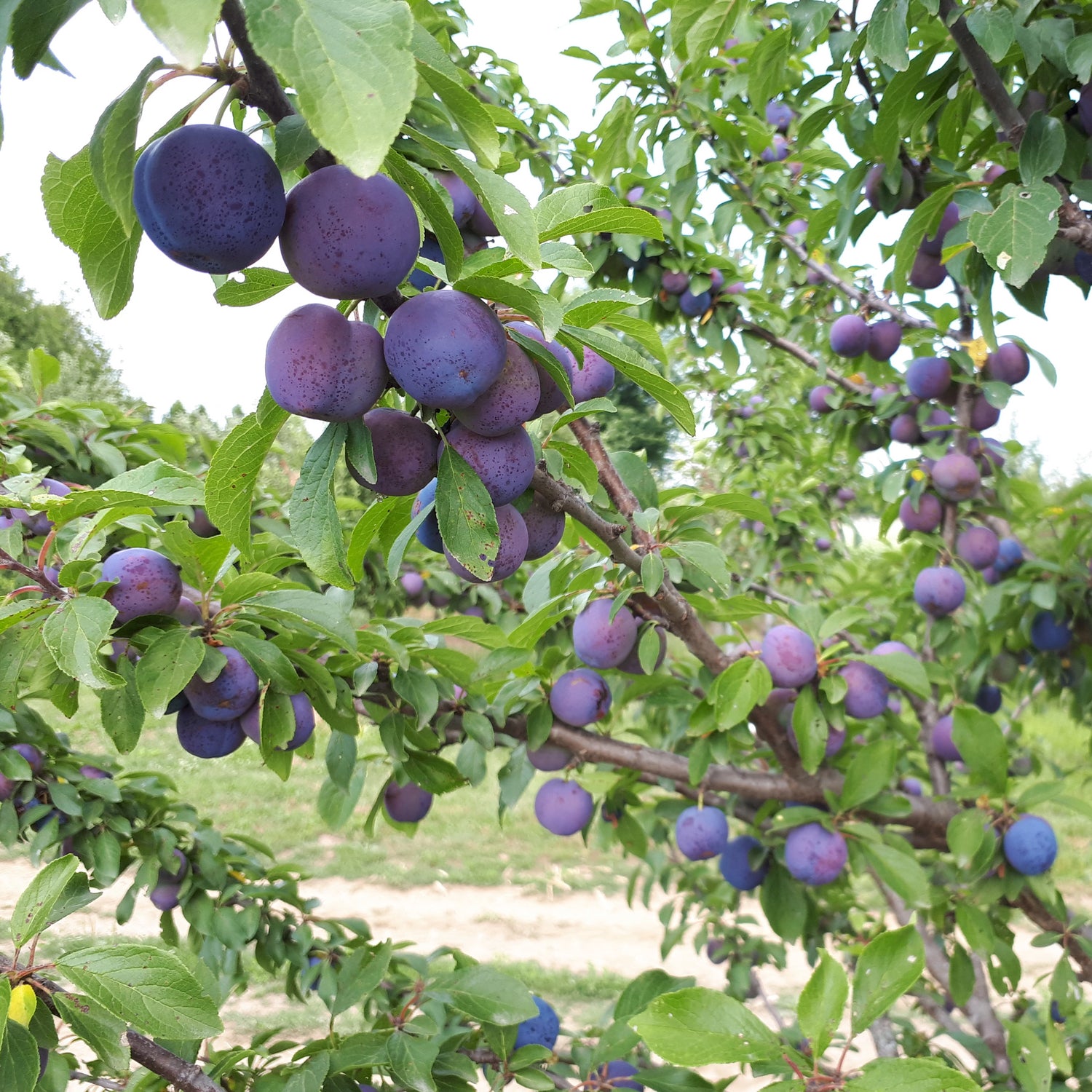
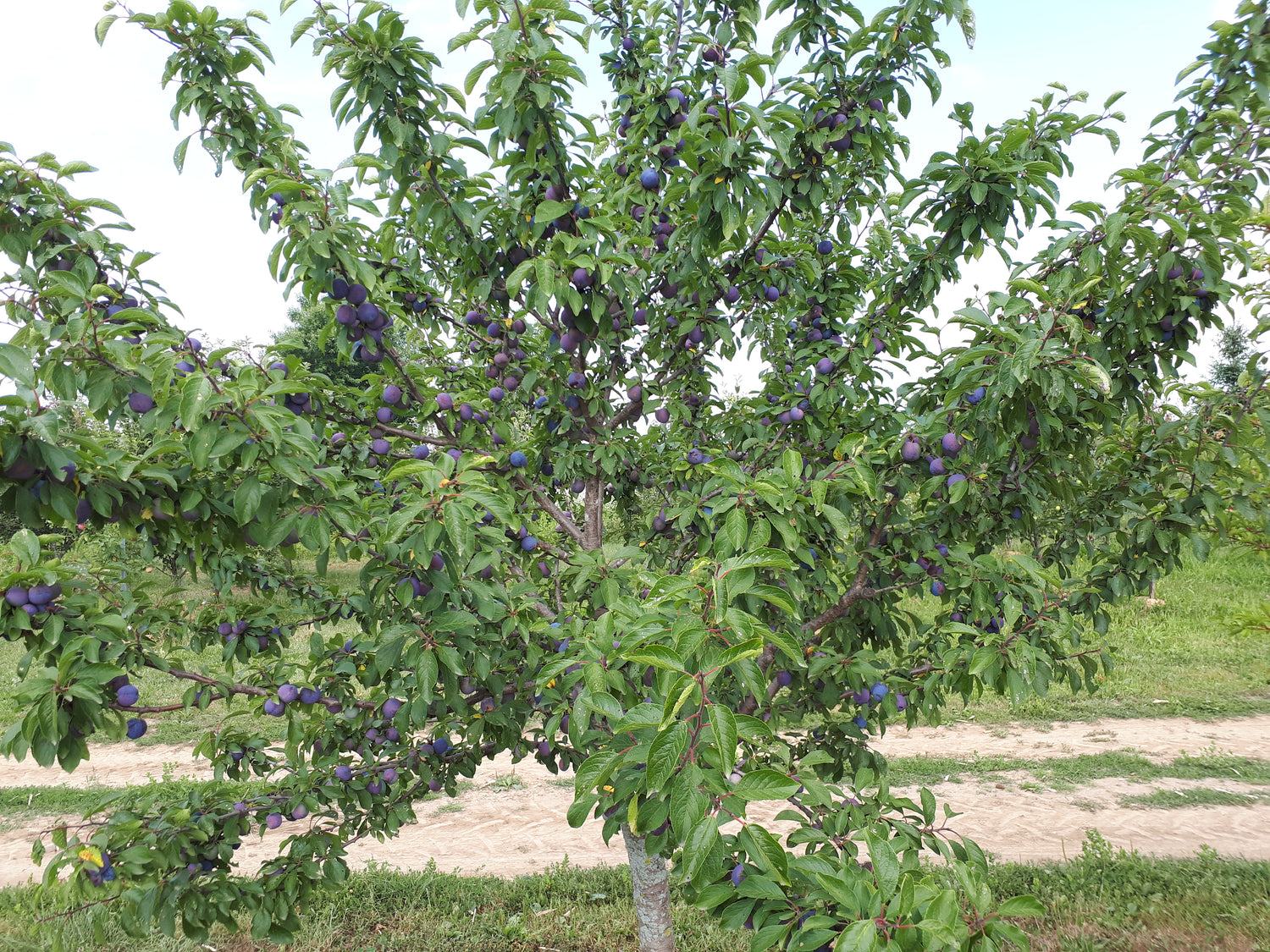
History: As the name suggests, Mount Royal plums originated in the Montreal area where it was either found by French colonizers as a wild chance seedling or intentionally bred by Jesuit missionaries and French colonizers using plums brought over from Europe. Either way, the result is a lovely plum hardy enough to survive Canadian winters.
Why We Grow It: This European plum is a Canadian classic of excellent flavour and good cold-hardiness. The fruit is blue-skinned with jammy yellow flesh that is both sweet and spicy. The tree produces heavy crops.

History: Michelin was raised by a French nurseryman in Normandy where it first bore fruit in 1872. It was named after pomologist Henri Michelin who studied cider varieties. In 1884 the Woolhope Field Naturalist's Club brought Michelin along with Medaille d'Or back to England where it became one of the most commonly planted cider varieties by the 1900s.
Why We Grow It: These juicy apples produce good quantities of bittersweet juice that make a nice addition to cider blends. The trees start producing fruit at a young age and have large, reliable crops. They have preformed well in recent studies at the Vineland Research station in our Canadian growing conditions.

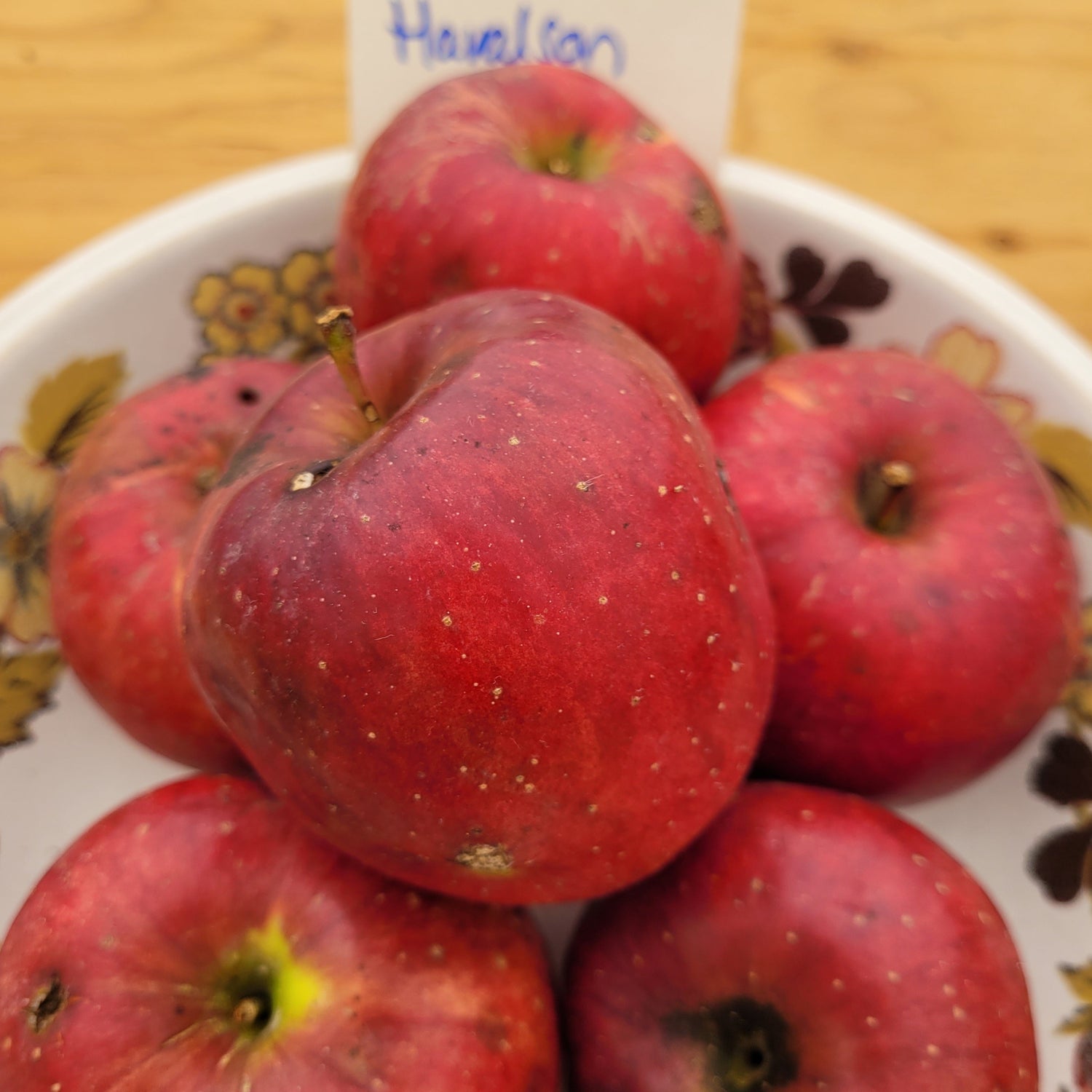
History: Haralson apples were developed at the University of Minnesota in 1922 and named after Charles Haralson who was superintendent of the university's fruit breeding farm. It is one of almost 30 apple varieties the university has developed in its breeding program since it began in 1888.
Why We Grow It: The skin of this variety is striped red with russet dots and the flesh is white, juicy, and of pleasant albeit mild flavour. Haralson boasts excellent cold hardiness and general disease resistance.


For the most up-to-date information see Claude Jolicoeur's website here!
History: Douce de Charlevoix (translated from French as 'sweet Charlevoix') was discovered by Claude Jolicoeur in a Quebecois village in the county of Charlevoix in the 1990s. He has since dubbed it a 'first class early cider apple' and in 2015 a cider blend using 40% Douce de Charlevoix won a bronze medal at the GLINTCAP competition.
Why We Grow It: This apple is quite attractive with orange-red stripes across green skin and makes an excellent juice with a notable bitter taste. In general this apple has medium tannins, some sweetness, and very little acidity. The tree itself is also quite vigorous and hardy.

History: A traditional French cider apple grown in Normandy, it is one of the varieties approved by the Appellation d'Origine Contrôlée for use in cider production in the region.
Why We Grow It: This apple produces an aromatic, bittersweet juice that can be used in cider and apple brandy. Although it only bears fruit every other year, it produces a considerable crop in a single season. It is also a great pollinator for other varieties due to its long blooming time.
History: Thorne was discovered in Gloucestershire, England, in 1670. It was originally grown for cooking and fresh eating but is now primarily used to make perry. It is still commonly grown for perry production in England today.
Why We Grow It: This is the most reliable of the English perry pears for Canadian growing. Although this pear can be eaten fresh, it packs an astringent punch and is best made into a good perry instead.
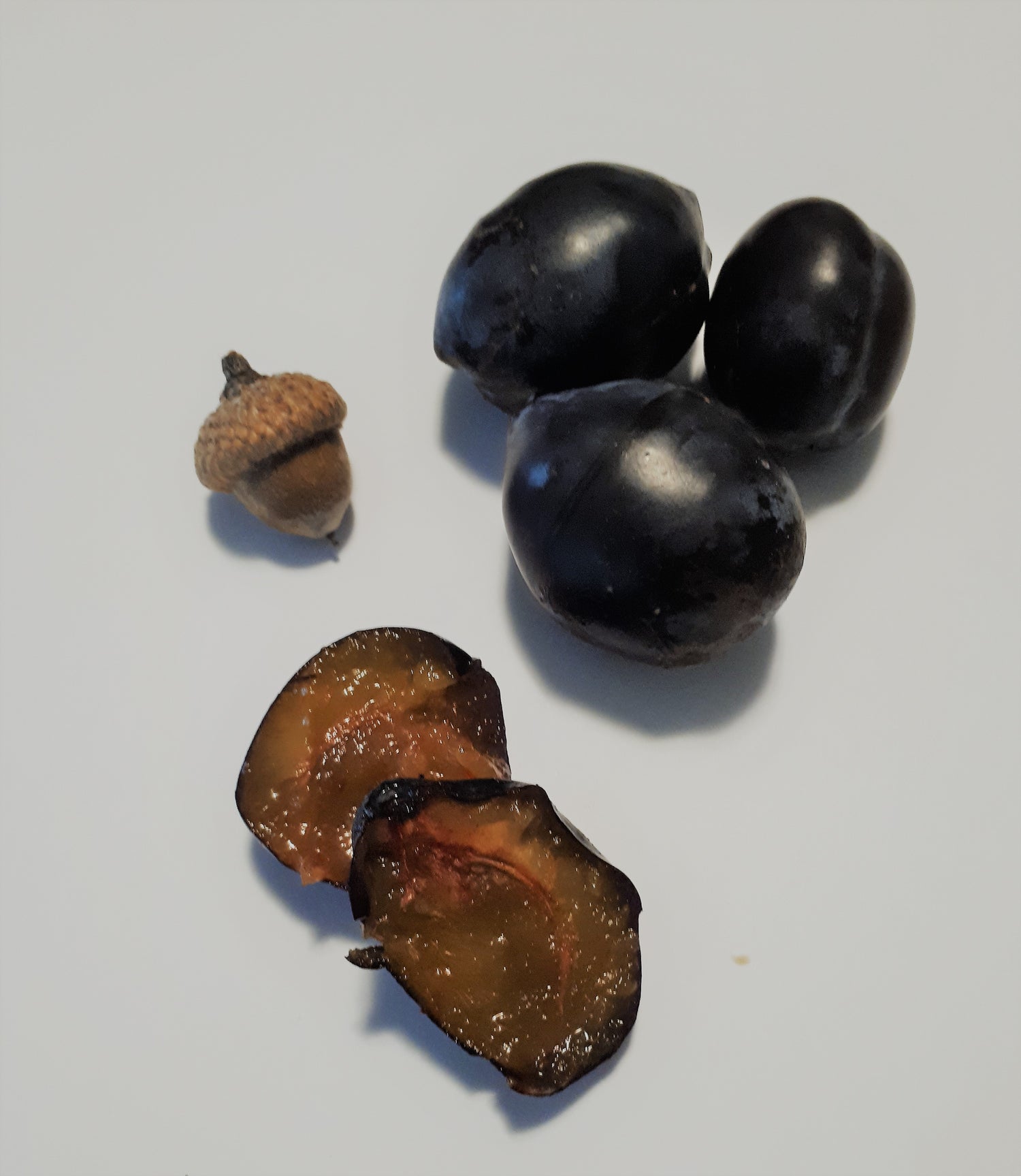
History: Stanley plum was developed in Geneva, New York by Cornell University and released in 1962.
Why We Grow It: This freestone European plum has deep purple skin and meaty, golden flesh, the standard for prunes. It has a sweet juicy flavour and is great for fresh eating, canning, and drying. The tree produces heavy, reliable crops.

History: Maiden's Blush was first described in New Jersey in 1817 although it had already been popular in Philadelphia markets for some time. It likely originated around New Jersey in the late 1700s. Maiden's Blush continued to be commonly grown in the southern US through the early 1800s.
Why We Grow It: Maiden's Blush's uniqueness is still worthy of attention today, its flavour being an interesting mix of citrus-like acidity and sweetness that stand out among other apples. While it is good for fresh eating, particularly after a few weeks off the tree, it is most well known for cooking, baking, and drying due to its non-browning qualities.

History: Antonovka was discovered near Kursk, Russia in 1826 and then developed by renowned Russian plant breeder I.V. Michurin. It was released in 1888 and became a popular variety in Russia, Poland, and Belarus due to its good flavour and quality for cooking/baking. In Russia, Antonovka was given the name 'The People's Apple' and in 2008 a monument to it was unveiled in Kursk. Although this hardy variety is less popular outside of its homeland, it has been commonly used as rootstock due to its ability to grow a strong, deep root system that makes it hardier and more drought tolerant.
Why We Grow It: This tree produces a refreshing, juicy, tart yellow apple that cooks down well. It is also quite cold hardy which is a great feature in our Canadian environment.

History: Elstar apples were developed in the Netherlands in the 1950s and are a cross between Golden Delicious and Ingrid Marie. This excellent combination has created what is considered one of the best Golden Delicious offspring. Fittingly, it has since become quite popular in continental Europe. Despite being introduced to the US in 1972, it has not attained the same level of popularity in North America.
Why We Grow It: Elstar is a flavourful variety, fine for fresh eating or sauce with its crisp, juicy flesh; very little acidity. The skin is distinctive, sporting a orangey-red marbled appearance.

History: The exact origin of Ellis Bitter is unknown but it is believed to have originated on the farm of a Mr. Ellis in the 1800s in England. It was planted commercially, particularly by growers under contract with the cider-making company H.P. Bulmer. Unlike some older cider varieties, Ellis Bitter still remains relatively common today.
Why We Grow It: Ellis Bitter is an old English cider apple, with good disease resistance, vigour, and production. This variety produces a high quality medium-bittersweet juice with soft, astringent tannins that are suited for blends. It is notable for its early ripening time compared to many cider apples, and therefore adds nicely to an orchard to extend the season. This cultivar has produced very well in the Ontario climate according to trials at the Vineland Research Station.

History: This English cider apple originated in and was named after Rodney Stoke, a small village in Somerset, England. It was discovered around 1920 and has been popular in England since.
Why We Grow It: Stoke Red produces a great bittersharp juice that is well-regarded for cider making. As an added bonus, it is a heavy cropper and resistant to scab.

History: Sweet Coppin originated in Devon, England, in the early 1700s. It was grow on a relatively large scale in the 1800s before its popularity waned, although it has since made a comeback and is grown around the world.
Why We Grow It: While this old English cider apple has a very good but mild flavour that is suitable for fresh eating, it is most well known for its cider qualities. It produces a full sweet cider of vintage quality
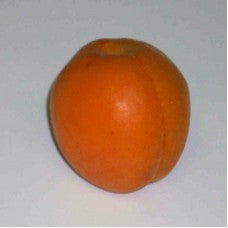
History: Velvaglo was one of several varieties developed in Vineland, Ontario, in an effort to create apricots that could survive in our southern Ontario climate.
Why We Grow It: Velvaglo produces high quality fruit with juicy, flavourful flesh. This variety is a good choice for farmer's markets or roadside sales as well as canning.
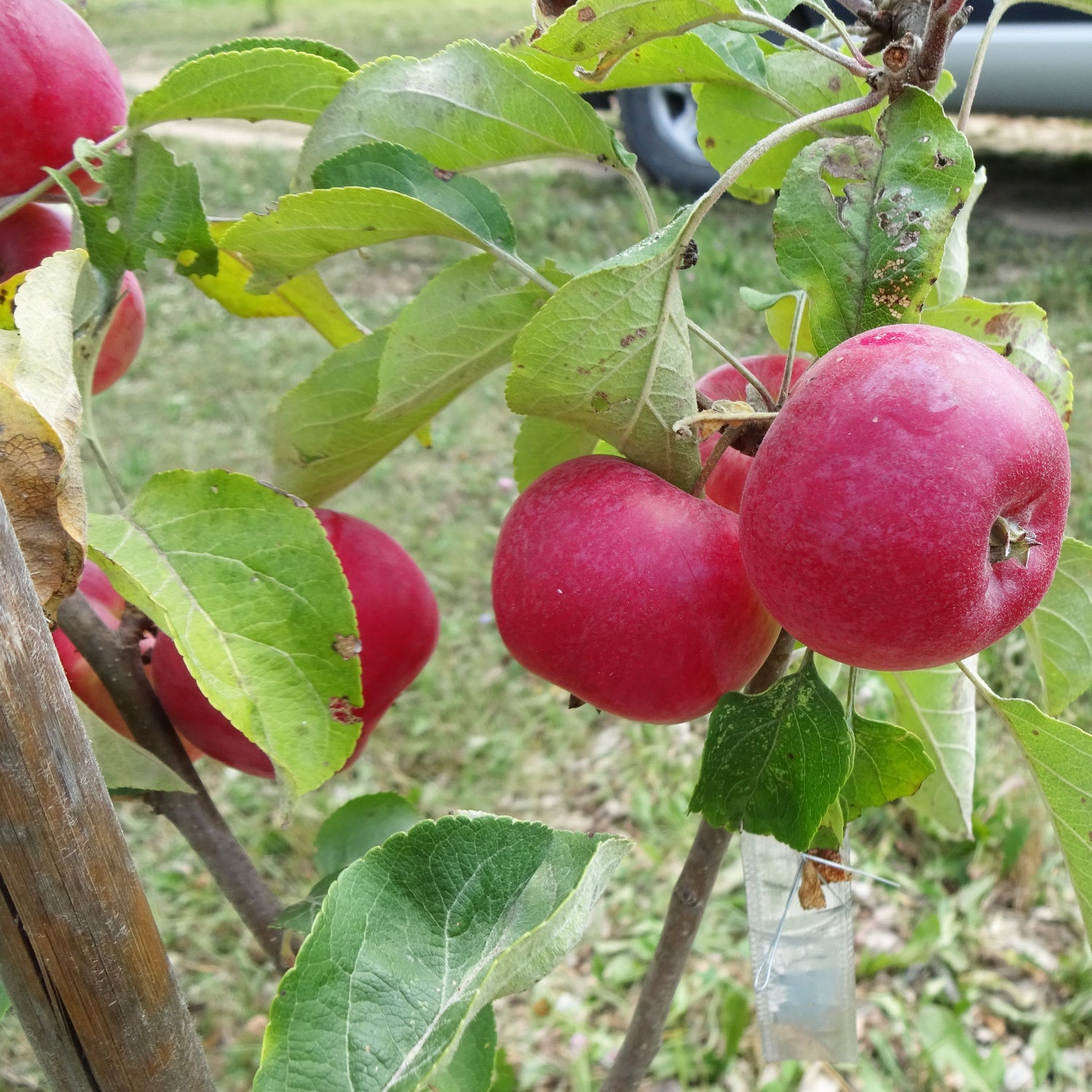
History: Parkland apples were variety created at the Morden Research and Development Centre in Manitoba and released in 1979. Like other varieties developed there, Parkland was designed to withstand the harsh prairie winters and is especially cold hardy. It has become the most commonly grown apple in Alaska after it was brought over in 1985 in an effort to determine which Canadian varieties could survive in the northern state.
Why We Grow It: Parkland is a very satisfying early season apple - sweet and crunchy. It's excellent snacking or applesauce although the fruit is small (about 2" diameter) with creamy flesh and red skin. The tree is quite hardy.


History: Gin pears were first recorded in England in 1886. It was said the perry made from this pear had a juniper flavour, hence the name 'Gin.' It it still quite popular in parts of England.
Why We Grow It: The small fruit of this pear are used chiefly for perry, producing a good quality juice of medium tannins and acidity. The harvested fruit can be kept up to a month until pressing.


History: Priscilla is the second apple variety developed through the collaborative PRI disease-resistant breeding program run by Purdue University, Rutgers University, and the University of Illinois. It was planted in 1962 and has a complex heritage that includes Starking Delicious, McIntosh, Golden Delicious, and Rome Beauty. It was introduced in 1972 and named 'Priscilla' after Priscilla Hovde, the wife of the seventh president of Purdue University as it happened to fit the 'pri' naming scheme for the varieties developed through the program.
Why We Grow It: Another successful introduction from the PRI breeding program, Priscilla boasts resistance to most common apple diseases including fireblight and scab. The fruit is also quite attractive with a deep red blush over yellow skin with a sweet and subacid flavour.
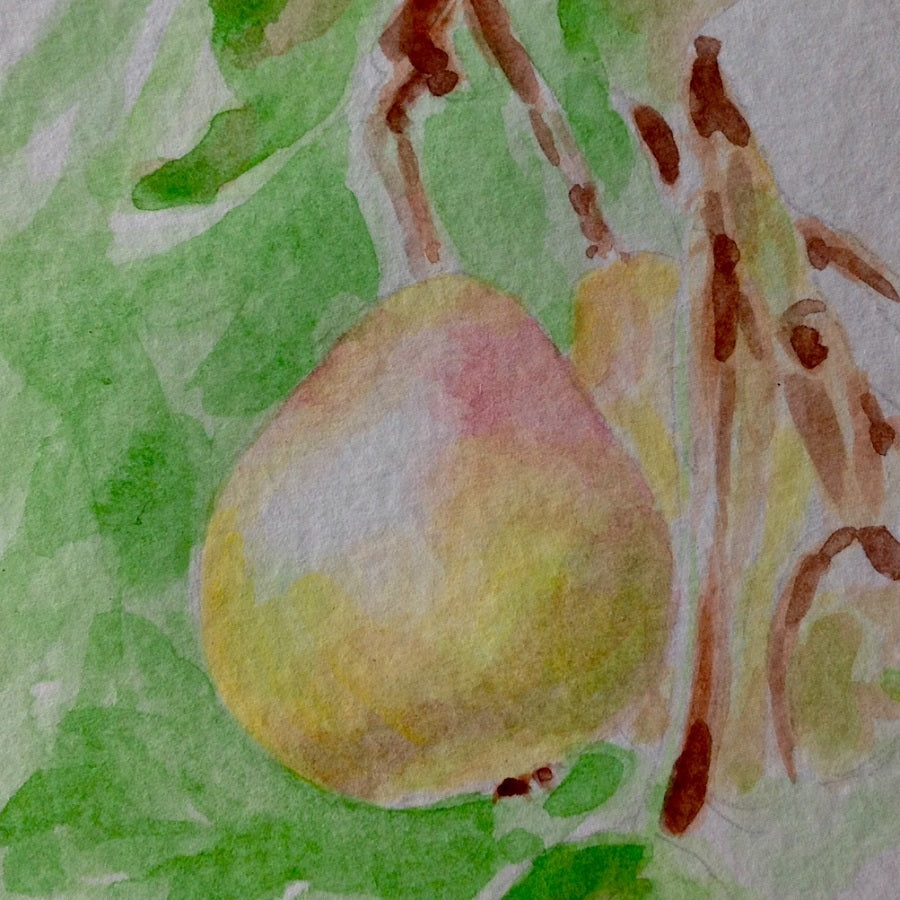
History: Winnal's Longdon was raised by a Mr. Winnall in the parish of Weston-under-Penyard, a village in England, around 1790. Despite being named after Winnall, Winnal's Longdon is now commonly spelled with only one 'L' after it was recorded incorrectly in the 1920s. This pear is still grown in small quantities in England.
Why We Grow It: This old English variety is a high quality perry pear. It was blended with Hendre Huffcap to form a perry which won the Long Ashton Perry competition many years in a row. The tree is known for its vigorous growth, heavy crops, and high resistance to scab which make it quite suitable for organic production.


History: Redfree is one of the apples developed under the collaborative PRI disease-resistant breeding program run by Purdue University, Rutgers University, and the University of Illinois. It was bred in 1966 and officially introduce to the public in 1980.
Why We Grow It: Redfree apples are great for fresh eating with a pleasant, mildly sweet flavour and softer yet crisp flesh. The fruit does not ripen all at once, allowing a longer eating season. As its name would suggest, it has decent resistance to several common apple diseases.

History: Little to nothing is known about this apple other than it likely originated in France.
Why We Grow It: Astringent! First apple to produce in Ken's orchard planted 2019 in Beaver Valley. Despite its foggy past, this apple has a lot of potential for a bright future. It produces an aromatic juice and is quite high in tannins, making it a great addition to cider blends. The tree is known for its vigorous growth (notable compared to cider trees in general), high productivity, and general disease resistance which make it definitely worth growing.
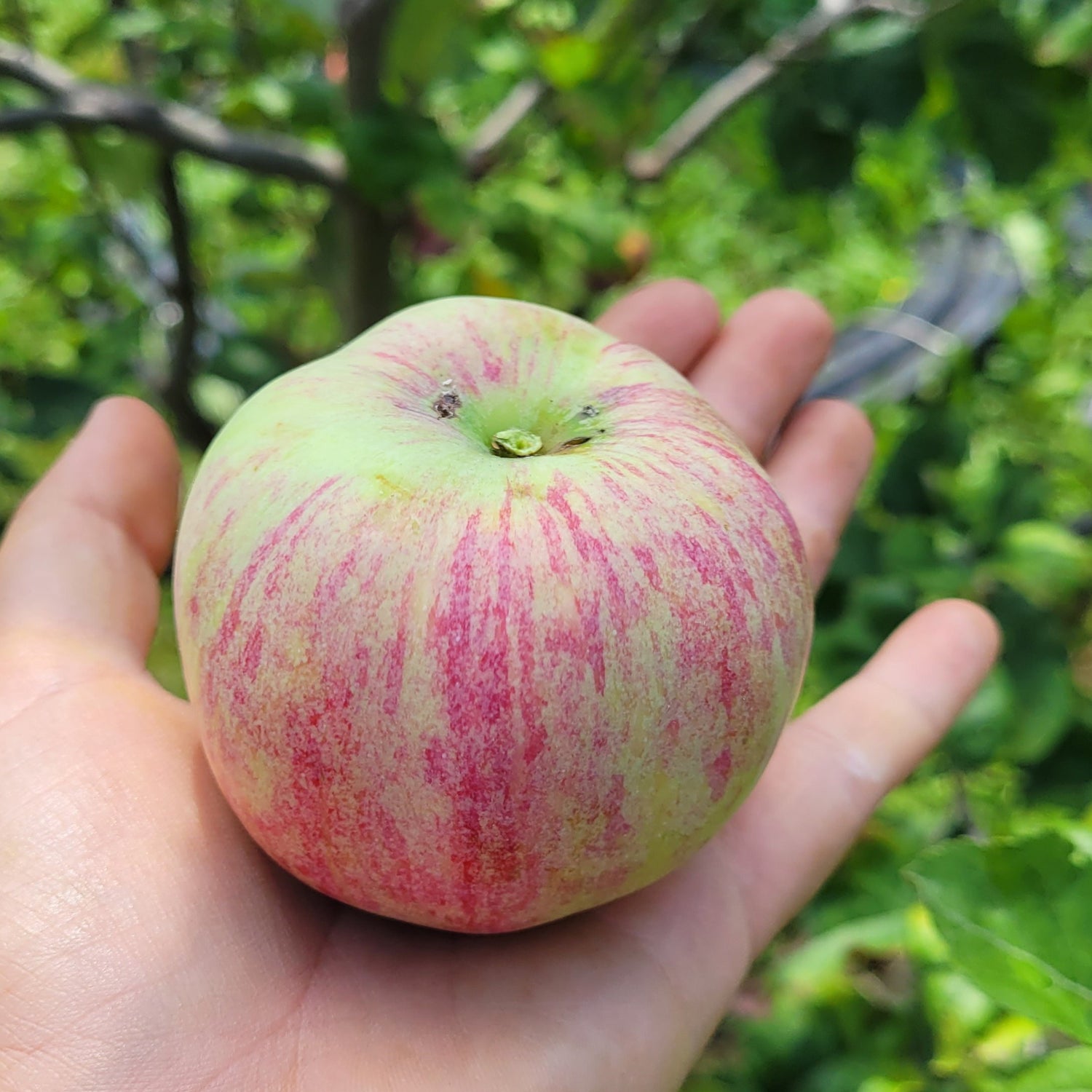
History: This cold-hardy apple was developed in the prairies and is for growing in colder, northern areas.
Why We Grow It: This unique apple produces a yellow fruit with red stripes. It is a rather uncommon variety and is great for sauce. It has begun producing reliably in our test orchard the last few years, and always has a bountiful crop.