TEST july 30_Fruit Trees
297 products
Sort by:
297 products
297 products
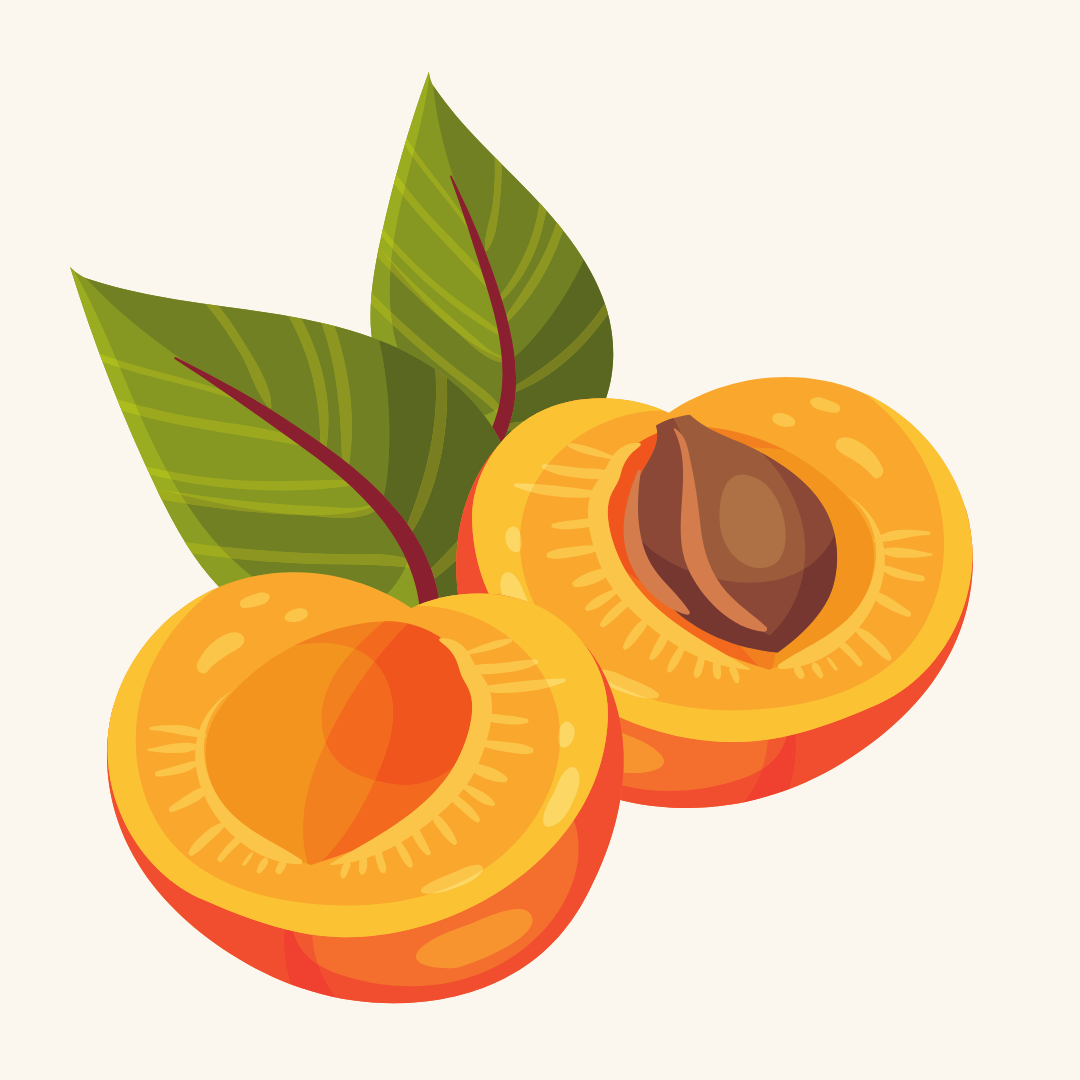
History: Montrose's parent tree was discovered growing in Montrose, California, by Lloyd Rosenvold after he purchased the land in 1952. He was surprised to find a large apricot tree growing quite high up on a hill in an area where the winters could get quite cold, yet the tree still produced large crops of excellent fruit. When he moved to Idaho in 1966, Rosenvold took seeds from the apricots of this tree to see how they would fare in an even colder climate. The best of these trees he named 'Montrose.'
Why We Grow It: Montrose produces medium to large freestone apricots that are yellow with a pleasant red blush. They have an excellent sweet flavour and even the pit is edible, being similar to an almond. Most importantly for us, these trees are quite hardy and bloom late, making them more reliable in our climate compared to other varieties.
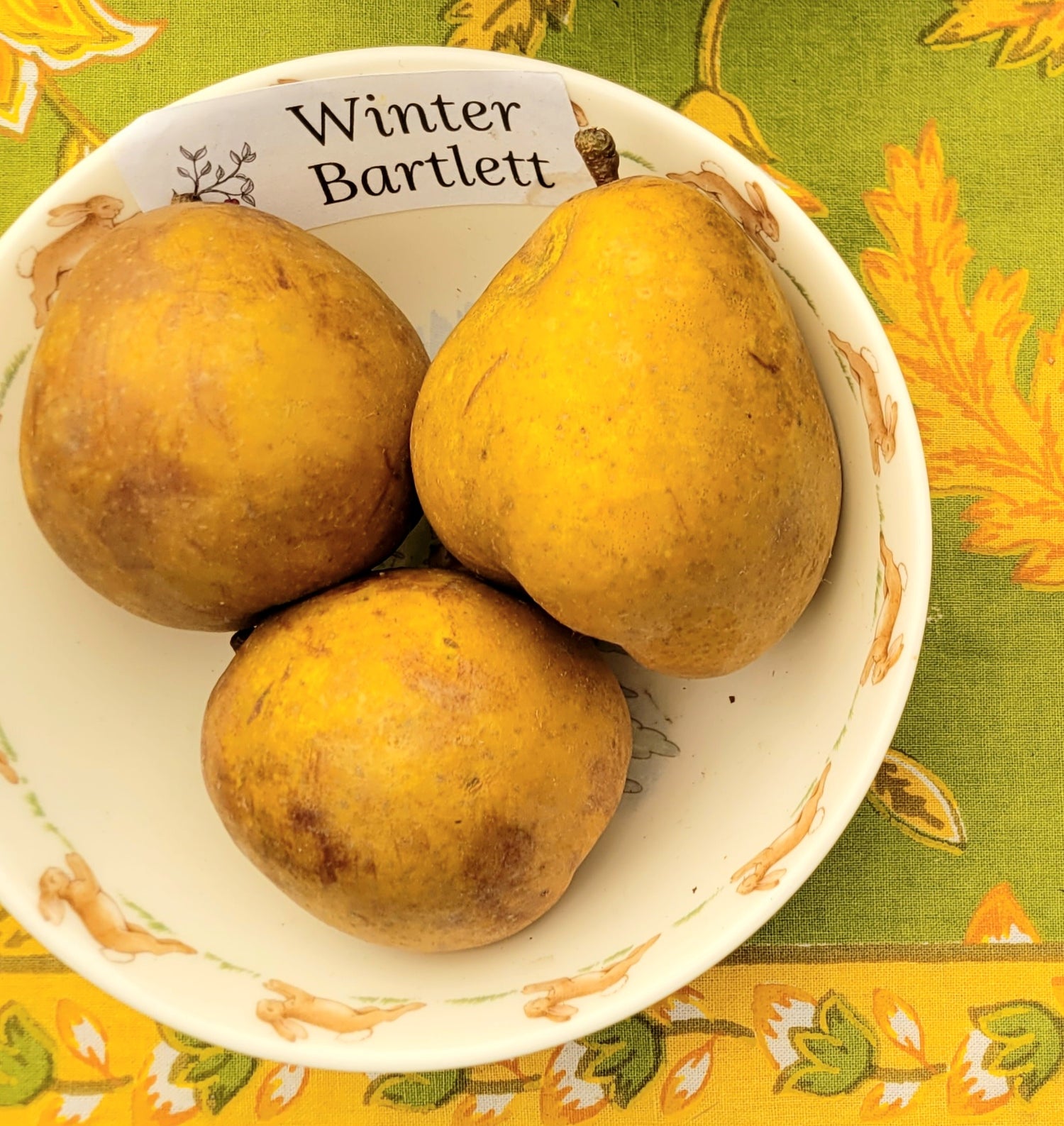
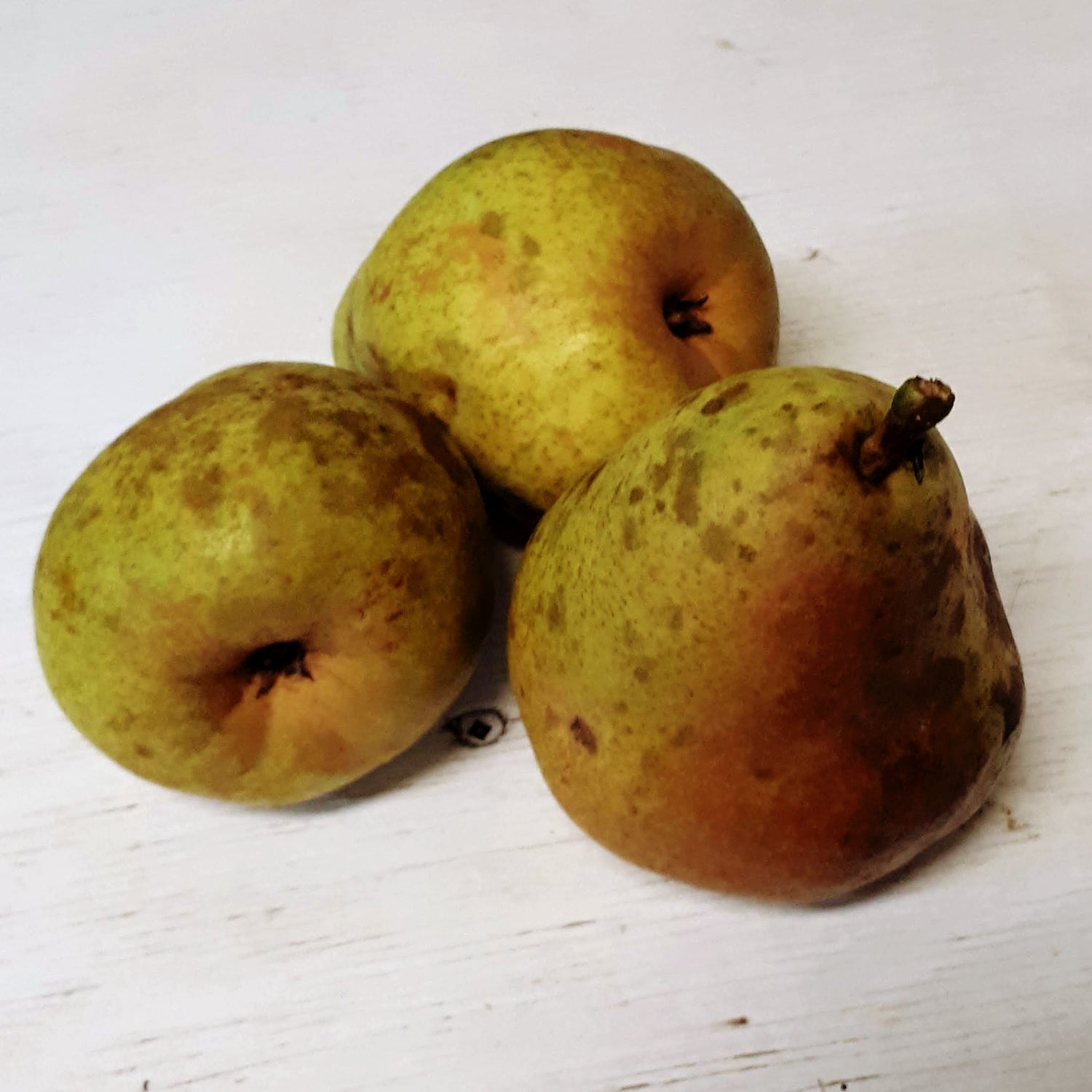
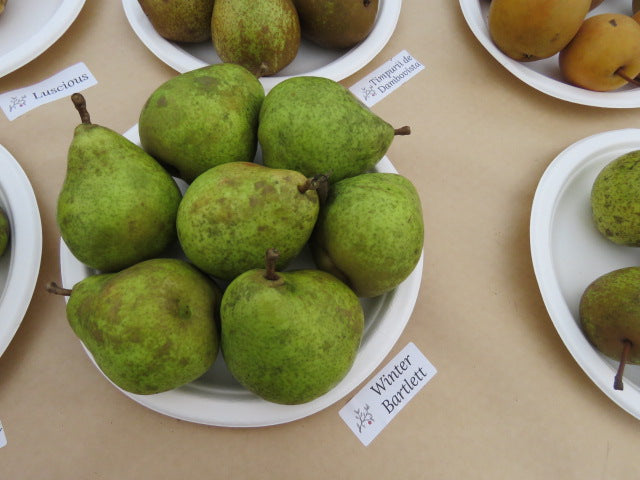
History: Winter Bartlett pears originated on the western coast of the United States, likely in Eugene, Oregon. They were introduced by D.W. Coolidge in 1880 but it is believed the variety may have existed for some time before that. It earned its name from it's resemblance to the Bartlett pear in taste and shape and it's designation as a winter pear.
Why We Grow It: As opposed to summer pears which are meant to be eaten shortly after picking, winter pears are supposed to be allowed to ripen for months in cold storage and enjoyed during later seasons. It is worth the wait for this variety, which produces a medium to large fruit with golden-yellow skin covered in patches and dots of russet and red streaks. It has a sweet and slightly subacidic flavour paired with firm, coarse, juicy white flesh. It is also great for cooking.
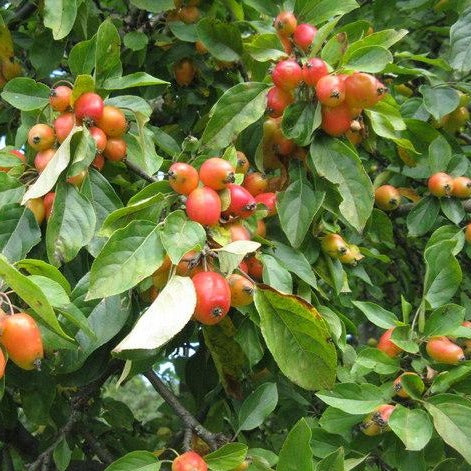
History: John Downie was raised by Edward Holmes, a nursery worker in England, in the 1870s. The variety was named after another nursery worker and friend of Holmes, John Downie. John Downie crabapples remain one of the most popular of the English crabapples.
Why We Grow It: This crabapple sports bright orangey-red fruit, often used to create some of the best jelly around. With its sweet-tart flavour, this crabapple can be pressed into a cheery orange juice that is a great addition to cider blends.

History: Hewe's Virginia (aka Hughes' Virginia or Virginia) was discovered in Virginia in 1817 although the first trees discovered were thought to be around 100 years old. It is believed that Hewe's Virginia is a cross between a European apple and a North American crabapple. It became quite popular for its excellence as a cider apple and was favoured by Thomas Jefferson who devoted an entire block of his orchard at Monticello to just Hewe's Virginia. This variety was widely planted in the 18th and 19th centuries but waned as interest in cider-making declined. Luckily, it stuck around with us due to its usage as rootstock and pollinizers for other varieties. With the growing popularity of cider in the US, however, Hewe's Virginia is making a strong comeback as people are once again realizing its potential.
Why We Grow It: This hardy, vigorous tree produces a good number of crabapples that are excellent for cider. It is easy to see why this variety was so popular back in the day and is making a resurgence now, the bittersharp juice is great on its own and in blends. Hewe's Virginia is also great for making jelly!

History: Rhode Island Greening emerged around 1650 where it was grown from seed by a Mr. Green near Green's End, Rhode Island. Mr. Green owned a tavern and often gave scions from the original tree to his customers, although the tree eventually died from the demand for scionwood. The name was originally the descriptive 'Green's Inn apple from Rhode Island' and later shortened to 'Rhode Island Greening.'* This apple was commonly grown in New York and is still quite common today.
*Fun fact: The Ontario ghost town Unopark got its name in a similar way. It was originally founded by Richard Parker, Mouse's ancestor, and the name is a shortened version of 'You know the Parkers?'
Why We Grow It: This apple's long-lasting popularity is due to its reputation as perhaps the definitive American pie-making apple. The large, dark-green apple is too tart to be eaten fresh but is great in pies and holds its shape well when cooked. It also produces nicely in our test orchard, producing large, blemish-free fruit despite it's generally poor disease resistance.

History: Harry Masters Jersey was discovered in the early 1900s at Yarlington Mill (in England) and is thought to be a seedling of Yarlington Mill (the apple variety). It was named after Mr. Masters, a worker at the mill who is thought to have discovered the apple.
Why We Grow It: Although not the most vigorous of apple trees, the fruit itself boasts a medium-full bittersweet juice of vintage quality with low acid that makes it popular among cider connoisseurs. Harry Masters Jersey also starts producing fruit at a young age.

Why We Grow It: Purple Passion produces a large apple with reddish-purple skin and crimson flesh. The flavour is quite sharp, making it better suited for cooking and especially cider. This juicy apple can be pressed into a crimson cider that is visually quite appealing. The tree also boasts attractive pink blossoms and red-tinged foliage, making it a nice ornamental tree as well.
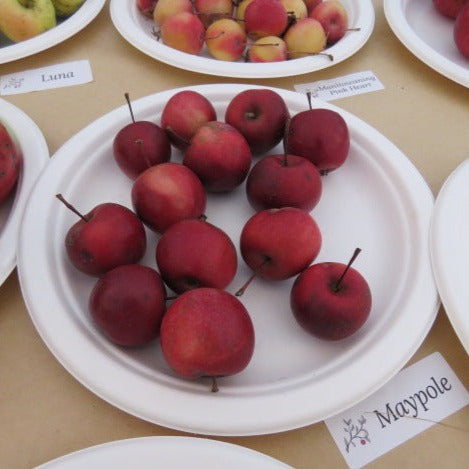
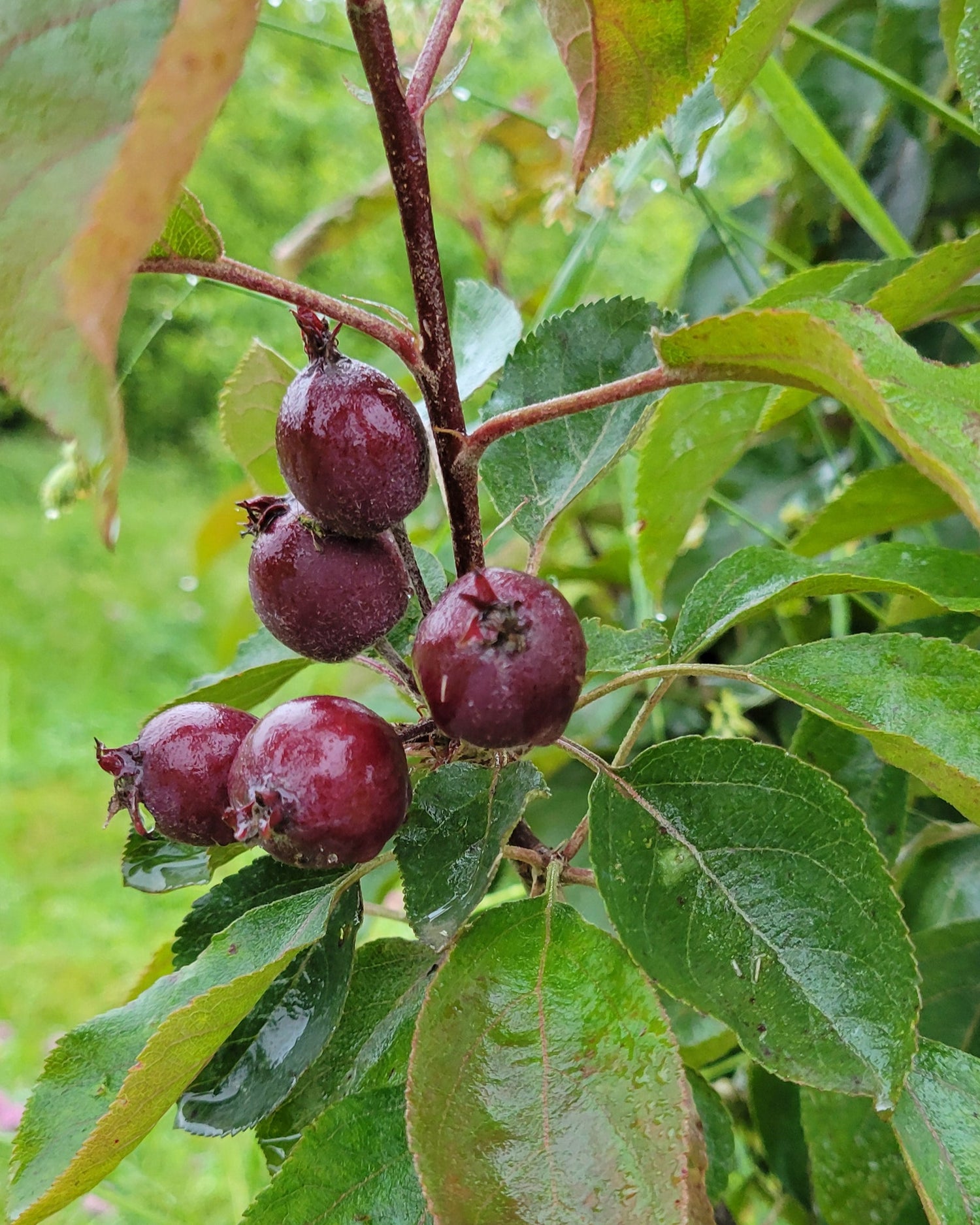
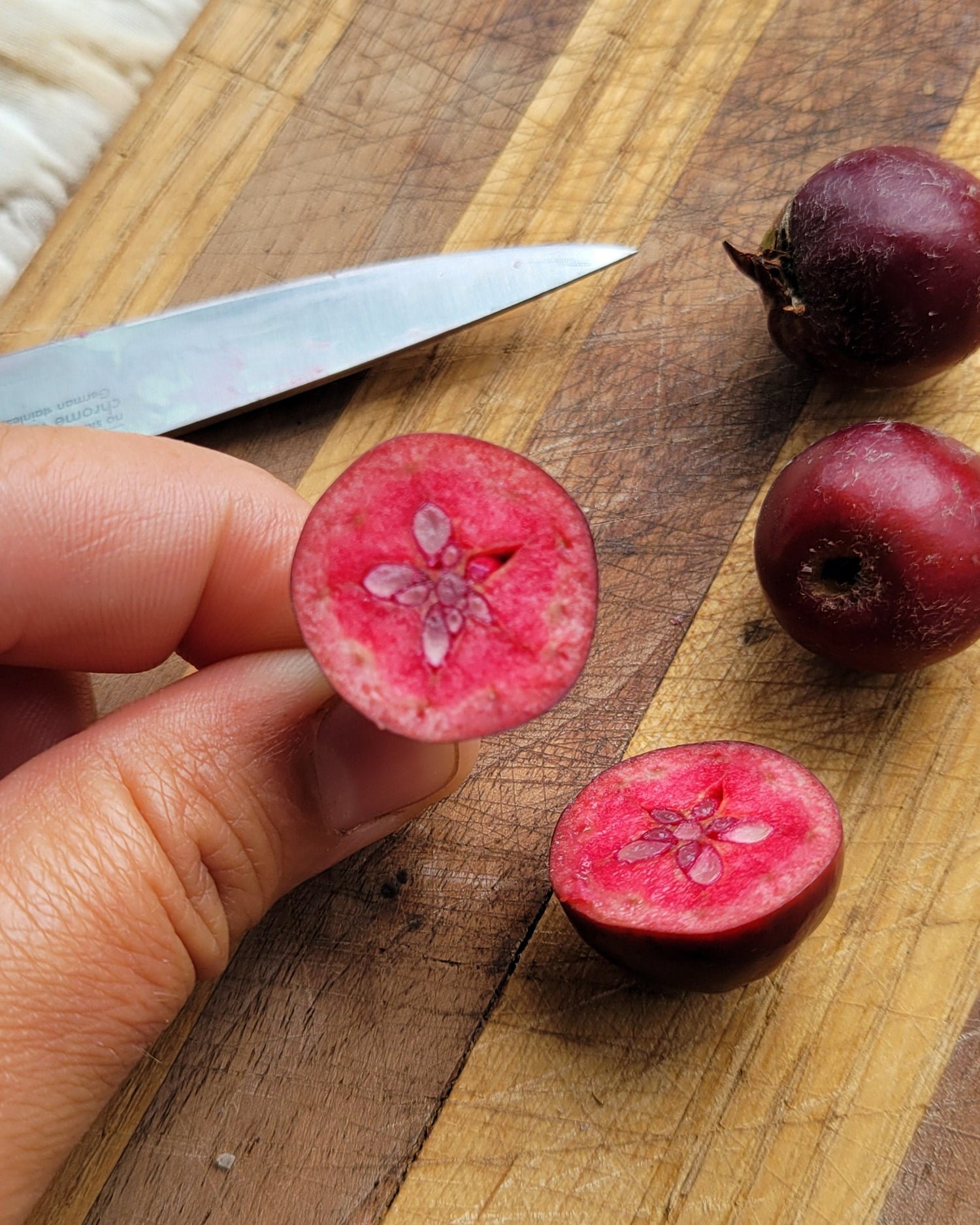
History: Maypole was developed in 1976 by Plant Breeding International at the East Malling Research Station in the UK as a cross between Wijcik Spur McIntosh and Baskatong. Wijcik Spur McIntosh originated as a mutation discovered on a McIntosh tree in 1962 in the Wijcik Orchards in British Columbia, the branch growing oddly straight with little branching. Several varieties were deliberately bred to have this mutation and now Maypole, released in 1986, is one of six columnar varieties developed at the station. This series of trees is known as Ballerina in the UK but due to that name being unavailable in the US, they are known as Colonnade in North America.
Why We Grow It: Not only is Maypole unique as a columnar apple, this crabapple also boasts lovely red flesh, bronze coloured leaves, and pretty pink blossoms in the spring. This makes it overall a lovely ornamental tree to have, whether planted in the yard or in a pot. The fruit is also excellent for jelly, apple butter, and cider, adding a red hue to each. It can also be eaten fresh although it tends to be quite acidic with a touch of sweetness.

History: This vintage quality cider apple is believed to have originated near Martock in England. This apple is so old it's not entirely certain when exactly it was first discovered, with estimates ranging from the 11th to 14th century.
Why We Grow It: This lesser-known apple is bitter with high acid, featuring a fruity flavour with a bitter aftertaste that is great when made into cider on its own or when mixed into a cider blend.
History: Brookgold was developed at the Crop Diversification Centre South in Brooks, Alberta and was named for the town and its golden colour. It was introduced in 1979.
Why We Grow It: Brookgold, like other fruit varieties developed in the prairies, is very cold hardy! Although there is sometimes a trade-off between cold hardiness and fruit quality, this variety still produces small yellow freestone plums that are very sweet, making them great for fresh eating and good for canning and preserving.
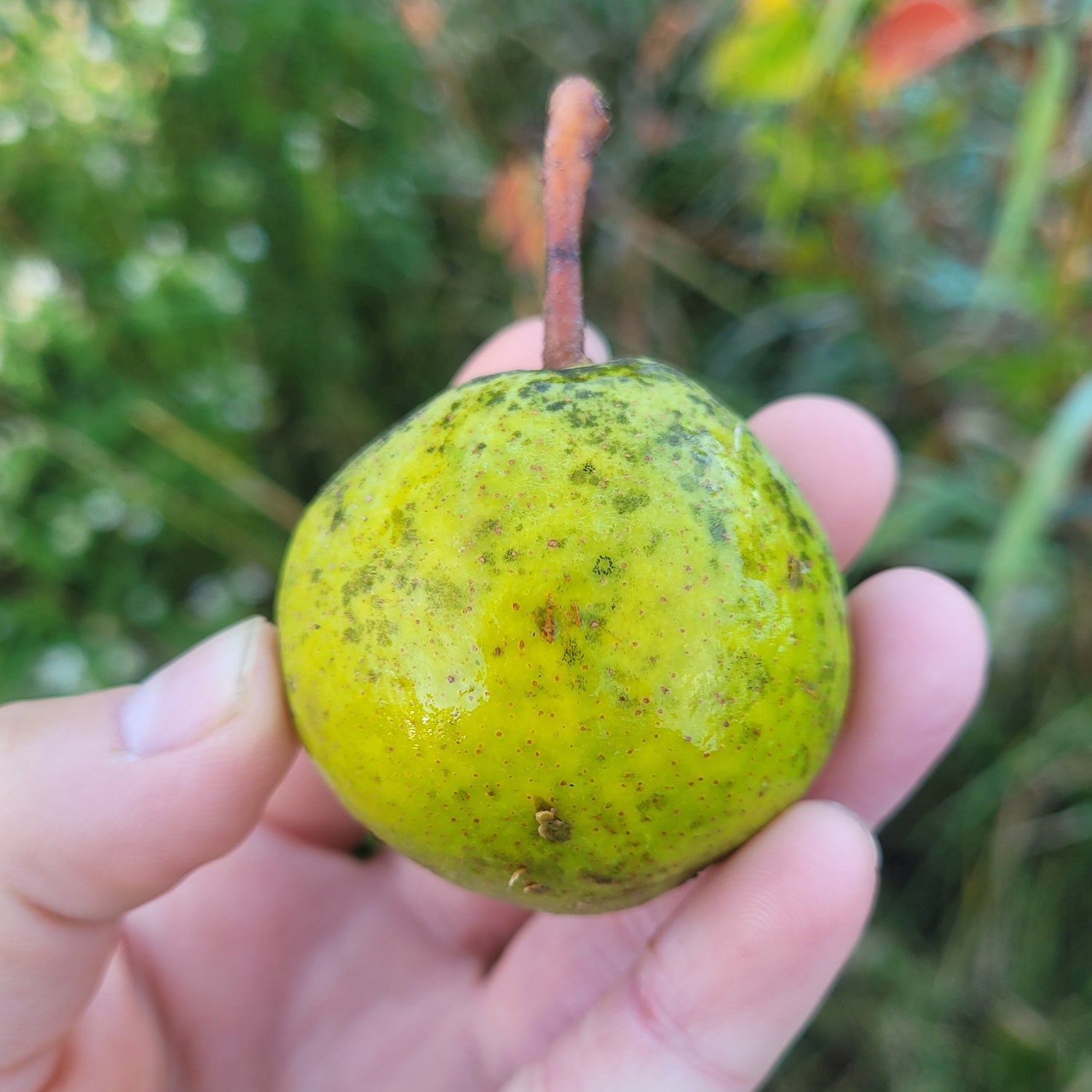
History: Little is known about the origins of Taynton Squash. Its name is derived from the village of Taynton in England where it was discovered at the parish. It was possibly discovered at some point in the 17th century as writings on it from 1811 describe it as an old variety. It was noted at the time for producing an excellent perry although now it is considered rather average.
Why We Grow It: This ancient English perry pear produces 4-5cm round green fruits in heavy crops. They should be blet for two days at most before being turned into perry, of which they make an average quality single-variety perry.

History: Sekai Ichi (translated literally from Japanese as 'world number one,' more accurately meaning 'best in the world') was bred at the Prefectural Experiment Station in Aomori, Japan in 1930 and released in 1974. It is a cross between Red Delicious and Golden Delicious. This variety is quite highly regarded in Japan where a single apple can sell for as much as $25 each. Each apple is hand pollinated, washed in honey, and hand-stamped while being inspected to ensure its quality.
Why We Grow It: Although we don't get quite that fancy here, Sekai Ichi is nonetheless a great apple if you enjoy sweet, crunchy, apples with no acidity, as is common with Japanese varieties. It is red over greenish skin and very large with an average circumference of 30-45cm and average weight of 2lb. The tree itself is very vigorous although slow to start bearing fruit with a tendency towards biennial bearing.


History: The origins of Pomme Gris (translated as 'gray apple' from French) are a bit of a mystery. It may have originated in France in the 1600s as either a seedling or sport of the variety Reinette Gris which was then brought to Quebec by French or Swiss colonizers. Alternatively, it may have its origins in Quebec, perhaps being grown and propagated in Canada from the start. The first instance of this variety's documentation was by a William Forsyth in 1803 who believed the apple originated in Canada and made its way to Europe sometime in the 1700s. Regardless, this variety was grown in Quebec for centuries.
Why We Grow It: Pomme Gris is an excellent all-purpose apple! Although not the prettiest apple in the world, it is crisp, juicy, and aromatic with a nutty flavour and hints of vanilla. It was really a standout when our tree first produced fruit a couple years ago! The fruit can also be used for cooking and the apple would likely be a good addition to cider blends.

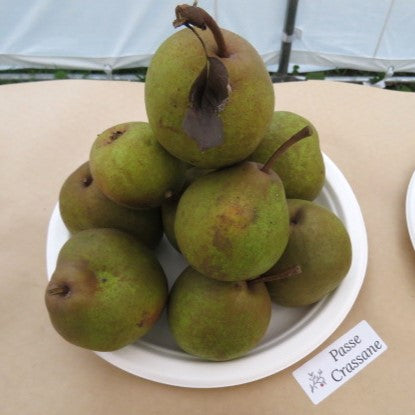
History: The Passe Crassane pear originated in France where it was grown by Louis Boisbunel in 1845 and first bore fruit in 1855. It quickly became popular and was grown in France, Italy, and Spain and commonly exported to Germany and England. The stems were sealed with a red wax to keep in moisture during the pear's long ripening period which became a symbol of the variety. Although its susceptibility to blight has caused its popularity to decline since then, it is still grown on a small scale in parts of France and Italy.
Why We Grow It: This French winter pear is aromatic, floral, and fruity with a melting texture. It is best enjoyed after 4-5 months in storage, usually around February to March. Although the tree is hardy, it is susceptible to mildew and fireblight.
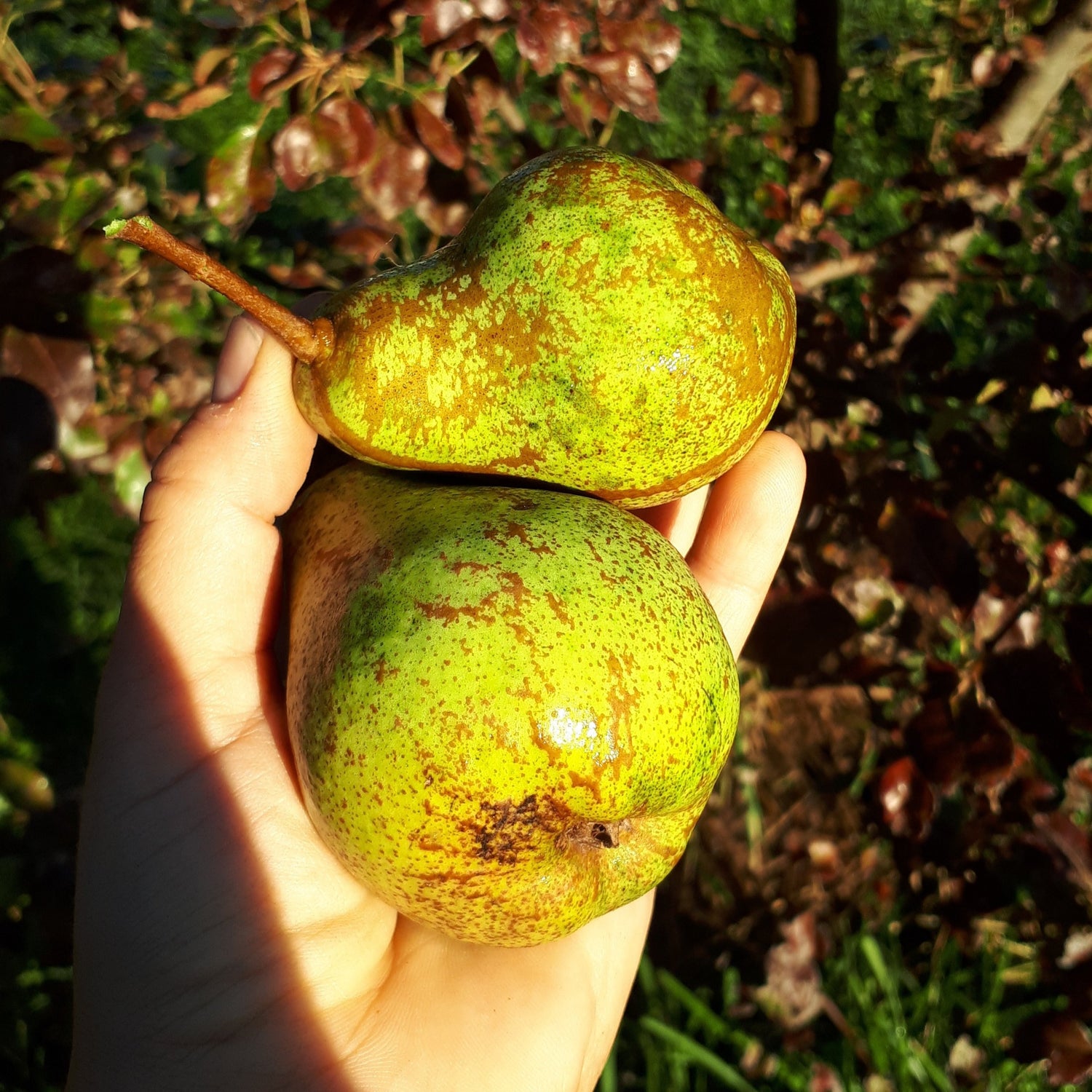
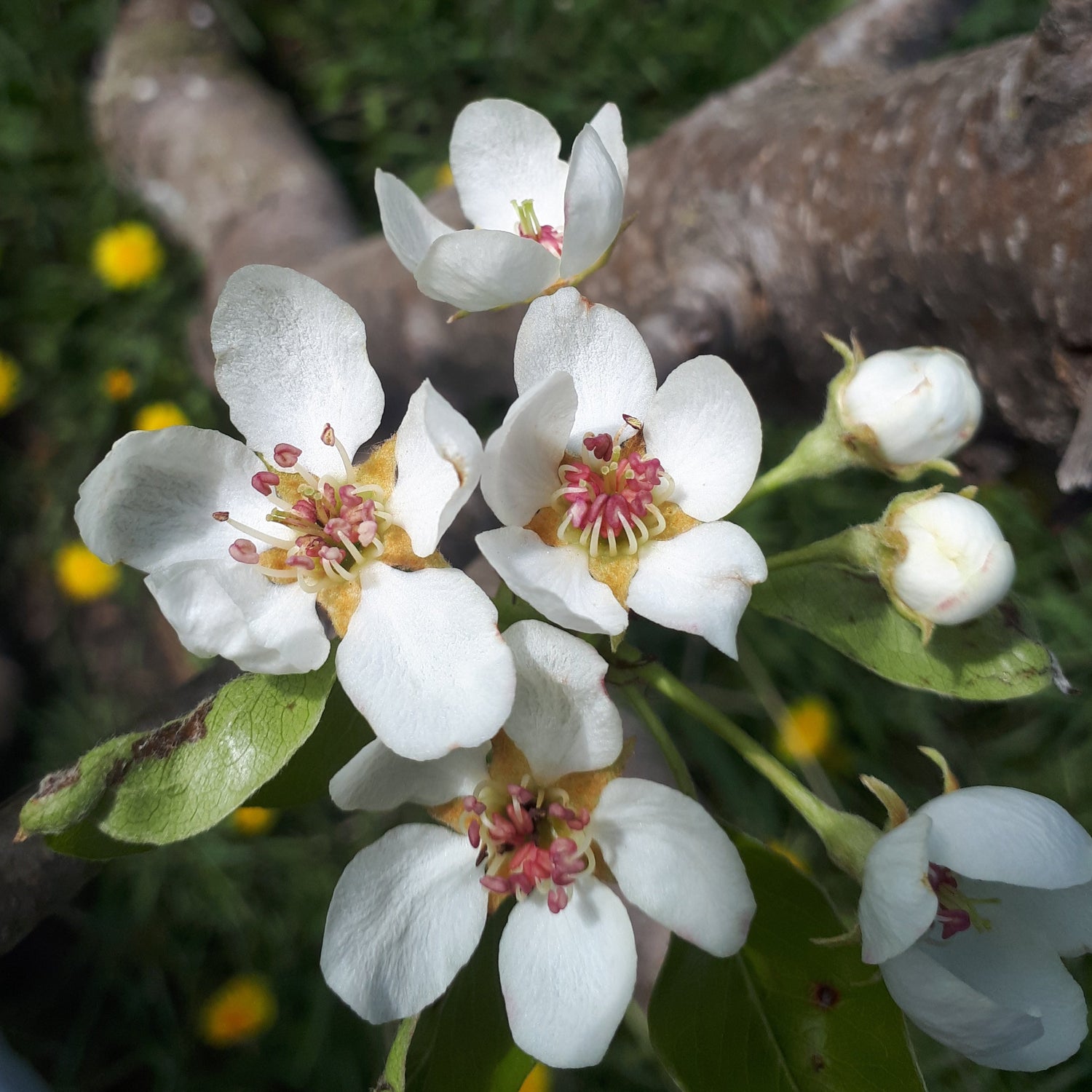
History: Jules d'Airoles was first discovered by Leon Leclerc in Laval, France, in 1836. It was named after Jules de Liron d'Airoles, a notable French horticulturalist and pomologist. Confusingly, this pear shares its name with a Belgian variety grown about twenty years later by François-Xavier Grégoire-Nélis.
Why We Grow It: This pear develops in storage to a wonderful treat: very sweet and a touch tangy, semi-fine juicy flesh, with pleasant tannic notes depending on the terroir. Smooth, thick green skin with a lovely rose blush where the sun touches the fruit.

History: Glowing Heart was bred in Toronto by Fred Jansen, one of the founders of the North American Fruit Explorers (NAFEX). This unique apple is still in its early years.
Why We Grow It: This variety has a unique pink and white flesh and is quite acidic. One bite will make you pucker! Although not the best option for fresh eating, this apple creates an aromatic jelly with rich flavour and can be used in ciders as well. It does well in organic orchards.


Why We Grow It: These large, red apples boast a high acid content along with high sugars and a strong fruity flavour, making them excellent cooking apples. Like other English cooking apples, it breaks down when cooked.

History: AKA Co-op 30, Enterprise is one of the many varieties that was developed through the collaborative PRI disease-resistant breeding program run by Purdue University, Rutgers University, and the University of Illinois. It was introduced in 1993 and has proven to be a very reliable variety. Although its name does not start with 'PRI' like many of the other varieties that came from this program, they still snuck the initials into Enterprise's name.
Why We Grow It: Enterprise produces crisp fruit that it is known for its strong, rich, tart flavour that can be described as spiced. It is a very disease-resistant variety that grows quickly, produces reliable crops, and stores for a long time. They are good for fresh eating although the skin is on the thicker side, and they can be used for cooking, baking, and sauce.

History: Brettacher Sämling (sämling meaning seedling in German) originated as a chance seedling on a farm in Brettach, Germany in the early 1900s. It is possibly a descendent of the French cooking apple, Lebel. It is known for its excellent storage qualities and is still grown commonly in parts of Germany.
Why We Grow It: Brettacher Sämling produces large, juicy apples with a sweet-tart fruity flavour that has a hint of spice. The apples, green with a red blush, are best enjoyed after being stored for two months. They are fairly versatile, also considered suitable for sauce and juice/cider. Compared to other apple trees, this variety is relatively low maintenance and only requires a hard prune every two to three years.

History: Little is known about this pear in the Western world aside from the fact it came from China. Seuri is possibly the Japanese version of the Chinese name Se Li (translated as 'red pear' from Mandarin).
Why We Grow It: Seuri Li has yellow-brown skin and the flesh is sweet yet slightly tart with a hint of apricot. It is considered one of the most flavourful of the Asian pears. The tree grows well and has heavy crops.
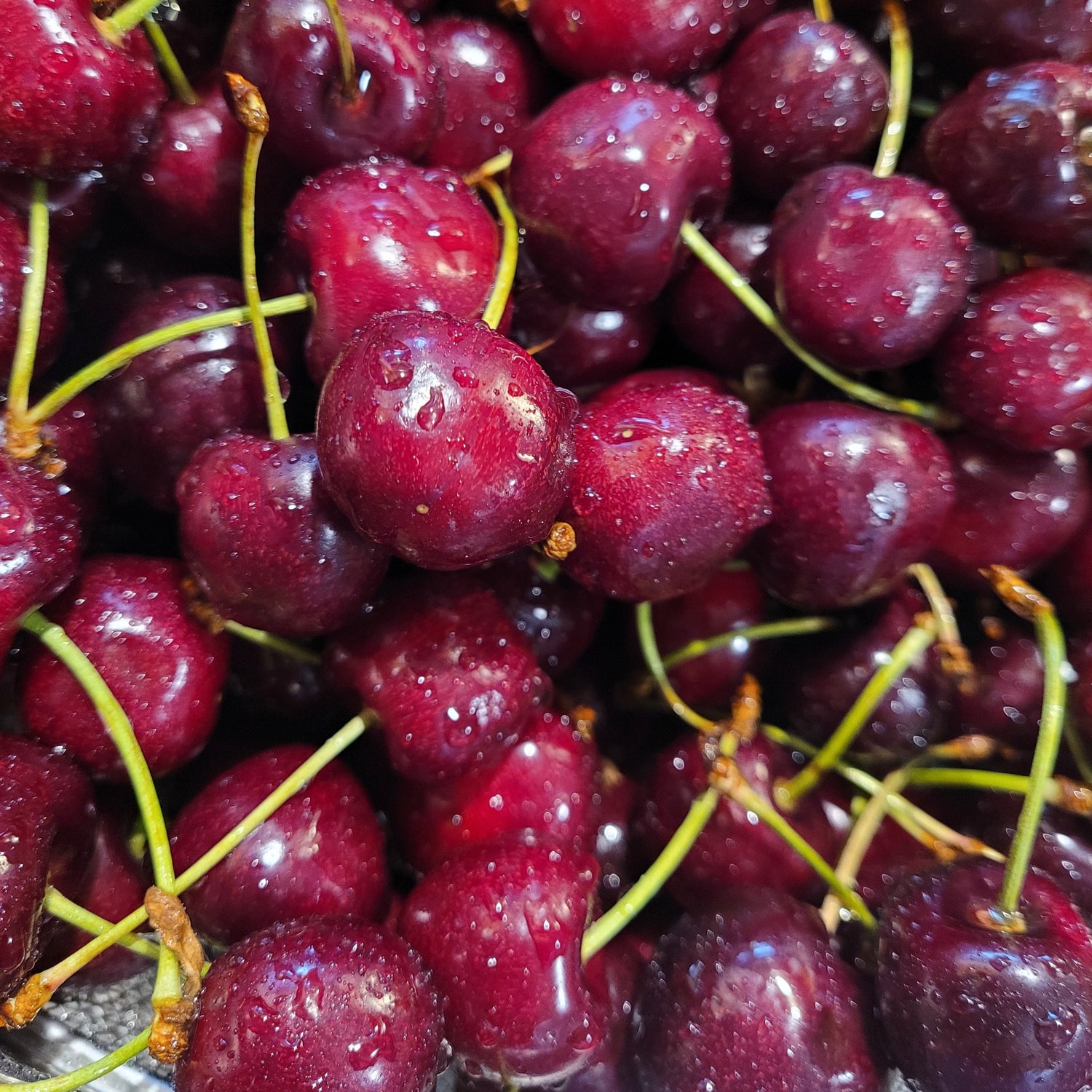
History: Lapins (aka Cherokee) was developed at the Summerland Research Station in British Columbia by Latvian agronomist Karlis Lapins, an important figure in the development of self-pollinating sweet cherry varieties. He created Lapins by crossing Stella and Van sweet cherries, and although the variety was released in 1983 after he retired, it was named in his honour. The variety was also awarded the Royal Horticultural Society's Award of Garden Merit. Although quite popular when it was first released, Lapins have since been supplanted by other cherry varieties due to their popularity and its inconsistent quality when shipped.
Why We Grow It: These lovely deep purple cherries are quite similar to Bing. They have a pleasant, mild flavour and can be used for fresh eating, cooking, and canning. The fruit is resistant to cracking and the tree grows well and begins bearing fruit a little earlier than other varieties.
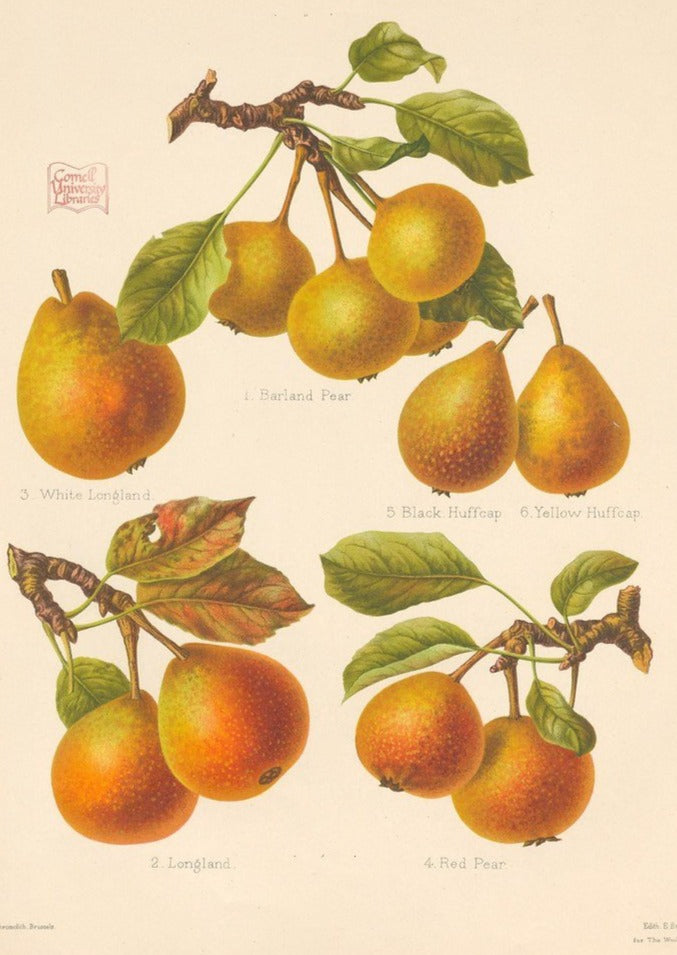
History: Although its exact origins are unclear, it is believed that Barland comes from Bosbury in England. It was already well known by the late 1600s and its perry was believed to have medicinal properties. This perry pear has stood the test of time and is still widely grown in the UK.
Why We Grow It: Barland remains one of the most popular perry varieties. This bittersharp perry pear can be made into a good single-variety perry or added into blends.

History: The history of Blenheim Orange is a bit muddled depending on your source. We know it was discovered by George Kempster (either a baker, a tailor, or a basket weaver depending on who you ask!) in England in 1740 and it was originally named Kempster's Pippin. Some say he found it as a seedling growing along a wall of Blenheim Palace while others claim he grew it in his garden located near Blenheim, England. It was later renamed to Blenheim Orange in the early 1800s, likely when it was sold commercially through nurseries. This variety has many other names, including: Beauty of Dumbleton, Blooming Orange, and Northwitch Blenheim. The tree itself is also known for its sturdy wood and it was at one time popularly used to make railway cogs.
Why We Grow It: These large, somewhat flat apples feature orangey-red stripes over yellow skin with some russet. The fruit is good for fresh eating with a nutty taste and is quite nice when paired with cheese. It is also great for cooking and makes a stiff purée. The tree is highly vigorous but can be slow to come into production, although it has heavy crops once it does.
For the most up-to-date information see Claude Jolicoeur's website here!
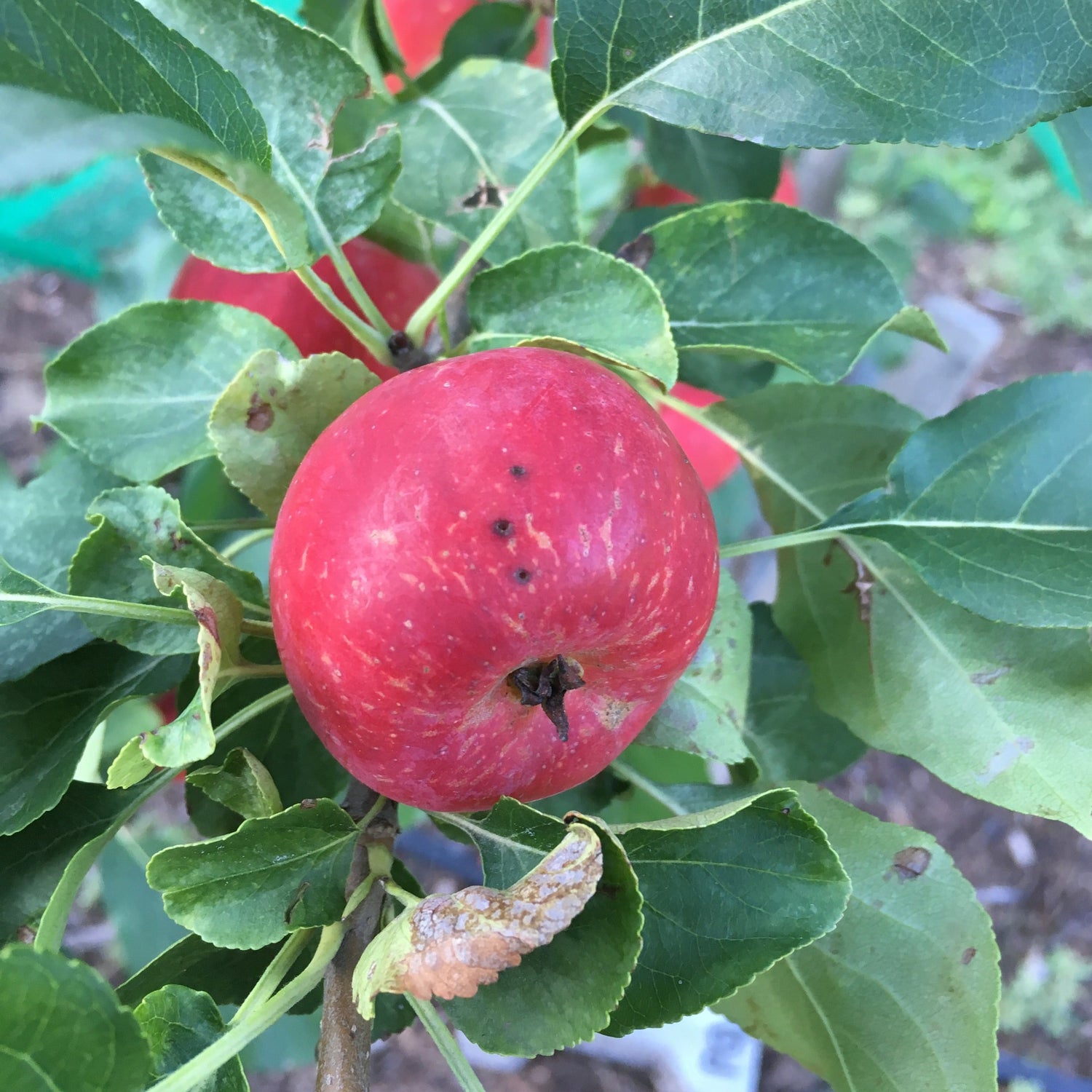
History: This particular iteration of Trail, previously referred to as Bilodeau, has a bit of a messy history. A Trail crabapple tree was mislabeled at a Quebec nursery in the 1980s and sold to an unknowing customer named Claude Bilodeau who thought he was purchasing a pear tree. Later on Claude Jolicoeur, well-known Quebecois cider-maker and pomologist, took a cutting from this tree and found that the fruit (definitely not a pear!) was excellent for making cider. Since it was still a mystery what the original variety was, the crabapple was named Bilodeau by Jolicoeur after the owner of the tree - only for Paul Kron from the University of Guelph to confirm that it was actually Trail via DNA testing in 2022. The Trail crab was bred at Ottawa from a cross of Northern Queen x Rideau, it was selected in 1913 and introduced in 1920.
Why We Grow It: Despite the confusion, we are regardless happy to have this apple in our catalogue! This bittersharp cider apple has excellent cider-making qualities and, unlike most crabapples, is also great when eaten fresh or made into jelly!
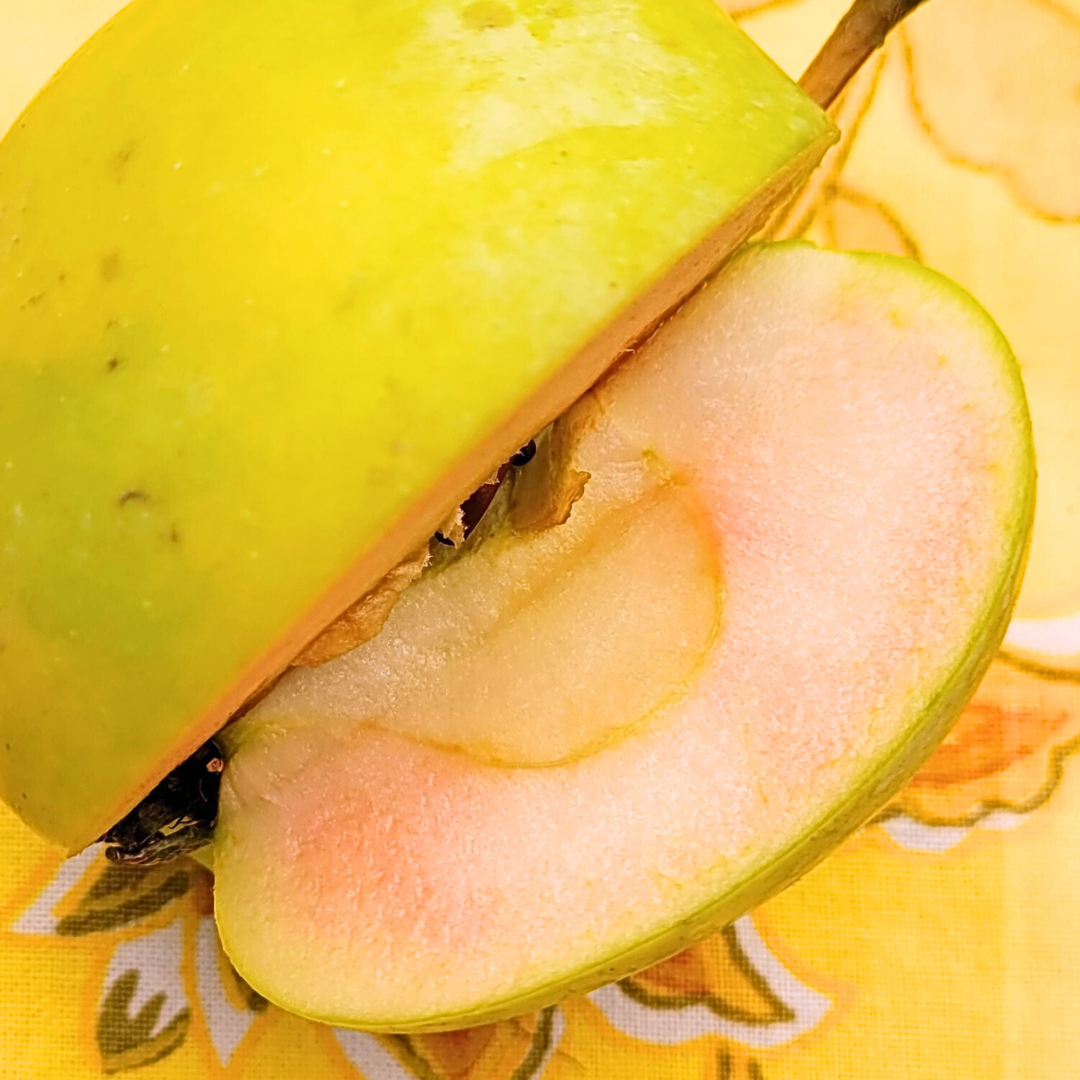
History: Airlie's Red Flesh originated on the farm of Lucky and Audrey Newell in Airlie, Oregon who sold the property in the 1960s. Two decades later in the 1980s, a Louis Kimzey was walking through the old orchard, bit into an apple from the tree, and was amazed at its stunning pink flesh. This was also known as Newell-Kimzey to reference those who found it and Airlie's Red Flesh as a reference to its place of origin and pink flesh. It also goes under a separate brand name.
Why We Grow It: This small, slightly conical apple has yellow skin that belies a bright pink interior that whitens near the core. Not only is it pretty, the fruit has a very sweet flavour with some mild astringency and the flesh is slow to brown. Along with the attractive fruit, the tree boasts bright pink blossoms that gives it an extra ornamental appeal.
History: Little is known about this variety aside from the fact it originated in France and was widely grown in Austria. It has historically been popular in both countries. Its name translated from German means Normandy Cider Pear, which may point to its place of origin or at least where it was most popular in France.
Why We Grow It: Normannischen-Ciderbirne produces small, russeted pears that are a greenish-yellow. The fruit produces high quality juice for perry.

History: The Niitaka Asian pear was developed in Japan as a cross between Amanogawa and Imamuraaki Asian pears in 1915 and was released in 1927.
Why We Grow It: Niitaka is a popular Japanese variety with large orange-brown fruit that is round and speckled. The flavour is sweet and mild.
History: Whitney crabapples were grown from seed by nurseryman A.R. Whitney around 1865 at Whitney Nursery in Illinois, US. It became popular for its excellent cold hardiness and productivity and in the 1900s the state of Montana recommended it as one of the best crabapple varieties to grow.
Why We Grow It: These large (for a crabapple) yellow and red apples boast a sweet-sharp flavour with some astringency and juicy, crispy flesh. They are a truly multipurpose fruit and can be eaten fresh (if you like some astringency to your apple) or used for cooking, sauce, cider, and jelly. The trees are very cold hardy and boast good disease resistance as well.

Why We Grow It: It is easy to see why growers were so eager to overlook Viking's scab susceptibility, its flavour providing a sweet-tart taste with notes of rose and lychee. It is an excellent all-purpose apple that can be used for cooking, baking, sauce, and cider. Its great flavour and utility is matched by its attractive appearance, the large fruit featuring dark red skin bordering on maroon. However, it does bruise easily and brown quickly and only stores for about a month at most.
Species: xSorbopyrus irregularis (Pyrus communis x Sorbus aria), also referred to as xSorbopyrus auricularis although this name is no longer correct
History: Shipova is a unique cross between European pears and Common Whitebeam* (Sorbus aria) which readily hybridizes with many other fruiting plants in the rose family. As a surprise hybrid, the history of Shipova is a little foggy. This cross supposedly appeared, or was perhaps planted, at Bollwiller Castle in France in the 1600s and was called Bollwiller Pear. It was cultivated in gardens in the late 1700s and early 1900s. It may have also originated in Yugoslavia and is popular in Eastern Europe today. Shipova was first brought to the US in 1959 and was imported from Yugoslavia. Today, it appears to remain something of a novelty in North America.
Why We Grow It: Shipova is a truly unique fruit tree and it is a shame that it is not grown more commonly. They are quite cold hardy and relatively disease-resistant. The trees produce clusters of small, round fruit that resemble pears. They are dense and crisp with a sweet flavour reminiscent of tropical fruits.
*Many places list Shipova as a cross between European pears and Mountain Ash. More precisely, the genus Sorbus is the Mountain Ash genus and the specific tree that is the parent of Shipova is the species Sorbus aria, commonly known as Common Whitebeam