TEST july 30_Fruit Trees
297 products
Sort by:
297 products
297 products


History: Mindemoya was discovered growing along the shores of Lake Mindemoya on Manitoulin Island along with Mindemoya Maroon. Wayne Kuntze happened upon these trees in 2020 while vacationing with his family. The good size and pinkish striping on the fruit caught his eye, and the sweet flavour sealed the deal! Now in 2023, we are happy to introduce this variety to the world!
Why We Grow It: Always on the search for new varieties, we are happy to grow and offer something that Wayne discovered! Mindemoya is an attractive whitish apple with pinkish-red stripes. It has a pleasantly sweet flavour and plenty of juice, along with a soft texture that may make it good for applesauce along with fresh eating.
This is a brand new variety and we're still learning about it! For any avid apple growers who decide to plant these out, feel free to keep us updated on how it grows, what you use the fruit for, etc, so we can provide as much information as possible!
For the most up-to-date information on this cultivar, see Claude Jolicoeur's website here!
History: Well-known Quebec cidermaker Claude Jolicoeur discovered this variety as a chance seedling growing on his property. The fruit is bitter with a banana-like aroma, and was therefore given the name Banane Amère (translated from French as 'bitter banana').
Why We Grow It: Despite its inedible nature, Banane Amère is an excellent cider apple and produces a bittersweet juice. It shares some characteristics with the popular cider variety Yarlington Mill but tends to ripen better in our climate.

Why We Grow It: It is hard to turn down an apple that sounds as wonderful as Sundance! It is crisp and juicy with a spicy, citric flavour. Along with being great for fresh eating, the fruit also holds its shape well when baked. As an added bonus, this variety is resistant to many common apple diseases and stores quite well so you'll have plenty of high quality apples to easily last you through the winter.
History: Skeena was developed at the Summerland Research and Development Centre in British Columbia in 1976 as part of an initiative to create a high quality cherry that ripens later in the season than other varieties. It is a cross between several self-pollinating varieties and was introduced in 2000.
Why We Grow It: These dark red cherries are often considered an improvement over Lapins with their larger size, good firmness, and general ease of harvest due to the spreading way the tree grows. The flavour is sweet with a touch of acidity. The tree itself grows vigorously and tends to start bearing fruit at a young age.
History: Blakeney Red (aka Circus pear, Red pear, and Painted Lady) is believed to have originated in the English village of Blakeney, its birthplace and the prominent red blush on the fruit earning it its name. It may have been originally planted sometime in the 1700s but became better known starting around 1830 and was the most widely planted perry pear. It is still popular in the UK today and is gaining attention in North America as well. A yellow dye can also be made from this variety and it was used to dye khakis for British soldiers during WW1.
Why We Grow It: This perry pear produces small to medium yellow fruit with red blush and some russet. For those interested in perry, it's hard to ignore this variety's long history, although its quality can vary based on growing conditions.
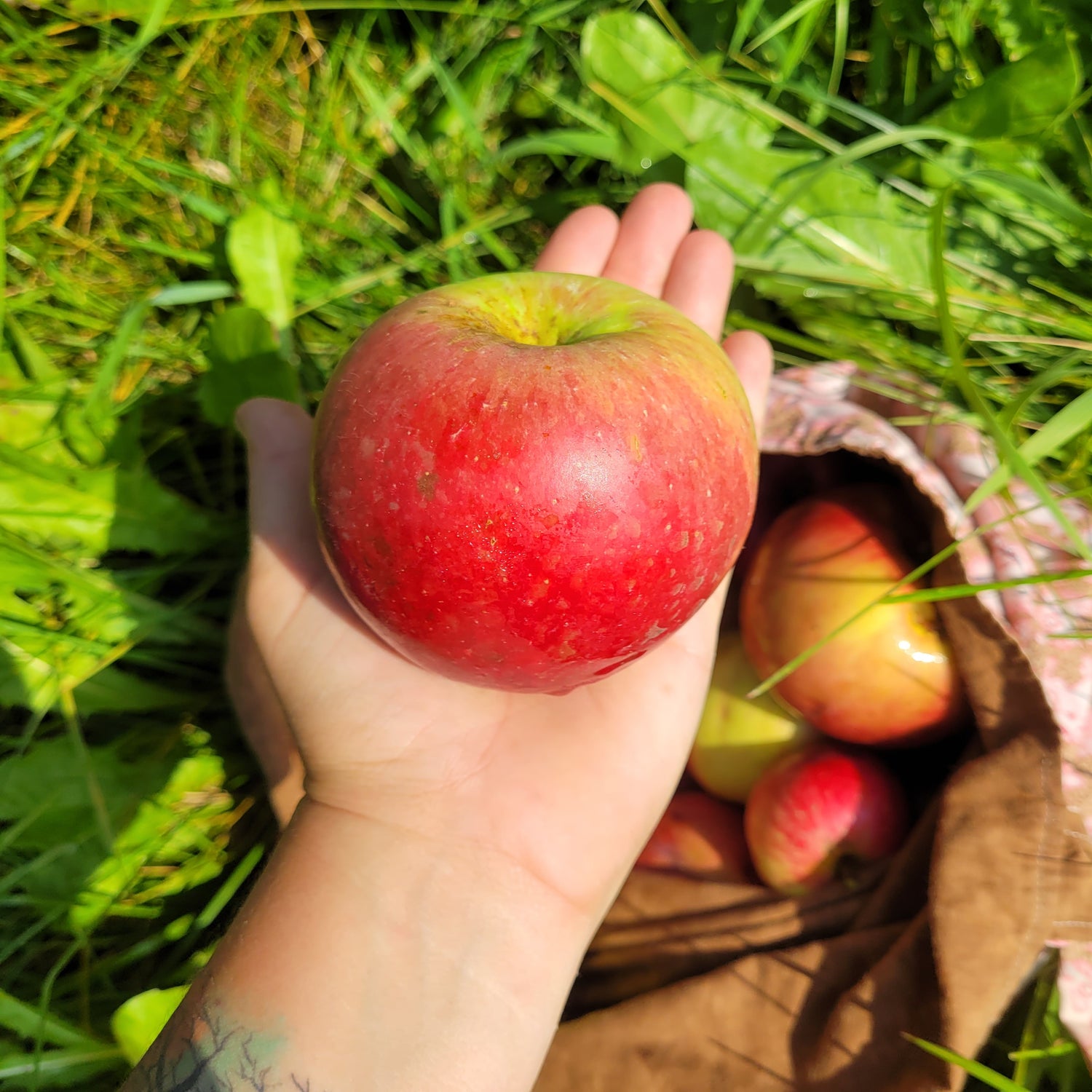
History: Wealthy apples were created by horticulturalist Peter Gideon after spending years trying to breed an apple variety that could survive Minnesota's harsh winters. With the very last of his money, he purchased seeds and scions in 1868 in one final attempt and was able to produce the Wealthy apple which he named after his wife, Wealthy Gideon. He gave scions away freely and Wealthy became one of the top five apples grown in the US.
Why We Grow It: A medium to large sized apple, Wealthy makes splendid applesauce, but is also very good for fresh eating with a balanced sweet-tart crunch. The tree is scab resistant and cold hardy, makes an excellent pollinator for other apples, and is well-suited for organic orchards.
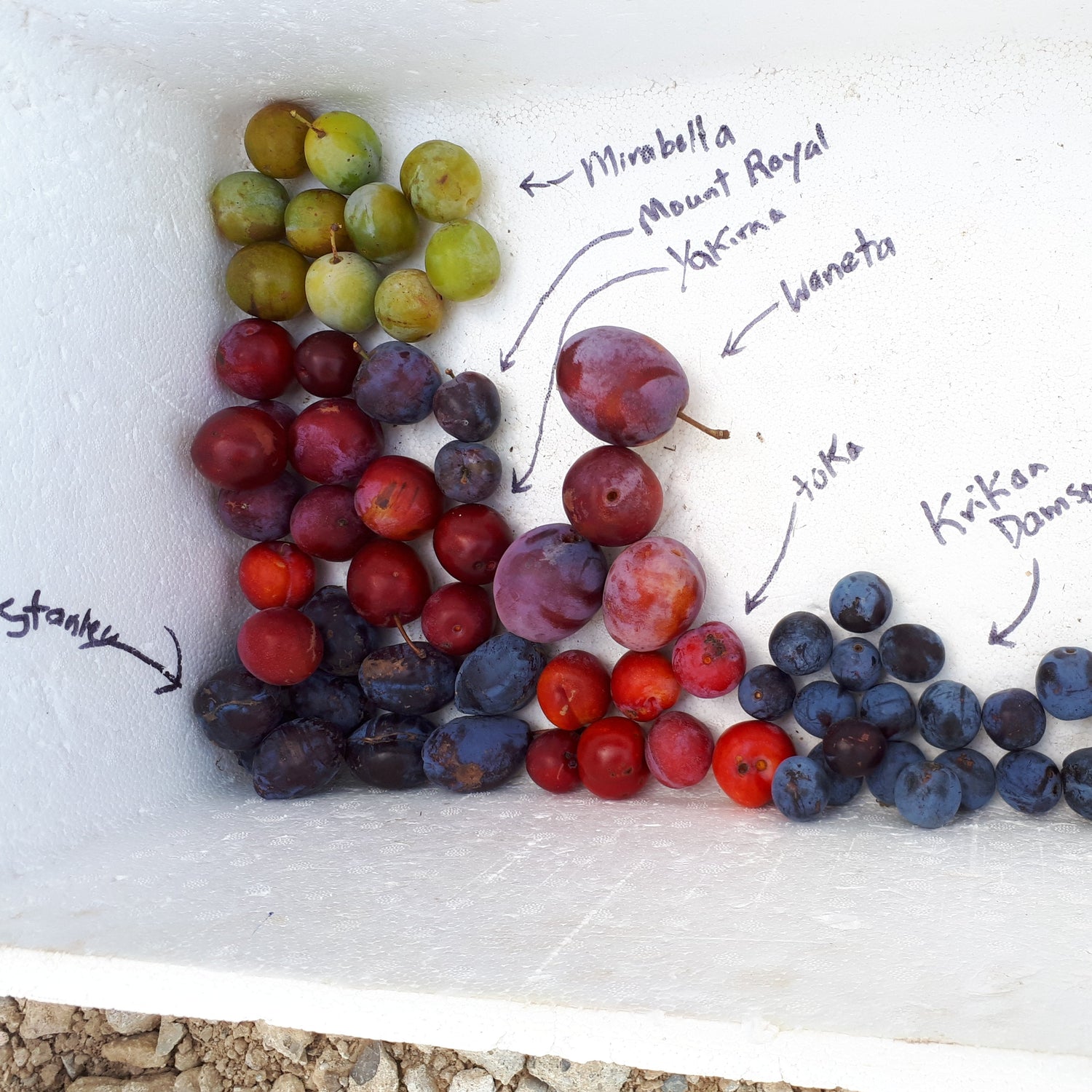
History: The origins and history of this variety are unknown based on our current research.
Why We Grow It: This variety produces a medium-sized freestone plum with purple-pink skin and yellow flesh that is sweet and juicy. It is one of the hardiest European plums around, making it a good choice for our colder climate!
History: Packham's Triumph were created by Charles Packham in 1896 in the town of Molong, located in Australia. His goal was to create a late-ripening pear and this popular pear proves he was indeed triumphant. This pear is most commonly grown in the southern hemisphere and the town of Molong is quite proud that such a beloved variety is part of their history.
Why We Grow It: Packham's Triumph is bright-yellow with russet mottling and smooth, white, juicy flesh that has an excellent flavour and smooth texture. The tree produces heavy and reliable crops.

History: Holstein was discovered in Schleswig-Holstein, Germany in 1918 and became one of the most popular varieties in the country. It is possibly a seedling of Cox's Orange Pippin.
Why We Grow It: This popular German variety sports attractive yellow skin with an orange/red blush. The flesh is firm, juicy, and aromatic in a way that is reminiscent of Cox's Orange Pippin. In general, this variety is easy to care for and grows vigorously.
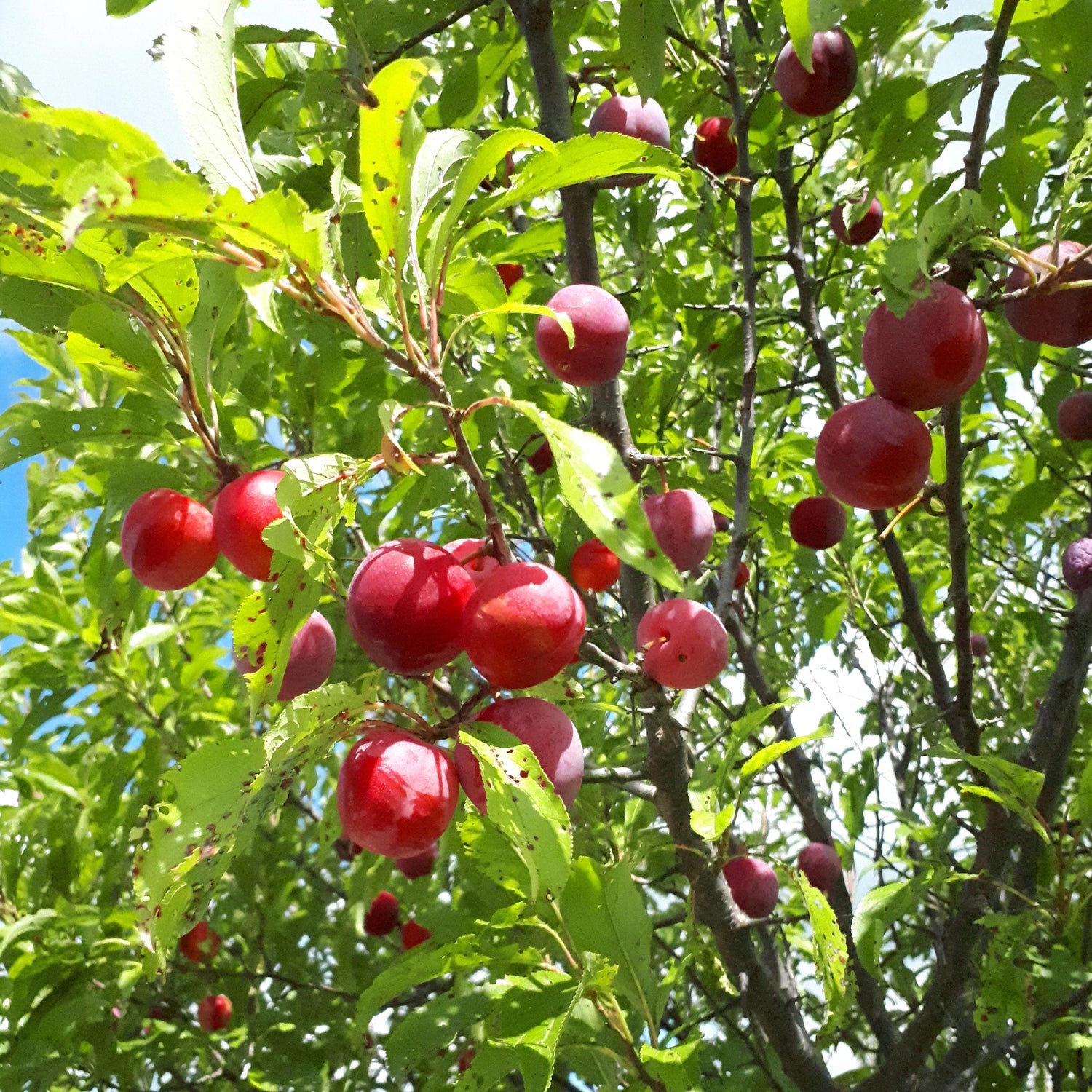
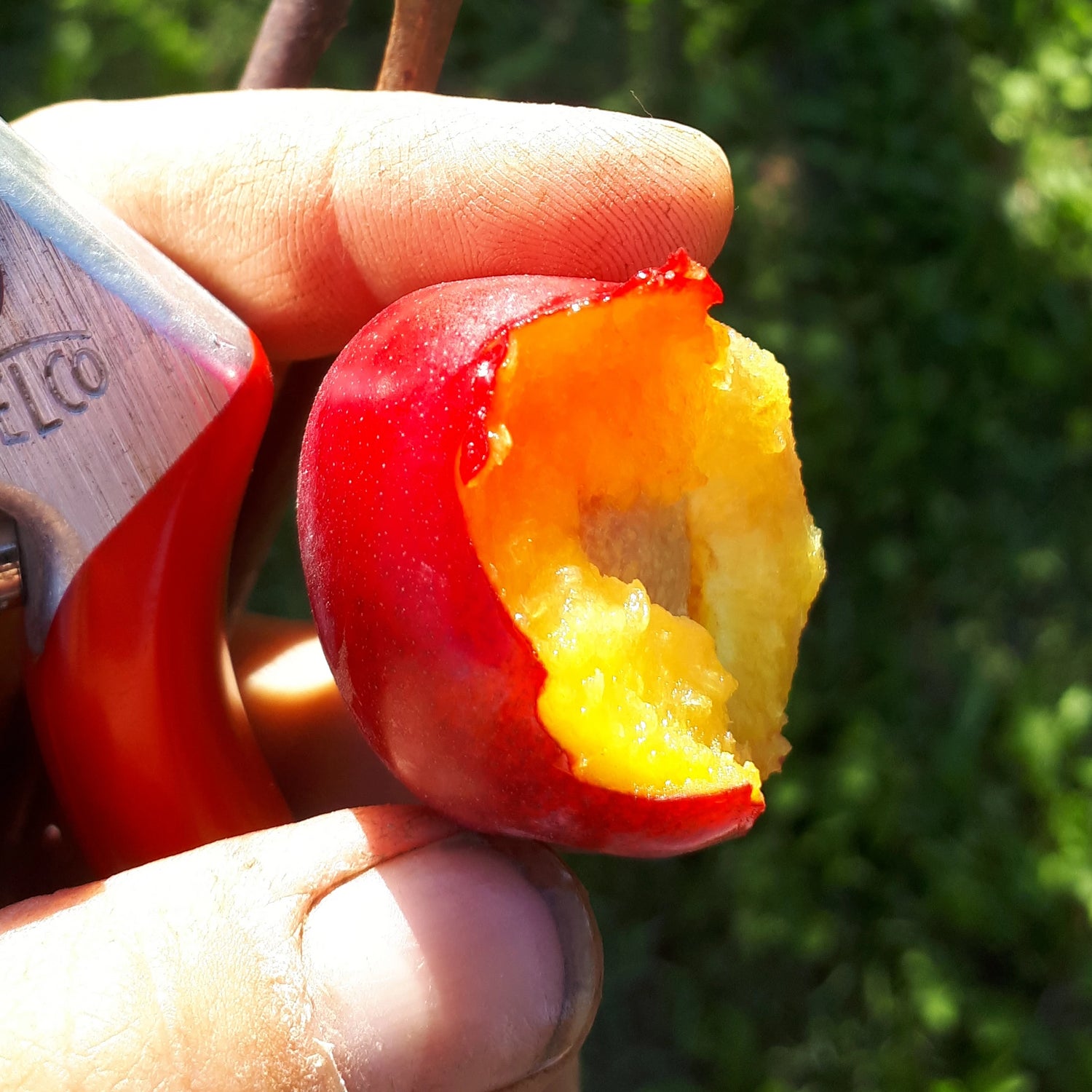
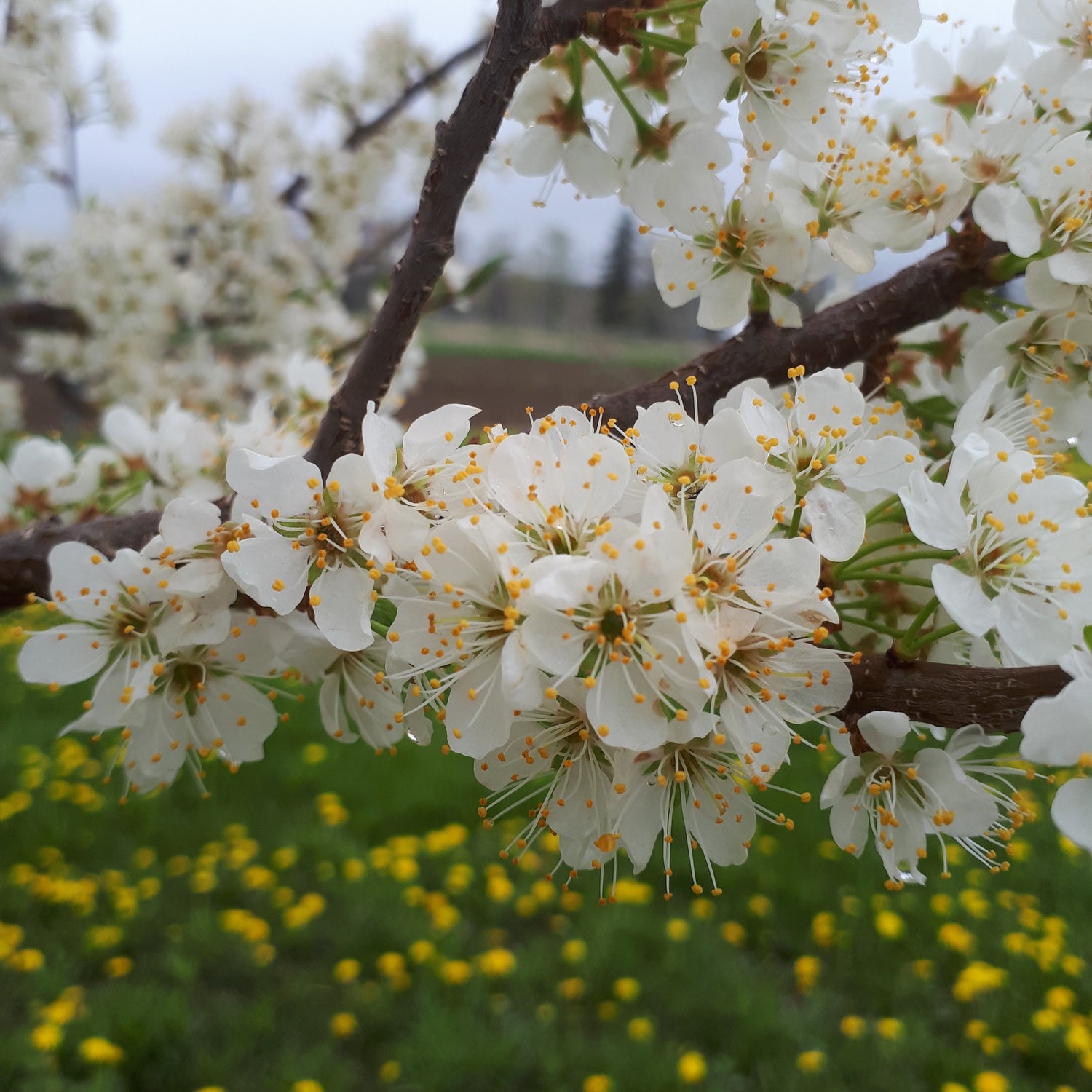
History: Toka is a hybrid of an American plum (Prunus americana) and a Japanese plum (Prunus salicina) that was created by Dr. N.E. Hansen who is known for his extensive career in developing cold hardy plant varieties. He developed Toka at the South Dakota Experiment Station and introduced it in 1911. It is unclear what 'Toka' translates to in English but 'toka' can mean 'etc/among other things' or 'river crossing' in Japanese
Why We Grow It: Toka is also known as Bubblegum plum due to its flavour and smell which bears an uncanny resemblance to bubblegum. These plums are incredibly aromatic, and will fill your kitchen with their perfumed scent as they sit out to ripen. The semi-clingstone fruit features deep red skin and bright yellow flesh that is firm but juicy. It is good for fresh eating or preserving.


History: Ketchankookem Trail was discovered in 2022 by Wayne Kuntze while he was vacationing on Manitoulin Island with his family. He found it growing wild along Ketchankookem Trail, being drawn to its bright yellow fruit with a pinkish-red blush. Now we are happy to officially introduce this variety in 2023!
Why We Grow It: This variety is worth growing for the name alone! Ketchankookem Trail shares a lot of similarities with Lodi and Yellow Transparent in terms of its early ripening time, yellow skin, and sprightly flavour. Like these other fine early-ripening varieties, it may also be good for sauce along with fresh eating.
This is a brand new variety and we're still learning about it! For any avid apple growers who decide to plant these out, feel free to keep us updated on how it grows, what you use the fruit for, etc, so we can provide as much information as possible!

History: Golden Sentinel was developed at the Pacific Agri-Food Research Centre in Summerland, BC. It was first bred in 1986 as part of a breeding program to create high quality columnar apples. It underwent further testing until 1997, after which it was eventually released.
Why We Grow It: Golden Sentinel is wonderful for a variety of reasons! It produces attractive, large yellow apples with a sweet flavour reminiscent of Golden Delicious. The fruit can be eaten fresh or used for baking. Its columnar growth habit means it stays quite thin, making it a great option for container growing and/or those with limited space. This variety is also quite disease resistant.
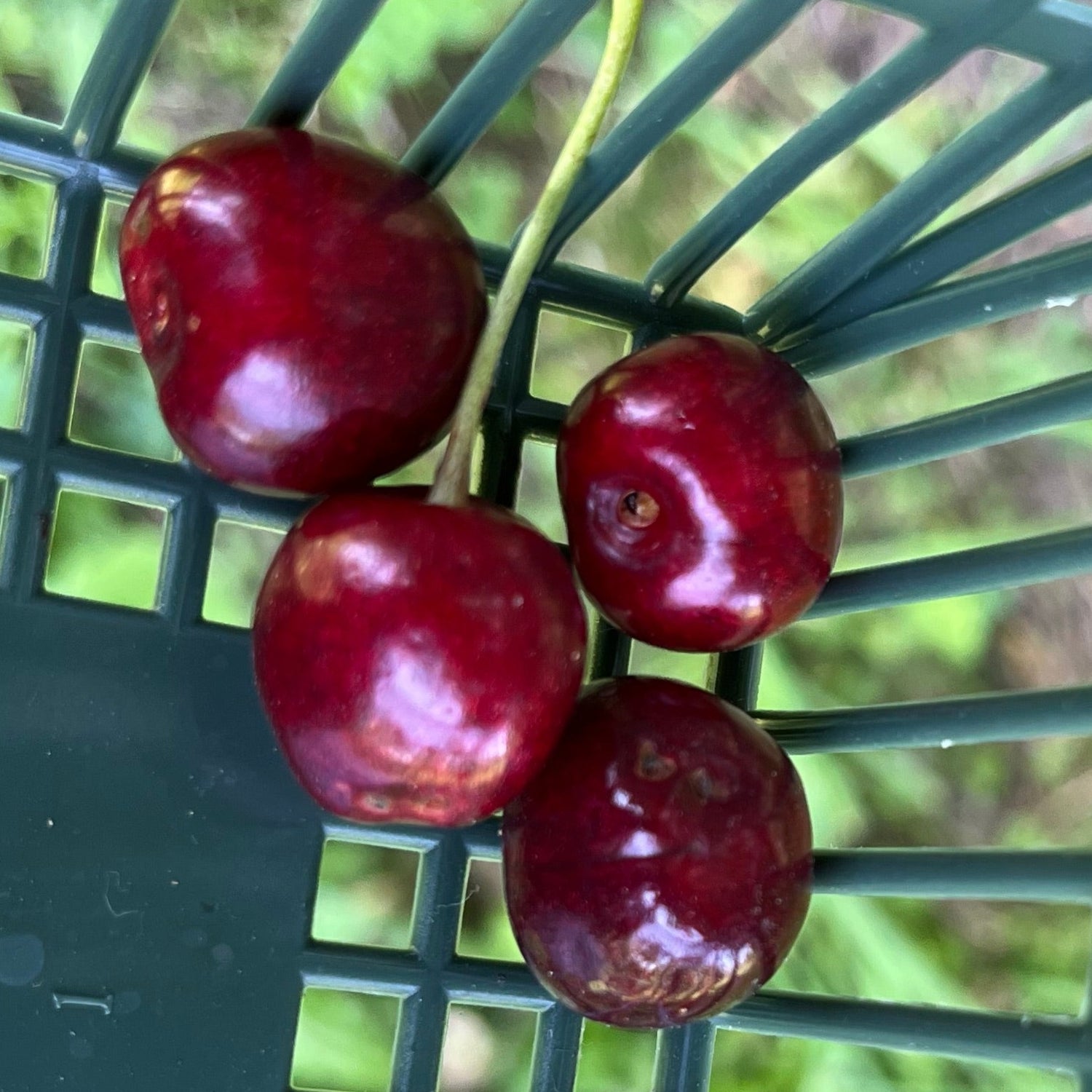
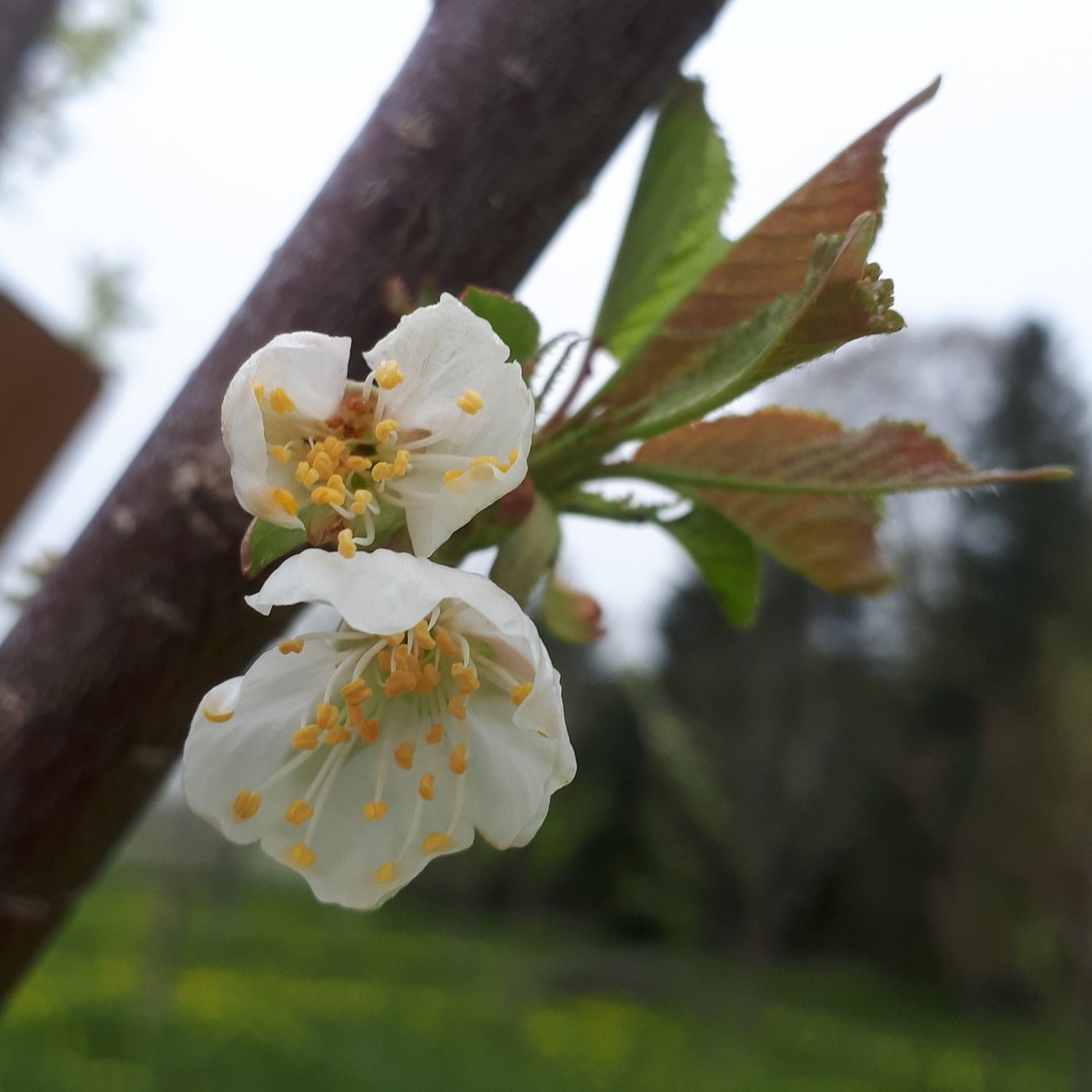
History: Viva originated in 1935 as a possible hybrid of Hedelfingen and Victor.
Why We Grow It: Viva produces medium-sized, dark red cherries with good flavour. They are suitable for many uses including fresh eating, cooking, and preserving. They are one of the first cherry varieties to ripen, creating a pleasant start to the cherry season.

History: Miki* Life was bred in Hirosaki City, Japan in 1981 by Seiichi Kudo and patented in 1996. It is a cross between two popular Japanese varieties: Tsugaru and Senshu.
*without knowing how the name is written in Japanese, it is difficult to say what 'miki' translates to but it could be 'beautiful tree'
Why We Grow It: Like many other Japanese varieties, Miki Life is a lovely red apple that is all sweetness with no acidity. These juicy apples can also be used to help bulk up cider and add alcohol by adding more sugars.

History: Little is known about Kermerrien aside from the fact it originated in the Quimplerlé region in France. It was exhibited by an orchardist at an event in 1896 and was described in a book on cider apples published in the same year, but it is unknown how old the variety is. It is commonly used to make traditional Breton cider.
Why We Grow It: This bittersweet cider apple produces a good single-variety cider with a nice golden juice. The tree is vigorous and starts bearing at a young age.

History: Kandil Sinap* originated in the early 1800s around the Black Sea, although it is debated whether it originally came from the Crimean Peninsula in the Ukraine or the Sinop Peninsula in Turkey. It was at one time commonly exported into Russia.
*There are different thoughts on what Kandil Sinap translates to, some say it is 'candle of Sinop,' others 'sweet apple of Sinap,' and it translates directly from Turkish as 'oil lamp'
Why We Grow It: Kandil Sinap's most prominent feature is the odd shape of the fruit, strangely oblong and conical, almost resembling a candle in appearance. The odd green fruit have a sweet, sprightly flavour and are quite aromatic, although they do bruise easily. The tree naturally stays smaller but produces heavy crops and is great for backyard orchards.

Why We Grow It: The saying 'big things come in small packages' holds true for Chinook. Although the fruit is on the smaller side, it boasts a lovely red skin, excellent sweet-tart flavour, a nice aroma, and crisp and juicy flesh. Fans of this variety will be happy to hear that the fruit can be enjoyed well through the winter, it is an excellent keeper and can last 6-7 months in storage. On top of that the tree grows fairly vigorously, starts bearing fruit at a young age, and produces heavy crops (although thinning will be required).
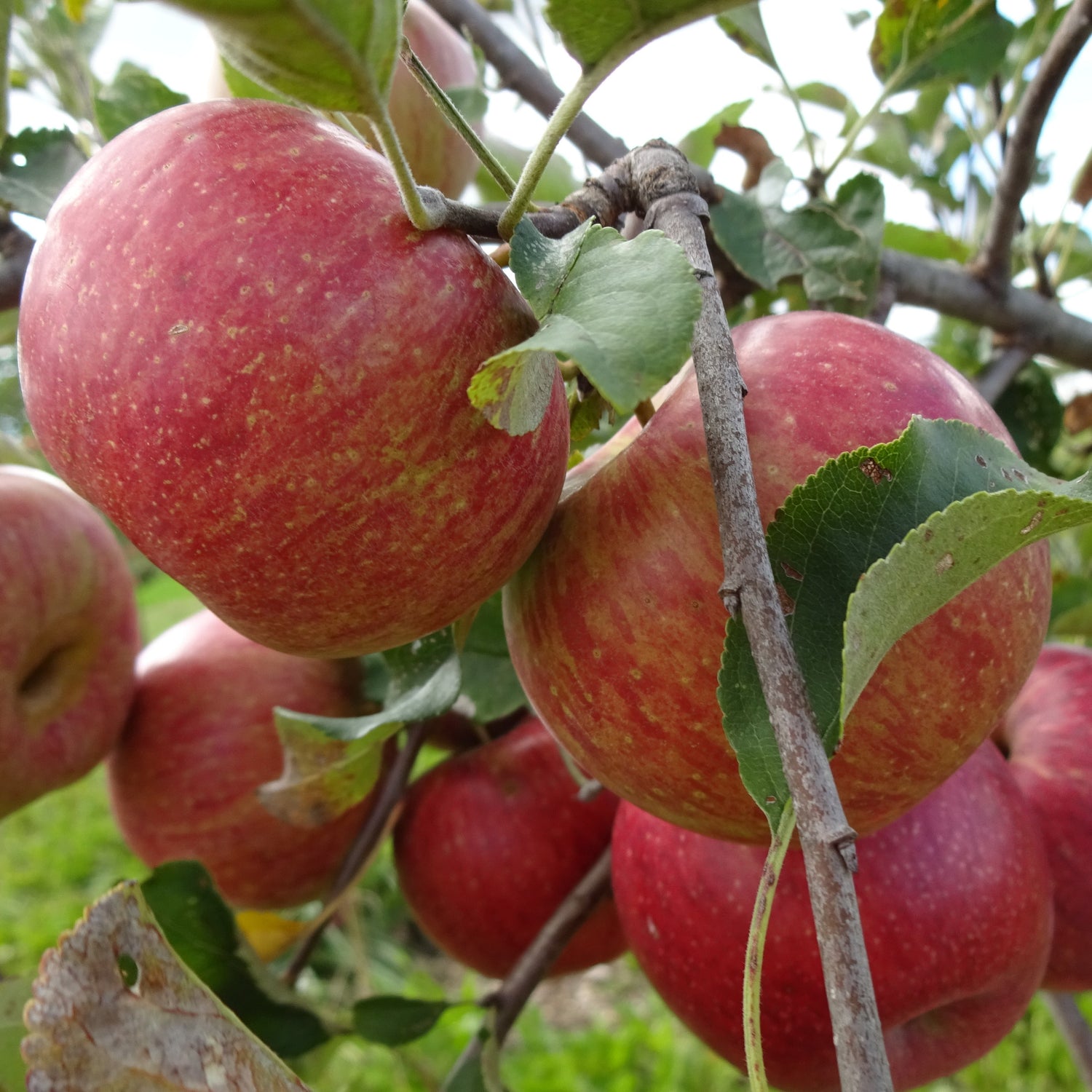
History: Tsugaru is another apple that was created at the Aomori Apple Experiment Station in Japan and released in 1975. It was likely named after Tsugaru, a nearby city, or the Tsugaru samurai clan that controlled the area during the Edo period. This variety is quite popular in Japan and represents the sweetness that is coveted among Japanese apple fans.
Why We Grow It: If you love sweet apples, you need to give Tsugaru a try. It has a very mild flavour with virtually no acid. It is performing very well in our test orchard, providing an abundance of nice clean fruit. It is one of Steph's favourites.

History: Major dates back to potentially before the nineteenth century and was commonly grown on farms in Devon and Somerset in England. It remains a traditional English cider variety.
Why We Grow It: Major produces a lovely bittersweet juice that is good both in blends or on its own. It ripens relatively early so it is a nice apple for extending the cider pressing season.
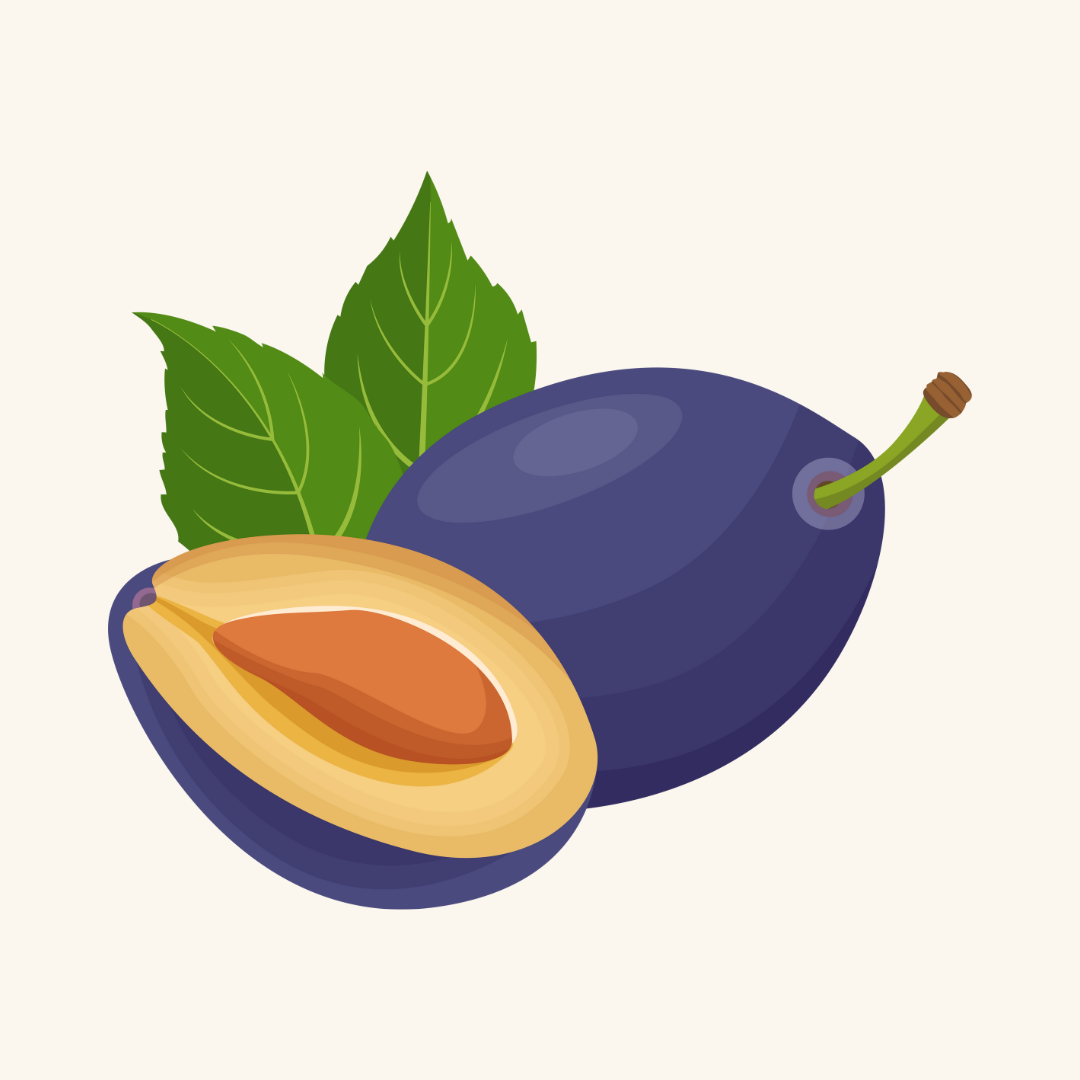
History: Despite once being the most commonly planted commercial plum tree in New York, Bradshaw's origins are quite hazy. It is uncertain whether the variety even originated in Europe or the US. It was named in 1846 by C.M. Hovey who wrote about it in his "Magazine of Horticulture," naming the variety "Bradshaw" after an E.E. Bradshaw who had exhibited excellent specimens of the fruit for several years. Bradshaw has since been eclipsed by other plum varieties.
Why We Grow It: Bradshaw produces relatively large purplish-red plums of good quality. The flavour is pleasantly sweet and the variety is good for fresh eating and likely cooking and processing like other European plums. It is semi-clingstone. The tree is self-fertile, productive, and quite hardy, although it can be slow to start bearing fruit.

History: Little is known about this variety aside from that it originated in the Brittany region of France in the 1800s. The variety is held in high esteem as a traditional French cider variety. Translated from French, its name means 'Queen of Apples.'
Why We Grow It: Reine des Pommes produces a bold, fragrant flavoured bittersweet cider that is quite unique. It is good both as a single-variety cider and in blends. The tree is fairly vigorous and produces good crops.
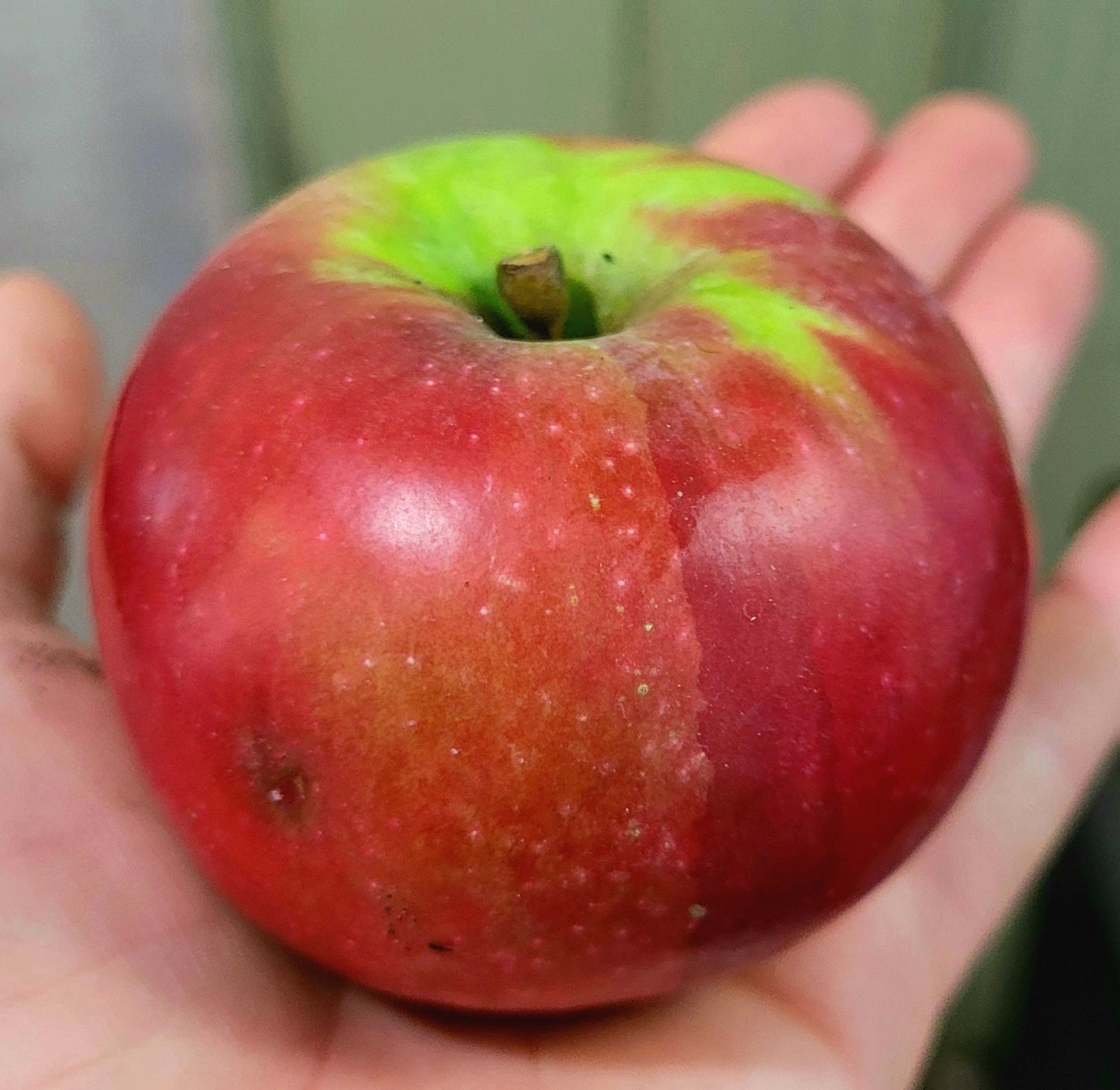
History: Snow, aka Fameuse, apples originated near Lake Champlain in Quebec some time before the 1730s. The exact origin is unclear but this variety is thought to have originated from a seedling or cutting brought from France. From about 1750-1850, this was one of the most commonly grown apples in Quebec until the orchards were almost wiped out in the latter half of the 19th century by disease and failed to regain their popularity. However, these lovely apples may still be with us in their own way as they are one of the potential parents of McIntosh.
Why We Grow It: It is easy to see why Snow apples were once so popular. These apples have a lovely deep red skin with pure white flesh with a sweet strawberry flavour. These trees are also quite cold hardy and produce heavy crops.

History: Paula Red (sometimes written Paulared) was discovered in Michigan in 1960 by Lewis Arends near a ravine where apples were dumped. It was one of several wild apple seedlings that had sprouted up from the discarded seeds. Likely pleased by its attractive red skin and flavour, Arends named it 'Paula Red' in honour of his wife Pauline. It is a cross between Duchess and McIntosh.
Why We Grow It: Paula Red produces medium to large red apples with small yellow/green patches that are juicy and firm with a nice sweet/tart flavour. The flavour has strong vinous and strawberry notes. It is also slower to brown. This early-ripening variety tends to soften relatively quickly which means it does not store very long, but it is great for making applesauce. The tree produces heavy crops although tends to bear every other year as a result.

History: Jalander is a little-known apple with a unique history. Eric Hambly, owner of Siloam Orchards, and his wife visited one of New York's experimental farm stations in the 1980s shortly before it shut down. Hundreds of newly developed disease-resistant apple varieties were slated for destruction, so the couple gathered as much material for propagation as possible and grafted the trees back in Ontario. In the end, five of these trees were chosen for their disease-resistance and taste. One of them was Jalander and it is Hambly's favourite apple among all disease-resistant varieties.
Why We Grow It: For those interested in growing truly rare and unique apples, check out Jalander! On top of its disease-resistance, this apple boasts a sweet-tart taste with character (according to Hambly), and is also crisp and juicy.

History: Brown's Apple was discovered in Devon, UK, in the early 1900s and is considered a traditional English cider apple. It remains quite popular in the area.
Why We Grow It: This traditional variety boasts cold-hardiness and a resistance to scab. It is great for making cider thanks to being simultaneously high in both acid and sugar, an uncommon feature in most apples. Brown's Apple presses to a fragrant, vintage quality juice.

History: Not to be confused with Stembridge Cluster, Stembridge Jersey was introduced in Somerset, England, in the 1950s. To this day it remains a popular variety in UK cider orchards.
Why We Grow It: The good-quality bittersweet juice produced by this variety explains why it is still popular in the UK. Although Stembridge Jersey suffers from a tendency to only produce fruit every other year, it does produce good crops in those alternate years and is relatively disease resistant.
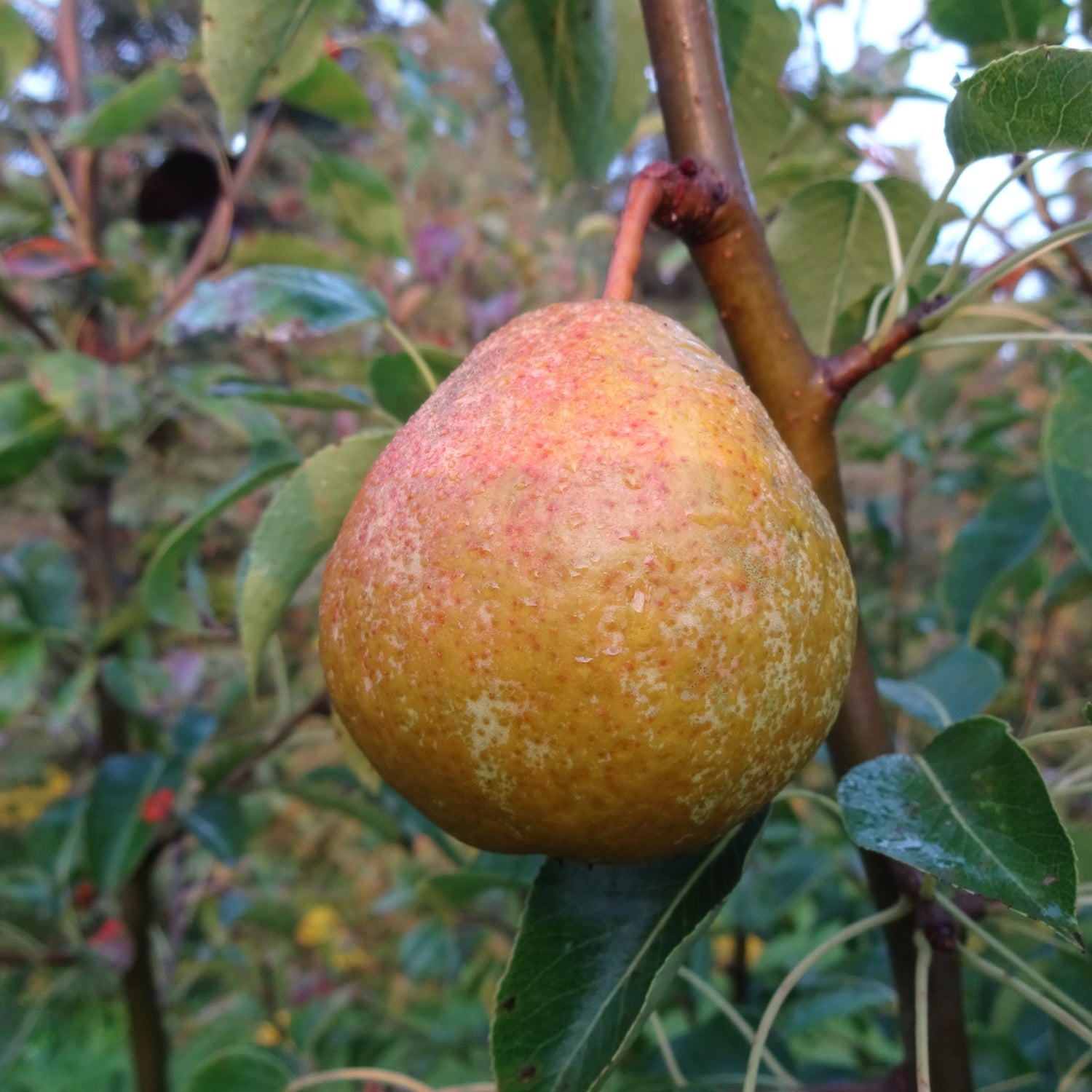
History: Luscious was developed at South Dakota State University as a cross between Ewark and South Dakota 31 in 1954. This goal was to create trees suitable for areas like the Northern Great Plains. Luscious was introduced in 1973, likely selected for its cold-hardiness and excellent flavour.
Why We Grow It: Luscious produces small to medium yellow fruits with an attractive red blush. The fruit is quite sweet, great for fresh eating and cooking/baking! This is an excellent option for fans of Bartlett who are looking for a versatile and cold hardy variety! Luscious also has value as an ornamental tree, producing white blooms and glossy green leaves that turn a nice red in the fall.

History: Greensleeves was bred as a cross between James Grieve and Golden Delicious by Dr. Frank Alston at the East Malling Research Station in the UK in 1966. In 1981 it received the Royal Horticulture Society Award of Merit and was released the year after.
Why We Grow It: These round, golden apples have a nice sweet/tart flavour that mellows out with maturity. They are great for making juice or cider as well as fresh eating. The tree has low vigour so it naturally stays more compact, a useful feature if you don't have a lot of space.
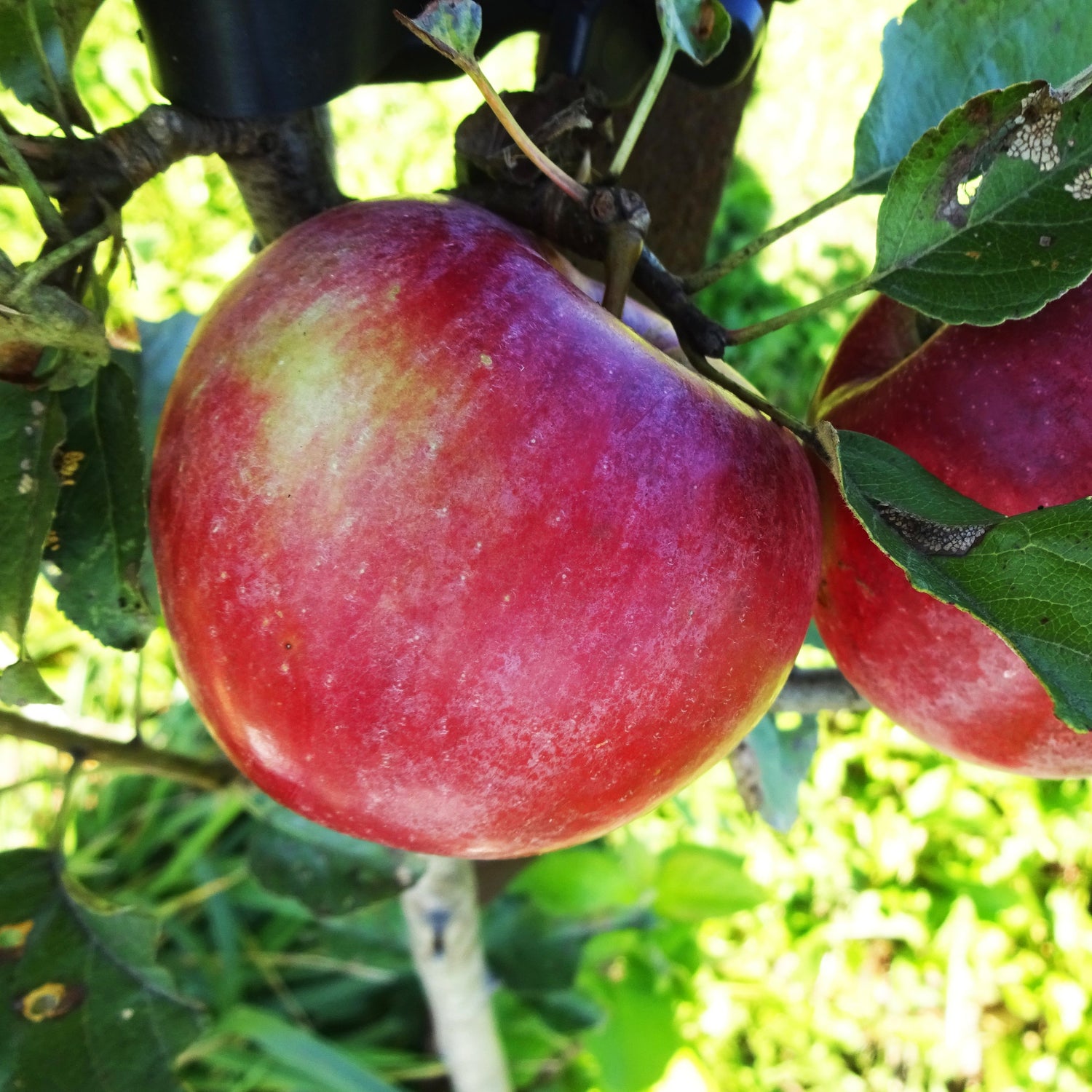
History: Sweet Sixteen was developed by the University of Minnesota and introduced in 1977. It is one of nearly thirty varieties released by the university since its breeding program began in 1888.
Why We Grow It: Some apples taste better when grown in colder climates, and Sweet Sixteen is one of them. For a fresh-eating apple, this is a favourite. Sweet Sixteen provides that crisp first bite that so many people love in an apple, and the pure white flesh will not disappoint for flavour with a very unique, distinct honeyed flavour. Its cold-hardiness and general disease-resistance (tolerant of scab and cedar rust) make it winner for the grower too.
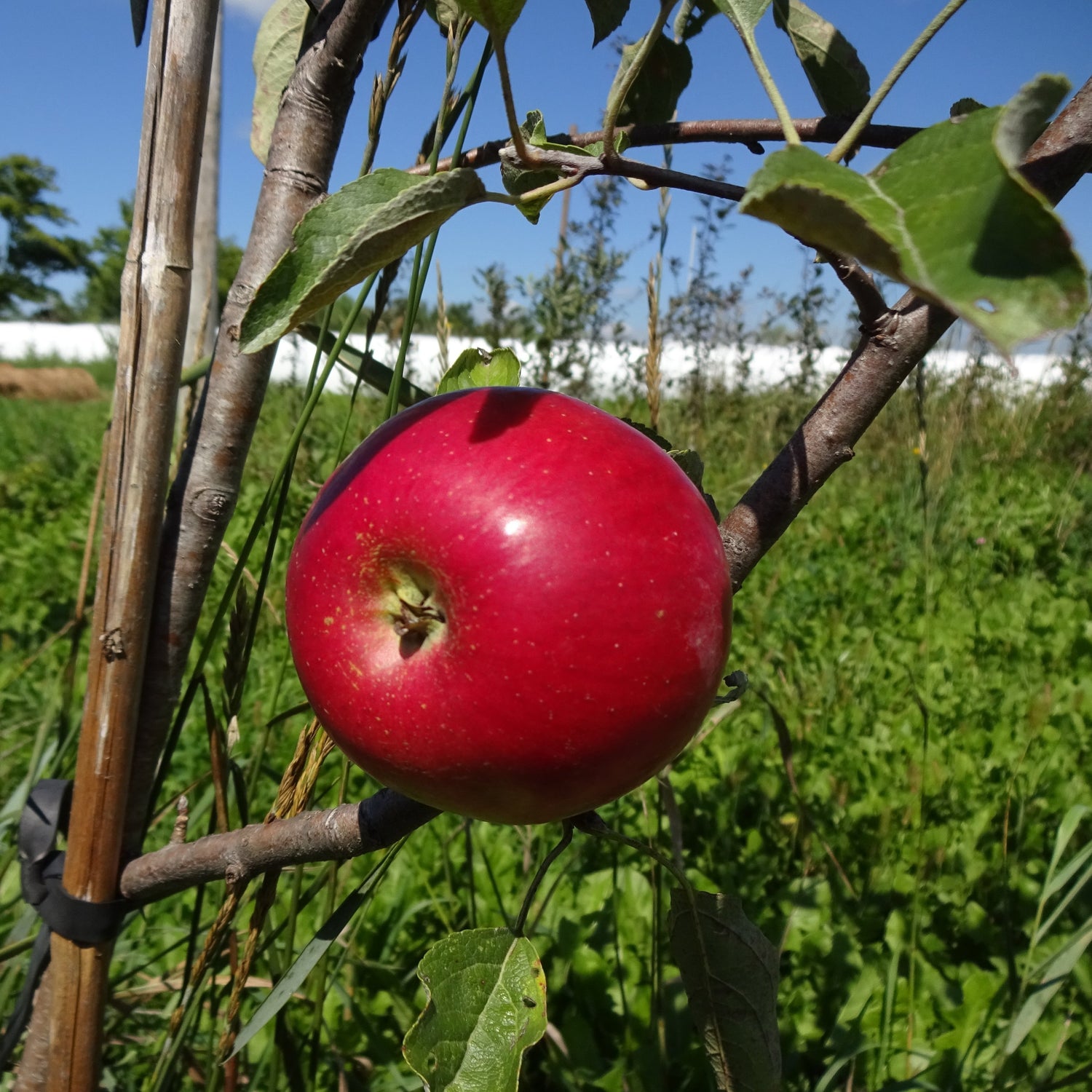
History: Akane was developed in Japan in 1937 at the Morioka Experimental Station. It is one of several kinds of produce created to better feed citizens and troops during WW2. The name 'akane' literally translates from Japanese as 'deep red.'
Why We Grow It: This crisp, sweet apple is great for fresh eating and has bright red skin. It tends to begin bearing at a young age and is relatively diseases resistant.