TEST july 30_Fruit Trees
297 products
Sort by:
297 products
297 products

History: York Imperial was discovered as a seedling tree growing on the farm of John Kline in Pennsylvania. Nurseryman Jonathan Jessop, of Springwood Farm in York, Pennsylvania, began propagating the variety in 1820 after witnessing schoolboys digging through the leaves around the base of the tree in spring and retrieving apples there were in great condition despite spending all winter on the ground. In an age without refrigeration, Jessop knew this variety had excellent commercial potential. It was initially named Jonathan's Fine Winter for its excellent storage properties but was later renamed York Imperial after horticulturalist Andrew Jackson Downing called it the 'imperial of keepers,' again referencing its storability and the location of Jessop's farm. It quickly became popular and remains one of few heritage apples that are still commonly grown in the US today.
Why We Grow It: York Imperial produces a rather lop-sided fruit with yellow skin and red striping. It is crisp and juicy with a lovely sweet, honeyed flavour that is hard to turn down. The fruit is truly all-purpose, also being great for cooking, baking, jelly, juice, drying, and cider and generally storing quite well. While not the fastest growing tree and with a tendency to start producing fruit a little later than other varieties, York Imperial is an exercise in patience that is well worth the wait.
History: York Imperial was discovered as a seedling tree growing on the farm of John Kline in Pennsylvania. Nurseryman Jonathan Jessop, of Springwood Farm in York, Pennsylvania, began propagating the variety in 1820 after witnessing schoolboys digging through the leaves around the base of the tree in spring and retrieving apples there were in great condition despite spending all winter on the ground. In an age without refrigeration, Jessop knew this variety had excellent commercial potential. It was initially named Jonathan's Fine Winter for its excellent storage properties but was later renamed York Imperial after horticulturalist Andrew Jackson Downing called it the 'imperial of keepers,' again referencing its storability and the location of Jessop's farm. It quickly became popular and remains one of few heritage apples that are still commonly grown in the US today.
Why We Grow It: York Imperial produces a rather lop-sided fruit with yellow skin and red striping. It is crisp and juicy with a lovely sweet, honeyed flavour that is hard to turn down. The fruit is truly all-purpose, also being great for cooking, baking, jelly, juice, drying, and cider and generally storing quite well. While not the fastest growing tree and with a tendency to start producing fruit a little later than other varieties, York Imperial is an exercise in patience that is well worth the wait.

History: Nonpareil originated in France although no one is sure quite how old it is or what its exact origins are. We do know that it was brought over to England sometime in the 1500s where it gained more popularity due to its pear-drop flavour. It can still be found at markets, farmgate sales, and in gardens in England to this day and is believed to be the ancestor of the popular European variety Ashmead's Kernel.
Why We Grow It: Nonpareil is not much to look at with its dull yellow-green russet skin but it packs a flavourful punch: sweet-sharp with notes of pear-drops. The fruits hangs onto the tree well and stores for several months. It is mainly used for fresh eating but can be added to cider blends as well. The tree is naturally more compact and has moderate vigour.


History: While on vacation on Manitoulin Island in 2022, Wayne Kuntze found Manitowaning Pink Heart growing wild in the corner of the Gulyas family's yard and (with permission) brought the apples and some grafting material back to Silver Creek Nursery. The distinct pink colour and the heart shape of the fruit caught his eye, along with the pink flesh inside. Fittingly, he named it Manitowaning Pink Heart after the village where the property was located and the unique appearance of the apple. A truly unique variety, we are happy to officially introduce it in 2023!
Why We Grow It: We love unusual apple varieties and Manitowaning Pink Heart really stands out! With its attractive pink blush over yellow skin, pink flesh, and heart-shaped fruit, this is a one of a kind apple! Despite its sweet appearance, this crabapple is quite tart and tannic. Like other crabapples, this one is best suited for jelly and cider. Its pink flesh may help add a distinctive colouration.
This is a brand new variety and we're still learning about it! For any avid apple growers who decide to plant these out, feel free to keep us updated on how it grows, what you use the fruit for, etc, so we can provide as much information as possible!
Bloom photo courtesy of Christine Gulyas
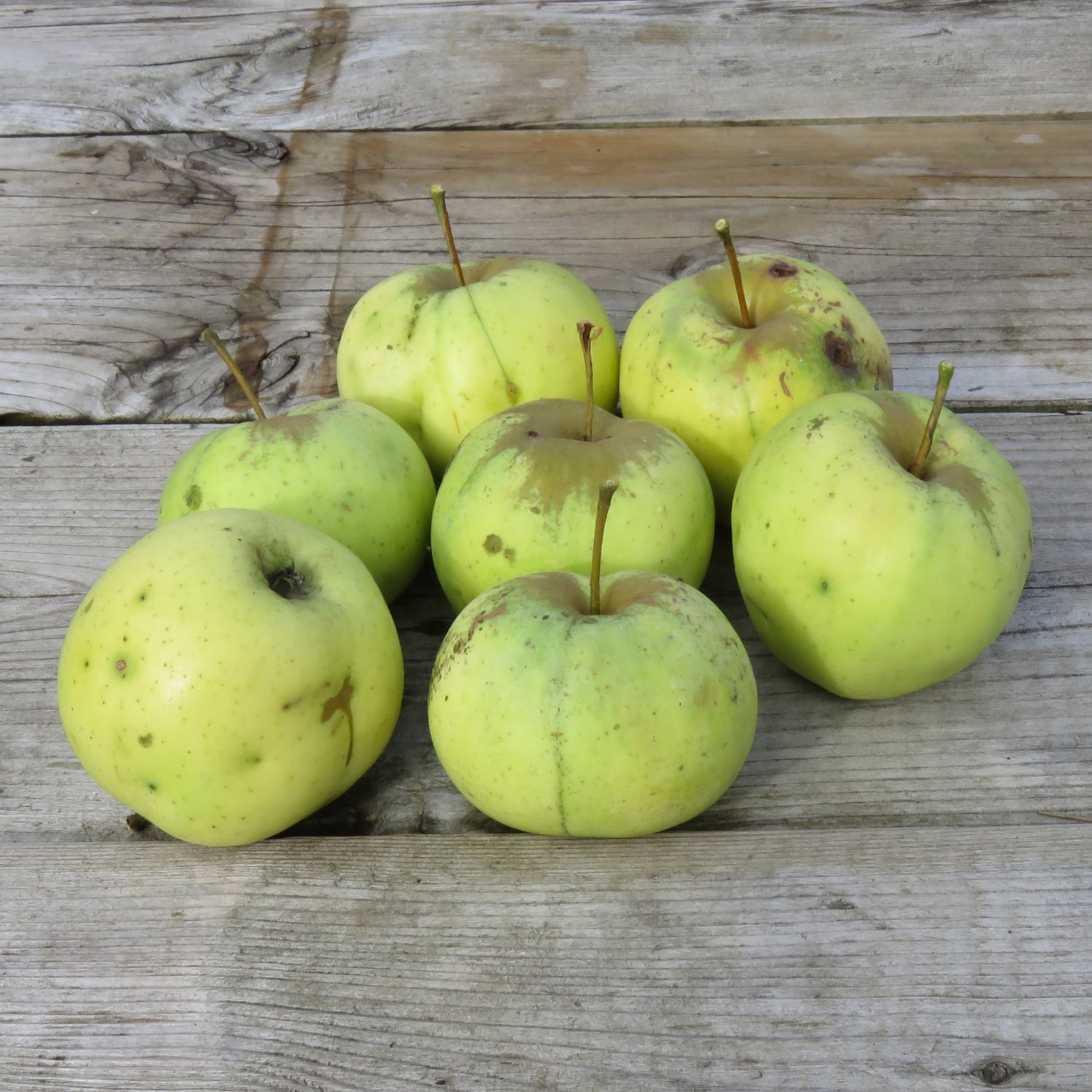
History: Little is known about the origin of this heritage apple, but Tolman Sweet has been highly valued since its discovery. It is uncertain whether it came from Massachusetts or New York in the 18th or 19th century but it was first recorded in 1822. This hardy tree was used as a source of rootstock at one time.
Why We Grow It: Tolman Sweet is a great all-purpose apple. The fruit are medium-sized with yellow skin, and have a distinctly sweet, dry flesh. They are nice for fresh eating but can also be used in baking, drying, and pickling. Their unusually low acid content helps to reduce acidity in both sweet and hard cider.
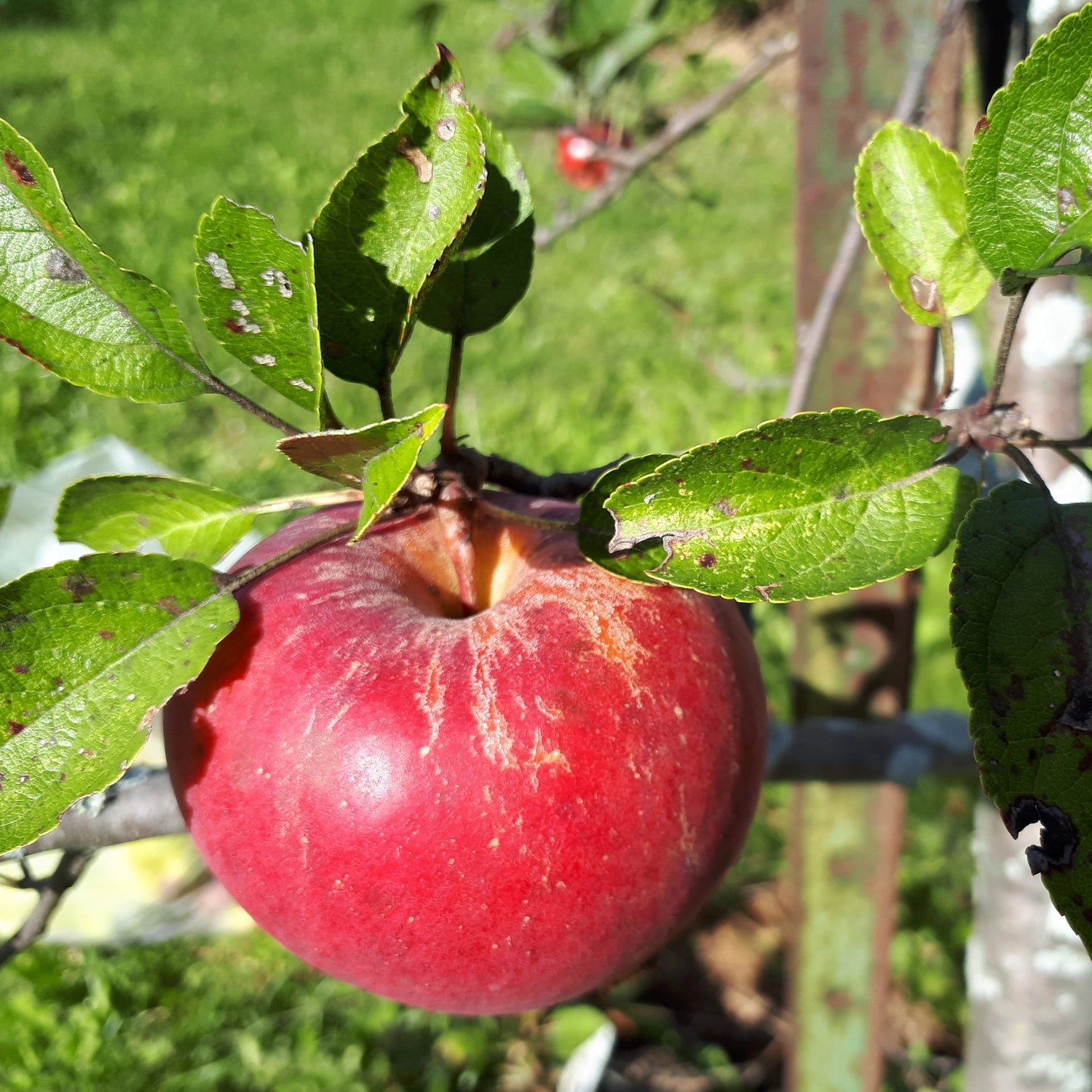
History: Winesap's origins are unclear but it is believed to have originated from New Jersey pre-1800s where it was popular for making cider. It is first mentioned in a couple of books on apples in the early 1800s. Winesap was popular in the US until the 1950s due to its good keeping ability but the advent of better storage technology allowed better tasting apple varieties to eclipse it. It is still quit popular with backyard orchardists.
Why We Grow It: Winesap's all-purpose nature helps to explain why it hasn't faded into total obscurity like some other varieties. The medium-large red and yellow skinned fruit is good for cooking and making cider. It has sweet flesh with some tang or 'winey' flavour that is also decent for fresh eating. On top of that, the tree is productive, very resistant to fireblight, and the fruit stores well.

History: So Sweet has a so obscure history. It is apparently an older variety that was discovered growing along the banks of the St Lawrence river. It is quite possible that a pear core was tossed from a passing boat and it either landed on the shore or washed up where a seed eventually grew into the lovely pear tree we have today.
Why We Grow It: So Sweet produces small, unusually round green pears that, as the name suggests, are just oh so sweet! The fruit is great for fresh eating and can be made into jams or preserves which is fortunate since it only keeps about a month. The tree itself is self-pollinating, extremely cold hardy, starts bearing fruit at a young age, and is very productive. Overall, a great pear to have around!

Why We Grow It: Pinova produces lovely yellow fruit with pink to red blush and some striping. It is very flavourful with plenty of sweetness and complexity and a strong floral aroma. This crisp, juicy apple is great for fresh eating, produces bountiful crops, and stores exceptionally well. The tree is also resistant to scab and late spring frosts!
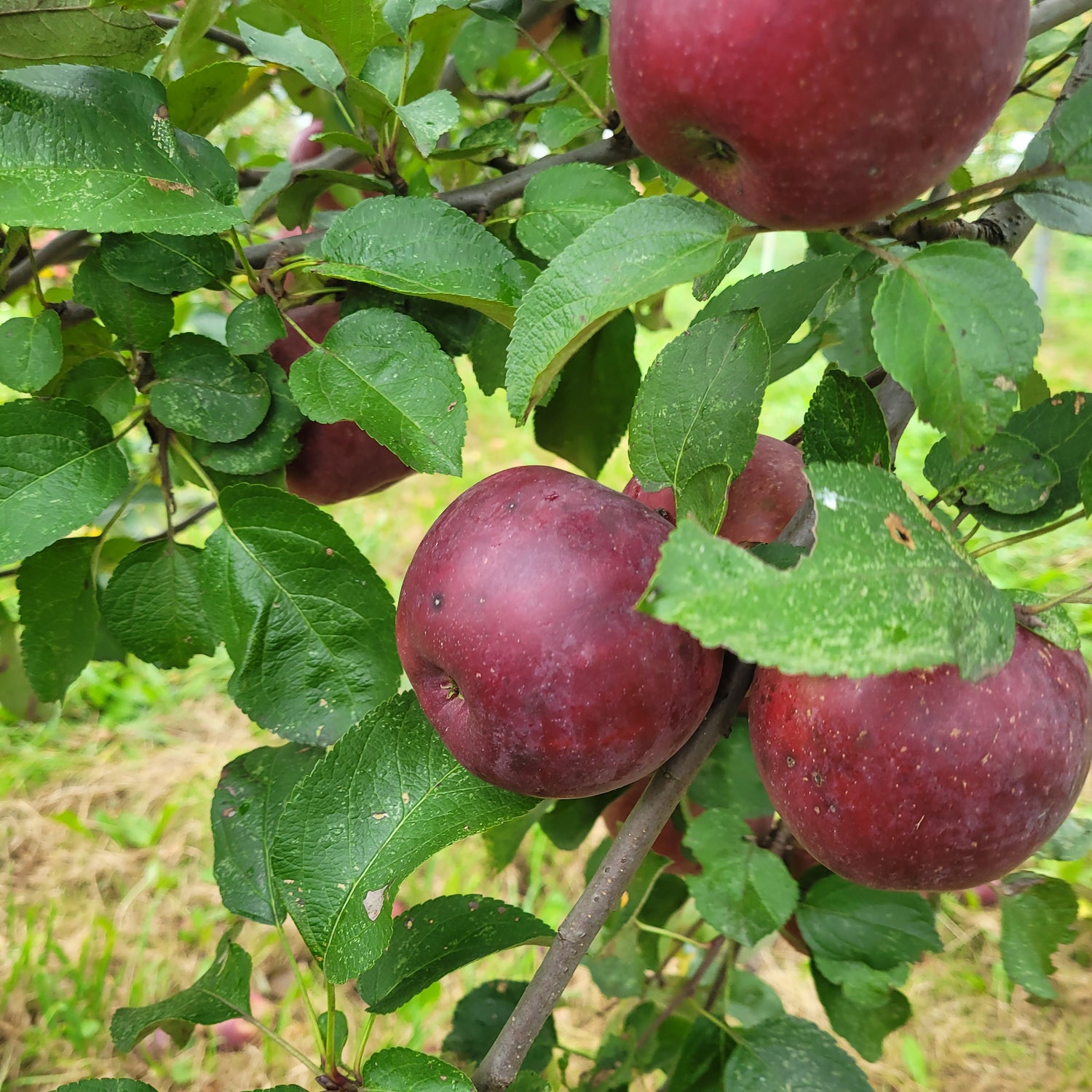
History: Spartan apples are a Canadian variety that was developed at the Pacific Agri-Food Research Centre in Summerland, BC in 1936 by Dr. R.C. Palmer. Of particular interest is the fact that Spartan apples are the first apple variety created by a formal scientific breeding program. They have been popular in North America ever since and are even commonly found in gardens in the UK.
Why We Grow It: This variety is known for its sweet/acid flavour and pleasant crunch, especially when eaten fresh off the tree. They tend to soften rather quickly after they are picked but luckily the fruit hangs on the tree 2-3 weeks after its ripe which helps to extend the optimal time to enjoy this variety. Spartan apples are also known for being relatively easy to grow, having decent disease resistance, heavy crops, and an ability to keep all winter.

History: Strawberry Pippin is another variety whose history we know little about. All we know is that it likely originated in England where it was first recorded in 1874. The 'pippin' in its name indicates that it was grown from seed by chance.
Why We Grow It: While we may not know much about its past, we do know why we are happy to grow it! Strawberry Pippin has an attractive red striped fruit which is quite firm and sweet. Its excellent flavour is best enjoyed picked fresh right off the tree. In our experience, Strawberry Pippin does well with minimal care, and is an excellent choice for the backyard.
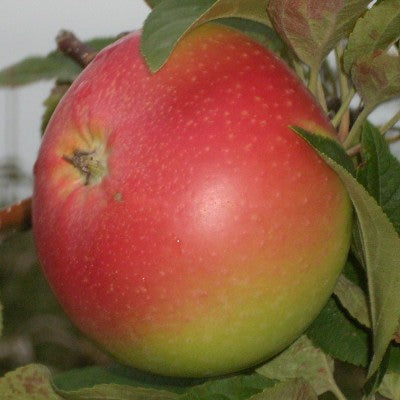
History: Winter Banana originated on David Flory's farm in Indiana around 1876. It was named Winter Banana due to the apparently banana-like aroma it gives off when ripe. It is also named Flory Banana or Flory Apple after David Flory. Winter Banana was grown on the west coast and gained some popularity in England and Germany. The thin skin of this variety is easily bruised which prevented it from being a commercial variety but it is still commonly found in gardens and farmer's markets.
Why We Grow It: This all-purpose apple is extremely attractive with pale yellow skin and a pinkish-red blush. The banana-like aroma is accompanied by sweet flesh with an acid tang. The flavour improves in storage and the apples can be kept all winter.

Why We Grow It: These apples feature red blush over green skin and have a rather flattened appearance. They have an intense pineapple flavour that is a pleasant mix of sweet and sharp, and are also crisp, juicy, and high in Vitamin C. As one can imagine, they are great for fresh eating but can also be used for cooking. The tree is vigorous and produces good crops, but does tend to bear fruit biennially. It is also one of more particular trees, being more sensitive to late frosts and drought conditions.
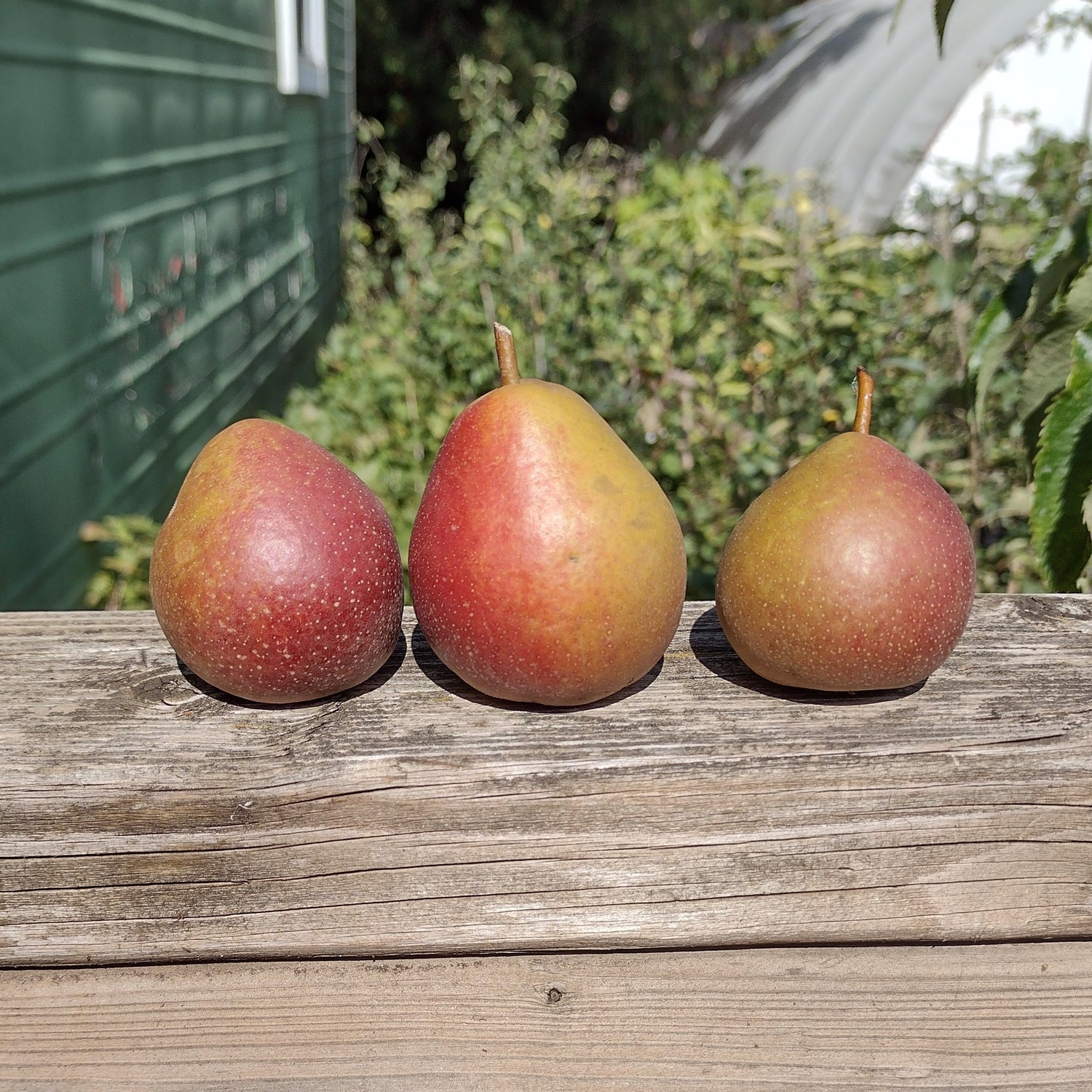
History: The history of the Seckel pear is somewhat contentious. It was said to have been named after a Mr. Seckel who discovered the variety growing as a sapling near Philadelphia in the late 1700s or early 1800s. Some say it is the only commercial American pear since it was thought to have been a wild seedling but others believe the tree sprouted from a seed left by German immigrants. Either way, this lovely little pear is still grown on a small scale across the States as a specialty fruit.
Why We Grow It: Although it is small in size, this heirloom is popular for eating fresh due to its high quality flavour. The skin is ruddy green with a pronounced red blush and the flesh is very sweet with a spicy flavour, which is why it's sometimes called 'Sugar Pear.' Aside from being excellent for fresh eating, this pear is great canned, pickled, and spiced. As an added bonus, the tree is resistant to fireblight.
Customer Suggestion: One of our wonderful customers shared a recipe for Pickled 'Sickle Pears' (aka Seckel) that had been passed down from his great grandmother. We haven't tested it out yet, but Seckel pears, brown sugar, cinnamon, vinegar and cloves, cooked and marinated, then pickled sounds very intriguing! Thanks for sharing David!

History: Veteran peaches were developed in Vineland, Ontario and released in 1928.
Why We Grow It: Very hardy and of Canadian origin, Veteran is perhaps the most cold-hardy peach we offer. The freestone fruit is large with yellow flesh and an easy-to-peel skin. Although it has slightly mealy flesh, it boasts an excellent flavour and makes a great pie! This is the best preforming peach in our test orchard.


History: Waxing Moon was discovered by Steph's cousin Liam Younger who has spent many summers working here at the nursery! He found it growing as a chance seedling on his family farm in 2023, drawn in by the apple's pale white skin. Naming the variety Waxing Moon for its moon-like appearance, he grafted a small number of the trees here and we are happy to introduce the variety in 2024!
Why We Grow It: Waxing Moon produces an exceptionally pale yellow apple that is nearly white! While one would think it is a Yellow Transparent apple, its mild sweet flavour lacks any of the tartness. Like Yellow Transparent, this variety is good for fresh eating and sauce. It appears to be relatively disease resistant, having produced clean fruit with no care whatsoever.
Since this is a new variety, there is still a lot for us to learn about it! If you grow this variety and have any observations or find any fun uses for the fruit, we'd love to hear from you!

History: Mindemoya Maroon was discovered near Mindemoya, Ontario by Wayne Kuntze when he was vacationing on Manitoulin Island with his family in 2020. It, along with Mindemoya, were found growing wild along Lake Mindemoya. It was named for the location where it was found and the red flesh of the crabapple. We are happy to officially introduce this variety to the world in 2023!
Why We Grow It: Always excited to try new things, Mindemoya Maroon is hard to turn down with its bright red flesh. For those who like really tart apples, it is not bad for fresh eating but would likely be better for jelly or potentially cider. Red-fleshed varieties often produce a lovely red juice, adding visual appeal to whatever they're used in!
This is a brand new variety and we're still learning about it! For any avid apple growers who decide to plant these out, feel free to keep us updated on how it grows, what you use the fruit for, etc, so we can provide as much information as possible!

History: Érdi Bõtermõ is a Hungarian variety of sour cherry that is a cross between Pangy and Nady Angol. It was bred by the Hungarian Research Institute for Fruitgrowing and Ornamentals and remains popular in Europe. It was brought back to the US by Michigan State University biologist Pr. Amy Iezzoni who is researching and breeding new sour cherry cultivars. It was given the name "Danube" in North America, named after the river that flows through Hungary, since it was considered easier to pronounce and spell.
Why We Grow It: Érdi Bõtermõ is unique in that it has a surprisingly sweet flavour compared to other sour cherries, making them suitable for fresh eating along with baking and preserving. It ripens early and produces large fruit that are deep red with firm red flesh.

History: In the 1830s in Lancaster County, Pennsylvania, a seedling apple tree grew beside the smokehouse of William Gibbons. Perhaps it sprang from a core that some one had tossed there while they tended the fire. Who knows? What we do know is that the aptly named Smokehouse was commonly grown in the area until its popularity waned as sweeter apple varieties appeared on the market. Still, this variety has stood the test of time due to its great flavour.
Why We Grow It: Traditionally Smokehouse apples are picked a little early and used for baking, but if they're allowed to ripen fully on the tree, some people have described the balanced flavour as being “like drinking fresh-pressed cider!”.
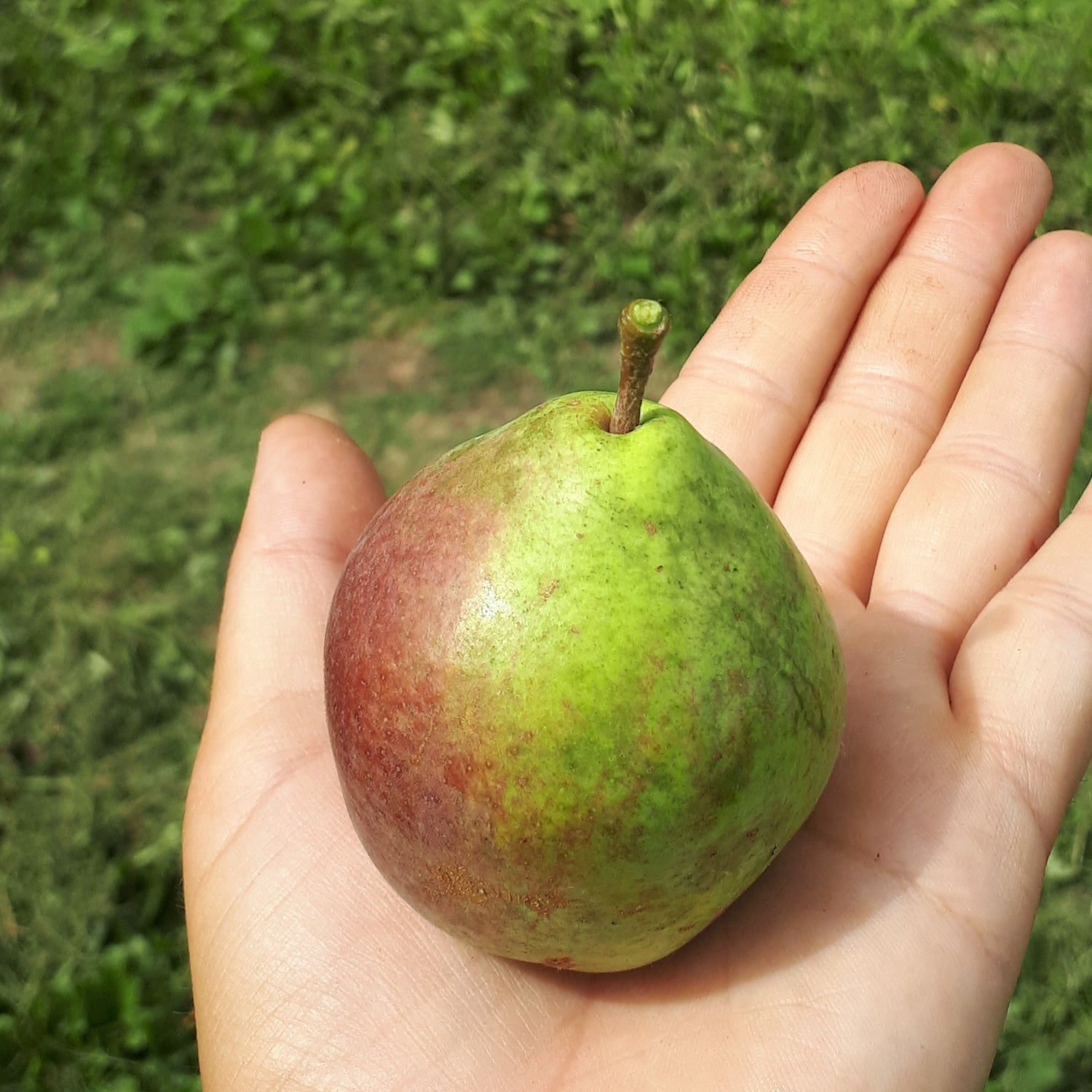
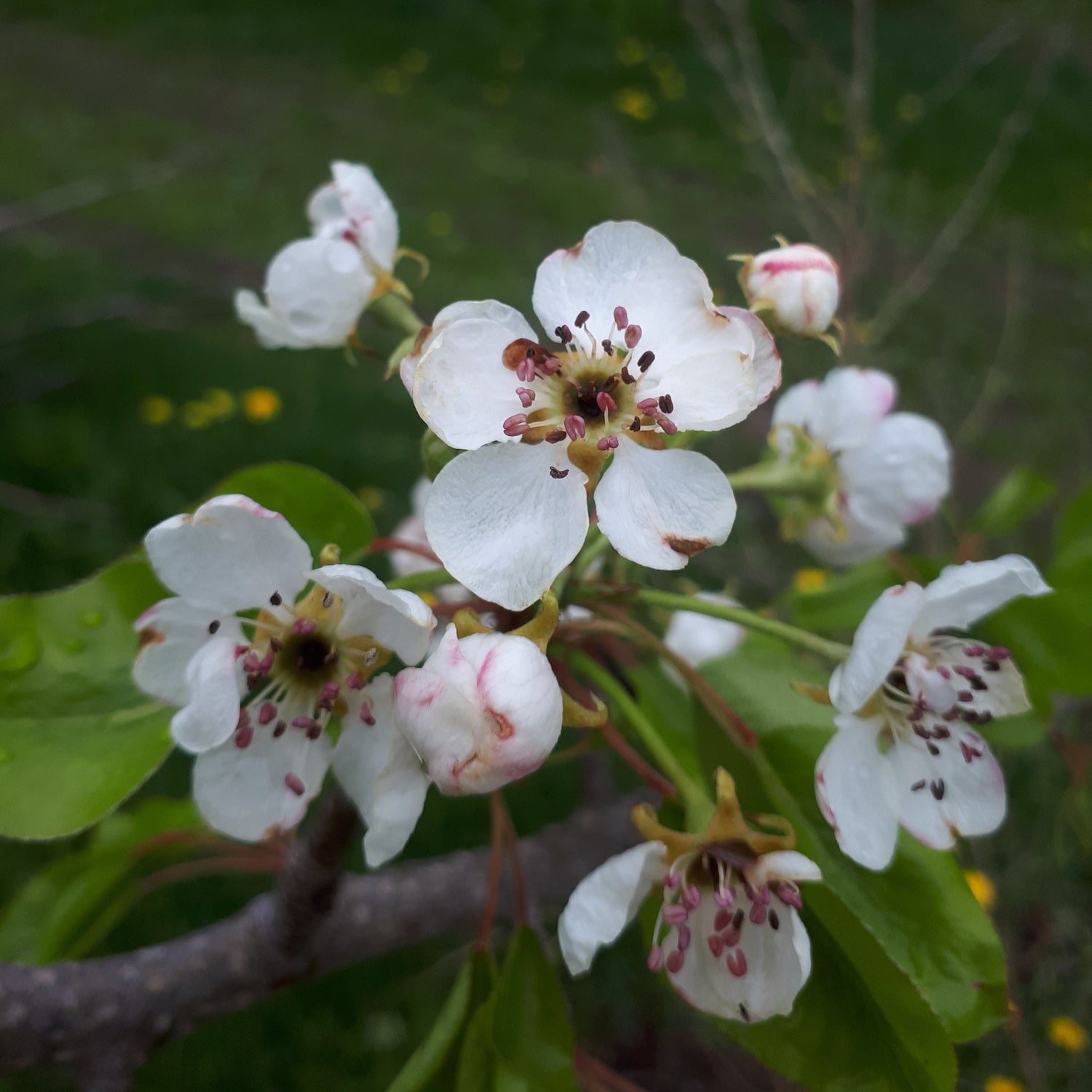
History: Summercrisp pears were developed by the University of Minnesota in an effort to create a cold hardy pear. They were successful in creating a hardy and delicious pear, releasing the variety in 1985. Its name is derived from the fact it ripens in summer (very early for a pear!) and that it is great right off the tree when still crisp.
Why We Grow It: Summercrisp performs amazingly in our test orchard, producing lots of freckled beauties that ripen uniformly and hang well on the tree. This early cold-hardy pear has a really sweet, pleasant flavour and is not gritty or dry. The fruit are average-sized with yellow skin and red blush. For optimal eating they should be picked before fully ripe and stored in the fridge until eating. This variety deserves to be more widely planted.

Why We Grow It: Discovery is a slightly sweet apple with noticeable acidity, and under optimal conditions it can have a strawberry flavour. Like many early apples, it is great for sauce. The fruit is on the smaller side and has a flatter shape with greenish-yellow skin overlaid with a bright red blush. The red can sometimes stain the cream-coloured flesh inside, providing some visual appeal. The tree boasts some resistance to scab and although it can take a while to start bearing fruit, once it does it bears quite reliably.
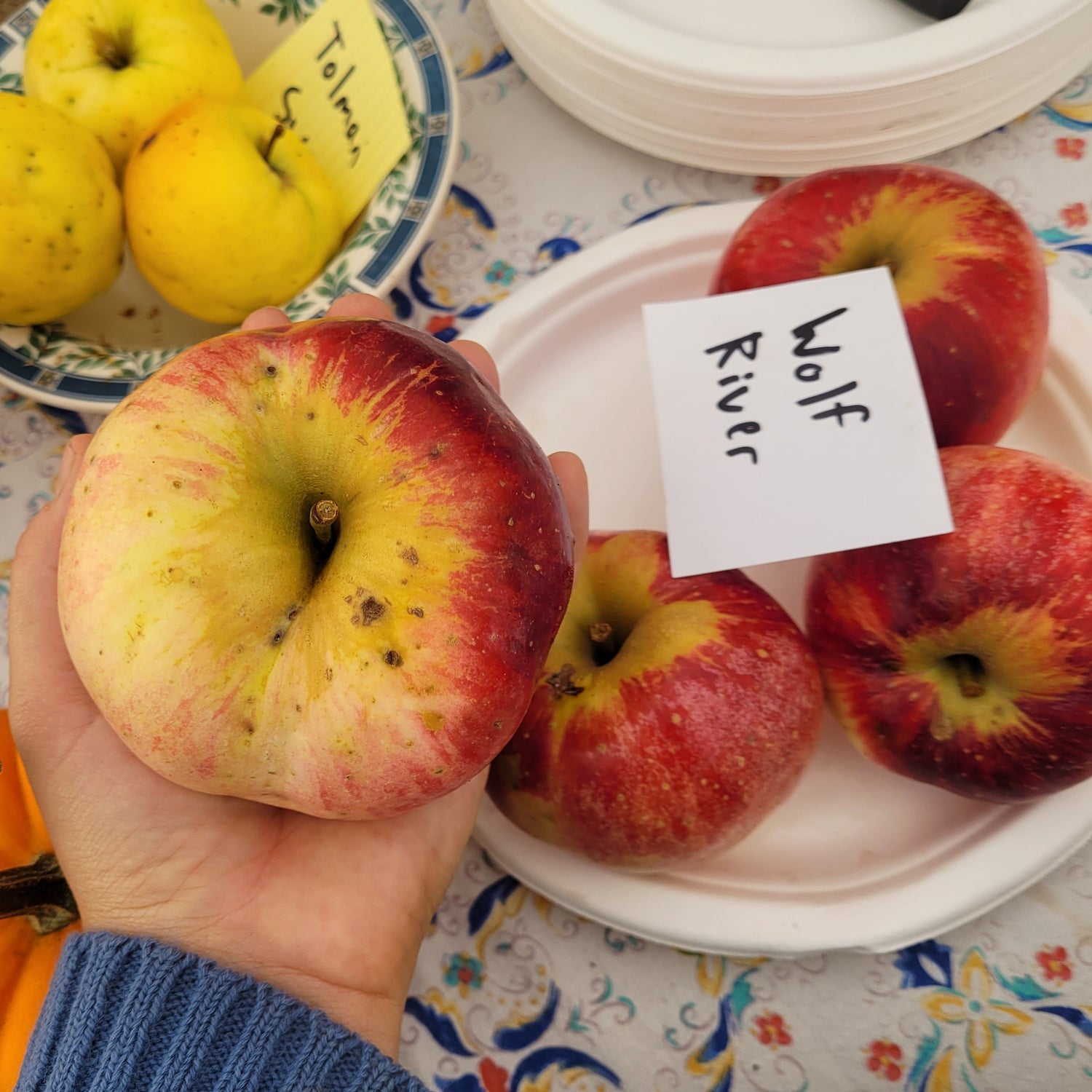
History: Wolf River was raised from seed by Quebec lumberman William Springer in the latter half of the 19th century. When Springer and his family were moving by wagon to Wisconsin, they bought a bushel of Alexander apples along the way. Upon arriving at their new home, he planted the seeds from said apples along the bank of the Wolf River and the Wolf River apple grew from there. This variety has since garnered a reputation as a good cooking apple and for the incredible size of its fruit.
Why We Grow It: First and foremost, Wolf River is legendary for the huge size of its fruit. The apples can weigh a pound or more and there are stories of pies being made from a single apple. The fruit, green with red blush and stripes, has a sweet and tart flavour that is good for cooking and it holds its shape well when cooked. The tree itself is hardy and relatively disease resistant as well.

History: Generally just known as Gravenstein, it is unknown when or where exactly these apples came from but they were imported from France to Denmark in the 1600s by Count Frederik the Younger and planted at the summer residence of the Danish royal family, Gråsten Palace. As a result the variety was named Gråsten (Danish for graystone) which translates to Gravenstein in German. This apple has been popular in Canada since the 1820s, particularly in Nova Scotia, and provided the dried apples and applesauce for American soldiers during WW2. In 2005 it was declared the national apple of Denmark.
Why We Grow It: Yellow Gravenstein's excellence as a fresh eating and cooking apple makes it easy to see why it is grown in so many different countries, even if the tree is slow to bear fruit and is prone to many common fruit tree diseases (although we haven't had much issues growing it here). It has a great sweet/tart flavour and is crunchy and juicy. The fruit is a nice yellow with red striping.
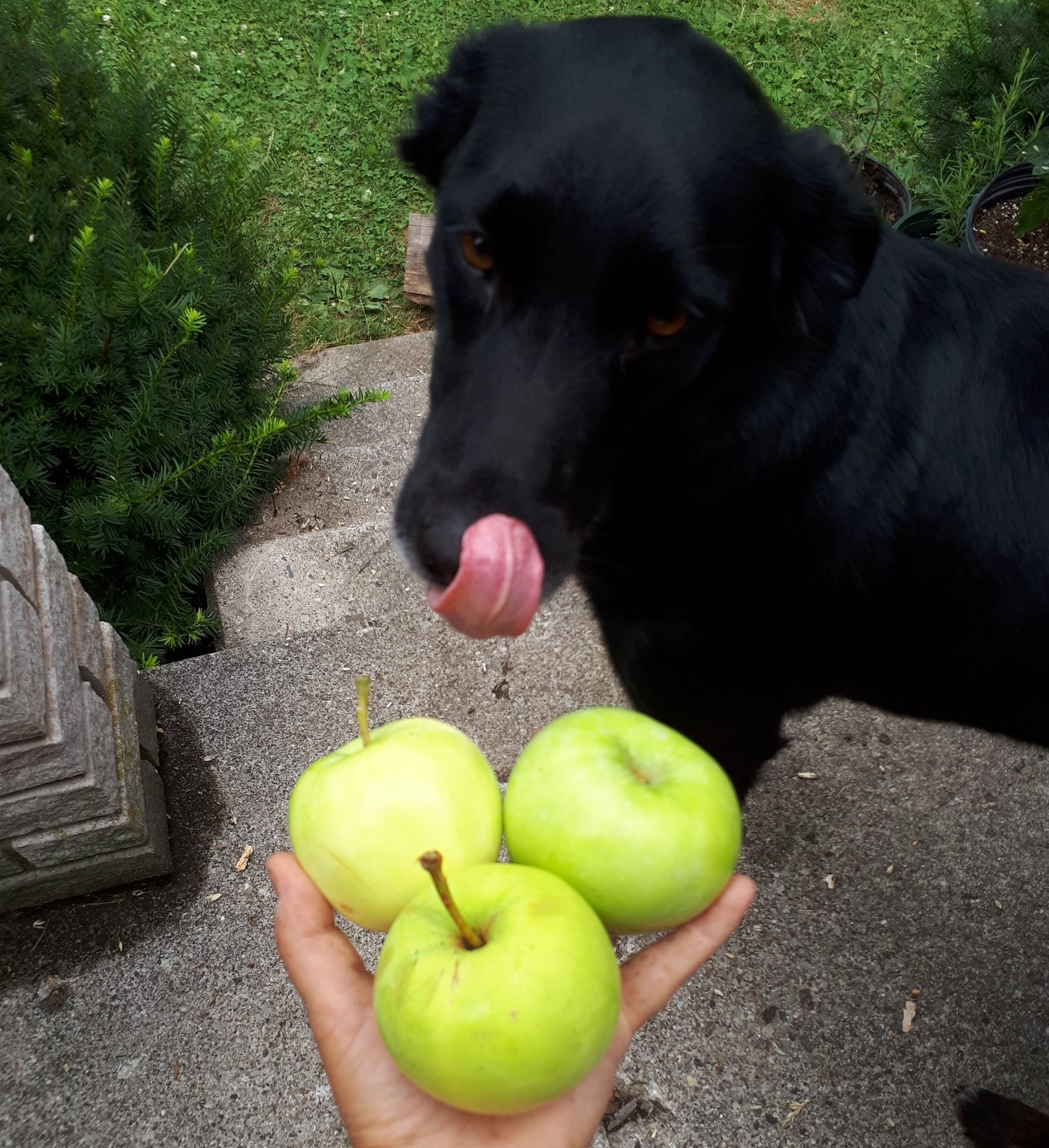
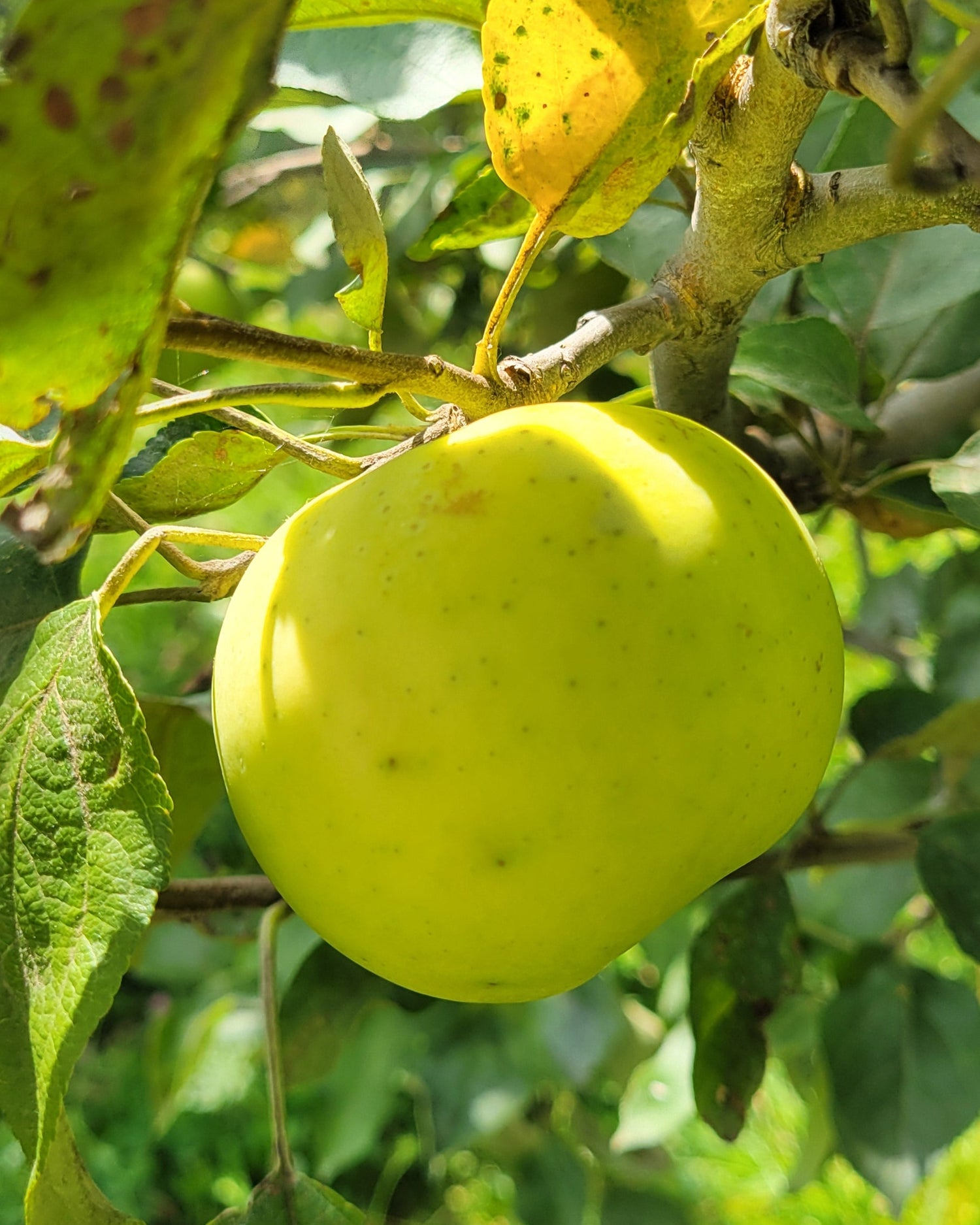
History: Yellow Transparent (aka White Transparent and Glass Apple) originated as a chance seedling in a nursery in Riga, Latvia around 1850. At the time Latvia was part of the Russian Empire so this variety is often considered Russian. Due to its early ripening and cold hardiness, this variety was widely grown in Europe, especially northern countries, where it is still grown today. It was imported to the US in the 1870s as part of an effort to import cold hardy Russian species that could potentially survive in states with harsher winters and became quite popular.
Why We Grow It: This classic early apple deserves a home in every home orchard. The fruit features pale yellow skin that almost looks transparent and white flesh with a sharp, sweet flavour. It can be eaten fresh but also makes a great applesauce. Like many early ripening apples, the fruit does not last long.

History: Twenty Ounce (aka Cayuga Redstreak) was discovered sometime in the early 1800s in Cayuga County, New York. It was first officially described in an 1844 issue of "The Magazine of Horticulture" by C.M. Hovey who called it Twenty Ounce due to its notable size.
Why We Grow It: These very large apples are excellent for cooking and make wonderful pies and applesauce. Save time with peeling and coring! They are a little tart for eating fresh, but makes an exceptional ingredient that keeps its shape when cooked.

History: Delbarestivale was developed by Delbard, a nursery in France, in the 1950s. Likely named as a portmanteau of 'Delbard' and 'estivale' (translated from French as 'summer') due to its early ripening time, this variety goes by many other names including Delcorf, Monidel, Dalili, and Ambassy. It was bred in an attempt to create an improved version of Golden Delicious. Although not quite as popular as Golden Delicious, it is still grown commercially in parts of France and England and the Royal Horticultural Society awarded it the Award of Garden Merit in 1998.
Why We Grow It: This French apple is very sweet but balanced nicely with a sharp flavour. The flesh is aromatic and crisp and the skin is a lovely, stripey bi-colour with reddish streaks overlaying green. The apples store quite well for an early-ripening variety, although they do tend to bruise easily.


History: Cortland apples were first bred in 1898 by Cornell University in New York and introduced in 1915. Since then, they have become one of the top fifteen apples in the US and Canada, although the majority are still grown relatively close to the university where they originated. While there are different versions of Cortland available with features such as redder skin, we are happy to offer the original!
Why We Grow It: Especially with older, popular varieties, we are always happy to offer what is, to the best of our knowledge, the original strain. Cortland is a sweet apple with crisp, juicy flesh. It is great for applesauce or drying as the flesh is slow to brown. The fruit keeps until Christmas under home storage conditions although the crispness and flavour does fade over time. This variety crops well annually and makes a good pollinator for others.

History: Royal Gala is a natural sport (mutation) of the Gala apple that was patented by Stark Bro's Nurseries in 1977. It boasts a deeper red colouring than the original Gala which makes it more visually appealing. In New Zealand, where the Gala apple originated, it has been almost entirely replaced by the Royal Gala in commercial growing operations.
Why We Grow It: Like the Gala apple, Royal Gala is popular for a reason. It is juicy and crisp with a sweet flavour and the fruit stores quite well.

History: Shizuka (translated as "quiet" or "calm") was created at the Aomori Apple Experiment Station in Japan in the 1930s. It is a cross between Golden Delicious and Indo, the same parentage as its sister apple Mutsu.
Why We Grow It: Although it resembles Mutsu with its large yellow-green fruit, sometimes featuring a reddish-orange blush, Shizuka is sweeter and less acidic. This is an excellent fresh-eating apple for farm gate sales and it also keeps well. It is also great in salads due to its slow browning.


History: True Root Pippin was discovered on Steph's dad Gary Roth on the family farm in 2022. He happened to come across a large apple tree, a chance seedling, covered in fruit growing along the fenceline and decided to sample them. Pleased by the quality of the apples, we later decided to propagate this lucky find and make these apples available to everyone! It was named True Root Pippin in honour of True Root Nursery, Gary Roth's nursery which is located on the property and is the source of our seedlings. We are happy to introduce True Root Pippin for the first time in 2024.
Why We Grow It: We're always on the lookout for exciting new varieties and this one stood out! True Root Pippin is a pleasant green apple with attractive red striping, albeit it is on the smaller side. It has a good sweet flavour balanced with some tartness. It keeps well and produces nice, clean fruit with minimal care.
Since this is a new variety, there is still a lot for us to learn about it! If you grow this variety and have any observations or find any fun uses for the fruit, we'd love to hear from you!

History: Pewaukee originated around the mid-1800s when George Peffer, owner of Pewaukee Fruit Farm & Nursery, crossed Duchess of Oldenburg with Northern Spy on his farm in Pewaukee, Wisconsin. The resulting apple, a cross of two varieties well known for their use in cooking, is great for a variety of culinary uses! It was formally recorded as a variety in 1870 and can still be found in old orchards in parts of the US today.
Why We Grow It: Pewaukee produces a yellow apple with red striping that has sweet, crisp flesh with a hint of vanilla. It is great for fresh eating and excels for sauce, cooking, and baking. The tree is known for being hardy and producing fruit at a young age.