In-Stock Inventory

In-Stock Inventory
Make your selections faster and easier by shopping "In-Stock" items only.
We offer flat rate shipping across Canada for our bareroot trees!
308 products
Sort by:
308 products
308 products
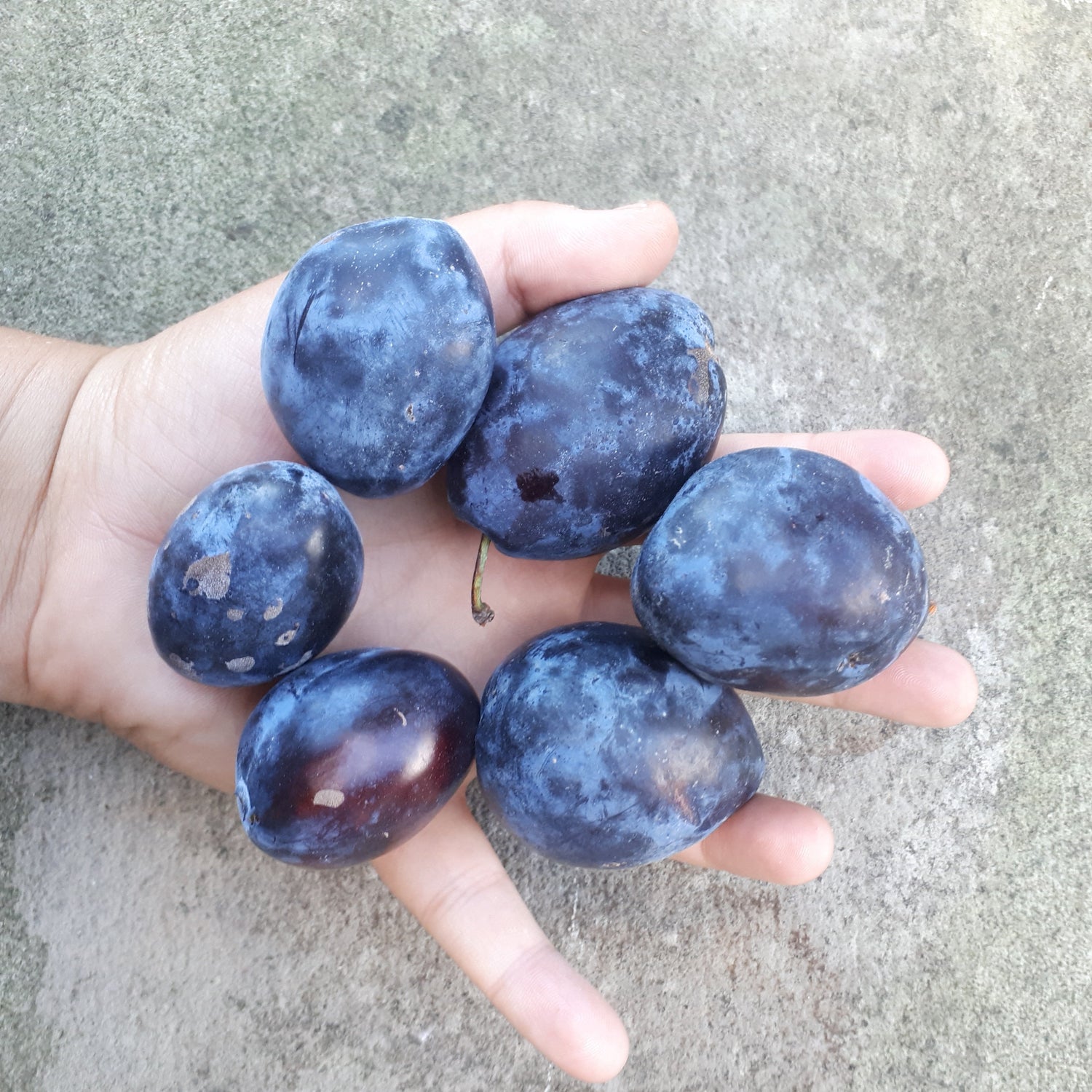
History: German plums are a European variety characteristic of the kind grown in central Europe. Although not much is known about its history, it is believed this variety is at least a couple centuries old.
Why We Grow It: A juicy, freestone plum with an aromatic, sweet flavour. They are great for fresh eating and due to their drier than average nature, are great for baking into traditional German plum desserts. They keep for 2-4 weeks refrigerated, providing ample time to enjoy them fresh or find that perfect recipe.
The photo of the plums in hand compares 4 larger Italian plums on the upper right, to 2 smaller German plums on the lower left.
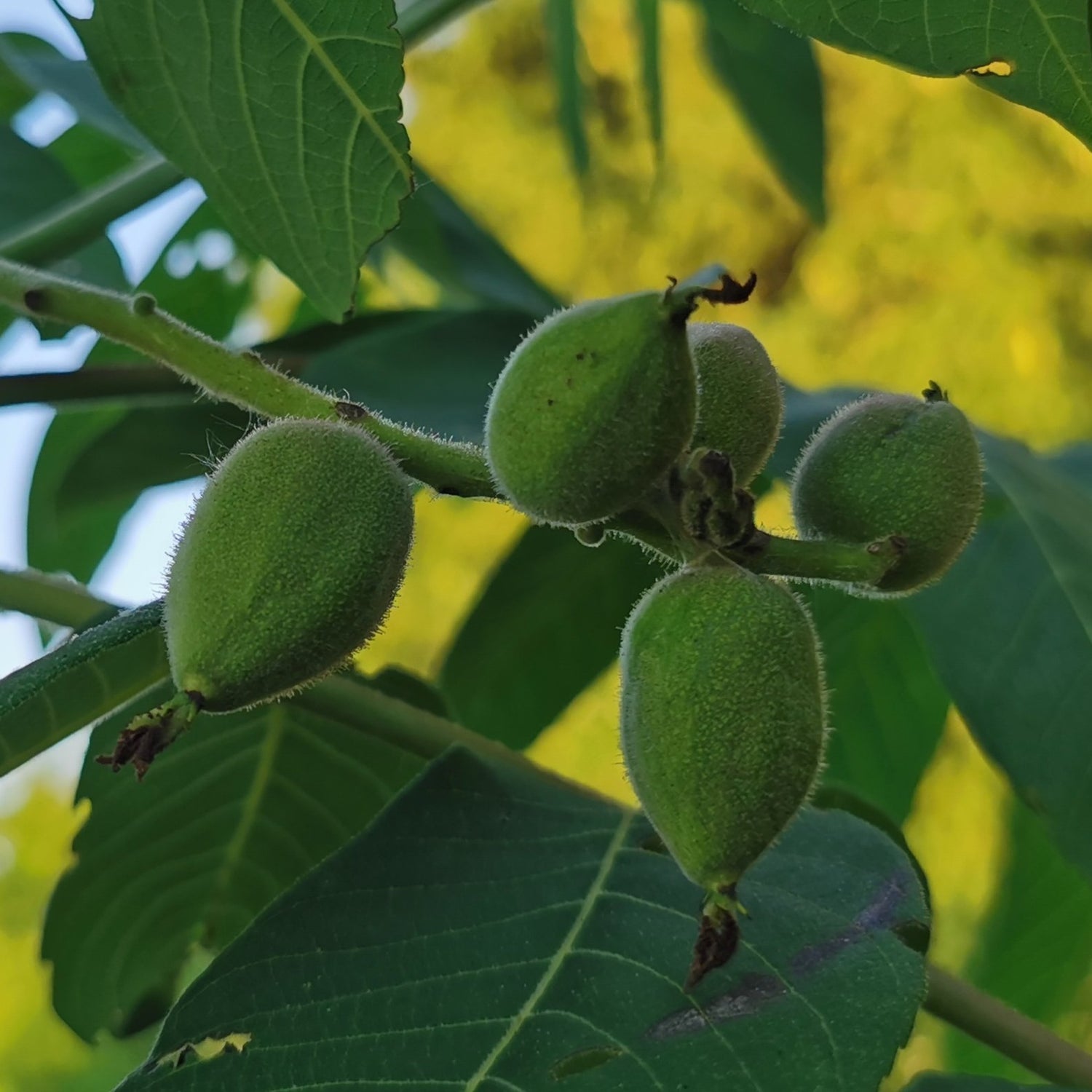
Species: Juglans ailantifolia var. cordiformis or hybrid. Our seeds are collected from trees that may have been cross-pollinated by closely related species so the resulting seedlings may be hybrids.
History: Heartnuts are a sport of the Japanese Walnut that have a heart-shaped shell and kernel instead of the usual elliptical shell. They have good commercial potential in the Great Lakes area where the climate is similar to that of Japan.
Why We Grow It: These trees produce an abundance of tasty nuts that are sweet than other walnuts and lack the bitter aftertaste. Ideally, they will produce heart-shaped nuts but since they are seedlings they may produce the usual rounder nuts of the regular Japanese walnut. They are sensitive to spring frosts for nut production, so they are best planted in a sheltered location.
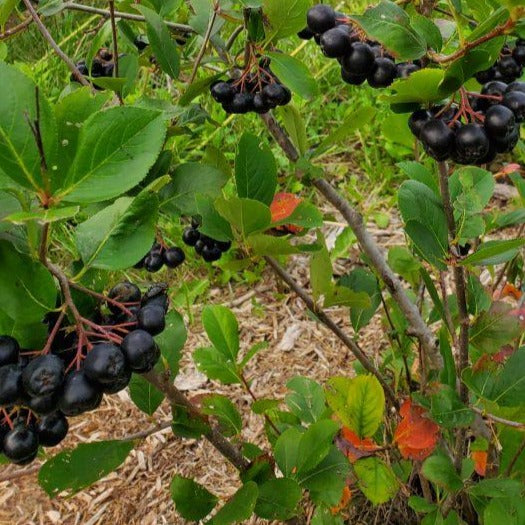
Species: Aronia melanocarpa
History: Viking was developed in Finland around the 1980s, likely looking to increase productivity. They succeeded and Viking is now the most productive of all aronia cultivars.
Why We Grow It: With slightly larger than average berries, very good flavour, and the best productivity of all aronia berries, Viking is a hard variety to turn down. Like other aronia berries, they can be a bit tart for fresh eating but are great when used for cooking, baking, wines, jams, etc. While the berries ripen in August, they can hang onto the bush for a couple months and tend to sweeten over time.

History: Jonagold, a cross between Golden Delicious and Jonathan, was developed in 1953 at the New York State Agricultural Experiment Station at Cornell University. With its large size and sweet flavour, it has become one of the most popular apples in North America and is especially popular in Belgium.
Why We Grow It: The fruit is attractive with a red blush over yellow skin. It has a pleasant sweet-sour flavour that makes it a great multi-purpose apple.


History: Discovered around the 1680s in Versailles, France, though thought to originate in Spain.
Why We Grow It: Deep purple-black skin over dark red, with very rich sweet flesh - one of the best tasting varieties around! The flavour intensifies if let to dry/shrivel slightly on the tree. Adaptable, excellent cropper and flavour, and a great choice for backyard growers.

Species: Salix sp, most likely Salix discolor
History: Pussy willows are native to North America, Europe, and Asia and are culturally significant in all three continents. They are a New Years decoration in China and Iran and have been used in various sects of Christianity for purposes such as replacing palm fronds as a decoration for Palm Sunday in Europe and America where palms do not grow.
Why We Grow It: A fluffy signifier of spring, these cute willows are also a great early pollen source for bees and have medicinal uses.
Photo by Huckleberry Hives.


As an organic slow-release fertilizer, bone meal is primarily used as a source of phosphorus and protein. Phosphorus promotes early growth, root formation and fruit development in trees, shrubs and other garden plants.
Contents: 4-10-0, bovine source
Size: Bagged in 2.2lb/1kg or 4.4lb/2kg bag
Application: Application rates depend on your soil type, but the general rate is 10lb per 100 square feet, or about 1/4-1/3 cup per tree mixed into the soil when planting; one 1kg bag has enough product for planting ~10-12 bareroot trees. DO NOT apply directly to the tree itself, apply it to the soil around the tree.
- Please Note: If you are adding phosphorous to your soil via fertilizers such as bone meal or soft rock phosphate and also using the Root Rescue mycorrhizal inoculant, reduce the application rate of the phosphorous source by 1/4-1/2. Too much phosphorous will negatively impact the mycorrhizal fungi, potentially slowing or even preventing your plants from forming a relationship with these incredible fungi.
Soil: Bone meal is best suited for slightly acidic soils (below pH 7) for the bone meal to be most available to the plants.
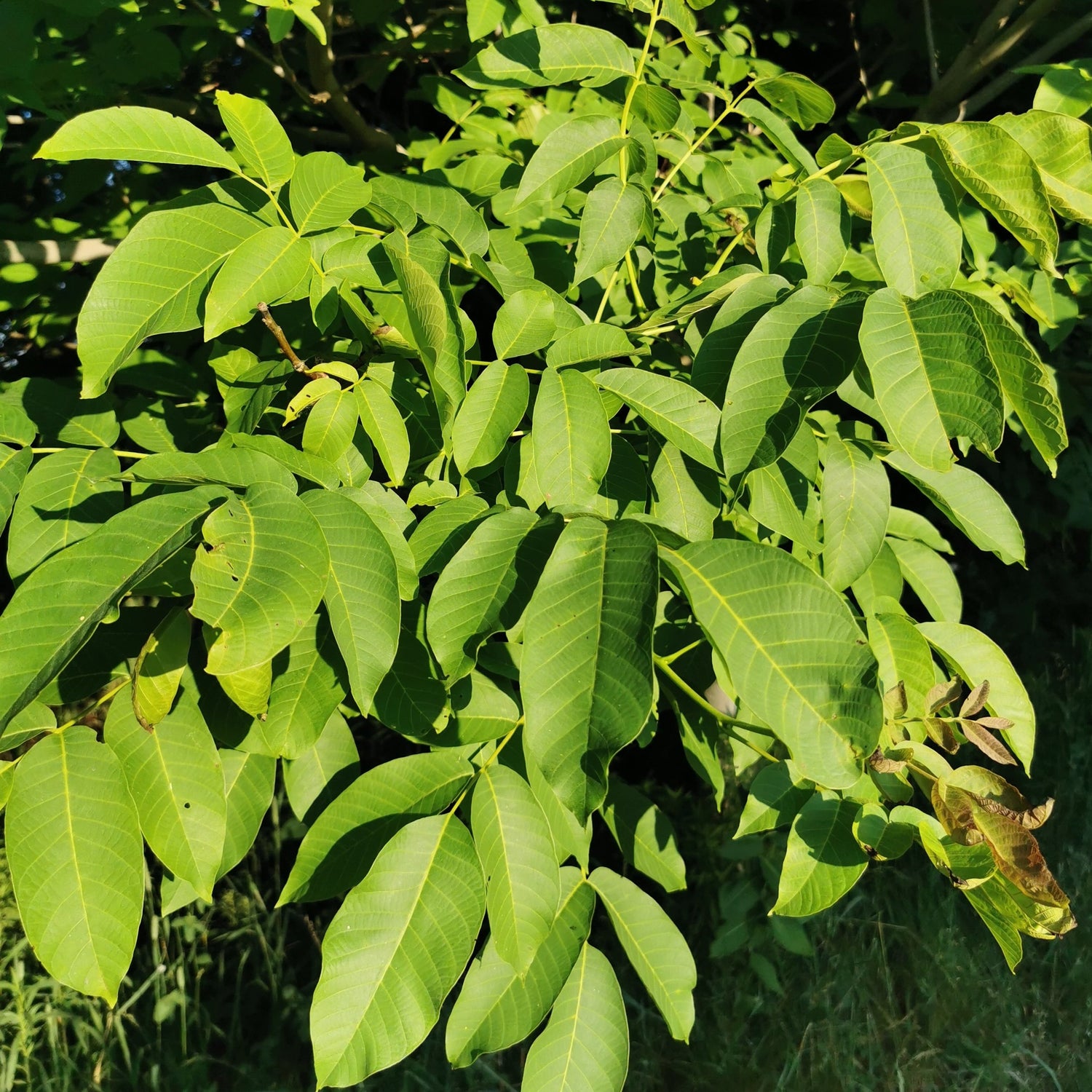
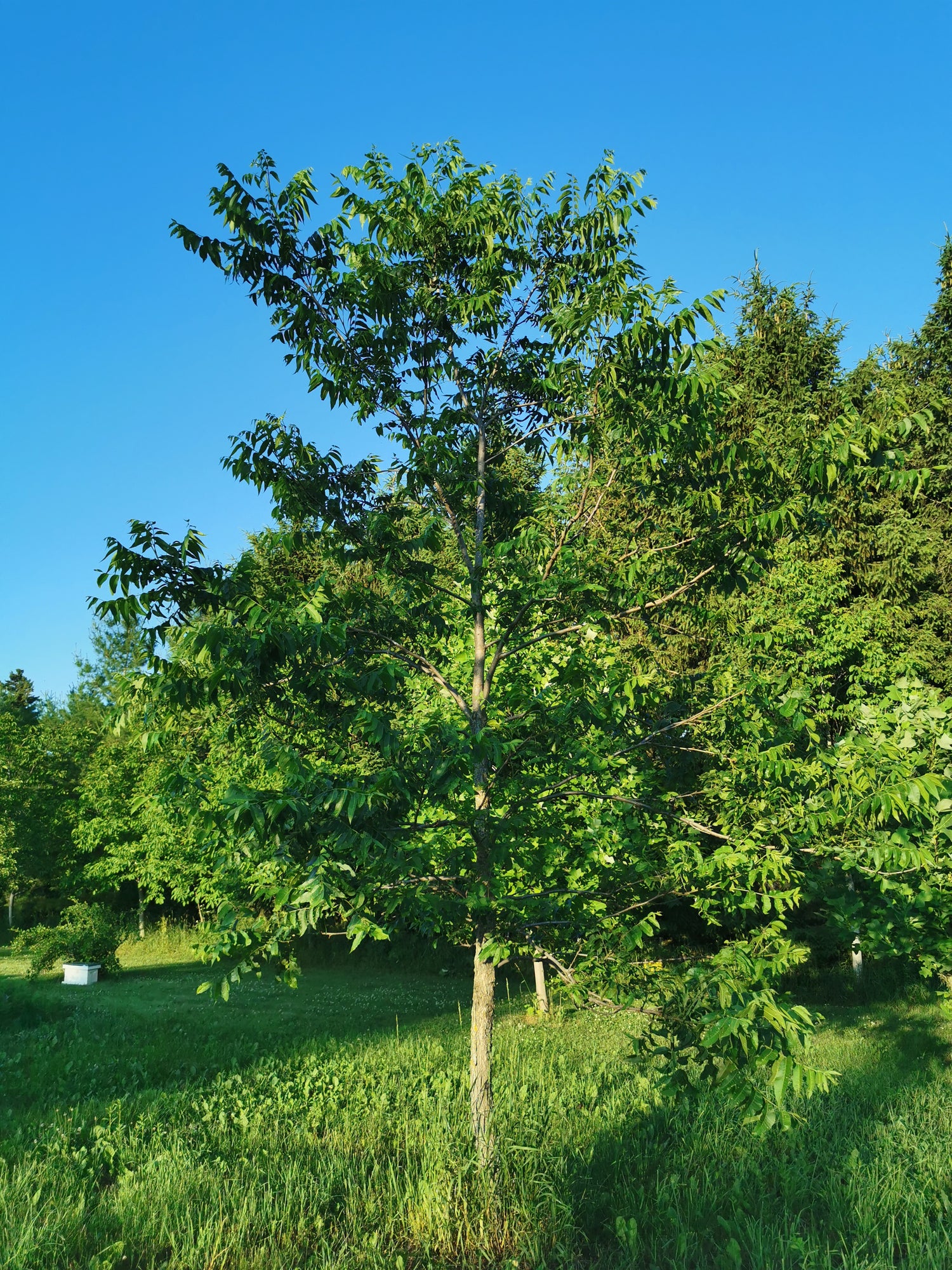
Species: Juglans regia or hybrid. Our seeds are collected from trees that may have been cross-pollinated by closely related species so the resulting seedlings may be hybrids.
History: English Walnut (aka Persian/Carpathian Walnuts) is native from the Balkans to the Himalayas and China. It possibly originated in Iran and over time has been spread across the world by Alexander the Great, the Romans, trade along the Silk Road, and British colonizers. In Italy, there were legends of witches gathering under an old English Walnut tree in Benevento to perform sabbats which in turn has inspired works such as the ballet Il Noce de Benevento. Still commonly grown and cultivated today, China is the main producer of commercial walnuts.
Why We Grow It: Although they aren't native like our other walnut trees, English Walnuts are known for being easier to open than Black Walnuts and remain popular for a reason. Our seedlings come a mother tree near Listowel ON, an extra boon when Ontario grown English Walnuts are said to produce sweeter nuts than those from California! The sap can be boiled to make walnut syrup, which tastes very similar to maple syrup but with notes of caramel and butterscotch. The husks can be used to flavour beer, like hops.
Be mindful of the juglones in the in the roots/nut husks, they are toxic to many other species. They require a buffer of about 50'/30m from the edge of the trees canopy for juglone-sensitive plants. This article from The Garden Hoe has a helpful list of plants that tolerate juglones. However there are recent (2019) studies showing healthy soil high in organic matter and mycorrhizal fungi actually reduce the toxicity of juglones suggesting many plants can grow below juglans species in a healthy ecosystem - it will be interesting to see more study done in this area!


History: A highly regarded cider apple of Normandy, France, where it has been grown for centuries. This cultivar is one of the traditional cultivars in the production of calvados (a brandy made from apples and sometimes pears) in the Pays d’Auge region.
Why we grow it: This cider apple has a unique spicy flavour that is high in tannins, low in acidity, and low in sugar. With it's rich history and beautiful brass coloured juice, this cultivar is a must in every well-rounded cider orchard.
Photo credit: Trizek, CC BY-SA 4.0, via Wikimedia Common

History: In the 1830s in Lancaster County, Pennsylvania, a seedling apple tree grew beside the smokehouse of William Gibbons. Perhaps it sprang from a core that some one had tossed there while they tended the fire. Who knows? What we do know is that the aptly named Smokehouse was commonly grown in the area until its popularity waned as sweeter apple varieties appeared on the market. Still, this variety has stood the test of time due to its great flavour.
Why We Grow It: Traditionally Smokehouse apples are picked a little early and used for baking, but if they're allowed to ripen fully on the tree, some people have described the balanced flavour as being “like drinking fresh-pressed cider!”.
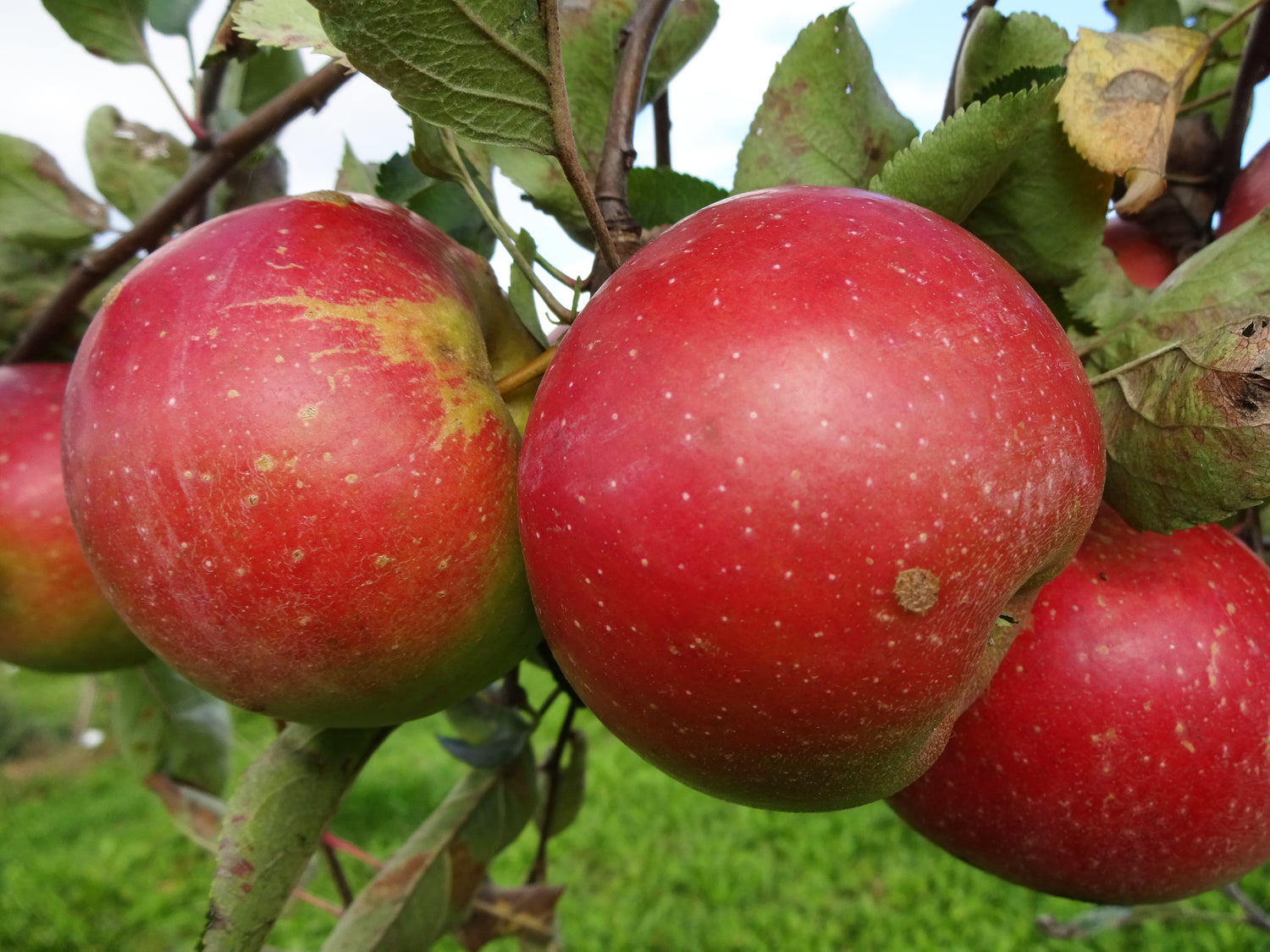
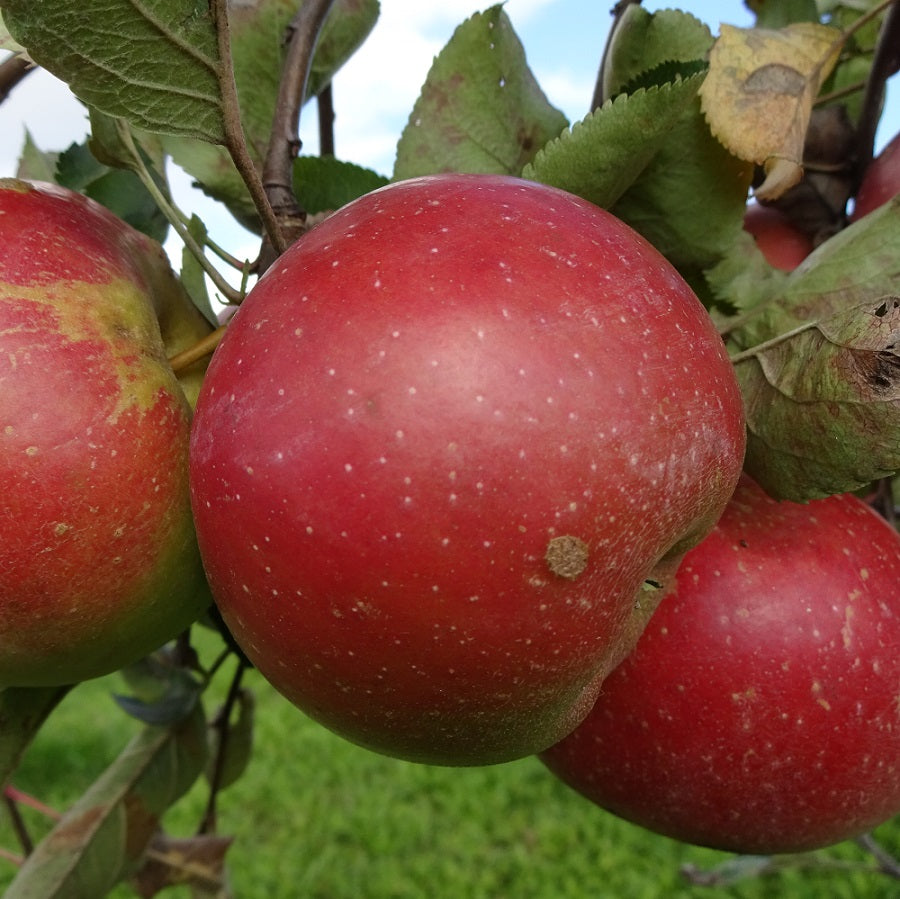
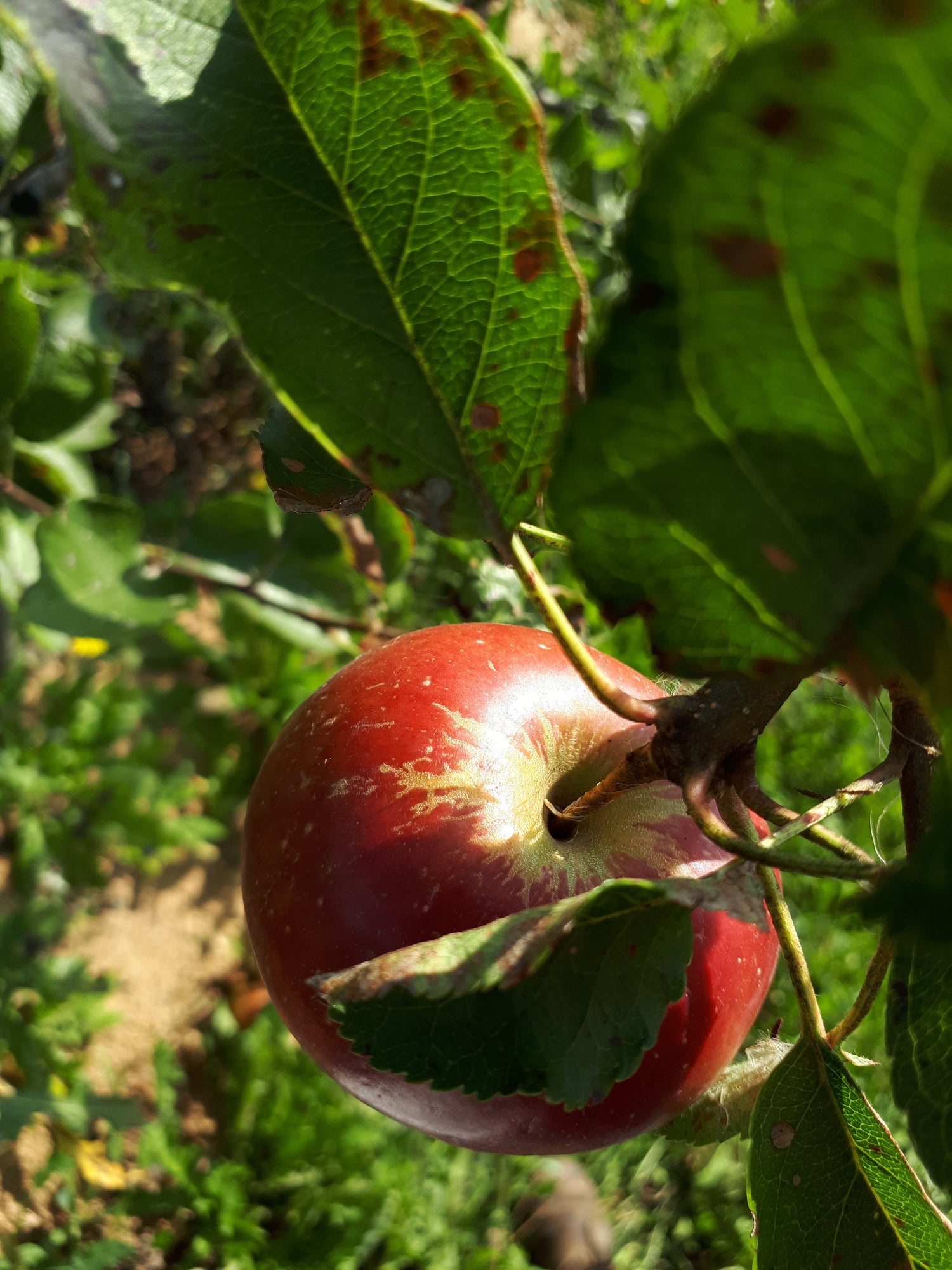
History: This classic American cooking apple was discovered by chance around 1740 in Massachusetts. It was eventually brought to the attention of a Col. Baldwin, after whom the variety was later named, who helped to spread it further. By 1850 this was one of the most commonly grown apples in the US, although its popularity began to decline by the 1900s, exacerbated by a terrible winter in 1934 that wiped out a significant number of trees. Despite this, Baldwin is making a bit of a comeback and a monument to this apple still stands in Wilmington, Massachusetts, around where it was discovered.
Why We Grow It: Baldwin apples produce large, greenish-yellow and maroon fruit with firm, sweet flesh that maintains its shape and crispness when cooked. The fruit produced in our test orchard has been attractive and blemish-free.
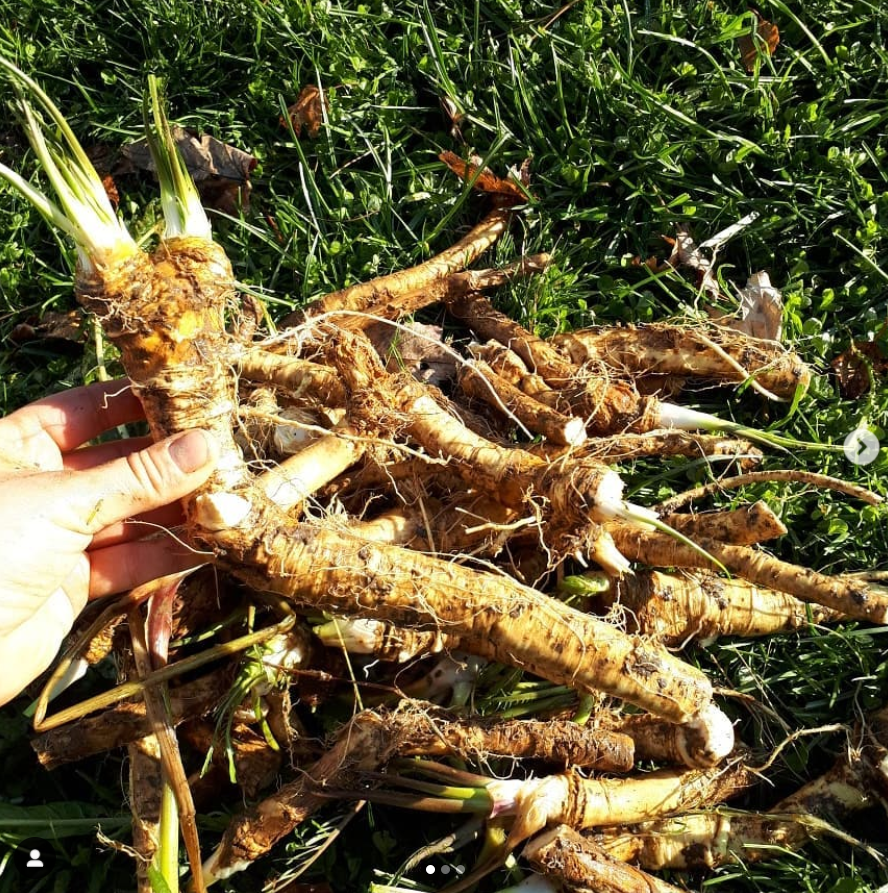
Species: Armoracia rusticana
History: Horseradish originated somewhere in the Mediterranean and has been well known since ancient history, appearing in writings from Ancient Greece, Ancient Rome, and the Renaissance. It has historically been used for both culinary and medicinal purposes in Europe and was introduced to North America by European colonizers where indigenous peoples also adopted it for medicinal use. Today, horseradish is commonly grown around the world and used in cooking or to make sauces. An enzyme in horseradish also has applications in molecular biology and biochemistry!
Why We Grow it: Horseradish is a root vegetable with a distinctly pungent and sharp taste. As a result, it is most often used in cooking and making sauces/condiments. It is a hardy vegetable and has a tendency to spread through the garden so extra care should be taken to keep it contained when planting it.


History: Duchess of Oldenburg, or Duchess as we like to call it, originated in the 1700s in Russia. It spread to other countries where it became popular, especially in Victorian England. Its popularity was so great that at one point it was used as a reference cultivar when evaluating other varieties of apples. It is also likely the parent of several other varieties such as Northern Spy.
Why We Grow It: Duchess boasts an attractive fruit that is striped and mottled red over light green. Although these apples don't store well, the flesh is soft and is excellent for pies and applesauce. The trees themselves are quite hardy and disease resistant.
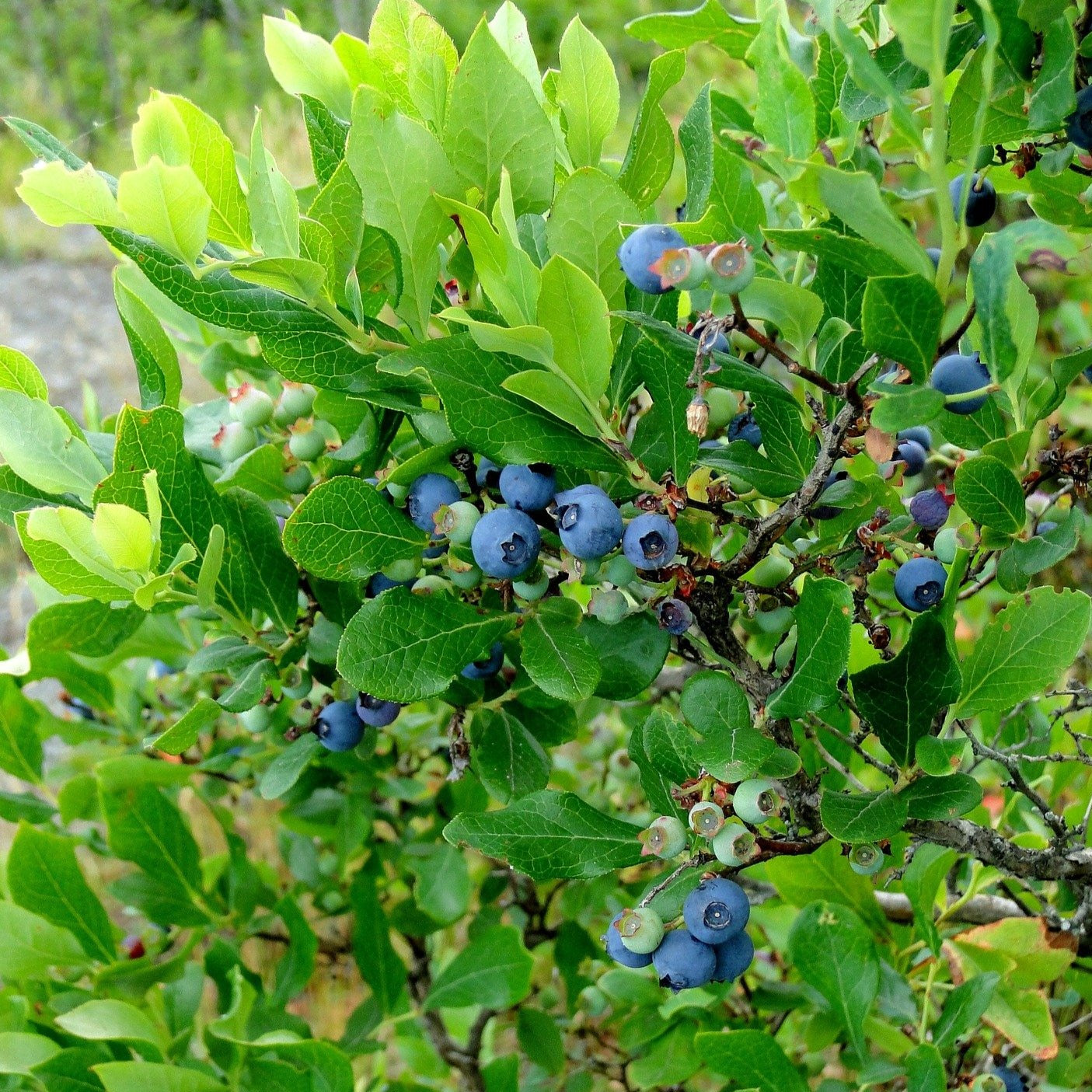
Species: Vaccinium corymbosum
History: Blueray higbush blueberry was introduced in 1941, although there is little other information on its origins. It may have originated in New Jersey where blueberry cultivation began.
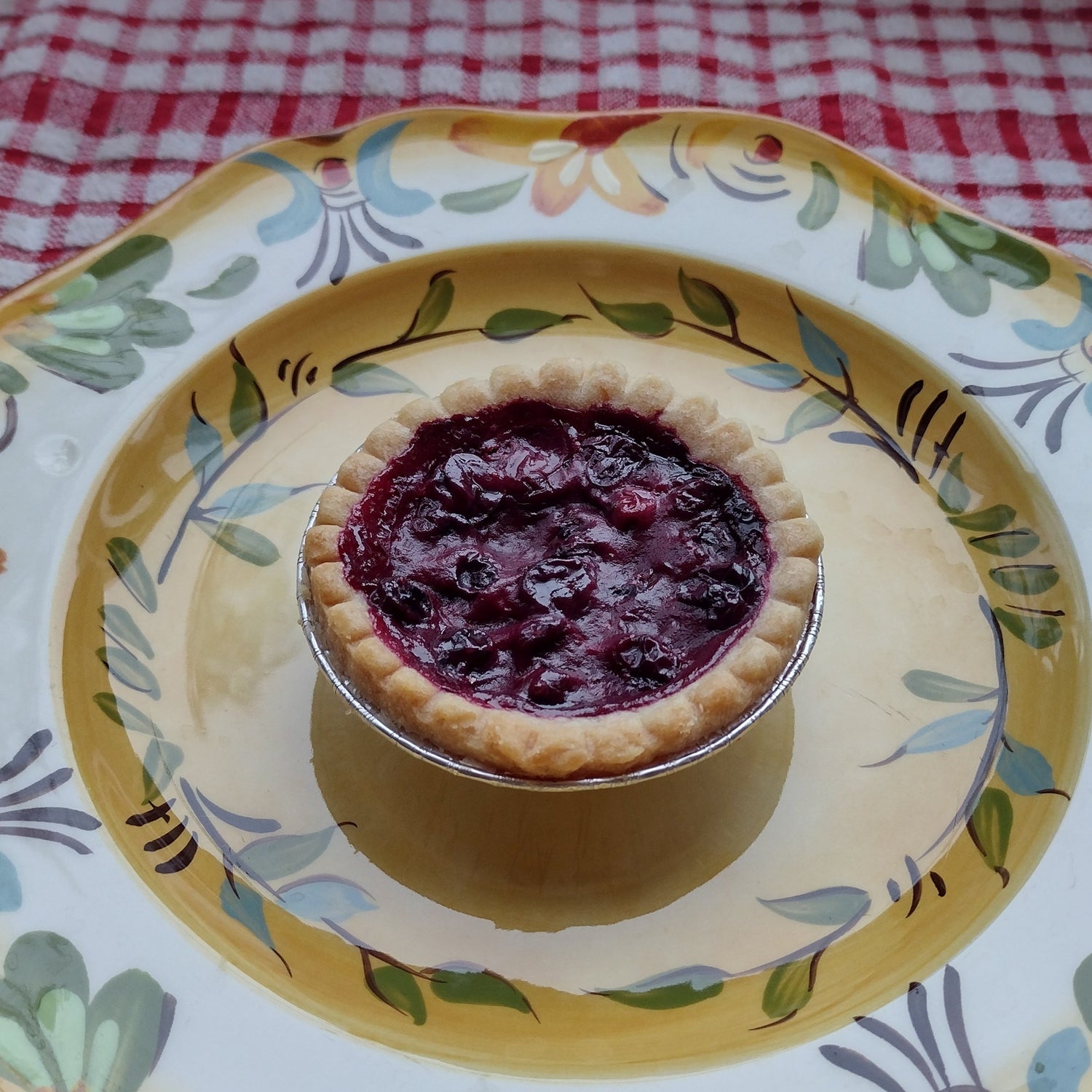
Why We Grow It: Blueray produces an abundant crop of very large berries with good flavour. This cold hardy variety is great for home growers! Blueberries are great for baking, for example Steph made some wonderful black currant and blueberry tarts that are pictured here!
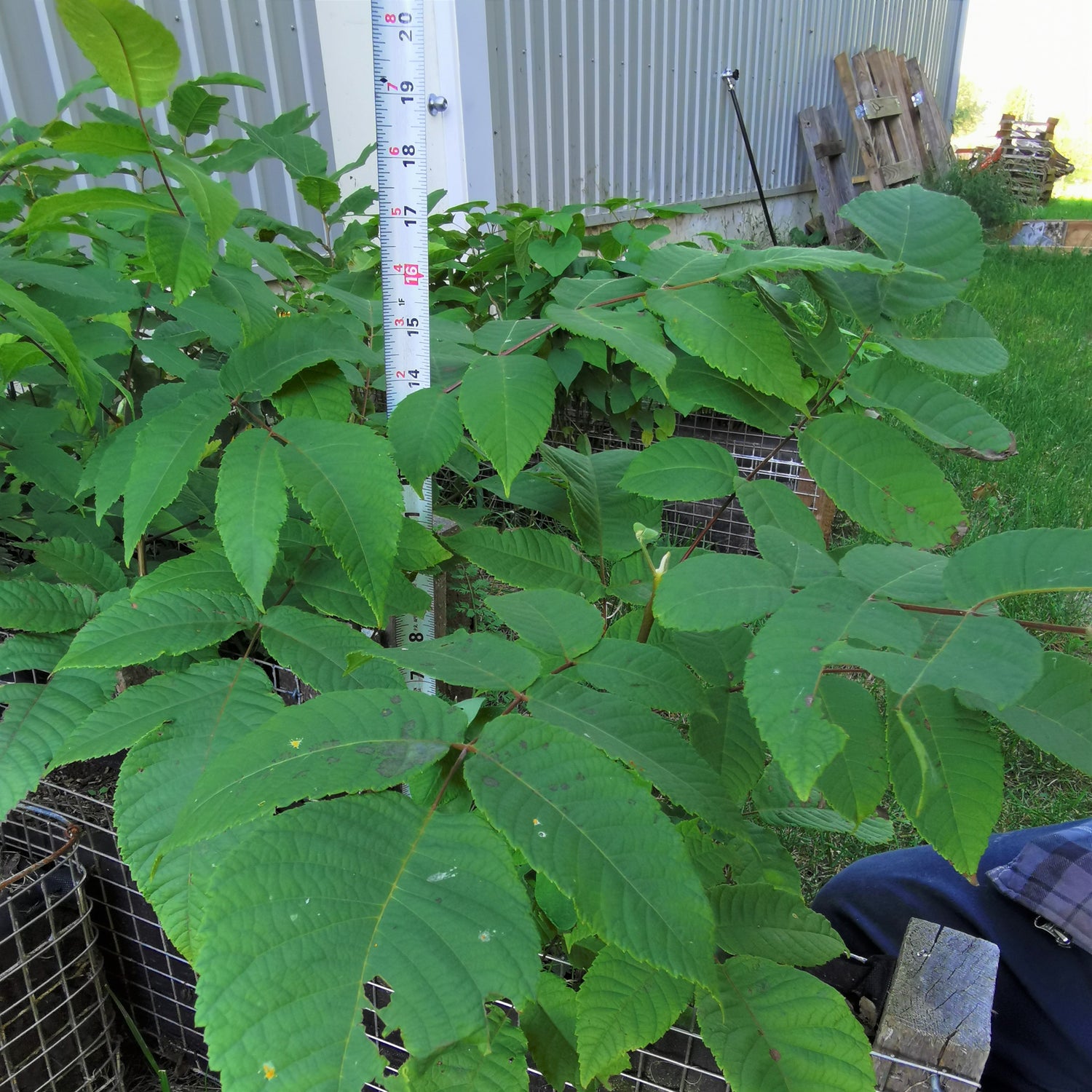
Species: Juglans cinerea or hybrid. NOTE: Butternuts are known to hybridize readily with other closely related species so there is no guarantee on whether these seedlings are pure, though the mother trees appear very true to type.
History: Butternut is an endangered tree native to southeastern Canada and the eastern United States where they grow naturally along sunny stream banks with rich, well-draining soil. The nuts have been used as a source of food and made into a butter-like oil by indigenous peoples. The trees have also been used for making syrup, furniture, and woodcarving. Unfortunately, Butternuts are highly endangered today due to Butternut Canker which has decimated their population within two decades.
Why We Grow It: By planting endangered species, collectively we can help Mother Nature potentially find a naturally resistant variety of Butternut. The nuts are quite similar to other walnuts but with a milder flavour. They can survive in zone 2, but they must be planted somewhere zone 3 or warmer to produce nuts. The sap can be boiled to make walnut syrup, which tastes very similar to maple syrup but with notes of caramel and butterscotch.
Be mindful of the juglones in the in the roots/nut husks, they are toxic to many other species. They require a buffer of about 50'/30m from the edge of the trees canopy for juglone-sensitive plants. This article from The Garden Hoe has a helpful list of plants that tolerate juglones. However there are recent (2019) studies showing healthy soil high in organic matter and mycorrhizal fungi actually reduce the toxicity of juglones suggesting many plants can grow below juglans species in a healthy ecosystem - it will be interesting to see more study done in this area!


History: Once one of the most popular commercial apples in the United States, Ben Davis apple trees were planted across the continent following its discovery around 1800. Due to its firm fruit and excellent keeping qualities, this apple was extremely easy to transport over longer distances which led to its popularity. Once storage and transportation improved, this apple was slowly replaced with better tasting varieties and it is now a relatively rare find. It's also a parent to Cortland.
Why We Grow It: The mellow, sub-acidic, mildly aromatic red fruit is not quite as flavourful as some apples but it stores exceptionally well, lasting into spring. Flavour improves in storage, like many heritage apples. The trees are reliable and heavy croppers, earning them the nickname of 'mortgage-lifters' when they were grown commercially.
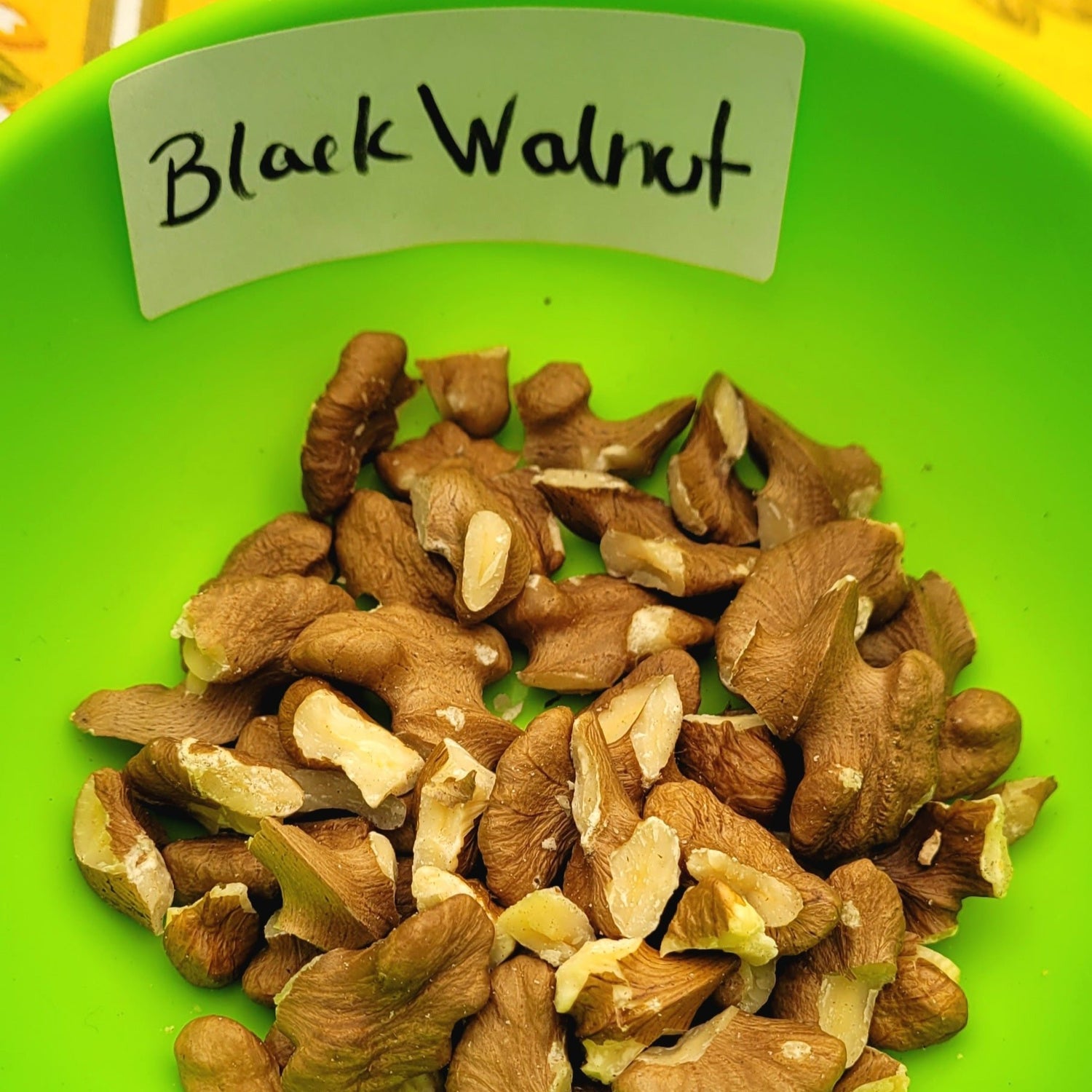
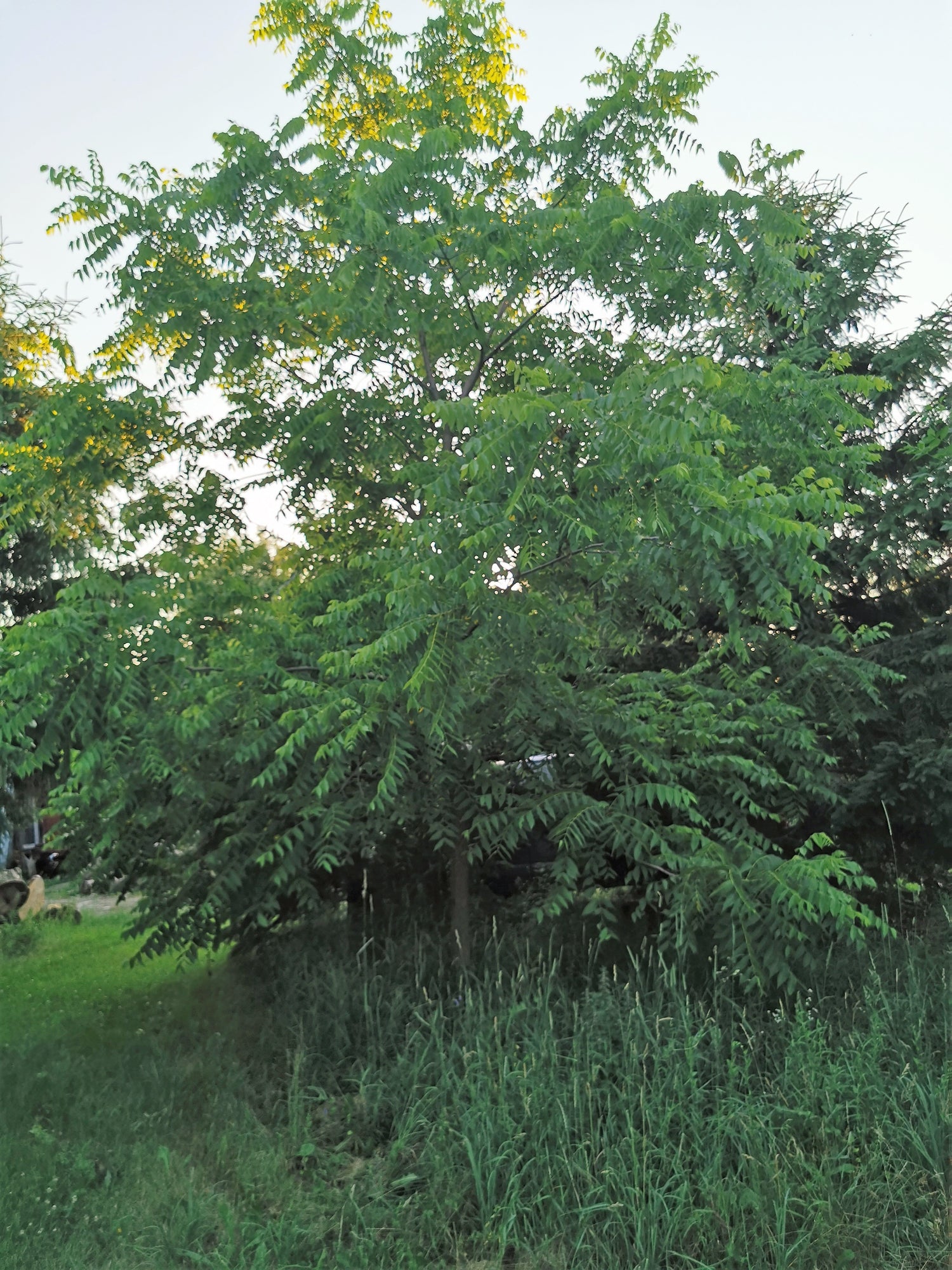
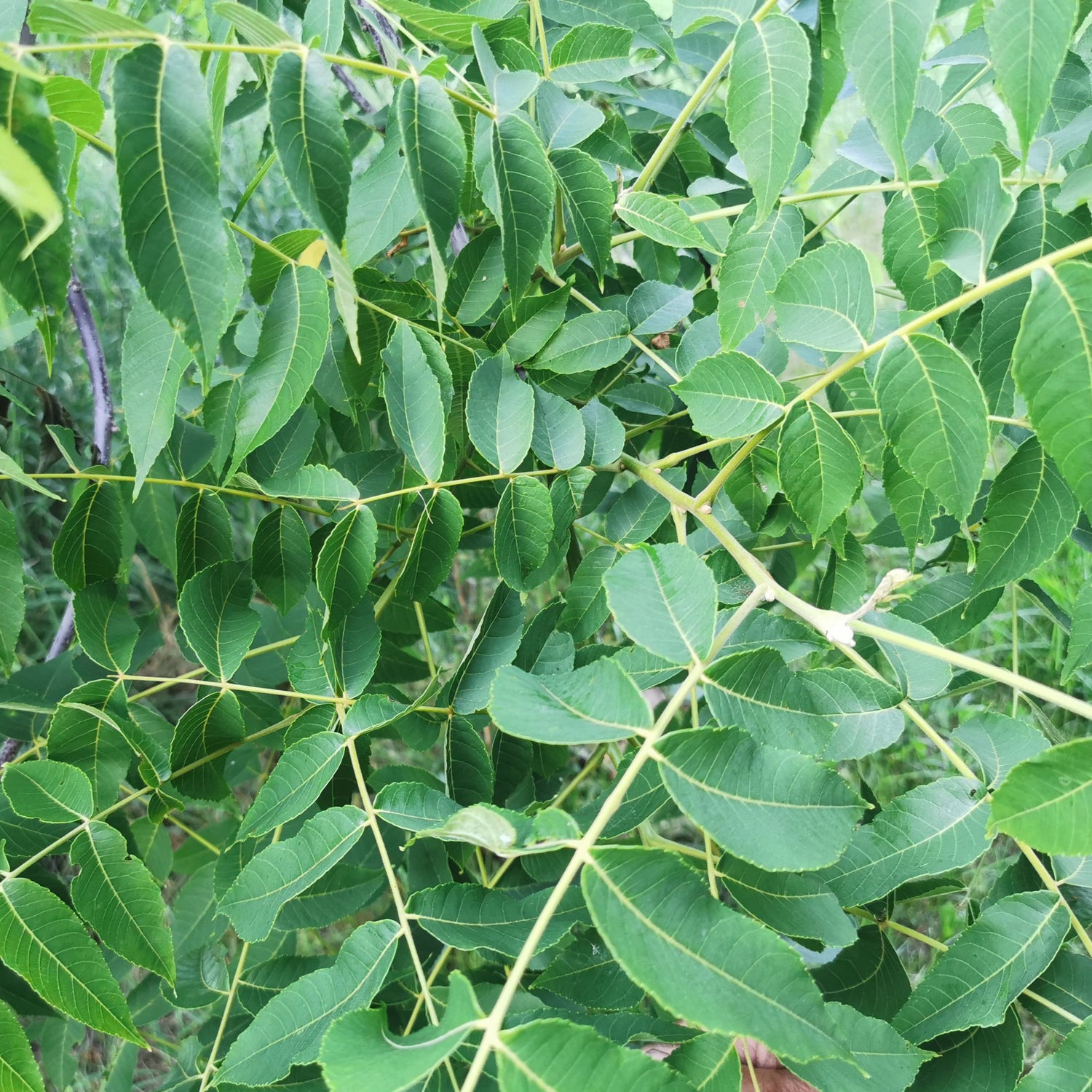
Species: Juglans nigra or hybrid. Our seeds are collected from trees that may have been cross-pollinated by closely related species so the resulting seedlings may be hybrids.
History: Native to much of the eastern and central United States and southern Ontario, Black Walnut has long been used as a source of food, dye, lovely dark wood, and as an ornamental tree. Although it is said to have a better flavour than the English walnut, the Black walnut remains less popular due to the increased difficulty of harvesting the nut meat from within the husk. Black walnut is also infamous for being allelopathic, meaning it secretes toxic chemicals (juglones) into the soil to reduce plant competition.
Why We Grow It: Black walnut is a beautiful tree that produces nuts with a stronger flavour than that of English walnuts. The sap can be boiled to make walnut syrup, which tastes very similar to maple syrup but with notes of caramel and butterscotch. Also, the husks can be used in brewing beer!
Be mindful of the juglones in the in the roots/nut husks, they are toxic to many other species. They require a buffer of about 50'/30m from the edge of the trees canopy for juglone-sensitive plants. This article from The Garden Hoe has a helpful list of plants that tolerate juglones. However there are recent (2019) studies showing healthy soil high in organic matter and mycorrhizal fungi actually reduce the toxicity of juglones suggesting many plants can grow below juglans species in a healthy ecosystem - it will be interesting to see more study done in this area!
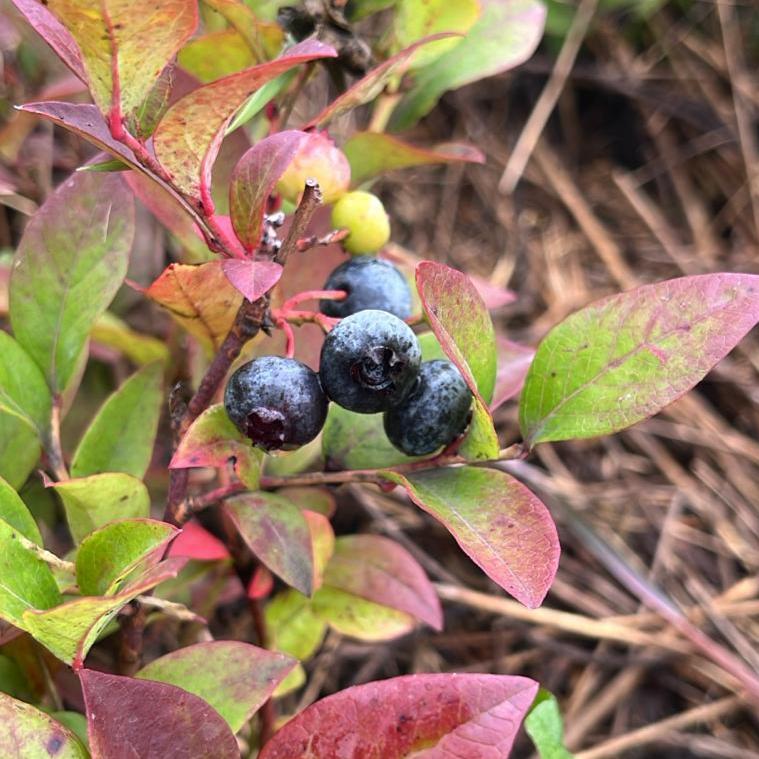
Species: Vaccinium corymbosum
History: Elliott originated in 1947 when Dr. George Darrow of the USDA first bred it. Elliott, and the other blueberries Dr. Darrow bred, were first evaluated by Dr. Arthur Elliott and then by members of the USDA such as Arlen Draper who has bred numerous blueberry varieties. It was released in 1973, over 25 years after the it was originally grown. Elliott was selected for the good quality of its fruit and its exceptionally late ripening time, making it a great variety for extending the blueberry season. It was named Elliott to honour Dr. Elliott's contributions to blueberry breeding efforts.
Why We Grow It: Elliott produces large berries with a mild sweet flavour late in the season. They are great for fresh eating, cooking, baking, and preserving! The bush is very productive and the firm fruit stores well. For those who want to enjoy fresh blueberries for as long as possible, Elliott is an excellent choice due to its very late ripening time!

History: Golden Nugget was created more or less by accident when Golden Russet and Cox's Orange Pippin were crossed at the Kentville Agricultural Station in Nova Scotia in 1932. Despite being an accident, once researchers realized how flavourful this variety was they continued to raise it and eventually released it in 1964. Although a delicious apple, its small size prevented it from attaining true commercial success.
Why We Grow It: It is prized for its incredible flavour which is super sweet and tangy like a pineapple. Along with being great for fresh eating, it is also suited for cider. The tree itself boasts decent disease resistance.
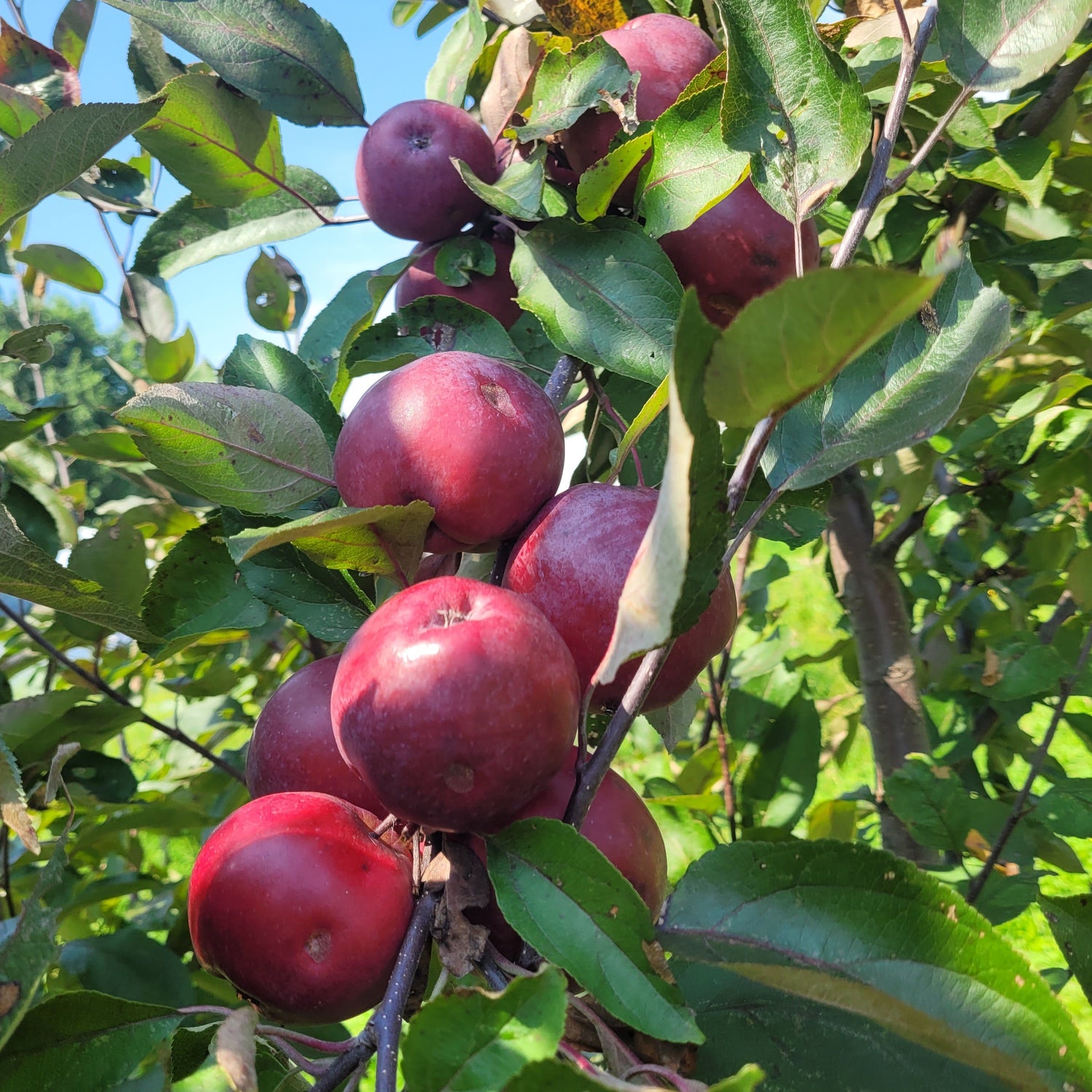
History: The Geneva crabapple was developed in the 1930s in collaboration with the Ottawa Experimental Farm and the New York State Agricultural Research Station based in Ottawa. The creation of this crabapple was head by Isabella Preston who specialized in creating cold-hardy ornamental plants.
Why We Grow It: This attractive crabapple has deep maroon flesh. The tree itself is quite visually appealing, sporting red leaves and bright pink flowers in the spring. The taste is reminiscent of rhubarb and is suitable for cooking as well. As it is a low sugar/high acid juice, it is best blended with another high sugar variety for cider. It also adds a nice red hue to blends.
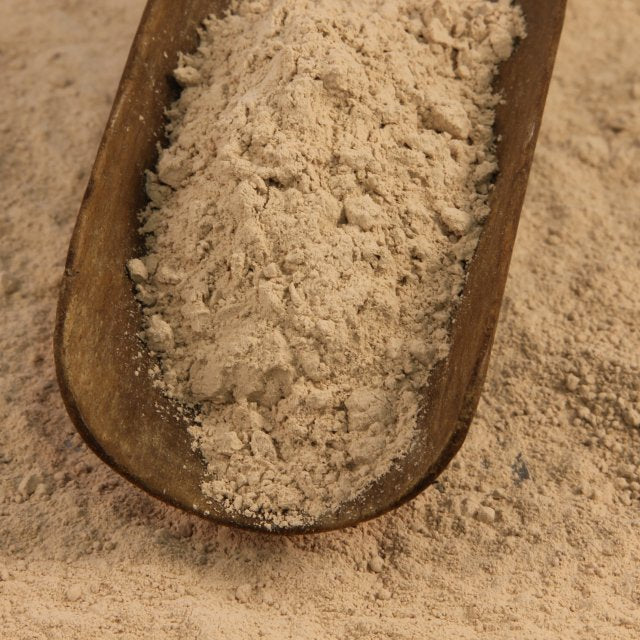
Azomite comes from an old volcanic deposit discovered in Utah in the 40s. It contains an array of minerals and rare earth elements that are beneficial for plants. While it is fairly easy to add macronutrients (NPK; or nitrogen, phosphorous, and potassium) to your soil, many often miss the importance of adding micronutrients like those contained in azomite which your plants also need.
Contents: A unique array of over 70 minerals, trace, and rare earth elements
Size: Bagged in 4.4lb/2kg bag (around 5 cups).
Application: 1/4 to 1/2 cup per tree, work the dust into the top 3in of the soil. This means a bag will treat 10-20 trees.
Soil: Any
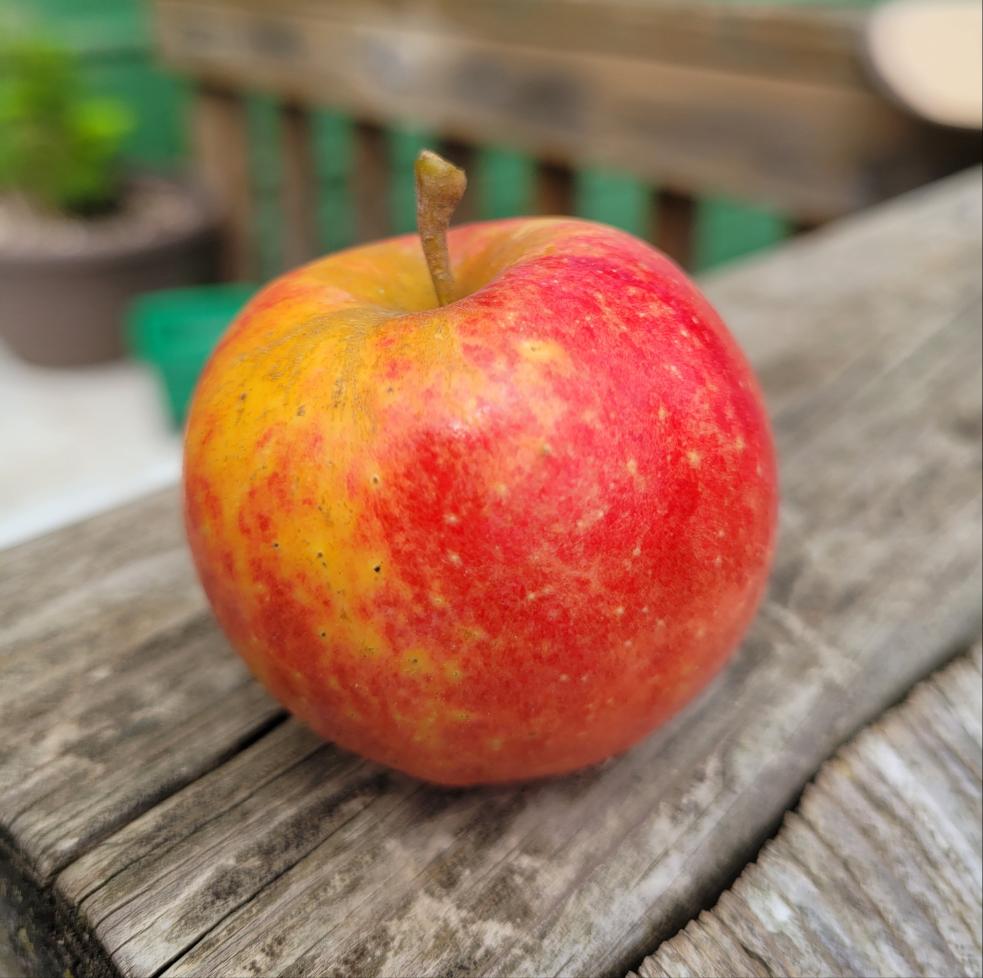
History: Norkent was bred as a cross between Haralson and Rescue at the Morden Research Station. It was one of tens of thousands of seedlings sent across the prairies as part of the Prairie Fruit Breeding Cooperative initiative by Agriculture and Agri-Food Canada in the 1960s. It was planted at the University of Alberta before being moved again to a backyard in Edmonton once the university ran out of space to it grow.
Why We Grow It: This pleasant and aromatic apple is one of the best fresh eating apples for colder climates! The flesh of this red apple is crisp and said to taste like a cross between an apple and pear.

History: Jonathan has an interesting history since there are two potential origins. One story says that Rachel Higley collected apple seeds from the local cider mill which she later grew on her new property in Ohio in 1796. She named one of the new varieties Jonathan after a young boy who often visited her orchard. The second, and more likely story, is that it was grown by farmer Philip Rick in the 1820s in New York. Originally named Rick, the apple was renamed Jonathan after the man who brought it to the attention of the Albany Horticultural Society.
Why We Grow It: These cheery red apples are crisp, juicy, and sweet. They are good for fresh eating as well as turning into pies and sauce. The fruit also stores quite well, lasting until January/February under optimal conditions.

History: Melba was developed by W.T. Macoun at the Central Experimental Farm in Ottawa in 1898. In 1924 it was released commercially and three years later received the Silver Wilder Medal from the American Pomological Society.
Why We Grow It: Melba is a lovely early market apple or backyard tree for making applesauce! The fruit is yellow with crimson flush and the crisp, white skin has a very sweet flavour.

History: Rouville apples were created by R.L. Granger and G.L. Rouselle in 1962 at the Agriculture and Agri-food Canada research centre located in St.-Jean-sur-Richelieu, Quebec. The variety was introduced in 1983.
Why We Grow It: This lovely Quebec cider apple has a wonderful bitter-sweetness that is great for fresh eating and juicing and sauce. It is resistant to scab and has grown very well in our test orchard.
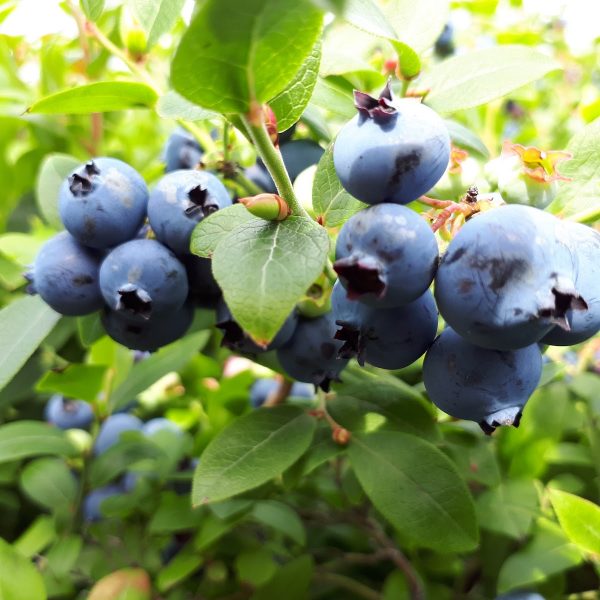
Species: Vaccinium angustifolium
History: Brunswick lowbush blueberry is the second lowbush variety developed at the AAFC Kentville Research and Development Centre in Nova Scotia. It was discovered growing wild on a blueberry farm owned by Shepoddy Blueberry and Lumber Co. in New Brunswick and was selected in 1965 for further testing. Proving to be an excellent variety that grows well and is relatively disease-resistant, it was named for its province of origin and released in 1977.
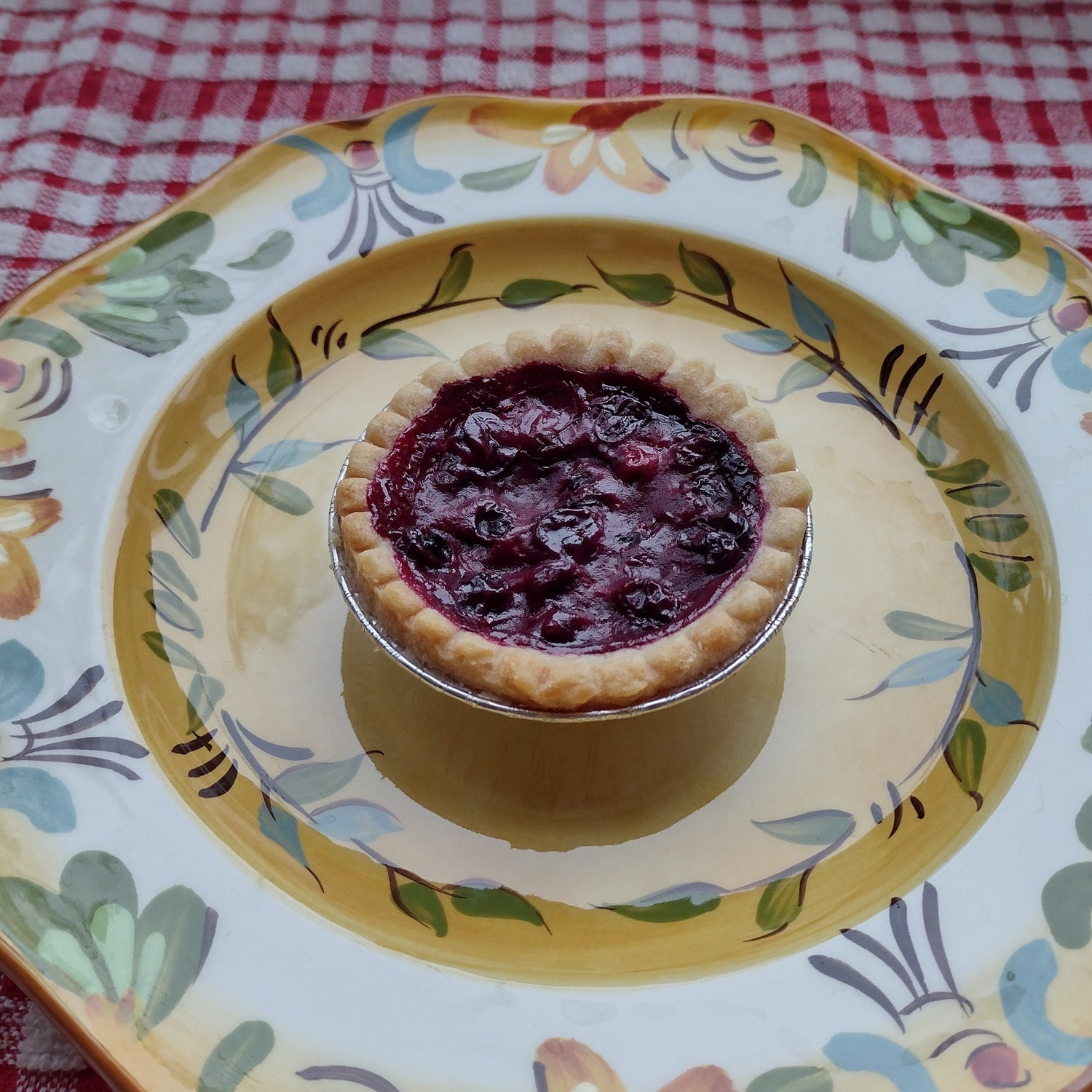
Why We Grow It: Brunswick produces firm, medium-sized dark blue berries, bursting with sweet flavour. These lowbush blueberries grow into a compact bush, with glossy dark green foliage that turns a lovely red in autumn. Blueberries are great for baking, for example Steph made some wonderful black currant and blueberry tarts that are pictured here!

Made from Alberta-grown hemp, these square mats are helpful in retaining moisture around the bases of trees and plants and suppressing weeds. These mats are more flexible than cocodiscs which makes them easy to mould to the earth, especially once they are wet.
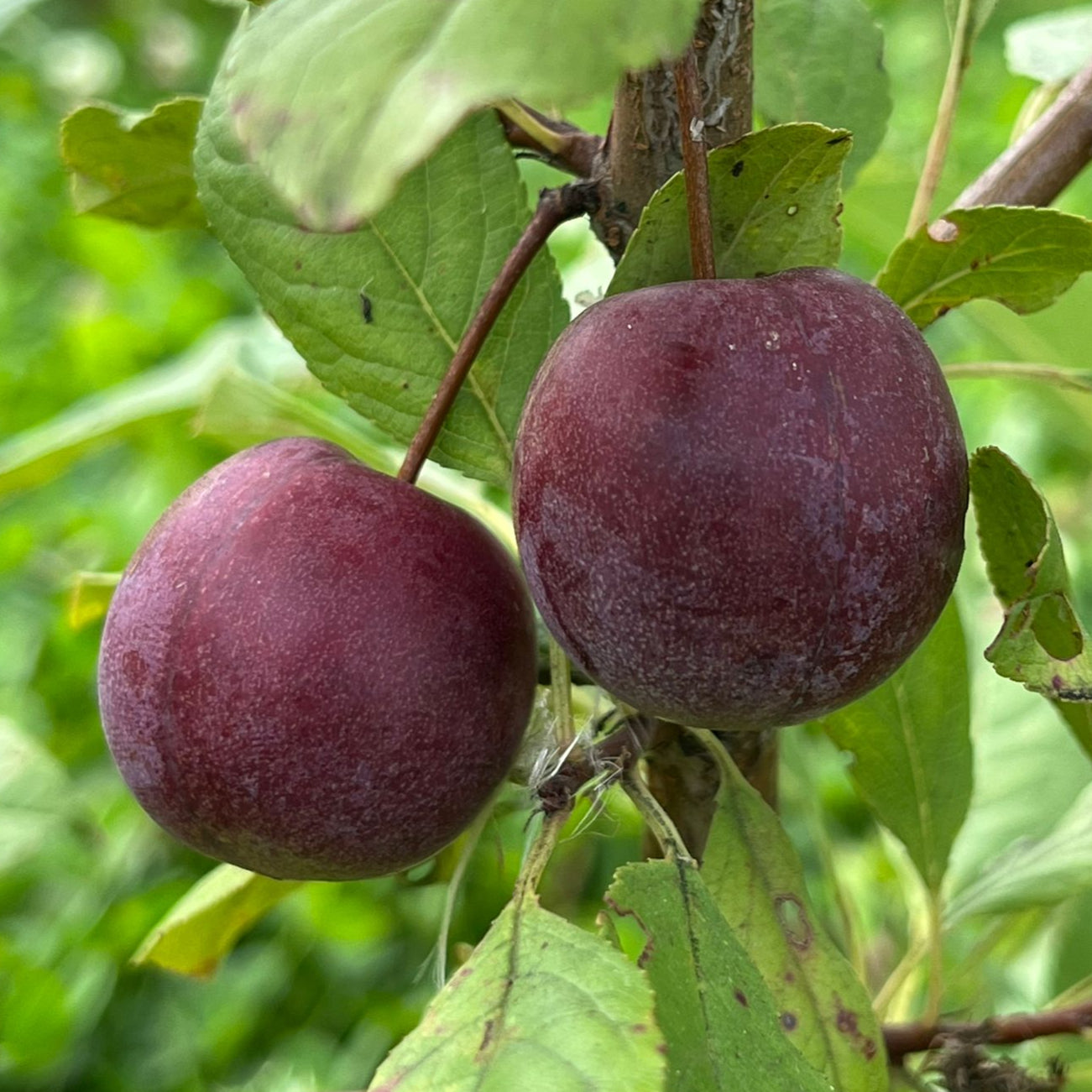
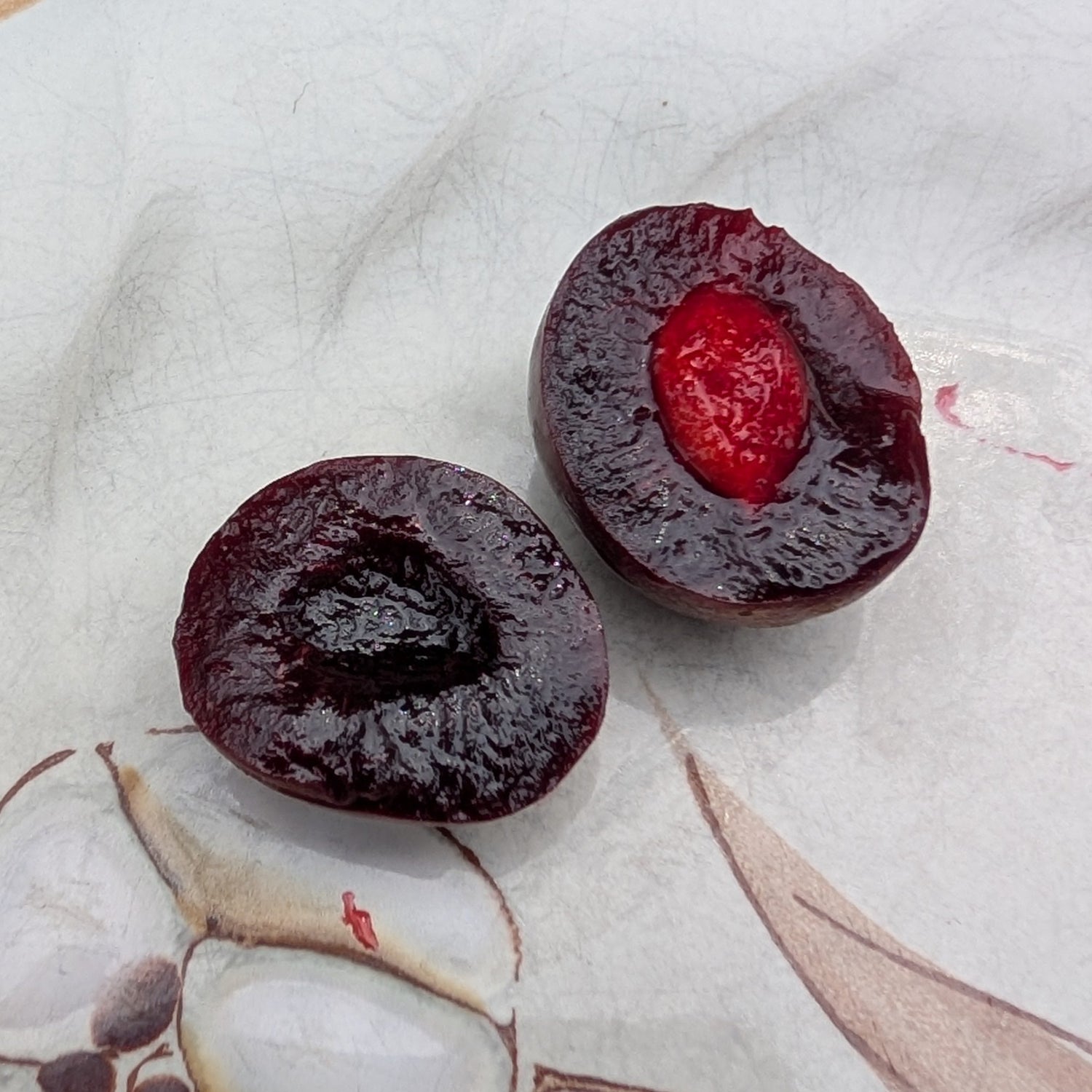
Species: Prunus pumila var. besseyi (Western sandcherry) x P. salicina (Japanese Plum)
History: Sapa (translated as 'black' from Lakota) was developed at the South Dakota Agricultural Experiment Station in the US by renowned plant breeder N. E. Hansen and released in 1908. His goal was to create plants hardy enough to grow in the harsh, northern prairies and was one of the first people to start breeding chums. Hansen had a tendency to name his native plant crosses after words from indigenous cultures of the area, choosing the Lakota word for 'black' in this case due to the dark colour of the fruit.
Why We Grow It: This small, hardy shrub produces purplish fruit with mauve flesh that has a sweet flavour with some tartness. It is good for fresh eating along with a variety of other uses such as cooking, baking, and preserving. It is also quite productive and tends to start bearing fruit at a young age!

Species: Vaccinium corymbosum, hybridized with V. ashei and V. darrowi
History: Draper blueberries were developed at Michigan State University by renowned plant breeder James Hancock who has also developed several other notable blueberry varieties and other fruits such as the Redhaven peach. He worked with Arlen Draper, a blueberry breeder from the US Department of Agriculture, for 14 years to breed and test different varieties for commercial use, picking Draper due to its many excellent qualities. Named for Arlen Draper, this variety has quickly become an extremely popular commercial variety due to the size and quality of the fruit.
Why We Grow It: Draper produces large, firm fruit with an excellent sweet flavour. They are great for eating fresh or can be used in baking, jams, etc like other blueberries! The large size of the berries makes them good for u-pick orchards and the bushes stay slightly smaller than other highbush varieties! They also store better and longer than other blueberry varieties and ripen at the same time.
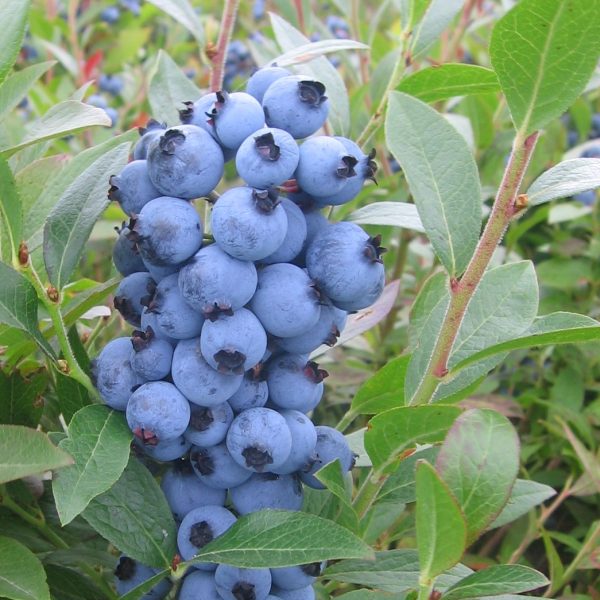
Species: Vaccinium corymbosum
History: Duke was developed in Maryland by Arlen Draper, a blueberry breeder working for the USDA, in collaboration with the New Jersey Agricultural Experiment Station. After ten years of testing it was released in 1987 thanks to its early ripening time, general disease resistance, reliable crops, and suitability for commercial sale. It was named Duke after S. Arthur "Duke" Galetta of the Atlantic Blueberry Company in honour of his support for blueberry breeding efforts over the years.
Why We Grow It: Duke produces good-sized crops of large, firm berries that are a good balance of sweet and tart. This is one of the earlier ripening blueberries and it has received the Royal Horticultural Society's Award of Garden Merit. Duke is an extremely reliable producer thanks to it's later bloom time that allows it avoid late spring frosts. Like other blueberries, it is great for a variety of uses including fresh eating, baking, and preserving!