In-Stock Inventory

In-Stock Inventory
Make your selections faster and easier by shopping "In-Stock" items only.
We offer flat rate shipping across Canada for our bareroot trees!
308 products
Sort by:
308 products
308 products


GRO BioDiverse Compost is a locally made compost certified for use in organic operations! This 100% natural amendment has a variety of benefits including:
- Improved water retention
- Better plant growth
- Increased soil fertility and health
- Better soil structure
- Improved soil biology through the addition of beneficial organisms such as protozoa, bacteria, nematodes, and fungi
This product is not sterilized.
Note on Pricing and Shipping:
Due to the size and weight of the bags of compost, shipping it adds an additional $10 in shipping fees. We have included this in the price of the compost so please select either the Pickup Only option below if you are purchasing a bag for pickup or the Shipping Only option if you want your order shipped.


History: This apple was developed in New York in 1974. It has never achieved major popularity but remains a curiosity due to the deep red colour of its skin which causes the flesh inside to become stained pink.
Why We Grow It: Along with its visual appeal, this apple boasts a sweet, sub-acidic flavour that makes it suitable for both fresh eating and making cider. Although these apples don't store well, the fruit hangs onto the tree for three weeks which helps to keep it available a little longer.
Picture of Burgundy apples on the tree courtesy of Shannon McInnis
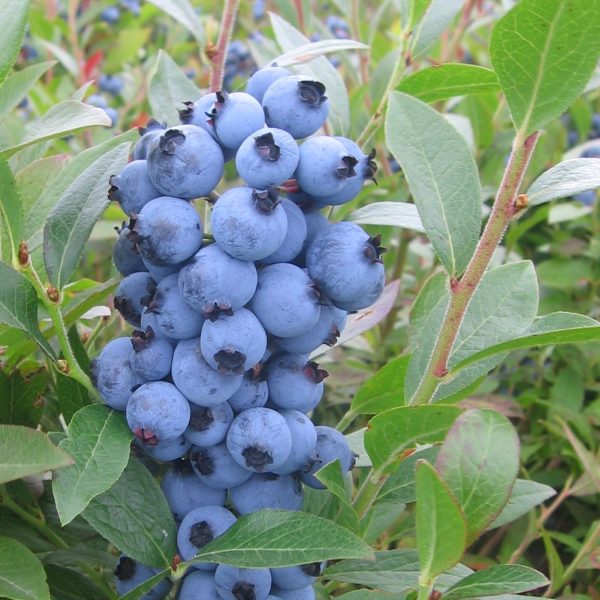
Species: Vaccinium corymbosum x V. angustifolium
History: Northcountry was bred by the University of Minnesota as part of a hybrid blueberry breeding program that started in 1967. The goal of the program was to cross highbush and lowbush blueberries in order to create high-quality cold hardy varieties. Northcountry itself was created in 1968 and was introduced in 1986.
Why We Grow It: Northcountry produces small to medium blueberries with a sweet flavour akin to that of wild blueberries. For those looking to enjoy fresh blueberries as soon as possible each year, this variety is an excellent choice since it ripens quite early. The compact bush is also quite cold hardy and productive!

History: Vista Bella was created at Rutgers University in New Jersey in the 1950s and released in 1974. Although its poor keeping ability prevents it from being a commercial success, this early ripening variety is still a nice way to herald in the apple harvest season every year.
Why We Grow It: Vista Bella is the first red apple of the season. The flavour and texture are of better quality than other early apples, making Vista Bella an excellent choice for early farmer’s market sales and roadside stands. The flesh is crisp and juicy, although it softens quickly and, like other early apples, does not keep long.


History: This McIntosh type apple was developed in New Jersey at the Rutgers Agricultural Experiment Station in 1956. It was released commercially in 1971.
Why We Grow It: For McIntosh lovers this is a great apple to grow since it ripens before actual McIntosh apples. It is a bit more tart than McIntosh which makes it great for cooking, baking, and applesauce. It is recommended to use a thickener when baking pies since the flesh cooks down quickly. This tree is also a good cropper.
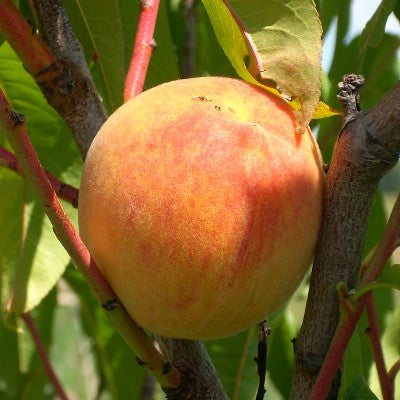
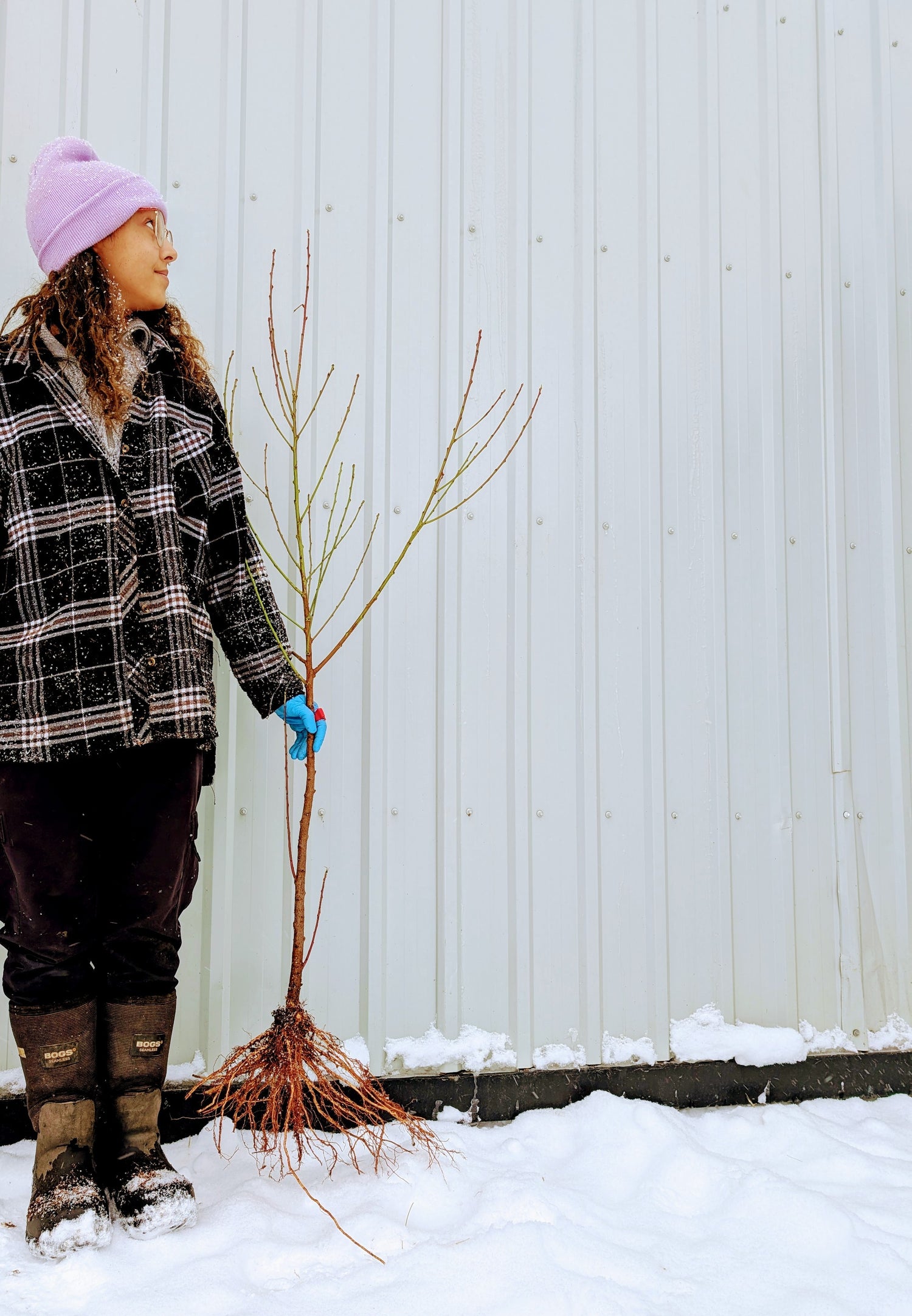
Species: Prunus persica
History: These seedlings are grown from Coralstar seeds collected from mother trees growing in Ontario. Coralstar was developed through the Fruit Acres Stellar Peach Breeding Program.
Why We Grow It: Seedling fruit trees are a great way to add some diversity and mystery to your garden or orchard! We expect that seedling peaches will be even hardier trees than their parents! The parent variety, Coralstar, is hardy and great for fresh eating and canning.
Please Note: Since peaches tend to stay true to type more than apples, these seedlings will likely bear a strong resemblance to their parent variety. However, any specific information listed on this page should be taken with a grain of salt as there may be some variation from the parent tree.


Why We Grow It: Although it failed to take off commercially, Silken is an excellent early fresh-eating apple. It is attractive with pale yellow skin sometimes with a faint pinkish blush. The fruit has crisp, juicy flesh that is quite sweet with a little bit of acidity. The tree grows quickly and tends to start bearing fruit at a young age.

History: Domaine apples originated in France some time before the 1900s. In the Pays d'Auge region in Normandy, Domaine is one of the 13 cultivars prized for making hard cider (included in that 13 are Fréquin Rouge and Noël des Champs, which we also have available). This apple was brought to the United States in 1949 but remains relatively unknown outside of its country of origin.
Why We Grow It: This bittersweet cider apple is high in tannins, low in acidity, and contains a moderate amount of sugar. Although not great for single-variety ciders, it can be an excellent addition when used in cider blends.


History: Ginger Gold has quite the dramatic origin. In 1969 Hurricane Camille hit Virginia and brought awful floods, devastating the orchards of Clyde and Frances "Ginger" Harvey. As Clyde Harvey went to save the few remaining trees in his Winesap orchard, he discovered a mysterious seedling that produced yellow apples instead of red. Genetic testing showed it was a seedling of Golden Delicious, Albermarle Pippin, and an unknown third variety. Clyde named the variety after his wife and it was introduced commercially in 1982. Since then, it has become a commercially popular early variety! In 2007, the Virginia General Assembly proposed a bill to make Ginger Gold the official state apple, although this bill was sadly tabled.
Why We Grow It: It is easy to see why this such a popular early apple! Ginger Gold produces lovely bright yellow apples that sometimes sport a red blush. These medium-large apples have are firm and juicy with a pleasant sweet flavour that has a nice tart finish. The fruit is slow to brown which makes them even better for fresh-eating along with drying. For fans of feeding wildlife, Ginger Gold apples are known to hang onto the tree well after they are ripe.

Co-authored by Silver Creek Nursery's own Steph! This book was written for all the wonderful folks who have asked us so many grafting questions over the years! Our online grafting course delves into even more detail, but this book is the ultimate guide to get you started!
This book offers a results-oriented approach to mastering grafting techniques. Whether you’re adding a new branch to an existing tree, crafting a whole new tree from a rootstock, or propagating a beloved heirloom tree, this book is your road map to success.
Susan Poizner, author of Fruit Tree Grafting for Everyone and creator of the online grafting and fruit tree care courses at OrchardPeople.com, is joined by Steph Muma of Silver Creek Nursery to help you transform your garden through fruit tree grafting. In this guide, you will learn:
- How to harvest scionwood in the winter.
- Techniques for cleft, bark, and whip grafting in the spring
- Methods for chip and T-bud grafting in the summer
- Essential aftercare practices for long-term graft success
Whether you’re a beginner or an experienced grower, Fruit Tree Grafting for Everyone will empower you to create productive, diverse, and fruit-filled landscapes in your own backyard and beyond.
If you want this item(s) shipped to you and the shipping fees don't seem right, please contact us directly and we'll get a proper rate for you!

History: Harrison was first described in 1817 by William Coxe and became a very popular cider variety in New Jersey during the 1800s, making it one of few American varieties renowned for its cider properties. Harrison's popularity declined in the early 1900s and it was believed that this variety was lost to time until it was rediscovered in 1976 growing by an old cider mill in New Jersey. This rediscovery was just in time, as what may have been the last known Harrison trees were cut down only a week later. Following successful propagation, it is once again being grown by cider makers across North America. It is considered one of the best American apples both for fresh eating and cider.
Why We Grow It: Harrison produces a high quality cider and can be made into a single variety cider. Unlike most cider apples, Harrison can also be eaten fresh and has a pleasant if somewhat dry taste. It is also scab resistant and crops reliably each year.

History: We have a collective of Franciscan missionaries to thank for this variety, when they started it in San Diego in 1768. Over the years, it became the favored fig to grow in California, including sweeping through the commercial orchards.
Why We Grow It: Excellent quality fig, with good production! Black skin, sweet strawberry-red flesh, with distinct flavour.
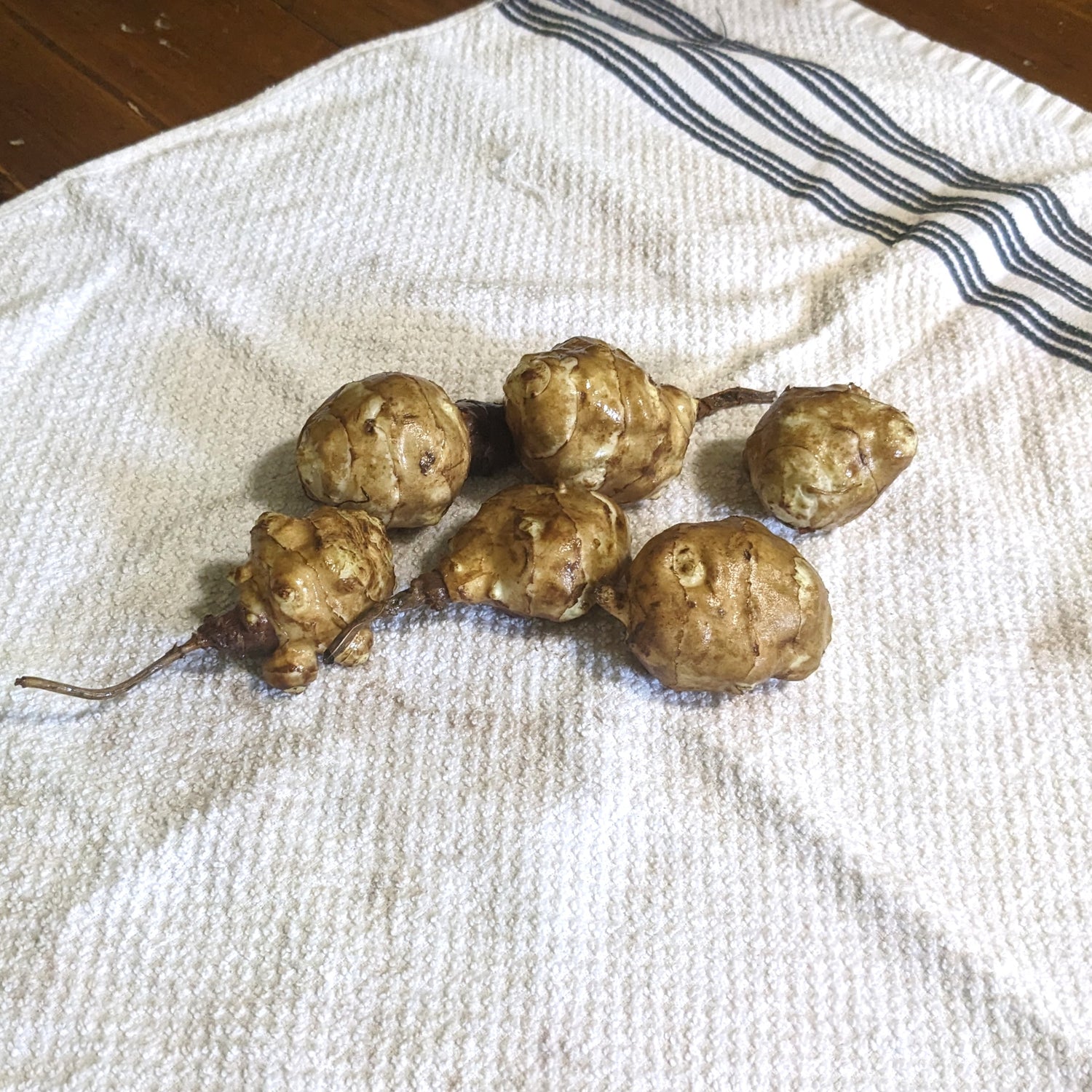
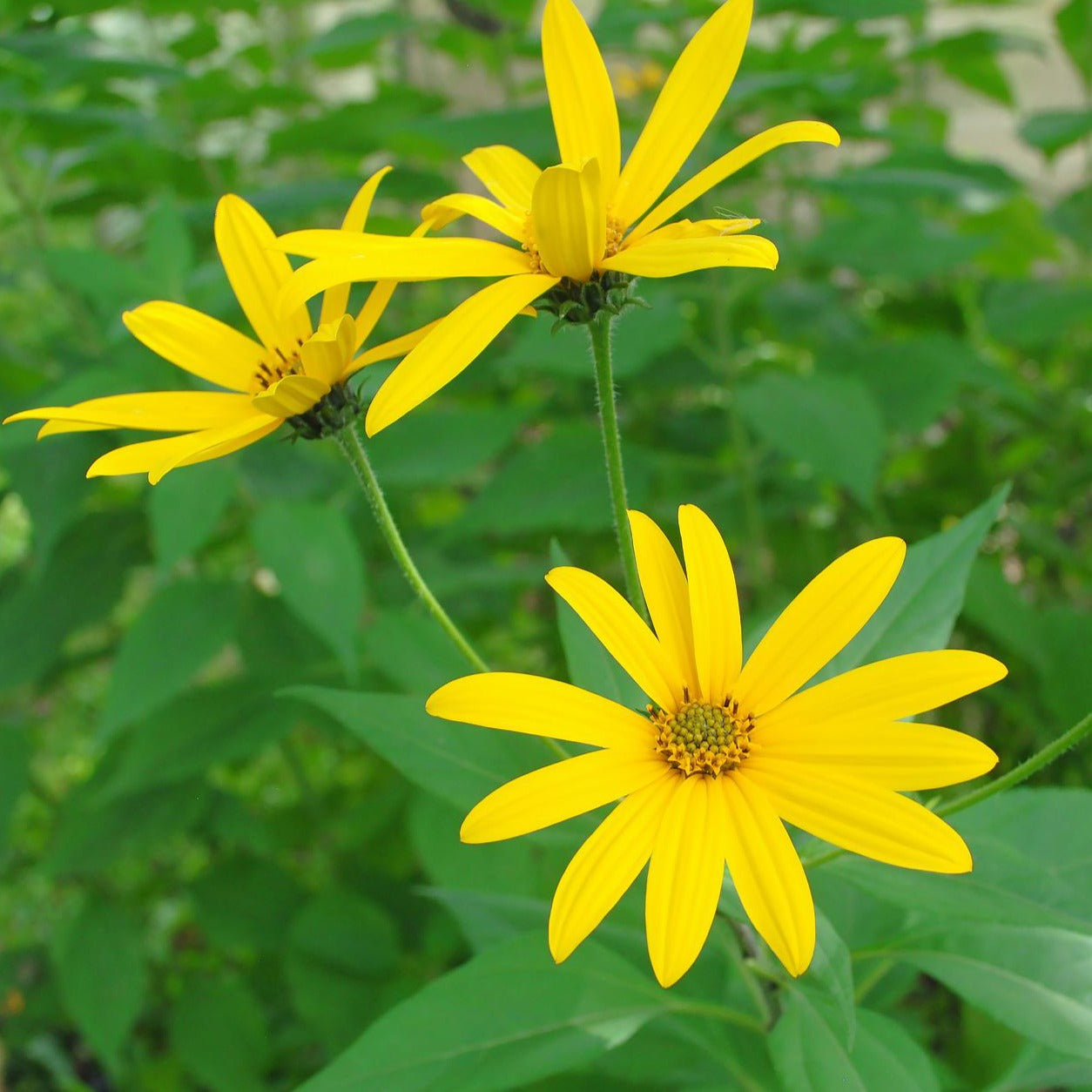
Species: Helianthus tuberosus, Sunchokes are also known as Jerusalem Artichokes or J Chokes
History: Stampede apparently originated on a reserve in northern Ontario where indigenous peoples had been cross-breeding the earliest flowering sunchokes they could find. They succeeded with Stampede which is an early flowering and ripening variety. In 1978, only two tubers were sent to Johnny's Selected Seeds in Maine, producing enough tubers by the end of the year that the nursery was able to introduce the new variety commercially in 1979.
Why We Grow It: Stampede is an extremely productive variety and produces relatively large, if somewhat knobby, white tubers. Like other sunchokes, Stampede can be prepared and eaten in a variety of ways, similar to the many ways you can use a potato! The early flowering and ripening time of this variety is great for anyone with a limited growing season.
Species: Prunus avium
History: These seedlings are grown from seeds from Sandra Rose sweet cherries sourced in Ontario. Sandra Rose was developed at the Summerland Research and Development Centre in BC.
Why We Grow It: Seedling fruit trees are a great way to add some diversity and mystery to your garden or orchard! Sandra Rose, the parent variety, produces large dark cherries with excellent flavour.
Please Note: Since sweet cherries tend to stay true to type more than apples, these seedlings will likely bear a strong resemblance to their parent variety. However, any specific information listed on this page should be taken with a grain of salt as there may be some variation from the parent tree.

History: Bedan des Parts is a French cider apple from Normandy that originated in the 1800s. It is still a popular cider apple in the area today.
Why We Grow It: The continuing popularity of this apple is due to the good quality bittersweet juice it produces that blends well with other varieties. Although a late bloomer, it is quite a heavy cropper.


History: In 1817 Joel Gillet accidentally received Rome Beauty as a seedling in a shipment of nursery trees. His son planted the seedling along the Ohio River in Rome Township. When it began producing lovely red apples, Gillet's cousin started a nursery to propagate and promote it. Originally named Gillet's Seedling, the name was later changed to Rome Beauty in 1832 to honour the township. The original tree collapsed in the 1850s due to bank erosion but the variety still remains popular in the United States today.
Why We Grow It: The fruit is deep red, large, and slightly conical with cream coloured flesh. It has a mild flavour compared to something with more character like a russet, though still an excellent snacking apple. It makes a good cooking apple too since it keeps its shape when cooked. It also stores exceptionally well, lasting all winter long. Tip-bearing.
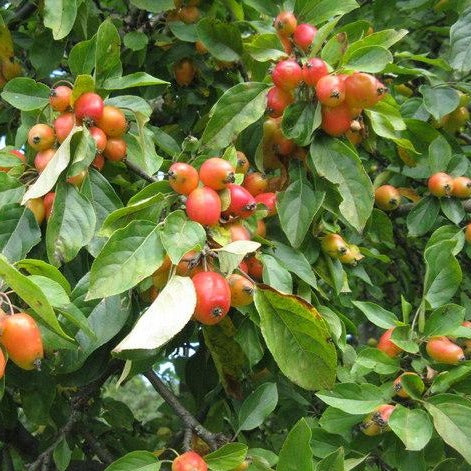
History: John Downie was raised by Edward Holmes, a nursery worker in England, in the 1870s. The variety was named after another nursery worker and friend of Holmes, John Downie. John Downie crabapples remain one of the most popular of the English crabapples.
Why We Grow It: This crabapple sports bright orangey-red fruit, often used to create some of the best jelly around. With its sweet-tart flavour, this crabapple can be pressed into a cheery orange juice that is a great addition to cider blends.

History: Rhode Island Greening emerged around 1650 where it was grown from seed by a Mr. Green near Green's End, Rhode Island. Mr. Green owned a tavern and often gave scions from the original tree to his customers, although the tree eventually died from the demand for scionwood. The name was originally the descriptive 'Green's Inn apple from Rhode Island' and later shortened to 'Rhode Island Greening.'* This apple was commonly grown in New York and is still quite common today.
*Fun fact: The Ontario ghost town Unopark got its name in a similar way. It was originally founded by Richard Parker, Mouse's ancestor, and the name is a shortened version of 'You know the Parkers?'
Why We Grow It: This apple's long-lasting popularity is due to its reputation as perhaps the definitive American pie-making apple. The large, dark-green apple is too tart to be eaten fresh but is great in pies and holds its shape well when cooked. It also produces nicely in our test orchard, producing large, blemish-free fruit despite it's generally poor disease resistance.
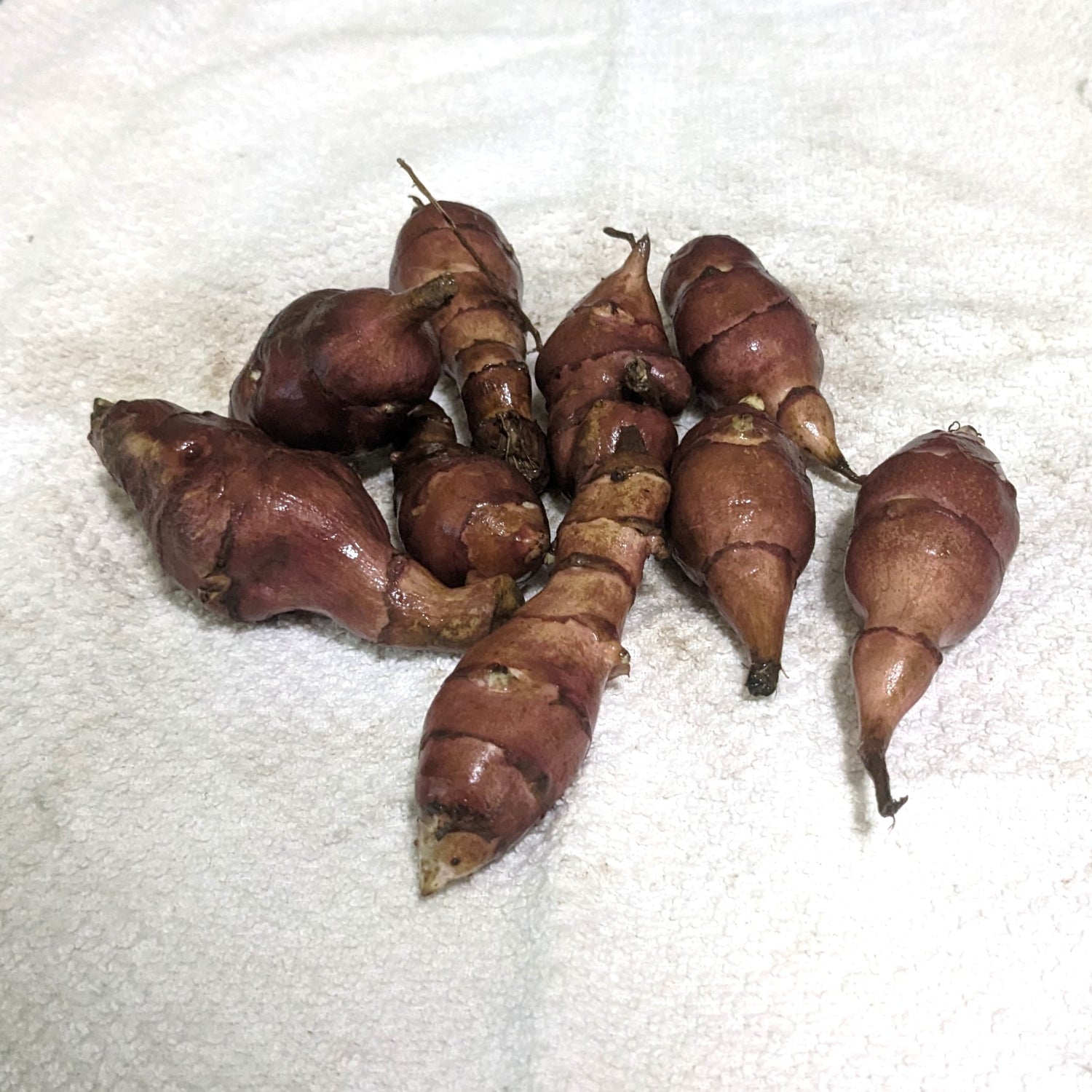
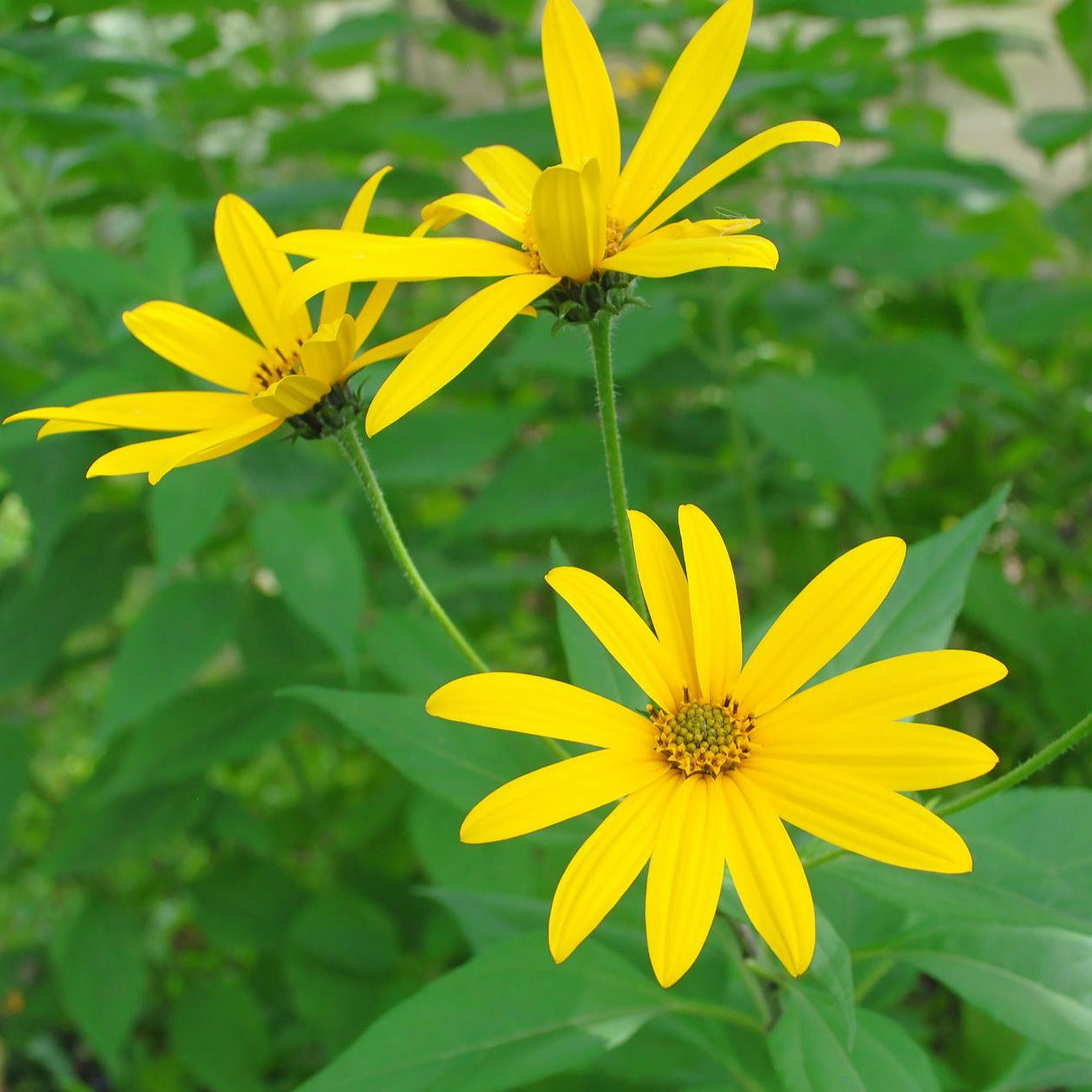
Species: Helianthus tuberosus, Sunchokes are also known as Jerusalem Artichokes or J Chokes
History: Beaver Valley Purple was introduced by heirloom vegetable gardener William Woys Weaver in the latter half of the 1900s. When he visited Sarah Morgan, a cook and gardener, at her home in Beaver Valley, Pennsylvania, she showed him the unique purple sunchokes growing in her garden. According to Morgan, the purple sunchokes had been growing on the property when her husband purchased it in 1920 and locals already considered it an heirloom variety at that time. Weaver, a fan of heritage vegetables, named the variety and began to offer it through the Seed Savers Exchange.
Why We Grow It: Beaver Valley Purple produces a unique reddish-purple tuber that is visually quite distinct from other sunchokes. Sunchokes, similar to a potato, can be prepared and eaten in a variety of ways!
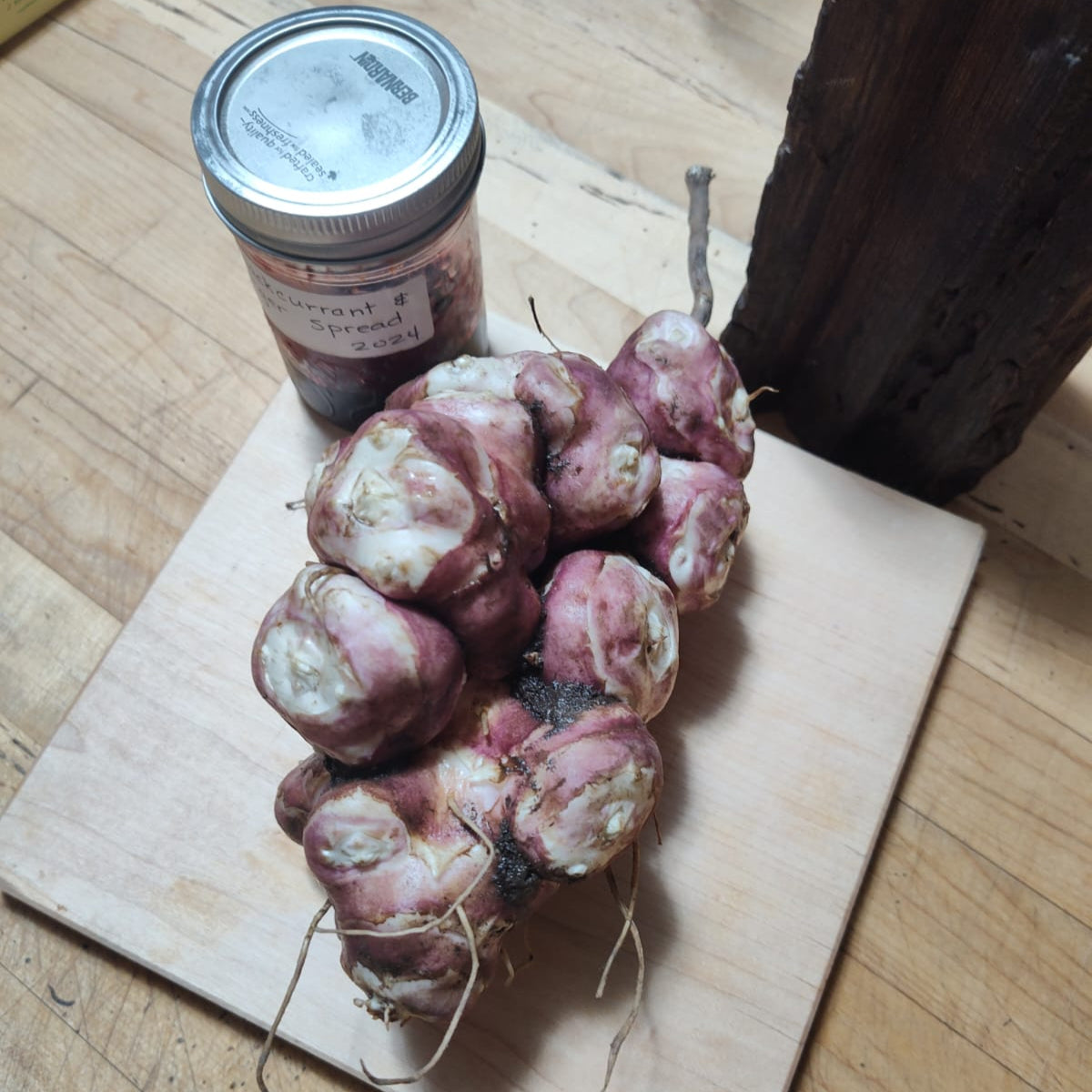
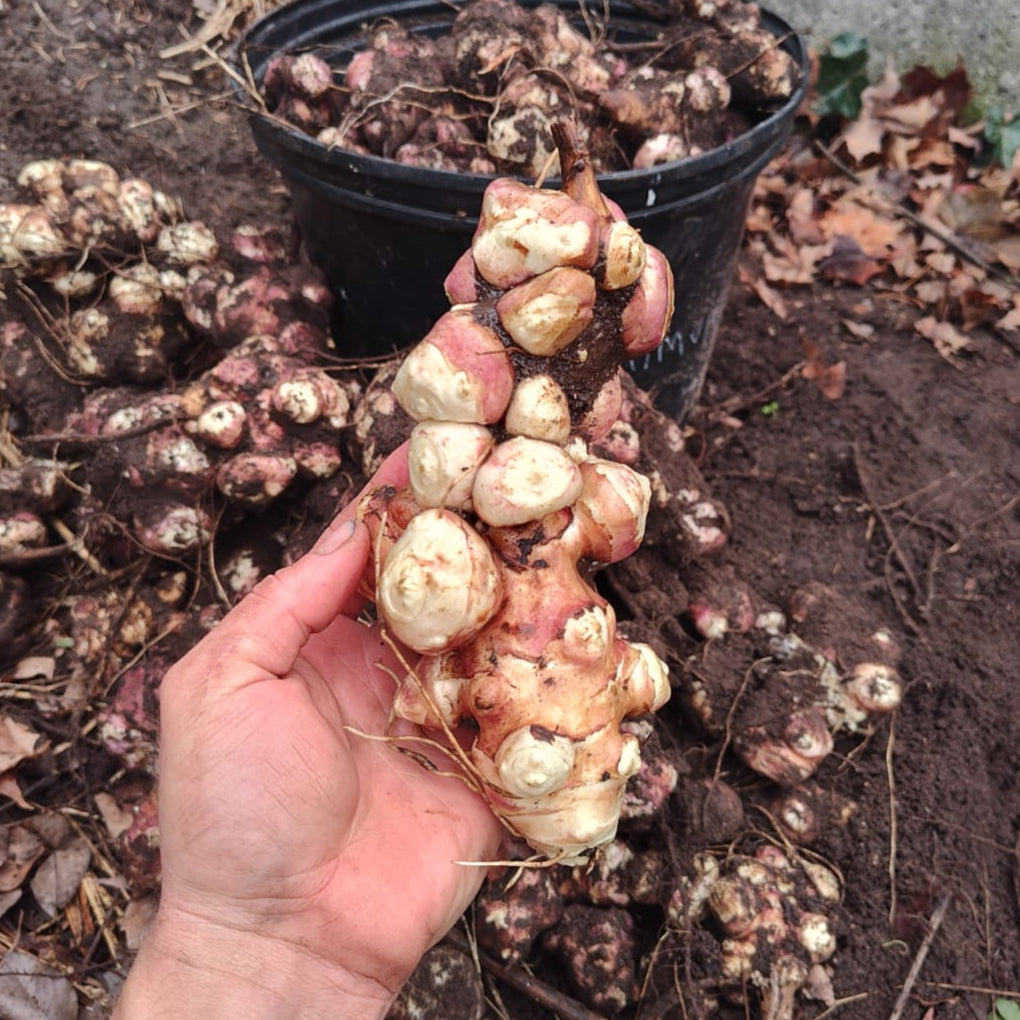
Species: Helianthus tuberosus, Sunchokes are also known as Jerusalem Artichokes or J Chokes
History: Mavor sunchokes are of unknown origin since they were kindly given to us by a local customer named A. Mavor. We were impressed with the large size and flavour of this variety and wanted to make them available to more customers, so are offering them under the name Mavor as thanks to the person who gave them to us.
Why We Grow It: Mavor sunchokes produce large, knobby tubers that are great for cooking in all the same ways you would cook a potato. At least in our soil, some of the tubers produce have a nice reddish tinge to the skin. The tubers store quite well in the fridge. It is a quick growing variety and, like other sunchokes, can spread quite aggressively if left unmanaged.

History: This vintage quality cider apple is believed to have originated near Martock in England. This apple is so old it's not entirely certain when exactly it was first discovered, with estimates ranging from the 11th to 14th century.
Why We Grow It: This lesser-known apple is bitter with high acid, featuring a fruity flavour with a bitter aftertaste that is great when made into cider on its own or when mixed into a cider blend.
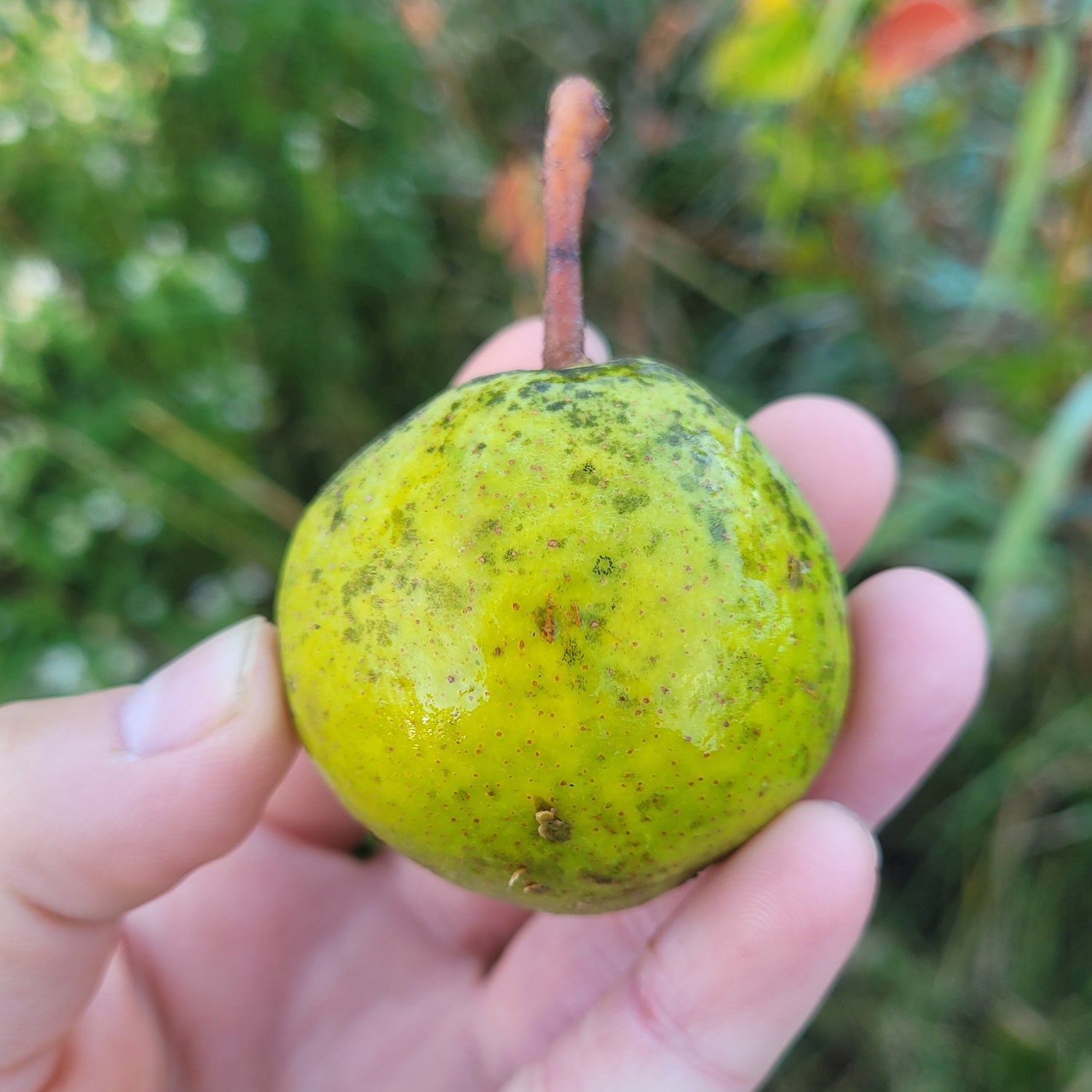
History: Little is known about the origins of Taynton Squash. Its name is derived from the village of Taynton in England where it was discovered at the parish. It was possibly discovered at some point in the 17th century as writings on it from 1811 describe it as an old variety. It was noted at the time for producing an excellent perry although now it is considered rather average.
Why We Grow It: This ancient English perry pear produces 4-5cm round green fruits in heavy crops. They should be blet for two days at most before being turned into perry, of which they make an average quality single-variety perry.

Fruit trees are delicate and need specialized care, especially when they’re planted in an urban environment, which comes with its own unique challenges. Whether you want to plant a single fruit tree or an entire orchard, this book will show you how to save time and money and be successful right from the start.
Susan Poizner lives in Toronto, and is an excellent resource to anyone seeking to plant fruit trees in their back-yard. We find her book easy to read with clear, concise information and excellent pictures and diagrams.

History: Sekai Ichi (translated literally from Japanese as 'world number one,' more accurately meaning 'best in the world') was bred at the Prefectural Experiment Station in Aomori, Japan in 1930 and released in 1974. It is a cross between Red Delicious and Golden Delicious. This variety is quite highly regarded in Japan where a single apple can sell for as much as $25 each. Each apple is hand pollinated, washed in honey, and hand-stamped while being inspected to ensure its quality.
Why We Grow It: Although we don't get quite that fancy here, Sekai Ichi is nonetheless a great apple if you enjoy sweet, crunchy, apples with no acidity, as is common with Japanese varieties. It is red over greenish skin and very large with an average circumference of 30-45cm and average weight of 2lb. The tree itself is very vigorous although slow to start bearing fruit with a tendency towards biennial bearing.

The Holistic Orchard: Tree Fruits and Berries the Biological Way demystifies the basic skills everybody should know about the inner-workings of the orchard ecosystem, as well as orchard design, soil biology, and organic health management. Detailed insights on grafting, planting, pruning, and choosing the right varieties for your climate are also included, along with a step-by-step instructional calendar to guide growers through the entire orchard year. The extensive profiles of pome fruits (apples, pears, Asian pears, quinces), stone fruits (cherries, peaches, nectarines, apricots, plums), and berries (raspberries, blackberries, blueberries, gooseberries, currants, and elderberries) will quickly have you savoring the prospects.
Michael Phillips has been a huge inspiration for how we run things here at Silver Creek Nursery. From considering the principles of orchard ecosystems to the holistic spray recipe we have listed on our website, his knowledge and insight has been an irreplaceable resource for us.


History: The origins of Pomme Gris (translated as 'gray apple' from French) are a bit of a mystery. It may have originated in France in the 1600s as either a seedling or sport of the variety Reinette Gris which was then brought to Quebec by French or Swiss colonizers. Alternatively, it may have its origins in Quebec, perhaps being grown and propagated in Canada from the start. The first instance of this variety's documentation was by a William Forsyth in 1803 who believed the apple originated in Canada and made its way to Europe sometime in the 1700s. Regardless, this variety was grown in Quebec for centuries.
Why We Grow It: Pomme Gris is an excellent all-purpose apple! Although not the prettiest apple in the world, it is crisp, juicy, and aromatic with a nutty flavour and hints of vanilla. It was really a standout when our tree first produced fruit a couple years ago! The fruit can also be used for cooking and the apple would likely be a good addition to cider blends.

History: Glowing Heart was bred in Toronto by Fred Jansen, one of the founders of the North American Fruit Explorers (NAFEX). This unique apple is still in its early years.
Why We Grow It: This variety has a unique pink and white flesh and is quite acidic. One bite will make you pucker! Although not the best option for fresh eating, this apple creates an aromatic jelly with rich flavour and can be used in ciders as well. It does well in organic orchards.

Volcanophos Rock Dust – Mineral-Rich Soil Amendment for Planting Fruit Trees
We like this product because:
Volcanophos rock dust adds phosphorus and trace minerals to soil—ideal for planting fruit trees, boosting root growth, and improving long-term fertility.
Key Benefits:
-
Natural phosphorus source for root growth and fruiting
-
Rich in trace minerals and rare earth elements
-
Enhances soil biology and nutrient availability
-
Ideal for planting fruit trees and orchard establishment
-
Micronized for faster breakdown and improved efficiency
-
Approved for organic use
Volcanophos is a carbonatite/phosphate igneous rock that comes from the Kapuskasing area in Ontario. The unique thing about this mineral is that it is the only igneous rock available in North America that contains apatite, which is a phosphorus source. In addition to this, the igneous base to this deposit means that it contains a profuse range of trace minerals and rare earth elements, which sedimentary rocks generally lack.
This material is micronized. This makes for a more costly product, as the material, which initially comes in a sand like texture, is then ground down into a fine powder. However, this greatly increases surface area of the rock dust, which in turn allows the biology in the soil to more readily access to the material. This results in it being broken down more rapidly.
As with all rock dusts, it is best mixed with a compost or peat carbon source in order to facilitate the breakdown into bio available forms. Therefore this is an excellent material to add to your compost piles at a rate of approx. 10% by volume.
This product is approved for organic use.
Application
VolcanoPhos is typically applied at a rate of 300 to 500 lbs per acre each year until optimal phosphorus levels are reached. In a soil mix, use at a rate of approx 1/2 cup per cubic foot of mix.
A certified agronomist should be consulted with regards to Volcanophos and its application rates specific to your needs.
Equivalency Measurement - 6 cups/2kg

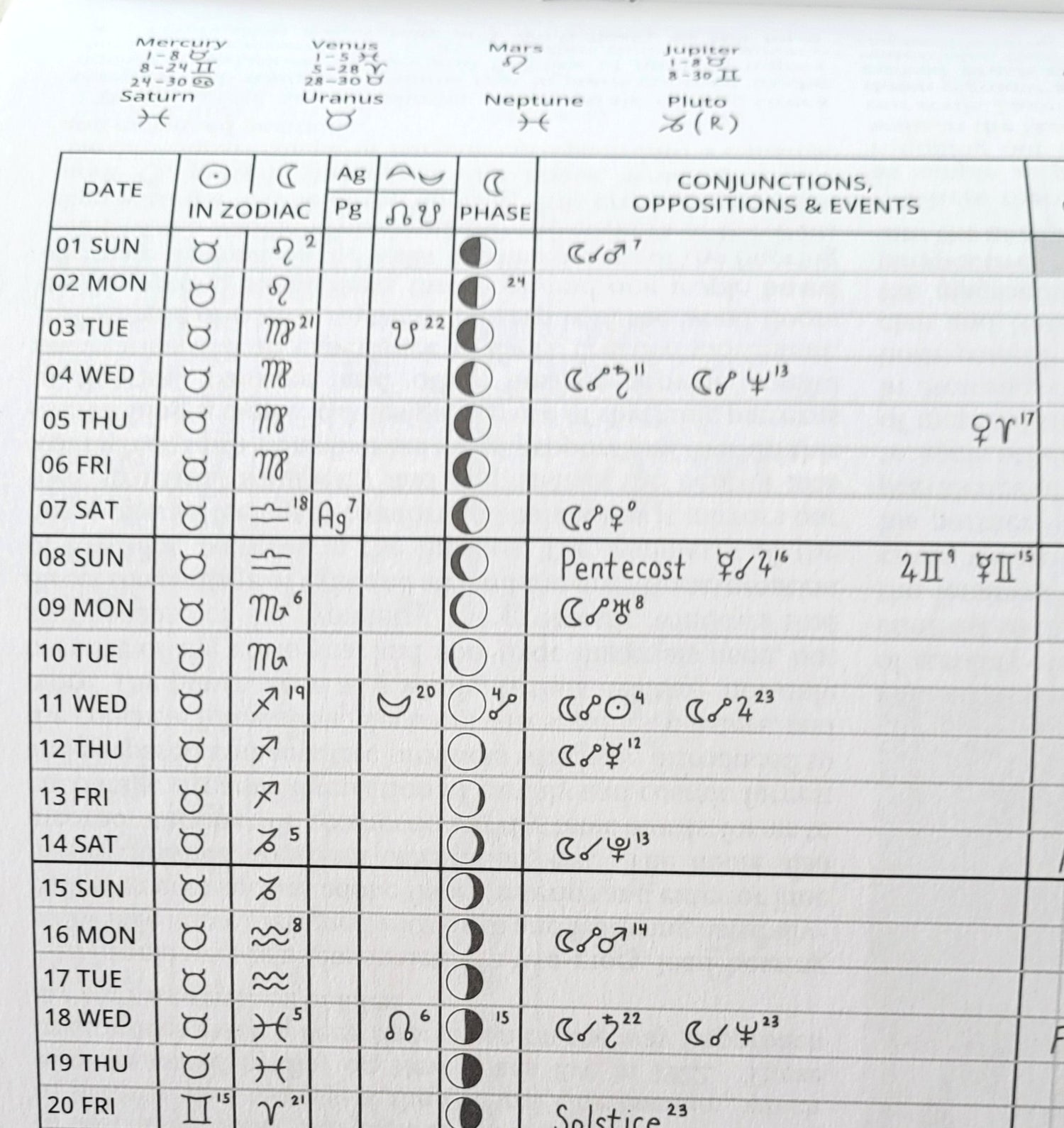

Stella Natura Biodynamic Planting Calendar for 2027 Working with Cosmic Rhythms.
The Stella Natura® Biodynamic Planting Calendar joins in the long ancestral tradition of orienting our work on the land with the rhythms of the cosmos.
Founded on the work of Rudolf Steiner, the approach taken in the Stella Natura Calendar seeks to renew ancestral agrarian wisdom through modern spiritual scientific research.
The mission of this Calendar is to help awaken human partnership with the cosmos in the service of tending to the farm, garden, and natural world, especially plants! To this end, the
Sun and Moon are the planetary bodies upon which this Calendar places the strongest emphasis, as the rhythms of their relationships and influences are most closely observable and practically applied in relation to plant growth.
The charts in this calendar offer advice for when to sow seeds and best times to cultivate the garden and farm crops to enhance their roots (carrots, beets, etc.), flowers (chamomile, zinnias, etc.), leaves (lettuce, spinach, kale …), or fruits (squash, beans, tomatoes, …). This is based on the Moon’s passage through the constellations of the zodiac. Unfavorable times for sowing are also indicated, to help avoid those inexplicable crop failures.
Initiated by Sherry Wildfeuer in 1978, Stella Natura has been heartfully produced by her since that time. After 46 years at the helm, Sherry identified Alex Tuchman, director of Spikenard Farm Honeybee Sanctuary, as her chosen successor in this work. Alex and Sherry have worked mindfully and joyously together on this transition and have collaborated closely on the last several issues.
Since Steiner’s time, great contributions towards developing this new star wisdom have been taken by Lilly Kolisko, Elisabeth Vreede, Willi Sucher, Maria Thun, as well as contemporary colleagues like Sherry Wildfeuer, Dennis Klocek, Jonathan Hilton, Mary Stewart Adams, Brian Gray, Malcolm Gardner, and many more.