In-Stock Inventory

In-Stock Inventory
Make your selections faster and easier by shopping "In-Stock" items only.
We offer flat rate shipping across Canada for our bareroot trees!
308 products
Sort by:
308 products
308 products

History: The origins of Beer's Black are a mystery, but the excellent fruit proves why it continues to be a popular variety today!
Why We Grow It: Beer's Black produces medium figs with dark violet skin and magenta flesh that are quite sweet. They are excellent for eating fresh or drying!

History: AKA Co-op 30, Enterprise is one of the many varieties that was developed through the collaborative PRI disease-resistant breeding program run by Purdue University, Rutgers University, and the University of Illinois. It was introduced in 1993 and has proven to be a very reliable variety. Although its name does not start with 'PRI' like many of the other varieties that came from this program, they still snuck the initials into Enterprise's name.
Why We Grow It: Enterprise produces crisp fruit that it is known for its strong, rich, tart flavour that can be described as spiced. It is a very disease-resistant variety that grows quickly, produces reliable crops, and stores for a long time. They are good for fresh eating although the skin is on the thicker side, and they can be used for cooking, baking, and sauce.


Species: Elaeagnus umbellata
History: Autumn Olive (aka Japanese Silverberry) is native to parts of Asia and was introduced to the US as an ornamental plant, erosion control, and wildlife habitat in the early 1800s. Its nitrogen-fixing properties and prolific seed production has caused it to become an invasive species in some parts of the US and Canada, so caution is recommended when planting it so it doesn't spread.
Why We Grow It: Despite its bad reputation, this shrub has many beneficial uses. The small red sweet/tart berries are good for fresh eating and making into jams and condiments while the nitrogen-fixing properties of the shrub make it a useful companion plant in orchards and agroforestry systems and for rebuilding the soil.

Species: Shepherdia argentea
History: Silver Buffaloberries are native to the southern parts of the prairies, parts of the northern US with scattered populations further south. It is an important source of food and habitat for many species including Saskatchewan's provincial bird the sharp-trailed grouse. It is traditionally used by indigenous peoples in its range as food, seasoning, medicine, dyes, and in coming-of-age ceremonies for girls.
Why We Grow It: Silver Buffaloberries are an excellent addition to native gardens, food forests, and hedgerows! They are tolerant of a wide array of conditions and are also nitrogen-fixing. These shrubs are some of the first to produce flowers each spring, making them good resource for pollinators. The berries, which are often red but may be orange or yellow, are a good source of food for birds later in the season. The edible berries are on the bitter/tart side but are much more enjoyable when made into jams, jellies, and pies! Just be mindful these shrubs are thorny and will spread over time.

History: Little is known about this pear in the Western world aside from the fact it came from China. Seuri is possibly the Japanese version of the Chinese name Se Li (translated as 'red pear' from Mandarin).
Why We Grow It: Seuri Li has yellow-brown skin and the flesh is sweet yet slightly tart with a hint of apricot. It is considered one of the most flavourful of the Asian pears. The tree grows well and has heavy crops.

Phosphorous is one of the most important nutrients required by plants, aiding in root growth among other aspects of plant development! Soft rock phosphate, aka colloidal phosphate, comes from clay collected from basins of former hard phosphate mining operations. The clay nature of this product means it does not leach out of the soil due to water, allowing it to better stay in place and remain accessible to plants.
Application Rates:
- About 1 cup per tree dusted into backfill soil when planting. One bag has around 5 cups (2kg).
- Light Applications: Apply 3.2kg per 1,000 square feet, ¼ cup per plant, or 0.45kg per 20 foot row of vegetables.
- Normal Applications: Apply 5.5kg per 1,000 square feet, 1/3 cup per plant, or 1kg per 20 foot row.
- Please Note: If you are adding phosphorous to your soil via fertilizers such as bone meal or soft rock phosphate and also using the Root Rescue mycorrhizal inoculant, reduce the application rate of the phosphorous source by 1/4-1/2. Too much phosphorous will negatively impact the mycorrhizal fungi, potentially slowing or even preventing your plants from forming a relationship with these incredible fungi.

Species: Vaccinium corymbosum
History: Toro is a cross between Earliblue and Ivanhoe bred by USDA blueberry breeder Arlen Draper in Maryland. It was selected for its productivity, firmness, and flavour and introduced in 1987. It was named Toro ('bull' in Spanish) due to its strong and stocky structure, however this dense canopy structure prevented Toro from achieving true commercial success due to the added difficulty of pruning and harvesting it at a commercial level.
Why We Grow It: Toro produces large blueberries that are quite sweet and firm. They tend to produce heavy crops that ripen all at once, making mechanical picking easier. Like other blueberries, Toro is great for eating fresh, baking, and preserving!


Species: Cornus mas
History: Cornelian Cherry (aka Cornel) is a dogwood species native to parts of Europe and Asia. The berries were traditionally used mainly in cooking and to make jams and alcohol and have also been used in traditional Chinese medicine along with the leaves. The wood is quite dense (it sinks in water!) and has been used to make tool handles, machine parts, weapons in Ancient Greece, and the sticks traditionally carried by the mounted herdsman in the Maremma region. In the UK there was some interest in its use as a garden plant starting in the mid 1500s but interest has mainly grown in the last century or so.
Why We Grow It: A novelty among the dogwoods, Cornelian Cherries produce small, red fruits that resemble cherries. The acidic fruit can be eaten fresh when they're quite ripe but are primarily used for cooking and preserves, similar to cranberries. They are also attractive ornamental plants, producing clusters of bright yellow flowers very early in the season.
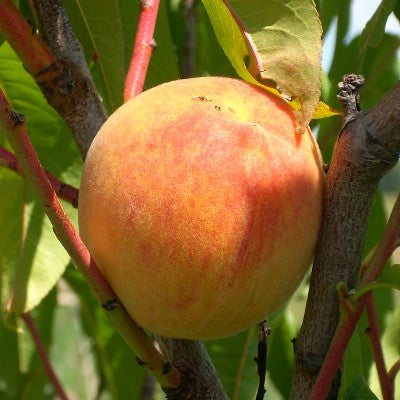
Species: Prunus persica
History: These peach seedlings are grown from peach seeds from the very trees we have in our orchards! The parents will be a mix of the Harrow Diamond, Redhaven, Reliance, Veteran, and seedling peaches from True Root Nursery.
Why We Grow It: Peach seedlings tend to stay fairly true to type so odds are you're going to get a pretty solid peach tree once they mature and it is hoped that growing them from seed here will make them a littler hardier! For those who prefer the certainty that comes with getting a named variety, these trees would also be great for grafting as rootstock, feeding wildlife, or planting along a fence line.

History: The Niitaka Asian pear was developed in Japan as a cross between Amanogawa and Imamuraaki Asian pears in 1915 and was released in 1927.
Why We Grow It: Niitaka is a popular Japanese variety with large orange-brown fruit that is round and speckled. The flavour is sweet and mild.
History: Whitney crabapples were grown from seed by nurseryman A.R. Whitney around 1865 at Whitney Nursery in Illinois, US. It became popular for its excellent cold hardiness and productivity and in the 1900s the state of Montana recommended it as one of the best crabapple varieties to grow.
Why We Grow It: These large (for a crabapple) yellow and red apples boast a sweet-sharp flavour with some astringency and juicy, crispy flesh. They are a truly multipurpose fruit and can be eaten fresh (if you like some astringency to your apple) or used for cooking, sauce, cider, and jelly. The trees are very cold hardy and boast good disease resistance as well.

Wollastonite comes from the area around Seeleys Bay in Ontario. Its source is a high grade calcium silicate deposit that when mined and ground down provides an excellent rock dust made up of approximately 27% silicon, 16.5% calcium, and 4% magnesium. Although most soils can benefit from the calcium addition, it is the silica content here that is of interest.
Silica is a crucial mineral, as it contributes greatly to building the strength of cell walls, which not only encourage upright plant structure, but they trigger a range of natural defense in turn. Strong cell walls protect the plant from pests that seek to chew and suck on the plant structures. A cell wall fortified with adequate silica levels also protects the plant from assault by the different fungal pathogens by making it much more difficult for the fungal pathogens to be able to eat their way through the cell walls into the cell center where it then gains a foothold and spreads.
Silica also boosts photosynthesis and chlorophyll development. The nutrient pathways in the plant- the xylem and phloem- govern the movement and translocation of mineral nutrients throughout the plant. It is silica that is responsible for the creation and maintenance of these pathways. And without adequate levels of silica in its structure, plants will all too often succumb more readily to the stresses brought on by drought and low water conditions.
"The stronger the cell wall, the more stress-resistant the plant, whether that stress is from pathogens or non-living factors." Graeme Sait, Australian Agronomist
This product is approved for organic use.
Application: 1 cup per tree, work the dust into the top 3in of the soil
Use at a rate of approximately 1/2 cup per cubic foot of soil mix.
Equivalency Measurement - 7 cups/2kg

TM-7 contains a blend of seven micronutrients as well as concentrated humic and fulvic acid. It can be used to stimulate microbial activity, increase nutrient uptake, and reduce nutrient leaching. It improves soil structure, builds plant immunity, and promotes growth and increased yields.
Derived from: Boron, cobalt sulfate, copper sulfate, ferrous sulfate, manganese sulfate, sodium molybdenate, zinc sulfate and chelated with humic and fulvic acids derived from fresh water cretaceous humate deposits.
Application: Can be used for seed activation and soil or foliar applications
Soil, container, or foliar application: 0.75-1.25g/gal
Field application: 2-4 pounds per acre every 3-6 weeks
Soil: Good for all soil types including containers and hydroponics
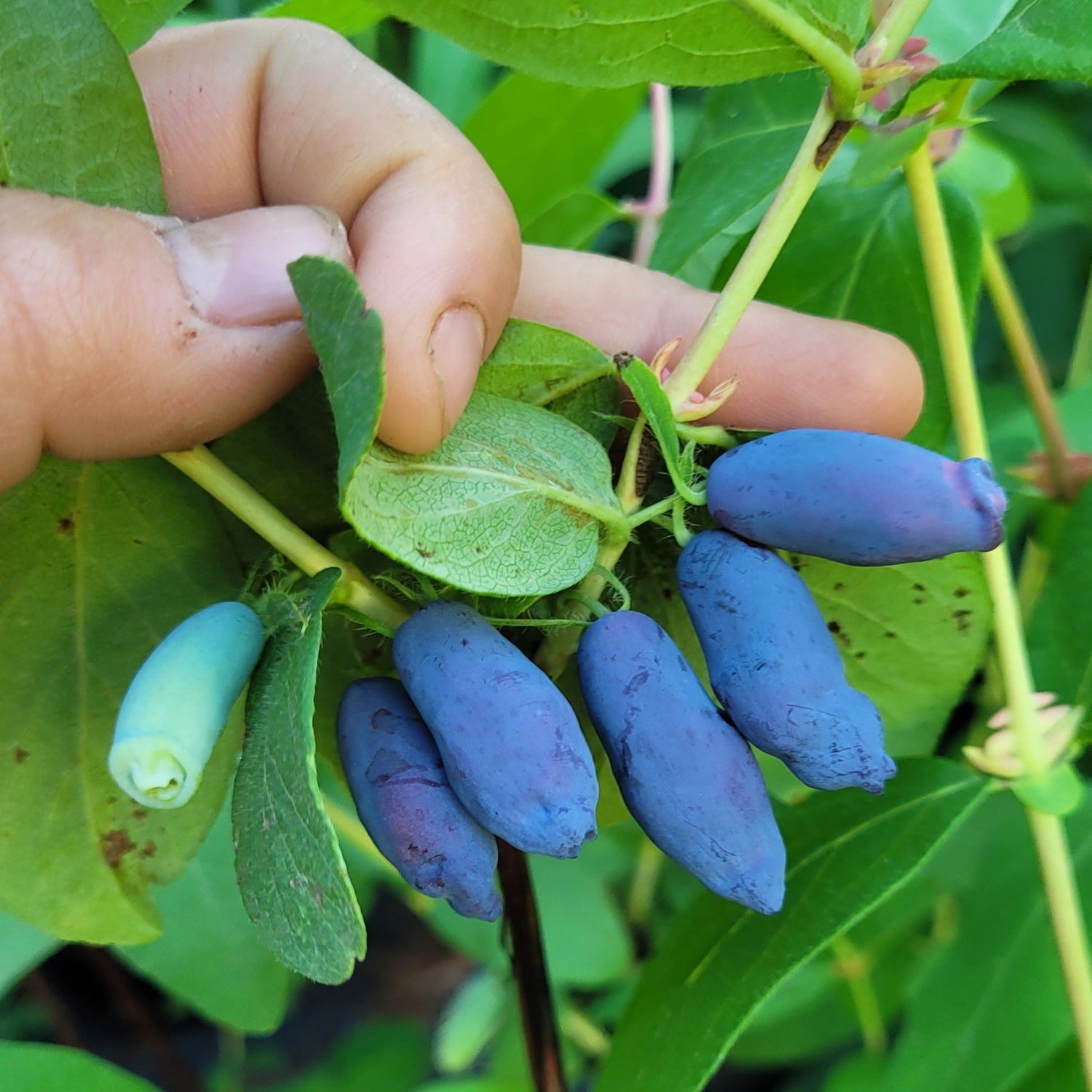
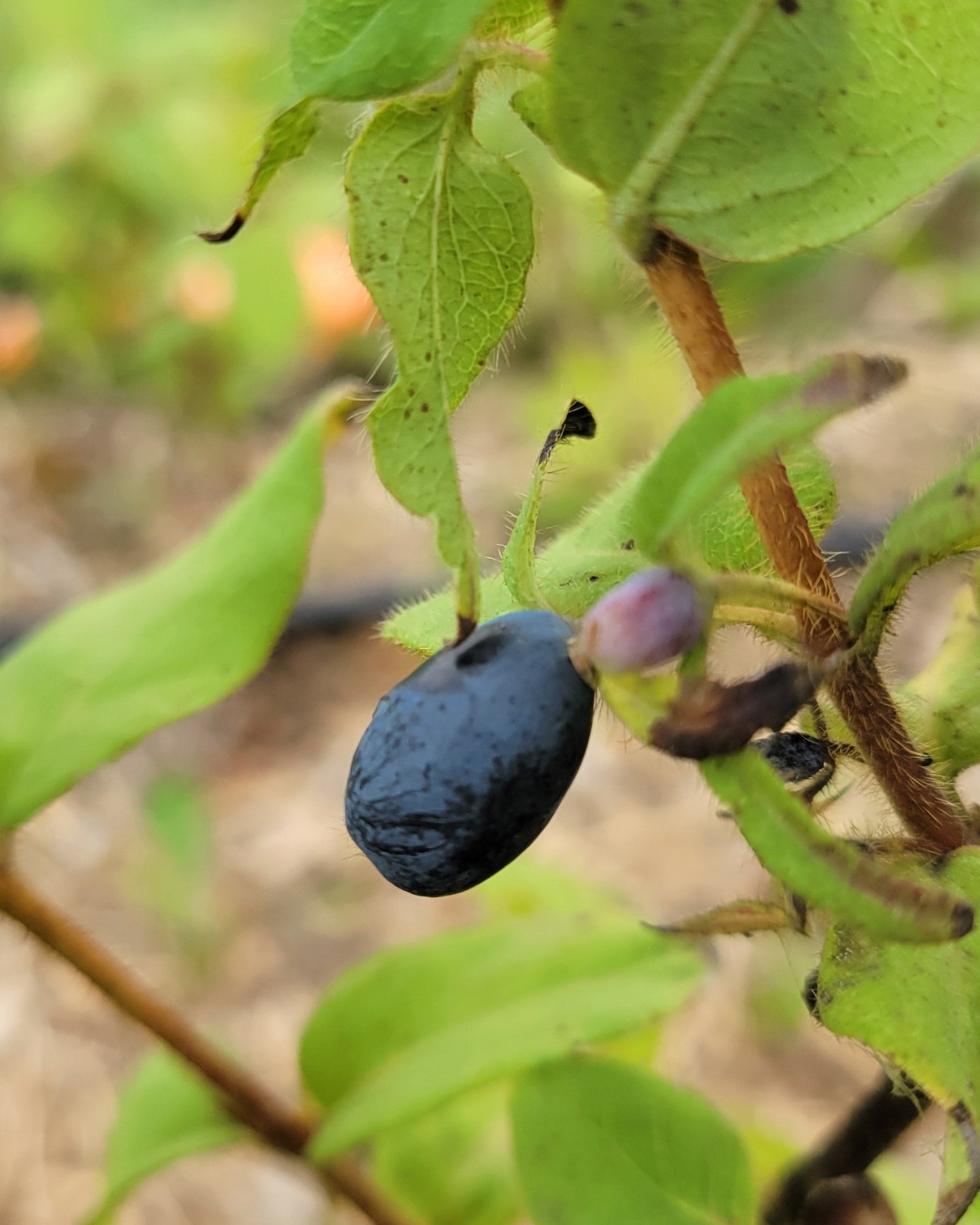
Species: Lonicera caerulea
History: Indigo Gem was bred by Bob Bors at the University of Saskatchewan as part of the Indigo Series, a series of five varieties that all share the same parents. They were bred sometime in the mid to late 2000s and released around 2010/2011. Indigo Gem is the most productive variety of the series.
Why We Grow It: Indigo Gem produces fairly round berries that are sweeter and smaller than most haskaps, although they still have that characteristic tartness to them! It is considered one of the better options for fresh eating and like other haskaps is also great in baking, making preserves, etc.

Why We Grow It: It is hard to turn down an apple that sounds as wonderful as Sundance! It is crisp and juicy with a spicy, citric flavour. Along with being great for fresh eating, the fruit also holds its shape well when baked. As an added bonus, this variety is resistant to many common apple diseases and stores quite well so you'll have plenty of high quality apples to easily last you through the winter.
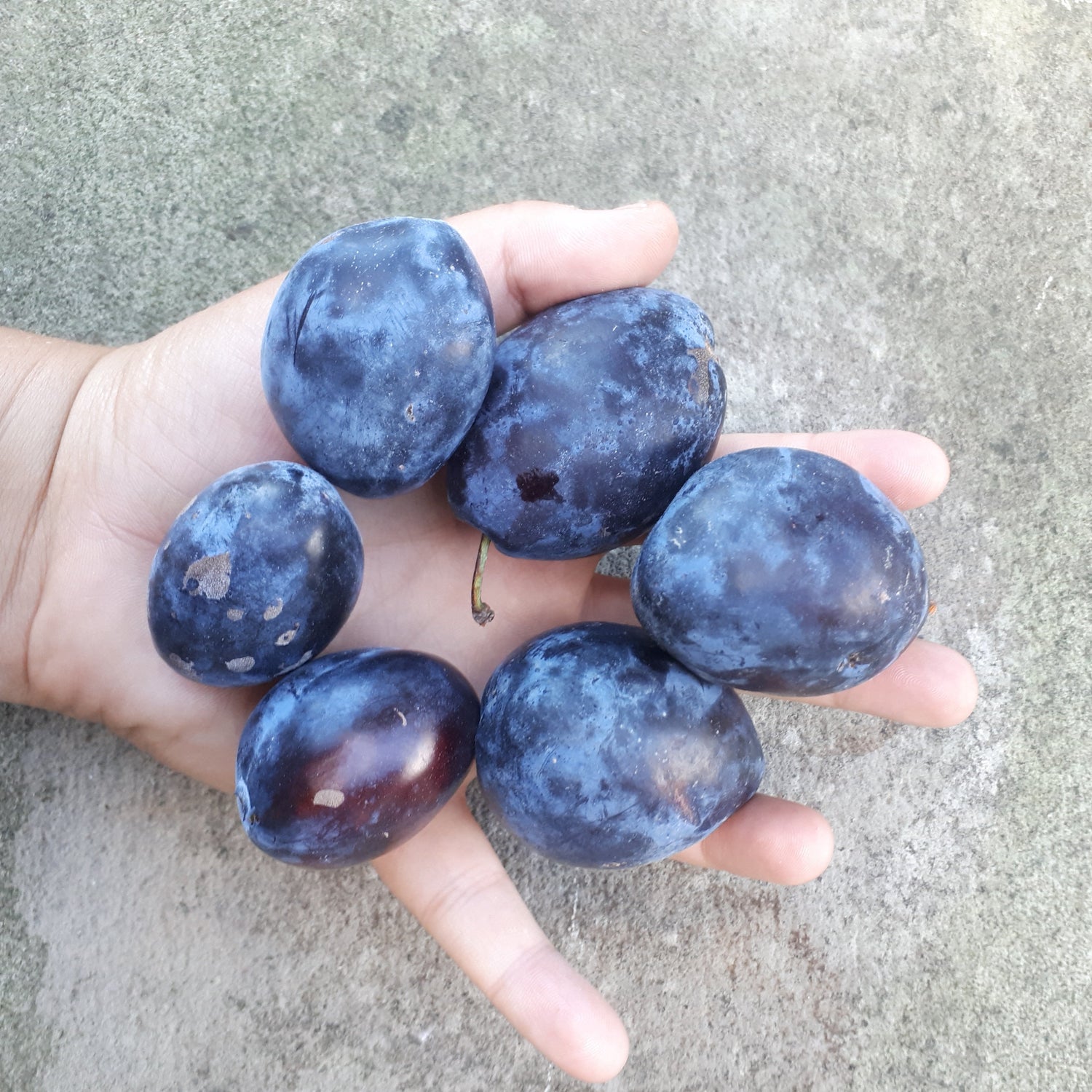
Species: Prunus sp
History: These seedlings are grown from German plum seeds collected from our orchard. Likely a few centuries old, German plums are a classic prune style plum that are great for traditional German desserts.
Why We Grow It: Seedling fruit trees are a great way to add some diversity and mystery to your garden or orchard! The parent of this variety, German plum, is sweet and aromatic. It is good for eating fresh and great for drying or baking. For a more detailed description, see the German plum page on our website here.
Please Note: Since plums tend to stay true to type more than apples, these seedlings will likely bear a strong resemblance to their parent variety. However, any specific information listed on this page should be taken with a grain of salt as there may be some variation from the parent tree.


History: Ketchankookem Trail was discovered in 2022 by Wayne Kuntze while he was vacationing on Manitoulin Island with his family. He found it growing wild along Ketchankookem Trail, being drawn to its bright yellow fruit with a pinkish-red blush. Now we are happy to officially introduce this variety in 2023!
Why We Grow It: This variety is worth growing for the name alone! Ketchankookem Trail shares a lot of similarities with Lodi and Yellow Transparent in terms of its early ripening time, yellow skin, and sprightly flavour. Like these other fine early-ripening varieties, it may also be good for sauce along with fresh eating.
This is a brand new variety and we're still learning about it! For any avid apple growers who decide to plant these out, feel free to keep us updated on how it grows, what you use the fruit for, etc, so we can provide as much information as possible!

History: Little is known about Kermerrien aside from the fact it originated in the Quimplerlé region in France. It was exhibited by an orchardist at an event in 1896 and was described in a book on cider apples published in the same year, but it is unknown how old the variety is. It is commonly used to make traditional Breton cider.
Why We Grow It: This bittersweet cider apple produces a good single-variety cider with a nice golden juice. The tree is vigorous and starts bearing at a young age.

History: Granny Smith was discovered by Maria Ann "Granny" Smith as a chance seedling on her and her husband's farm in Australia in 1868. Having grown from apple seeds she had tossed, she found it to be an exceptional apple. She propagated it and brought the apples to market, earning the variety local popularity. She passed away two years later but local growers kept the variety going until it was noticed by the New South Wales Department of Agriculture in 1895. Thanks to its excellent shelf life, it became an important agricultural export and remains one of the most popular apple varieties in the world today. There has been an annual Granny Smith Festival in Eastwood since 1985 to commemorate Maria Ann Smith and her apple that attracts over 80k attendees each year.
Why We Grow It: This classic green apple barely needs an introduction! It is well known for its sweet and sharp flavour that is a delight for fresh eating and for its usage in cooking and baking. As an added bonus, Granny Smith also keeps well in storage and tends to start producing fruit at a young age.

History: Kandil Sinap* originated in the early 1800s around the Black Sea, although it is debated whether it originally came from the Crimean Peninsula in the Ukraine or the Sinop Peninsula in Turkey. It was at one time commonly exported into Russia.
*There are different thoughts on what Kandil Sinap translates to, some say it is 'candle of Sinop,' others 'sweet apple of Sinap,' and it translates directly from Turkish as 'oil lamp'
Why We Grow It: Kandil Sinap's most prominent feature is the odd shape of the fruit, strangely oblong and conical, almost resembling a candle in appearance. The odd green fruit have a sweet, sprightly flavour and are quite aromatic, although they do bruise easily. The tree naturally stays smaller but produces heavy crops and is great for backyard orchards.


History: Karneval (translated from Czech as 'Carnival') was developed at the Institute of Experimental Botany in Prague in the Czech Republic by Dr. Jaroslav Tupý. It is a cross between Vanda and Cripps Pink. It was released in 2011 and like many other modern apples, boasts a sweeter flavour and good disease resistance. However, the main reason this apple was likely selected and given its fun name was for the bright red striped that adorn it.
Why We Grow It: Karneval is medium sized apple that is sweet, juicy and just a little tart and aromatic. However, this apple is best known for its unique appearance: yellow skin with distinct red stripes that would make it feel at home at the circus. Great flavour, striking visual appeal, good storage capabilities, and good disease resistance make this apple an excellent choice for any grower.

When you prune your fruit tree, you’re not just cutting branches; you’re partnering with a living organism to help it thrive. Together, you and your tree work toward a shared goal: a healthy harvest of delicious fruit.
In this book, Susan Poizner, ISA Certified Arborist and award-winning creator of OrchardPeople.com, combines science-based insights with practical strategies to make pruning intuitive. By understanding your tree’s needs, you’ll learn how to work with its natural growth patterns for healthier, more productive results.
With Susan’s guidance, you’ll discover:
- How proper pruning improves your tree’s health and directs its energy into producing higher-quality fruit
- Why winter pruning encourages rapid growth, while summer pruning slows it down
- Step-by-step techniques for Central Leader and Open Center pruning
- How to make your first pruning cut—often on the same day you plant your tree!
- How to train fruit tree branches with weights or clothespins to make them stronger and more productive
Susan Poizner has over a decade of experience helping growers master the art of fruit tree care. In this book, she shares everything you need to know about pruning, with clear, step-by-step instructions to guide you through the process.

Huplaso is a new basalt from New Brunswick which is proving to be an excellent rock dust option. All basalts originate from volcanic activity and consequently can be rich sources of macro, micro, and trace elements. Huplaso comes from mafic volcanic rock that dates back to the Middle Ordovician times. This deposit emerged from a rapidly cooling magma deposit on the east coast of Canada and contains 57 different mineral elements.
One of the great benefits of basalt is that it generally carries a high paramagnetic reading. The advantage of paramagnetism is not readily embraced by current science. However, most soil scientists are aware of the work of Phil Callahan, who has contributed significantly to the understanding of what constitutes a healthy soil. Because of its own high paramagnetic value, Huplaso is a powerful tool to use in your soils. It is also a valuable liming agent in soils.
This product is approved for organic use.
Equivalency Measurement - 6 cups/2kg
Application: 1 cup per tree, work the dust into the top 3in of the soil. This means a bag will treat 6 trees.
Apply 1/2lb-3lb per cubic foot of soil mix, unless mixing with other rock dusts, in which case adjust accordingly. Use the highest rate for high value crops, poor soils and/or for potentially increased crop yield.
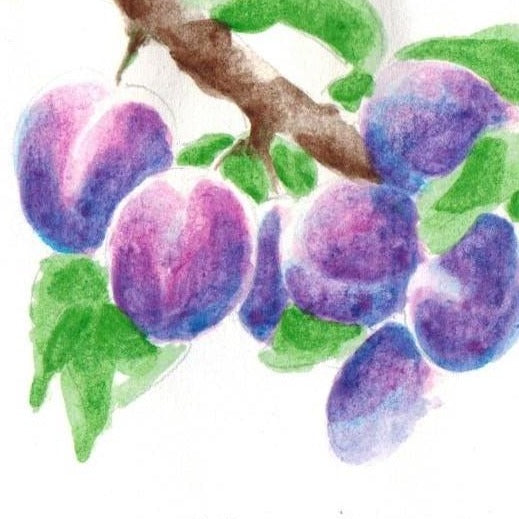
Species: Prunus sp
History: These seedlings are grown from plum seeds collected from our orchard. We missed labelling this particular batch, but we know their parents are a blue prune plum similar to German and Late Italian plums.
Why We Grow It: Seedling fruit trees are a great way to add some diversity and mystery to your garden or orchard! The seedling of a classic prune plume like German or Late Italian, these plums will be good for fresh eating but great for baking, drying, etc.
Please Note: Since plums tend to stay true to type more than apples, these seedlings will likely bear a strong resemblance to their parent variety. However, any specific information listed on this page should be taken with a grain of salt as there may be some variation from the parent tree.

History: Not to be confused with Stembridge Cluster, Stembridge Jersey was introduced in Somerset, England, in the 1950s. To this day it remains a popular variety in UK cider orchards.
Why We Grow It: The good-quality bittersweet juice produced by this variety explains why it is still popular in the UK. Although Stembridge Jersey suffers from a tendency to only produce fruit every other year, it does produce good crops in those alternate years and is relatively disease resistant.

History: Greensleeves was bred as a cross between James Grieve and Golden Delicious by Dr. Frank Alston at the East Malling Research Station in the UK in 1966. In 1981 it received the Royal Horticulture Society Award of Merit and was released the year after.
Why We Grow It: These round, golden apples have a nice sweet/tart flavour that mellows out with maturity. They are great for making juice or cider as well as fresh eating. The tree has low vigour so it naturally stays more compact, a useful feature if you don't have a lot of space.


FELCO 512 - Pruning & Grafting Knife - Right-handed
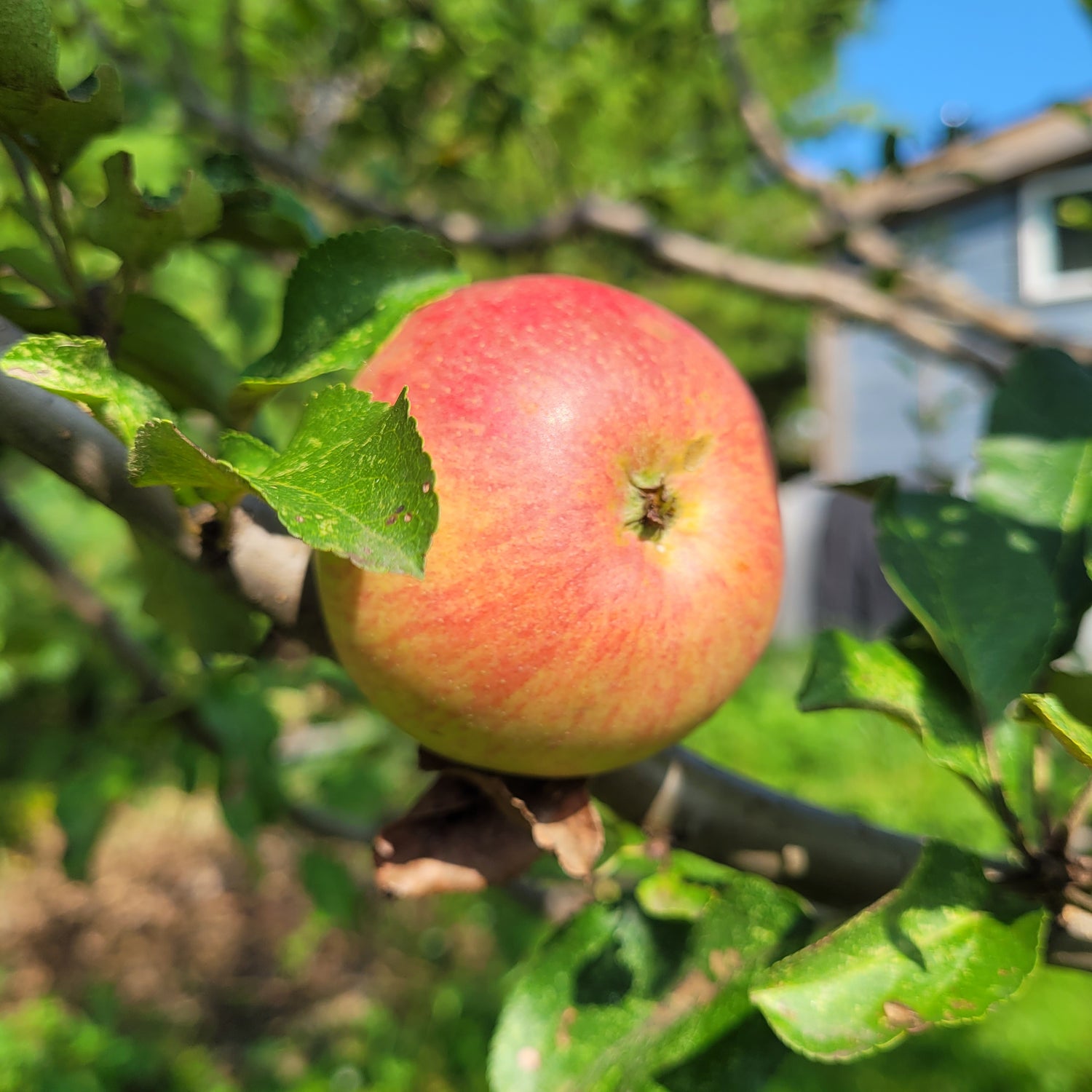
History: Alkmene, aka Early Windsor, was developed by M. Schmidt and H. Murawski at the Kaiser-Wilhelm-Institut für Züchtungsforschung in Müncheberg, Germany in the 1930s.* It was named after Hercules' mother Alcmene. After the chaos of WW2, it took about 30 years for Alkmene to be introduced to the rest of the world. It was released in 1962 and given the name Early Windsor for better marketability. It remains a popular apple in Europe today.
Why We Grow It: Alkmene produces a medium-sized crisp, juicy apple that has yellow skin overlaid with red stripes. The aromatic fruit is known for its rich flavour that is both honeyed and notably sharp. The tree is known to be quite a heavy cropper!
*While the Kaiser Wilhelm Institute was heavily involved with the Nazis during WW2, at the time of Alkmene's development the institute's president was Max Planck, a scientist who staunchly defended his Jewish colleagues. The institute was renamed in his honour following WW2. That is to say, we're not selling a Nazi apple.

Working with Nature to Build Soil Health
Healthy soil means thriving plants. Yet untangling the soil food web and optimizing your soil health is beyond most gardeners, many of whom lack an in-depth knowledge of the soil ecosystem.
Soil Science for Gardeners is an accessible, science-based guide to understanding soil fertility and, in particular, the rhizosphere – the thin layer of liquid and soil surrounding plant roots, so vital to plant health.
Robert Pavlis, a gardener for over four decades, debunks common soil myths, explores the rhizosphere, and provides a personalized soil fertility improvement program in this three-part popular science guidebook. Coverage includes:
- Soil biology and chemistry and how plants and soil interact
- Common soil health problems, including analyzing soil's fertility and plant nutrients
- The creation of a personalized plan for improving your soil fertility, including setting priorities and goals in a cost-effective, realistic time frame.
- Creating the optimal conditions for nature to do the heavy lifting of building soil fertility
Written for the home gardener, market gardener, and micro-farmer, Soil Science for Gardeners is packed with information to help you grow thriving plants.
Publisher: New Society Publishers
Pub. Date: 2020-04-07
ISBN: 9780865719309
Format: Paperback - 224 pages
Size: 6" x 9" (w x h)